
Reviewed · TEA CEREMONY EXPERIENCES
Tea Ceremony in 150 Years Old Townhouse with Tables and Chairs
Kyoto’s tea ceremony can feel formal and mysterious until someone shows you what each movement means. Here, inside a 150-year-old townhouse near Ninenzaka, a tea master explains the tools, customs, and quiet rituals before you prepare your own bowl of Uji matcha.
I like the hands-on format, and I like that your tea comes with two handmade seasonal Japanese sweets rather than a quick drink and a photo stop. The English guidance is offered daily, and an assistant helps explain the tea master’s demonstration step by step.
The main thing to consider is the group setting. The maximum is 15 people, so this is not a private, one-to-one ceremony. Arrive on time, wear socks, skip perfume, and dress modestly so the ceremony room remains comfortable and respectful for everyone.
In This Review
- Five useful things to know before you book
- What the 50-minute tea ceremony actually teaches you
- Entering a 150-year-old townhouse near Ninenzaka
- Watching the tea master prepare matcha
- Making your own bowl of Uji matcha
- Seasonal sweets make the tea easier to appreciate
- Group size, atmosphere, and the kimono option
- The strongest reasons to choose this experience
- Who should book this Kyoto tea experience?
- My verdict on the Kangetsu tea ceremony
- FAQ
- Where does the tea ceremony take place?
- How long does the experience last?
- Is the activity private?
- Is English instruction available?
- What is included in the price?
- Is kimono rental included?
- What should I wear?
- Can children participate?
Five useful things to know before you book
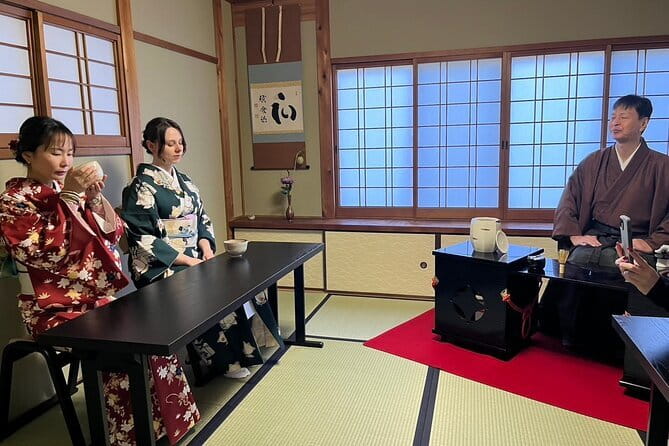
- Your own matcha bowl: You use the provided tools and prepare your own cup with guidance from the tea master.
- A real Kyoto setting: The experience takes place in a 150-year-old townhouse in the Ninenzaka and Sannenzaka area.
- Two cups and two sweets: The package includes two cups of high-quality matcha from Uji, Kyoto, plus two different seasonal Japanese sweets.
- English instruction every day: The tea master demonstrates the process while an assistant or interpreter explains the details in English.
- A short, focused visit: The session lasts about 50 minutes, making it easy to fit around sightseeing in Higashiyama.
- Kimono is optional: You can add a simple two-piece kimono for 1,000 yen per person, but it is not included in the base price.
What the 50-minute tea ceremony actually teaches you
This is more than a cup of green tea. The point is to show you how matcha is prepared, why the ceremony follows certain rules, and how small actions express care and respect.
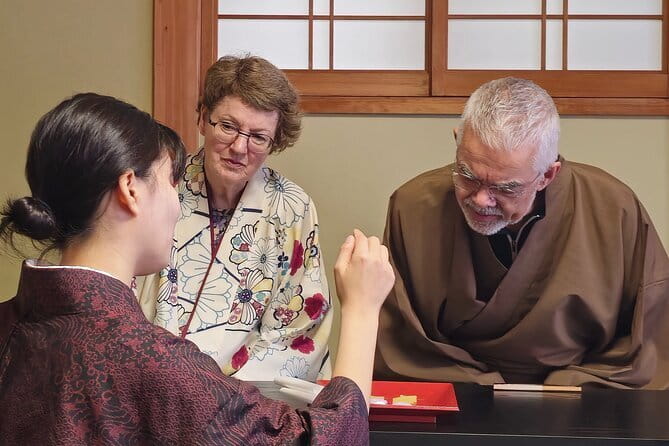
The session begins with an introduction to Japanese tea culture. You learn about the role of the tea master, the purpose of the utensils, and the basic etiquette used in the tea room. This opening matters because the ceremony can otherwise seem like a series of unexplained gestures.
The instructor explains what you are seeing before moving into the demonstration. That makes the experience friendly for first-time visitors. You do not need prior knowledge of tea ceremony customs, and you are not expected to perform everything perfectly.
English instruction is available every day. An assistant helps make the explanations clear, especially when the tea master is demonstrating several steps at once. This language support is one of the most useful parts of the experience because the meaning behind the actions is just as important as the movements themselves.
You also have time for questions. If you are curious about matcha, incense, tea bowls, etiquette, or the difference between making tea at home and preparing it in a formal setting, this is the moment to ask.
A few more Kyoto tours and experiences worth a look
Entering a 150-year-old townhouse near Ninenzaka
The meeting point is Tea Ceremony and Cultural Experience Kangetsu Kyoto, at 349-19 Masuyacho in Higashiyama Ward. It is in the Ninenzaka area, with Sannenzaka listed as the nearby stop.
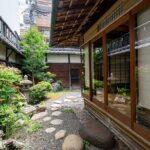
This is an excellent part of Kyoto for a cultural activity. Ninenzaka and Sannenzaka are famous for old streets, wooden buildings, shops, and temples. The area can be busy during sightseeing hours, but the townhouse provides a change of pace once you step inside.
The age of the building adds something that a modern hotel room cannot. You are not simply watching a demonstration in a neutral classroom. The setting gives the ceremony a stronger sense of place, even though the activity is designed for international visitors.
The interior includes a preparation room and a tea room. The first space is used for explanation and background. You then move into the tea room for sweets, tea, and the practical part of the ceremony.
Give yourself extra time to find the address. The provider sends a text with directions, which makes arrival easier, but Ninenzaka has lanes and traditional streets that can slow you down. Prompt arrival is especially important here. A late arrival can interrupt the tea master and hold up the group.
Watching the tea master prepare matcha
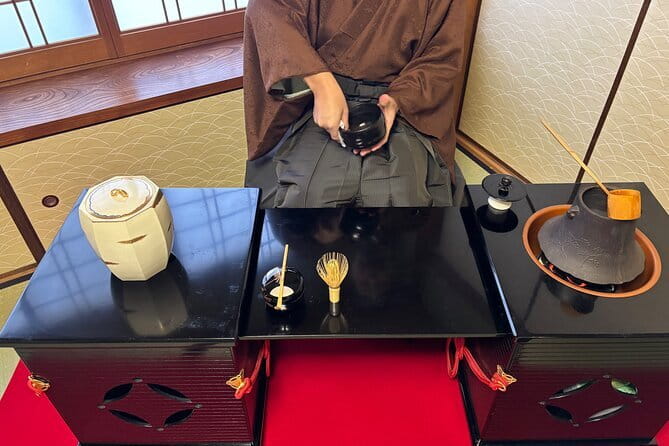
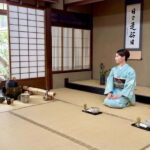
The demonstration is the heart of the experience. The tea master introduces the bowl, whisk, scoop, and other tools, then shows how they are handled.
You learn the basic order of preparation and the care given to each step. The emphasis is not only on making a drink that tastes good. It is also on preparing something thoughtfully for another person.
The explanation of etiquette helps you understand how to receive the tea, how to treat the utensils, and why the ceremony is conducted in a calm, deliberate way. These details give meaning to the setting and prevent the activity from becoming a simple craft lesson.
You should expect a structured presentation rather than a casual tea tasting. Video recording during the instructor’s demonstration is not allowed, and only smartphones are permitted in the tea room. You can take photographs with the tea master afterward if the staff allows it, but follow the instructions given during your session.
Perfume is strictly prohibited. This is not just a dress-code quirk. Fragrance can interfere with the smell of incense and tea, both of which are part of the room’s atmosphere. If you wear scent, the staff may ask you to remove it before taking part.
Making your own bowl of Uji matcha
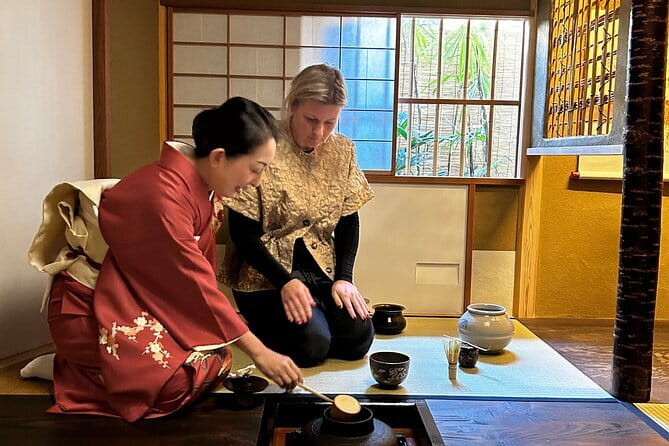
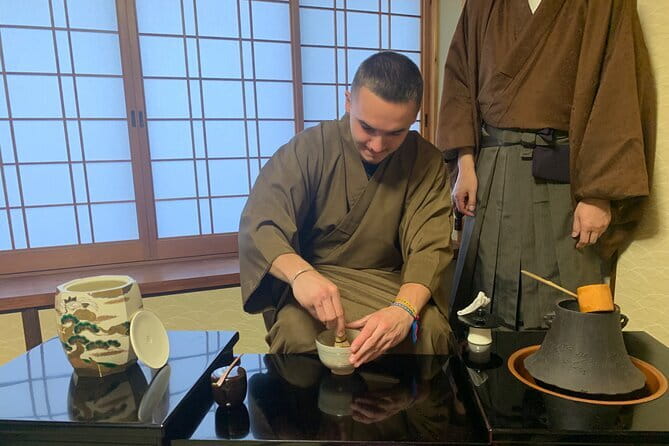
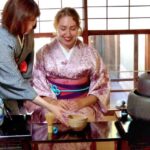
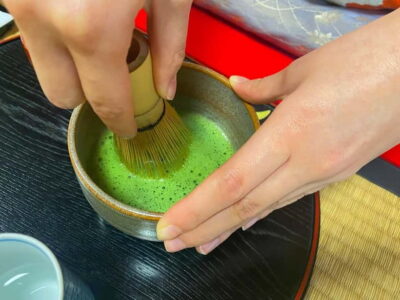
After watching the demonstration, you get to prepare your own matcha using the provided tools. This hands-on part is what makes the session more useful than a ceremony viewed from the sidelines.
You receive guidance as you work, so you are not left guessing how to use the whisk or how much effort to apply. The instructions are clear and step by step. If your first bowl is not perfect, that is part of the fun. You are learning a skill, not taking a tea-master exam.
The matcha comes from Uji in Kyoto, an area closely associated with high-quality Japanese tea. The inclusion is listed as two cups of matcha, giving you the chance to taste and prepare tea rather than stopping after a single serving.
I especially like this format for visitors who want to understand why matcha is special. You see the powder, handle the tools, make the tea, and then drink it in the setting where the customs make sense.
Some participants may prefer to sit back and watch. If that sounds like you, the demonstration and explanations still provide value, but the activity is built around participation. You should be willing to try the preparation yourself.
Seasonal sweets make the tea easier to appreciate
The tea is served with two different types of beautiful seasonal Japanese sweets. These are not just decoration. Their sweetness balances matcha’s grassy, slightly bitter taste.
The sweets also show how Japanese food changes with the seasons. Their shape and appearance are part of the experience, so take a moment to look before eating. The tea master or assistant may explain their role during the session.
The package includes two cups of high-quality matcha and two sweets. Bottled water, soda, and alcohol are not included. This is a tea ceremony, not a meal, so plan to eat before or after if you need something substantial.
All fees and taxes are included in the listed price of $28.90 per person. For Kyoto, that is a fair price for a short cultural activity in a historic townhouse, particularly because it includes instruction, tools, matcha, and sweets.
The value depends on what you want. If you only want to drink matcha, a tea shop will cost less and take less time. If you want to understand the ritual and make the tea yourself, this session gives you more for the money.

Group size, atmosphere, and the kimono option
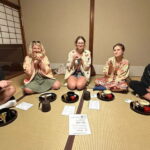
The maximum group size is 15 people. That is small enough for a guided class, though it may not feel intimate if the session is full.
The tea ceremony is presented as a small-group experience, and the strongest parts are the personal instruction and the chance to ask questions. Still, you should not book it expecting a private ceremony. One unhappy booking came from a guest who thought the experience would be private and include traditional clothing. The activity is a group session, and kimono rental is an optional add-on.
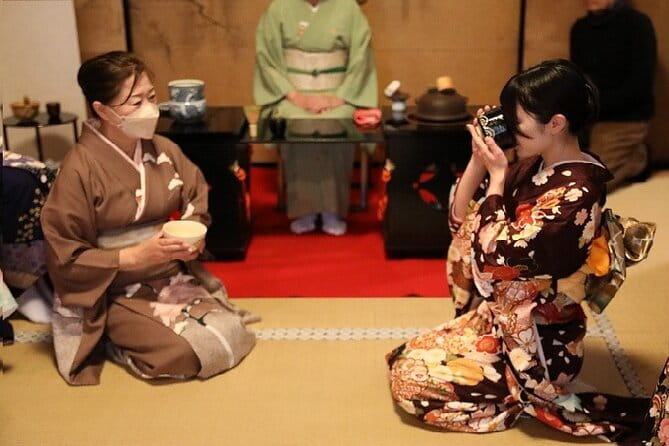
For 1,000 yen per person, you can wear a simple two-piece kimono. This is not included in the $28.90 price. It may add a special touch to photographs and help you feel more connected to the setting, but it is not needed to understand the ceremony.
The clothing rules are practical. Wear socks, and cover too much exposed skin. If you forget socks, you must purchase them. Children under seven cannot participate. Older children can take part, and the format has worked well for families with children aged 11 and 13 because the history and hands-on activity keep the session active.
Tell the provider about allergies in advance. The sweets are part of the ceremony, so you should not wait until you arrive to raise a food concern.
The strongest reasons to choose this experience
The tea master and assistant receive repeated praise for clear explanations, friendly service, and a calm approach. The instruction is formal enough to feel meaningful but relaxed enough for someone who knows nothing about tea ceremony.
The most appreciated feature is the balance of education and action. You learn the background, watch the preparation, make your own tea, eat sweets, and ask questions. That gives the 50 minutes a clear shape and keeps it from feeling like a staged photo opportunity.
The setting also receives high marks. A historic townhouse in Higashiyama feels right for this subject, especially when paired with a walk through Ninenzaka and Sannenzaka.
The current rating is 4.8 out of 5, with 95 percent recommending the experience. That matches the practical strengths: clear guidance, warm staff, a beautiful setting, and very good matcha.
There are two cautions. First, the group must respect the tea master and one another. Arriving late or behaving carelessly can inconvenience everyone. Second, the experience is short. You receive a good introduction, not a full course in the many schools and forms of Japanese tea ceremony.
Who should book this Kyoto tea experience?
I would choose this for a first visit to Kyoto, especially if you want one cultural activity that is easy to understand and does not take half a day.
It suits solo visitors, couples, families with children aged seven or older, and anyone curious about matcha. It is also a good choice if you want an activity near Higashiyama and need something that fits between temple visits and shopping.
You will get the most from it if you are open to following etiquette and trying the preparation yourself. This is not the right pick if you want a private ceremony, a long meditation session, a full meal, or included kimono rental.
The 50-minute length is a real advantage in a packed Kyoto schedule. You can visit the tea house, then continue around Ninenzaka and Sannenzaka without giving up an entire afternoon.
Book at least 24 hours ahead if your plans may change. Free cancellation is available until 24 hours before the local start time. Cancellations or changes inside that window are not refunded or accepted. The activity also requires good weather, and poor weather may lead to a new date or a full refund.
My verdict on the Kangetsu tea ceremony
Book this experience if you want a welcoming, hands-on introduction to Japanese tea ceremony in a historic Kyoto setting. The strongest value comes from the clear English explanations, the chance to prepare your own Uji matcha, and the two seasonal sweets included in the price.
Go in expecting a group class, not a private ritual. Wear socks, avoid perfume, arrive promptly, and consider the optional 1,000-yen kimono only if photographs and dress-up appeal to you.
For $28.90 and about 50 minutes, this is a sensible Kyoto choice for learning what makes matcha and tea ceremony special. It gives you enough context to notice the details, without asking you to already understand them.
FAQ
Where does the tea ceremony take place?
It takes place at Tea Ceremony and Cultural Experience Kangetsu Kyoto, at 349-19 Masuyacho, Higashiyama Ward, Kyoto. The experience is in the Ninenzaka area, with Sannenzaka listed as the nearby stop.
How long does the experience last?
The tea ceremony lasts approximately 50 minutes.
Is the activity private?
No. This activity is offered as a group session with a maximum of 15 participants.
Is English instruction available?
Yes. English experiences are provided every day, with the tea master and an assistant or interpreter explaining the ceremony and preparation.
What is included in the price?
The price includes all fees and taxes, use of the tea-making tools, two cups of high-quality matcha from Uji in Kyoto, and two different seasonal Japanese sweets.
Is kimono rental included?
No. A two-piece kimono is available as an optional add-on for 1,000 yen per person.
What should I wear?
Wear socks and clothing that does not expose too much skin. Perfume is prohibited because it can interfere with the smell of incense and tea.
Can children participate?
Children under seven years old are not allowed to participate. Children aged seven and older may take part, subject to the activity’s rules.
More Tea Ceremony Experiences in Kyoto
More tours in Kyoto we've reviewed




Tea Ceremony Experiences, compared.
 ★ 4.9Kyoto: Tea Ceremony in a Traditional Tea House in KiyomizuFrom $4945 min
 ★ 4.9Kyoto: Tea Ceremony Ju-An at Jotokuji TempleFrom $291h 10m
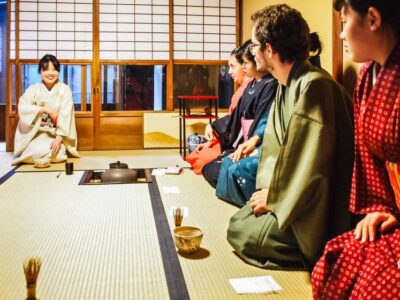 ★ 4.3Kyoto: 45-Minute Tea Ceremony Lesson ExperienceFrom $2245 min
 ★ 5.0World Heritage Kyoto & Nara Uji Authentic Matcha ExperienceFrom $129
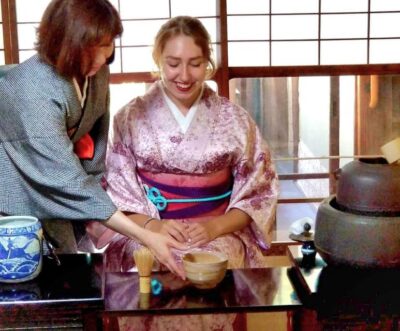 ★ 4.9Kyoto: Table-Style Tea Ceremony at a Kyo-MachiyaFrom $451h 30m
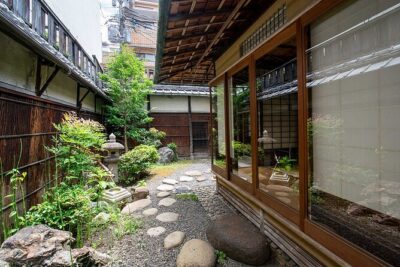 ★ 5.0Kimono Tea Ceremony at Kyoto Maikoya, NISHIKIFrom $65