
Reviewed · MORNING
Traditional Japanese Washi Papermaking- Kyoto morning
Making paper sounds humble until you see a plain sheet take shape with cherry blossoms, maple leaves, grasses, and your own design. At 紙TO和, a small studio in central Kyoto, you learn the basic process, make washi from raw materials, and leave with a souvenir you helped create from start to finish.
I like the tiny class size, which can be capped at four people, and the calm, patient teaching from Hiro, Junko, and their bilingual team. I also like the choice of finished projects: four regular postcards are included, while a table mat, wraparound lampshade, or tapestry panel gives you a larger keepsake.
The main limitation is time. One hour goes quickly, especially if you want to make a detailed design or several gifts. You can pay for an extra hour of unlimited paper making, but that added cost is not included in the basic price.
In This Review
- Key points to know before you book
- A quiet hour with an old Japanese craft
- From raw material to handmade paper
- Four postcards, a lantern, or a larger paper piece
- What the one-hour schedule feels like
- Why the small group matters
- Getting there from central Kyoto
- Is $33.03 good value?
- What I would plan before arriving
- Who will enjoy this most?
- Should you book the Kyoto washi workshop?
- FAQ
- How long does the washi papermaking activity last?
- Where does the workshop take place?
- How do I reach the workshop by train?
- Is transportation included?
- What can I make during the class?
- Are English instructions available?
- How many people can join the class?
- Can children take part?
Key points to know before you book
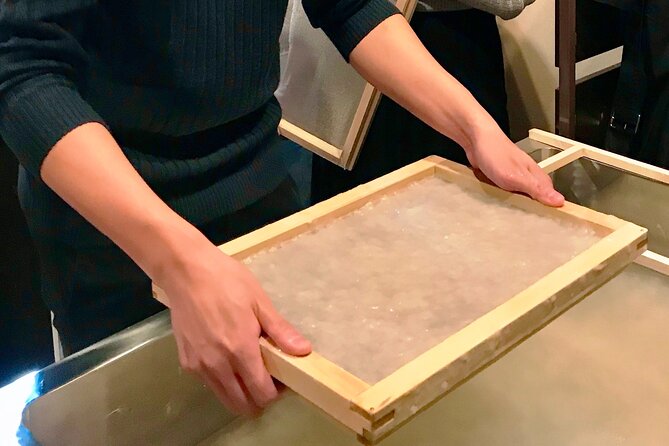
- You make the paper yourself: This is a hands-on process, not a demonstration watched from the sidelines.
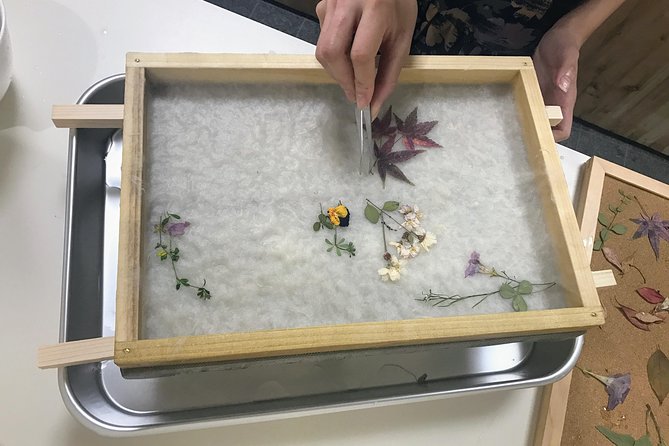
- Seasonal decoration is part of the fun: Cherry blossoms, maple leaves, grasses, and paper cut-outs let you build a personal design.
- The class stays small: The maximum group size is four, so you can expect close help from the instructors.
- Four postcards are included: Other projects, including a lantern, table mat, or tapestry panel, may require an extra payment.
- It works well for families: Children must have an adult with them, and the activity has suited children as young as seven.
- The location is easy to reach: It is a six-minute walk from Karasuma Oike Station Exit 6, or nine minutes from Shijo Station Exit 24 and Karasuma Station.
A quiet hour with an old Japanese craft
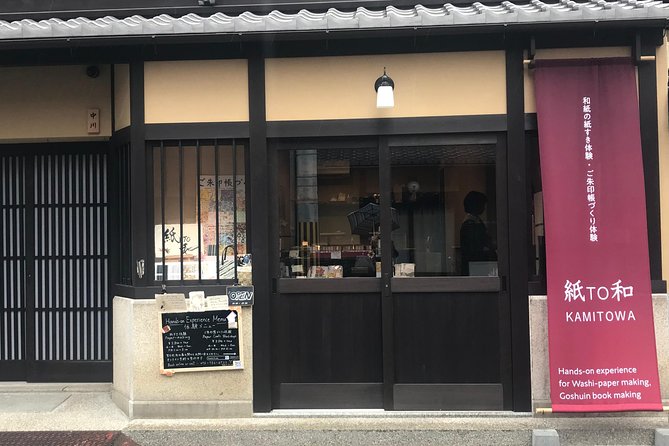
Kyoto can fill your day with temples, shrines, shopping streets, and crowds. This workshop gives you a useful pause without taking you far from the center. You make your own way to a traditional Japanese-style house at 345 Sanjōchō, in Nakagyo Ward, then settle in for a guided craft session.
I like the setting because it keeps the experience personal. This is not a large classroom built for a busload of people. The maximum is four, and the small scale allows the instructors to watch your technique, answer questions, and help when your paper does not behave exactly as planned.
The class is run in Japanese and English. Hiro and Junko are named as the couple behind the workshop, and the teaching style is patient and clear. You do not need prior craft experience. The process is explained step by step, with enough help for children and first-time makers.
The class also gives you more than a pretty object. You learn why handmade paper requires so many careful stages, and an educational video during the drying period can add background on the traditional method. I found this especially useful as a way to understand why washi is treated as an art, not simply as stationery.
A few more Kyoto tours and experiences worth a look

From raw material to handmade paper
The central activity is making traditional washi paper from raw materials. The supplied information does not spell out every technical stage, so you should not expect a full professional apprenticeship in a single hour. You can expect a compact, practical introduction that lets you take part in the process yourself.
The instructors explain each step as you go. You work under their eye rather than being left to figure out the tools and materials alone. That matters for a craft where the paper must be handled carefully and the timing of each stage affects the result.
Once you prepare your sheet, you choose decorative elements. Cherry blossoms and maple leaves are especially appealing if you want a clear connection to the seasons of Japan. Paper cut-outs let you add shapes and patterns without relying only on natural materials.
The design stage is where the experience becomes personal. You can arrange flowers, leaves, grass, and cut paper before the sheet is finished. Your choices determine whether the final piece feels delicate, graphic, simple, or busy. I would take a moment before the class to think about the kind of object you want to bring home, since a postcard and a lantern call for different levels of detail.
A ten-minute educational video may be shown while your paper dries. This is a smart use of the waiting period, since you are learning about the history and full process instead of simply sitting idle. It also helps connect your small sheet of paper to the larger craft tradition.
Four postcards, a lantern, or a larger paper piece
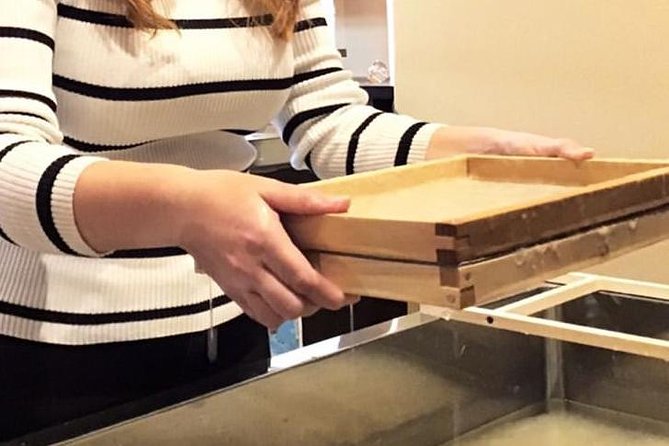
The standard option includes a set of four postcards. That is a sensible choice if you want several small gifts or need something easy to pack. A handmade postcard also gives you a useful souvenir rather than another mass-produced Kyoto trinket.
You can choose a table mat, wraparound lampshade, or tapestry panel instead. These projects require more space and may cost extra, so check the supplement before you begin. One participant chose a lantern for an additional fee and was pleased with the finished result.
The lantern is likely the most decorative choice, while postcards are the easiest to carry. A table mat sits in the middle: larger than a card but still practical. A tapestry panel gives you the biggest surface for arranging your design, though it may need more care in your luggage.
The important point is that you are not simply decorating a ready-made object. You first make the paper, then design it with the provided materials, and finally turn it into your chosen product. That full sequence gives the souvenir its value.
Packaging is handled carefully, which helps if you are carrying the piece through the rest of your trip. One practical detail is worth noting: unless you arrange otherwise with the workshop, you should be prepared to carry your finished work with you after the class.
What the one-hour schedule feels like
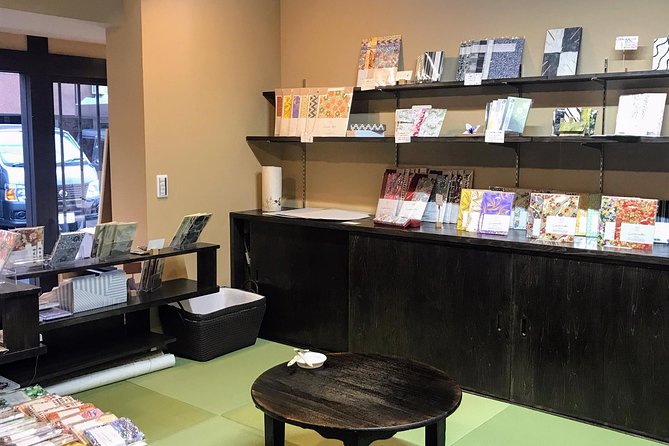
The activity lasts about 60 minutes. After you arrive and introductions are complete, the instructors explain the method. You then make and decorate your paper, with guidance throughout. Drying time can include a short instructional video about washi production.
I would treat the hour as a focused introduction, not an open-ended studio session. You have enough time to complete a meaningful project, but not enough time to linger over every possible design or produce a large stack of gifts.
If you want to make more paper, you can add an extra hour of unlimited paper making at your own expense. This is worth considering if you are visiting with friends, want several handmade presents, or choose a larger project and prefer more breathing room.
The extra hour is not necessary for the basic experience. The included postcard option can be completed in the normal session, and the instructors keep the process moving. Still, the add-on gives creative people a way to spend longer with the materials instead of stopping just as they get comfortable.
Why the small group matters
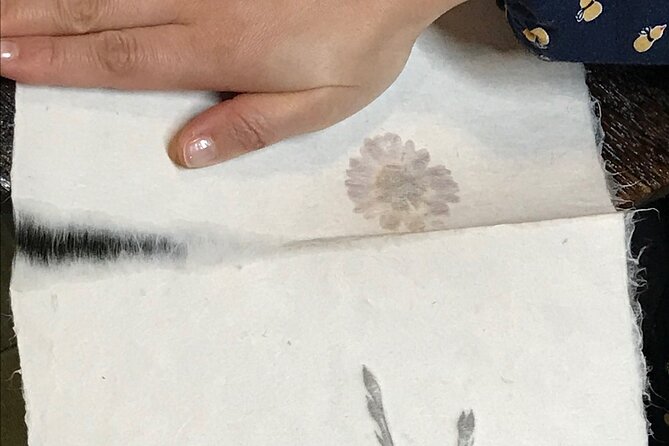
A maximum of four people changes the mood of the class. You are not competing for the instructor’s attention, and you can ask for help without interrupting a large group. This is particularly useful when children are involved or when your design needs a little correction.
The small format also makes the workshop feel calmer than many scheduled Kyoto activities. You are working indoors, seated in a traditional-style setting, and focusing on a tactile task. I would consider it a good reset after visiting crowded sights or walking through busy shopping areas.
Families are a strong match. Children must be accompanied by an adult, and the activity has worked well for a seven-year-old, an eleven-year-old, a nine-year-old, and teenagers. The instructors are described as accommodating with children, but you should still expect youngsters to follow directions and handle wet paper with care.
Adults who enjoy crafts will get the most from the session. You do not have to be artistic, but the activity rewards anyone who likes arranging colors, shapes, and natural objects. If you prefer a passive cultural talk, this may feel too practical. The value comes from doing.

Getting there from central Kyoto
The meeting point is 345 Sanjōchō, Nakagyo Ward, Kyoto, 604-8205. Transportation to and from the workshop is not included, so you make your own way there. The location is near public transportation, which keeps the planning simple.
From Karasuma Oike Station on Kyoto Metro’s Karasuma Line, use Exit 6 and allow about six minutes on foot. From Shijo Station Exit 24 on the same line, or from Karasuma Station on the Hankyu Line, allow about nine minutes.
This central position makes the class easy to fit between other plans. The workshop is also close to the covered market area, so you could pair a morning session with lunch and shopping nearby. I would still leave a little extra time to find the exact entrance, especially if you are navigating Kyoto for the first time.
The activity begins and ends at the same meeting point. No hotel pickup is provided, and no transport is part of the price.
Is $33.03 good value?
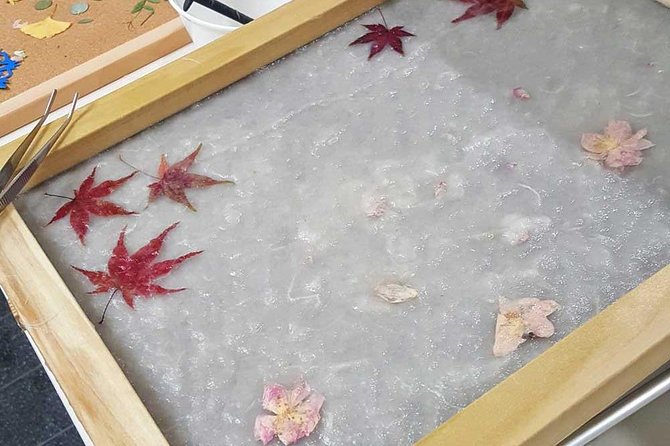
At $33.03 per person, the workshop is priced like a short cultural activity rather than a full-day class. I think the value is strong if you care about making something yourself. The fee includes the instruction, materials, taxes, fees, and handling charges, along with the standard postcard project.
You are paying for three things: the guided process, the cultural explanation, and the finished handmade item. The souvenir alone would not justify the cost for everyone, since you can buy attractive paper goods elsewhere in Kyoto. The appeal is the connection between your own effort and the final object.
The basic price is less attractive if you want a lantern, table mat, or tapestry panel and are trying to keep spending tightly controlled. Those options may involve a supplement, and an extra hour costs more. Ask about the additional price before choosing an upgraded project.
For families, the value improves because the activity gives adults and children a shared task. For solo visitors, the small class can make the hour feel more like a private lesson than a quick tourist stop. For anyone already planning to buy Japanese paper goods, the class adds a personal story to what you take home.
What I would plan before arriving
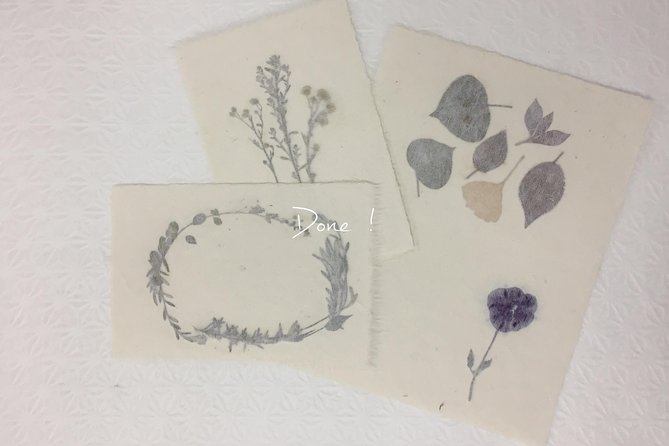
I would book ahead, especially because the class can hold no more than four people. Confirmation is provided at booking, and the activity is recommended for most people who can take part in a guided hands-on craft.
Wear something you can work comfortably in. The supplied information does not state a dress code, but paper making and decorating are practical activities, so you should avoid bringing anything you would be upset to mark or handle carefully.
Decide how much time you have before booking. The regular experience lasts about one hour. If you want to make multiple gifts, budget for the optional extra hour and the added project fees.
Think about luggage space, too. Postcards are simple to carry, while a lantern or larger panel may need more care. The finished pieces are packaged well, but packaging does not make a larger object disappear into an already full suitcase.
Cancellation is free if you cancel at least 24 hours before the local start time. Within 24 hours, the amount paid is not refunded, and changes are not accepted.
Who will enjoy this most?
I would recommend this workshop to you if you want a hands-on cultural activity that fits into a busy Kyoto schedule. It suits craft lovers, families, couples, teenagers, and anyone who wants a break from sightseeing without giving up a connection to Japanese tradition.
It is also a good rainy-day choice because the activity takes place indoors. The quiet pace can be welcome after a morning of walking, and the finished paper gives you a souvenir with a clear personal connection.
I would be less likely to recommend it if you want a detailed professional course in washi production. One hour can only cover an introduction. You will learn the main process and make a finished piece, but you will not become a trained papermaker in one visit.
I would also think twice if you have no interest in crafts. The teaching is friendly and the cultural background is useful, but the heart of the experience is arranging materials and making paper with your hands.
Should you book the Kyoto washi workshop?
I would book it if you want a small, calm, personal activity with a useful takeaway. The combination of bilingual instruction, a maximum group of four, seasonal materials, and a central Kyoto location makes it easy to fit into a morning.
Choose the standard postcard project if you want the simplest option and the easiest souvenir to pack. Pay for a lantern, table mat, or tapestry panel only if the larger finished object matters to you. Add the second hour if you want to make several gifts or need more time with your design.
This is not a grand sight and it does not try to be one. It is a quiet hour spent learning an old craft, with patient guidance and something handmade to carry home. For many Kyoto itineraries, that change of pace is exactly the point.
FAQ
How long does the washi papermaking activity last?
The standard activity lasts approximately one hour. You can add an additional hour of unlimited paper making at your own expense.
Where does the workshop take place?
The meeting point is 345 Sanjōchō, Nakagyo Ward, Kyoto, 604-8205, Japan. The class takes place in a traditional Japanese-style house.
How do I reach the workshop by train?
The workshop is about a six-minute walk from Exit 6 of Karasuma Oike Station on the Kyoto Metro Karasuma Line. It is also about a nine-minute walk from Exit 24 of Shijo Station on the Karasuma Line or from Karasuma Station on the Hankyu Line.
Is transportation included?
No. You make your own way to the workshop, and transportation to and from the location is not included.
What can I make during the class?
You can make washi paper decorated with seasonal flowers, leaves, and paper cut-outs. Project choices include a set of postcards, a table mat, a wraparound lampshade, or a tapestry panel.
Are English instructions available?
Yes. The activity is operated by a multilingual guide, with instruction available in Japanese and English.
How many people can join the class?
The activity has a maximum of four participants.
Can children take part?
Yes. Children must be accompanied by an adult, and most people can participate. The class has accommodated children and families.
More Morning in Kyoto
More tours in Kyoto we've reviewed



Morning, compared.
 ★ 5.0Kyoto Early Morning Tour with English-Speaking GuideFrom $68
★ 4.9Kyoto: Early Morning Tour with English-Speaking GuideFrom $1015h 30m
★ 5.0Kyoto Early Morning Tour with English-Speaking GuideFrom $68
★ 4.9Kyoto: Early Morning Tour with English-Speaking GuideFrom $1015h 30m
 ★ 5.0Nara Early Morning Tour (Kyoto or Osaka Departure Available)From $61
 ★ 4.6From Kyoto: Nara Guided Morning TourFrom $774 hours
 ★ 4.6Kyoto: Gion Night or Morning Walking Tour with Local SnacksFrom $46
 ★ 4.0Kyoto Morning Tour from Kyoto or OsakaFrom $87