
Reviewed · TEA CEREMONY EXPERIENCES
Traditional Tea Ceremony Experience in Kyoto
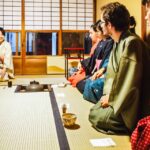
Kyoto’s tea ceremony is presented here in a short, friendly 30-minute format, with a Japanese instructor showing how single-origin matcha is prepared and explaining the meaning behind the main movements and utensils. You sit at a table and chair, not on the floor, which makes this a comfortable first look at one of Japan’s best-known traditions.
I like the very low price, just $7 per person, and the easy location one minute from Gojo Station. I also like the small sweet served with the matcha, since ohigashi gives you a taste of the traditional pairing rather than tea alone. The tradeoff is time: the session can feel brief, and explanations may be limited in English.
In This Review
- Key points to know
- A first taste of Kyoto tea culture
- What happens during the 30-minute session
- Why single-origin matcha matters
- Table and chair seating, not floor sitting
- Gojo Station makes the visit easy to fit in
- How much explanation should you expect?
- Value at $7 per person
- Who will enjoy this Kyoto tea ceremony?
- Booking details worth noting
- Should you book it?
- FAQ
- How long does the tea ceremony experience last?
- How much does the experience cost?
- What is included?
- Is the completion certificate included?
- Where is the meeting point?
- What language is the experience conducted in?
- Is the activity wheelchair accessible?
- What are the operating hours?
- Can I cancel for a full refund?
- Are babies and young children charged?
Key points to know
- Single-origin matcha: Watch the tea being made and taste a rich cup prepared for the session.
- Ohigashi included: A Japanese dried sweet is served alongside the matcha.
- Table seating: You will use chairs and tables instead of sitting formally on the floor.
- Gojo Station access: The venue is about one minute from Exit 1 of the Subway Karasuma Line.
- Japanese-led instruction: English translation is provided as much as possible, but it is best to request help in advance.
- Short and affordable: The 30-minute format costs $7, making it easy to fit into a Kyoto day.
A first taste of Kyoto tea culture
This experience gives you a compact introduction to ote-mae, the Japanese tea ceremony procedure. The point is not simply to drink powdered green tea. You are shown how the tea is prepared, why the tools matter, and how a quiet set of actions creates a polite exchange between host and participant.
The session takes place in Kyoto, Japan’s former capital and a major center of tea culture. That setting adds meaning, though this is not a long historical lecture or a full formal ceremony lasting several hours. Think of it as a practical starting point. You learn the basic shape of the ritual, then taste the result.
The instructor is Japanese, and the main operating language is Japanese. English translation is offered as much as possible if requested. You should contact the provider ahead of time if clear English explanation is important to you.
The short schedule also makes this useful for families, first-time visitors, and anyone who wants a cultural activity without giving up half a day. At the same time, the compact format means the depth of explanation can vary. One session received praise for explaining matcha history and proper manners, while another participant found the information basic and divided between English and Korean. Go in expecting an introduction, not an advanced tea-school lesson.
A few more Kyoto tours and experiences worth a look
What happens during the 30-minute session
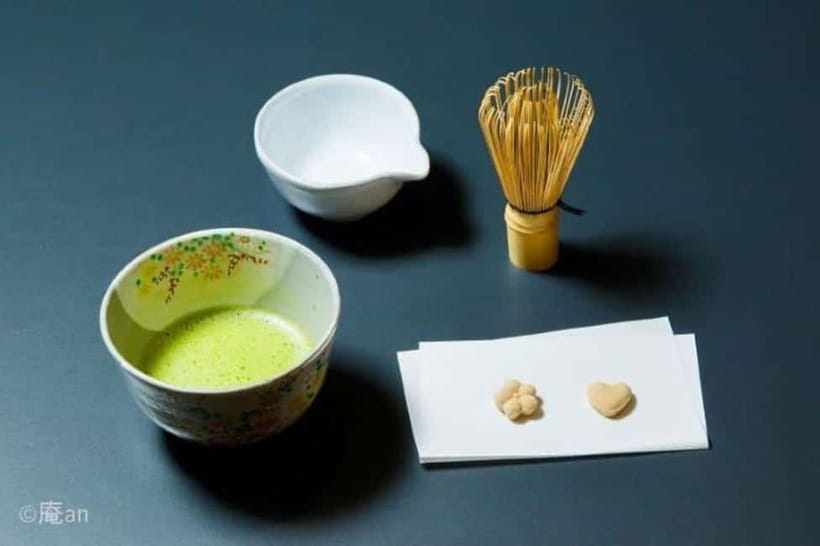
The experience is built around one set of ote-mae, the Japanese tea ceremony procedure included in the booking. Exact pacing can vary, but the supplied details point to four main parts: an explanation of tea culture, a demonstration, the tasting, and a brief chance to take in the etiquette.
First, the instructor introduces matcha and the role it plays in the ceremony. You may hear about the customs surrounding the tea, the tools used, and the proper behavior for the person receiving it. The quality of the explanation depends partly on translation and the size of the group, so listen closely and ask for English support before the session begins.
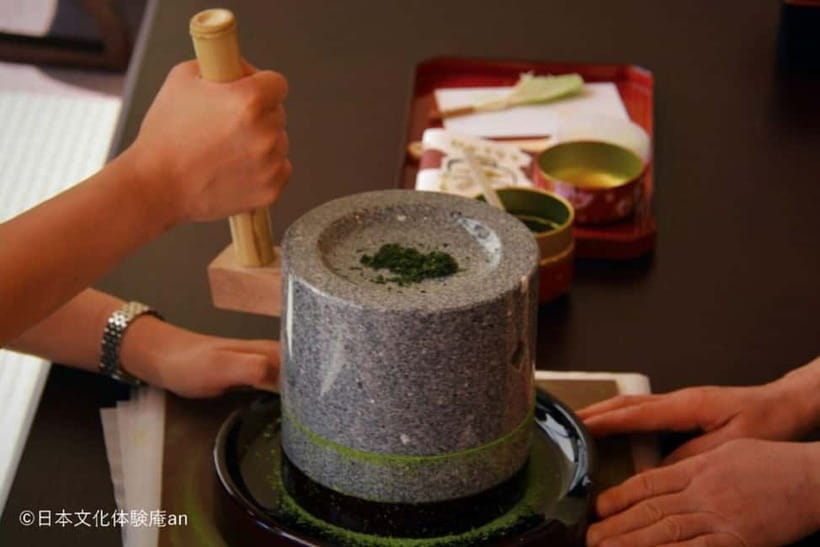
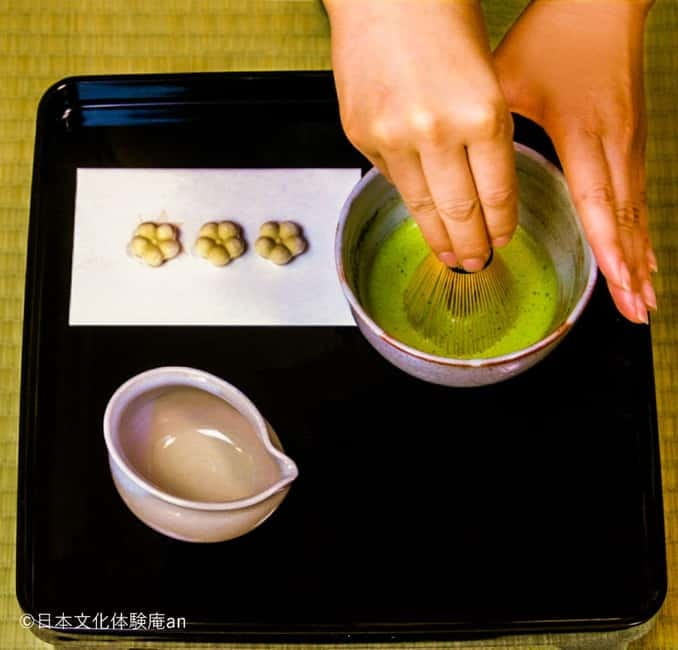
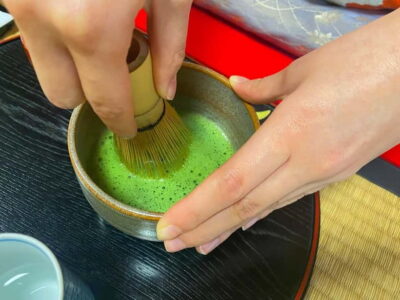
Next comes the preparation demonstration. You watch hot water added to powdered matcha and mixed into a drink. This simple action is more interesting when you understand the care behind it. The instructor’s movements are part of the lesson, not just a kitchen task, and the ceremony gives ordinary steps a formal order.
You then receive the single-origin matcha. The tea is described as rich, so be ready for a strong, earthy taste rather than a sweet green tea. Ohigashi, a Japanese dried sweet, is served with it. The sweet helps balance the matcha and shows how tea and food are considered together in the ceremony.
The whole activity lasts about 30 minutes. One recent booking found the active portion closer to 25 minutes, with about half of the explanation in English and half in Korean. That is useful to know if you are planning a tightly timed day. This is a quick cultural stop, not a long sit-down performance.
Why single-origin matcha matters
The phrase single-origin tells you that the tea is presented with attention to where it comes from, rather than as an anonymous powdered drink. The provided information does not identify the farm or region, so you should not expect a detailed producer presentation unless the instructor supplies it on the day.
Still, the focus gives the tasting a clear purpose. You are not merely handed a cup after watching a demonstration. You can pay attention to the color, aroma, texture, and lingering taste, then see how the ohigashi changes the experience.
Matcha can surprise first-time drinkers. It is concentrated and often more bitter or savory than expected. The prepared sweet is therefore an important part of the session. Eat it according to the instructor’s guidance, and you will better understand why Japanese tea service includes carefully chosen sweets.
I like this element because it turns the ceremony into a small lesson in balance. The tea has force; the dried sweet provides a gentler counterpoint. At $7, getting both a demonstration and a traditional accompaniment is strong value.
Table and chair seating, not floor sitting
You will be seated at tables and chairs. That detail may sound minor, but it changes who can enjoy the activity comfortably. Formal tea settings often bring images of kneeling on tatami, which can be difficult for people with knee, hip, or back concerns. This format removes that hurdle.
The activity is described as wheelchair accessible, but the building has no elevator and participants need to use stairs to reach each venue. Those details do not fit neatly together, so anyone using a wheelchair should contact the provider before booking and confirm the exact route and room.
The seating also makes this a practical choice for young children and families. Children under two who sit on a parent’s lap are free. The information does not give a separate child price or say how many children can attend, so check before making a family reservation.
Gojo Station makes the visit easy to fit in
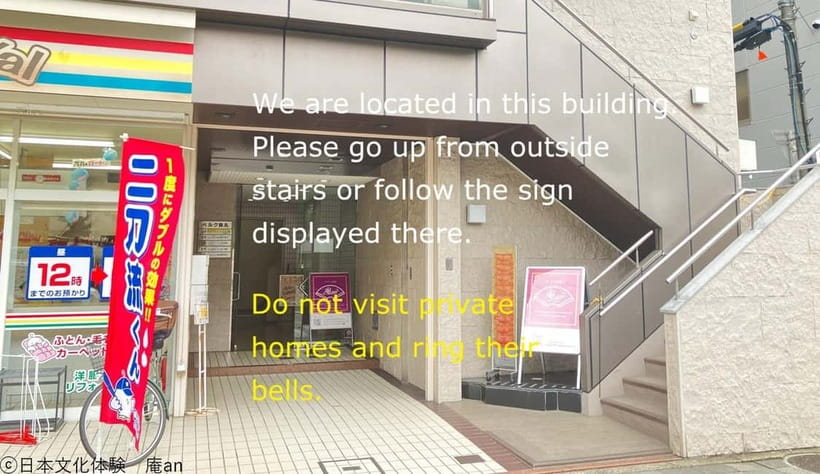
The meeting point is one minute from Exit 1 of Gojo Station on the Subway Karasuma Line. The entrance faces Gojo-dori, the main street, which should make it easier to find than a venue hidden inside a side lane.
Use the address and map carefully, especially if you arrive by taxi or are following a phone map. The coordinates provided are 34.99642916810299, 135.76176672966227. Since the entrance faces the main road, look for the storefront rather than assuming the meeting point is inside the station area.
I would arrive a little early. The operator will not hold the event for late arrivals, regardless of the reason, and missing it can also mean losing travel costs to the venue. This matters more here than on a flexible museum visit because the session has a fixed start time and lasts only half an hour.
The operating hours are 10:00 to 17:00. Reservations received after 17:00 are processed the next day. If you need help with English or want to confirm access, contact the provider during operating hours rather than waiting until the evening.

How much explanation should you expect?
The best version of this activity gives you more than a recipe. You can learn why the host handles each utensil in a certain way, how the guest receives the bowl, and how manners support the calm rhythm of the ceremony.
The available feedback shows that the teaching can be uneven. One participant found the session educational and calming. Another learned about matcha history and proper do’s and don’ts, and even received a matcha certificate as a fun extra. That certificate is not listed as included, though, so do not count on it as part of the standard $7 experience.
A different participant wanted more discussion of the ceremony’s history, cultural meaning, and when matcha is usually served and to whom. Instead, the explanation focused on adding hot water and mixing. This is the main limitation to keep in mind. You may get a useful etiquette lesson, but you may not receive a detailed account of tea culture.
Language can shape that experience. Japanese is the stated instructor language, and English translation is provided as much as possible. One session also included Korean interpretation, with the explanation split between languages. If you need a full English presentation, request it before booking and keep your expectations realistic.
The venue can also feel crowded. A participant found it hard to hear the guide in a busy room. Choose a quieter time if starting times allow, and sit where you can see the instructor’s hands clearly. In a tea ceremony, the small movements are half the lesson.
Value at $7 per person
At $7, this is one of the least expensive ways to add a traditional Japanese activity to a Kyoto itinerary. The price includes the tea ceremony set, the matcha demonstration, the cup of single-origin matcha, and the ohigashi sweet.
The value is strongest if you want a short introduction. You can reach the venue by subway, spend 30 minutes learning and tasting, then continue with sightseeing. There is no need to commit to a long formal ceremony or pay for a larger cultural show.
The value is less certain if you want expert-level history, a long meditation-like setting, or a fully translated lecture. The session may be shorter in practice, and crowded conditions can make the instructor difficult to hear. A completion certificate costs an additional 300 JPY, so add that only if the document matters to you.
I would compare this with the price of other small Kyoto activities, but the key question is not simply cost. It is what kind of experience you want. For a low-risk taste of tea culture, $7 is easy to justify. For serious study, you may need a longer class.
Who will enjoy this Kyoto tea ceremony?
I would recommend it to first-time matcha drinkers who want context before ordering tea elsewhere. The demonstration helps you understand what is in the bowl, while the ohigashi gives you a traditional food pairing.
It also suits visitors with a packed Kyoto schedule. The Gojo Station location and 30-minute length let you place it between other plans. You can make it a morning activity during the 10:00 to 17:00 operating window, or use it as a brief cultural break rather than a full-day event.
Families may appreciate the table seating and the free lap-sitting policy for children under two. Still, very young children may find a quiet demonstration difficult, and the information does not describe a separate children’s program.
I would be more cautious if you need guaranteed English, full wheelchair access without stairs, or an extensive discussion of tea history. Contact the provider first in all three cases. The activity can still work, but you should confirm that the format matches your needs.
Booking details worth noting
You can cancel up to 24 hours in advance for a full refund. After that point, a cancellation fee applies, and changing the date or time after a fee has been incurred brings an additional specified charge.
The reserve-now, pay-later option keeps your plans flexible and requires no payment today. That is helpful when your Kyoto schedule is still moving, but it does not remove the late-arrival or late-cancellation rules.
Only people taking part in the experience may enter. Do not assume that nonparticipating companions can wait inside. If someone in your party plans to watch without drinking tea or joining the activity, ask the provider before booking.
Should you book it?
Book this experience if you want an affordable, short introduction to matcha and tea etiquette near a subway station. The chair seating, included ohigashi, and clear demonstration make it approachable, and the 4.3 rating from 64 bookings suggests a generally positive experience.
Skip it if you are seeking a long, highly detailed ceremony with guaranteed English instruction. The session can be crowded, explanations may be basic, and the practical activity may finish in about 25 minutes. For everyone else, it is a sensible little Kyoto stop, especially when you treat it as a first taste rather than the final word on Japanese tea culture.
FAQ
How long does the tea ceremony experience last?
The stated duration is 30 minutes. One session was reported to last about 25 minutes, so avoid scheduling another activity immediately afterward.
How much does the experience cost?
The listed price is $7 per person.
What is included?
The booking includes one set of ote-mae, the Japanese tea ceremony procedure. Single-origin matcha and an ohigashi Japanese dried sweet are served as part of the activity.
Is the completion certificate included?
No. A completion certificate costs an additional 300 JPY.
Where is the meeting point?
The venue is about a one-minute walk from Exit 1 of Gojo Station on the Subway Karasuma Line. The entrance faces Gojo-dori, the main street.
What language is the experience conducted in?
The instructor language is Japanese. English translation is provided as much as possible, and you should contact the provider if you would like English assistance.
Is the activity wheelchair accessible?
The activity is described as wheelchair accessible, but the building has no elevator and stairs are required to reach each venue. Contact the provider to confirm the exact access arrangements.
What are the operating hours?
The operating hours are 10:00 to 17:00. Reservations received after 17:00 are processed the following day.
Can I cancel for a full refund?
You can cancel up to 24 hours in advance for a full refund. Cancellation fees apply after that period.
Are babies and young children charged?
Children under two who sit on a parent’s lap are free. The information does not specify pricing for older children.
More Tea Ceremony Experiences in Kyoto
More tours in Kyoto we've reviewed



Tea Ceremony Experiences, compared.
 ★ 4.9Kyoto: Tea Ceremony in a Traditional Tea House in KiyomizuFrom $4945 min
 ★ 4.9Kyoto: Tea Ceremony Ju-An at Jotokuji TempleFrom $291h 10m
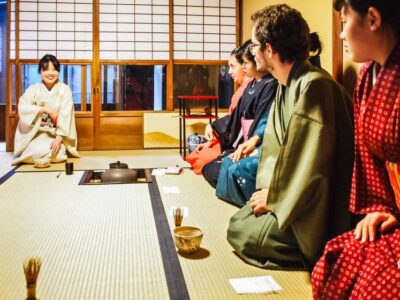 ★ 4.3Kyoto: 45-Minute Tea Ceremony Lesson ExperienceFrom $2245 min
 ★ 5.0World Heritage Kyoto & Nara Uji Authentic Matcha ExperienceFrom $129
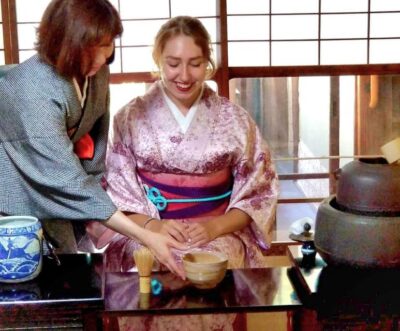 ★ 4.9Kyoto: Table-Style Tea Ceremony at a Kyo-MachiyaFrom $451h 30m
 ★ 5.0Kimono Tea Ceremony at Kyoto Maikoya, NISHIKIFrom $65