
Reviewed · GOLDEN PAVILION & TEMPLE TOURS
Best of Kyoto: Ginkakuji & Path of Philosophy E-Bike Tour
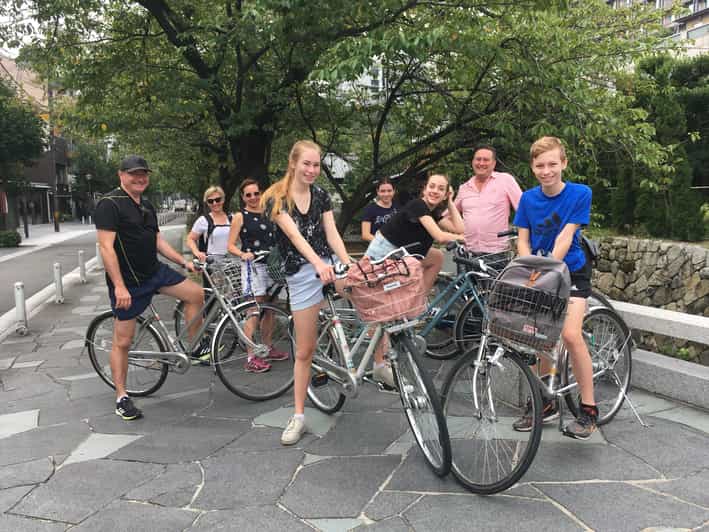
Kyoto’s best sights make more sense when you reach them by bike. This 210-minute e-bike tour links Ginkakuji, the Philosopher’s Path, Nanzenji, and Heian Shrine, using quiet lanes that let you see the city between the headline attractions.
I like the gentle pace and the chance to cover about nine miles without wearing out your legs. I also like the guides’ personal touch: Philippe, Kevin, Niall, Salomé, and others have been praised for clear explanations, flexible routing, and a relaxed manner. The main drawback is simple: you need to be a confident cyclist, and the eastern route gives you limited time to linger at each stop.
In This Review
- Key points to know before you book
- Why a bicycle works so well in Kyoto
- Ginkakuji begins the eastern Kyoto route
- The Philosopher’s Path is best taken slowly
- Nanzenji adds scale and quiet
- Heian Shrine brings a different Kyoto mood
- The ride between the sights is part of the tour
- East Side or Wild West?
- Guides make the difference
- Price, timing, and practical value
- Who will enjoy this ride most?
- Should you book the Kyoto e-bike tour?
- FAQ
- How long is the Kyoto e-bike tour?
- Which sights are included on the eastern route?
- Does the tour visit Arashiyama Bamboo Forest?
- Is an e-bike included?
- What languages are available?
- Is lunch included?
- What happens if it rains?
Key points to know before you book
- E-bikes make Kyoto’s gentle hills manageable: You still pedal, but the motor helps when the road rises.
- The eastern route links four important sights: Ginkakuji, the Philosopher’s Path, Nanzenji Temple, and Heian Shrine.
- You ride beyond the postcard views: Quiet back streets and smaller lanes are part of the appeal.
- Guides shape the experience: Philippe and Kevin are often praised for cultural insight, humor, flexibility, and a calm pace.
- The tour is about three and a half hours: It is long enough to see a good slice of Kyoto, but not long enough for an unhurried visit at every stop.
- There are two broader route choices: The East Side course focuses on Ginkakuji, while the Wild West course covers Arashiyama Bamboo Forest, Kinkakuji, and Ryoanji.
Why a bicycle works so well in Kyoto
Kyoto’s famous sights are spread across a wide area. Walking between them can take much of a day, while buses may leave you staring at traffic and station maps. A bicycle gives you a useful middle ground: you cover real distance, but you still move slowly enough to notice temple gates, garden walls, neighborhood shrines, and ordinary Kyoto streets.
The e-bike matters more than it may sound. Kyoto is not a mountain town, but the eastern side has gentle rises, and heat can make even a mild slope feel harder than expected. The electric boost keeps the ride pleasant rather than competitive. You still need to pedal and control the bike, so this is not a motorized sightseeing vehicle.
I especially like the way cycling creates a natural rhythm. You ride for a while, stop at a temple or shrine, listen to an explanation, and then set off again. The movement keeps the outing from feeling like a chain of indoor lectures, while the stops provide the cultural context that independent cycling often lacks.
The ride is also a good introduction to Kyoto’s scale. You may arrive knowing the city mainly through photographs of bamboo, gold leaf, and stone gardens. Moving between those sights shows you a quieter side of Kyoto, with local streets and alleyways linking the major sites.
A few more Kyoto tours and experiences worth a look

Ginkakuji begins the eastern Kyoto route
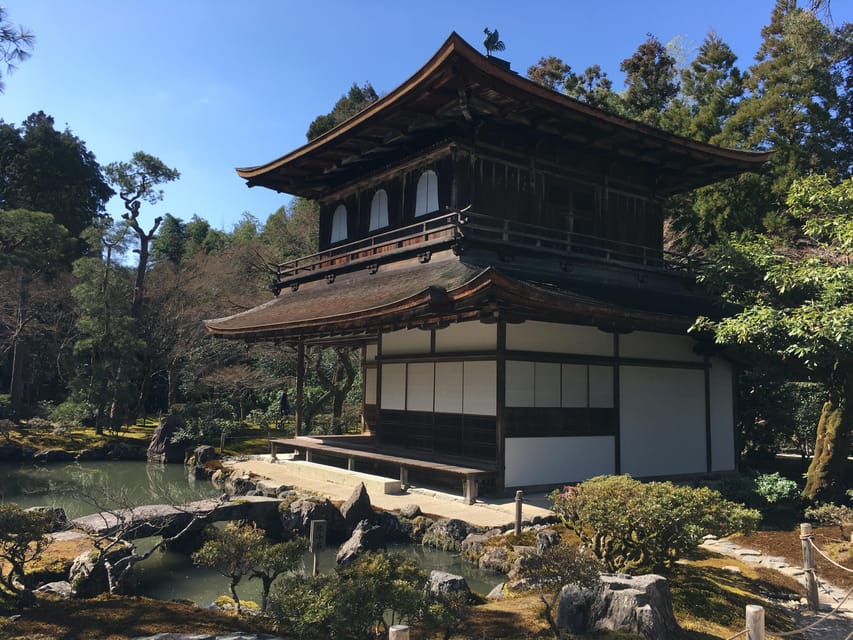
The eastern course starts at Kyoto Bike Rentals, at 222 Koyamacho, though the exact meeting point can vary by booking option. After fitting your helmet and getting used to the e-bike, you head toward Ginkakuji Temple, also called the Silver Pavilion.
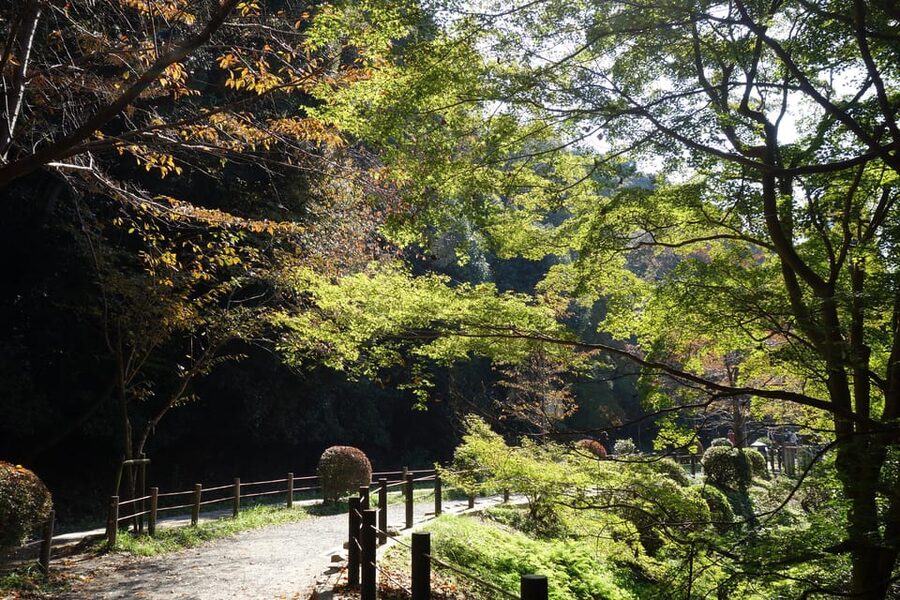
Ginkakuji is not actually covered in silver. Its appeal comes from the setting, the restrained architecture, and the gardens around it. This is a place where design does much of the talking. Carefully arranged gravel, moss, trees, water, and stone create changing views as you walk through the grounds.
The garden is one of the tour’s strongest stops because a guide can explain how Zen ideas influence the arrangement without turning every plant and rock into a puzzle. You will have time to look, but the 45-minute guided portion means this is not an extended garden study. If Ginkakuji is high on your personal list, keep that timing in mind.
The smells matter here too. Kyoto’s temple gardens are not just visual attractions. Depending on the season, you may notice damp earth, moss, flowers, incense, or pine as you move through the grounds. Those small details help the visit feel less like a quick photo stop.
The Philosopher’s Path is best taken slowly
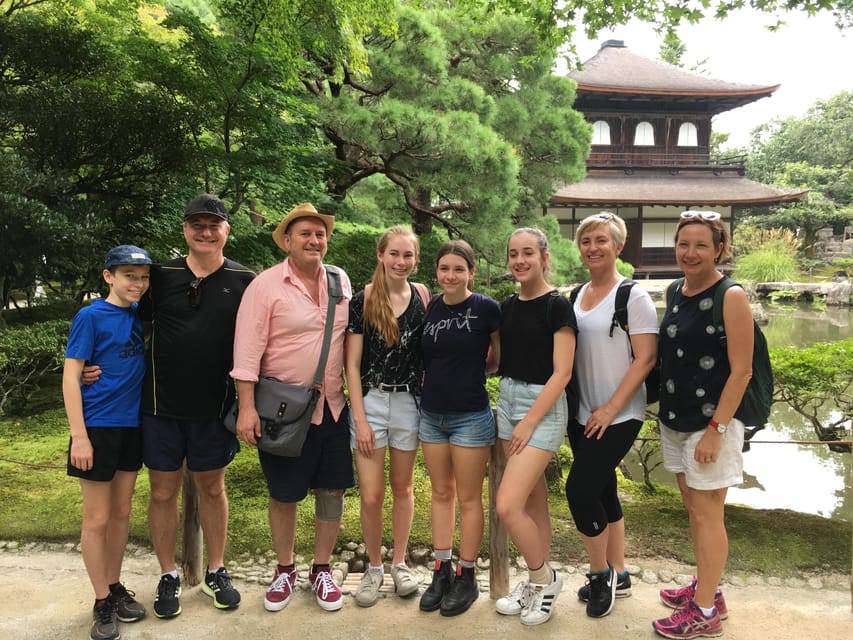
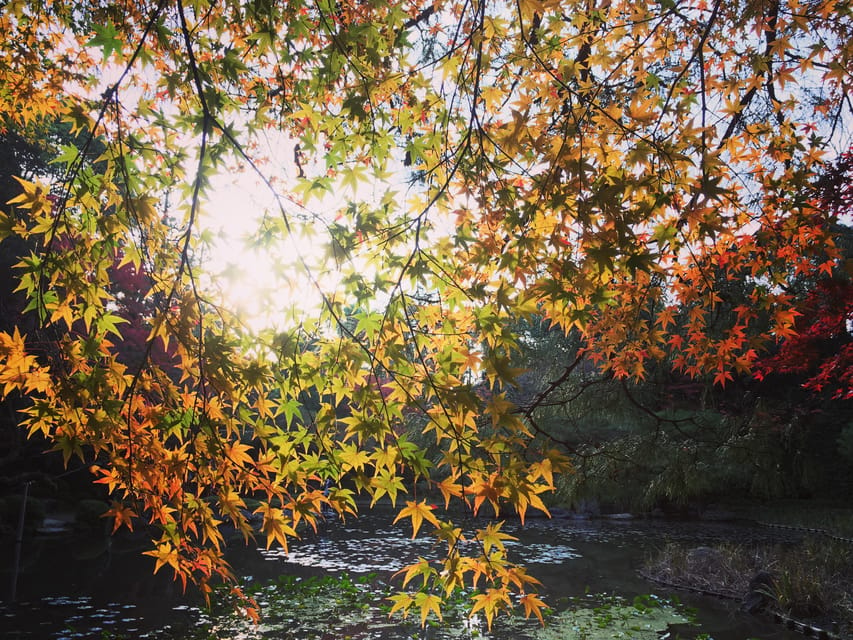
From Ginkakuji, the route continues along the Philosopher’s Path for about 30 minutes of e-bike riding. This famous walkway follows a canal and is especially attractive during cherry blossom season, though its appeal is not limited to spring.
The path is more about atmosphere than speed. You may find flowers, overhanging branches, small bridges, temple entrances, and quiet stretches that invite you to pause. On a bicycle, you can reach more of the area than you would on foot, but you should not expect to race along it. Pedestrian traffic and the character of the path call for care.
One useful point is that the riding time does not equal unlimited sightseeing time. A past guest wished for more time around the Philosopher’s Path, and that is a fair caution. If you want to stop at every side lane, browse every small shop, or take long blossom photographs, a private tour may give you more room to adjust the pace.
Still, the route works well as a connector. You get a pleasant ride between major temples while seeing a part of Kyoto that feels more local than a direct bus journey. It is one of the places where the bicycle format earns its keep.
Nanzenji adds scale and quiet
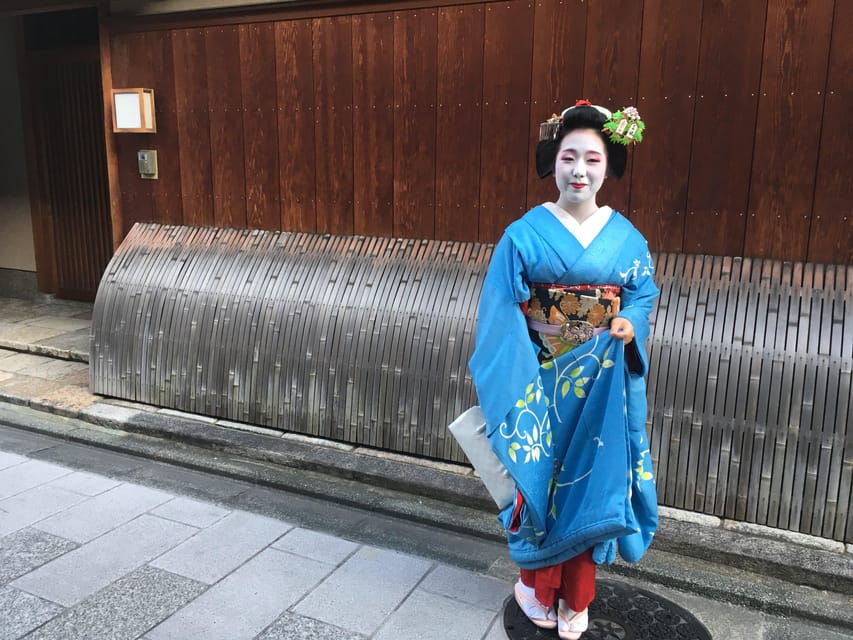
Nanzenji Temple receives about 30 minutes on the route. The complex is known for its spacious grounds and calm religious setting, giving the tour a change of mood after the narrow canal-side path.
Here, I would pay attention to the contrast between the open temple grounds and the smaller garden spaces. Kyoto’s religious sites are not all designed for the same feeling. Some ask you to study a precise composition, while others give you room to breathe and absorb the setting.
The stop is listed as a visit rather than a longer guided section, so the amount of explanation and free time may depend on your guide and group. That flexibility can be useful. The strongest guides do not fill every quiet moment with facts. They explain Shinto and Zen when it helps you understand what you are seeing, then let you look around.
Nanzenji also helps break up the day physically. You have been riding, but you are not sitting on a bike for three and a half straight hours. Temple stops give your legs a rest, although you should still expect a genuine cycling outing rather than a sightseeing tour with a token bike ride.
Heian Shrine brings a different Kyoto mood
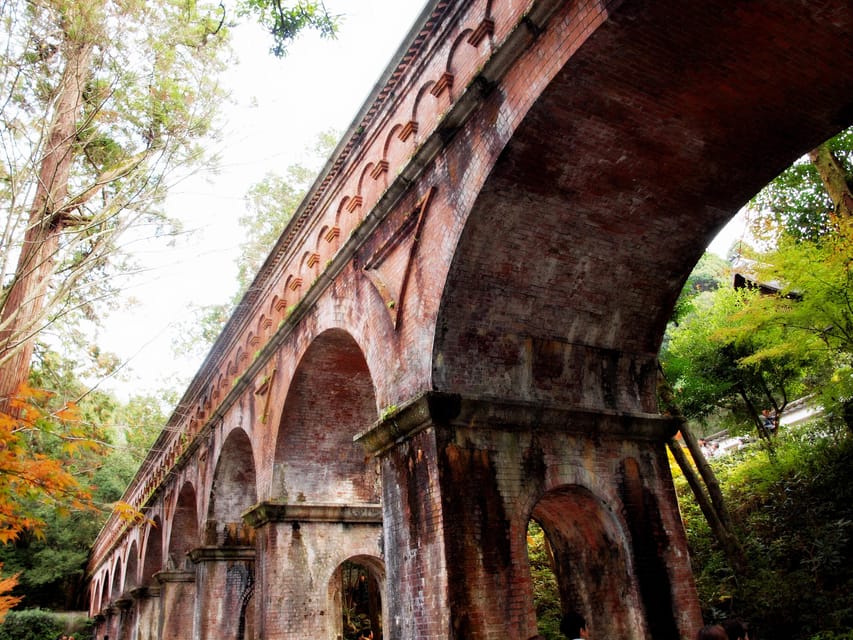
The final major stop on the eastern itinerary is Heian Shrine, with around 45 minutes of guided time. Its scale and visual character differ from Ginkakuji and Nanzenji, so the sequence gives you more than a series of similar temple visits.
The shrine is tied to Kyoto’s Shinto tradition, making it a useful place to discuss the difference between Shinto and Zen. Your guide can help you notice how a shrine visit differs from a Buddhist temple visit, including the distinct atmosphere and forms of worship.
This is where the guide’s role becomes especially valuable. Several guides have been praised for explaining Japanese religion and culture in a measured way, using what you have already seen in Japan rather than delivering a nonstop script. Philippe, Kevin, and Salomé are among the names that have received especially warm feedback, while Niall has been praised for an accommodating family outing.
The 45-minute timing provides a solid introduction, but you should not expect to inspect every part of the shrine grounds. The tour is designed to give you a broad, connected experience of Kyoto, not an exhaustive study of one site.
Other cycling tours in Kyoto
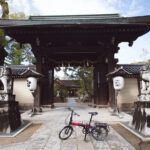
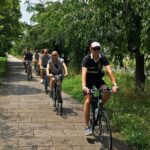
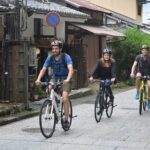

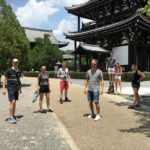
The ride between the sights is part of the tour
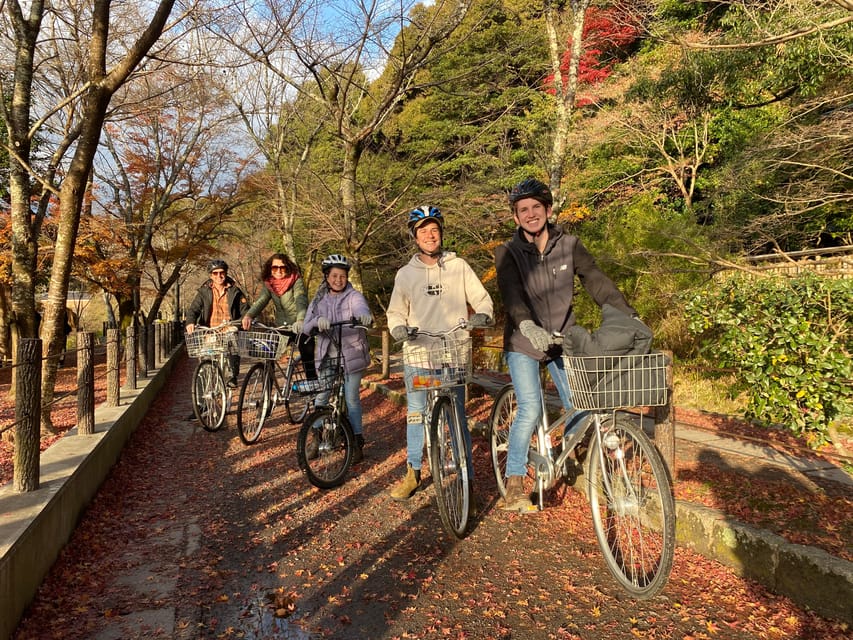
A major strength is what happens between the official stops. The route uses Kyoto streets and alleyways, and guides may adjust the path to suit the group, weather, or interests. That can reveal a side of the city you would miss by moving only between train stations and famous gates.
The ride is described as mostly relaxed and nearly flat on the eastern course, though gentle hills are exactly where the e-bike helps. One rider described roughly nine miles of easy cycling, which gives you a useful idea of the scale. The precise distance and effort can vary, but you should be ready for several hours in the saddle.
Cycling also gives your guide more opportunities to respond to the day. A guide may point out a detail, answer a question about local customs, or make a small route change. Kevin was praised for adapting the itinerary, and Philippe was praised for helping with a short hike. That does not mean every request can be added, but private and small-group bookings are better suited to personal adjustments.
You may even pass through areas with a chance of seeing everyday Kyoto scenes, including the kind of traditional dress associated with Gion. Treat those moments as luck rather than a promised feature. The guaranteed value is the route itself, not a particular sighting.
East Side or Wild West?
The supplied activity details describe two group courses, and you should confirm which one you are booking. The East Side course is the roughly four-hour option centered on Ginkakuji, an ancient shrine, and the Philosopher’s Path. The listed 210-minute itinerary follows this general eastern pattern and adds Nanzenji and Heian Shrine.
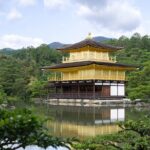
The Wild West course is the longer, roughly six-hour option. It heads toward Arashiyama Bamboo Forest, Kinkakuji, also known as the Golden Pavilion, and Ryoanji’s famous rock garden. These are major Kyoto sights, but the longer duration means a more demanding day on a bicycle.
Arashiyama is a natural choice for visitors who want the bamboo grove. The route also includes Ryoanji, where the spare stone garden encourages a very different kind of attention from the leafy Philosopher’s Path. Kinkakuji supplies the bold, instantly recognizable view that Ginkakuji does not.
Do not assume the eastern and western highlights are combined in one 210-minute ride. They are separate course choices, and the Wild West outing is much longer. If you have only one free morning, the eastern route is the cleaner fit. If bamboo and the Golden Pavilion are your top priorities, check the longer option and prepare for a fuller day.
Guides make the difference
The strongest praise goes to the guides, not simply to the bikes or temples. Philippe is repeatedly described as calm, funny, attentive, and well versed in Japanese culture. Kevin is praised for humor, flexibility, and his ability to explain the differences between Japan and English-speaking countries. Salomé received high marks for her grasp of the subject and for turning a scheduled group ride into a private experience when no other guests were booked.
Those details matter because a cycling tour can feel rushed if the leader treats it like a race. The best feedback points to guides who pace the ride well, avoid talking without pause, and shape explanations around your interests. That is especially helpful if you have already visited several Japanese temples and want connections rather than a basic list of dates.
Languages offered are English and French. Private and small-group formats are available, which should appeal to families, couples, and anyone who wants more say over stops and pace.
Price, timing, and practical value
At $69 per person, the tour is fairly priced for an outing that includes an e-bike, helmet, guide, and garden entry fees. You are paying for more than bike rental. The useful part is the route planning and the cultural framing, especially in a city where the best sequence of sights is not always obvious.
The value is strongest if you want to see several districts and do not want to plan every turn yourself. It is less compelling if you already own a bicycle, know Kyoto well, and prefer to spend an hour or two at each garden.
Lunch is not included, and hotel pickup and drop-off are not included. Plan your own food around the tour, particularly for the longer western course. You return to Kyoto Bike Rentals, but the exact start and end arrangements can vary by the option selected.
Weather deserves attention. In light rain, you may be offered a rescheduled tour, a walking tour, or a ride in a poncho. Heavy rain can lead to cancellation with a full refund. Since Kyoto’s temple paths and city streets are less pleasant in poor weather, a flexible schedule is useful. You can cancel up to 24 hours ahead for a full refund, and the reserve-now, pay-later arrangement keeps the booking flexible.
Who will enjoy this ride most?
I would recommend the eastern route to first-time Kyoto visitors who want orientation, culture, and movement in one outing. It is also a good choice for families with older children, couples, and active adults who find a full day of walking tiring.
Confident cyclists are essential. The provider may end the tour if safety becomes a concern, so do not book this simply because an e-bike sounds effortless. You need to pedal, steer, follow the guide, and manage several hours outside.
The tour suits you less if you want complete independence, long photography stops, or a slow garden-focused visit. A private booking can help with flexibility, but it cannot turn the 210-minute eastern route into an unhurried full-day temple study.
Should you book the Kyoto e-bike tour?
Book it if you want to connect Kyoto’s eastern highlights without spending the day on buses or walking between distant sites. The combination of Ginkakuji’s gardens, the Philosopher’s Path, Nanzenji, Heian Shrine, and quiet connecting streets gives you a strong first look at the city.
I would choose the eastern course for a balanced half-day and the Wild West course only if Arashiyama, Kinkakuji, and Ryoanji are your main goals and you are ready for a longer ride. Try to request or select a private or small-group format if you care about photography, family pacing, or extra questions.
The clearest reason to book is the guiding. Philippe, Kevin, Salomé, and Niall have each been praised for warmth, cultural insight, and flexibility. Just arrive ready to cycle, allow for weather changes, and accept that the tour gives you a well-connected taste of Kyoto rather than unlimited time at every stop.
FAQ
How long is the Kyoto e-bike tour?
The listed itinerary lasts 210 minutes, or three and a half hours. The activity details also describe an East Side course of about four hours and a Wild West course of about six hours, so confirm the duration of your chosen option.
Which sights are included on the eastern route?
The eastern itinerary includes Ginkakuji Temple, the Philosopher’s Path, Nanzenji Temple, and Heian Shrine. It also includes cycling through Kyoto streets and alleyways.
Does the tour visit Arashiyama Bamboo Forest?
Arashiyama Bamboo Forest is included on the Wild West course, not the eastern itinerary described in detail. The Wild West course also visits Kinkakuji and Ryoanji Rock Garden.
Is an e-bike included?
Yes. E-bike rental and a helmet are included in the price. The electric assistance helps with Kyoto’s gentle hills, but you still need to be a confident cyclist.
What languages are available?
Live guides are available in English and French.
Is lunch included?
No. Lunch is not included, so you should plan your own meal, especially if you choose the longer Wild West course.
What happens if it rains?
In light rain, you may be able to reschedule, change to a walking tour, or continue by bike with a poncho. If rain is heavy, the provider may cancel the activity and issue a full refund.
More E-Bikes in Kyoto
More Cycling Tours in Kyoto
More Golden Pavilion & Temple Tours in Kyoto
More tours in Kyoto we've reviewed




Golden Pavilion & Temple Tours, compared.
 ★ 4.8Kyoto: Fushimi Inari, Kinkakuji, Bamboo Grove 1 Day Bus TourFrom $122510 minutes - 9 hours
 ★ 4.9Kyoto: Tea Ceremony in a Traditional Tea House in KiyomizuFrom $4945 min
 ★ 4.9Kyoto: Tea Ceremony Ju-An at Jotokuji TempleFrom $291h 10m
 ★ 4.1Osaka/Kyoto:Kinkakuji,Arashiyama,FushimiInariShrine,NaraParkFrom $66
 ★ 4.8Arashiyama Bamboo, Temple, Monkeys, or Secret Sake BreweryFrom $875 hours - 330 minutes
 ★ 5.0Kyoto: Nijo, Kinkaku-ji, Arashiyama, Kiyomizu & Fushimi InariFrom $51