
Reviewed · FUSHIMI INARI TOURS
From Osaka/Kyoto: Kyoto, Nara, and Fushimi Inari Day Trip
The big draw here is the sheer range packed into one day: Arashiyama’s bamboo paths, Fushimi Inari’s endless red gates, and Nara’s friendly deer and giant Buddha. You move from Kyoto’s wooded shrines to Nara’s open parkland without changing trains or sorting out several local bus routes.
I like the private van and the flexible pickup from either Osaka or Kyoto. I also like the small-group setup, which keeps the day personal and makes a $516 price reasonable for six people. The catch is time. Ten hours sounds generous, but three major areas and roughly two and a half hours of driving leave limited room for slow wandering.
In This Review
- Key points to know
- Three famous sights in one private day
- Arashiyama Bamboo Forest sets the tone
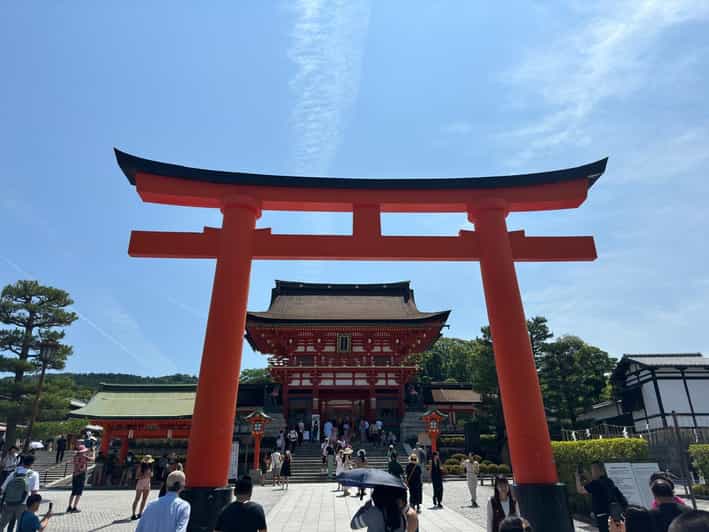
- Fushimi Inari and its red gate tunnel
- Nara Park brings the deer into the picture
- Todai-ji and the Great Buddha Hall
- Kasuga Taisha and the lanterns
- What the private van changes
- Is $516 a fair price?
- Who should choose this day trip?
- Practical advice for a smoother day
- Should you book it?
- FAQ
- Where does the tour start?
- Where does the tour end?
- How long does the experience last?
- Is this a private tour?
- Is an English-speaking guide or host included?
- What major sights are included?
- Can I see deer during the tour?
- Is the tour wheelchair accessible?
- What should I bring?
Key points to know
- Arashiyama starts the day with a walk through Kyoto’s famous bamboo grove.
- Fushimi Inari follows with thousands of vermilion torii gates on a forested hillside.
- Nara Park brings you close to deer, considered sacred messengers of the gods.
- Todai-ji houses the Great Buddha, one of the day’s most impressive sights.
- Kasuga Taisha finishes the route with its famous lanterns and a quieter shrine setting.
- The private price works best for larger groups, costing $86 per person for six people.
Three famous sights in one private day
This tour is built for people who want the main sights of Kyoto and Nara without spending a day studying rail maps. Your English-speaking host picks you up in Osaka or Kyoto, drives between stops, and returns you to Osaka or Kyoto after about 10 hours.
You will spend most of the day walking once you arrive at each site. Comfortable shoes are not a minor suggestion here. Arashiyama, Fushimi Inari, Nara Park, Todai-ji, and Kasuga Taisha all reward walking, while Fushimi Inari includes a hillside route and Nara’s sites are spread across a large park.
The group is private and limited to six people. That matters more than it might first appear. You are not waiting for a large bus to load, and you can stay with your own group throughout the day. The tradeoff is that the schedule remains ambitious, so the private vehicle improves comfort but does not create extra hours.
A few more Kyoto tours and experiences worth a look

Arashiyama Bamboo Forest sets the tone
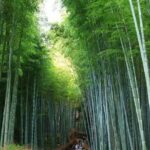
The first major stop is Arashiyama Bamboo Forest, one of Kyoto’s most recognizable places. Tall bamboo rises on both sides of the path, creating a cool, shaded corridor that feels very different from the city streets.
You will have a self-guided visit here, so this is a good moment to set your own pace. Walk slowly, take photographs, and enjoy the change in sound as the bamboo blocks much of the surrounding city noise. The grove is best understood as a short atmospheric walk rather than a full-day attraction.
That distinction helps you plan your expectations. You are not getting an extended guided tour of every corner of Arashiyama. Instead, you get time to see the signature grove before moving on. If photography matters to you, this stop can feel brief, especially if your group likes to pause often.
The order of the day also makes practical sense. Starting in Arashiyama gives you one of Kyoto’s most famous sights early, when you still have energy for the longer walking portions later. Your exact starting time depends on availability, so check the schedule before booking.
Fushimi Inari and its red gate tunnel
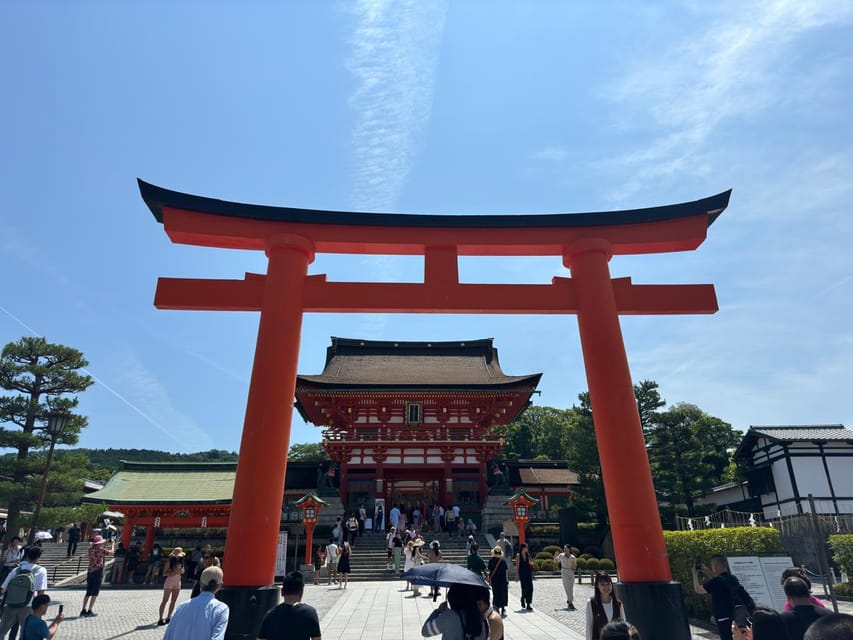
From Arashiyama, the van continues to Fushimi Inari Taisha. The drive is listed at about 30 minutes, giving you a useful break between walking stops.
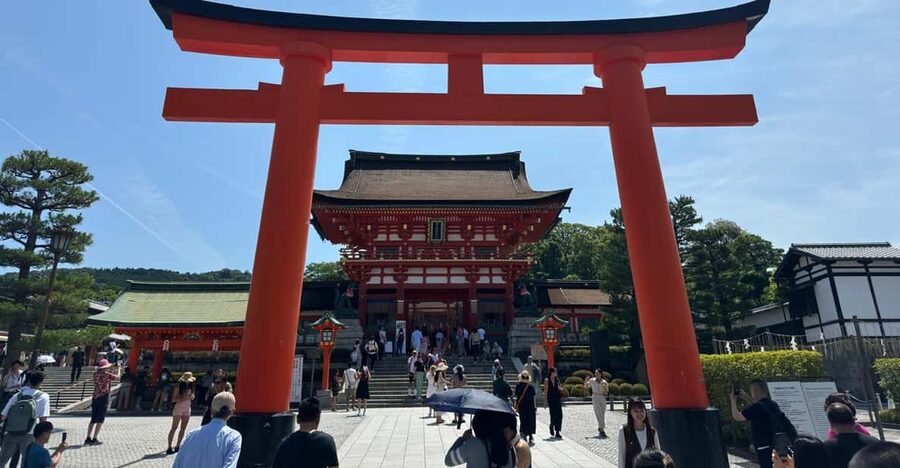
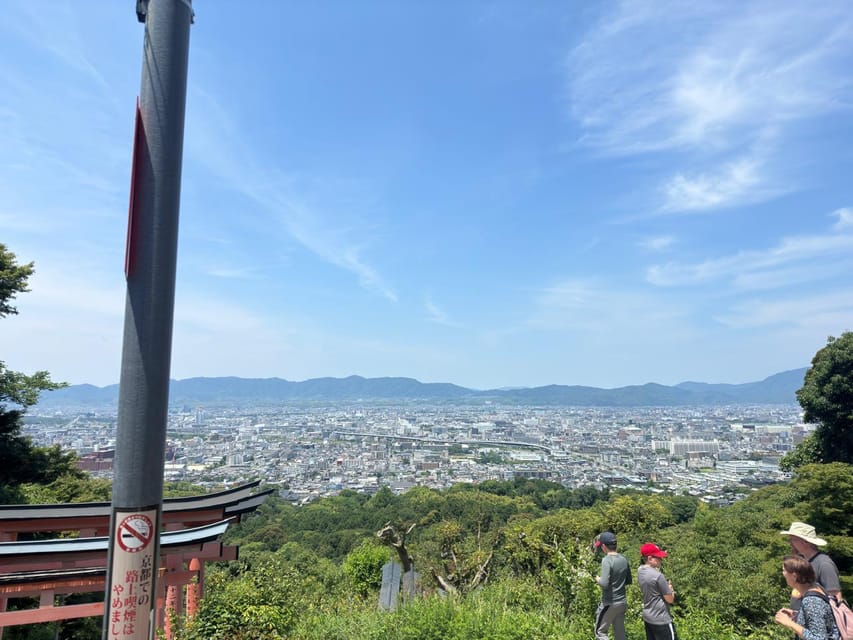
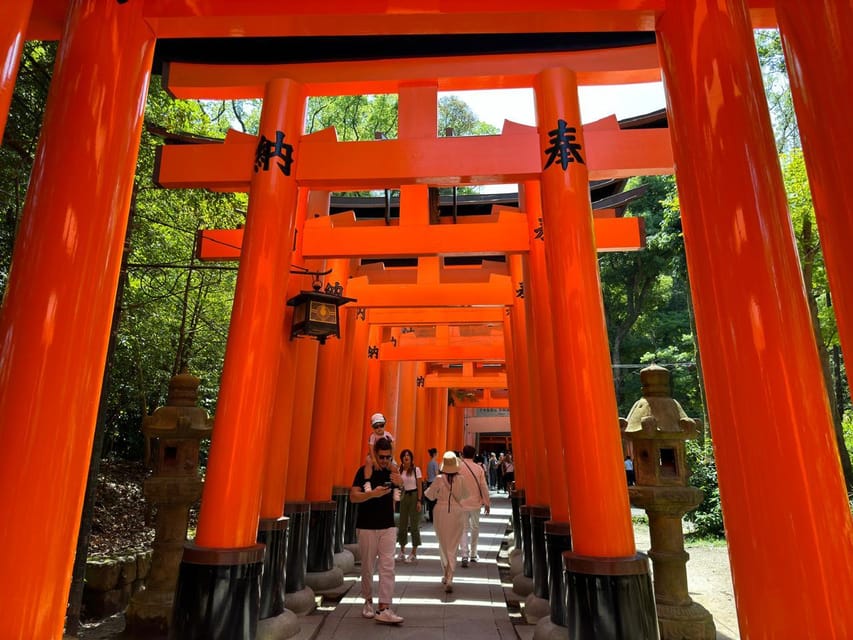
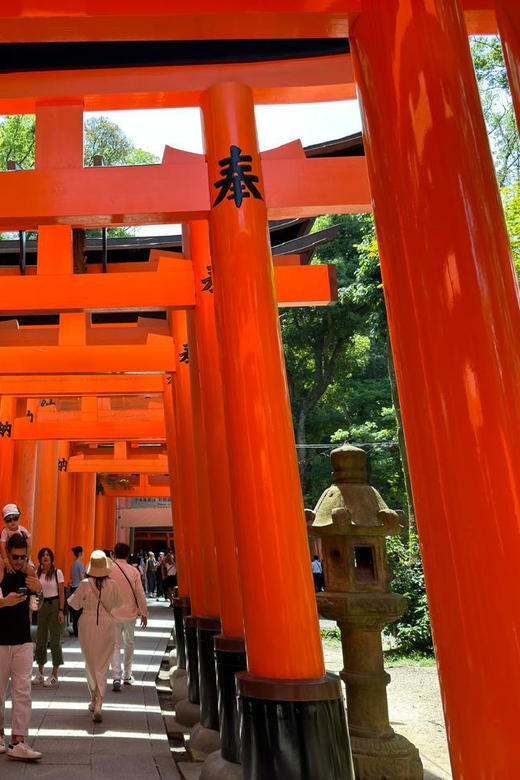
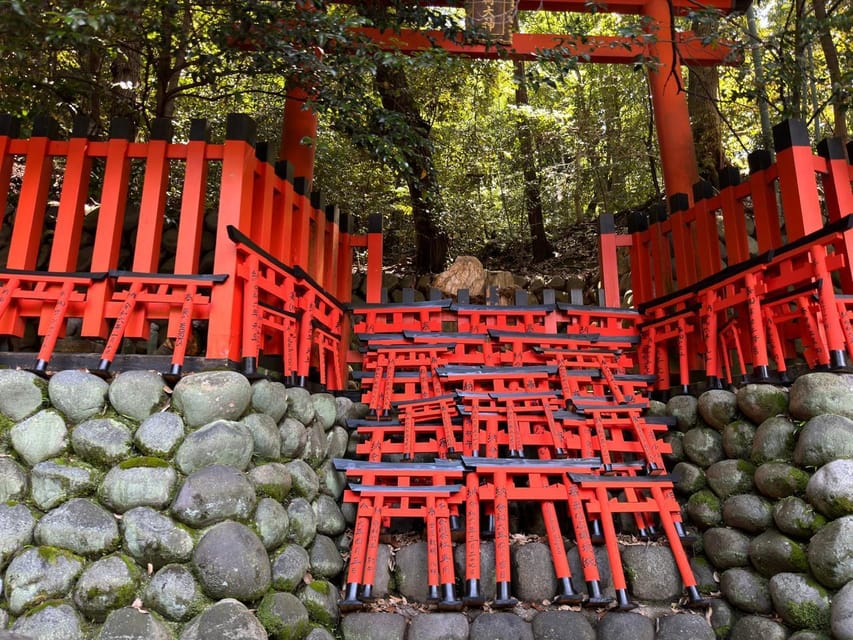
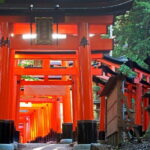
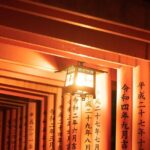
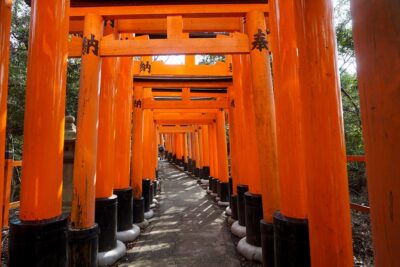
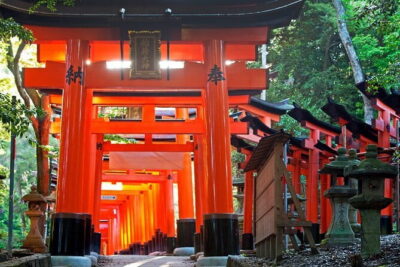
Fushimi Inari is famous for its thousands of vermilion torii gates. They line the route through the wooded hillside, forming a long tunnel of color and shadow. The shrine is not just one photo stop. Its winding paths invite you to walk as far as your time and energy allow.
This is one place where the private format helps. Your host can bring you to the area, then you can choose how much of the route to cover as a group. The tour description calls for sightseeing and walking, not a complete climb to every upper section, so do not assume you will reach the highest point of the mountain.
I would save some energy here rather than trying to rush. You still have Nara Park, Todai-ji, and Kasuga Taisha ahead. Fushimi Inari is visually striking near the entrance, but the experience changes as you leave the busiest section and follow the gates uphill.
Bring weather-appropriate clothing. The route moves through a wooded area, and conditions can vary during a long day outside. A camera is worth packing, but keep both hands free when possible for the steps and uneven walking.
Nara Park brings the deer into the picture
The drive from Fushimi Inari to Nara takes about 40 minutes. Nara was Japan’s first permanent capital, and its central park gives this part of the tour a different feel from Kyoto’s shrine districts.
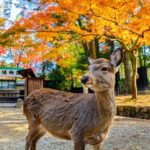
The deer are the star attraction for many people. They roam through Nara Park and are regarded as sacred messengers of the gods. You can see them close up and interact with them, but the important rule is simple: respect the animals and follow local guidance.
I like this stop because it is not only about looking at a monument. The deer make the park feel active and unpredictable in a gentle way. You might find them resting beside paths, moving through the grounds, or approaching people. Keep your attention on the animals and your belongings, and do not treat them like props for photographs.
Nara Park is large, so wear shoes that can handle a lot of walking. The park visit also connects naturally with Todai-ji and Kasuga Taisha, both of which are nearby in the same broad sightseeing area. Even so, you should not expect to cover every path in detail during this day trip.
Todai-ji and the Great Buddha Hall
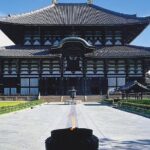
Todai-ji is the major temple stop in Nara. Its Great Buddha Hall houses the world’s largest bronze statue of Buddha, giving the visit a scale that photographs do not fully convey.
The temple is one of the day’s most substantial cultural stops. After the playful deer in the park, Todai-ji shifts your attention to architecture, religious art, and the size of Japan’s historic Buddhist tradition. You will walk through the temple area rather than simply view it from the van.
The schedule lists Todai-ji after Nara Park, but the two visits work as one connected outing. Allow yourself enough time to appreciate the contrast. Nara Park is open and informal. Todai-ji is monumental and enclosed. Together, they explain why Nara is such a useful addition to a Kyoto visit.
The main limitation is pace. With several sites still on the route, you may need to keep moving instead of lingering at every feature. If Todai-ji is your top priority, tell your host early in the day so your group can use its time wisely.
A few more Kyoto tours and experiences worth a look

Kasuga Taisha and the lanterns
The final main stop is Kasuga Taisha Shrine. It is known for thousands of lanterns, which give the shrine a special atmosphere, particularly later in the day.
Kasuga Taisha adds another layer to the Nara visit. Todai-ji is known for its huge hall and bronze Buddha, while Kasuga Taisha offers a shrine setting associated with lanterns and wooded paths. The two sites are close enough to combine, but distinct enough that the second does not feel like a repeat of the first.
The description highlights a magical glow at dusk, but the exact timing depends on your pickup time, time spent at each stop, traffic, and the day’s schedule. Treat dusk lighting as a possibility rather than a promise. Even without evening darkness, the lanterns remain one of the shrine’s defining details.
By this point, you may be ready for the van ride home. The return drive is listed at about 40 minutes, with drop-off in Osaka or Kyoto. That flexibility is especially useful if you are staying in one city and began the day in the other.
What the private van changes
The transport is not just a way to get from one sight to another. Kyoto and Nara are close enough to visit in one day, but the sights are not arranged in a simple straight line. A private van removes much of the train, local bus, and station-walking work.
The listed driving sections total about 150 minutes, or two and a half hours. That is a meaningful part of a 10-hour day, though it also gives your feet regular rests. You are not walking nonstop from morning to evening.
Pickup is available in Osaka or Kyoto, and the same two cities are offered for drop-off. The exact pickup location options are limited to those cities, so confirm the meeting details when booking. An English-speaking host or greeter is provided.
Guide service can make a noticeable difference on a route like this. Hamza has been singled out for being punctual, helping with vehicle access, adjusting seating for children, and treating an elderly okonomiyaki cook with respect while speaking Japanese. Usama is also named as a helpful driver. Guide assignments can vary, so these names should not be treated as a guaranteed pairing, but they give you a sense of the attentive service associated with the operation.
Is $516 a fair price?
The price is $516 for a private group of up to six people. For six participants, that works out to $86 per person. For three people, it becomes $172 each, and for two, $258 each.
That makes the group size central to the value. A family or group of friends sharing the van gets a much better deal than a solo visitor or couple. You are paying for private transport, pickup and drop-off from Osaka or Kyoto, and a full day covering several major sights.
The price does not list entrance fees as a separate inclusion, so check what you will pay at individual attractions before you book. The included experience is the transportation and visits to Arashiyama, Fushimi Inari, Nara, the deer area, Todai-ji, and Kasuga Taisha.
I would compare this with the cost and effort of arranging several train rides, local connections, and taxis for a group of six. The private van is likely to feel most worthwhile when convenience, door-to-door movement, and shared time matter more than finding the absolute cheapest route.
Who should choose this day trip?
This experience suits first-time visitors who want a broad look at Kyoto and Nara in one day. It also works well for families, older adults who prefer private transport, and groups that want to remain together rather than split up on public transit.
The listed accessibility is wheelchair accessible, which is useful for travelers who need that feature. Still, the day includes walking at multiple outdoor and historic sites. Ask for the practical details of each stop before booking if your group has specific mobility needs.
Families may appreciate the private vehicle and the guide’s reported care with children. The deer are an obvious hit with younger visitors, while Todai-ji gives the day a strong cultural focus. The long schedule may test small children, so plan for a full day rather than a casual outing.
This is less suitable for someone who wants a slow, deeply focused visit to one place. It is also a poor match if you dislike frequent transfers between sights. The tour is not suitable for people over 95, according to the activity conditions.
Practical advice for a smoother day
Wear comfortable shoes with good support. You will walk in the bamboo grove, along shrine paths, through Nara Park, and around Todai-ji and Kasuga Taisha. Fushimi Inari may require more effort than the other stops because of its hillside route.
Pack a camera, but also bring weather-appropriate clothing. The experience runs for 10 hours and includes extended time outdoors. Rain, heat, or cooler conditions can change how much you enjoy the walking sections.
Smoking, alcohol, drugs, littering, fireworks, and alcoholic drinks in the vehicle are not allowed. These rules are easy to follow and help keep the private ride comfortable for everyone in your group.
Free cancellation is available up to 24 hours before the activity for a full refund. You can also reserve now and pay later, which helps if your Osaka or Kyoto plans are still shifting. Check starting-time availability before committing, since the day’s rhythm depends heavily on when pickup begins.
Should you book it?
Book this tour if you want maximum sightseeing with minimum transport hassle, especially with four to six people sharing the $516 cost. The combination of bamboo, torii gates, deer, Todai-ji, and Kasuga Taisha gives you a strong first look at both Kyoto and Nara.
Think twice if you want long, unhurried visits or if the per-person cost is high for a small group. The route is ambitious, and each stop receives only part of the day. For a private group that values convenience, a capable driver, and a wide sample of Japan’s major sights, it is a practical choice.
FAQ
Where does the tour start?
Pickup is available from Kyoto or Osaka.
Where does the tour end?
Drop-off is available in Kyoto or Osaka.
How long does the experience last?
The tour lasts 10 hours.
Is this a private tour?
Yes. It is offered as a private group experience for up to six people.
Is an English-speaking guide or host included?
Yes. The host or greeter language is English. Hamza and Usama are names associated with the guiding and driving service, but a specific guide is not guaranteed.
What major sights are included?
The day includes Arashiyama Bamboo Forest, Fushimi Inari Taisha, Nara Park, Todai-ji, and Kasuga Taisha Shrine.
Can I see deer during the tour?
Yes. The Nara Park visit includes the chance to interact with the deer that roam through the park. You should respect the wildlife and follow local guidelines.
Is the tour wheelchair accessible?
Yes, the activity is listed as wheelchair accessible. Because the day includes walking at several historic and outdoor sites, confirm any specific access needs before booking.
What should I bring?
Bring comfortable shoes, a camera, and clothing suited to the weather. Smoking, alcohol, drugs, littering, fireworks, and alcoholic drinks in the vehicle are not allowed.
More Osaka & Hiroshima Departures in Kyoto
More Nara Day Trips in Kyoto
More Fushimi Inari Tours in Kyoto
More tours in Kyoto we've reviewed











Fushimi Inari Tours, compared.
 ★ 4.8Kyoto: Fushimi Inari, Kinkakuji, Bamboo Grove 1 Day Bus TourFrom $122510 minutes - 9 hours
 ★ 5.0Fushimi Inari Hidden Hiking Tour (Private Option Available)From $63
 ★ 4.7Kyoto/Osaka: Nara, Fushimi Inari Taisha, Arashiyama Bus TourFrom $529 - 10 hours
 ★ 4.4Osaka/Kyoto: Arashiyama, Nara & Fushimi Inari Shrine w/LunchFrom $61
 ★ 5.0Kyoto: Nijo, Kinkaku-ji, Arashiyama, Kiyomizu & Fushimi InariFrom $51
 ★ 5.0Kyoto Fushimi-Inari Night Walking TourFrom $43