
Reviewed · DESSERT TOURS
Japanese Traditional Sweets making
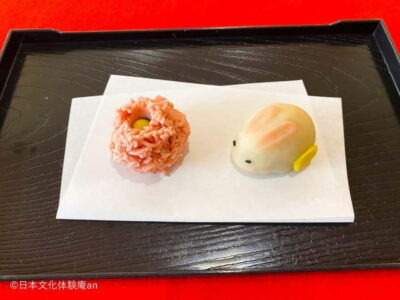
The best part of this Kyoto class is that you do not just sample a Japanese sweet, you shape two of your own. Using white or red bean paste from long-established Kyoto confectioners, you form seasonal nerikiri, then eat your handiwork on the spot. I like the short one-hour format and the chance to work with proper confectionery ingredients rather than a simplified tourist substitute.
I also like the low price, about $12.52 per person, and the fact that you can add matcha or a take-home box. The main concern is language: English help is not automatically guaranteed, and a private English translation option costs 5,500 JPY per group. One past booking also ran into an address problem, so you should check the meeting point carefully before setting out.
In This Review
- Key points at a glance
- Making Kyoto Sweets With Your Own Hands
- Two Seasonal Designs, Not a Fixed Souvenir
- Why the Bean Paste Matters
- What the 65-Minute Visit Feels Like
- Adding Matcha to the Sweet-Making Class
- Language Help Requires Some Planning
- Finding 135 Manjūjichō Without a Wrong Turn
- Group Size, Timing, and the Feel of the Room
- The Extra Costs Worth Knowing
- Who Will Get the Most From This Class
- Booking, Cancellation, and Practical Choices
- Should You Book Japanese Traditional Sweets Making?
- FAQ
- How long does the Japanese traditional sweets class last?
- Where does the activity start and finish?
- How many sweets will I make?
- Can I eat the sweets during the activity?
- Is English translation included?
- Can I cancel for a full refund?
Key points at a glance
- Make two seasonal nerikiri sweets: The designs change with the season, giving each visit a different theme.
- Use Kyoto confectionery ingredients: The white and red bean pastes come from long-established local shops.
- Eat your sweets immediately: You can taste the finished pieces at the venue rather than carrying them around Kyoto.
- Add matcha or a box: Tatedashi matcha costs 500 JPY, while a take-out box costs 100 JPY.
- Plan for language limits: English translation is provided as much as possible unless you pay for the group guarantee.
- Allow 1 hour 5 minutes: The class begins and ends at 135 Manjūjichō in Kyoto’s Shimogyo Ward.
Making Kyoto Sweets With Your Own Hands
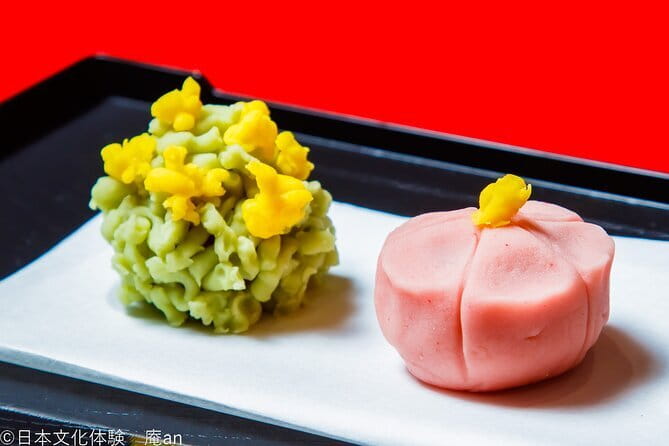
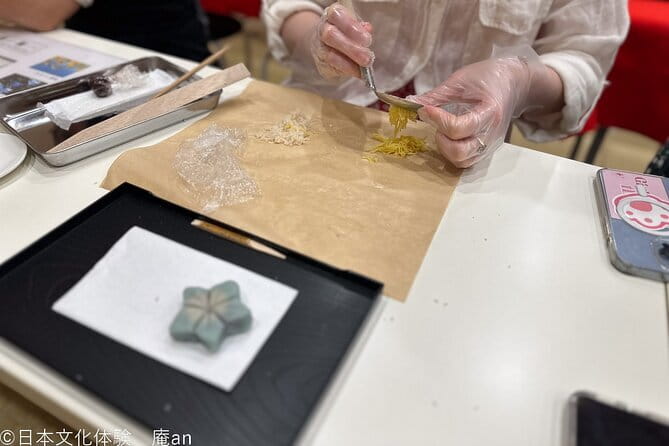
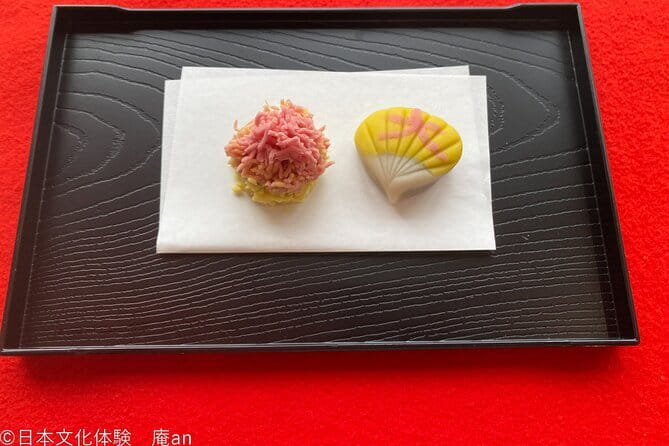
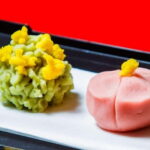
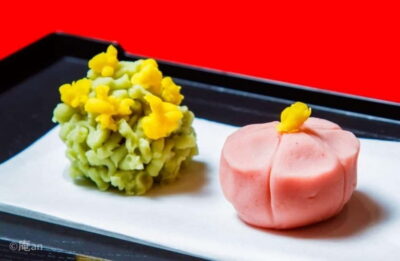
Nerikiri is a soft Japanese sweet made with bean paste, shaped into small seasonal forms. It is often associated with tea service because its careful colors and patterns balance the simple bitterness of matcha.
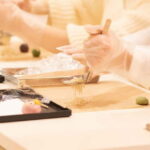
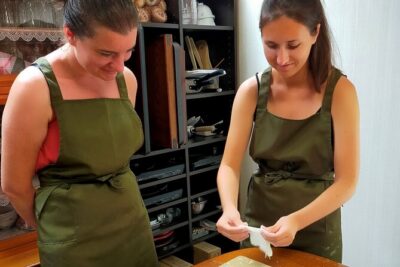
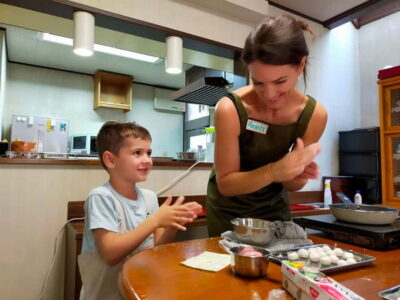
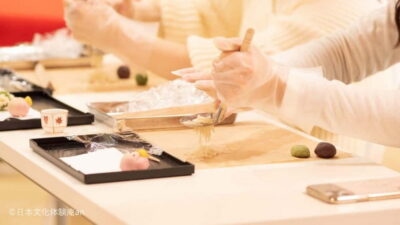
Here, you make two pieces yourself. That changes the activity from a tasting stop into a small craft lesson. You will handle the paste, shape it, and arrange the finished sweets on a plate. The final result is meant to look like a tiny work of edible art, though your first attempt may look more handmade than polished.
That is part of the appeal. The class gives you a close look at a Japanese food tradition that is easy to admire in a shop window but harder to understand until you try shaping it. The work demands care. One Japanese-language review specifically noted that forming the nerikiri was more difficult than expected, so do not assume the finished design will come together without a little patience.
The difficulty is useful rather than frustrating if you treat the class as a hands-on introduction. You are not being asked to produce professional confectionery. You are learning how delicate the paste feels, how much pressure it takes to form a shape, and how small details change the look of the sweet.
A few more Kyoto tours and experiences worth a look
Two Seasonal Designs, Not a Fixed Souvenir
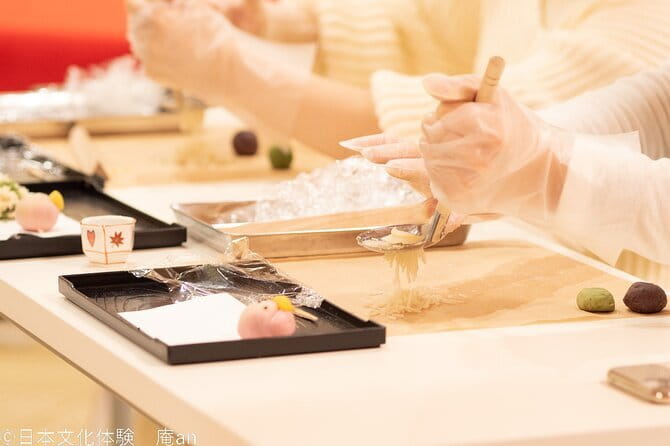
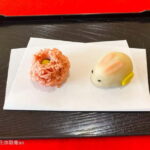
The class includes two seasonal Japanese sweets. The exact shapes are not specified, and that is worth keeping in mind when you book. The designs can change with the time of year, so the activity has a local rhythm rather than one identical project all year.
Seasonal design is an important part of Japanese confectionery. A sweet can suggest a flower, leaf, fruit, or other seasonal image through color and form. Even without a detailed explanation of each motif, you will be making something tied to the period of your visit.
You also get a natural comparison between your two pieces. The first helps you understand the material, while the second gives you a chance to correct your technique. If you are visiting with a friend or family member, the results may look quite different even when everyone follows the same basic instructions.
I would take a photo before eating them. The finished plate is part of the experience, and the sweets are fragile by nature. If you want to save them, request the take-out box option when you reserve. It costs 100 JPY and must be paid directly at the desk.
Why the Bean Paste Matters
The class uses white and red bean paste produced by long-established Kyoto shops. That detail gives the workshop more value than a generic candy-making session because the central ingredient is connected to Kyoto’s established confectionery trade.
Bean paste is the base of the nerikiri, so its texture and sweetness affect the whole activity. You will not simply decorate a ready-made item. You are working with the material that gives the sweet its body, flavor, and shape.
The supplied information does not identify the confectionery shops by name, so I would not book this expecting a formal lesson in the history of a particular maker. The practical benefit is clearer: you get to form real Japanese sweets with ingredients used by established local businesses.
That also makes the modest price appealing. At roughly $12.52, you receive ingredients, instruction, and two sweets to eat. It is not a full meal, and it is not a long cultural seminar, but it offers a focused introduction at a cost lower than many larger Kyoto activities.
What the 65-Minute Visit Feels Like
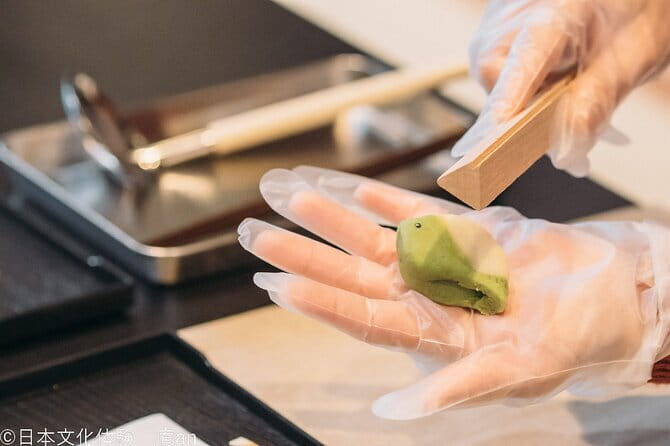
The stated duration is about 1 hour 5 minutes. The activity starts at 135 Manjūjichō, Shimogyo Ward, Kyoto, and returns to the same meeting point when it ends.
The schedule is short enough to fit between sightseeing plans. You could place it in a morning or afternoon without giving up half a day. At the same time, 65 minutes is long enough to make the class feel like an activity rather than a quick demonstration.
Expect the session to center on the two nerikiri pieces. You will work with the bean paste, shape the seasonal designs, and plate them. You can then eat them at the venue. The available information does not provide a minute-by-minute schedule or the names of individual instructors, so do not count on a long guided tour of the building or a detailed city orientation.
The compact format is best for you if you want one clear task. It is less suitable if you are searching for a broad Kyoto cooking course with several dishes, a market visit, or a lengthy tea ceremony.
Adding Matcha to the Sweet-Making Class
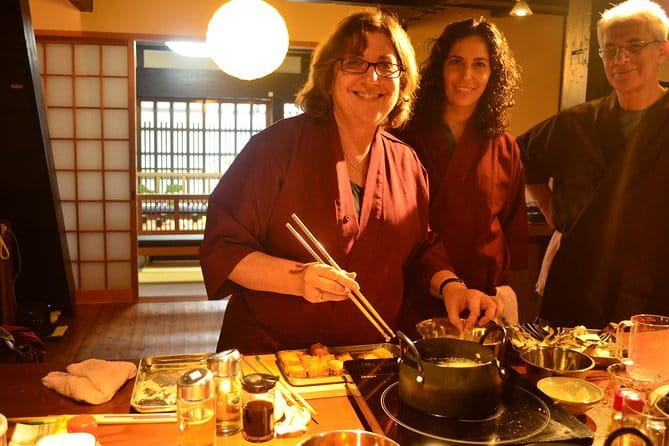
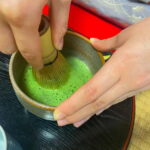
You can add tatedashi matcha for 500 JPY, paid directly at the desk. This gives you a traditional drink to pair with the sweets and makes the class feel more like a small tea-time setting.
Matcha is a sensible addition because nerikiri is designed to be eaten with tea. The sweet provides sugar and softness, while matcha brings a firm, bitter edge. The pairing also gives you a better reason to sit with the finished sweets instead of rushing off after the shaping is complete.
The class information does not promise a full tea ceremony with extensive instruction, so keep your expectations measured. The option is best understood as matcha served alongside the sweets, not as a separate ceremonial program unless the staff explains otherwise.
If your budget is tight, the base activity still works on its own. If you are interested in the food pairing, the extra 500 JPY is a small addition. You should request options when making the reservation because changes cannot be made after the booking is confirmed.


Language Help Requires Some Planning
English support is the biggest practical question for many international visitors. If you do not apply for the English Guarantee, translation is provided as much as possible, but the provider warns that last-minute requests may not be covered.
A guaranteed English translation costs 5,500 JPY per group. That is a substantial addition compared with the base price, especially for a solo visitor. For a group, the cost is shared, which makes it easier to justify if clear step-by-step instruction is essential.
You can still follow a hands-on class with limited language support because the work is visual and practical. The safe approach is to reserve the translation option early if anyone in your party needs full English assistance. The option cannot be added after confirmation, and it must be requested at booking.
No guide names are provided, so I cannot point you toward a particular instructor. I would bring your booking details on your phone, pay close attention to demonstrations, and ask for English support when you reserve rather than waiting until arrival.
Finding 135 Manjūjichō Without a Wrong Turn
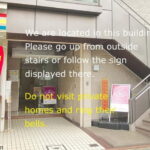
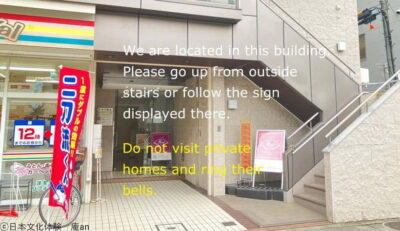
The meeting point is 135 Manjūjichō, Shimogyo Ward, Kyoto, postal code 600-8104. The activity ends at that same location, and the venue is near public transportation.
One past booking had a serious problem: the participant went to the wrong address, could not reach the provider in time, and missed the 3:30 PM appointment. The provider stated that the address in the booking system was correct and said it would add a clearer picture of the location.
The lesson for you is simple. Check the address in your confirmation, compare it with your map pin, and leave extra time to identify the building. Do not rely only on a general neighborhood name. If you are unfamiliar with Kyoto, send a message before the day of the class if the location is unclear.
This is especially important because the class is short. Arriving 20 minutes late can take a large share of the scheduled session. The venue is near public transportation, but the information supplied does not identify a specific station or give walking directions, so use the exact address rather than guessing from the district.
Group Size, Timing, and the Feel of the Room
The maximum group size is 40 people. That is a fairly large possible class for a craft that requires shaping small pieces of paste.
The actual atmosphere may depend on the number booked for your time slot. A small group should give you more room to concentrate and ask for help. A full session could feel more like a workshop, with less individual attention. The supplied details do not promise private instruction or a small-group format.
You can participate alone or with a group. Solo visitors may appreciate the clear structure and short duration, while families and friends can compare their finished designs. The activity also gives a group a shared task without requiring advanced cooking skills.
I would be more cautious about booking it for very young children unless they are comfortable following careful hand movements. The information does not state an age requirement or describe special child arrangements, so ask the provider if that point matters to your party.
The Extra Costs Worth Knowing
The base price is about $12.52 per person. That is good value for two handmade sweets and a 65-minute activity, particularly in Kyoto, where even a short scheduled experience can cost much more.
The listed extras are:
- Take-out box: 100 JPY
- Tatedashi matcha: 500 JPY
- Experience completion certificate: 300 JPY
- Guaranteed English translation: 5,500 JPY per group
The certificate costs 300 JPY. If you want a named certificate, provide the names in advance. Otherwise, the provider will leave the name field blank.
These additions make the experience flexible. You can keep the cost close to the advertised price, add matcha for a better food pairing, or buy the certificate as a small record of the activity. The English option is the only extra that can change the total sharply, so factor it in before comparing this class with other Kyoto workshops.
All extras are paid directly at the desk. Request them when booking, since options cannot be changed after confirmation.
Who Will Get the Most From This Class
I would recommend this activity to you if you want a short, affordable introduction to Japanese sweets and prefer making something over watching a demonstration. It works particularly well as a break from temples, shopping, and long walks.
It also suits anyone curious about Kyoto’s seasonal food customs. The two designs change with the season, and the use of bean paste from established Kyoto shops gives the activity a stronger local connection than a generic decorating class.
You may want to choose another experience if you need guaranteed English instruction but do not want to pay the translation fee. You should also think twice if you want a full tea ceremony, a detailed confectionery lecture, or a meal-sized cooking class. Those are not promised here.
The class is a better fit for people who enjoy small-scale crafts. Nerikiri shaping takes care, and the finished sweets may not look perfect. That is fine, but the activity rewards patience more than speed.
Booking, Cancellation, and Practical Choices
Confirmation is received at the time of booking, and the ticket is mobile. Keep it easy to reach on your phone, along with the exact address.
Cancellation is free up to 24 hours before the scheduled start time, based on local Kyoto time. Cancellations or changes made within 24 hours are not refunded, so check your plans before adding the class to a tightly packed day.
The average booking point is 11 days before the experience. That suggests you should reserve ahead if your Kyoto dates are fixed, particularly if you need guaranteed English translation or want a certain time. The data does not say that every departure sells out, so I would not treat 11 days as a strict deadline.
Because one missed appointment involved confusion over the address, I would build in extra time and verify the location on the morning of the class. The potential refund dispute in that case also makes careful confirmation worthwhile.
Should You Book Japanese Traditional Sweets Making?
Book this class if you want a low-cost, hands-on Kyoto activity with two seasonal sweets, local bean paste, and the option to add matcha. The short schedule makes it easy to fit into a sightseeing day, and eating the sweets immediately keeps the focus on the experience rather than on buying another souvenir.
Be cautious if the class will be difficult without guaranteed English translation, if you need a small group, or if a precise address check will be hard for you. The overall rating is only 3 from three available ratings, and the address complaint is a real planning concern even though the provider says the listed address was correct.
My call: book it for the craft, the seasonal designs, and the price, but confirm the location and language arrangements before you go. Add the 500 JPY matcha if you want the most complete version of the visit, and add the 100 JPY box only if you plan to carry the sweets away.
FAQ
How long does the Japanese traditional sweets class last?
The experience lasts approximately 1 hour 5 minutes.
Where does the activity start and finish?
It starts at 135 Manjūjichō, Shimogyo Ward, Kyoto, 600-8104, Japan, and ends back at the same meeting point.
How many sweets will I make?
You will make two seasonal Japanese traditional sweets called nerikiri.
Can I eat the sweets during the activity?
Yes. You can eat the finished sweets on the spot. A take-out box is also available for 100 JPY if requested when booking.
Is English translation included?
English translation is provided as much as possible unless you request the English Guarantee. Guaranteed English translation costs 5,500 JPY per group and should be requested when making the reservation.
Can I cancel for a full refund?
Yes, if you cancel at least 24 hours before the experience start time. Cancellations and changes made within 24 hours are not refunded or accepted.
More Dessert Tours in Kyoto
More tours in Kyoto we've reviewed










Dessert Tours, compared.
 ★ 4.4Kyoto: Japanese Traditional Sweets Making and Tea CeremonyFrom $181h 35m
 ★ 5.0Kyoto Wagashi(Japanese sweets) Cooking Class near FushimiinariFrom $79
 ★ 5.0Kyoto: Wagashi (Japanese sweets) Cooking near FushimiinariFrom $84
 ★ 4.62 Types of Japanese Sweets making and Tea CeremonyFrom $282h 5m
 ★ 4.3Japanese Traditional Sweets ”Nerikiri” makingFrom $111h 5m
 ★ 4.3Japanese Traditional Sweets making with Tatedashi MatchaFrom $141h 5m