
Reviewed · TEA CEREMONY EXPERIENCES
Kyoto: Japanese Traditional Sweets Making and Tea Ceremony
Kyoto’s food culture becomes much easier to understand when you can shape it with your own hands. In this 95-minute class, you color white bean paste, form two seasonal nerikiri sweets, and prepare Uji matcha to drink with them. The sweets use bean paste from long-established Kyoto shops, so this is more than a snack-making stop.
I especially like the low price of $18 and the way the class gives you something to remember and repeat at home. I also like the seasonal focus: your sweets may reflect flowers, fruit, or autumn colors rather than looking the same all year. The main caution is that the tea portion can feel brief and classroom-like, especially if other groups are sharing the room.
In This Review
- Key points at a glance
- What you actually make in 95 minutes
- Why nerikiri is worth your time
- Coloring and shaping the seasonal sweets
- Preparing Uji matcha after the sweets
- A Japanese-led class with changing English support
- The location near Gojo Station
- What the $18 price really includes
- Who will enjoy this Kyoto activity
- Practical details before you book
- Should you book the sweets and matcha class?
- FAQ
- How long does the Kyoto sweets and tea activity last?
- How much does the experience cost?
- Where is the meeting point?
- What sweets will I make?
- Is matcha included?
- Is the class offered in English?
- Is the venue wheelchair accessible?
- Can I cancel for a full refund?
Key points at a glance
- Make two seasonal nerikiri sweets: Color and shape prepared white or red bean paste into refined Japanese confections.
- Use Kyoto-made ingredients: The bean paste comes from long-established Kyoto sweet shops.
- Prepare single-origin Uji matcha: You whisk your own tea and drink it with the sweets you made.
- Expect a friendly Japanese-led class: English help is offered as much as possible, with demonstrations carrying much of the instruction.
- Spend only 95 minutes and $18: It fits neatly into a busy Kyoto day and offers unusually good value.
- Plan for stairs and punctuality: The venue is one minute from Gojo Station Exit 1, but there is no elevator, and late arrivals cannot be accommodated.
What you actually make in 95 minutes
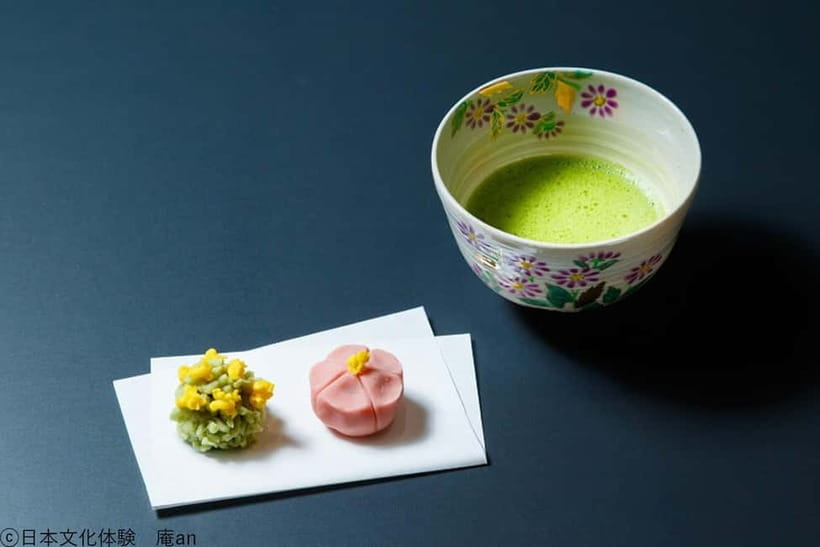
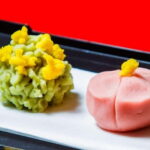
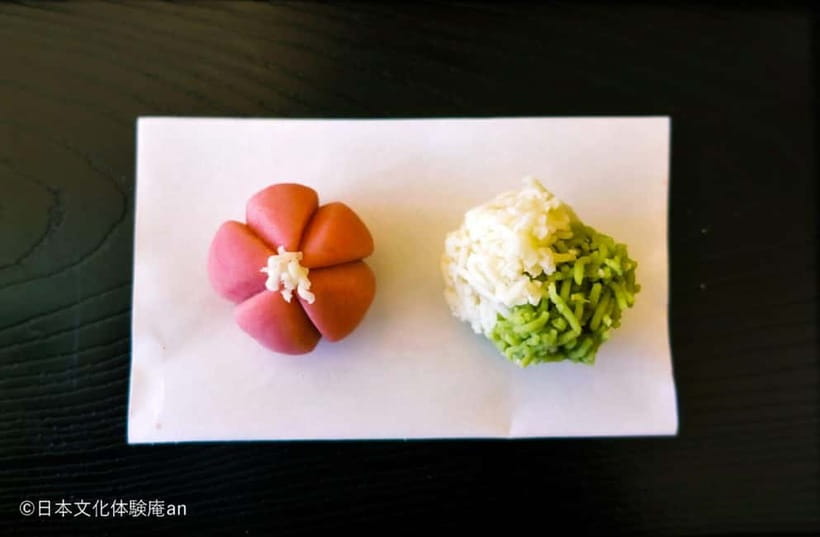
The class begins with nerikiri, a high-grade Japanese sweet made from smooth white bean paste shaped into seasonal designs. You start by coloring the paste, then work it into forms that suggest flowers, fruit, or other seasonal subjects.
This is not a professional confectionery course. You are working with prepared paste, and the instructor leads you through a limited number of shapes. That keeps the activity approachable, even if your fingers are not naturally gifted at delicate food work.
I like this format because it gives you a real task without turning your holiday into a full afternoon lesson. You get to see how much care goes into a sweet that may look simple behind a Kyoto shop window. You also get two finished pieces to eat later in the session.
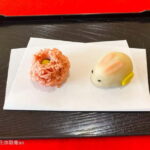
The exact design changes with the season, which gives the class a stronger connection to Kyoto than a fixed souvenir workshop. Spring, summer, autumn, and winter each bring their own visual language in Japanese sweets. The activity information does not promise a specific design for your date, so treat the seasonal element as part of the surprise.
A few more Kyoto tours and experiences worth a look
Why nerikiri is worth your time
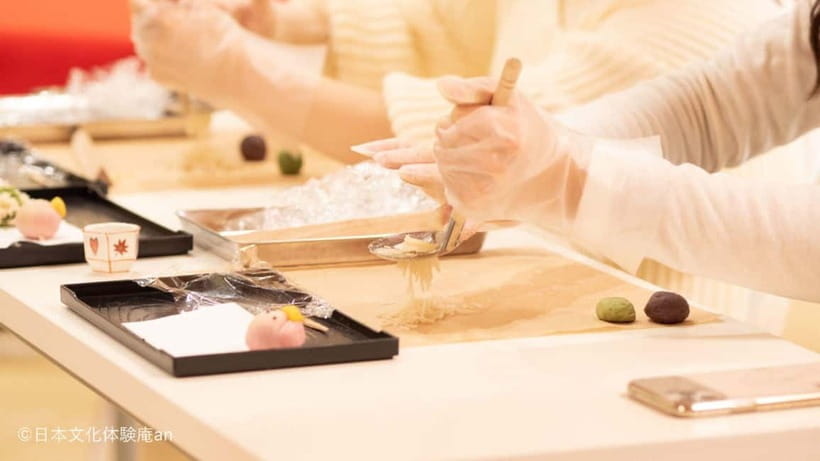
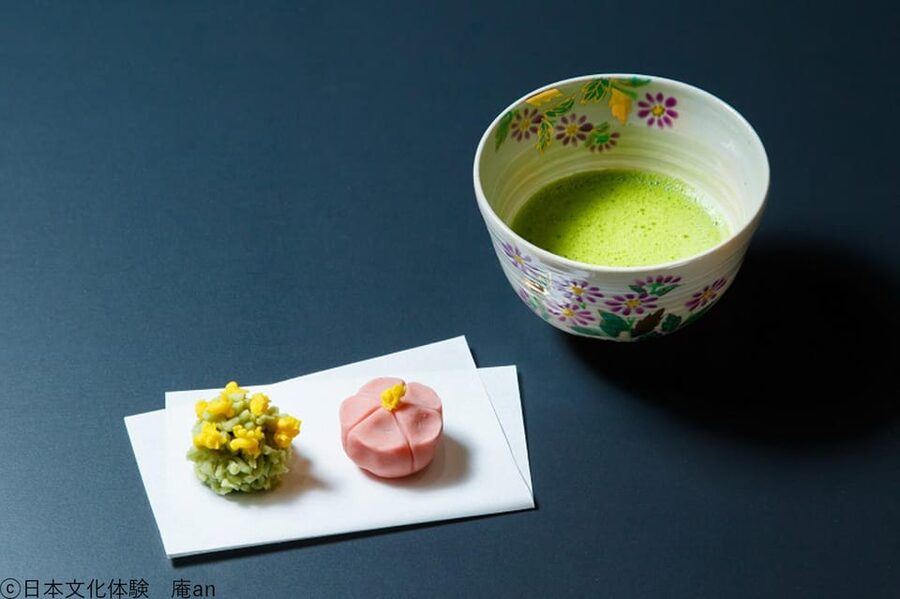
Nerikiri is made to look as good as it tastes. Its soft bean-paste base is shaped and colored with care, often into a flower or fruit, and it is traditionally paired with bitter matcha.
That pairing matters. On its own, bean paste is quite sweet, and matcha can be grassy, bitter, or a little sharp. Together, they balance one another. The class lets you understand that relationship by tasting your own sweets beside tea you prepared yourself.
The paste comes from long-established Kyoto shops, which adds a useful food-culture detail. You are not simply decorating generic candy. You are handling an ingredient connected to Kyoto’s long tradition of Japanese sweets.
You should also know that red or white bean paste is central to the experience. If you dislike sweet bean paste, this may not become a favorite Kyoto meal. If you are curious about wagashi, the broad Japanese category of traditional sweets, it is an easy and tasty introduction.
Coloring and shaping the seasonal sweets
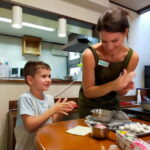
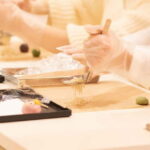
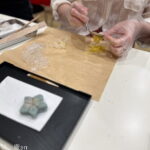
The hands-on portion starts with coloring the white bean paste. You then shape the paste into two sweets, following the instructor’s demonstration and working through the steps at your own pace.
The class is designed for ordinary hands, not expert pastry makers. One useful feature is that the process is broken into small sections. You can watch, copy, and adjust your shape as you go. Several participants found the instructions easy to follow, while others felt the guidance was less clear when the room became noisy or English explanations were limited.
That difference is worth keeping in mind. The activity is conducted in Japanese, and English translation is provided as much as possible if you request it. Some instructors have provided detailed explanations in both languages, while others have relied more heavily on gestures, demonstration, and short English directions.
You will probably manage even without strong Japanese, since the hand movements are visible. Still, if you want detailed explanations about technique, ingredients, and tea culture, contact the provider in advance to request English support. The setting is friendly, but the English level may vary by instructor.
The class can suit children, too. A 10-year-old and a 14-year-old were considered to have found the challenge and timing suitable, and another family enjoyed making the sweets with children. Children under two who sit on a parent’s lap are free, but non-participants cannot enter, so check the booking details carefully if you are bringing a young child.
Preparing Uji matcha after the sweets
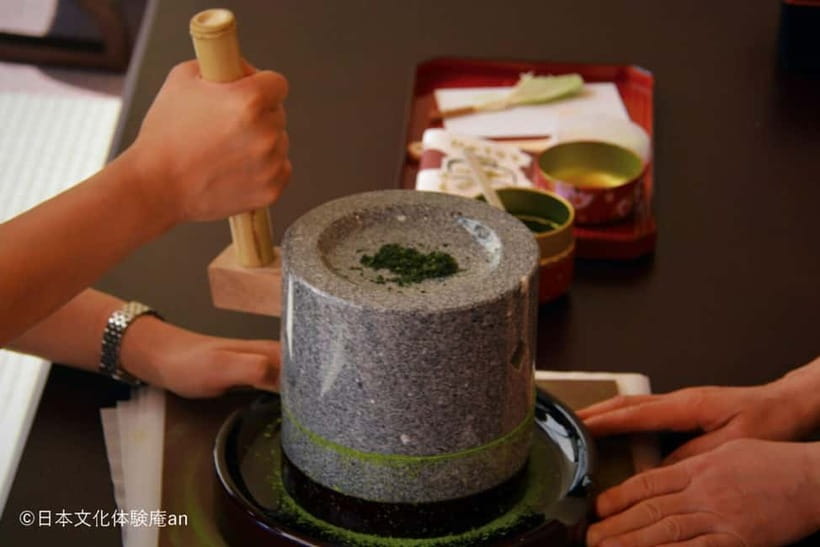
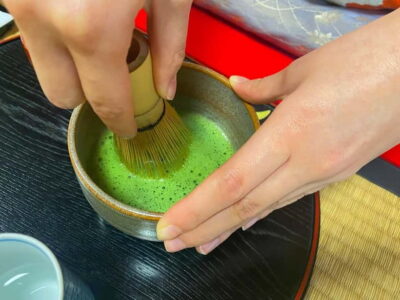
After the sweets are shaped, the class moves to matcha. You prepare your own tea using single-origin Uji matcha, then drink it with the nerikiri you made.
The matcha preparation includes basic etiquette and instruction on how to handle the cup and drink the tea. You get a practical introduction to the actions involved rather than only watching someone else perform them. One useful lesson is how the bitterness of matcha works with the sweetness of the bean paste.
I would set your expectations carefully here. The activity is called a tea ceremony experience, but several people found it closer to a short matcha lesson than to a formal ceremony in a traditional tea room. The tea segment may be quick, and it can feel less calm if another group is leaving or taking part nearby.
That does not make it pointless. If you have never prepared matcha, learning the basic method is useful, and you can take the knowledge home. One participant particularly liked being able to make matcha again after the class. If your main goal is a slow, highly formal tea ceremony with extended attention to ritual, choose a dedicated tea ceremony instead.
A Japanese-led class with changing English support
The instructor is Japanese, and the official language is Japanese. English translation is available as much as possible when requested, and the practical demonstrations make the class workable for many English speakers.
The strongest part of the teaching is the personal attention. Instructors have been described as patient, welcoming, funny, and careful to keep the group moving together. Some have switched into English when they noticed that people did not understand Japanese. That flexibility helps a great deal.
The weaker point is consistency. Some English-speaking participants found the explanation clear from start to finish. Others felt that English received less detail than Japanese, especially during the matcha discussion. A busy room can also make it hard to hear.
I would choose a seat where you can clearly see the instructor’s hands. If English support is important to you, contact the provider before arrival rather than assuming every session will be fully bilingual. A microphone and screen showing close-up demonstrations could improve the room, but those features are not listed as part of the experience.
The group size may be pleasantly small, but it is not guaranteed to remain small for every part. A separate school group or a class taking place in the same room can add noise or increase the number of people during the tea portion.
A few more Kyoto tours and experiences worth a look
The location near Gojo Station
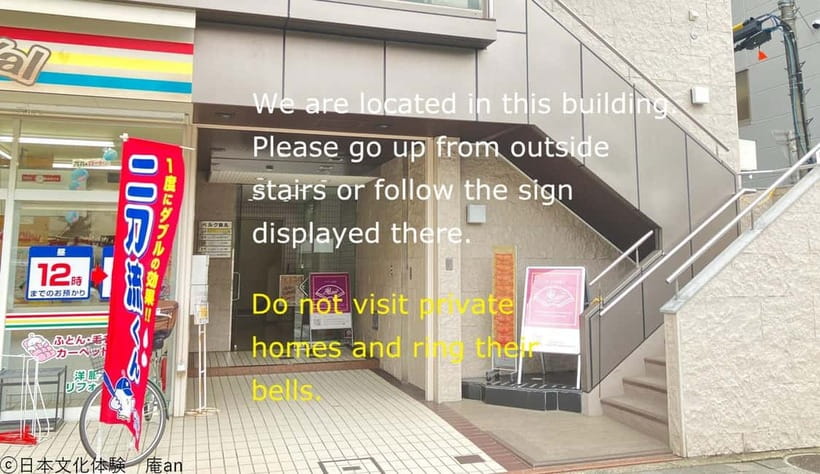
The meeting point is one minute on foot from Exit 1 of Gojo Station on Kyoto’s Karasuma Subway Line. The entrance faces Gojo-dori, the main street, so you should not need to wander through side lanes to find it.
This is a useful location for a short activity. You can fit it between sightseeing stops in central Kyoto, and it works well on a rainy afternoon or during a hot spell when you want time indoors. The session lasts 95 minutes, so it does not swallow a full day.
Arrive early. The class cannot be held for late arrivals, and delays do not excuse a missed start. The operation hours are 10:00 to 17:00, with reservations received after 17:00 handled the next day.
There is no elevator in the building, and you need to use stairs to reach each venue. The activity is listed as wheelchair accessible, but this stair information deserves direct confirmation before booking if you use a wheelchair or have difficulty climbing stairs.
What the $18 price really includes
At $18 per person, this is one of the better-value cultural activities in Kyoto. The price includes the sweet-making session and the matcha experience, including the ingredients needed to make and eat the sweets during the class.
You receive a hands-on activity, a short lesson in Japanese food culture, and a drink and snack that fit together naturally. You also leave with a skill you can repeat if you later buy matcha and a whisk.
There are two small extra charges. A take-out box for the sweets costs 100 JPY, and an experience completion certificate costs 300 JPY. The sweets are intended to be enjoyed during the class, but the box is useful if you want to carry them away.
I would skip the certificate unless you specifically collect activity mementos. The take-out box makes more sense, especially if you want to photograph the sweets first or save them for later. The core price already covers the worthwhile parts.
Who will enjoy this Kyoto activity
I would recommend this class to you if you want a short, affordable cultural activity with something to eat at the end. It suits first-time visitors who want more than a sightseeing photo, families with school-age children, and anyone looking for an indoor break.
It is also a good choice for people who enjoy making things but do not want a physically demanding activity. The work is delicate rather than strenuous, and the instructions are divided into manageable steps.
Food lovers who are curious about Japanese sweets will get the most from it. You can learn why seasonal appearance matters, how bean paste is used, and why matcha is served with sweet wagashi.
I would be more cautious if you want a formal tea-room ceremony, extensive instruction in English, or a quiet private setting. The tea segment may be short, and the room can include other groups. You should also avoid booking if climbing stairs is a problem unless the provider confirms that the listed accessibility works for your needs.
Practical details before you book
The experience costs $18 per person and lasts 95 minutes. You can cancel up to 24 hours in advance for a full refund, and the reserve-now, pay-later option lets you hold a place without paying at once.
Cancellation fees apply after the stated deadline, including when the reason is unexpected. If you change the date or time after a fee has been charged, another specified fee may apply. Travel costs to the venue are not reimbursed if you cancel.
The provider is B.B.Advisors Inc. AN KYOTO. Non-participants are not allowed to enter, so book every person who plans to join, with the stated exception for children under two sitting on a parent’s lap.
For the smoothest session, I would do three things:
- Confirm the starting time and arrive early.
- Request English assistance ahead of time if you need detailed explanations.
- Decide in advance if you want the 100 JPY take-out box.
Should you book the sweets and matcha class?
Book it if you want a friendly introduction to Kyoto’s traditional sweets, a chance to make two seasonal nerikiri, and a simple matcha lesson at a very fair price. The location, short duration, and indoor setting make it easy to fit into a packed Kyoto itinerary.
Do not book it expecting a long, formal tea ceremony. Think of it as a hands-on wagashi workshop followed by a compact lesson in matcha preparation and etiquette. With that expectation, I see this as a practical and enjoyable way to spend 95 minutes, especially for families, food-curious visitors, and anyone seeking good value near Gojo Station.
FAQ
How long does the Kyoto sweets and tea activity last?
The activity lasts 95 minutes.
How much does the experience cost?
The listed price is $18 per person.
Where is the meeting point?
The venue is one minute from Exit 1 of Gojo Station on Kyoto’s Karasuma Subway Line. The entrance faces Gojo-dori.
What sweets will I make?
You will make two seasonal nerikiri sweets using colored white bean paste. The designs change according to the season.
Is matcha included?
Yes. The experience includes preparing and drinking matcha with the sweets you make. The matcha is single-origin Uji matcha.
Is the class offered in English?
The instructor’s language is Japanese. English translation is provided as much as possible if requested, so you should contact the provider in advance if you need English support.
Is the venue wheelchair accessible?
The activity is listed as wheelchair accessible, but there is no elevator in the building and stairs are required to reach each venue. Confirm the arrangements before booking if this affects you.
Can I cancel for a full refund?
You can cancel up to 24 hours in advance for a full refund. Cancellation fees apply after that period, and reservations received after 17:00 are processed the next day.
More Dessert Tours in Kyoto
More Tea Ceremony Experiences in Kyoto
More tours in Kyoto we've reviewed




Tea Ceremony Experiences, compared.
 ★ 4.9Kyoto: Tea Ceremony in a Traditional Tea House in KiyomizuFrom $4945 min
 ★ 4.9Kyoto: Tea Ceremony Ju-An at Jotokuji TempleFrom $291h 10m
 ★ 4.3Kyoto: 45-Minute Tea Ceremony Lesson ExperienceFrom $2245 min
 ★ 5.0World Heritage Kyoto & Nara Uji Authentic Matcha ExperienceFrom $129
 ★ 4.9Kyoto: Table-Style Tea Ceremony at a Kyo-MachiyaFrom $451h 30m
 ★ 5.0Kimono Tea Ceremony at Kyoto Maikoya, NISHIKIFrom $65