
Reviewed · GOLDEN PAVILION & TEMPLE TOURS
Kyoto: Calligraphy class at Buddhist temple in city center
Kyoto’s calligraphy class inside Seigan-ji Temple gives you something many sightseeing stops cannot: a chance to use your hands and make a personal connection with Japanese culture. In a quiet washitsu, you’ll learn brush strokes, choose a kanji, and create a finished piece on special square cardboard to take home.
I like two things right away. The small group, limited to six people, allows the Japanese teacher and translator to offer individual help. I also like the souvenir: your own artwork, plus a key-chain with your chosen character made by the teacher. The main consideration is seating. Most people sit on a zabuton on tatami flooring, and that can be hard on your legs.
In This Review
- At a glance: what makes this class worthwhile
- Why calligraphy makes a good Kyoto activity
- Finding Seigan-ji Temple in Shinkyogoku
- A traditional room with tatami flooring
- Meeting the teacher and translator
- Choosing a word or kanji
- Learning the tools and basic brush strokes
- Making the final shikishi artwork
- The value of a $55 Kyoto activity
- Who will enjoy this class most
- Practical tips for a better session
- Is this calligraphy class worth booking?
- FAQ
- How long does the Kyoto calligraphy class last?
- How much does the calligraphy class cost?
- Where does the activity meet?
- Should I enter the temple to find the workshop?
- What languages are available?
- What will I make during the class?
- What other souvenir is included?
- Do I need previous calligraphy experience?
- Is seating provided on chairs?
At a glance: what makes this class worthwhile
- A working lesson, not just a demonstration: You practice basic lines and your chosen kanji before making a final piece.
- A temple setting in central Kyoto: The class takes place in a traditional Japanese room at Seigan-ji Temple, near the Shinkyogoku shopping street.
- A personal souvenir: You take home your shikishi artwork and receive a key-chain featuring your chosen character.
- Patient bilingual support: The Japanese teacher works with a translator, with English, Spanish, Japanese, and Dutch available.
- A compact 70-minute activity: It fits neatly into a Kyoto day, especially around Nishiki Market and the Shinkyogoku area.
Why calligraphy makes a good Kyoto activity
Japanese calligraphy, or shodo, is not simply decorative writing. It teaches you how kanji are built, how a brush should move, and how pressure and timing affect a line. Calligraphy is also part of school education in Japan, so this class offers a small window into an art that is part of everyday cultural life.
You do not need artistic skill or previous experience. The teacher breaks the process into manageable stages, beginning with the tools and basic strokes. I like this approach because you are not asked to copy a complicated character immediately. You first learn how the brush behaves.
The activity also gives you a calmer change of pace after Kyoto’s crowded streets and temple visits. It is not a silent meditation session, but the room tends to become quiet as everyone concentrates. You will hear instruction and conversation, yet the overall mood is focused and peaceful.
A few more Kyoto tours and experiences worth a look

Finding Seigan-ji Temple in Shinkyogoku
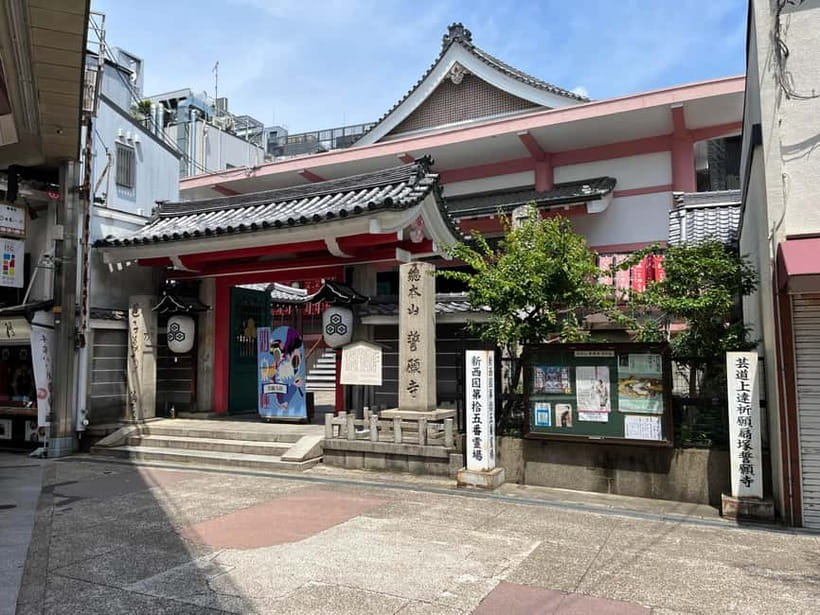
The meeting point is in front of Seigan-ji Temple, under the roofed section of the Shinkyogoku shopping street. Look for the person holding a red lantern on a stick.
This detail matters. The workshop meeting point is at the front of the temple, not necessarily up the temple stairs. Do not climb the stairs looking for the class, and do not stop the monks or temple staff to ask about it. Wait outside for the person with the lantern. If you have trouble locating the meeting point, use the email address or phone number supplied with your booking.
The temple’s location is one of the class’s practical strengths. You can combine it with shopping in Shinkyogoku or a visit to nearby Nishiki Market. Since the class lasts only 70 minutes, it does not consume a large part of your day.
Still, allow enough time to find the meeting point. A covered shopping street can feel confusing, especially when you are watching shop signs and navigating foot traffic. Read the information on your voucher before leaving for the activity, since it contains the essential meeting details.
A traditional room with tatami flooring
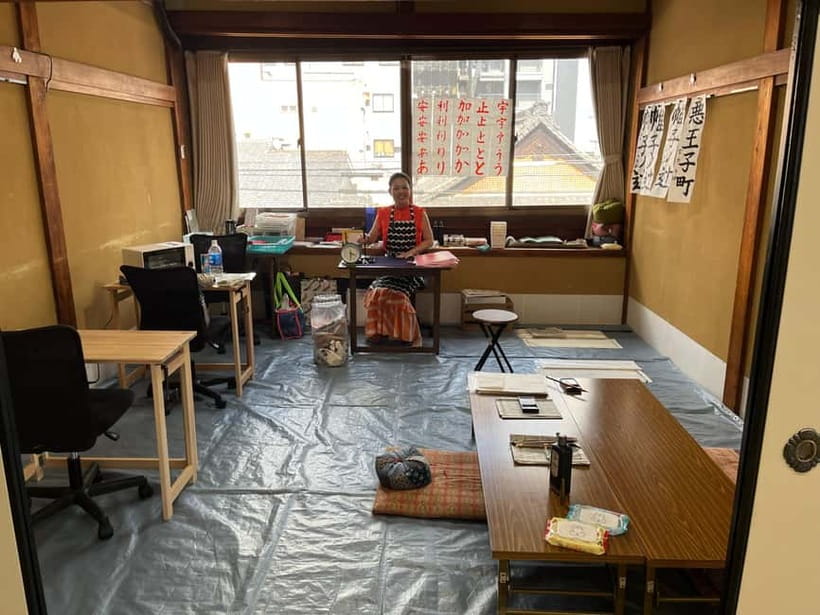
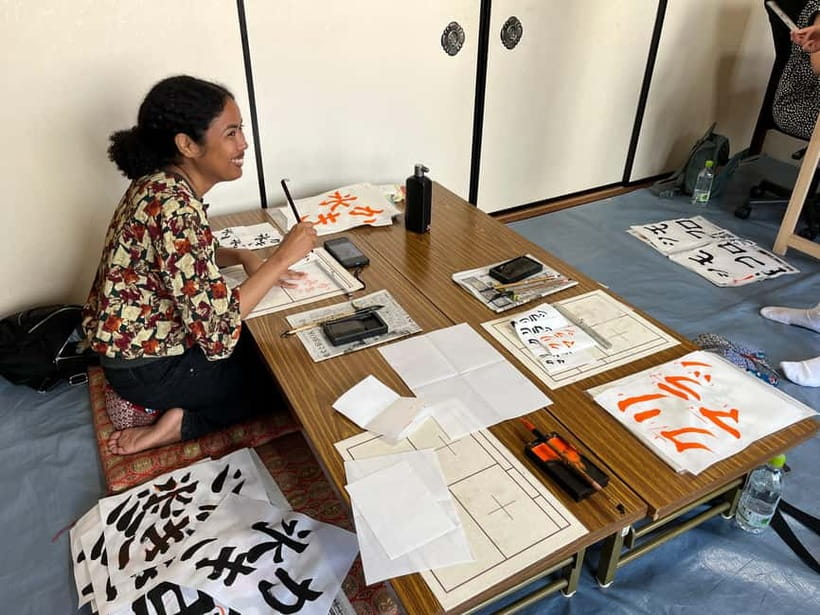
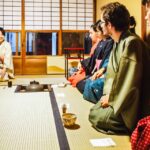
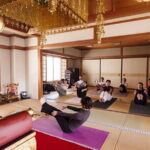
The class takes place in a washitsu, a Japanese-style room with tatami flooring. The setting gives the lesson a stronger sense of place than a modern classroom would. You are handling traditional tools in a room designed for Japanese customs and daily rituals.
Most seating is on the floor with a zabuton, or Japanese floor cushion. A limited number of desks are available, but you should not count on one. If sitting on the floor is difficult or puts strain on your knees, hips, or legs, consider this before booking.
The activity is listed as wheelchair accessible, but the floor-based seating arrangement deserves attention. Accessibility does not necessarily mean every part of the standard seating setup will suit every person. If you need a particular arrangement, contact the provider before reserving.
Bare feet are not allowed, so wear socks or shoes that are easy to remove if needed. Smoking, vaping, alcohol, and drugs are also not permitted. No food or drinks are served, though vending machines are available outside the temple.
Meeting the teacher and translator
The session begins with an introduction to the teacher and translator. The instructor is Japanese and has more than a decade of calligraphy experience. Some activity information describes her as having around 15 years in the craft, so you can expect a seasoned teacher rather than a casual guide.
The teacher’s instruction is supported by a translator. Available languages are English, Spanish, Japanese, and Dutch, depending on the selected session. Guides such as Jose and Saskia have been praised for helping explain the process, encouraging beginners, and taking photographs during the class.
The translator does more than repeat technical directions. You can ask questions, understand the meaning of the characters, and receive help when the brush feels less cooperative than expected. This is especially useful because the calligraphy teacher may not speak English.
The small group format helps here. With no more than six participants, the teacher can watch your grip, stroke order, and brush movement. That does not turn you into a calligrapher in one hour, but it does make the lesson feel personal.
Choosing a word or kanji
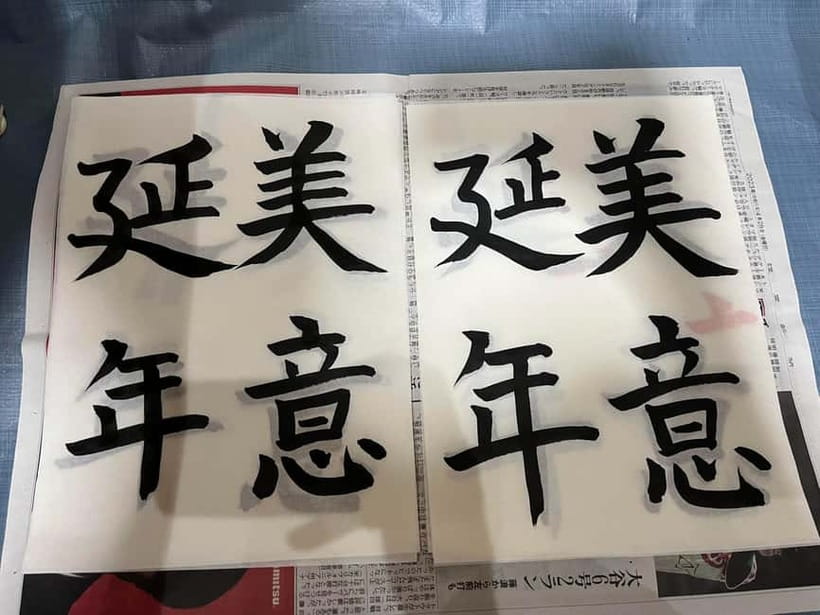
Early in the class, you select a word or kanji to write. Examples are available, but I recommend arriving with a few ideas. Choosing a character in advance saves time and makes the final piece more personal.
You might choose a character connected to a value, a place, a family name, or a hope for your trip. The important point is to understand what you are writing. Ask the translator about the meaning and structure before committing it to your final artwork.
Do not worry if you have no idea what to choose. The class provides examples, and the teacher can guide you through the available choices. Still, coming prepared with two or three possibilities is a smart move.
The decision affects the difficulty of the final piece. Some kanji have fewer strokes, while others require more control and balance. The instructor provides practice and examples, so beginners are not left to guess.
Other city tours we've reviewed in Kyoto


Learning the tools and basic brush strokes
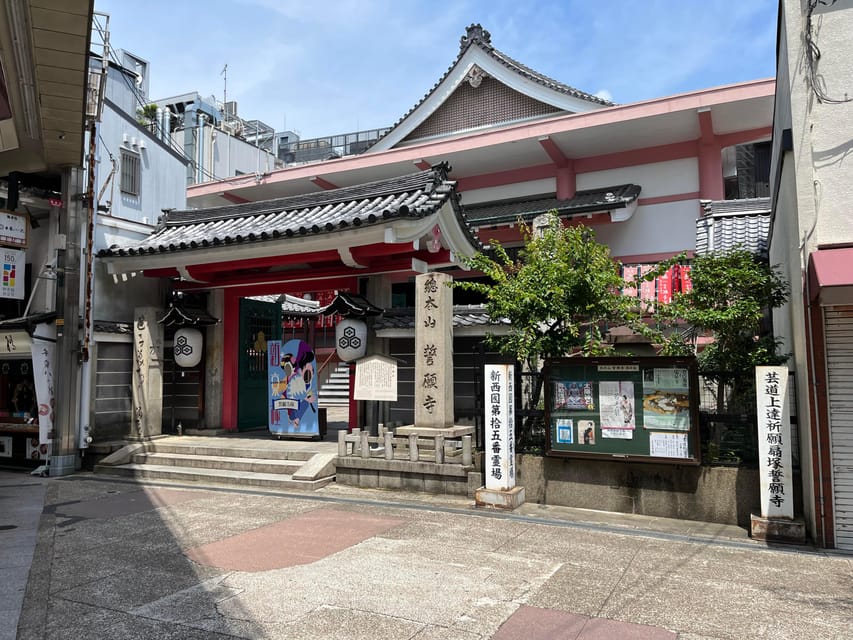
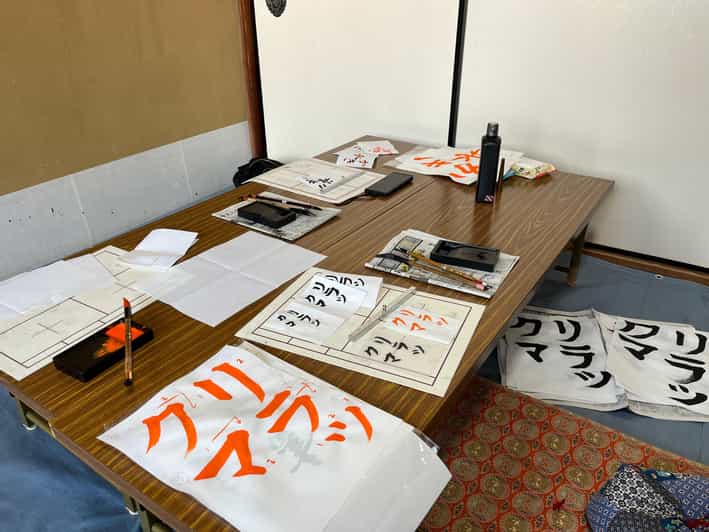
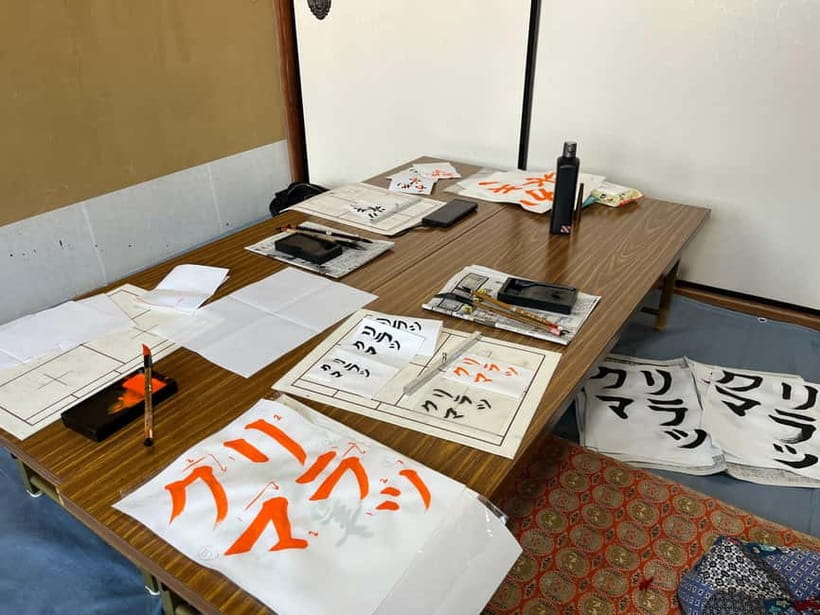
The materials are included: washi paper, a brush, ink, bunchi, and shitakami. These are not just props for photographs. You use them throughout the lesson, learning how each item fits into the process.
The teacher first explains how to handle the tools. You then practice basic lines. This stage can look simple, but it teaches the key movements used in kanji. A line’s thickness, direction, and finish all matter.
Next, you practice the chosen character. The teacher demonstrates the strokes, and the translator explains the sequence and technique. You repeat the character several times while receiving corrections and encouragement.
Calligraphy is harder than it looks. A brush does not behave like a pencil, and pressing too hard can change the line quickly. Left-handed participants may find the practice more challenging because traditional brush technique is generally easier with the right hand. One useful option is to try the right hand during practice and see what feels manageable.
The instruction is designed for beginners, so mistakes are part of the process. You are not expected to produce professional work. The goal is to learn enough about control and form to create a finished piece that has your own hand in it.
Making the final shikishi artwork
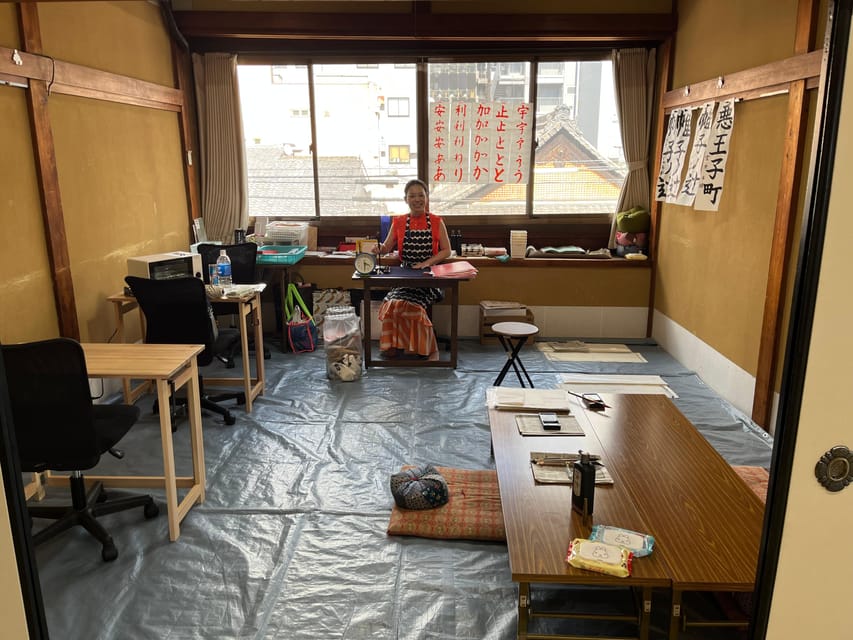
After practicing, you write the chosen character on a shikishi, a special square piece of cardboard used for calligraphy and other artwork. This is the moment when you need to stop chasing perfection and trust the practice.
The teacher’s advice is sensible: practice enough to understand the movement, but do not write until your arm is tired. Fatigue can make your final brushwork less controlled. The best final version may come after a modest number of careful attempts, not after filling every available sheet.
The shikishi format makes the finished piece easy to display at home. It is more substantial than a loose sheet of practice paper, yet small enough to pack in your luggage. Bring a protective folder or place it carefully between flat items in your suitcase if you want to keep it crisp.
The teacher also prepares a key-chain with your chosen character. This small gift adds a personal touch, especially if you select a character tied to your name or a meaningful idea. You leave with both an item you made and a separate souvenir connected to the lesson.
Photography is another welcome detail. The guide may take pictures while you practice and work on the final piece. If you want photos of the finished artwork or the group, ask during the session rather than waiting until everyone has packed up.
The value of a $55 Kyoto activity
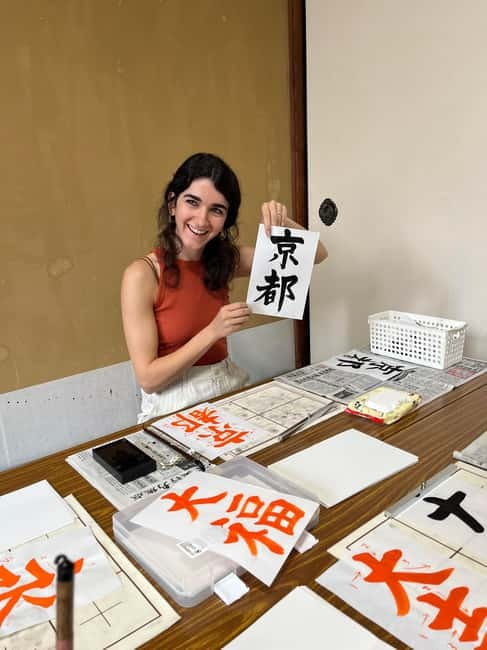
At $55 per person, this is not the cheapest way to spend 70 minutes in Kyoto. You can visit many temples for far less, and art supplies bought in a shop may cost less than the class fee.
But the price includes instruction, translation, all calligraphy materials, practice time, your finished shikishi, and the personalized key-chain. You are paying for access to a teacher, a structured lesson, and a traditional room in a temple setting. You also avoid the guesswork of buying supplies and trying to teach yourself.
For me, the strongest value is the finished souvenir. Many Kyoto purchases are attractive but interchangeable. Your calligraphy piece records a decision you made, a technique you tried, and a particular moment in the city. It may not be technically perfect, which is part of its charm.
The class is a better buy for someone who wants participation rather than another guided explanation. If you only want to see calligraphy performed, the lesson may feel too hands-on. If you want to make something and learn the basics, the price is reasonable.
Who will enjoy this class most
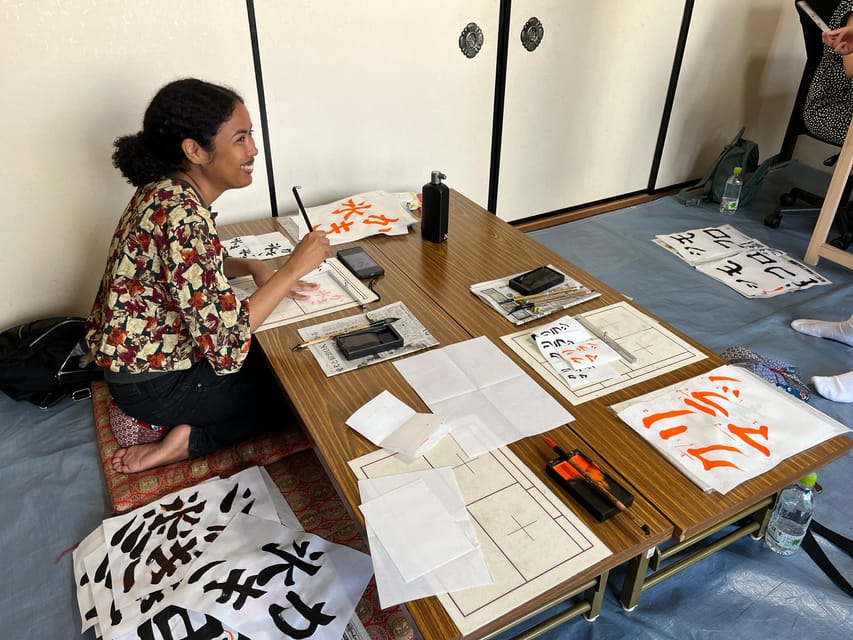
This experience suits couples, solo visitors, families with older children, and small groups of friends. It works well for people who like crafts, Japanese culture, quiet activities, or souvenirs with a personal story.
It is also a good option when rain or tired feet make another outdoor sightseeing stop less appealing. The compact schedule lets you fit it between other central Kyoto plans.
Children can take part only if they meet the activity’s age requirements. The supplied information lists children under 2, 3, 4, and 5 as unsuitable, so check the exact restriction attached to your chosen booking. Babies under 1 are also listed as unsuitable.
The class may not suit anyone who cannot sit on the floor, dislikes careful repetitive practice, or expects a polished professional result. Visually impaired participants are listed as unsuitable. If you are unsure about mobility or seating, ask the provider before booking.
Practical tips for a better session
- Think of several possible words or kanji before you arrive.
- Wear socks, since bare feet are not allowed.
- Avoid scheduling a tight connection immediately afterward. The class itself lasts about 70 minutes, but you need time to meet the guide and settle into the room.
- Keep your final artwork flat and protected during the rest of your trip.
- Do not overpractice. Your arm can tire, and the final piece may suffer.
- If you are left-handed, expect a little extra difficulty and ask for guidance early.
- Read your voucher carefully for the meeting instructions.
- Buy a drink from a vending machine before or after class if you need one, since refreshments are not provided.
The class is not completely silent. You will hear explanations, translation, and friendly conversation. Yet the atmosphere is generally quiet because everyone is trying to control the brush. That balance makes it comfortable for beginners who want concentration without a formal or intimidating mood.
Is this calligraphy class worth booking?
I would book this class if you want a hands-on Kyoto memory, especially if you have already seen several temples and would like to take part in a traditional art. The small group, experienced teacher, multilingual support, and finished shikishi make the experience more useful than a quick brush-writing demonstration.
I would hesitate only if floor seating is a serious problem, if you need a fully customized accessibility arrangement, or if you want a longer technical course. In 70 minutes, you learn the foundation and produce a souvenir, not mastery.
For most first-time visitors, this is a well-sized activity: central location, modest time commitment, clear instruction, and something personal to carry home. Choose your kanji before you go, arrive at the temple front, look for the red lantern, and let the first imperfect strokes be part of the memory.
FAQ
How long does the Kyoto calligraphy class last?
The activity lasts about 70 minutes.
How much does the calligraphy class cost?
The listed price is $55 per person.
Where does the activity meet?
Meet in front of Seigan-ji Temple in the Shinkyogoku shopping street. Look for the person holding a red lantern on a stick under the roofed street.
Should I enter the temple to find the workshop?
No. Wait at the front of the temple and look for the person holding the red lantern. Do not go up the stairs or ask the monks and temple workers about the workshop.
What languages are available?
Instruction and assistance are available in English, Spanish, Japanese, and Dutch.
What will I make during the class?
You practice a selected word or kanji and write a final version on a shikishi, a special square cardboard surface. You take the artwork home.
What other souvenir is included?
The teacher makes a key-chain featuring your chosen character for you.
Do I need previous calligraphy experience?
No previous experience is required. The class includes an explanation of the tools, practice with basic lines, and guided practice with your chosen character.
Is seating provided on chairs?
Most seating is on the floor with a zabuton on tatami flooring. A limited number of desks are available, so consider your comfort before booking.
More Workshops & Classes in Kyoto


More City Tours in Kyoto
More Golden Pavilion & Temple Tours in Kyoto

More tours in Kyoto we've reviewed





Golden Pavilion & Temple Tours, compared.
 ★ 4.8Kyoto: Fushimi Inari, Kinkakuji, Bamboo Grove 1 Day Bus TourFrom $122510 minutes - 9 hours
 ★ 4.9Kyoto: Tea Ceremony in a Traditional Tea House in KiyomizuFrom $4945 min
 ★ 4.9Kyoto: Tea Ceremony Ju-An at Jotokuji TempleFrom $291h 10m
 ★ 4.1Osaka/Kyoto:Kinkakuji,Arashiyama,FushimiInariShrine,NaraParkFrom $66
 ★ 4.8Arashiyama Bamboo, Temple, Monkeys, or Secret Sake BreweryFrom $875 hours - 330 minutes
 ★ 5.0Kyoto: Nijo, Kinkaku-ji, Arashiyama, Kiyomizu & Fushimi InariFrom $51