
Reviewed · CITY TOURS
Guided Kyoto City Cherry Blossom One Day Private Tour
Kyoto’s biggest challenge is not finding beautiful places. It is fitting them together without losing half your day to maps, transfers, and parking. This eight-hour private tour links six major sights, from the Arashiyama Bamboo Grove in the west to Fushimi Inari in the south, with a driver-guide handling the road between them.
I like the personal format and the useful transport setup. You have an air-conditioned vehicle, private transportation, tolls covered, onboard hotspot, and a child seat. I also like that the guide can help shape the day at each stop, explain the background, take photos, and suggest lunch. The main drawback is pace: one hour at each attraction gives you a strong overview, but not much time for long walks, quiet corners, or a full temple visit.
A second consideration is cost. At $569, this makes the most sense for a family or small group that values a private vehicle and a single efficient day. Admission fees, lunch, and drinks are extra, and the tour does not include wheelchair support.
In This Review
- Key points at a glance
- Why this private Kyoto plan works
- Arashiyama Bamboo Grove, Kyoto’s famous first stop
- Kinkaku-ji and the Golden Pavilion
- Kiyomizu-dera and the Otowa Waterfall
- Fushimi Inari’s red torii gates
- Gion, wooden streets and geisha culture
- Nishiki Market, Kyoto’s food corridor
- What the $569 price really buys
- Timing, tickets, and practical limits
- Who should book this Kyoto day?
- Should you book it?
- FAQ
- Where does the tour start?
- Does the tour offer pickup?
- Is this a private tour?
- Are admission tickets included?
- Is lunch included?
- What is the cancellation policy?
Key points at a glance
- Six major Kyoto sights in one day: Visit Arashiyama, Kinkaku-ji, Kiyomizu-dera, Fushimi Inari, Gion, and Nishiki Market.
- Private attention: Only your group participates, so you can ask questions and set a comfortable pace within the fixed schedule.
- Helpful drivers: Past guides included Malik, Sag, Imran Khan, and Hamza, with praise for punctual pickups, clean vehicles, route planning, and photo help.
- Useful vehicle extras: Air conditioning, private transport, toll taxes, a child seat, and an onboard hotspot are included.
- Early start: The day begins at 8:00 a.m. at Kyoto Station and ends back at the meeting point.
- Seasonal appeal: The tour is presented as a cherry blossom experience, but blossom timing and actual flowers are not guaranteed by the provided details.
Why this private Kyoto plan works
Kyoto rewards careful planning, but it can also punish a loose schedule. The sights here are spread across different parts of the city. Arashiyama sits to the west, Kinkaku-ji is farther north, Kiyomizu-dera and Gion are in the eastern part of central Kyoto, and Fushimi Inari is south of the center.
A private vehicle gives you a practical way to connect these places. You are not working out several rail and bus changes while carrying shopping bags or keeping children moving. The driver also handles road tolls and parking logistics. One past guide, Hamza, was praised for knowing where to park for easier access to the major stops. That detail matters more than it may first appear, since a good drop-off point can save time and walking.
The vehicle is air-conditioned, and a child seat and hotspot are included. Those extras make the arrangement more useful for families and for anyone who wants a break between crowded sights. Pickup is offered on request, although the stated start point is Kyoto Station at 8:00 a.m. The day ends back at the meeting point.
This is a private activity, not a shared coach tour. Your group gets the guide’s attention, and the day is less rigid than a large group outing. Still, the schedule is full. The six listed stops are each planned for about an hour, leaving roughly two hours for driving, parking, and transitions during the eight-hour day.
Other guided tours in Kyoto
Arashiyama Bamboo Grove, Kyoto’s famous first stop
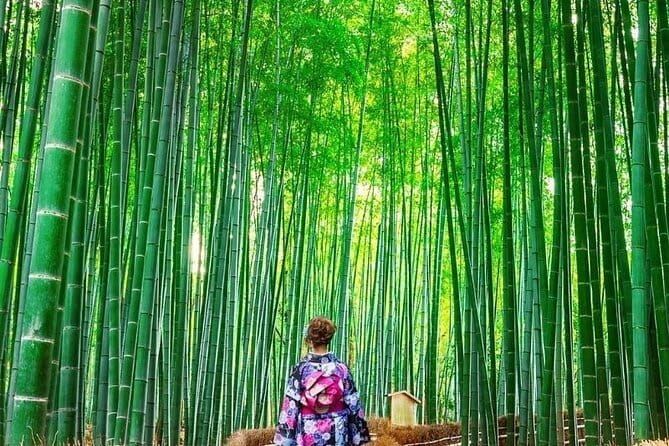
The day begins at Bamboo Forest Street in Arashiyama, one of Kyoto’s best-known sights. Tall bamboo rises on both sides of the path, creating a cool, green corridor that feels very different from the stone-and-timber temple districts elsewhere in the city.
The area has attracted visitors since the Heian Period, from 794 to 1185, when court nobles came to enjoy its natural setting. That old connection gives Arashiyama more depth than a quick photo stop. The grove is also one of Japan’s most familiar natural images, so it is a sensible opening stop for a first day in Kyoto.
You have about an hour here. That is enough to walk through the main section and take photographs, but not enough for a slow exploration of the wider Arashiyama district. Admission is not included, although the supplied information notes that entry fees are not more than $7 per itinerary item. Confirm the exact charges when booking if your budget is tight.
The private vehicle is especially useful here because Arashiyama is not close to the later stops. Arriving early also gives you a better chance of experiencing the grove before the busiest part of the day, though no exact crowd level is promised.
Kinkaku-ji and the Golden Pavilion
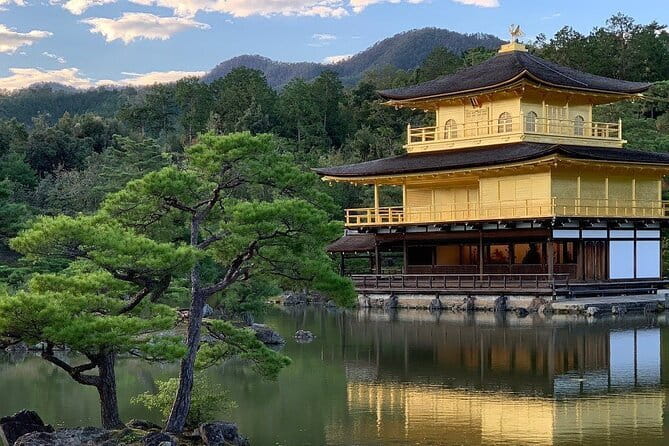
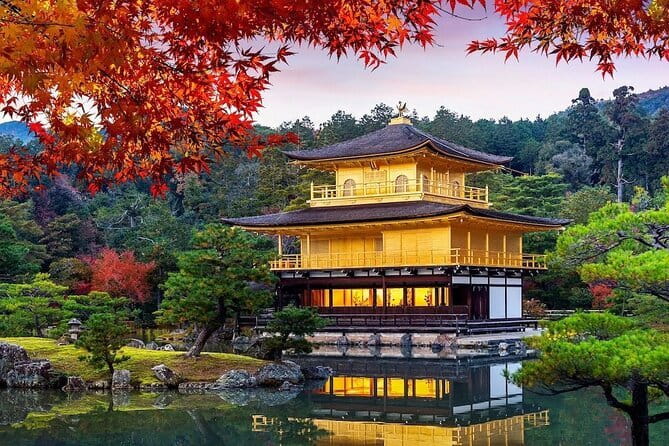
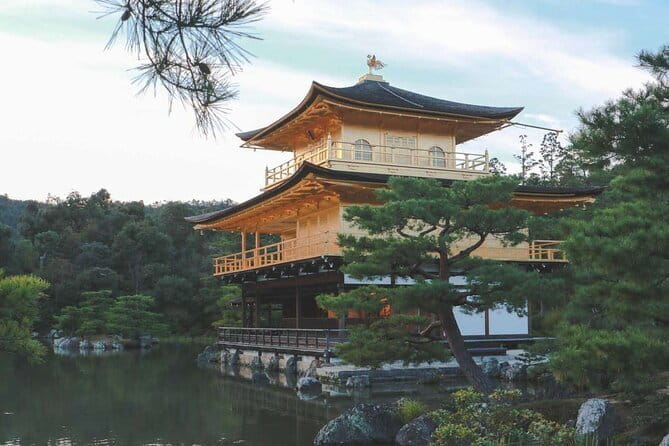
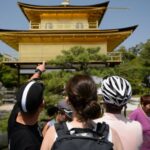
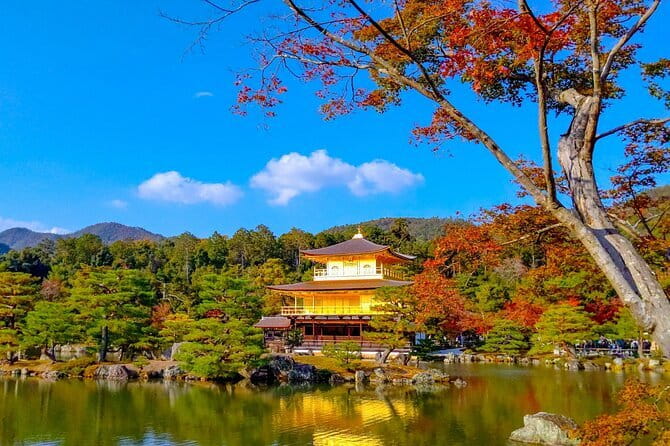
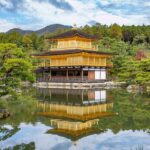
Kinkaku-ji, formally called Rokuon-ji, is the Golden Pavilion. Its upper two floors are covered in gold leaf, and the building is set beside water, making it one of Kyoto’s most instantly recognizable sights.
The pavilion began in 1397 as the retirement villa of shogun Ashikaga Yoshimitsu. After his death, it became a Zen temple. The building has also had a difficult past. It burned several times, and the present structure dates from 1955 after a 1950 fire set by a monk.
That history gives your guide something worthwhile to explain. You are not just looking at a bright gold building. You are seeing a reconstruction tied to the power, taste, and religious life of medieval Kyoto, along with the complicated way historic buildings survive in Japan.
Plan on about one hour. Kinkaku-ji is best treated as a focused visit rather than a long temple walk. You will have time to view the pavilion and follow the grounds, but the schedule does not allow for lingering. Admission is not included.
Kiyomizu-dera and the Otowa Waterfall
Kiyomizu-dera is one of Kyoto’s defining temples. Founded in 778, it is among the city’s oldest religious sites and is known for its large wooden stage and hillside setting.
The name means Pure Water Temple, taken from the Otowa Waterfall that runs through the grounds. The temple was linked with the Hosso school of Buddhism until becoming independent in 1965. Those details are useful because Kiyomizu-dera can otherwise feel like a scenic stop without much explanation.
You receive about an hour here. That should let you see the central features and take in the views, but the approach and temple grounds involve walking. Wear shoes that are comfortable for an active day, especially since this stop follows two earlier attractions.
The tour gives you a guide to put the site in context, but you should not expect a long religious or architectural study. If Kiyomizu-dera is your top priority, you may want more time here than this schedule allows. If your goal is to see Kyoto’s essential sights in one day, the one-hour visit is a reasonable compromise.
Fushimi Inari’s red torii gates
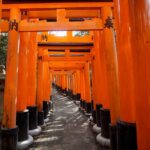
Fushimi Inari-taisha is dedicated to Inari, the Shinto deity associated with rice, fertility, and agriculture. The shrine is famous for its Senbon Torii, thousands of red torii gates that form covered paths up Mount Inari.
The gates were donated by individuals and businesses seeking favor and blessings. That gives the rows of torii a human and practical side. They are not just decoration. They reflect continuing religious practice and personal hopes.
You have one hour here, which is enough to enter the shrine grounds and walk through part of the torii route. It is not enough to climb all the way up Mount Inari. Keep that limit in mind before you arrive, since the full mountain path is much longer than a short photo visit.
This is one of the places where a private guide can help you make a clear choice. You can focus on the main gate tunnels and shrine area, or use your hour for a shorter walk. The tour does not promise a full mountain hike, so anyone wanting that experience should ask about timing before booking.
Other city tours we've reviewed in Kyoto


Gion, wooden streets and geisha culture
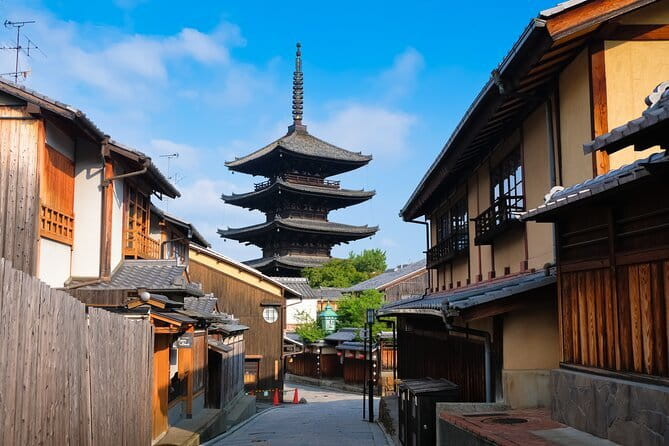
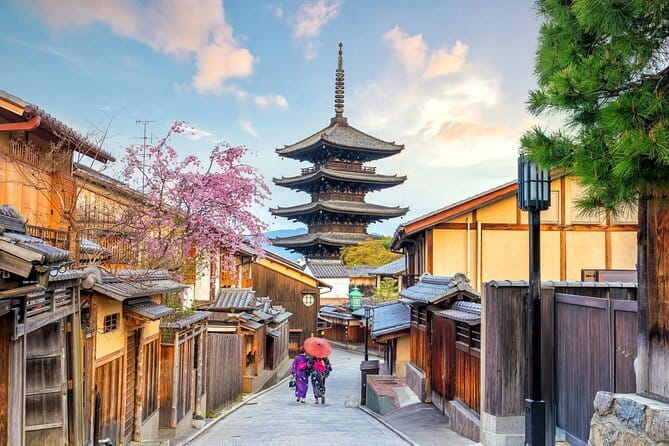
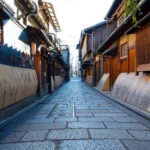
Gion brings a different side of Kyoto. This historic district is known for wooden machiya houses, traditional teahouses, and its connection with geisha culture.
After several large temple grounds, Gion gives you a chance to see an older urban setting. The traditional buildings and narrow streets show how Kyoto’s cultural life developed beyond shrine gates and temple courtyards. Your guide can also help explain the difference between simply seeing a historic entertainment district and understanding the customs connected with it.
The scheduled hour is best used for a walk and orientation. Do not expect a formal geisha performance or a private teahouse visit, since neither is included in the tour details. Treat this as a street-level look at one of Kyoto’s best-known historic neighborhoods.
Good manners matter here. Keep voices low, do not block doorways, and ask before photographing people. The area is a living district, not a stage set.
Nishiki Market, Kyoto’s food corridor
Nishiki Market is known as Kyoto’s Kitchen. The narrow shopping street runs for five blocks and contains more than 100 shops and restaurants. It has served as a center for food and trade for centuries.
This is a useful final stop because it changes the mood of the day. Instead of viewing buildings and sacred grounds, you can browse food stalls, shops, and small restaurants. It is also a natural place to ask your guide about local specialties and decide where to eat.
Lunch is not included, and neither are alcoholic drinks. That is not necessarily a disadvantage. You can choose how much to spend and what kind of meal suits your group, but you should budget for it. One guide received praise for recommending a good lunch place, and another guide was appreciated for helping with photographs. Those small acts can make a packed sightseeing day easier.
The market can be crowded, and the passage is narrow. Keep bags close and expect to move at a slower pace. One hour lets you sample the atmosphere and shop, but not inspect every stall.
What the $569 price really buys
The $569 price is easiest to justify when several people share the vehicle. For a family or small private group, you are paying for a full day of transportation, a dedicated driver-guide, route planning, road tolls, and the convenience of returning to Kyoto Station.
The value is less clear for a solo visitor or couple who are comfortable using Kyoto’s public transport. The tour does not include lunch, drinks, or admission fees, so the final cost will be higher than the headline price. It also does not promise long visits at each attraction.
The strongest value is time. You can see six famous places without building the route yourself. The vehicle also gives you a place to sit between stops, and the onboard hotspot may help with messages, maps, or quick planning during the day.
The service record is encouraging but small. The supplied rating is 4.8 from 16 reviews. Specific praise focused on guides arriving on time, keeping the car clean, choosing practical parking spots, helping with photos, and offering useful lunch suggestions. Guides named in the feedback include Malik, Sag, Imran Khan, and Hamza. Your assigned guide may be different, so treat those names as examples of the guiding team rather than a guarantee.
Timing, tickets, and practical limits
Start at 8:00 a.m. at Kyoto Station, Higashishiokoji Kamadonocho, in Shimogyo Ward. Pickup is available on request, but clarify the exact pickup arrangement before the morning of the tour.
The activity ends back at the meeting point. A mobile ticket is offered, and confirmation is received when you book. Most people can participate, but wheelchair support is not included in the stated services.
Admission tickets are not included at the individual stops. The supplied details say entry fees are not more than $7 per itinerary item. Since the wording is broad, check the exact total before you go, especially if every stop has a charge.
Free cancellation is available if you cancel at least 24 hours before the local start time. Within 24 hours, you do not receive a refund, and late changes are not accepted.
Who should book this Kyoto day?
I would choose this tour if you have only one full day in Kyoto, are traveling with family, want private transportation, or prefer a guide to explain the sites as you go. It is also a good fit if you value a clean, comfortable vehicle and do not want to work out the city’s road and transit connections yourself.
I would hesitate if your main goal is slow temple exploration, a full Mount Inari hike, extended time in Arashiyama, or a long meal at Nishiki Market. The schedule gives you a broad first look, not a relaxed study of each district.
The cherry blossom focus may also affect your decision. The title points to spring blossoms, but no blossom forecast, viewing location, or bloom guarantee is provided. Book it for the route and private format first, then think of flowers as a seasonal bonus rather than the central promise.
Should you book it?
Book this private Kyoto tour if you want to cover the city’s essential sights in one organized day and the $569 cost works for your group size. The best reasons are the efficient route, private vehicle, helpful guide service, and the chance to see six major locations without managing every transfer.
Skip it if you prefer public transport, long walks, or spending half a day at one temple. For most first-time visitors with limited time, though, it offers a practical overview, with enough cultural explanation to make the sights more meaningful and enough flexibility to feel personal.
FAQ
Where does the tour start?
The stated starting point is Kyoto Station, at Higashishiokoji Kamadonocho in Shimogyo Ward, Kyoto. The start time is 8:00 a.m.
Does the tour offer pickup?
Yes. Pickup is offered on request. Confirm the exact pickup details when booking, since the listed meeting point is Kyoto Station.
Is this a private tour?
Yes. Only your group participates in the activity, and private transportation is provided.
Are admission tickets included?
No. Admission tickets are not included. The supplied details state that entry fees are not more than $7 per itinerary item.
Is lunch included?
No. Lunch and alcoholic drinks are not included. A guide may suggest a place to eat, but you pay for your own meal.
What is the cancellation policy?
You receive a full refund if you cancel at least 24 hours before the experience starts. Cancellations or changes made within 24 hours are not accepted and are not refunded.
More Private Tours in Kyoto
More City Tours in Kyoto
More Guided Tours in Kyoto

More tours in Kyoto we've reviewed



City Tours, compared.
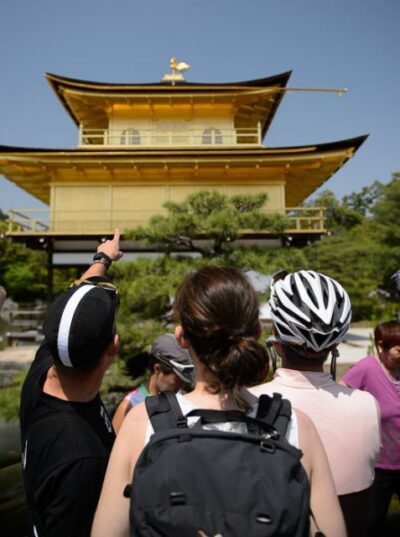 ★ 4.9Kyoto: City Secrets eBike TourFrom $1273h 45m
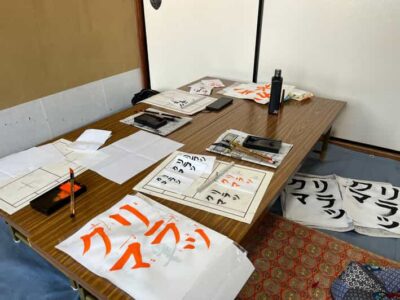 ★ 5.0Kyoto: Calligraphy class at Buddhist temple in city centerFrom $551h 10m
 ★ 5.0Private departure transfer from Kyoto city to Kansai International airportFrom $109
 ★ 5.0Kyoto: Full-Day City Highlights Bike Tour with Light LunchFrom $1678 hours
 ★ 4.5Private departure transfer from Kyoto city to Osaka Itami International airportFrom $79
 ★ 5.0Private arrival transfer from Kansai International airport to Kyoto CityFrom $97