
Reviewed · GION & GEISHA WALKS
Kyoto: Kiyomizu-dera, Fushimi Inari & Gion Geisha District
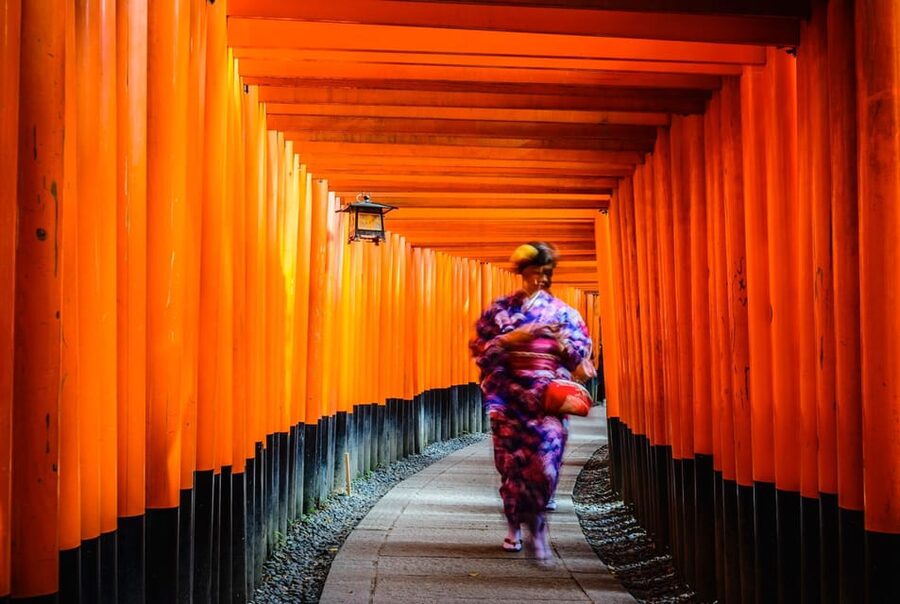
Fushimi Inari’s thousand vermilion torii gates are the star of this Kyoto tour, but the route gives you much more than a famous photo stop. You’ll connect Shinto tradition at Fushimi Inari with Buddhist worship at Kiyomizu-dera, then walk through old merchant streets into Gion.
I like the private format and Roberto’s practical approach. He is a Kyoto City Certified Tourist Guide who explains Buddhism, Shinto, geishas, and maiko with images on an iPad, and he is happy to take plenty of photos. The main drawback is the pace: four hours covers a lot, with trains, walking, temple steps, and no long meal break.
In This Review
- Key points to know before booking
- Starting at Kyoto Station and heading to Fushimi Inari
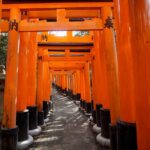
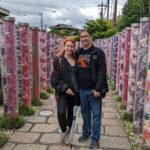
- Walking beneath Fushimi Inari’s 1,000 torii gates
- Kiyomizu-dera and Kyoto’s famous power spots
- Sannenzaka and Ninenzaka on foot
- Entering Gion and learning the facts about geishas
- What Roberto adds to the four-hour route
- Is $90 per person fair value?
- Timing, walking, and what to bring
- Who should book this Kyoto tour?
- Should you book it?
- FAQ
- Where does the tour meet?
- How will I identify the guide?
- Where does the tour finish?
- How long is the tour?
- Which languages are available?
- Is this a private tour?
- Is transportation included?
- Is the Kiyomizu-dera entrance fee included?
- Does the tour include food and drinks?
- What should I bring?
- Is the tour suitable for wheelchair users?
- Can I cancel for a full refund?
Key points to know before booking
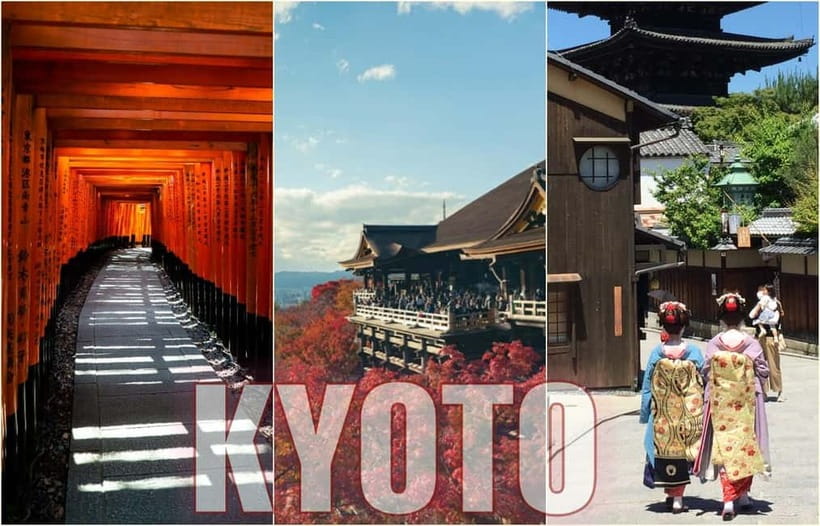
- The route links four classic Kyoto sights: Fushimi Inari, Kiyomizu-dera, Sannenzaka and Ninenzaka, then Gion.
- Roberto guides in English or Spanish: His explanations cover religion, local customs, geishas, and maiko.
- You use public transportation: Train and city bus costs are not included, so carry cash or another way to pay.
- Kiyomizu-dera costs 500 yen extra: The guide’s own admission and transport are covered, but your entrance fee is not.
- This is a private four-hour tour: The route can suit your interests, but it still requires comfortable walking and some stamina.
- The tour finishes in Gion: You can continue exploring there or take a city bus or taxi to your hotel.
Starting at Kyoto Station and heading to Fushimi Inari
The meeting point is easy to identify if you use the right station exit. Meet Roberto in front of the 7-Eleven Heart-In on the first floor of the JR Kyoto Station building, on the Kyoto Tower side. He will hold an iPad and a red card marked RBRT.
That clear meeting signal matters at Kyoto Station, a large and busy transport hub. You do not need to search through the station for a shop or platform. Arrive ready to move, since the group takes a train for about 10 minutes to reach Fushimi Inari Taisha.
The public transport part is useful in its own right. You get a taste of how Kyoto works beyond the sightseeing lanes, but you also need to budget for your own fares. Transportation is not included, and the route later includes another train or public transport connection of about 30 minutes.
A few more Kyoto tours and experiences worth a look

Walking beneath Fushimi Inari’s 1,000 torii gates
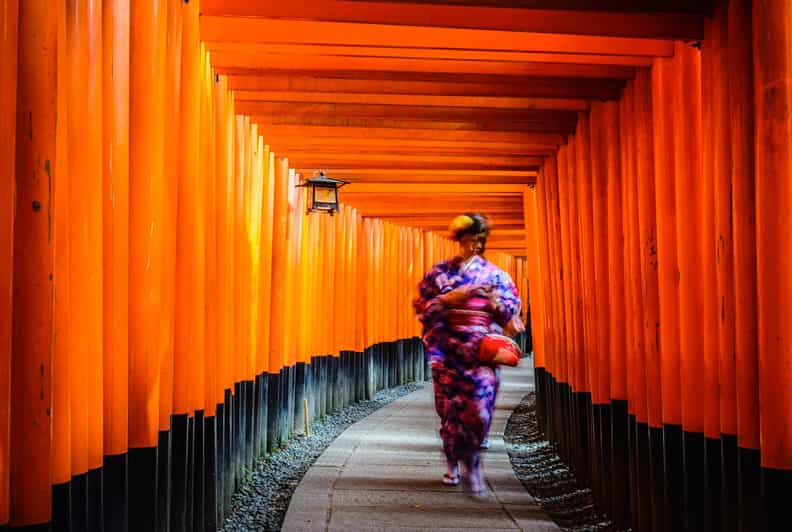
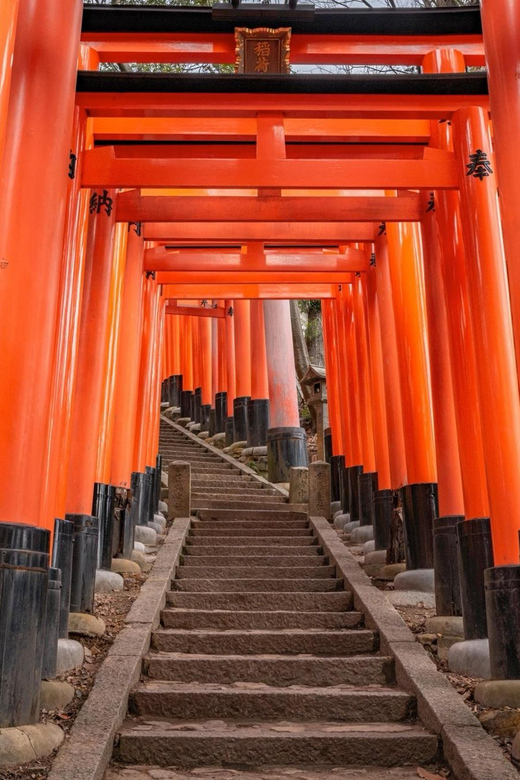
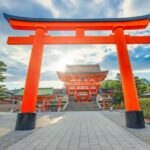
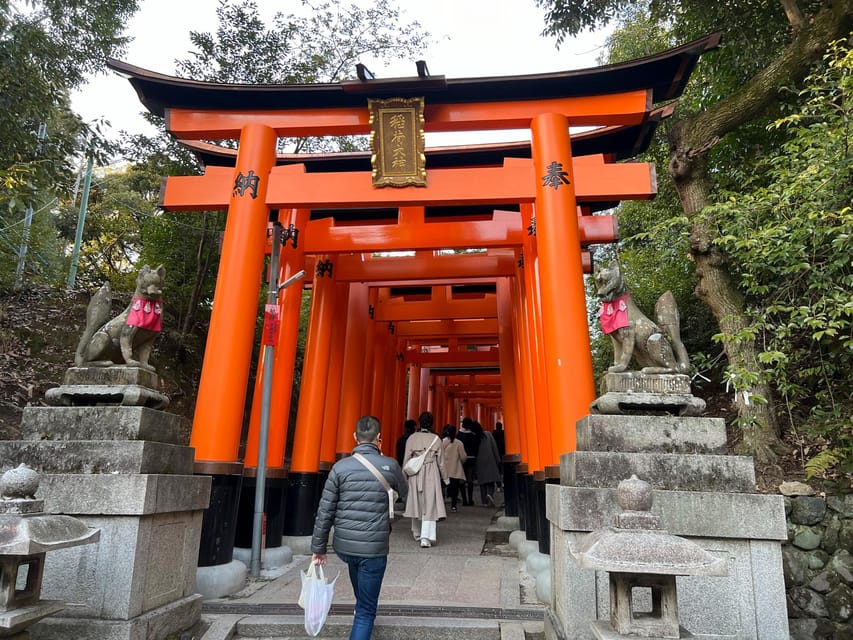
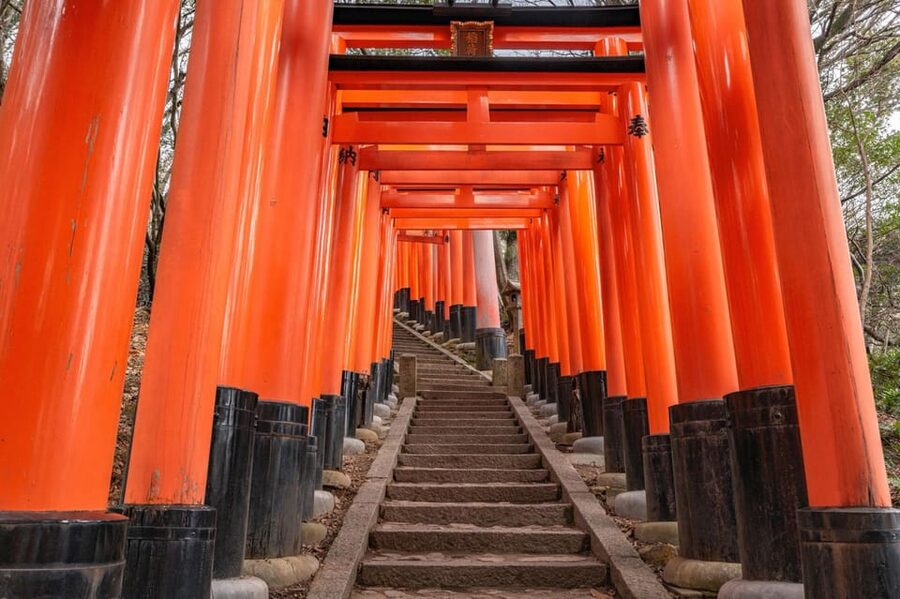
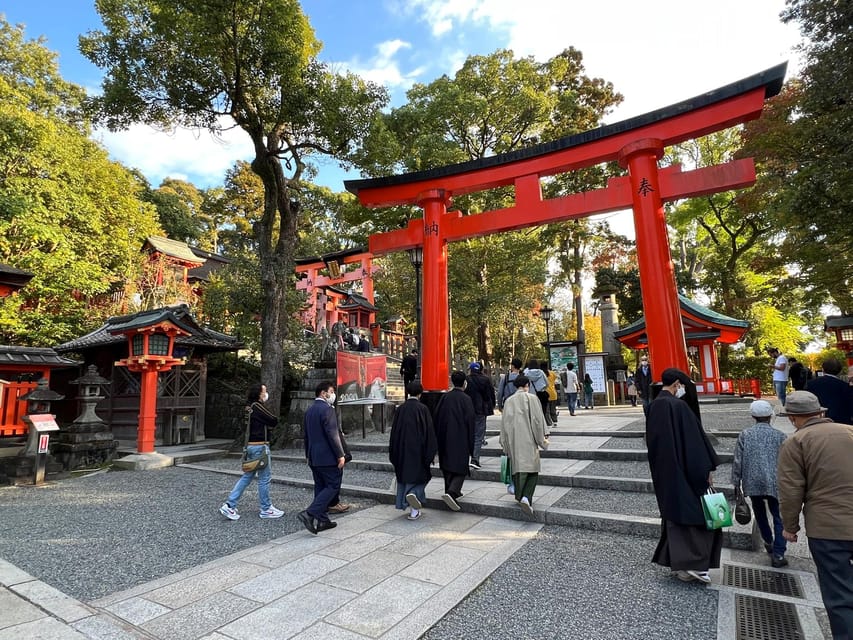
Fushimi Inari is a Shinto shrine dedicated to Inari, a deity associated with rice, prosperity, and business success. Its most famous feature is the long trail of vermilion torii gates, donated over time by individuals and businesses.
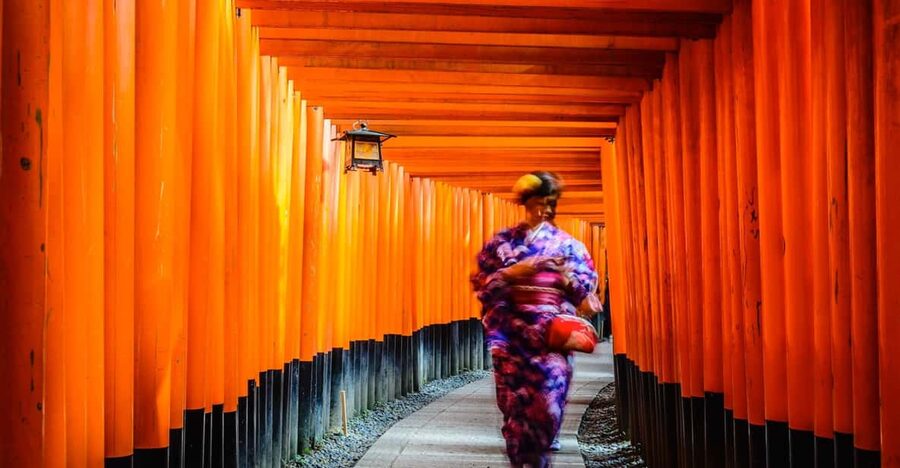
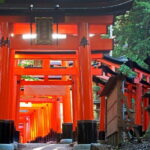
The tour allows about 75 minutes here. That is enough to walk through a memorable section of the gates and hear about the shrine’s ancient origins and Shinto practices. The orange-red columns form repeated corridors that change in feel as you move away from the main shrine area.
This is a place where a guide adds real value. Without context, the torii can look like a striking series of gateways and little else. Roberto can explain their religious meaning and help you understand why the shrine matters to Japanese worshippers, not just to photographers.
Do not expect to complete every trail at Fushimi Inari in 75 minutes. The full mountain route is much longer than the portion normally covered on this compact tour. You should also wear shoes with good support, since the path includes walking and may feel tiring when combined with the rest of the morning.
Fushimi Inari is popular, so the private format helps you stay focused instead of waiting for a large group. Roberto can use iPad images to make unfamiliar religious ideas easier to follow. The visual aid is especially helpful if you want more than a quick explanation at the gate.
Kiyomizu-dera and Kyoto’s famous power spots
After Fushimi Inari, the tour continues by public transportation. The scheduled transfer takes about 30 minutes, so this middle section is not simply one long walk between sights. Keep some cash ready for your fare.
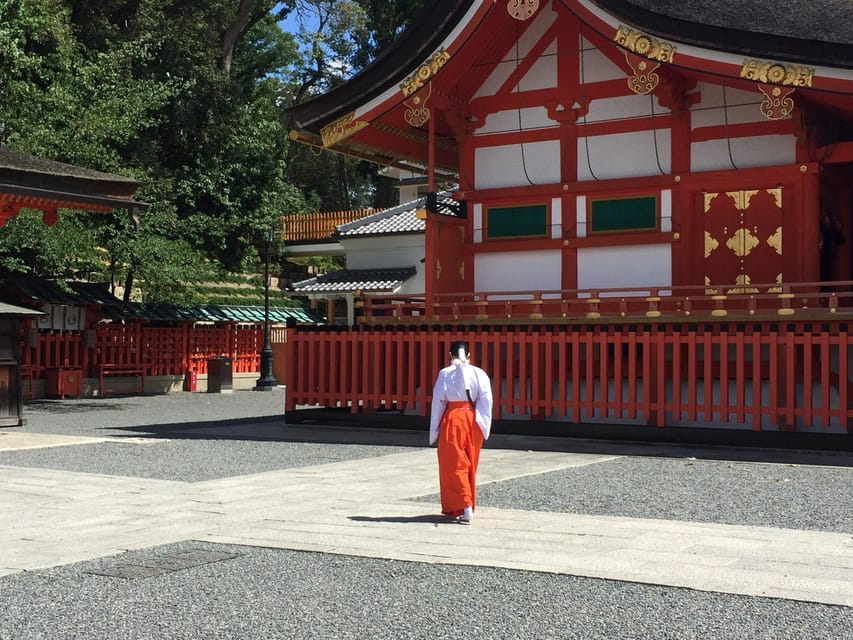
Kiyomizu-dera is one of Kyoto’s best-known temples, set above the old streets of eastern Kyoto. The visit lasts about 80 minutes, making it the longest stop on the route. You pay 500 yen for your own admission, roughly US$3.10 at the stated price. Roberto’s entrance fee is covered, but yours is not.
The temple is known here for its power spots, linked with love, longevity, and academic success. Roberto’s role is to explain what these places mean and how they fit into Japanese religious life. That turns a quick temple visit into a lesson in the way Buddhist and local devotional practices meet in Kyoto.
I like that the tour does not treat Kiyomizu-dera as one grand photo platform. You have time to learn about the religious points connected with the temple, then see how worship, architecture, and tourism share the same space.
There is a practical catch. The temple visit involves walking, and the route continues on foot afterward. People with back problems, limited mobility, visual impairments, or low fitness should think carefully before booking. The tour is not suitable for wheelchair users, and it is specifically not recommended for people over 75.
Sannenzaka and Ninenzaka on foot
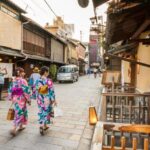
From Kiyomizu-dera, you walk through Sannenzaka for about 10 minutes, then Ninenzaka for another 10 minutes. These lanes preserve the look of old Kyoto with wooden buildings, traditional shops, and merchant houses.
The streets are not museum pieces. They are active shopping and walking areas, so the appeal is the mix of old architecture and present-day Kyoto life. You might find sweets, souvenirs, crafts, and small shops along the way, but food and drinks are not included in the tour.
The short walking segments are easy to understand on paper, but they come after Fushimi Inari and Kiyomizu-dera. You should plan on roughly four hours of near-constant movement, including transfers. Comfortable clothes, water, and sturdy shoes are not optional extras here. They are the right equipment.
Sannenzaka and Ninenzaka also provide a useful bridge between temple grounds and Gion. Instead of jumping straight from one major sight to another, you see the traditional streets that connect them. The route feels more like a walk through Kyoto’s old eastern quarter than a checklist of isolated attractions.
Entering Gion and learning the facts about geishas
The final walk takes about 12 minutes before a 15-minute visit through Gion District. The tour finishes here, giving you a natural place to continue your evening.
Gion is Kyoto’s best-known geisha district, with shops, restaurants, ochaya teahouses, and traditional wooden machiya merchant houses. Ochaya are places where geisha and maiko provide entertainment, though this tour does not promise a performance or a private tea-house visit.
That distinction matters. You are learning about the district and its culture, not buying a geisha encounter. Roberto explains the facts about geishas and maiko, including the difference between trained geisha and apprentices. His explanations can help you look past costume and photography and understand the demanding cultural role behind the appearance.
Please treat Gion as a working neighborhood, not a stage set. The tour information emphasizes the district’s traditional buildings and cultural background. It does not include a guaranteed geisha sighting, meal, or entertainment booking.
Ending in Gion is convenient. You can take a city bus or taxi to your hotel, or remain in the area for dinner and further walking. The finish gives you more freedom than a return to Kyoto Station would, especially if your evening plans are already in eastern Kyoto.
A few more Kyoto tours and experiences worth a look

What Roberto adds to the four-hour route
The strongest feature of this tour is the guide. Roberto is a Kyoto City Certified Tourist Guide and leads in English or Spanish. He uses an iPad with images, which is useful when a spoken explanation involves unfamiliar symbols, religious figures, or historical details.
The guiding style described in the experience is personal rather than fixed. The private group format lets the tour adapt to the people in front of him. One particularly useful strength is his willingness to take photos and videos throughout the visit. If you want pictures of your whole group rather than the usual one-person selfie, that service can make the morning more relaxed.
He also gives advice about getting around Kyoto. That matters because the tour itself uses trains and city transport, and you may want to repeat part of the route later. Several English and Spanish comments praise his clear cultural explanations, polite manner, punctuality, and ability to give detail without making the tour feel heavy.
A private guide cannot remove crowds or shorten every queue. He can, however, help you understand what you are seeing and keep the route moving. That is the real value here.
Is $90 per person fair value?
The price is $90 per person for four hours. It is not the cheapest way to see these sights, especially because you still pay your own transportation and the 500-yen Kiyomizu-dera entrance fee.
You are paying for a private guided route, not just admission to a temple. The fee includes a certified Kyoto guide, explanations in English or Spanish, iPad visuals, and as many photos as you wish. It also joins several major sights that would take more planning to connect independently.
The value is strongest for first-time visitors who want cultural context and a smooth morning. If you already know Kyoto well, speak Japanese, and enjoy setting your own pace, you may prefer independent visits. You can also spend far longer at one shrine or temple without a fixed schedule.
For couples, families, or small private groups, the price makes more sense because the guide can adjust explanations and photo stops to your interests. The tour is less attractive if your priority is a slow meal, shopping, or a single deep visit to Fushimi Inari.
Timing, walking, and what to bring
The four-hour schedule is compact. It includes about 75 minutes at Fushimi Inari, 80 minutes at Kiyomizu-dera, short walks on Sannenzaka and Ninenzaka, transport between districts, and a walk through Gion.
Bring:
- Comfortable shoes
- Water
- Comfortable clothes
- Cash for transport and the Kiyomizu-dera fee
Large bags and luggage are not allowed, and smoking is not allowed. Do not book this as a luggage-transfer solution between hotels.
You should also be comfortable with public transport. The tour uses a train and city bus or other public transport, and those fees are separate. The meeting point is at Kyoto Station, while the finish is in Gion, so plan your day around that one-way route.
Free cancellation is available up to 24 hours before the activity for a full refund. You can also reserve and pay later, which helps if your Kyoto schedule is still changing.
Who should book this Kyoto tour?
I would recommend it to first-time Kyoto visitors who want the major eastern sights explained in one morning. It is also a strong choice for couples and private groups who want photos, cultural background, and help with transport without joining a large group.
The tour suits people who enjoy a brisk pace. You will walk through shrine gates, temple grounds, historic streets, and Gion in a short period. Comfortable footwear and a reasonable level of fitness are essential.
I would look elsewhere if you need wheelchair access, have serious mobility limits, want a leisurely food-focused tour, or hope for a guaranteed geisha performance. Those are not part of this experience.
Should you book it?
Book this tour if you want Fushimi Inari, Kiyomizu-dera, and Gion in one focused route, with a guide who can explain the difference between Shinto and Buddhism and separate fact from tourist myth about geishas and maiko.
The best reasons are Roberto’s personal attention, his English or Spanish guiding, photo help, and the useful iPad explanations. Skip it if you prefer to explore slowly, avoid public transport, or spend half a day at just one temple. For an active first morning in Kyoto, the route offers a practical mix of famous sights and old neighborhood streets at a fair, though not budget, price.
FAQ
Where does the tour meet?
Meet in front of the 7-Eleven Heart-In on the first floor of the JR Kyoto Station building. Use the Kyoto Tower side exit.
How will I identify the guide?
Roberto will hold an iPad and a red card marked RBRT.
Where does the tour finish?
The tour finishes in Gion District. From there, you can take a city bus or taxi to your hotel.
How long is the tour?
The tour lasts four hours.
Which languages are available?
The live guide is available in English and Spanish.
Is this a private tour?
Yes. The activity is for a private group.
Is transportation included?
No. The tour uses public transportation, including a train and city transport, but your transportation fees are not included.
Is the Kiyomizu-dera entrance fee included?
No. Your entrance fee is 500 yen, approximately US$3.10. The guide’s entrance fee is covered.
Does the tour include food and drinks?
No. Food and drinks are not included.
What should I bring?
Bring comfortable shoes, water, comfortable clothes, and cash.
Is the tour suitable for wheelchair users?
No. It is not suitable for wheelchair users, people with mobility impairments, people with back problems, visually impaired people, people over 75, or people with a low level of fitness.
Can I cancel for a full refund?
Yes. You can cancel up to 24 hours in advance for a full refund. You can also reserve now and pay later.
More Golden Pavilion & Temple Tours in Kyoto
More Fushimi Inari Tours in Kyoto
More Gion & Geisha Walks in Kyoto
More tours in Kyoto we've reviewed




Gion & Geisha Walks, compared.
 ★ 4.7Kyoto Geisha Walking Tour: Gion District & Hidden GemsFrom $252 hours
 ★ 4.7Kyoto: Gion Geisha District Walking Tour – Stories of GeishaFrom $202 hours
 ★ 4.9Best of Kyoto: Gion, Geisha, Pagodas & CobblestonesFrom $242 hours
 ★ 4.5Night Walk in Gion: Kyoto’s Geisha DistrictFrom $211h 40m
 ★ 5.0Kyoto Night Foodie Tour in Gion (9+ dishes + 6 Sake tastings)From $163
 ★ 5.0Kyoto Gion Geisha District Walking Tour – The Stories of GeishaFrom $25