
Reviewed · TEA CEREMONY EXPERIENCES
Tea ceremony by the tea master in Kyoto SHIUN AN
At SHIUN AN, tea is more than a drink. In a quiet Kyoto home near Daitoku-ji, a qualified tea master shows you the careful movements, room design, seasonal sweets, and Zen ideas behind the ceremony. You watch a formal serving, then make your own bowl of matcha.
I like the small group size, normally no more than six people, because it leaves room for questions and personal instruction. I also like the generous format: you receive two bowls of matcha and two Japanese sweets, not just a quick demonstration.
The main drawback is location. This is in a residential area north of central Kyoto, not near Gion, and the address can take time to find. Some people also may struggle with the stairs or sitting on the floor, though the host has made adjustments for those who need them.
In This Review
- Key points to know before booking
- What the SHIUN AN tea ceremony is really about
- Entering the tea room near Daitoku-ji
- Admiring the scroll and flowers before the tea begins
- Watching the formal matcha preparation
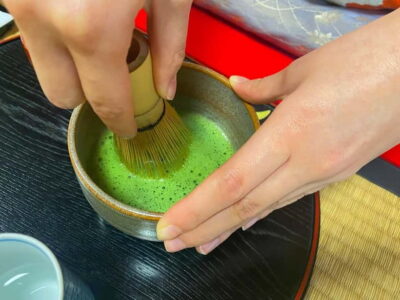
- Making your own bowl of matcha
- Sitting, stairs, and comfort
- How the small group changes the experience
- The connection between tea and Zen
- Is $33.03 good value?
- Who should book this Kyoto activity?
- Booking, cancellation, and practical details
- Should you book SHIUN AN?
- FAQ
- Where is the tea ceremony held?
- How long does the experience last?
- How many people can join each session?
- Is transportation included?
- Does the experience end at the meeting point?
- What is included in the price?
- How much matcha will I drink?
- Are Japanese sweets included?
- Can I attend with a service animal?
- What is the cancellation policy?
Key points to know before booking
- Tea master instruction: Watch an authentic ceremony, then learn the basic movements for making matcha yourself.
- Two bowls of tea: One bowl is served to you, and another is prepared by you during the hands-on lesson.
- Seasonal sweets included: Two Japanese sweets accompany the matcha and help balance its bitter taste.
- Small, personal setting: Sessions usually hold up to six people, with a maximum of eight during peak periods.
- Daitoku-ji neighborhood: The ceremony takes place near one of Kyoto’s major Zen temple areas and four bus stops from Kinkaku-ji.
- Plan your route: The quiet residential setting is part of the charm, but you should allow extra time for buses, stairs, and finding the entrance.
What the SHIUN AN tea ceremony is really about
Many Kyoto tea experiences offer a quick taste of matcha and a few photographs. SHIUN AN aims to explain the discipline behind the ritual.
The tea master has a Tea Name, a title connected with full professor-level qualification in the tea tradition. That matters because the ceremony is not simply a performance arranged for visitors. The movements, utensils, posture, room decoration, and order of service all have meaning.
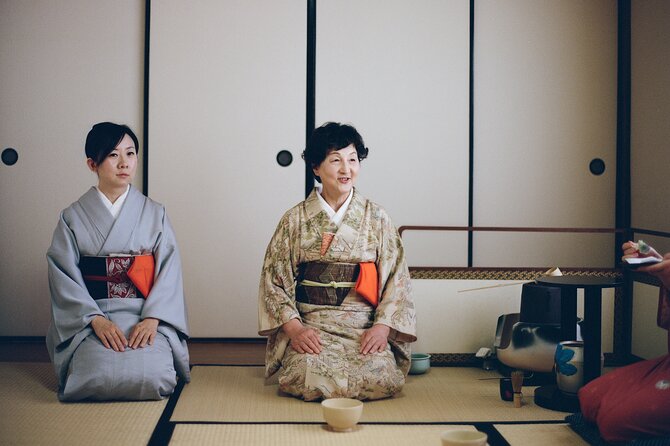
You are introduced to the experience in a small traditional setting rather than a large cultural center. The quiet residential neighborhood helps shift your attention away from Kyoto’s busy sightseeing routes. I like that contrast. You are still in the city, but the pace changes as soon as you enter the tea room.
The session lasts about 45 minutes, although some descriptions of the experience and time spent by participants place it closer to an hour. Either way, this is a compact activity that fits well between temple visits. You will not spend half a day here, but you should avoid scheduling it too tightly against another booking.
A few more Kyoto tours and experiences worth a look
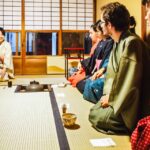
Entering the tea room near Daitoku-ji
The meeting point is at 955-1 Idacho, in Kyoto’s Kamigyo Ward. The experience begins and ends at this same address, with no hotel pickup or drop-off.
The setting near Daitoku-ji is a useful part of the lesson. Daitoku-ji is a major Zen Buddhist monastery with strong ties to Japanese tea culture. Its priests and tea practitioners helped shape the customs associated with the ceremony, so this neighborhood gives the activity a fitting setting.
You are not inside Daitoku-ji during the tea session, and the activity does not include a temple tour. Still, being close to the monastery adds context. If you have already visited Daitoku-ji, the ceremony can give greater meaning to the connection between Zen practice and tea. If you have not, you can pair the two on the same day.
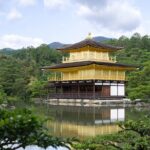
Kinkaku-ji, the Golden Pavilion, is also nearby by Kyoto standards. It is four bus stops away, so you can combine the ceremony with that famous sight if your schedule and bus connections work. I would avoid treating the distance as a guaranteed short walk. Use a map and allow time for Kyoto traffic and the walk from the bus stop.
Finding the house may require care. The area is quiet and residential, and several people have found the location harder to identify than a major attraction. I recommend arriving early, checking the address before leaving your hotel, and keeping the mobile ticket ready.
Admiring the scroll and flowers before the tea begins
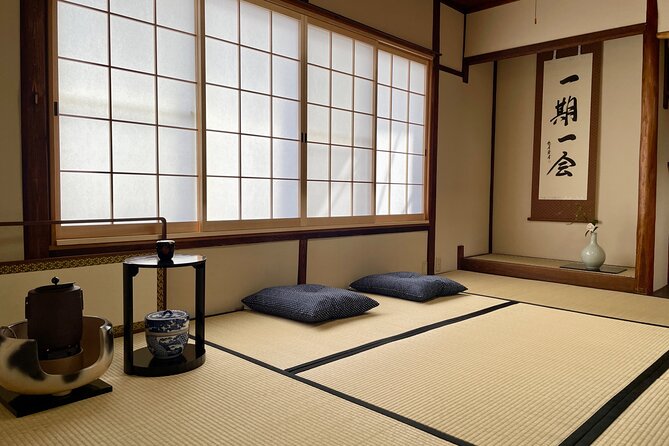
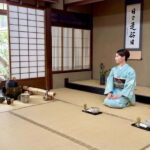
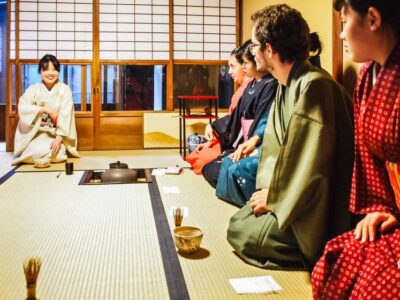
The ceremony starts with an introduction to the tea room. Before the tea is prepared, the host draws attention to the hanging scroll and flower arrangement.
These details are easy to miss if you are focused only on the bowl in front of you. The scroll and flowers help set the mood, reflect the season, and show how Japanese tea practice values simplicity and attention. The arrangement may be modest, but that is the point. In the tea room, small choices matter.
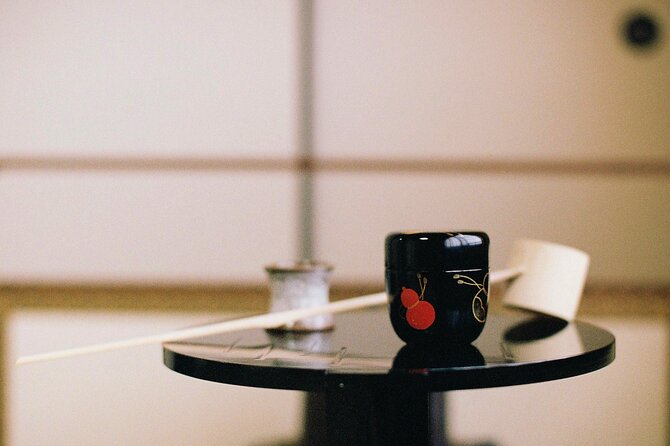
The host also explains the room’s layout and the utensils used. You will see tea bowls, a tea container, tea scoops, and bamboo whisks. Each item has a practical role, but the ceremony also gives importance to how the objects are handled and displayed.
This is where an interpreter adds real value. The tea master can demonstrate movements with precision, but the cultural meaning is harder to grasp without clear explanation. The English interpretation helps you follow the sequence and ask questions. It also makes the activity more useful for anyone who wants to understand the ceremony rather than simply copy a set of gestures.
Watching the formal matcha preparation
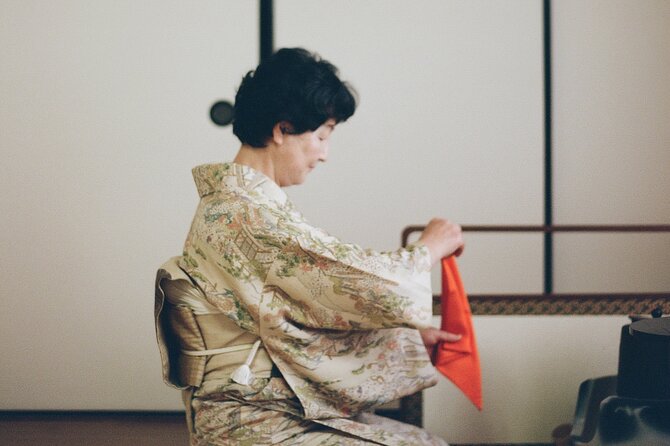
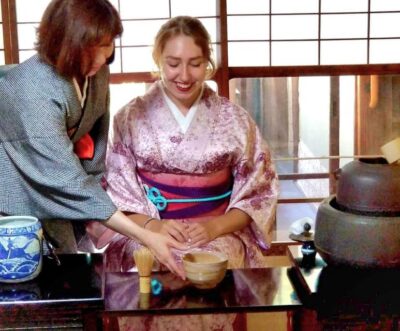
After the introduction, the tea master prepares matcha for you. The process is deliberate, with attention given to each movement.
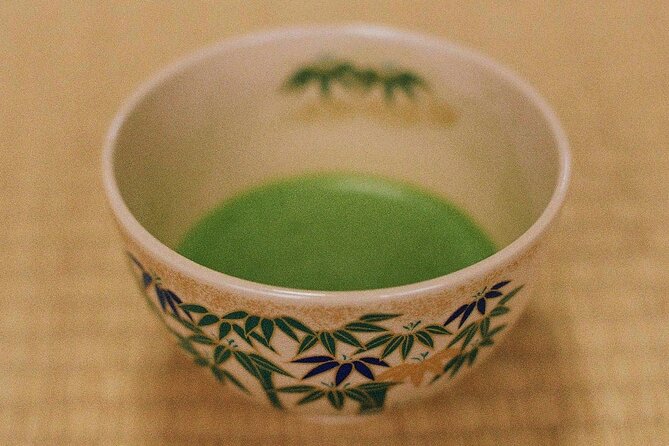
You will see the tea container opened, matcha measured with a scoop, and the powder whisked in a bowl. The point is not speed. The calm pace lets you notice the order of the actions and the care given to the utensils.
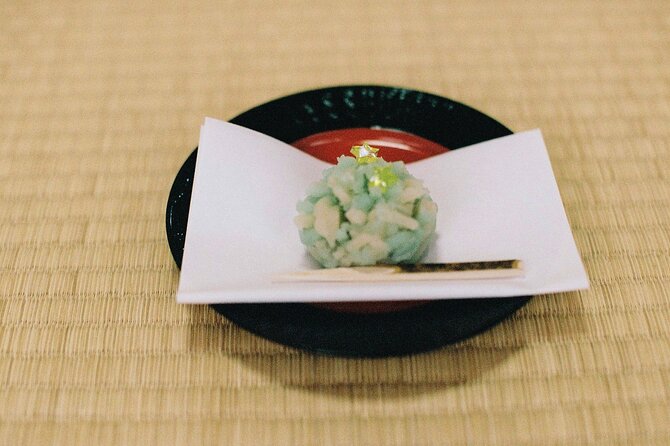
A seasonal Japanese sweet is served with the tea. This is not an accidental snack. Traditional sweets are often paired with matcha because their sweetness balances the tea’s sharp, grassy bitterness. If you are new to matcha, the sweet can make the first bowl easier to appreciate.
You receive two kinds of Japanese sweets during the activity. The exact varieties are not specified, and seasonal changes are likely, so do not book this expecting one particular confection. You should tell SHIUN AN about food allergies in advance.
The first bowl is prepared for you, giving you a chance to taste the tea before trying the technique yourself. That order is helpful. You can concentrate on the flavor and the ceremony first, then focus on whisking when it is your turn.
Making your own bowl of matcha
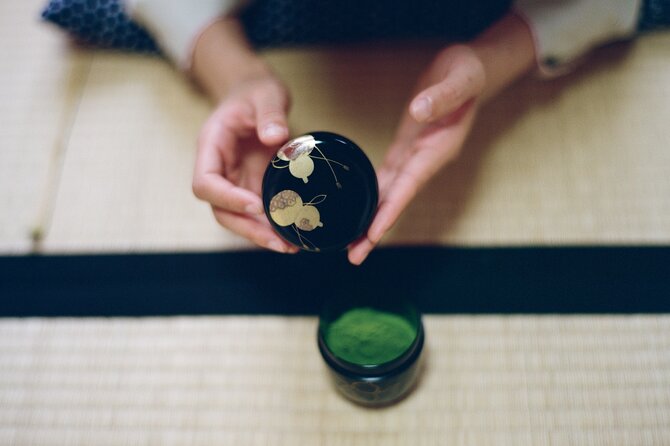
The hands-on section is the most useful part for many people. You are given instruction on how to make matcha and the chance to prepare your own bowl.
The equipment is supplied, including the bowl, tea container, scoop, and whisk. You do not need to bring special tools. White socks and a folding fan are also provided for use during the ceremony.
Do not expect your first bowl to match the tea master’s. The difference is part of the lesson. The tea master has years of practice, while you are learning the basic rhythm in a short session. The aim is not perfection. It is to understand the work involved and gain respect for the craft.
The instructor and interpreter can answer questions after the demonstration and hands-on practice. That makes this more than a passive show. You can ask about the utensils, the order of service, the meaning of the room, or the connection with Zen.
I also see value for children and teenagers who are interested in Japanese culture. The process has enough movement to hold attention, and making the tea gives younger participants something active to do. The setting remains formal, so parents should prepare children to listen and follow instructions.



Sitting, stairs, and comfort
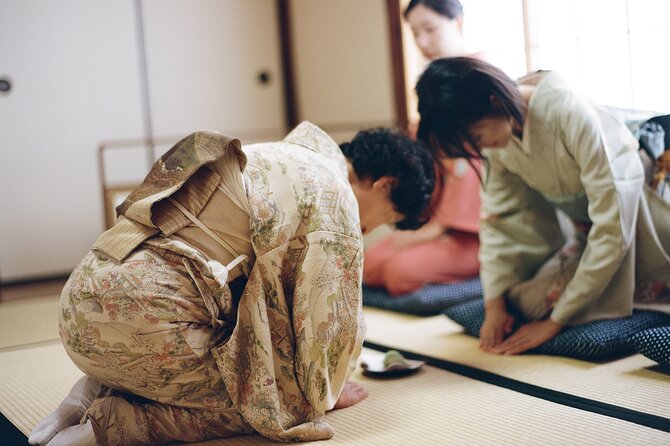
Traditional tea ceremonies often involve sitting on the floor, and SHIUN AN uses a tatami-style setting. White socks are provided, which is a thoughtful practical touch.
You should be ready for some time seated on the floor. One person was unable to sit in the preferred position for the full session, but the host made the situation comfortable. Another participant praised the way the staff included a husband who could no longer sit on the floor.
That does not mean every mobility concern is automatically solved. The information specifically notes stairs as a possible difficulty, and one person said they would have planned differently if they had known. If you have trouble with stairs, kneeling, or floor seating, contact the provider before booking and explain what you need.
Service animals are allowed, and the meeting point is near public transportation. No hotel transfer is included. These are small details, but they affect the experience because the activity is not in the center of the usual Kyoto sightseeing zone.
How the small group changes the experience
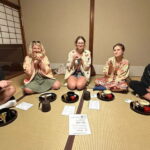
The standard maximum is six people per session. During busy seasons, the group may grow to eight.
That is still a modest size for a cultural activity, especially compared with large demonstrations aimed at bus groups. A small group makes it easier to see the tea master’s hand movements and ask questions through the interpreter.
There is also a chance of a particularly quiet session. If few people book a time, you might find yourself with more personal attention. Do not count on a private ceremony, but the format allows for a calmer experience than a crowded stage show.
The room itself is small, so a low headcount matters. You will be close enough to observe the utensils and follow the preparation without relying on a distant screen. The tradeoff is that the limited space may feel less comfortable for anyone who prefers a chair or needs room to move.
The connection between tea and Zen
The tea ceremony is presented as a path toward self-discovery and enlightenment, ideas connected with Zen. That does not mean you are attending a religious service. Instead, the activity explains how tea practice uses concentration, restraint, and awareness of the present moment.
The link to Daitoku-ji gives this explanation a strong local setting. The monastery has a long connection with tea culture, and its priests have influenced the way the tradition developed.
I appreciate this cultural background because it prevents the ceremony from becoming a lesson in table manners alone. You learn why the host pays attention to the room, the season, the utensils, and the order of service.
At the same time, the session is accessible to beginners. You do not need prior knowledge of Zen or Japanese tea. Reading a little about the ceremony before arriving may help you understand the lesson, but no special preparation is required.
Is $33.03 good value?
At $33.03 per person, this is a fairly priced introduction to a traditional Japanese art. The cost includes the tea bowls, containers, scoops, whisks, matcha, two sweets, white socks, and a folding fan.
The value comes from the teaching as much as from the refreshments. A quick matcha tasting might cost less, but it would not necessarily include a qualified tea master, an explanation of the room and utensils, English interpretation, and hands-on preparation.
Two bowls of matcha also make the format feel complete. You taste a professionally prepared bowl and then make your own. That comparison gives you a clear sense of why whisking, water, and technique matter.
The price does not include transportation. Since the venue is outside the areas most associated with Kyoto’s evening dining and sightseeing, add the cost and time of a bus, subway connection, or taxi. One useful approach is to take public transportation close to the venue and use a taxi for the final section if the route feels confusing. A taxi from a nearby station has been described as costing about 1,000 yen, though fares can vary.
Who should book this Kyoto activity?
I would choose SHIUN AN if you want a cultural lesson with real participation, not just a photo opportunity. It is especially suitable for:
- First-time visitors curious about matcha and Japanese customs
- People who want a small-group activity
- Anyone already planning to visit Daitoku-ji or Kinkaku-ji
- Families with children interested in Japanese culture
- Visitors who value English explanation and time for questions
- Matcha drinkers who want to learn the traditional method
It may be less suitable if you want a central Kyoto location, cannot manage stairs or floor seating, or dislike bitter green tea. The sweets help balance the flavor, but matcha remains a strong, unsweetened drink.
You should also allow time to settle into the ceremony. This is not an activity to rush into after running across town. Arrive early, silence your phone, and give yourself a few quiet minutes before entering.
Booking, cancellation, and practical details
The activity uses a mobile ticket, and confirmation is provided when you book. Free cancellation is available up to 24 hours before the local start time. Cancellations or changes made within 24 hours are not refunded or accepted.
The experience requires a minimum number of participants. If SHIUN AN cancels because that minimum is not reached, you are offered another date or experience, or a full refund.
Tell the provider about food allergies before the session. Matcha and sweets are included, but the exact sweets are not specified in advance.
The activity returns to the same meeting point. Since there is no pickup or drop-off, use the address rather than relying on a broad search for Daitoku-ji. The neighborhood is near public transportation, but the final walk and stairs deserve extra attention.
Should you book SHIUN AN?
I would book this experience if you want a thoughtful, affordable introduction to Kyoto’s tea culture and do not mind traveling north of the central sightseeing areas. The strongest features are the tea master’s formal training, the small group, the interpreter, and the chance to make your own matcha.
I would pause only if stairs or floor seating are serious concerns, or if your Kyoto schedule is already packed with distant temple visits. In that case, the location may create more stress than the ceremony is worth.
For most visitors, the $33.03 price buys more than a cup of tea. It gives you a short lesson in Japanese design, manners, seasonal taste, Zen ideas, and careful movement. Book it early in your day, arrive with time to spare, and treat the quiet setting as part of the experience rather than an inconvenience.
FAQ
Where is the tea ceremony held?
It is held at 955-1 Idacho, Kamigyo Ward, Kyoto, 602-8302, Japan, near Daitoku-ji Temple.
How long does the experience last?
The advertised duration is approximately 45 minutes.
How many people can join each session?
The usual maximum is six people. During peak seasons, the maximum may increase to eight.
Is transportation included?
No. Pickup and drop-off are not included. You must make your own way to the meeting point.
Does the experience end at the meeting point?
Yes. The activity ends back at the same meeting point where it begins.
What is included in the price?
The price includes tea bowls, tea containers, tea scoops, tea whisks, white socks, a folding fan, matcha tea, and Japanese sweets.
How much matcha will I drink?
You can enjoy two bowls of matcha during the ceremony. One is served during the demonstration, and you make your own bowl during the practical lesson.
Are Japanese sweets included?
Yes. Two kinds of Japanese sweets are included.
Can I attend with a service animal?
Yes. Service animals are allowed.
What is the cancellation policy?
You can cancel up to 24 hours before the local start time for a full refund. Cancellations or changes made less than 24 hours before the start time are not refunded or accepted.
More Tea Ceremony Experiences in Kyoto
More tours in Kyoto we've reviewed




Tea Ceremony Experiences, compared.
 ★ 4.9Kyoto: Tea Ceremony in a Traditional Tea House in KiyomizuFrom $4945 min
 ★ 4.9Kyoto: Tea Ceremony Ju-An at Jotokuji TempleFrom $291h 10m
 ★ 4.3Kyoto: 45-Minute Tea Ceremony Lesson ExperienceFrom $2245 min
 ★ 5.0World Heritage Kyoto & Nara Uji Authentic Matcha ExperienceFrom $129
 ★ 4.9Kyoto: Table-Style Tea Ceremony at a Kyo-MachiyaFrom $451h 30m
 ★ 5.0Kimono Tea Ceremony at Kyoto Maikoya, NISHIKIFrom $65