
Reviewed · KYOTO FOOD TOURS
Kyoto Nishiki Market & Depachika: 2-hours Food Tour with a Local
Kyoto’s food culture makes more sense when someone helps you read the stalls. This two-hour walk begins at Daimaru’s underground food hall, then moves into Nishiki Market, where you can taste Kyoto specialties without guessing what sits behind the glass or on the grill.
I like the contrast between the polished Depachika and the old market street. I also like the small-group limit of nine, since guides such as Jasmine, Mao, Boris, and Ai have earned especially warm praise for explaining customs, choosing good bites, and adjusting to different tastes.
The main consideration is the amount of food. Tastings include yuba sashimi, a soy milk donut, Nishiki gyoza, and Uoriki tempura, but this is not a full lunch. One visitor also felt the tour needed more Kyoto-specific storytelling, so book it for guidance and orientation, not simply for quantity.
In This Review
- Key points to know before you book
- From Daimaru’s basement to Kyoto’s market street
- Reading Nishiki Market without guessing
- Why the local guide matters here
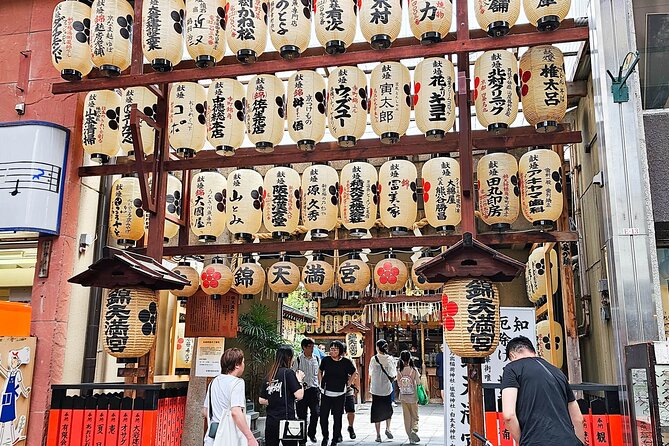
- Nishiki Tenmangu Shrine gives the walk a quiet finish
- How much food do you really get?
- Timing, group size, and comfort
- Who will get the most from this Kyoto food tour?
- Is $48 a fair price?
- Should you book the Nishiki Market walk?
- FAQ
- How long does the Kyoto Nishiki Market food tour last?
- What food tastings are included?
- Is a meal included?
- Where does the tour start?
- Where does the tour end?
- How large is the group?
- Is hotel pickup included?
- Can I cancel for a full refund?
Key points to know before you book
- Daimaru’s basement food hall gives you a useful look at Japanese department-store food culture, with beautifully presented sweets, prepared dishes, and delicacies.
- Nishiki Market is easier with a guide, especially when stalls are crowded and menus or ingredients are unfamiliar.
- Included tastings cover several styles, from tofu skin and a soy milk donut to gyoza and tempura.
- The group is capped at nine people, though one booking may sometimes feel almost private if few others join.
- The final stop is Nishiki Tenmangu Shrine, a calm place to pause after the market’s noise and food stalls.
- The tour ends at Kawaramachi Station, and the guide can help you work out where to go next.
From Daimaru’s basement to Kyoto’s market street
The tour starts outside Apple Kyoto at 83-1 Tachiuri Nakanochō. From there, your guide leads you to Daimaru Kyoto, whose basement food hall offers a very different view of Japanese eating.
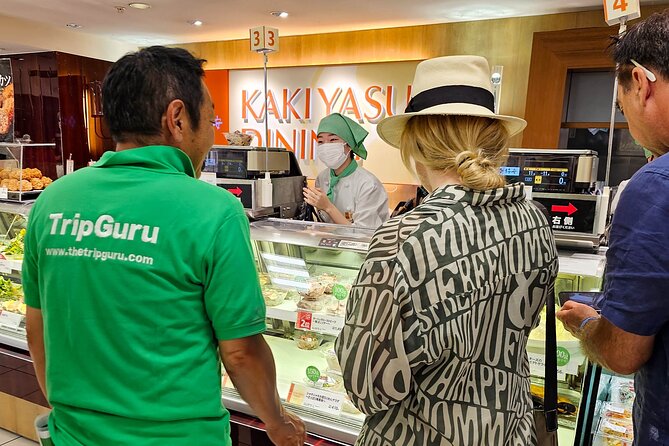
A Depachika is a department-store food hall, and it is one of the most useful stops for first-time visitors who want to understand how carefully Japanese food is presented. You might find prepared meals, sweets, regional products, seafood, and gift-ready foods arranged with great care. The tour allows about 30 minutes here, enough time to learn how the displays work and sample selected items.
This part is not just a warm-up before the market. It shows you the modern, polished side of Kyoto food shopping. Products are neatly packaged, portions are easy to compare, and presentation matters. Your guide can point out items you may otherwise pass without understanding.
The included tastings are yuba sashimi and a soy milk donut, though the exact flow can be flexible. Yuba is tofu skin, a Kyoto-associated food made from the thin layer that forms when soy milk is heated. Its texture is delicate and unlike ordinary tofu, so having a guide explain what you are tasting helps.
The soy milk donut offers a sweeter, more familiar counterpoint. That mix is useful: the tour does not limit you to one kind of Japanese food, and you get a first sense of how soy appears in both savory and sweet forms.
A few more Kyoto tours and experiences worth a look

Reading Nishiki Market without guessing
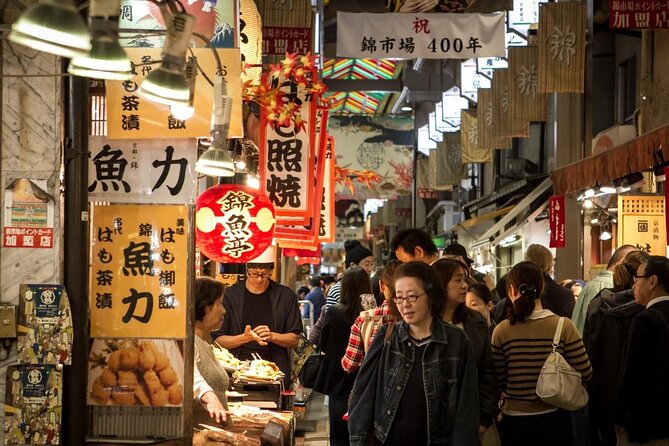
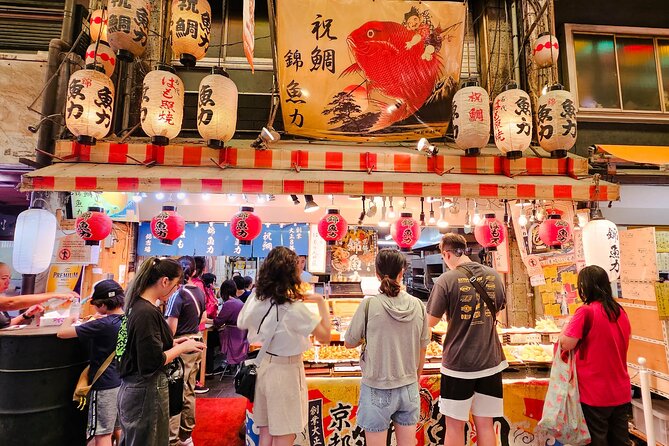
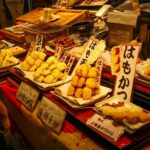
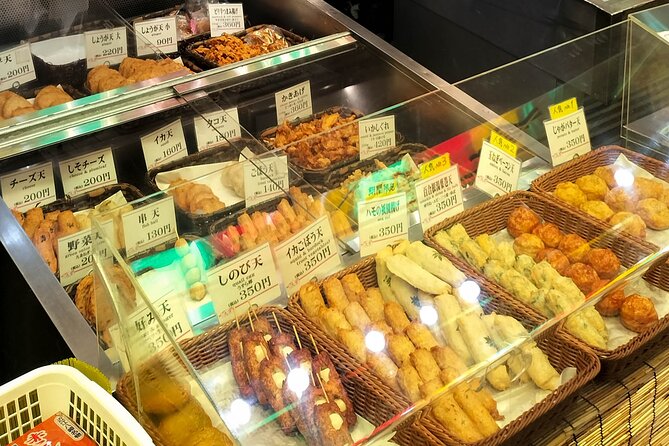
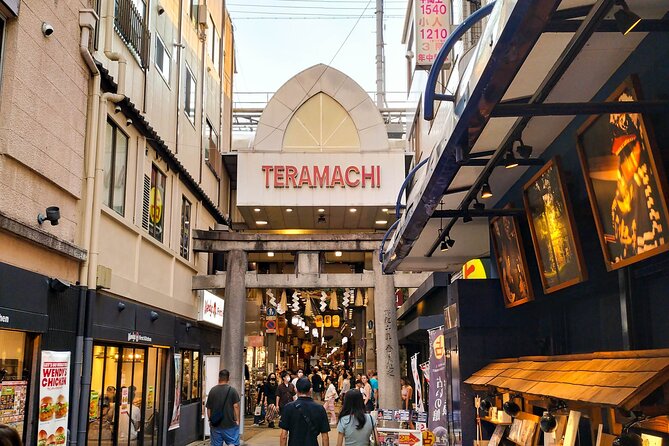
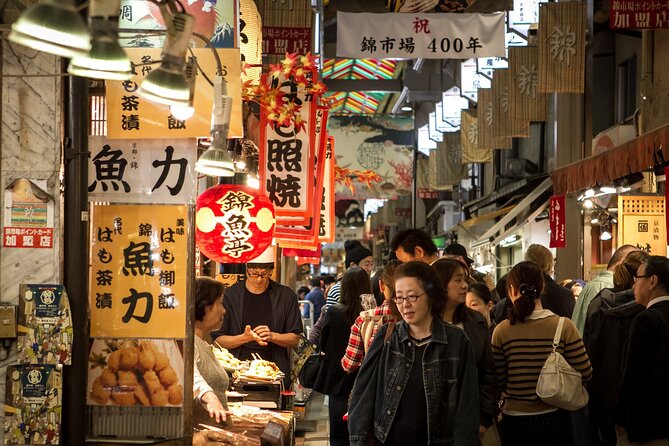
Nishiki Market is known as Kyoto’s Kitchen for good reason. The covered shopping street is lined with vendors selling seasonal foods, Kyoto specialties, produce, knives, cookware, and ready-to-eat snacks. You have about an hour here, which is enough for an introduction but not enough to inspect every stall.
That time limit is worth keeping in mind. Nishiki can pull you in several directions at once. You might stop for a sample, notice a shop selling kitchen tools, then spot another counter offering something you have never seen before. A local guide keeps the walk moving while helping you decide what is worth trying.
The included food stops are Nishiki gyoza and Uoriki tempura. Gyoza gives you a familiar reference point, while tempura lets you compare a crisp fried preparation with the softer tofu-skin tasting from earlier. The food is selected for tasting, not as a large meal, so plan to buy additional food if you want lunch.
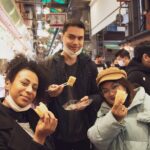
Past participants had food selected for them at different stalls, including beef, shrimp, desserts, and other market specialties. That does not mean every departure includes every one of those items. It does show the practical role of the guide: you are not simply marched past counters while someone recites names. The best guides help you choose, order, and understand what is in front of you.
Some foods may be unfamiliar or challenging. One person enjoyed sampling a wide range but could not manage every exotic item, while another particularly liked having a guide take care of ordering. You can expect the guide to help with choices, but you should still mention allergies, dislikes, or dietary limits at the start. The supplied details do not promise a special dietary menu, so do not assume every need can be covered.
Why the local guide matters here
Nishiki Market is possible to visit on your own. That is also the strongest argument for asking what you are paying for. At $48 per person, the value comes from explanation, food selection, translation help, and a more organized route through a complicated shopping street.
The guide quality matters a great deal. Jasmine was praised for taking care with tastes and helping people choose products. Mao was singled out for explaining Japanese customs and traditions as well as food. Boris was praised for his explanations, friendly manner, and extra help when a taxi went to the wrong place. Ai was noted for knowing the market closely and explaining the background of individual shops.
Those names give you a sense of the service, but they do not guarantee a particular guide. The experience provider is TripGuru, and the assigned guide can vary. If you are hoping for Jasmine, Mao, Boris, or another specific person, you can ask when booking, but the provided information does not promise that request.
The strongest guide will help you notice details you might miss: how foods are sold, which items are seasonal, what a specialty means in Kyoto, and how to behave around a crowded food counter. The weaker version of the tour may feel like someone buying snacks for you without explaining much. One person found the guide friendly but wanted more history and more emphasis on foods particular to Kyoto.
That difference explains the rating of 4.6 from 23 reviews. Most of the praise centers on the guides, but the experience depends on who leads your small group and how much conversation you draw out of them. Ask questions. If you want more cultural background, say so early.
Nishiki Tenmangu Shrine gives the walk a quiet finish
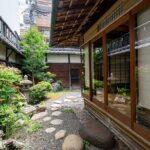
After the market, the route continues to Nishiki Tenmangu Shrine for about 15 minutes. The shrine is dedicated to the deity of learning and provides a quiet change from the food stalls and shopping traffic.
This is a short visit, not a full shrine tour. Its value is in the contrast. You move from displays, samples, and close-packed counters into a more reflective Shinto setting nearby. The stop also adds context to the neighborhood, reminding you that Nishiki is part of an old urban district, not an isolated food attraction.
Your guide may explain the shrine and help you understand basic customs. Do not expect an extended religious-history lesson in 15 minutes. Think of it as a brief cultural pause that rounds out the food walk.
The tour then ends at Kyoto-Kawaramachi Station. This is convenient if you plan to continue shopping, explore the Gion area, or catch public transport. The guide will help with your next destination, which is useful after a short tour in an unfamiliar part of the city.
How much food do you really get?
The included tasting list is specific:
- Yuba sashimi, or tofu skin
- Soy milk donut
- Nishiki gyoza
- Uoriki tempura
The description also calls these free tasting items, so they are included in the $48 price rather than added as surprise charges. Other meals, drinks, and personal purchases are not included.
I would treat the food as a sampling course. It should give you enough to understand the market and decide what to return for later. It should not replace breakfast or lunch, especially if you have a large appetite or are traveling with teenagers.
This distinction is important because the tour’s appeal is partly educational. You are paying for access to a local guide who can point out good places, explain unfamiliar foods, and help you order. If your priority is maximum food for your money, walking through Nishiki alone and buying several snacks may cost less. If your priority is confidence and context, $48 is more reasonable.
The food approach can also be flexible. One couple found the guide willing to let them try what interested them instead of following a rigid list. That flexibility is useful for families and cautious eaters, but it means the exact tasting experience may vary.
A few more Kyoto tours and experiences worth a look
Timing, group size, and comfort
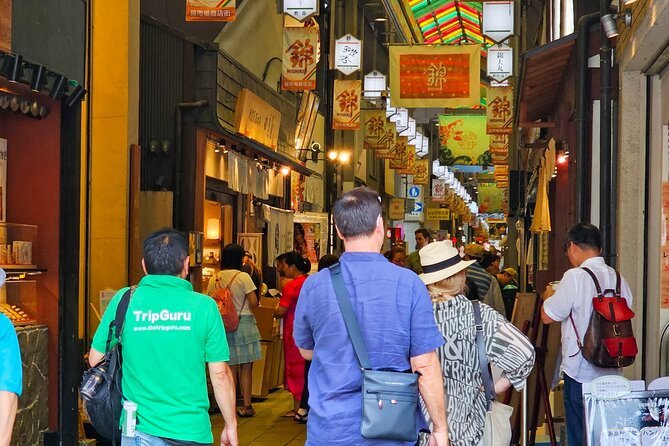
The tour lasts about two hours: roughly 30 minutes at Daimaru, one hour in Nishiki Market, and 15 minutes at the shrine, with the remaining time used for walking and transitions.
That is a good length for a first orientation. You get a useful introduction without spending half a day in a market. It also works well for families with younger people who may lose interest during a longer food program.
The maximum group size is nine. A small group makes it easier to hear explanations, stay together, and ask questions at a crowded stall. One booking ended up with only a couple, creating a much more personal outing. You should not count on that, but the group limit is still modest.
The tour is near public transportation, uses a mobile ticket, and does not include hotel pickup or drop-off. Wear shoes you can walk in, and arrive at the Apple Kyoto meeting point with enough time to find your guide. Directions have been clear for some participants, but the market district has many streets and entrances, so checking the meeting point before setting out is sensible.
Most people can participate according to the supplied information. Still, Nishiki is a busy market, and tasting stops may involve standing, walking, and moving through crowded spaces. If you need specific assistance, ask the provider before booking.
Who will get the most from this Kyoto food tour?
I would recommend this experience to first-time visitors who want a guided introduction before returning to Nishiki on their own. It is also a good fit if you are curious about Japanese foods but do not know what to order, or if reading menus feels like a barrier.
Families can benefit from the short format and flexible food choices. Teenagers may not want every tasting, but the range of dishes gives you several chances to find something appealing. The shrine stop also keeps the tour from becoming two straight hours of eating and shopping.
It suits solo visitors and couples who prefer a small group rather than a large coach outing. It is also helpful if you are fitting food exploration into a busy Kyoto schedule, since the walk ends at Kawaramachi Station and takes only two hours.
I would be more cautious if you want a full meal, an advanced cooking lesson, or a detailed lecture on Kyoto’s food history. The tour is an introduction. Its success depends on the guide explaining the foods rather than merely handing them over.
If you have already taken several Japanese food tours in Tokyo and Osaka, ask yourself what you want to add. One person felt some offerings were similar to food found elsewhere in Japan and wanted more dishes unique to Kyoto. For you, the value may rest in the Depachika visit, the market setting, and the local guidance rather than in rare foods.
Is $48 a fair price?
At $48 per person, this is not the cheapest way to eat at Nishiki Market. You can browse the stalls independently and choose your own purchases. The price becomes easier to justify if you value a planned route, included samples, help ordering, and explanations about Japanese customs and food.
The Depachika portion strengthens the value. Many visitors would not think to visit a department-store basement food hall, yet it offers a striking contrast with Nishiki’s market stalls. A guide can make that stop more than a quick look at expensive packaged foods.
The small group limit also helps. You are not paying for a large crowd experience, and you have a better chance to speak with the guide. Still, keep your expectations aligned with the format. You are buying an orientation and tasting walk, not a grand feast.
The free cancellation policy allows you to cancel up to 24 hours before the start time for a full refund. Changes or cancellations inside that 24-hour window are not accepted for a refund.
Should you book the Nishiki Market walk?
Book it if you want a friendly local guide to make sense of Kyoto’s food scene, especially on your first visit. The best version gives you four included tastings, a look at Daimaru’s unusual basement food hall, a guided route through Nishiki, and a short shrine visit, all in two hours.
Skip it if you mainly want the most food possible for $48 or prefer to explore markets without a schedule. You should also lower your expectations if you want a detailed historical tour or a menu built around foods found only in Kyoto.
For most visitors, I see this as a useful first look rather than a complete food adventure. Go with an appetite for learning, tell your guide what you can and cannot eat, and plan time afterward to return to the stalls that caught your eye. That is where the tour earns its keep: it helps you get your bearings fast, then leaves you better prepared to explore on your own.
FAQ
How long does the Kyoto Nishiki Market food tour last?
The experience lasts about two hours, including stops at Daimaru Kyoto, Nishiki Market, and Nishiki Tenmangu Shrine.
What food tastings are included?
The included tastings are yuba sashimi, which is tofu skin, a soy milk donut, Nishiki gyoza, and Uoriki tempura.
Is a meal included?
No. The included items are food tastings. Other meals, drinks, and personal purchases are not included.
Where does the tour start?
The meeting point is Apple Kyoto, at 83-1 Tachiuri Nakanochō, Shimogyo Ward, Kyoto, 600-8006, Japan.
Where does the tour end?
The tour ends at Kyoto-Kawaramachi Station. The guide can help you with directions to your next destination.
How large is the group?
The maximum group size is nine people. The actual group may be smaller.
Is hotel pickup included?
No. Hotel pickup and drop-off are not included. The tour is near public transportation.
Can I cancel for a full refund?
Yes. You can cancel at least 24 hours before the experience start time for a full refund. Cancellations or changes made less than 24 hours in advance are not accepted for a refund.
More Food Experiences in Kyoto
More Nishiki Market Tours in Kyoto
More Kyoto Food Tours in Kyoto
More tours in Kyoto we've reviewed











Kyoto Food Tours, compared.
 ★ 5.0Kyoto Night Foodie Tour in Gion (9+ dishes + 6 Sake tastings)From $163
 ★ 5.0Nishiki Market Brunch Walking Tour (7 Tastings + Brunch)From $68
 ★ 5.03-Hour Kyoto Insider Sake Brewery Tour with Tastings & PairingsFrom $84
 ★ 4.6Kyoto Night All-Inclusive Eats and Streets, Gion and BeyondFrom $101
 ★ 4.5Kyoto Nighttime All-Inclusive Eats and Streets, Gion and BeyondFrom $119
 ★ 5.0Kyoto Foodie Night TourFrom $102