

Reviewed · TRAIN EXPERIENCES
Kyoto Railway Museum Admission Ticket
The Kyoto Railway Museum puts you close to the machines that shaped modern Japan. You can step inside 53 real trains, from old steam locomotives to sleek Shinkansen cars, then watch a working steam locomotive and the roundhouse turntable in action. It is part museum, part hands-on playground.
I like the mix of real hardware and interactive displays. I also like that the museum explains how railways work, not just what trains look like. The main drawback is simple: the ticket is non-refundable, and the museum closes every Wednesday, so check the date before you commit.
In This Review
- Key points to know before you go
- Why the Kyoto Railway Museum is worth your time
- Start with the 53-train collection
- Step inside the Shinkansen
- Watch the steam locomotive and roundhouse turntable
- Try the simulators and hands-on displays
- Take your time with the railway dioramas
- Finish at the Sky Terrace
- How long should you spend there?
- Getting there and redeeming the ticket
- Is the $9 ticket good value?
- Who will enjoy this museum most?
- My recommendation
- FAQ
- Where is the Kyoto Railway Museum?
- How long is the ticket valid?
- What does the ticket include?
- How many real trains are on display?
- Can I ride a steam locomotive?
- Can I enter the trains?
- Are train-driving simulators available?
- Is the museum open every day?
- Are young children charged admission?
- Is the museum wheelchair accessible?
Key points to know before you go
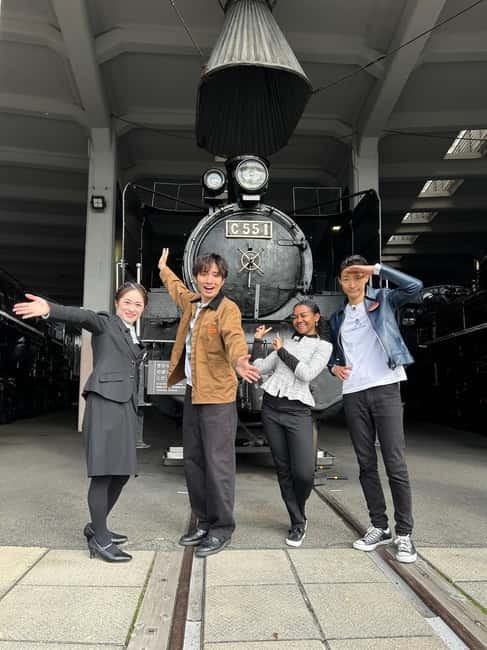
- See 53 genuine railway vehicles: Walk through Japanese railway history, with steam engines, classic trains, and Shinkansen cars.
- Ride a working steam locomotive: This adds a real sense of movement and nostalgia to the museum visit, though the supplied ticket information identifies the ticket as standard admission.
- Watch the roundhouse turntable rotate: The historic turntable is one of the museum’s most memorable working exhibits.
- Try hands-on railway controls: Train-driving simulators and interactive displays give you more to do than simply read signs.
- Allow a full day if you want the whole museum: The ticket is valid for one day, and the collection is large enough to reward a slow visit.
- Plan around Wednesday closures: Children under 3 enter free, and children aged 3 to 7 can buy tickets on-site for 200 yen.
Why the Kyoto Railway Museum is worth your time
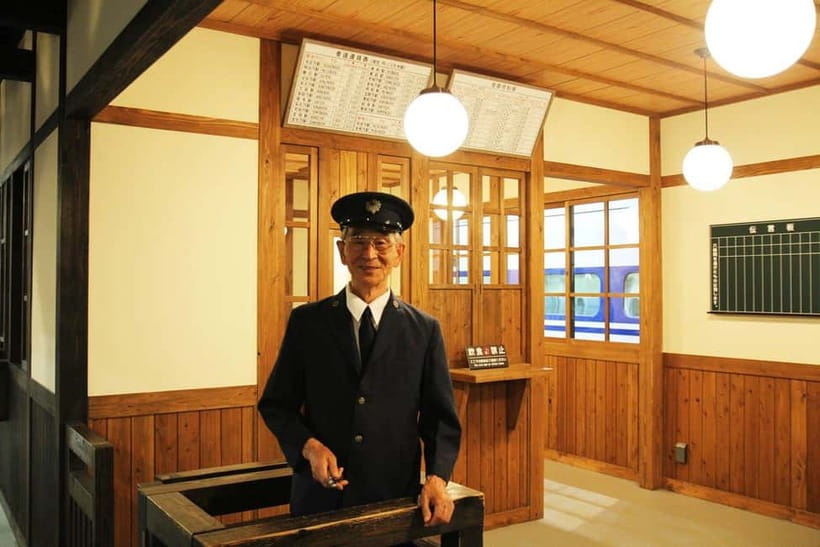
Kyoto is full of temples, gardens, wooden streets, and food markets. The railway museum gives you a different view of Japan, one built around precision, engineering, work, and motion. Here, the country’s railway story is not presented as a row of dusty objects behind glass. You can walk through actual train cars, examine working equipment, and see how rail travel changed daily life.
The collection covers a wide span, from steam power to the famous bullet train. That range matters. You can compare the size, shape, and feel of different railway eras in one place instead of seeing a single historic locomotive and moving on.
I find the museum especially useful for families because it gives children something to do with their hands. They can look into train cabs, try simulators, study railway displays, and watch large machines move. Adults with no special interest in trains still have enough context to understand why these machines mattered.
The museum has an average rating of 4.3 from 23 submitted scores, with especially strong praise for its interactive design, the variety of exhibits, and its appeal to both train fans and children. Those strengths match the main reason to visit: this is not only a display of Japanese trains. It explains the systems and technology around them.
A few more Kyoto tours and experiences worth a look


Start with the 53-train collection
Your first major task is to explore the real trains. The collection includes steam locomotives, older railway cars, and Shinkansen equipment. The important word here is real. You are not looking at small models or modern replicas. You are standing beside full-size machines and, in some cases, stepping inside them.
The steam locomotives give the museum a strong sense of age and character. Their exposed mechanical parts make it easier to understand how much labor and force once went into moving a train. The Shinkansen cars then offer a sharp contrast. Their smooth bodies and advanced design show how far Japanese railway technology progressed.
I recommend taking your time inside the cars. A quick walk-through will show you the seats and windows, but a slower look helps you notice how railway travel changed over time. The museum works best when you compare the vehicles rather than treating each one as an isolated photo stop.
This section should appeal to anyone interested in industrial design, transport, or Japanese social history. It also gives you good photographs, but I would not make photography the main goal. The scale of the trains is much more impressive when you stop and inspect the details.
Step inside the Shinkansen
For many people, the Shinkansen is the museum’s main draw. Japan’s bullet train is known around the world for speed and punctual service, but the museum lets you consider the vehicle as a physical object. You can see the interior, look at the shape of the cars, and compare it with the older trains nearby.
I like this contrast because it gives the famous bullet train a proper setting. If you only ride a Shinkansen during your trip, you experience it as transport. At the museum, you can examine it as part of a longer story about Japanese railways.
The Shinkansen exhibit also works well for children who already recognize the trains. A familiar symbol becomes something they can inspect at close range. For adults, it is a useful reminder that Japan’s rail system is not just about speed. It depends on design, engineering, operations, and a long process of development.
The museum is not presented as a guided tour, and no guide is named in the available activity information. You should expect to set your own pace and read the displays for yourself. That is a benefit if you like freedom, but less useful if you prefer someone to explain every exhibit aloud.
Watch the steam locomotive and roundhouse turntable
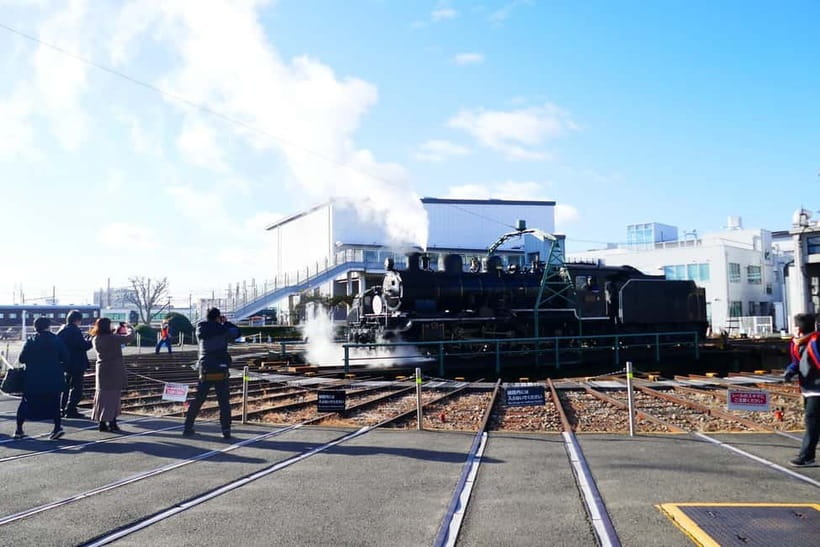
The working steam locomotive adds movement to a museum filled with stationary machines. That makes it one of the most distinctive parts of the visit. The sight and sound of a locomotive in operation give you a clearer sense of the power these engines once handled.
The roundhouse turntable is another highlight. The turntable rotates locomotives into position inside the historic roundhouse, and seeing the mechanism move helps explain how railway depots operated. It is an unusually good example of a large piece of railway equipment doing its job rather than merely sitting on display.
I would plan time around these active exhibits instead of assuming you can rush through them. Exact operating times are not provided in the booking information, so check the museum’s official website before your visit if the steam ride or turntable rotation is a top priority.
There is also a practical point here. The ticket includes standard admission, but the supplied information does not spell out the booking procedure or any separate charge for the steam ride. Treat the museum admission as your entry ticket, then confirm current ride details on the official website.
Try the simulators and hands-on displays
A museum can lose children quickly if it asks them to look at glass cases for hours. The Kyoto Railway Museum avoids that problem with hands-on exhibits and realistic train-driving simulators.
The simulators let you try the controls instead of simply watching a professional operate a train. You may find that this changes your view of railway work. Driving a train is not only about pushing a lever. It involves timing, attention, and control, even in a simulated setting.
The interactive displays also help explain railway technology in plain, practical terms. One strong part of the museum is its effort to show how trains and the surrounding railway system function. That gives the exhibits value for adults who want more than a collection of famous vehicles.
Availability and queue arrangements for individual simulators are not specified, so do not build your entire day around one particular machine. Treat the simulators as an important part of the museum, but keep your plan flexible.
Other museum experiences in Kyoto






Take your time with the railway dioramas
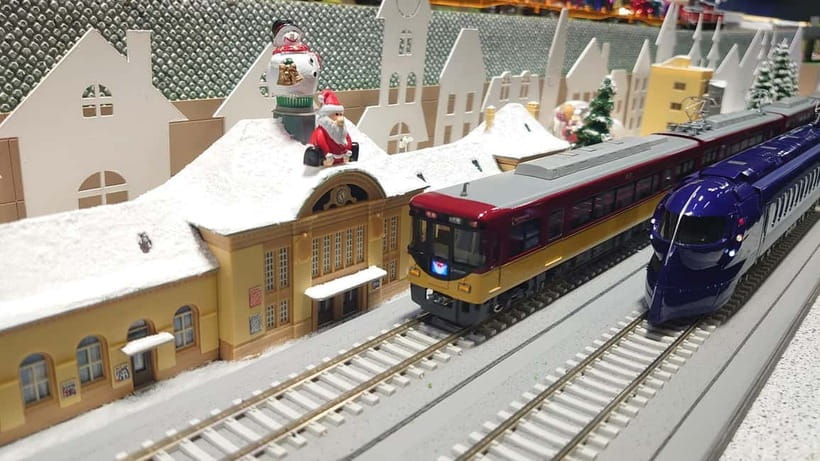
The railway dioramas show train operations on a smaller scale. These displays are useful because they let you see the railway as a complete system, with trains, tracks, stations, and movement working together.
A full-size locomotive shows engineering up close. A diorama shows the wider picture. You can understand how multiple parts of a railway connect, and you can pause to notice the relationship between trains and infrastructure.
I find dioramas especially helpful after seeing the real vehicles. Once you have looked inside a locomotive or Shinkansen car, the smaller display gives you a broader sense of where those trains fit. It is a quieter part of the museum, but not a throwaway exhibit.
If you are visiting with children, this can be a good place to slow down after the excitement of the simulators and steam locomotive. If you are traveling alone, it gives you a chance to study the details at your own speed.
Finish at the Sky Terrace
The Sky Terrace provides views from above the museum. After spending time among large engines and enclosed train cars, the change of perspective is welcome. From up high, you can look out across Kyoto and watch railway activity in the wider setting.
The supplied information does not specify exactly what landmarks are visible, so I would treat the terrace as a pleasant viewing stop rather than book it for one particular panorama. Its real value is the pause. The museum has plenty of machinery and information, and the open view gives you room to reset.
The terrace also helps place the museum in Kyoto’s modern setting. The city is often associated with traditional buildings, but railways are part of its present-day identity too. The view connects the museum’s historical displays with the city outside.
How long should you spend there?
The ticket is valid for one day, not for a fixed timed tour. That gives you useful freedom. You can visit at your own pace, return to a favorite exhibit during the same day, and avoid the pressure of a short scheduled activity.
I would set aside several hours at minimum. A fast visit could cover the main trains and the Shinkansen, but it would leave less time for the simulators, dioramas, steam locomotive, roundhouse, and Sky Terrace.
If you have a strong interest in trains, a full day makes sense. The collection includes 53 vehicles, and the hands-on exhibits reward attention. Families may also need extra time because children often want to repeat interactive activities rather than move along after one try.
Opening hours can change, so check the official museum website before setting your schedule. Wednesday is the regular closure day listed for this experience. This is especially important if you are planning the museum around Kyoto’s other attractions.
Getting there and redeeming the ticket
The meeting point is the Kyoto Railway Museum itself. You should go directly to the museum for ticket redemption at these coordinates: 34.9870986, 135.7422732.
When you arrive, present your admission ticket to the staff. If you leave and plan to return, keep the ticket available because you must show it again when re-entering the museum.
There is also a specific queue instruction for busy periods. If the entrance line is long, wait in the line marked Early Bird Advance Ticket. Follow staff directions rather than joining a different queue simply because it looks shorter.
The activity is wheelchair accessible. That is useful for visitors who need step-free access, though the supplied information does not provide details about every individual train car, simulator, or exhibit. If you need a particular accommodation, confirm it with the museum before arrival.
Is the $9 ticket good value?
At $9 per person, this is one of the easier Kyoto admissions to justify. You get access for a full day to a large collection of real trains, interactive displays, simulators, railway dioramas, the roundhouse, and the Sky Terrace.
The value is strongest if you spend at least half a day inside. A short visit focused only on the Shinkansen will still be enjoyable, but it will not make full use of the ticket. The museum earns its price through variety: you get history, engineering, working machinery, and family activities in one place.
The low adult price also makes this a sensible choice on a rainy day or when you want a break from temples. The experience is indoors for much of the visit, with the Sky Terrace adding an outdoor pause.
Children under 3 enter free. Children aged 3 to 7 can buy tickets on-site for 200 yen. The supplied information does not state the adult ticket price for every booking channel beyond the listed $9 rate, so check the current price when you select your date.
One warning: the activity is non-refundable. Check the museum’s Wednesday closure and current opening hours before buying.
Who will enjoy this museum most?
I would recommend the Kyoto Railway Museum to dedicated rail fans first. The chance to see 53 genuine trains, enter iconic cars, and watch a steam locomotive operate gives you plenty to study.
It is also a strong family choice. The simulators and hands-on exhibits give children an active role, while the real trains provide enough scale and spectacle to hold attention. The museum can explain railway technology without requiring a child to already know anything about trains.
History lovers and engineering-minded visitors should also find plenty here. The museum shows how railway design and operation changed, rather than presenting the bullet train as an isolated modern wonder.
You may want to skip it if your Kyoto schedule is already packed with temples and you have only a short time in the city. The museum is best when you can give it several hours. It is also less suitable for anyone expecting a guided tour, since no guide or guided format is included in the activity information.
My recommendation
Book the Kyoto Railway Museum if you want a practical, hands-on look at Japan’s railway story. The strongest reasons are the 53 real trains, the working steam locomotive, the rotating roundhouse turntable, and the chance to try train simulators rather than only read labels.
I would choose it for families, train fans, rainy-day plans, and anyone curious about the technology behind Japan’s famous rail service. Check the Wednesday closure, confirm current hours and steam ride details, and allow enough time to explore properly. At $9 for a full day, it offers a lot of substance for the price.
FAQ
Where is the Kyoto Railway Museum?
The museum is in Kyoto on Honshu, Japan. Go directly to the Kyoto Railway Museum for ticket redemption. The supplied coordinates are 34.9870986, 135.7422732.
How long is the ticket valid?
The ticket is valid for one day.
What does the ticket include?
The ticket includes standard admission to the Kyoto Railway Museum.
How many real trains are on display?
The museum has 53 real trains, including steam locomotives and Shinkansen trains.
Can I ride a steam locomotive?
The museum offers a ride on a working steam locomotive. The supplied ticket details identify the purchase as standard admission and do not explain any separate ride booking or charge, so check current details with the museum.
Can I enter the trains?
Yes. The experience includes the chance to step inside iconic trains.
Are train-driving simulators available?
Yes. The museum has realistic train-driving simulators and other hands-on exhibits.
Is the museum open every day?
No. The museum is closed every Wednesday. Opening hours can also change, so check the official website before your visit.
Are young children charged admission?
Infants under 3 years old enter free. Children aged 3 to 7 can purchase tickets on-site for 200 yen.
Is the museum wheelchair accessible?
Yes. The activity information identifies the museum as wheelchair accessible.
More Museum Experiences in Kyoto
More Tickets in Kyoto


More tours in Kyoto we've reviewed







Train Experiences, compared.
 ★ 4.0From Tokyo 1-Day Kyoto English-guided Tour by Bullet TrainFrom $452
 ★ 4.3From Osaka: Sagano Train Ride and Kyoto Guided Day TourFrom $66
 ★ 4.5Sagano Romantic Train & Arashiyama, Kiyomizudera, Fushimi Inari Taisha Day TourFrom $82
Full Day Hiroshima and Miyajima Tour by Bullet Train from KyotoFrom $399
Kyoto: Arashiyama Day Tour with Train, Boat, and OnsenFrom $150270 minutes - 5 hours
★ 4.5Sagano Romantic Train & Arashiyama, Kiyomizudera, Fushimi Inari Taisha Day TourFrom $82
Full Day Hiroshima and Miyajima Tour by Bullet Train from KyotoFrom $399
Kyoto: Arashiyama Day Tour with Train, Boat, and OnsenFrom $150270 minutes - 5 hours
 ★ 4.7Kyoto: Arashiyama Tour with optional Sagano Romantic TrainFrom $1053 - 4 hours