
Reviewed · 1-DAY TOURS
Kyoto Private Day Trip – Enjoy Your First-Time Visit to Kyoto!
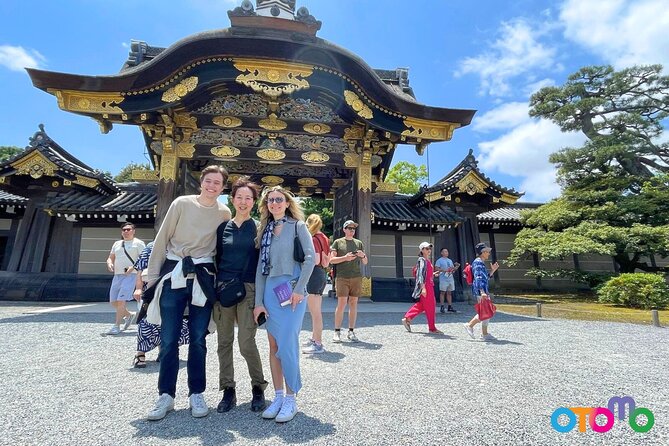
Kyoto’s famous sights are spread across the city, and this private day trip tackles the big four in one well-packed run: Fushimi Inari Taisha, Kiyomizu-dera, Nijo Castle, and Kinkaku-ji. You also walk through the old lanes of Sanneizaka and Hanamikoji Street, giving the day some atmosphere between the headline stops.
I like the private format, since your guide can adjust the pace, explain customs, help with photos, and change the order when needed. I also like the way guides such as Kei, Fumi, Kai, Jun, and Tetsu have shaped the day around family needs, lunch preferences, crowds, and places already visited. The catch is that the $99.10 price does not cover transportation, entrance fees, food, or other personal costs, so your final bill will be higher.
In This Review
- Key points to know before booking
- Why this route works for a first day in Kyoto
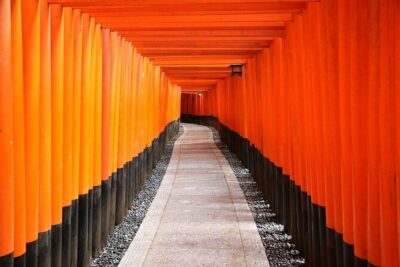
- Fushimi Inari and the tunnel of red gates
- Kiyomizu-dera, Kyoto’s famous wooden stage
- Sanneizaka and the old lanes around Kiyomizu
- Hanamikoji Street and the Gion atmosphere
- Nijo Castle and the Tokugawa story
- Kinkaku-ji, the Golden Pavilion finale
- The guide can make or break the day
- Standard route or custom planning?
- What the $99.10 price really buys
- Who should book this Kyoto day trip?
- Practical details for a smoother day
- Should you book it?
- FAQ
- How long does the Kyoto private day trip last?
- Which attractions are included in the standard route?
- Is this a private tour?
- Where does the tour start and finish?
- Are transportation costs included?
- Are entrance fees included?
- Is lunch included?
- Can I customize the route?
- Can I cancel for a full refund?
Key points to know before booking
- Four major Kyoto sights in one day: Fushimi Inari, Kiyomizu-dera, Nijo Castle, and Kinkaku-ji form a strong first visit.
- A genuinely private experience: Only your own group participates, with a guide assigned to help manage timing and local details.
- Flexible guiding is the main value: Guides have adjusted routes for children, mobility limits, rain, closures, late arrivals, and personal interests.
- A lot of walking is involved: Comfortable clothing and shoes matter, especially around shrine approaches, temple grounds, and old hillside streets.
- Costs come after the tour price: Transportation, admissions, lunch, and other expenses are extra. Taxi fares also cover the guide if you choose that option.
- Custom planning needs advance contact: For a personalized route, contact the guide two weeks ahead. If you do not reply, the standard route goes ahead.
Why this route works for a first day in Kyoto
A first day in Kyoto can easily become a pile of train changes, bus waits, map checks, and rushed temple visits. This tour gives you a clear framework. You meet at Kyoto Station’s Bus Ticket Centre and Information Centre, then spend about seven hours moving through a mix of shrine, temple, castle, shopping street, and traditional district.
The route gives you several different views of Kyoto rather than repeating one type of sight. Fushimi Inari is known for its long tunnel of red torii gates. Kiyomizu-dera gives you a broad city view from its wooden stage. Nijo Castle brings in the world of the Tokugawa shogunate, while Kinkaku-ji delivers the polished image many people picture when they hear Kyoto.
The pace is full. The scheduled stops add up to more than four hours, before transport and meals are counted. That means you will see a lot, but you will not have unlimited time for quiet wandering, long photography sessions, or every side path.
That tradeoff makes sense if this is your first Kyoto visit and you want a strong overview. It is less suitable if you already know the major sights and would rather spend a full day in one district.
Other private tours in Kyoto

Fushimi Inari and the tunnel of red gates
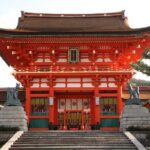
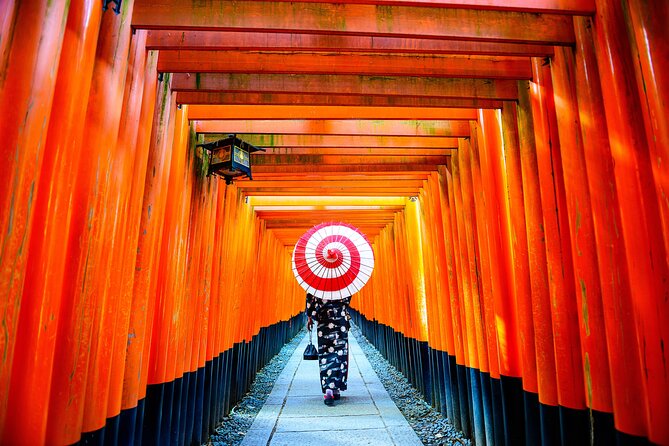
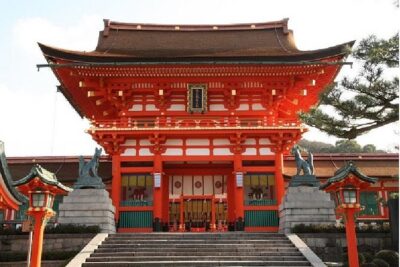
The day begins with Fushimi Inari Taisha, one of Kyoto’s most recognizable sights. The approach is lined with thousands of torii gates, creating the famous Senbon-torii scenery. The gates were placed as prayers for safety and the fulfillment of wishes, so this is not only a photogenic walk. It is an active Shinto shrine with religious meaning.
The scheduled stop is about 32 minutes, which is enough to enter the shrine area and see the most famous section of gates. It is not enough for a long hike through the entire mountain route. Your guide can help you use the limited time well and explain what you are seeing instead of leaving you to guess at the customs.
This is one place where timing matters. Fushimi Inari is popular in every season, and the narrow gate passages can feel crowded. A private guide cannot remove the crowds, but can help you avoid wasting time finding the entrance, choosing a route, or working out how to continue to the next stop.
Wear shoes you can walk in comfortably. Even a short visit involves moving through a large shrine complex, and the full torii route rises into the wooded hills.
Kiyomizu-dera, Kyoto’s famous wooden stage
Kiyomizu-dera is one of Kyoto’s essential temple visits and a World Heritage site. Its best-known feature is the wooden stage, which offers a memorable view across the city. The temple began with the enshrinement of a statue of Kannon, according to the site’s traditional account, adding a religious layer to what might otherwise seem like a scenic overlook.
You have about 45 minutes here. That is a useful amount of time for the main temple area, basic explanations, and photographs, but it remains a quick visit. Admission is not included, and the listed information gives an admission cost of ¥5,370 per person. Because that figure is unusually high compared with many individual Japanese temple admissions, check the current amount and currency shown at checkout before you commit your budget.
The approach to Kiyomizu-dera is part of the experience. Instead of treating the temple as a single stop, the tour continues into Sanneizaka, where the old streets create one of Kyoto’s most appealing walking sections.
Sanneizaka and the old lanes around Kiyomizu
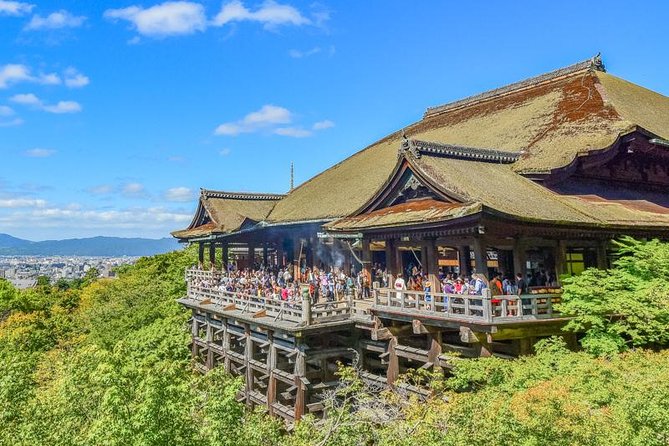
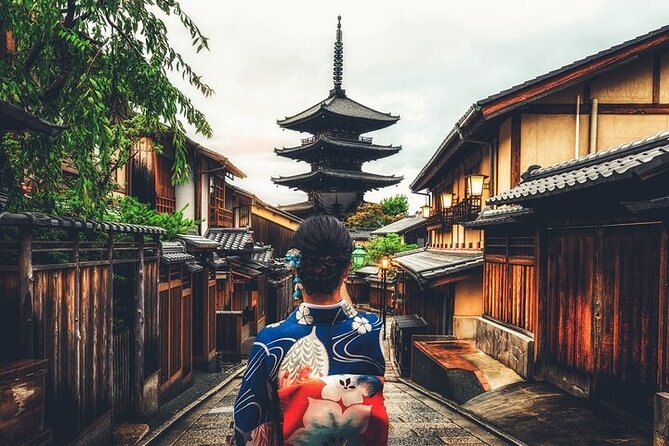
Sanneizaka is scheduled for about an hour, longer than any other stop except Nijo Castle. That extra time is welcome. The lane forms part of the approach to Kiyomizu-dera and is lined with traditional Kyoto-style buildings, shops, and places to pause.
Sanneizaka, together with nearby Ninen-zaka, is designated as an Important Preservation District for Groups of Traditional Buildings. The street is also linked with Kita no Mandokoro, the wife of Toyotomi Hideyoshi, who is said to have used the approach.
This is where the private format can feel most useful. You can ask your guide about the buildings, decide how much time to spend browsing, and get help with photos or local suggestions. Several guides have also helped arrange lunch, tea, and shopping stops, though those purchases are your responsibility.
The old lanes are attractive but not especially quiet. Expect a popular sightseeing area, a good deal of walking, and streets where you may want to slow down even though the rest of the day is tightly timed.
Hanamikoji Street and the Gion atmosphere
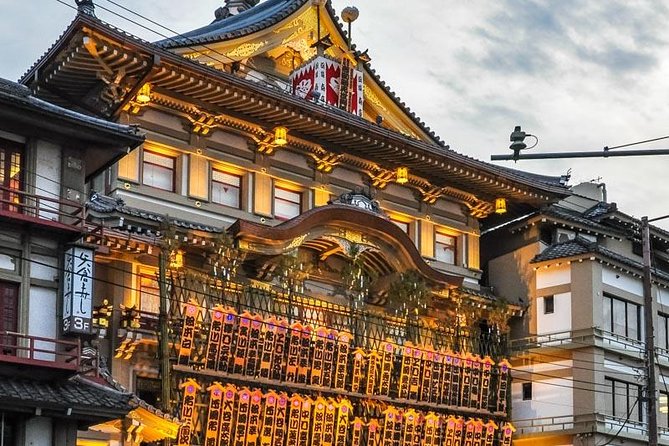
The 10-minute stop at Hanamikoji Street is brief, but it adds a useful glimpse of Gion. This is the main street through the area, with Kyoto-style buildings and nearby Buddhist temples and Shinto shrines.
Do not expect a long exploration of Gion during this stop. Ten minutes is enough to see the character of the street and hear an explanation from your guide, not enough to search every lane or wait for a special sight.
That short pause works because the tour already spends more time around Sanneizaka. You get two different traditional Kyoto settings in one morning or afternoon: the temple approach around Kiyomizu and the refined streets of Gion.
A few more Kyoto tours and experiences worth a look

Nijo Castle and the Tokugawa story

Nijo Castle shifts the mood from religious sites and old streets to political power. It is tied to the rise and fall of the Tokugawa shogunate and preserves an important part of Japanese history. The castle grounds also provide a chance to sit in a garden and catch your breath after the busy temple areas.
You have approximately 55 minutes here. That gives you time for a focused visit, though the castle complex deserves longer if you want to study every room, garden, and architectural detail.
Admission is extra, as are all transportation and food costs. Your guide can explain the castle’s role in Japanese history and help you keep moving toward the final stop. This kind of context is valuable because Nijo Castle can otherwise become a quick sequence of impressive rooms and painted walls without much sense of why it mattered.
The tour’s historical balance is one of its strengths. You are not only seeing beautiful places. You are also moving from religious devotion at Fushimi Inari and Kiyomizu-dera to the political world represented by Nijo Castle.
Kinkaku-ji, the Golden Pavilion finale
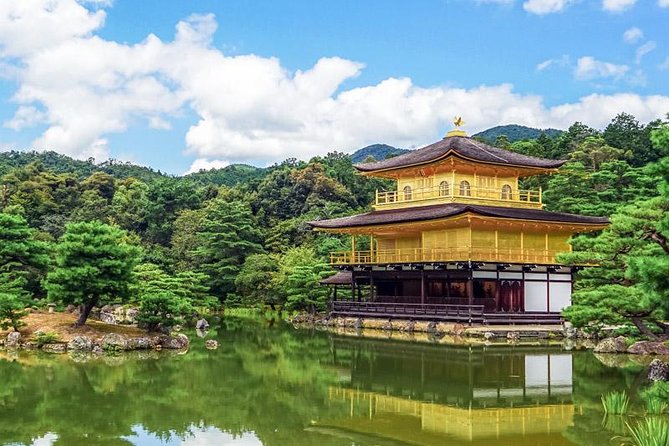
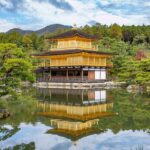
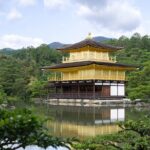
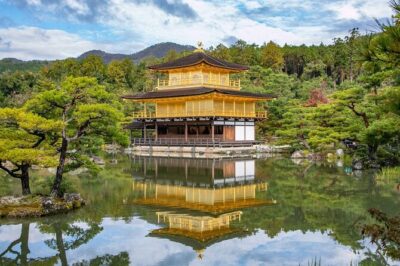
Kinkaku-ji, also called the Golden Pavilion, closes the standard route. The gold-covered building reflected in the surrounding water is one of Kyoto’s most familiar images, and the site is busy throughout the year.
The visit lasts about 40 minutes. That is usually enough to follow the main viewing path, see the pavilion from its classic angle, and hear the story behind the temple. The site’s golden building is associated with the idea of the Golden Land, making it a fitting final image after a day focused on Kyoto’s best-known sights.
Kinkaku-ji is a place where expectations can get ahead of reality. You will see the famous pavilion, but the visit is not a long, private contemplation. The main viewing area can be crowded, and you follow an established route rather than wandering freely.
Ending here makes practical sense. It leaves you with one of Kyoto’s strongest visual memories, even if the day has been busy.
The guide can make or break the day
The tour’s strongest feature is not simply the list of sights. It is the person guiding you between them. The most effective guides described in the supplied experiences have done more than recite facts.
Kei adjusted the schedule around busy periods, suggested shopping areas, helped choose lunch, and offered extra tips for the rest of a Kyoto visit. Another day with Kei included Fushimi Inari, Kiyomizu-dera, a Japanese lunch, and Kinkaku-ji in a well-timed order.
Fumi built a route around Kyoto’s top sights and adjusted it when a place was closed or already visited. Kai helped translate cultural differences and shaped a specialized schedule around specific needs. Jun met a group at the station, organized the key sights efficiently, and helped make a first day manageable.
The service also appears suited to families. Guides have slowed or adjusted activities for children and different physical abilities, and one guide made extra effort to keep a family member comfortable. If you have a particular limitation or priority, explain it clearly before the tour.
There is one caution. One negative account describes a customized tour in which the guide did not use the paid time well. That is a reminder to confirm the length, route, meeting details, and expectations in writing before the day, especially when selecting the custom option.
Standard route or custom planning?
The standard route is the safer choice if you want Kyoto’s major sights and do not want to spend time planning. It covers a lot and works well for a first visit.
The custom option is better if you have already seen one of the listed places, need a slower pace, want to focus on food or culture, or are traveling with children. You must contact the guide two weeks in advance to build that route. If you do not respond, the standard route will be used.
Custom does not mean every expense is included. Entrance fees and other necessary expenses for the guide are listed as extra for the personalized option. Ask for a clear cost outline before the tour.
There is also a limo option and a taxi preference. If you choose taxis, all taxi fares during the tour, including the guide’s fares, are your responsibility. The provided information does not promise a fixed transport cost, so public transport or walking may be easier to budget if available for your group.
What the $99.10 price really buys
At $99.10 per person, the main purchase is private guiding and time saved, not an all-inclusive sightseeing package. The guide can organize the day, explain the places, help with language differences, adjust the route, and keep your group moving through a difficult set of locations.
The price has better value for a family or small group that wants personal attention. It also makes more sense for a first visit when planning Kyoto’s scattered sights feels like work. A solo participant or couple who is comfortable using trains, buses, maps, and temple websites may find the extra admissions and transport costs harder to justify.
The standard tour gives an estimated additional cost of ¥5,370 per traveler, but the information also separately lists Kiyomizu-dera admission at ¥5,370 per person. Treat those figures as amounts to verify rather than a final guaranteed total. Lunch, drinks, entrance fees, transport, and personal spending are not included.
You can cancel for a full refund up to 24 hours before the start time. Changes or cancellations made less than 24 hours before the start are not accepted for a refund.
Who should book this Kyoto day trip?
I would consider this tour for a first-time visitor with one busy day in Kyoto, especially if you want help with local customs and cultural background. It is also a strong fit for families, older relatives, and groups that value having one person manage the day.
It suits you if you want to see the famous places without building a route yourself. The private setting also lets you ask questions freely and request help with photos, lunch, translation, or small changes.
I would hesitate if you prefer slow travel. Seven hours with six scheduled stops is a full day, and the most famous sites are busy. You should also think twice if you expect the $99.10 price to cover everything. It does not.
The tour has a 4.9 rating from 97 ratings and a 99 percent recommendation figure, which fits the overall picture of strong guide performance with one important warning: your experience depends heavily on the individual guide and on how clearly you communicate your needs.
Practical details for a smoother day
The meeting point is the Bus Ticket Centre and Information Centre at 902 Higashishiokōjichō, Shimogyo Ward, Kyoto 600-8216. The activity ends back at that meeting point.
Allow extra time to find the exact spot inside or around Kyoto Station. One group had trouble locating its guide at first because it approached from another part of the station, although the guide was waiting at the stated location.
Wear comfortable clothing and shoes. The route includes shrine grounds, temple approaches, preserved streets, castle grounds, and substantial walking between stops.
You receive confirmation when booking, and the meeting point is near public transportation. Most people can participate, but the schedule is active enough that you should tell OTOMO Travel Guide about any physical concerns before the day.
Should you book it?
Book this private Kyoto day trip if you want a well-organized first look at the city, personal explanations, and help fitting the headline sights into one day. The strongest value comes from the guide’s flexibility, not from admission savings.
Choose the standard route for a straightforward overview. Choose the custom option only if you are prepared to contact the guide well ahead of time and discuss exactly what you want. Budget separately for transport, admissions, and lunch, then confirm the unusual fee figures before paying.
For a first Kyoto visit, this is a practical, ambitious introduction. Just keep your expectations realistic: you will see the essentials, not every corner of the city.
FAQ
How long does the Kyoto private day trip last?
The experience lasts approximately seven hours.
Which attractions are included in the standard route?
The standard route visits Fushimi Inari Taisha Shrine, Kiyomizu-dera Temple, Sanneizaka, Hanamikoji Street, Nijo Castle, and Kinkaku-ji Temple.
Is this a private tour?
Yes. Only your own group participates in the private activity.
Where does the tour start and finish?
It starts at the Bus Ticket Centre and Information Centre at 902 Higashishiokōjichō, Shimogyo Ward, Kyoto 600-8216, Japan, and ends back at the meeting point.
Are transportation costs included?
No. All transportation costs are paid by the customer. If you choose the taxi preference, you also pay the guide’s taxi fares.
Are entrance fees included?
No. Entrance fees are not included. The listed information specifically says admission to Kiyomizu-dera, Nijo Castle, and Kinkaku-ji is extra.
Is lunch included?
No. Lunch, food, drinks, and other personal expenses are not included.
Can I customize the route?
Yes. Select the customizable tour option and contact the guide two weeks in advance. If you do not respond, the standard route will be used.
Can I cancel for a full refund?
Yes, if you cancel at least 24 hours before the experience start time. Cancellations or changes made less than 24 hours before the start are not accepted for a refund.
More 1-Day Tours in Kyoto
More Private Tours in Kyoto
More tours in Kyoto we've reviewed




1-Day Tours, compared.
 ★ 5.0PERFECT KYOTO 1-Day Bus TourFrom $129
 ★ 4.8Kyoto: Fushimi Inari, Kinkakuji, Bamboo Grove 1 Day Bus TourFrom $122510 minutes - 9 hours
 ★ 5.010 Must-see Spots in Kyoto One Day Private Tour (up to 7 people)From $179
 ★ 4.0Kyoto 1 Day Tour from KyotoFrom $168
 ★ 4.5Kyoto and Nara Day Trip from KyotoFrom $194
 ★ 4.0From Tokyo 1-Day Kyoto English-guided Tour by Bullet TrainFrom $452