
Reviewed · SAMURAI & KENDO EXPERIENCES
Kyoto: Samurai Ninja Museum guided tour
Kyoto’s Samurai Ninja Museum turns a short museum visit into a hands-on history lesson. You see samurai armor and weapons, dress in a samurai costume, wear a real helmet, handle a replica sword, and finish by throwing shuriken, the familiar ninja stars. It is history with a bit of theatrical fun.
I like the English-speaking guides, who explain the place of samurai and ninja in Japanese history rather than simply passing around props. I also like the mix of looking and doing: the costume photographs, the katana lesson, and the star-throwing keep children and teenagers involved. The main caution is time. One hour moves quickly, and the $28 price may feel high if you want a quiet, in-depth museum visit rather than an interactive activity.
In This Review
- Key points at a glance
- What the Kyoto Samurai Ninja Museum experience is really like
- The museum displays: armor, swords, and ninja tools
- Samurai costume, helmet, and replica sword
- Shuriken throwing and the ninja finale
- Why the guide makes the difference
- Is $28 good value for one hour?
- Timing, group size, and practical planning
- Who will enjoy this most?
- How to get the most from your hour
- Should you book the Samurai Ninja Museum tour?
- FAQ
- How long does the Samurai Ninja Museum tour last?
- What language is the tour offered in?
- What is included in the ticket?
- Can I wear samurai armor?
- Does the tour include a katana lesson?
- Is the museum wheelchair accessible?
- Can I cancel the booking for a refund?
Key points at a glance
- Wear samurai gear: Try a samurai costume, a real helmet, and a replica sword for photographs.
- Learn from a live guide: Guides including Miu, Akiko, Sayo, Ko, and Jukia have been praised for clear English and lively explanations.
- Throw ninja stars: Shuriken throwing is the tour’s most popular hands-on activity and works well for families.
- See weapons and craftsmanship: Displays cover armor, weapons, and the skill that went into making them.
- One hour, small-group format: The advertised group limit is 10, though the activity information also gives a maximum of 30, so check the specific departure.
- Good rainy-day option: The museum, guide, and activities are indoors, with no transportation included.
What the Kyoto Samurai Ninja Museum experience is really like
This is not a large traditional museum where you spend half a day reading labels. Think of it as a compact, guided introduction to samurai and ninja culture, followed by simple activities that let you handle safe replicas and dress for photographs.
The tour connects Kyoto with the long period in which samurai shaped Japanese politics and society, from the early Heian period through the end of the Tokugawa shogunate. The guide helps place armor, swords, and ninja tools into that wider story. That context matters because the costumes and weapons are more than photo props. They give you a basic sense of how warriors were presented, equipped, and remembered.
The strongest part of the experience is the guide. Names that appear repeatedly among the excellent staff include Miu, Akiko, Sayo, Ko, Jukia, Aya, Taka, and Saku. You may not receive a particular guide, but the consistent praise for clear English, questions, and audience participation is reassuring.
Guides have been described as friendly, easy to understand, and good at explaining both history and craftsmanship. One useful detail is that some guides ask questions during the tour. That keeps the session moving and gives you a chance to connect the displays with the story instead of simply listening to a speech.
A few more Kyoto tours and experiences worth a look

The museum displays: armor, swords, and ninja tools
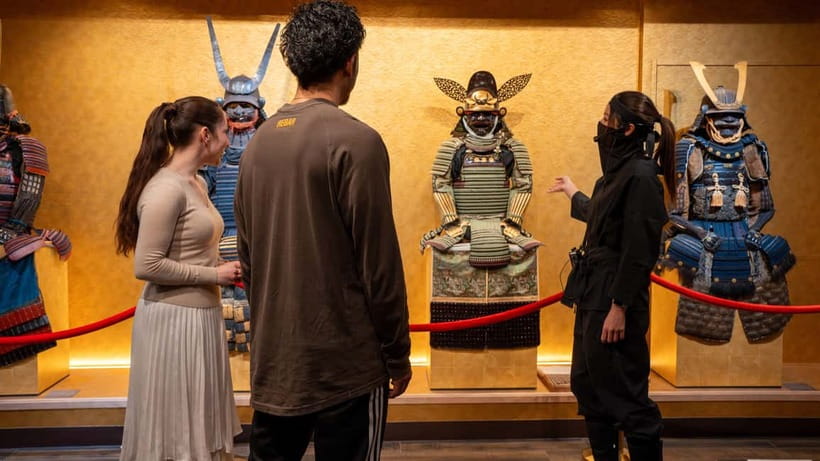
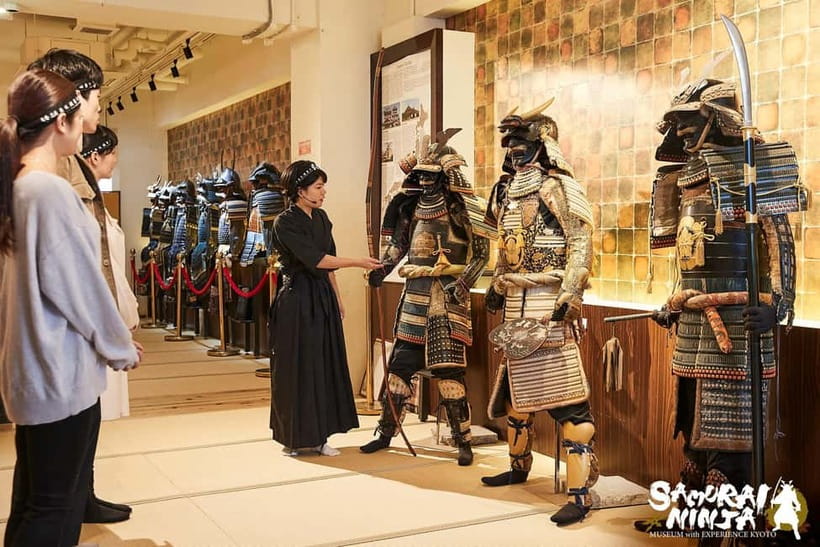
The museum portion introduces the equipment associated with samurai and ninja. You can expect displays of armor, swords, and other weapons, along with explanations of their use and construction.
The armor is likely to be the main visual draw. Samurai armor has an imposing look, and seeing it at close range makes a stronger impression than seeing a small photograph in a guidebook. You can also hear about the workmanship involved in the armor and weapons, a detail several guides emphasize.
The ninja side is more playful, but it adds useful contrast. Ninja are often presented in popular culture as shadowy fighters with impossible skills. A guided explanation can help separate the historical idea of ninja from the modern movie version. One guide, for example, may discuss ninja tools while another spends more time on samurai life and the warrior class. The exact balance depends on the person leading your session.
Do not expect a complete account of Japanese military history in one hour. Kyoto’s connection with samurai reaches across centuries, and the museum can only sketch that story. I see this as an introduction, not a replacement for a larger history museum or a serious book.
Samurai costume, helmet, and replica sword
The dress-up portion is where the tour becomes especially useful for families. You can put on a samurai costume, wear a real samurai helmet, and hold a replica sword. The activity provides a clear photo opportunity, but it also gives you a physical sense of the weight and appearance of warrior equipment.
The replica sword is important. You are not handling a live weapon, and the experience is designed for a broad audience. You can pose, listen to the guide’s explanation, and take pictures without turning the activity into a formal martial arts class.
A katana lesson is also listed among the hands-on experiences. The exact amount of instruction may vary within the one-hour schedule, so I would treat it as a short demonstration or introduction rather than a full lesson. The same applies to the costume time. If you are visiting with children, keep expectations realistic: everyone may not have unlimited time for individual photographs.
Still, this is a smart use of a museum visit. Children can lose interest when a guide talks for too long, but a costume change gives them a reason to pay attention. Adults often enjoy it just as much, especially if the group is willing to play along.
Shuriken throwing and the ninja finale
The ninja star throwing is the most clearly hands-on part of the tour. You receive the chance to throw shuriken at a target, and some sessions turn it into a friendly competition.
This activity earns its popularity because it is simple, quick, and memorable. You do not need prior knowledge or special skill to take part. You aim, throw, and see what happens. It gives the hour a lively finish after the more information-heavy museum section.
Several strong experiences specifically praise the shuriken activity, including families with children and teenagers. If you are booking mainly for younger members of your group, this is probably the feature that will keep their attention. It also gives adults a break from standing and listening.
The limitation is that ninja star throwing is a short activity, not a full training session. You should not book this expecting advanced martial arts instruction. It is a safe, supervised taste of the subject, paired with a chance to take pictures and have fun.
Why the guide makes the difference
A one-hour museum tour rises or falls on the person holding the conversation together. The guides named in the feedback receive repeated praise for their English, warmth, and ability to explain samurai history in a way that suits families and first-time visitors.
Mami, Miu, Akiko, Sayo, Ko, Jukia, Aya, Taku, Taka, and Saku are among the guides praised for being informative and engaging. Some explanations focus on the historical role of samurai and ninja. Others draw attention to armor, weapons, or the skill of the craftsmen who made them.
That variety can be a strength. You are not booking a recorded presentation with the same delivery every time. You get a live person who can answer questions and adjust the pace. One guide might look and dress the part, adding to the atmosphere, while another may rely more on questions and detailed explanation.
English ability has also been a major strength. Multiple visitors describe the explanations as easy to follow, with one person singling out Ko’s English as especially clear. That matters in a tour built around historical terms and unfamiliar objects.
I would still keep your questions focused. The tour is short, so this is the moment to ask about the displayed weapons, armor, or the difference between samurai and ninja. A broad request for the entire history of Japan will not fit comfortably into sixty minutes.
Other guided tours in Kyoto





Is $28 good value for one hour?
At $28 per person, the tour is not the cheapest way to spend an hour in Kyoto. Its value depends on what you want from the visit.
The fee includes museum admission, a professional English-speaking guide, the samurai costume experience, and ninja star throwing. It also includes the interactive elements that are difficult to arrange on your own. If you value clear English explanations, family entertainment, and photographs, the price is reasonable for a compact activity.
The value is weaker if you only want to inspect displays. One four-star assessment questioned paying an additional amount for what felt like a museum ticket and ordinary guiding. That is a fair concern. Before booking, compare the cost with any basic museum admission option available for your date, especially if you do not care about dressing up or throwing shuriken.
The tour makes more financial sense for a family or first-time visitor than for someone already well read on samurai history. You are paying partly for the guide and partly for the activities. A person seeking a scholarly museum experience may want something larger and slower. A parent trying to fit an entertaining cultural stop into a Kyoto day will likely see more value.
Timing, group size, and practical planning
The advertised duration is one hour, with starting times subject to availability. That short length makes the activity easy to place between other Kyoto plans. It can work before lunch, after sightseeing, or as a rainy-day stop.
Transportation is not included, so you need to make your own way to the museum. Leave enough time to locate the entrance and arrive without rushing, but do not assume the tour includes pickup or a transfer to another sight.
The activity is described as a small-group tour limited to 10 participants. Elsewhere, the information gives a maximum of 30 travelers. Because those figures do not match, check the group size for your chosen departure before booking if crowding matters to you.
A group of 10 should allow better access to the guide and smoother participation in the dress-up and throwing activities. A larger group could mean more waiting for photographs or turns. The tour is wheelchair accessible, which is useful for planning, though the supplied information does not give detailed notes about every activity or the exact costume process.
Free cancellation is available up to 24 hours before the start time for a full refund. You can also reserve and pay later, which helps if your Kyoto schedule is still changing.
Who will enjoy this most?
I would recommend the experience to families, first-time visitors to Japan, teenagers, and adults who enjoy trying something rather than only looking at exhibits. The combination of costumes, replica weapons, guide-led explanations, and shuriken throwing gives different age groups something to do.
It is particularly useful if your group has mixed interests. A history fan can listen to the explanations about warriors and craftsmanship, while a child can look forward to dressing up and throwing stars. The guides’ use of questions and interaction helps bridge that gap.
It also suits visitors who want a clear English introduction to samurai and ninja culture. You do not need to prepare in advance, although one person sensibly suggested reading a little about ninjas before arriving. Even a short background will help you ask better questions and understand the difference between historical fact and popular imagery.
I would be more cautious if you dislike staged activities, want extensive original artifacts, or expect a full martial arts class. The museum is built around an accessible, participatory experience. That is its appeal, but it is also its limit.
How to get the most from your hour
Go in with two goals: learn the basic story and enjoy the activities. If you focus only on getting the perfect costume photograph, you may miss the explanation of the armor and weapons. If you focus only on the lecture, you will miss what makes this museum different from a standard display.
Ask the guide about one object that catches your eye. Ask how the armor was made, what a particular weapon was used for, or how ninja were understood in Japanese history. A focused question can turn a general tour into a more personal lesson.
Be ready to take part. The costume and shuriken activities are not optional extras in spirit, even if you can choose how much to participate. Adults should encourage children, but they should also try the activities themselves. The best photographs often come from a whole family taking the experience seriously for about thirty seconds.
Keep your wider Kyoto schedule flexible after the tour. The session lasts one hour, but costume changes, group movement, and photographs can make the experience feel busy. Do not place it immediately before a timed train or reservation unless you have a comfortable buffer.
Should you book the Samurai Ninja Museum tour?
Book it if you want a short, guided, family-friendly introduction to samurai and ninja culture with real participation. The English explanations, costume photographs, replica sword, and shuriken throwing make good use of one hour, and the guides have earned strong praise for clear teaching and friendly energy.
Think twice if you want a quiet, large-scale museum or a detailed study of Japanese warfare. At $28, the price depends on using the interactive features. If you skip the costume and star throwing, you may not feel you received the full value.
For most first-time visitors, especially families and teenagers, I think the balance works. You leave with a little historical context, a few memorable photographs, and a fun story from your Kyoto visit. Just confirm the group size and compare admission options if the price feels important.
FAQ
How long does the Samurai Ninja Museum tour last?
The tour lasts one hour.
What language is the tour offered in?
The live guided tour is offered in English.
What is included in the ticket?
The price includes museum admission, a professional guided tour, a samurai costume, and ninja star throwing.
Can I wear samurai armor?
You can dress in a samurai costume and wear a real samurai helmet. The experience also includes holding a replica sword.
Does the tour include a katana lesson?
A katana lesson is listed among the hands-on experiences included at the museum. The activity lasts one hour, so the lesson is part of the short guided visit rather than a full-length training course.
Is the museum wheelchair accessible?
Yes, the activity is listed as wheelchair accessible.
Can I cancel the booking for a refund?
Yes. You can cancel up to 24 hours in advance for a full refund. You can also reserve now and pay later.
More Museum Experiences in Kyoto


More Guided Tours in Kyoto
More Samurai & Kendo Experiences in Kyoto


More tours in Kyoto we've reviewed







Samurai & Kendo Experiences, compared.
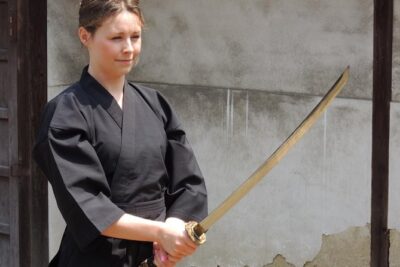 ★ 5.0Kyoto Samurai ExperienceFrom $119
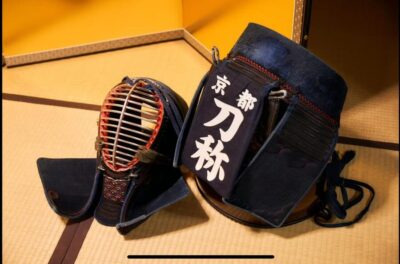 ★ 4.9Kyoto: Kendo and Samurai Experience with Uniform and GearFrom $1032 hours
 ★ 4.5Skip the lines Basic Ticket at SAMURAI NINJA MUSEUM KYOTOFrom $28
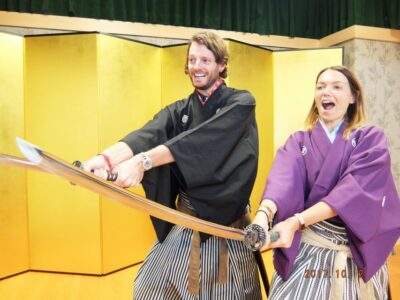 ★ 4.9Kyoto: Samurai Class, Become a Samurai WarriorFrom $70
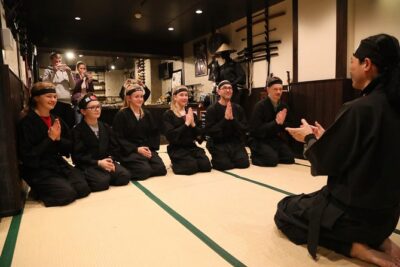 ★ 5.0Ninja 1-hour Hands-on Lesson by Japanese master in Kyoto -EntryFrom $80
 ★ 4.8Kyoto: Ninja Weapon Forging ExperienceFrom $1482h 30m