
Reviewed · COOKING CLASSES
Kyoto Ramen & Gyoza Cooking Class with Professional Chefs
The best part of this Kyoto cooking class is that you make the noodles yourself. You knead the dough, cut it, cook it, and build a bowl of ramen before sitting down to eat. You also prepare gyoza and fried rice, so this is a full meal, not a small taste.
I like the small group of up to eight, which gives the chef and English-speaking guide room to help with tricky steps. I also like the practical finish: two drinks, a generous meal, class photos, and recipes you can use at home. The main thing to consider is that this is not suited to vegans, vegetarians, or people who need strict allergy control.
In This Review
- Key points
- Making ramen instead of merely ordering it
- What happens during the 150-minute class
- Ramen, gyoza, and fried rice make a serious meal
- Drinks, photos, and recipes add real value
- The guides make the English instruction work
- A good fit for couples, families, and solo participants
- Food restrictions need careful attention
- Getting there and making the day work
- Should you book the Kyoto ramen class?
- FAQ
- How long does the Kyoto ramen and gyoza cooking class last?
- What food will I make?
- Are drinks included?
- Where is the meeting point?
- Is the class suitable for children?
- Can I join if I am vegan or have food allergies?
Key points
- Make ramen noodles from scratch: Knead, roll, cut, and top your own noodles rather than simply watching a demonstration.
- Cook three Japanese staples: The class covers ramen, gyoza, and fried rice, with enough food to count as a proper meal.
- Learn through translation: An English-speaking guide such as Rika, Yuki, Ayuri, or Yuka explains the chef’s instructions as you work.
- Keep the group personal: Eight participants is the stated limit, useful for questions and hands-on help.
- Finish with drinks and recipes: Two alcoholic or soft drinks are included, along with downloadable recipes and photos sent by email.
- Arrive early: The class begins on time, and late arrivals cannot join, reschedule, or receive a refund.
Making ramen instead of merely ordering it
Kyoto has no shortage of good meals, but a cooking class gives you a different kind of food memory. You do not just identify the noodles, broth, and toppings after they reach the table. You handle the dough and see how a few ordinary ingredients become one of Japan’s most familiar comfort foods.
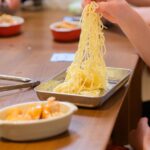
The noodle-making step is the heart of the experience. You knead the dough, cut the noodles, and prepare them for the bowl. That sounds simple, but the hands-on work helps you understand why fresh noodles have a different feel from packaged ones. It also gives the class a clear purpose: you are working toward lunch or dinner, not completing a string of unrelated kitchen exercises.
The class also places ramen in a wider Japanese food setting. The introduction may touch on ramen’s long story, from the oft-repeated account of Tokugawa Mitsukuni eating it in 1697 to the 1910 opening of Rairaiken in Asakusa, which helped bring the dish to a wider public. Japan now has more than 24,000 ramen shops, and this class offers a friendly way to understand the dish before you order your next bowl.
I would not book this mainly for a lecture. The history is a useful short context piece, while the real value comes from cooking and eating. If you want a long food-history seminar, this will feel light. If you want to learn a dish you can try again at home, the balance is right.
Other cooking classes in Kyoto

What happens during the 150-minute class
The advertised duration is 150 minutes, or two and a half hours. The experience description also refers to spending three hours with the ramen master and guide, so I would use the 150-minute figure when planning the rest of your day and confirm the exact timing when you book.
You meet in front of the Latitude 35° Story Monument, marked in Japanese as 北緯35°物語. Look for the guide holding an orange MagicalTrip board. This is one detail worth taking seriously. The class starts on time, and a late arrival cannot join, move to another session, or receive a refund.
Once the group is together, the English-speaking guide helps bridge the gap between you and the chef. The chef may not speak English, but guides such as Rika, Yuki, Ayuri, Yuka, Shiori, and Ken have handled translation and questions during past sessions. That arrangement lets the chef focus on technique while the guide explains what you need to do.
You then work through the dishes in a practical order. Exact sequencing can vary, but expect the class to cover:
- Ramen dough, noodle cutting, cooking, and toppings
- Gyoza filling, folding, and frying
- Fried rice preparation
- Plating and eating the finished food
- Drinks during the meal and cooking session
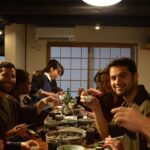
This is a group activity, so you will share the pace and kitchen space with other participants. That can be part of the fun. Several people have enjoyed meeting new friends while cooking, and the shared meal gives solo participants an easy way to talk without forcing conversation.
The pace seems designed for beginners. One participant described the class as easy to follow, while another appreciated that it was not rushed. Still, do not expect every minute to involve a separate culinary skill. One four-star assessment felt there was too much cutting and not quite enough individual cooking. That is a fair caution: the chef demonstrates, organizes, and guides, so the class is hands-on but not a professional kitchen apprenticeship.
Ramen, gyoza, and fried rice make a serious meal
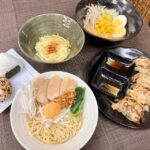
The menu is a strong point because it gives you three familiar dishes with different techniques. Ramen teaches dough and noodles. Gyoza adds filling, folding, and frying. Fried rice brings heat, timing, and quick movement in the pan.
The gyoza step may be the most social. Folding dumplings is easy to start and surprisingly hard to make look neat. You can expect a few imperfect shapes, but that is part of the charm. The important lesson is how to seal the wrapper and prepare a dumpling that holds together in the pan.
Fried rice rounds out the meal. It is a useful addition because it shows how Japanese home-style and casual restaurant food often works: a few prepared ingredients, strong heat, and careful timing. The class does not leave you with only one impressive dish that is difficult to repeat. You receive three recipes with different levels of challenge.
Plan to arrive hungry. The food is described as a generous full meal, and several participants found it filling. Do not schedule this between two large restaurant meals unless you are happy to eat lightly during one of them.
The dishes are made with meat unless you arrange a no-meat option in advance. The information provided says to tell the organizer at booking so the chef can prepare ahead. That is different from a general vegetarian or vegan menu. Vegans cannot join, and vegetarian or strict allergy requirements are not guaranteed.
Drinks, photos, and recipes add real value
The $83 price is easier to judge when you count what is included. You receive instruction, three dishes, two drinks, recipes, and photos. The drinks can be beer, sake, or soft drinks, and the meal itself is substantial.
I would not compare this price with the cost of a bowl of ramen alone. A restaurant meal may be far cheaper, but it will not teach you how to make noodles or give you a social activity lasting around two and a half hours. The better comparison is with another cooking class. For that kind of experience, the included meal and drinks make the price reasonable, especially in Kyoto, where paid activities can quickly add up.
The drinks also help set the tone. You can choose alcohol or soft drinks, so nobody needs to drink beer or sake to take part. The drinks are part of the meal rather than a separate bill, and the guide or staff can refill them during the session.
The recipe guide is perhaps the most useful extra. Take a photo of the finished dishes, then use the downloadable instructions after your trip. Homemade ramen can be a demanding project, but the class gives you a starting point and a better sense of the steps involved.
Photos are taken during the activity and sent by email afterward. This matters if you are busy cooking and do not want to keep stopping to take pictures. It is also useful for families, since children may be more interested in shaping dough and dumplings than posing at the table.
The guides make the English instruction work
The chef is the technical center of the class, but the guide shapes your comfort level. The English-speaking guide translates instructions, answers questions, explains cultural points, and helps keep the group moving.
Names vary by session, but Rika has been praised for taking plenty of photos and videos, translating the chef’s instructions, and making solo participants feel included. Yuki has been described as friendly, clear, and happy to answer wider questions about Kyoto. Ayuri and Yuka have also guided sessions, while Ken has been singled out for making sure every participant understood each step.
That personal help is important because cooking terms and gestures can be hard to follow across languages. A guide who translates only the basic recipe would be enough to get through the class. A guide who also checks that everyone is keeping up makes the experience much better.
The class is intended for all cooking levels. You do not need to know how to make dough or fold dumplings. The chefs and guide handle the instructions, and participants with no kitchen confidence can take part.
Children aged six and older are allowed. I would use extra judgment with younger children because the class involves knives, hot cooking surfaces, and other risky steps. Children must be supervised during knife use, and families should be ready to stay close rather than treating this as a drop-off activity.
Other cooking classes in Kyoto
A good fit for couples, families, and solo participants
For couples, this is a useful date activity because you work side by side and finish with a meal. It has more substance than a sightseeing stop and does not require advanced cooking ability.
Families can also do well here. The menu is familiar, the work is broken into clear tasks, and the class lasts long enough to feel special without taking an entire day. If you bring children, I would explain in advance that they must listen carefully around knives and hot equipment.
Solo participants have a natural place in the group. You will not be left to cook alone, and the shared table gives you a simple way to meet other food-focused people. The class has a friendly social side, but you can still focus on the food if that is your preference.
This is less suitable if you want a private lesson. The maximum group size is eight, and other participants may join. If mobility is a concern, the activity is not recommended and a private tour is suggested instead. Wheelchair users cannot take part.
Food restrictions need careful attention
This is the section I would read before paying. Vegetarian, vegan, and gluten-free requests cannot be reliably handled. Allergy-free meals are not guaranteed because the food is prepared outside the MagicalTrip kitchens, although small adjustments may be possible.
If you prefer no meat, contact the organizer at booking, not on the day. The chef may be able to prepare in advance, but the information does not promise a fully separate meal or an allergy-safe kitchen.
Vegans should skip this experience. People with serious allergies should also choose a class that clearly offers dedicated allergy procedures. The atmosphere may be welcoming, but kindness from the staff is not the same as a guaranteed safe meal.
You should also consider the amount of food. Ramen, gyoza, and fried rice together are filling. A light breakfast or lunch makes sense, depending on your start time.
Getting there and making the day work
The meeting point is the Latitude 35° Story Monument, and the orange MagicalTrip board is your visual marker. Give yourself enough time to find the monument. The no-late-arrival rule is strict, so arriving just a few minutes before the start is a needless risk.
The activity is listed in Honshu, Japan, and described as a Kyoto cooking class. One note in the supplied information refers to an Osaka cooking class, and some individual comments also mention Osaka. That appears to be a description mismatch, so check the confirmed meeting point and booking details carefully if you are staying in Osaka or moving between cities.
The class is conducted in English. You do not need to cover the guide’s food or drinks. Cancellation is free up to 24 hours before the activity for a full refund, and the reserve-now, pay-later option can help if your Kyoto plans are still shifting. Unsafe weather can lead to cancellation.
Should you book the Kyoto ramen class?
Book it if you want a hands-on food activity rather than another restaurant meal. The strongest reasons are the scratch-made noodles, the three-dish menu, the small group, the two drinks, and the recipes that give the experience a life beyond Kyoto.
I would especially recommend it for couples, families with older children, solo participants, and anyone who has already seen the main temples and wants an evening or midday activity with a local food focus. The 4.8 rating from 100 assessments reflects a very consistent experience, with praise focused on the friendly guides, clear translation, tasty food, organization, and warm treatment of children.
Skip it if you need vegan, gluten-free, or strictly allergy-safe food. Also skip it if you want a private, advanced cooking course with lots of individual stove time. For most beginners who like ramen and want to understand how the meal comes together, $83 is a fair price for food, instruction, drinks, and a useful memory you can repeat at home.
FAQ
How long does the Kyoto ramen and gyoza cooking class last?
The activity is advertised as 150 minutes. The included information also refers to spending three hours with the ramen master and guide, so confirm the exact session timing and allow extra room in your schedule.
What food will I make?
You will learn to make ramen, gyoza, and fried rice. The ramen includes making noodles from scratch, including kneading and cutting, and you will eat the completed dishes during the class.
Are drinks included?
Yes. Two drinks are included in the price. You can choose beer, sake, or soft drinks.
Where is the meeting point?
Meet in front of the Latitude 35° Story Monument, marked 北緯35°物語. The guide will hold an orange MagicalTrip board.
Is the class suitable for children?
Children aged six and older may join. Children must be supervised during knife use and other risky cooking steps.
Can I join if I am vegan or have food allergies?
Vegans cannot join. Vegetarian and gluten-free requests cannot be accommodated reliably, and allergy-free meals are not guaranteed. If you prefer no meat, tell the organizer when booking so the chef can check whether preparation in advance is possible.
More Workshops & Classes in Kyoto
More Cooking Classes in Kyoto
More Cooking Classes in Kyoto
More tours in Kyoto we've reviewed




Cooking Classes, compared.
 ★ 5.0Ramen Cooking Class at Ramen Factory in KyotoFrom $131
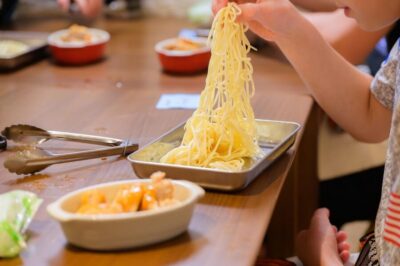 ★ 4.9Kyoto: Ramen Cooking Class at a Ramen Factory with SouvenirFrom $1271h 30m
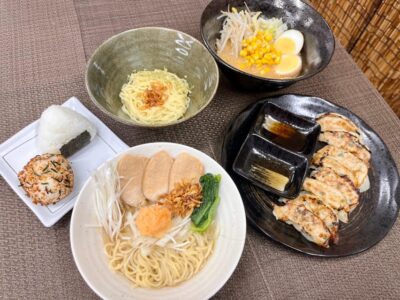 ★ 5.0Kyoto: Ramen, Gyoza, and Onigiri Cooking ClassFrom $901h 30m
 ★ 5.0Kyoto: Japanese Washoku Bento Small Group Cooking ClassFrom $582h 30m
 ★ 4.9Kyoto: Afternoon Japanese Izakaya Cooking ClassFrom $673 hours
 ★ 5.0Izakaya Style Cooking ClassFrom $71