
Reviewed · COOKING CLASSES
Kyoto: White Miso Cooking Class & Fermented Food Course Lunch
Kyoto’s white miso tradition gets a proper hands-on treatment in this small cooking class. You learn how shiro miso is made, work through the process yourself, cook a creamy white miso potage, and finish with a lunch built around fermented foods.
I like the small six-person maximum, which gives the class a personal feel, and I like the way it connects one ingredient to wider Japanese food customs. Miyuki, the miso expert, explains both the background and the practical method, and her calm guidance has been a major part of the experience.
The main catch is that the miso you make cannot be taken home because of customs regulations. Also, the class requires at least two participants, and a cancellation can come as late as four days before departure if that minimum is not met.
In This Review
- Key points to know before booking
- What makes Kyoto white miso worth your morning
- Meeting Miyuki and hearing the story behind miso
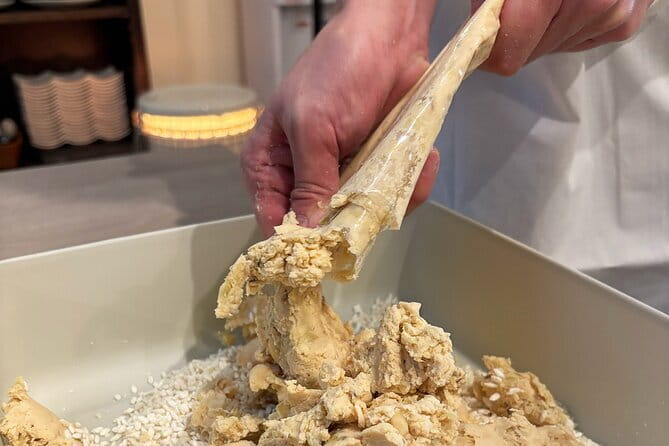
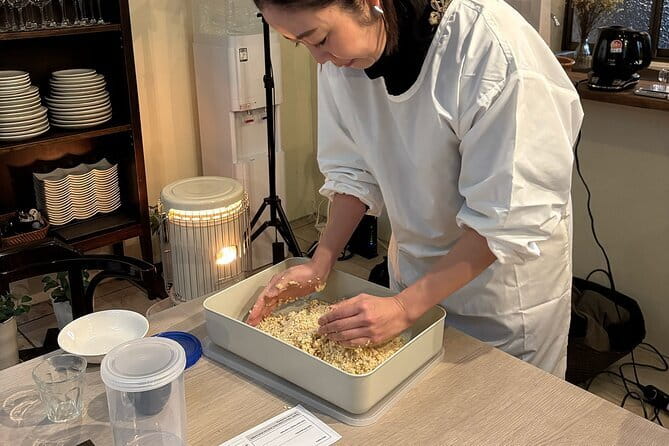
- Making white miso from scratch
- Cooking tofu white miso potage
- A fermented-food lunch after the workshop
- Why the small group changes the experience
- What you can and cannot take away
- Who will get the most from this class
- Booking, timing, and value at $120
- Should you book the Kyoto white miso class?
- FAQ
- Where does the white miso class meet?
- What time does the activity begin?
- How long does the experience last?
- Where does the activity end?
- How many people can join the class?
- Can I take the miso I make home?
Key points to know before booking
- You make white miso by hand, rather than simply watching a demonstration.
- Miyuki explains miso’s history and place in Japanese cooking, including why white miso is prized.
- You cook tofu white miso potage, then taste the result during the class.
- The included lunch centers on fermented foods, giving you more than a single cooking lesson.
- The group is limited to six people, but at least two participants are needed for the class to operate.
- The class begins at 9:20 a.m. and lasts about 3 hours and 40 minutes, ending at the same Kyoto meeting point.
What makes Kyoto white miso worth your morning
Miso is easy to recognize in a bowl of soup, but it is much more interesting when you learn how it is made and why different types taste so different. White miso, or shiro miso, is generally associated with a softer, sweeter flavor than darker varieties. That makes it useful in soups, sauces, dressings, and other dishes where you want savory depth without a heavy taste.
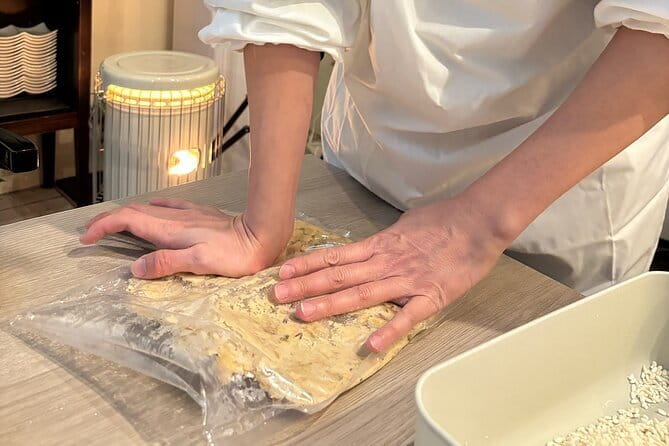
This class focuses on that gentler style. You do not simply hear a short talk and sit down for lunch. You handle the ingredients and take part in the work of making the paste. One person who took the class described the process as a real workout, which is useful to know: this is a cooking workshop, not a passive tasting stop.
I like that the lesson puts a familiar Japanese ingredient into context. Miso is tied to everyday food, home cooking, preservation, and the long Japanese practice of using fermentation to change and preserve ingredients. You get a clearer sense of why fermentation matters in Japanese meals, rather than treating miso as just another item on a restaurant menu.
The meeting point is 和想日々 京都, at the Kyoto Food and Lifestyle Research Institute, 416 Higashitakeyacho, Nakagyo Ward, Kyoto 604-0085. The class begins at 9:20 a.m., so you will want to plan your morning around arriving on time. The provided details do not specify a hotel pickup or transportation, so you should make your own way to the address.
Other cooking classes in Kyoto

Meeting Miyuki and hearing the story behind miso
Miyuki leads the workshop and explains the history and cultural role of miso before the hands-on work begins. Her teaching style is described as gentle, clear, and well organized, which suits a class where the process may be new to you.
This early explanation matters. Without it, making miso could feel like a set of repetitive kitchen tasks. With the background, you understand why the ingredients are treated as they are and why the finished paste has such a place in Japanese food.
Miyuki also talks about fermentation and its role in modern diets. That gives the class a wider angle than a standard local cooking lesson. You are not only learning a recipe. You are considering how a traditional preserved food continues to fit into daily meals.
The class appears to work well for first-time visitors to Japan because food provides an easy way into local culture. You do not need to know much about Japanese cuisine before arriving. The lesson starts with a central ingredient and builds from there.
At the same time, this is best for people who enjoy listening and participating. If you want a fast morning activity with minimal instruction, the long format may feel too slow. The value comes from the combination of explanation, physical preparation, cooking, and lunch.
Making white miso from scratch
The central part of the experience is the white miso preparation. You work under Miyuki’s direction and learn the steps involved in making the paste from scratch. The exact recipe and equipment are not specified, so I would not book this expecting a particular kitchen setup or a detailed take-home recipe unless the provider confirms it.
What is clear is that the class gives you a real hand-on role. You are not just tasting finished miso from a jar. That makes the experience more useful for anyone who wants to understand the texture, effort, and care behind a fermented seasoning.
One past participant felt confident enough afterward to make miso paste at home. That is a good sign for practical value, although your own ability to repeat the process will depend on the instructions given in the class and what ingredients you can find back home.
The physical side is worth noting. Miso making involves working ingredients together, and the process can require some effort. I see that as part of the appeal, but it may be less suitable if you want a purely relaxed demonstration.
The class is also a chance to ask questions in a very small group. With no more than six people, you should have a better chance to see what is happening and follow along than you would in a large tourist cooking school. The small size does not guarantee private instruction, but it does support a more direct exchange with Miyuki.
Cooking tofu white miso potage
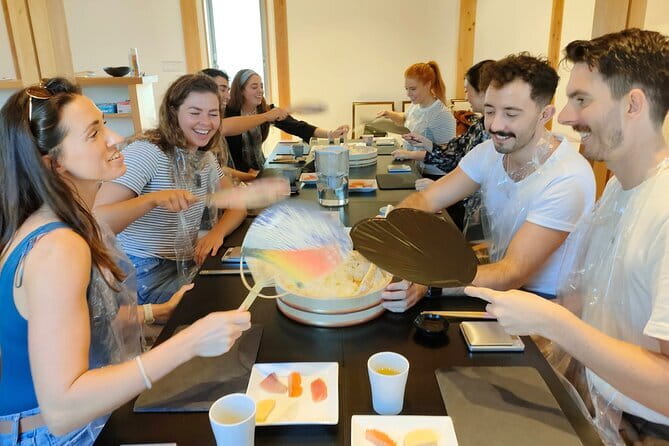
After making miso, you cook a white miso potage. The dish is described as a creamy tofu miso potage, a useful example of how white miso can work in a complete dish rather than only in traditional miso soup.
This part makes the class especially practical. You learn a preparation that may be easier to adapt to your meals at home than the full fermentation process. White miso’s mild sweetness can bring body and seasoning to a potage, while tofu fits naturally with the lesson’s focus on Japanese ingredients and fermented food.
You then taste the soup as part of the class. That lets you connect the ingredient, the preparation, and the final flavor in one morning. For me, this is one of the strongest parts of the format because it turns the lesson into something you can remember through taste, not just instructions.
The potage also offers a gentle entry point if you are unsure about fermented foods. You are not asked to begin with a sharp or unfamiliar flavor. The result is presented as creamy and approachable, with white miso providing the main seasoning.
The available details do not list every dish or ingredient used in the potage. If you have allergies or strict dietary needs, ask the provider before booking rather than relying on the general description.
A fermented-food lunch after the workshop
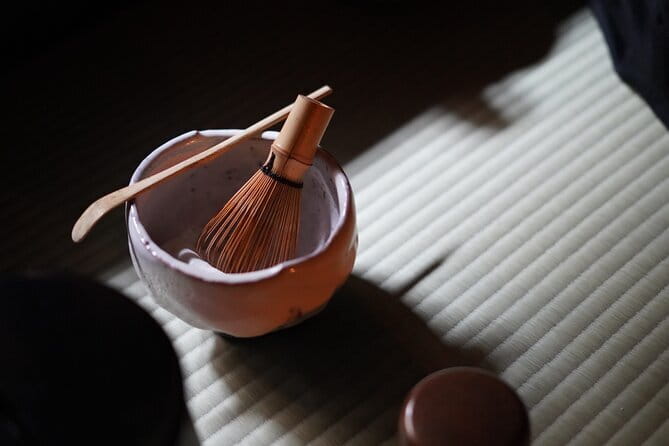
The final food portion is a fermented-food lunch. This gives the class a proper finish and expands the lesson beyond one bowl of soup. You get to see how fermentation can appear across a meal and how these foods support the broader cooking traditions Miyuki has been discussing.
I like this lunch because it gives the experience a clear arc. First, you learn what miso is. Next, you help prepare it. Then you cook with white miso and sit down to eat a meal built around related ideas.
The phrase fermented-food lunch does not provide a full menu, so you should not expect a specific set of dishes unless the provider confirms them. It is safest to think of the meal as a seasonal or house-prepared tasting rather than a fixed restaurant menu.
This meal also adds value to the $120 price. You are paying for a small group lesson, expert instruction, several food stages, and lunch, not merely a short miso demonstration. The price is not low for a cooking class, but the nearly four-hour schedule makes it easier to justify for people who want a serious food activity.
If you are mainly looking for a cheap meal, this is not the right choice. If you value a guided lesson and want food to be the center of a Kyoto morning, the cost is more reasonable.
A few more Kyoto tours and experiences worth a look

Why the small group changes the experience
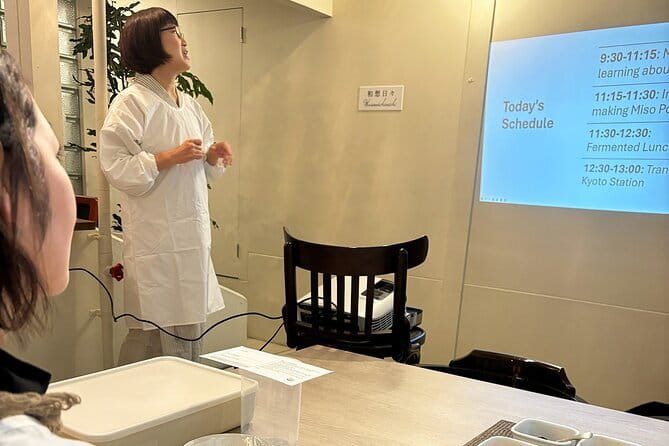
The maximum group size is six people. That number is important because the class depends on participation. You will be making food, listening to explanations, and tasting the results, so a crowded room could make the process awkward.
A small group also makes it easier to speak with Miyuki. Previous participants particularly valued her presentation, her patient guidance, and her ability to explain both the cultural side and the cooking method. You should still expect to share the teacher’s attention, but six people is a manageable number.
The minimum group size is two. If fewer than two people book, the experience may be canceled, with notice given four days before departure and a full refund offered. This is worth keeping in mind if you are building a tightly timed Kyoto itinerary.
The activity itself lasts about 3 hours and 40 minutes and ends back at the meeting point. Starting at 9:20 a.m., it should take most of your morning and reach into early afternoon, depending on the exact finish time. Do not place a timed museum visit immediately afterward unless you leave plenty of room.
What you can and cannot take away
The class is designed to give you skills and food knowledge, but the prepared miso cannot be taken home because of customs regulations. This is the most important practical limitation.
You may still leave with a better understanding of how to make miso yourself. One participant found the process rewarding and felt able to try making miso at home. That kind of knowledge can be the lasting souvenir, but you should not assume that a container of your finished mixture will come with you.
This restriction also affects how you should think about the class. You are buying a workshop and meal, not a food-product shopping opportunity. If your main goal is to bring Kyoto miso back in your luggage, visit a shop separately and check the rules for the products you buy.
For many people, not taking the miso home will not be a major problem. The hands-on work, the potage, and the lunch provide the immediate payoff. Still, it is better to know this before booking.
Who will get the most from this class
I would recommend this experience to you if you enjoy food history, Japanese home cooking, fermentation, or small-group classes. It also suits a first visit to Kyoto because it offers a cultural activity that does not depend on a major temple or famous viewpoint.
It is a particularly good pick for:
- People who want to make something rather than only watch
- Food lovers curious about the difference between white and darker miso
- Visitors interested in traditional preservation methods
- Anyone who enjoys a long, unhurried meal with instruction
- Couples or friends looking for a shared morning activity
- Repeat visitors who want a food experience outside the usual sightseeing route
I would be more cautious if you have limited time, want a class with a guaranteed take-home product, or prefer a large menu of dishes to prepare. The focus is narrow by design: white miso, one potage, fermented foods, and the ideas behind them.
The class also may not suit someone who dislikes hands-on food preparation. The miso-making stage takes effort, and the appeal depends on your willingness to participate.
Booking, timing, and value at $120
At $120 per person, this is a premium cooking activity. I think the price makes sense when you count the length, the small group, the specialist guidance, the hands-on miso work, the potage, and the fermented-food lunch.
The value is less convincing if you compare it with a short cooking demonstration or an ordinary Kyoto lunch. You are paying for access to a focused subject and for the chance to work directly with an instructor. The class is closer to a compact food seminar with lunch than to a quick recipe lesson.
Confirmation is sent within 48 hours of booking, subject to availability. The activity uses a mobile ticket, which is convenient, but you still need to check the meeting address carefully and arrive for the 9:20 a.m. start.
The cancellation policy is strict. You cannot cancel or amend the booking for a refund. The exception is a cancellation by the provider because the minimum number of participants has not been reached. In that case, you can be offered another date or experience, or receive a full refund.
For that reason, I would book only after your Kyoto schedule is firm. This is not an activity to reserve casually and adjust later.
Should you book the Kyoto white miso class?
Book it if you want an authentic, food-centered Kyoto experience with real participation. The best reasons are the small group, Miyuki’s clear guidance, the chance to make white miso from scratch, and the way the morning continues into potage and a fermented-food lunch.
Skip it if you need a take-home food souvenir, have only a short window in Kyoto, or want a broad cooking class covering many Japanese dishes. You will not leave with miso for customs reasons, and the activity requires a full morning.
For fermentation fans, I think the focused subject is the main strength. For everyone else, the deciding question is simple: do you want to understand one important Japanese ingredient in detail, then eat a meal built around it? If yes, the $120 cost can be worthwhile.
FAQ
Where does the white miso class meet?
The class meets at 和想日々 京都, at 416 Higashitakeyacho, Nakagyo Ward, Kyoto 604-0085, inside the Kyoto Food and Lifestyle Research Institute.
What time does the activity begin?
The start time is 9:20 a.m.
How long does the experience last?
The experience lasts approximately 3 hours and 40 minutes.
Where does the activity end?
The class ends back at the same meeting point where it begins.
How many people can join the class?
The maximum group size is six people. At least two participants are required for the activity to operate.
Can I take the miso I make home?
No. The prepared miso cannot be taken home because of customs regulations.
More Cooking Classes in Kyoto
More Food Experiences in Kyoto
More Cooking Classes in Kyoto
More tours in Kyoto we've reviewed

Cooking Classes, compared.
 ★ 5.0Ramen Cooking Class at Ramen Factory in KyotoFrom $131
 ★ 4.9Kyoto: Ramen Cooking Class at a Ramen Factory with SouvenirFrom $1271h 30m
 ★ 5.0Kyoto: Ramen, Gyoza, and Onigiri Cooking ClassFrom $901h 30m
 ★ 5.0Kyoto: Japanese Washoku Bento Small Group Cooking ClassFrom $582h 30m
 ★ 4.9Kyoto: Afternoon Japanese Izakaya Cooking ClassFrom $673 hours
 ★ 5.0Izakaya Style Cooking ClassFrom $71