
Reviewed · COOKING CLASSES
Private Cooking Class Udon in Kyoto Japan
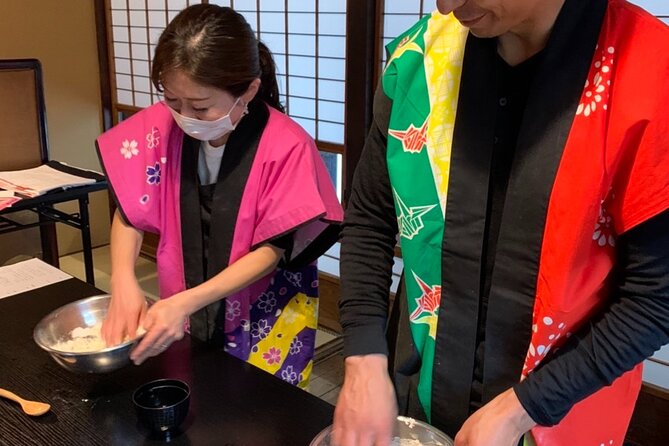
The most memorable part of this Kyoto class is not simply eating noodles. You make them from flour, water, and salt in a roughly 120-year-old wooden townhouse, then sit down to eat the finished udon with tempura. I like the hands-on method, especially the footwork used to knead the dough, and I like the warm teaching from Kyoto locals such as Tanaka and Hisayu. Their clear English demonstrations make the activity easy to follow.
The main consideration is timing. The noodle-making lesson lasts about an hour, but lunch and time in the house can stretch the visit to roughly 1.5 to 2 hours. You do not make the tempura, broth, or final boiling yourself, so this is more a focused cultural cooking lesson than a full Japanese meal-preparation course.
In This Review
- Key points at a glance
- Making udon in an old Kyoto townhouse
- The seven steps from saltwater to noodles
- 1. Mixing the saltwater
- 2. Rinsing and working the mixture
- 3. The famous foot kneading
- 4. Letting the dough mature
- 5. Stretching the dough
- 6. Cutting the noodles
- 7. Boiling the udon
- Eating your noodles with tempura and dashi
- Meeting Kyoto teachers in a family-friendly class
- What the historic house adds to the visit
- Is $60.43 a fair price?
- Practical details before you book
- Who should book this Kyoto udon class?
- FAQ
- Where does the udon class take place?
- How far is the class from Kyoto Station?
- How close is the class to Nishi Honganji Temple?
- What time does the activity begin?
- How long does the experience last?
- Do participants make the tempura and udon broth?
- Can children participate?
- What is the cancellation policy?
- Should you book it?
Key points at a glance
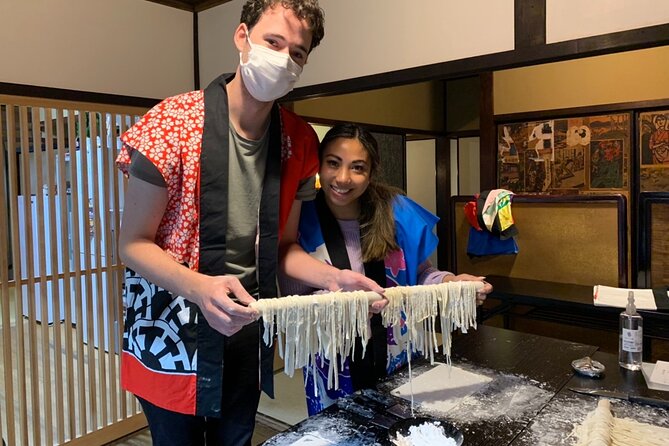
- Make udon from scratch: Mix saltwater, knead the dough with your feet, stretch it, and cut the noodles by hand.
- Learn inside an old Kyoto townhouse: The classroom is a renovated traditional house dating back roughly 120 to 130 years, with antique furnishings and artifacts.
- Eat what you make: Your meal includes the freshly cooked udon, vegetable tempura, dipping broth, grated ginger, and chopped green onion.
- Good for families: Children can take part in the noodle-making because the instructors handle the boiling.
- Meet local teachers: Tanaka, Hisayu, and other Kyoto-based instructors explain the process and cultural background in English.
- Easy Kyoto location: The house is about a 12-minute walk from Kyoto Station and two minutes from Nishi Honganji Temple.
Making udon in an old Kyoto townhouse
This experience begins at 12 noon at 364 Momijicho in Kyoto’s Shimogyo Ward. From Kyoto Station, the walk takes about 12 minutes, making this one of the easier food activities to fit into your first or last day in the city. Nishi Honganji Temple is only a two-minute walk away, so you can pair the class with a temple visit.
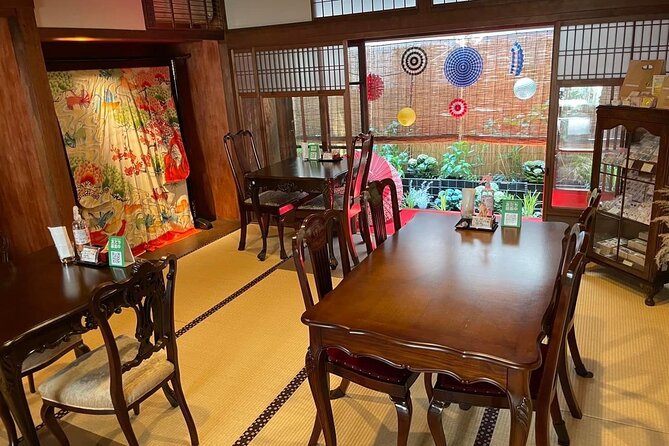
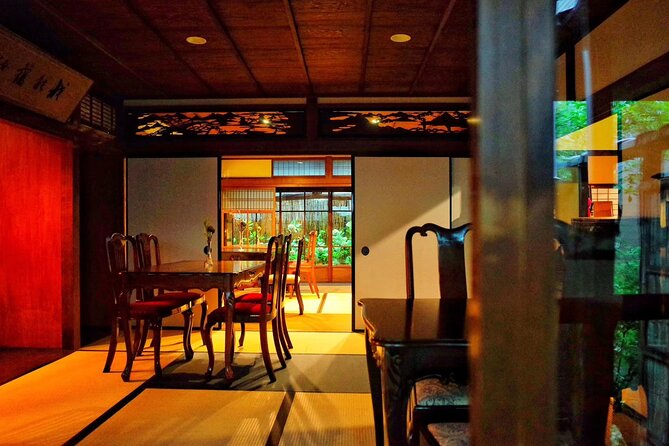
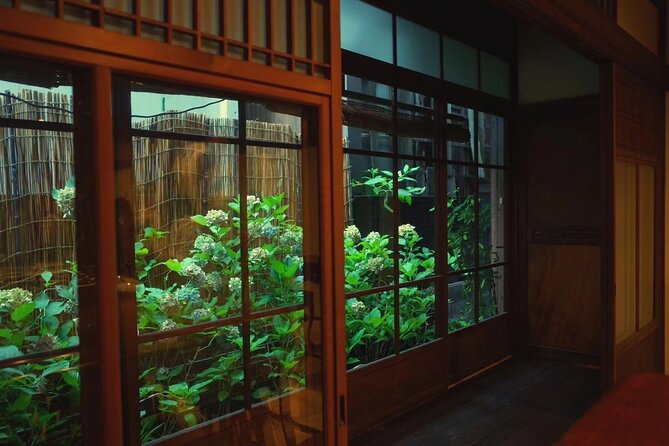
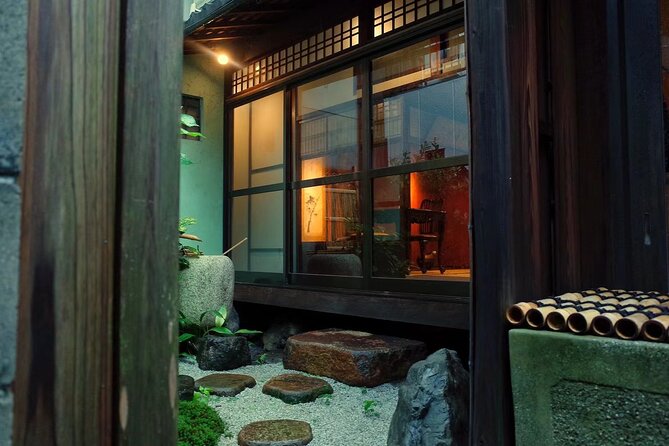
The setting does much of the cultural work. The classroom occupies a traditional Japanese house that has been renovated for cooking lessons but retains its old wooden character. Antique furniture and objects, many more than 110 years old, fill the space. Traditional Japanese music plays while you work.
I like this because you are not learning to make udon in a plain modern studio. The old house gives the lesson a sense of place. You get a glimpse of domestic Kyoto architecture while doing something practical with your hands.
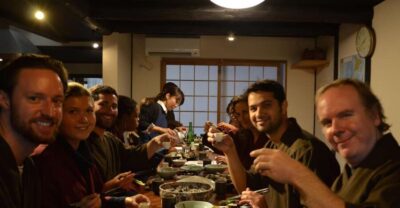
The atmosphere is likely to feel more personal than a large demonstration class. The activity is sold as private, meaning only your group participates. At the same time, one account describes a group of 10 with a smaller party within it, so the exact class arrangement may depend on the booking. Either way, the format centers on direct instruction rather than watching a chef from a distance.
Other cooking classes in Kyoto

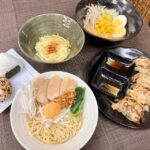
The seven steps from saltwater to noodles
The method follows a simple sequence, but each stage gives you a different kind of task. Ingredients are prepared for you, and the teacher demonstrates the work before you try it.
1. Mixing the saltwater
You begin by making the saltwater used in the dough. This is a small step, but it helps you understand that good udon does not start with a mysterious restaurant trick. The dough depends on a few basic ingredients and careful handling.
2. Rinsing and working the mixture
The next steps involve combining the ingredients and working the dough. Instructions are given in English, with demonstrations that make the process easier to copy. Tanaka is described as lively, patient, and encouraging, while Hisayu has also led the class.
You will want to follow the timing and pressure shown by the instructor rather than rushing. Udon dough can feel stiff, so this is not the same as stirring a soft cake batter.
3. The famous foot kneading
The class includes the traditional footwork. You place the dough in a protected covering and use your feet to knead it. This is the playful part of the lesson, and it gives children and teenagers a job they can handle.
The foot kneading is also useful from a cooking point of view. Udon dough is firm, and this method helps develop its texture. The class turns a potentially tiring task into something physical and memorable. One instructor even teaches an udon dance, adding a bit of fun without taking away from the technique.
Other private tours in Kyoto




4. Letting the dough mature
After kneading, the dough rests and matures. You do not spend the whole time watching it. This pause gives you a chance to wash flour from your hands and look around the old house.
That break is one reason the experience feels more like a cultural visit than a rushed cooking demonstration. The teachers handle the next preparation work while you enjoy the building.
5. Stretching the dough
You then stretch the dough into a thinner sheet. This is where even noodles begin to depend on control. Too much force can make the sheet uneven, while too little leaves it too thick.
The instructor guides you through the motion, so you do not need prior cooking experience. You should expect flour on the table and hands. That is part of the appeal, but wear something you do not mind working in.
6. Cutting the noodles
Once stretched, the dough is folded and cut with a knife. This step determines the shape and thickness of the udon you will eat.
The class gives you a recipe to take home, which adds real value. You are not left with only a pleasant memory. You have a method you can try again in your own kitchen, assuming you can find suitable ingredients.
7. Boiling the udon
You make the noodles, but you do not boil them yourself. The instructors take care of boiling and prepare the rest of the meal while you wait.
That arrangement is worth understanding before booking. It keeps the lesson manageable for children and avoids having visitors gather around hot water. But if you want to learn every stage of udon production, including cooking time and handling the noodles after boiling, this class leaves that final step to the staff.
Eating your noodles with tempura and dashi
After the lesson, you sit down to eat the udon you made. The meal includes vegetable tempura, a dipping broth made with dashi, freshly grated ginger, and minced green onion. The result is more than a sample portion at the end of a class. You receive a proper lunch built around the noodles you prepared.
The udon is served hot, and accounts of the meal describe the noodles as delicious and the tempura as a strong part of the lunch. You are not expected to prepare the tempura or broth. That keeps the focus on udon, while still giving you a complete Japanese meal.
The contrast between the chewy handmade noodles and the crisp tempura is part of the value. You can taste why kneading and cutting matter. This is also a good lunch timing: start at noon, work through the lesson, then eat soon afterward.
Plan your day with some flexibility. The formal class is about an hour, but the meal and time spent afterward may keep you there for 1.5 to 2 hours. If you schedule a temple visit at Nishi Honganji, leave enough room rather than trying to hurry straight to another reservation.
Meeting Kyoto teachers in a family-friendly class
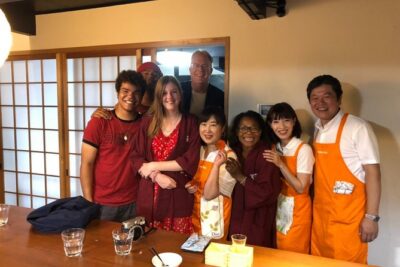
The instructors are local to Kyoto and explain both the cooking and some background about Japanese food culture. Tanaka is repeatedly described as friendly, upbeat, patient, and good at encouraging beginners. Hisayu is also identified as a welcoming teacher, and one class included a young adult daughter assisting the instructor.
The teaching style suits mixed-age groups. Children as young as four have been able to participate fully in the noodle-making, with older children and teenagers enjoying the physical kneading and cutting. Since staff handle the boiling, parents do not need to manage a hot cooking station during the lesson.
I would choose this for a family that wants an activity everyone can share. It also works for adults, couples, and groups of friends who would rather make something than sit through a standard food tasting. One participant in their eighties was able to enjoy the activity with a multigenerational group, suggesting that the class can work across a broad age range, though the foot kneading may not suit every person.
The class has a cheerful tone, but it is not only entertainment. You learn a recipe, practice a traditional method, and hear some cultural background. The result is a good balance for visitors who want substance without signing up for a long culinary course.
What the historic house adds to the visit
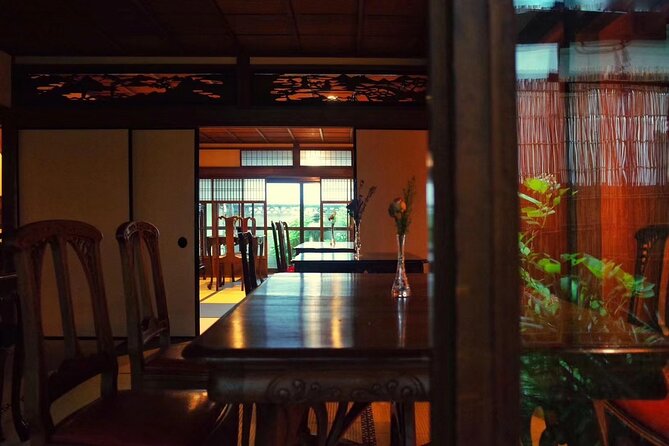
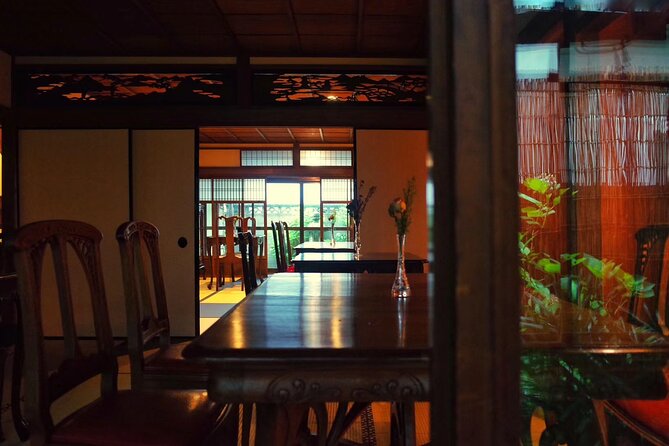
The house is more than a backdrop. It helps connect the noodles to Kyoto’s older way of life. The building dates from roughly 120 to 130 years ago, and many of its furnishings and artifacts are more than 110 years old.
You can look around while the staff boil the noodles and arrange lunch. This pause is especially pleasant because it breaks up the practical work. Instead of waiting in a modern classroom, you get a few quiet minutes with the wooden interior and antique objects.
The tradeoff is that an old Japanese house may not offer the space or conveniences of a purpose-built cooking school. The available information describes spacious worktables, but the overall setting remains a historic home. If you need a highly standardized commercial kitchen, this may feel informal. For most people, that informality is exactly what gives the class its character.
Is $60.43 a fair price?
At $60.43 per person, this is not the cheapest lunch in Kyoto. You could eat udon for much less at a casual noodle shop. The price makes more sense when you count the instruction, the private format, the meal, the historic setting, and the recipe you can use later.
You are paying for an activity that combines food, culture, and time with a local teacher. The class also removes the uncertainty of finding a cooking lesson on your own in Kyoto. The included tempura and seasonings mean you are not paying for noodles alone.
The value is strongest for families and first-time visitors who want a shared memory. It is also good for anyone interested in Japanese food but not ready for a longer or more technical cooking course. The value is weaker if your main goal is simply to eat inexpensive udon, or if you expect to prepare the broth, tempura, and boiling yourself.
The mobile ticket is useful for a phone-based booking, and confirmation is sent within 48 hours, subject to availability. Since the activity is often booked about 16 days ahead, reserve before your Kyoto schedule fills up, especially if you need a particular date.
Practical details before you book
The meeting point is 364 Momijicho, Shimogyo Ward, Kyoto, postal code 600-8345. The activity begins at noon and ends back at the same meeting point.
The location is near public transportation and within walking distance of Kyoto Station. Nishi Honganji Temple is close enough to visit before or after, though you should allow extra time because the class and meal can run longer than the one-hour lesson.
Service animals are allowed. The experience requires suitable weather, and if poor weather forces cancellation, you are offered another date or a full refund. You can cancel for a full refund up to 24 hours before the start time. Cancellations or changes made less than 24 hours before the activity are not refunded or accepted.
Who should book this Kyoto udon class?
Book it if you want to do something active at lunchtime, especially with children. The foot kneading, simple sequence, friendly instructors, and safe division of duties make it easier for a family to take part together.
It is also a strong choice for food-minded visitors who want a recipe and technique they can repeat at home. The lesson is short enough to fit into a busy Kyoto day, yet the meal and old-house setting give it more substance than a quick demonstration.
Think twice if you want an advanced cooking course. You will not make the tempura, dashi broth, or final boiled noodles. You also should not book it if you need the entire activity to last exactly one hour, since lunch can extend the visit.
FAQ
Where does the udon class take place?
It takes place at 364 Momijicho, Shimogyo Ward, Kyoto, postal code 600-8345, in a renovated traditional Japanese house.
How far is the class from Kyoto Station?
The facility is about a 12-minute walk from Kyoto Station.
How close is the class to Nishi Honganji Temple?
The meeting point is about a two-minute walk from Nishi Honganji Temple.
What time does the activity begin?
The class starts at 12 noon.
How long does the experience last?
The noodle-making lesson lasts about one hour. With the meal and time afterward, the full visit can take about 1.5 to 2 hours.
Do participants make the tempura and udon broth?
No. The class focuses on making the udon noodles. Tempura and the dipping broth are provided with the meal.
Can children participate?
Yes. The activity is described as child-friendly, and children can take part in the noodle-making. The instructors handle the boiling stage.
What is the cancellation policy?
You can cancel at least 24 hours before the start time for a full refund. Changes or cancellations made less than 24 hours before the start time are not accepted or refunded. If poor weather causes the activity to be canceled, you are offered a different date or a full refund.
Should you book it?
I would book this class if you want an approachable Kyoto food activity with a real sense of place. The best parts are the old townhouse, the foot-kneaded dough, the friendly local teaching, and the lunch that lets you taste the results right away.
The $60.43 price is fair for an activity and meal, but not for noodles alone. Families, first-time cooks, and visitors who enjoy hands-on cultural activities should find it worthwhile. If you want a full professional cooking course, choose something more extensive. For a lively lunchtime lesson that leaves you with a recipe, a meal, and a better feel for udon, this is a sensible Kyoto booking.
More Cooking Classes in Kyoto
More Private Tours in Kyoto
More Cooking Classes in Kyoto
More tours in Kyoto we've reviewed





Cooking Classes, compared.
 ★ 5.0Ramen Cooking Class at Ramen Factory in KyotoFrom $131
 ★ 4.9Kyoto: Ramen Cooking Class at a Ramen Factory with SouvenirFrom $1271h 30m
 ★ 5.0Kyoto: Ramen, Gyoza, and Onigiri Cooking ClassFrom $901h 30m
 ★ 5.0Kyoto: Japanese Washoku Bento Small Group Cooking ClassFrom $582h 30m
 ★ 4.9Kyoto: Afternoon Japanese Izakaya Cooking ClassFrom $673 hours
 ★ 5.0Izakaya Style Cooking ClassFrom $71