
Reviewed · WALKING TOURS
Private & Custom KYOTO Walking Tour – your Travel Companion
Kyoto is too spread out for a sensible one-size-fits-all stroll, and this private custom tour tackles that problem head-on. You can shape the day around temples, food, shopping, history, or a mix of all four while an English-speaking companion handles directions and helps you move between districts. Guides named in past bookings include Jinshi, Rio, Femin, Dalivanh, and Karl.
I like the freedom to choose your priorities, and I like the practical help with photos, local communication, restaurant bookings, and tickets. The price is $265.82 for up to five people, which can be good value for a family or small group. The catch is that private transportation, admission fees, and meals are extra, and the quality depends heavily on the individual guide. A few bookings received very poor reports about preparation and Kyoto knowledge.
In This Review
- Key points to know before booking
- A private Kyoto day built around your interests
- Choosing between Kyoto’s famous east and west sides
- Arashiyama needs more than one hour
- Food, old streets, and Gion after dark
- Quiet temples and imperial Kyoto
- What the companion actually adds
- The real cost of an eight-hour private day
- How to shape a better itinerary
- Practical details before you commit
- Who should book this Kyoto companion tour?
- Should you book it?
- FAQ
- How long does the private Kyoto tour last?
- How many people can join the private tour?
- Is hotel or accommodation pickup available?
- Is private transportation included?
- Are temple and castle entrance fees included?
- Are meals included?
- Can I choose the places I visit?
- Is an English-speaking guide provided?
- Can I cancel for a refund?
Key points to know before booking
- You control the route: Select from major temples, shrines, markets, old streets, and districts such as Gion and Arashiyama.
- The day is private: Only your group participates, with a maximum of five people.
- The guide handles the practical work: Expect help with navigation, communication, photos, ticket arrangements, and restaurant bookings.
- The suggested route is ambitious: Thirteen possible stops cannot all receive a proper visit in eight hours.
- Costs add up: Entrance tickets, food, accommodation, and private transportation are not included.
- Guide quality matters: Some guides, including Jinshi and Dalivanh, earned strong praise, while other bookings raised serious concerns about preparation.
A private Kyoto day built around your interests
The strongest idea here is simple: you do not have to spend your only Kyoto day following a fixed script. You can ask for famous temples, old neighborhoods, food stops, photography help, or a gentler pace, then work out a route with your companion.
That flexibility matters in Kyoto. Kinkakuji, Fushimi Inari, Arashiyama, Gion, and Kiyomizu-dera are scattered across the city. Trying to link them without a plan can eat up hours. A guide who understands the route can help you decide what is realistic and keep you from wasting time at the wrong end of town.
The tour lasts about eight hours and is private for your group, up to five people. At $265.82 per group, the per-person cost drops to about $53.16 if five people join. For one or two people, it is a much bigger spend, but families and friends may find the arrangement reasonable if they value personal attention.
The description calls this a walking tour, but the sights are too far apart to reach all of them on foot. Private transportation is not included. One past booking describes a guide helping with buses and trains, so public transportation may form part of the day, but you should confirm the exact plan before booking.
Other walking tours we've reviewed in Kyoto
Choosing between Kyoto’s famous east and west sides
The proposed stops cover nearly every major sightseeing zone. That is useful for planning, but it also creates a warning: the full list is far too long for a relaxed eight-hour visit.
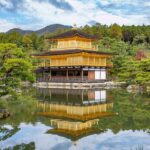
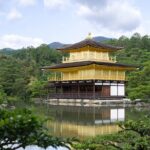
Kinkaku-ji, the Golden Pavilion, is a good first choice for a first visit. The gold-covered Zen temple reflects across a pond in a carefully arranged garden, creating one of Kyoto’s most recognizable scenes. The suggested visit is only 30 minutes, which may be enough for a quick look and photos, but not for a slow garden walk.
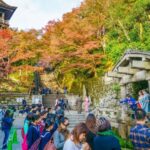
Kiyomizu-dera gives you a different kind of spectacle. Its wooden stage projects from the hillside below the main hall, and the approach leads through one of Kyoto’s most historic temple areas. The planned 45 minutes works for a brisk visit, though the surrounding streets deserve time too.
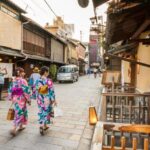
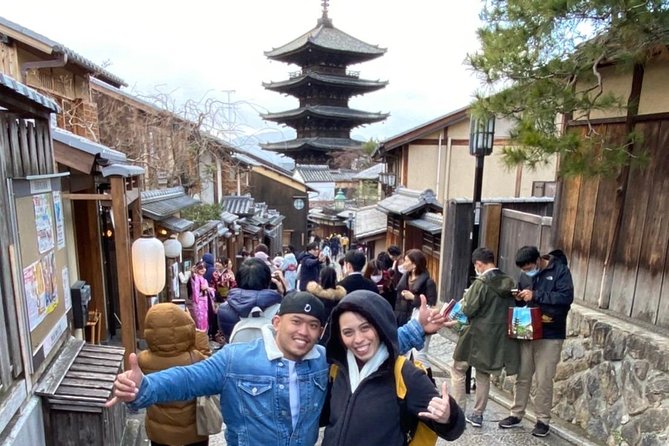
Sannenzaka and Ninenzaka are preserved lanes near Kiyomizu-dera. Their traditional buildings, small shops, and sloping stone streets make them a natural companion to the temple. The 45-minute stop lets you browse, but you may want to use the custom format to protect more time here if shopping and street scenes interest you.
Yasaka Shrine is set at the eastern edge of Gion and is closely tied to the Gion Matsuri, Kyoto’s major summer festival held every July. Thirty minutes gives you time to enter the grounds and see the shrine, but it will not explain every detail of the festival tradition.
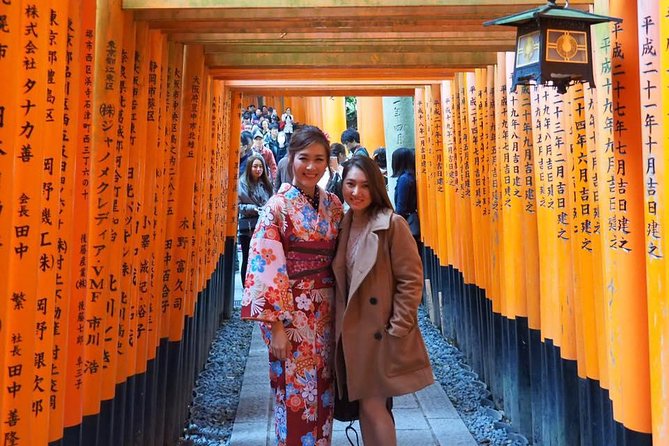
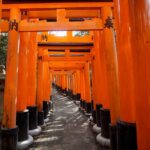
Fushimi Inari-taisha is famous for its long corridors of vermilion torii gates. The gates climb into wooded trails behind the main shrine, so a 15-minute visit only scratches the surface. If this is high on your list, tell the guide in advance. You will need to choose between a quick photo stop and a longer walk uphill.
Arashiyama needs more than one hour
Arashiyama is listed as a one-hour stop, with the Bamboo Forest and Tenryu-ji Temple as the main possibilities. This is enough for a compact introduction, not a full exploration.
The bamboo path is the quick visual hit, while Tenryu-ji adds a major Zen temple and garden. Since Arashiyama is on the western side of Kyoto, pairing it with far-eastern sights such as Fushimi Inari and Kiyomizu-dera can make the day feel rushed.
I would make a firm choice. If you want Arashiyama, give it a substantial part of the day and let the guide trim several other stops. If you want a broad first look at Kyoto, accept that Arashiyama will be a brief stop rather than a complete visit.
Food, old streets, and Gion after dark
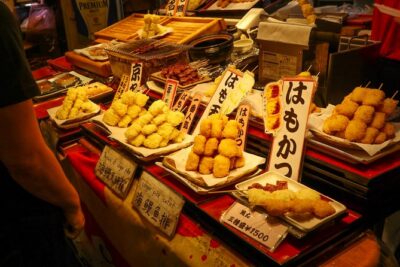
Nishiki Market, known as Kyoto’s kitchen, is a narrow shopping street lined with more than 100 shops and restaurants. The planned 40 minutes is enough to see the market and sample the atmosphere, though food purchases are your responsibility. You can also ask the guide for help communicating with vendors, a useful part of the service for visitors who do not speak Japanese.
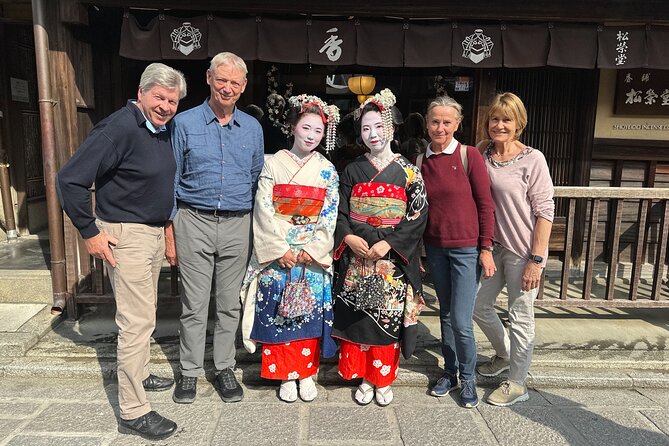
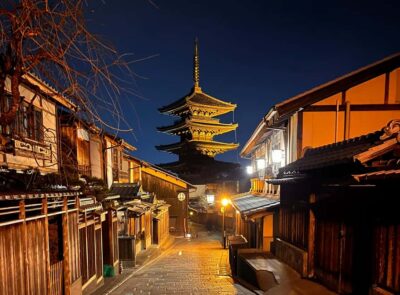
Gion is Kyoto’s best-known geisha district. A 30-minute walk can introduce you to its traditional streets, but do not expect that short visit to explain the whole area. Gion works well when paired with Yasaka Shrine and the lanes around Kiyomizu-dera.
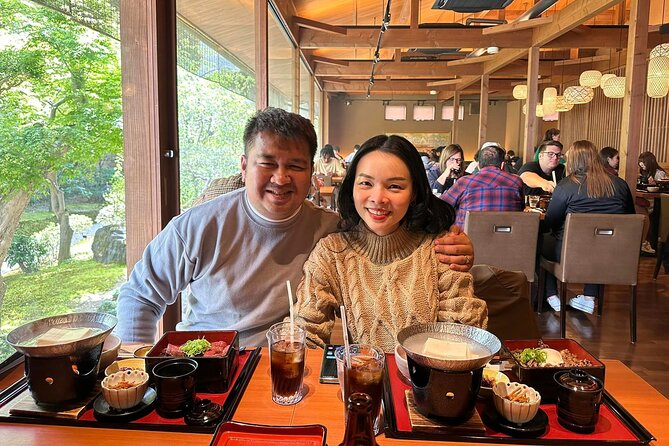
The guide may also help book a restaurant. That is not the same as including dinner, so budget separately for meals. It is a practical service, especially if you have a specific style of food or a large group.
Quiet temples and imperial Kyoto
Ginkaku-ji, the Silver Pavilion, offers a useful contrast with Kinkaku-ji. Its name suggests silver, but the temple is not covered in silver leaf. It is valued for its understated design and garden, and it represents a calmer side of Kyoto’s temple culture.
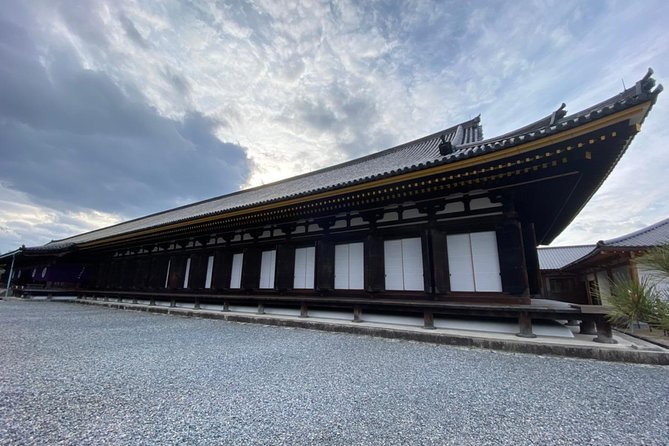
Sanjusangendo is famous for its hall containing 1,001 statues of Kannon, the Buddhist figure associated with mercy. The interior display is the main reason to visit, making this a worthwhile choice for anyone interested in religious art rather than outdoor scenery.
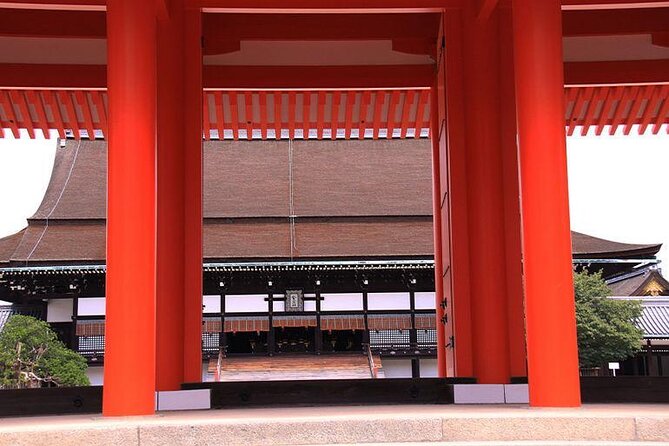
The Kyoto Imperial Palace was the residence of Japan’s imperial family until 1868, when the emperor and capital moved to Tokyo. The palace grounds provide a broad change of pace from crowded temple lanes, and admission is listed as free.
Nijo Castle was built in 1603 as the Kyoto residence of Tokugawa Ieyasu, the first shogun of the Edo period. Its palace buildings were completed by his grandson 23 years later. This is the pick for political history and castle architecture, although the entrance fee is extra and the proposed 45-minute visit is fairly brisk.
Eikando Zenrinji, north of Nanzenji, belongs to the Jodo sect of Buddhism and is particularly known for autumn color. If you visit outside the fall season, it may be less urgent than the city’s headline sights, but it can still fit a custom plan focused on temples and gardens.
Other private tours in Kyoto
What the companion actually adds
The service is more than pointing toward a temple gate. The included help covers itinerary planning, navigation, photos, communication with local vendors, restaurant arrangements, and assistance with tickets.
Those small tasks can make a large difference. You can ask someone to take a group photo instead of handing your phone to a stranger. You can get help explaining a request at a market stall. You can also ask for a route that matches your energy level, interests, or limited time.
The strongest experiences appear to come when the guide adapts well. Dalivanh was praised for being flexible with a sightseeing wish list and for helping with bus and train travel. Karl was associated with a good mix of temples, shrines, and local interests. Femin was praised for handling a child’s questions with patience and a cheerful attitude. Jinshi received particularly warm praise for a full day of Kyoto sights, gardens, temples, shrines, and food.
But do not confuse the word companion with a guaranteed professional historian. One poor booking involved a last-minute replacement who was described as a college student. Other serious complaints focused on guides who were not prepared, did not know Kyoto well, or had trouble finding the way. The overall score is 3.9 out of 5 from 23 ratings, which reflects a genuinely mixed experience.
For that reason, send a detailed wish list before the day. Ask who your guide will be, how the route will work, and which stops can realistically fit. If you need deep historical explanation at every temple, ask directly about the guide’s background rather than assuming the service includes a specialist.
The real cost of an eight-hour private day
The listed price is $265.82 per group of up to five people. That is not an admission-inclusive package. You still pay for temple and castle tickets, food, and any transportation costs beyond what your group arranges.
The value depends on your group size and priorities. Five people splitting the fee get a private day at a reasonable rate, especially if avoiding lost time is important. A couple pays more per person, but may value the ability to skip sights, linger at a market, or adjust the route without negotiating with a larger group.
The absence of private transportation is important. Kyoto’s major sights are not arranged in a neat line, and a day that tries to cover all 13 listed stops could involve several public buses or trains. Ask whether fares are paid directly by you and how much movement the proposed plan requires.
Entrance fees also affect the final budget. Kinkaku-ji, Kiyomizu-dera, Ginkaku-ji, Nijo Castle, Eikando, and Sanjusangendo are listed without included admission. Nishiki Market, Gion, Sannenzaka and Ninenzaka, Fushimi Inari, and the Imperial Palace are listed as free, though food and optional purchases are still extra.
How to shape a better itinerary
I would not hand the guide the entire 13-stop list and expect a satisfying visit. Instead, pick two or three priorities.
For classic Kyoto, combine Kinkaku-ji with Kiyomizu-dera, Sannenzaka and Ninenzaka, and Gion. This gives you a famous temple, a hillside temple, traditional lanes, and the city’s best-known geisha district.
For shrines and religious sites, choose Fushimi Inari, Sanjusangendo, and one of the two major pavilions. Allow extra time at Fushimi Inari if you want to walk beyond the first torii gates.
For western Kyoto, focus on Arashiyama, the Bamboo Forest, and Tenryu-ji. Add Nijo Castle only if you accept more travel and less time in Arashiyama.
For food and local streets, combine Nishiki Market with Gion, Yasaka Shrine, and the preserved lanes near Kiyomizu-dera. This plan makes good use of the guide’s help with vendors, photos, and restaurant arrangements.
For a quieter historical day, choose Ginkaku-ji, Eikando, the Imperial Palace, and Nijo Castle. That route still has variety, but it avoids trying to cross the entire city repeatedly.
Practical details before you commit
Pickup is offered, and the activity ends back at the meeting point. The operating hours are listed as 6:00 AM to 10:00 PM every day, with availability shown through January 18, 2027.
Confirmation is provided at booking, and the meeting area is near public transportation. Most people can participate, but the itinerary includes hills, temple approaches, and extended walking, so a realistic pace is worth discussing in advance.
The cancellation rule is strict: the experience is non-refundable and cannot be changed for any reason. Check your date, group size, meeting point, and guide arrangements carefully before paying.
Who should book this Kyoto companion tour?
This suits a family, small group, or first-time visitor who wants a private day without building every route alone. It is especially useful if you want help with public transportation, restaurant communication, photos, and a flexible schedule.
It also works for cruise passengers or people with limited time, but the shorter your visit, the more important it is to cut the list. One past cruise passenger wished for more time, even with an accommodating guide.
I would be cautious if your main goal is detailed temple history from a trained local expert. The service can be excellent with the right companion, but the mixed record shows that guide assignment is not a minor detail.
Should you book it?
Book this tour if you value custom planning and practical help more than a fixed, lecture-style sightseeing program. It offers a useful private format, a long day, and access to nearly every major Kyoto area, with the best value for groups of four or five.
Before booking, send your priorities and ask for the guide’s name and experience. Do not try to visit every listed stop. Choose a compact route, budget for transport and admissions, and confirm that the guide can provide the level of historical explanation you want. With a strong companion such as Jinshi, Dalivanh, Karl, or Femin, the format can make Kyoto much easier. With an unprepared replacement, it may not justify the cost.
FAQ
How long does the private Kyoto tour last?
The tour lasts approximately eight hours.
How many people can join the private tour?
The private activity is for your group only, with up to five people.
Is hotel or accommodation pickup available?
Pickup is offered, but the supplied details do not specify which accommodations qualify. Confirm the exact meeting arrangement when booking.
Is private transportation included?
No. Private transportation is not included. The tour includes assistance throughout the trip, and one described experience used buses and trains with the guide.
Are temple and castle entrance fees included?
No. Entrance fees are not included. Listed sites with separate admission include Kinkaku-ji, Kiyomizu-dera, Ginkaku-ji, Nijo Castle, Eikando, and Sanjusangendo.
Are meals included?
No. Breakfast, lunch, dinner, and other meals are not included.
Can I choose the places I visit?
Yes. The itinerary is personalized, and you can shape the day around your interests. The listed sights are possible stops rather than a realistic promise that all 13 will receive a full visit.
Is an English-speaking guide provided?
The experience includes a travel companion described as English-speaking, along with itinerary planning and assistance throughout the trip.
Can I cancel for a refund?
No. The experience is non-refundable and cannot be changed for any reason after booking.
More Private Tours in Kyoto
More Walking Tours in Kyoto
More tours in Kyoto we've reviewed


Walking Tours, compared.
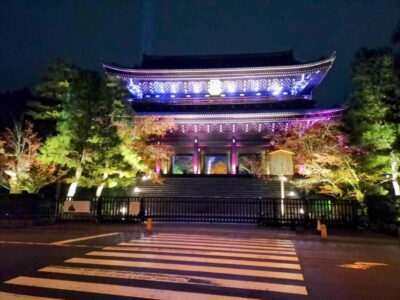 ★ 4.7Kyoto Geisha Walking Tour: Gion District & Hidden GemsFrom $252 hours
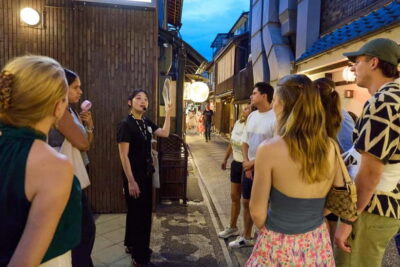 ★ 4.7Kyoto: Gion Geisha District Walking Tour – Stories of GeishaFrom $202 hours
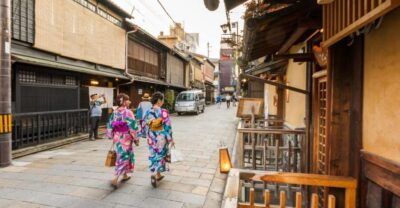 ★ 4.5Night Walk in Gion: Kyoto’s Geisha DistrictFrom $211h 40m
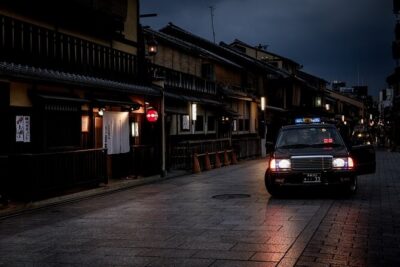 ★ 5.0Kyoto Gion Geisha District Walking Tour – The Stories of GeishaFrom $25
 ★ 5.0Nishiki Market Brunch Walking Tour (7 Tastings + Brunch)From $68
 ★ 4.9Kyoto: Gion Magical Night Walking Tour with Geisha InsightsFrom $34