
Reviewed · MORNING
Kyoto Early Morning Private Tour with Government-Licensed Guide
Kyoto is at its best before the day gets going. This four-hour private tour uses an early start to take you to two or three temples, shrines, or historic districts while the paths are calmer and the air is cooler. You meet your licensed English-speaking guide on foot within the designated Kyoto pickup area, then set off by walking and public transportation.
I like the freedom to choose your focus, instead of being marched through a long list of sights. I also like the human touch: guides such as Rie, Yasu, Tomy, Kay, and Mayumi have adjusted routes, answered questions about Japanese life, helped with onward directions, and even added time when a guest had an ankle problem.
The main catch is the short duration. Four hours is enough for two or three well-chosen stops, not a grand sweep of Kyoto. Transport, meals, and most entrance fees cost extra, and you need to be ready for an early start and plenty of walking.
In This Review
- Key points to know before booking
- Why an early Kyoto start is worth the alarm
- Your private guide and the value of local context
- Choosing the right two or three stops
- Fushimi Inari, more than a tunnel of red gates
- Kiyomizu-dera and the old streets of Higashiyama
- Gion, Pontocho, and Kyoto’s evening streets in daylight
- Nishiki Market, Kyoto’s Kitchen
- The Golden Pavilion and northern Kyoto
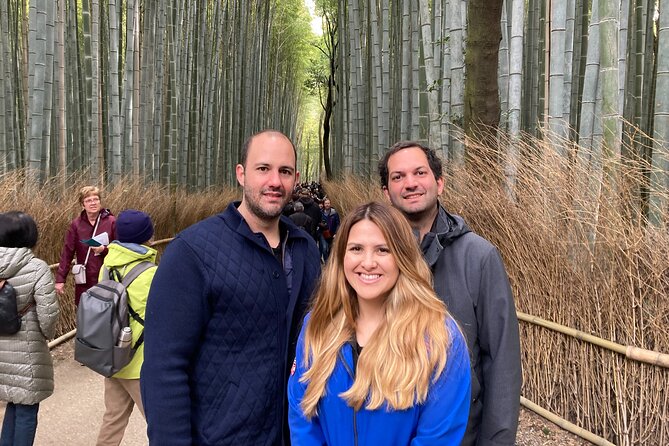
- Arashiyama, bamboo, bridges, and temple paths
- Zen temples and quieter eastern Kyoto
- Imperial villas and northern mountain escapes
- What $101.82 per person really buys
- Who will get the most from this morning
- Practical details that affect your morning
- Should you book this Kyoto morning tour?
- FAQ
- How long is the Kyoto Early Morning Private Tour?
- How many sites can I choose?
- Is the tour private?
- Is hotel pickup included?
- Is transportation included in the price?
- Are entrance fees included?
- Which languages does the guide speak?
- Can I visit Fushimi Inari early?
- Can families participate?
- What is the cancellation policy?
Key points to know before booking
- Early starts make the difference: Some tours begin at 6:30 or 7:00 a.m., helping you reach Fushimi Inari or Kiyomizu-dera before the busiest period.
- You choose two or three sites: The route can focus on famous landmarks, old neighborhoods, gardens, markets, or quieter temple areas.
- This is a walking tour, not a vehicle tour: Pickup is on foot, and transportation fees are not included.
- Your guide shapes the experience: Guides explain customs and history, answer questions, and can help you understand how to continue sightseeing after the tour.
- The price is $101.82 per person: That buys private guiding for your group, but admission, transport, lunch, and personal costs are separate.
- Most people can take part: Service animals are allowed, and the activity runs near public transportation, but expect walking and temple steps.
Why an early Kyoto start is worth the alarm
Kyoto’s famous sites can feel very different at 6:30 a.m. than they do later in the day. Fushimi Inari’s torii gates and Kiyomizu-dera’s approach are major draws, so arriving early gives you a calmer setting for photos and a better chance to hear your guide without noise around you.
The timing also matters in warmer months. One guide, Yasu, helped a group of four cover several places by public transportation before the heat and crowds built up. Another guide, Rie, led a group from 7:00 to 11:00 a.m. on January 2, one of Japan’s busiest holiday dates, then left them at a sushi restaurant for lunch.
You should not expect every stop to be empty. Kyoto is a major destination, and popular places may already have visitors when you arrive. Still, an early private tour gives you the best chance of enjoying the first part of the day at a gentler pace.
Other guided tours in Kyoto
Your private guide and the value of local context
A temple can be beautiful without explanation, but a guide helps you notice what you are looking at. The licensed English-speaking guides on this experience are there to explain Japanese culture, religious customs, local history, and practical details that can be easy to miss on your own.
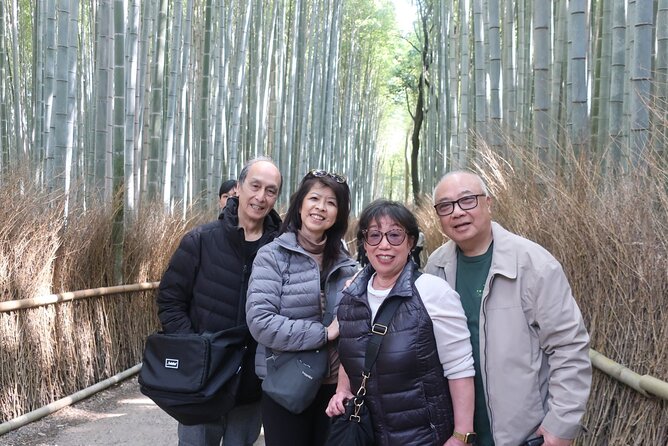
The strongest praise goes to the guides’ personal service. Yasu is described as helpful with both history and public transportation. Tomy is praised for explaining events at Kiyomizu-dera and Fushimi Inari. Kay acted as both guide and photographer during a route through the Bamboo Forest and Fushimi Inari.
Mayumi contacted a group in advance to discuss interests, then added an extra half hour to help a guest with an ankle problem. That kind of flexibility is one of the clearest reasons to pay for a private tour instead of joining a fixed group.
You can also ask questions that do not fit a standard sightseeing script. Guides have discussed Japanese culture, daily life, food, and local customs. Yoshi, for example, is praised for answering a wide range of questions and helping a couple understand parts of Kyoto they might have missed alone.
Choosing the right two or three stops
The tour offers a long menu of possible places, but the four-hour format means you must choose carefully. Kyoto is spread across several districts, and crossing the city between distant sights can eat into your time.
If you want the classic first visit, choose Fushimi Inari and Kiyomizu-dera, then add Gion if time and transport allow. If you want western Kyoto, choose Arashiyama with the Bamboo Forest and Tenryu-ji, perhaps adding Togetsukyo Bridge or Okochi Sanso Garden. Mixing Fushimi Inari with Arashiyama is possible in some circumstances, but it leaves less time for each place.
Tell the guide what matters most before the morning begins. Do you want major landmarks, quiet temple grounds, food, gardens, photography, or help getting oriented? The more specific you are, the more useful the private format becomes.
Fushimi Inari, more than a tunnel of red gates
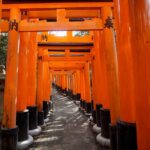
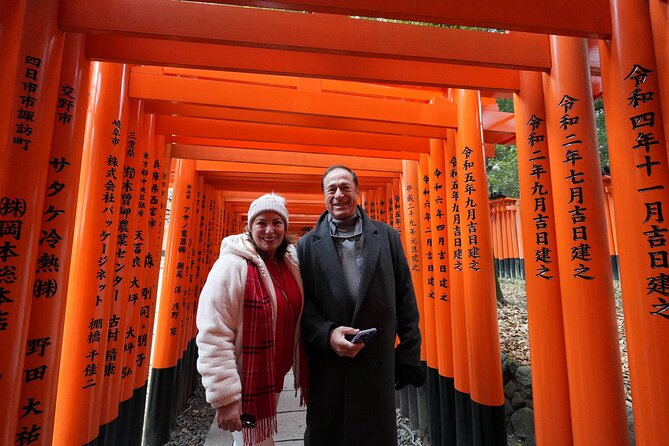
Fushimi Inari-taisha is the natural choice for an early start. Its famous vermillion torii gates climb through wooded slopes, creating one of Kyoto’s most recognizable walks. The shrine is free to enter.
The useful part of having a guide here is learning that the shrine is more than a photo stop. The route has stories, religious meaning, and layers of practice that are easy to overlook if you simply walk through the gates, take a picture, and turn around.
You need to be honest about your walking ability. The torii route leads uphill, and even a short visit involves uneven paths and steps. Ask your guide to tailor the walk rather than assuming you must complete the full climb.
Kiyomizu-dera and the old streets of Higashiyama
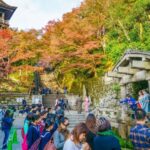
Kiyomizu-dera is one of Kyoto’s essential temples, set on the eastern hills above the old city. Its broad wooden stage and temple grounds make it a strong choice for travelers who want scenery, architecture, and cultural context in one stop.
Admission is not included, so budget separately for the entrance fee. The approach through Higashiyama can also involve slopes and walking, though the payoff is a close look at one of Kyoto’s best-preserved historic districts.
An early taxi helped one group reach Kiyomizu-dera around 8:00 a.m. during cherry blossom season, when the city was especially busy. That example also shows an important point: the tour does not provide a private vehicle. If a taxi makes sense for your route, you pay the fare.
Other private tours in Kyoto
Gion, Pontocho, and Kyoto’s evening streets in daylight
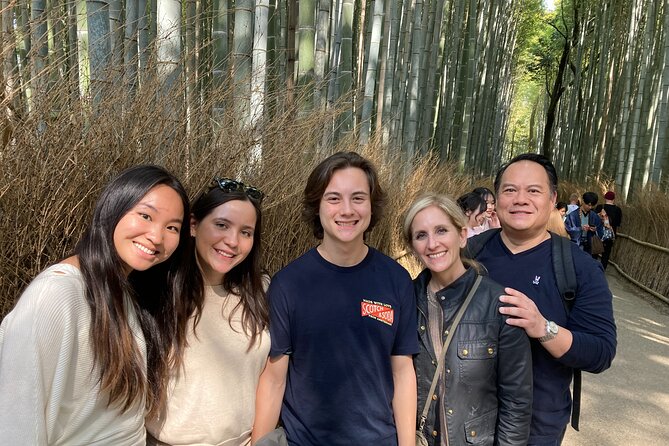
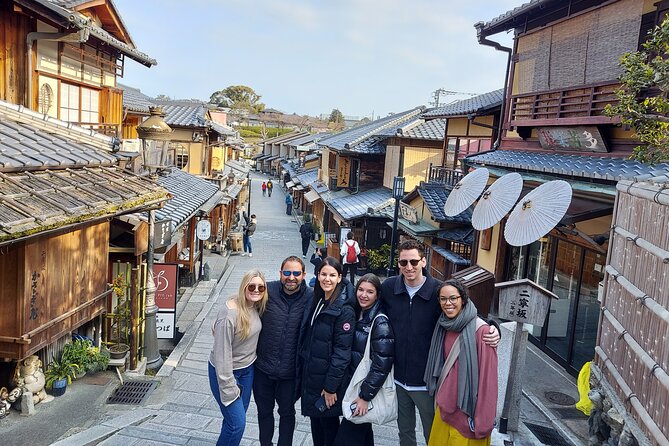
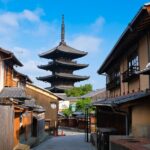
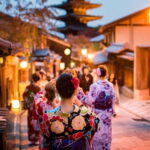
Gion is Kyoto’s traditional geisha district, with narrow lanes, old wooden buildings, and a strong sense of place. A guide is useful here because the alleys can be confusing, and respectful behavior matters. You should follow your guide’s advice about photography and avoid treating working districts as a stage set.
Pontocho offers a different mood. The narrow lane beside the Kamo River is known for restaurants and traditional architecture. In the early morning, many businesses may not yet be open, so this is mainly a streetscape and orientation visit rather than a dining stop.
Gion and Pontocho work well for a first morning in Kyoto because they help you understand the city’s layout. They are also free to walk through, making them useful choices if you want to keep admission costs down.
Nishiki Market, Kyoto’s Kitchen
Nishiki Market is a five-block shopping street lined with more than one hundred shops and restaurants. It is known for food, kitchen goods, and local specialties, but an early visit requires a little realism: market activity depends on opening hours, and not every stall will be ready at dawn.
The market is free to enter, but food purchases are your responsibility. It is a good choice if you want a less formal cultural stop and are interested in ingredients, snacks, and the everyday side of Kyoto.
I would pair Nishiki with Gion or Pontocho, not with a distant temple such as Kinkaku-ji or Arashiyama. The compact pairing gives you more time to walk and talk instead of spending the morning crossing town.
The Golden Pavilion and northern Kyoto
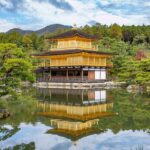
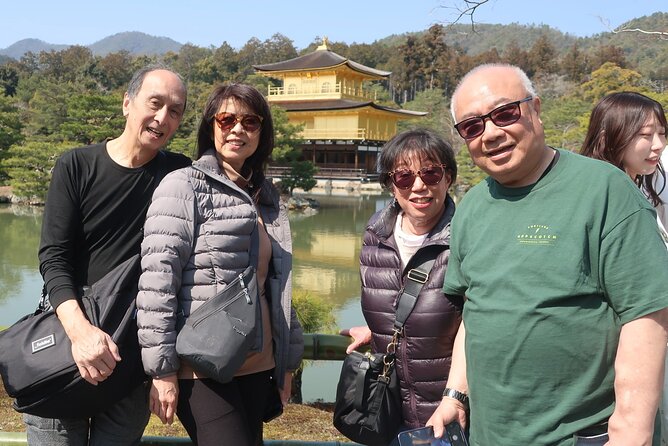
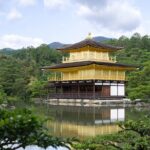
Kinkaku-ji, also called the Golden Pavilion, is a Zen temple whose upper floors are covered in gold leaf. The visit usually centers on the pavilion and its garden views, and the listed visit time is about 30 minutes.
Admission is extra. The site is visually powerful but can be crowded later in the day, so an early visit has a clear advantage. Keep in mind that the standard route around the grounds is more of a viewing experience than a long, open-ended exploration.
Nearby options include Ryoan-ji and Ninna-ji. Ryoan-ji is known for Japan’s most famous rock garden, while Ninna-ji is a World Heritage temple and the head temple of the Omuro school of Shingon Buddhism. These places make sense as a northern Kyoto cluster, but trying to add Fushimi Inari or Arashiyama may make the schedule too tight.
Arashiyama, bamboo, bridges, and temple paths
Arashiyama is one of the most requested choices, and for good reason. The area combines the Bamboo Forest, the Togetsukyo Bridge, Tenryu-ji, and several smaller hillside temples.
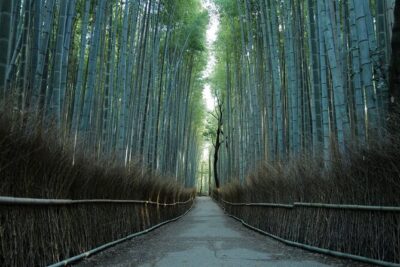
The Bamboo Forest is free, and early morning is the best time to see it in a quieter mood. The paths are pleasant for walking, though the famous section is not large enough to fill four hours by itself.
Tenryu-ji is the area’s major temple and a World Heritage site. Admission is extra. If you want more peace, your guide may suggest Jojakkoji, Nisonin, Gioji, Adashino Nenbutsuji, or Otagi Nenbutsu-ji. Gioji is known for moss and maple trees, while Otagi Nenbutsu-ji has about 1,200 stone figures, each with a different expression.
Togetsukyo Bridge is free and gives you a recognizable Arashiyama view. Okochi Sanso Garden, behind the bamboo area, has several gardens and buildings and requires an additional fee. These choices are best for people who enjoy walking and want to see more than one famous photo stop.
A route through Arashiyama can be especially memorable in autumn, when the wooded temple grounds take on strong seasonal color. It can also involve more walking than first-time visitors expect, so say clearly if you prefer a short route.
Zen temples and quieter eastern Kyoto
Ginkaku-ji, the Silver Pavilion, began as the retirement villa of shogun Ashikaga Yoshimasa in 1482. Despite its name, it is not covered in silver. Its appeal lies in the temple buildings, gardens, and setting along Kyoto’s eastern mountains.
Nanzen-ji is one of Japan’s important Zen temples, with broad grounds at the foot of the Higashiyama hills. The nearby Suirokaku aqueduct adds a striking architectural detail to the visit.
Tofuku-ji is another large Zen temple in southeastern Kyoto, especially famous for autumn color. Toji, the East Temple, connects the city to the early Heian period after the capital moved to Kyoto in the late eighth century.
These sites suit you if temples matter more than shopping or famous photo locations. Several charge admission, so confirm the day’s costs with your guide and allow enough time for walking between buildings.
Imperial villas and northern mountain escapes
The possible route goes beyond central Kyoto. Kyoto Imperial Palace occupies spacious grounds and served as the Imperial Family’s residence until 1868. Katsura Imperial Villa is known for its architecture and garden design, while Shugakuin Imperial Villa includes upper, middle, and lower sections and is managed by the Imperial Household Agency.
These are specialized choices. They appeal to people interested in gardens, court life, and design, but they are not the simplest additions to a route built around Fushimi Inari or Kiyomizu-dera.
Kibune and Kurama offer a change of pace in Kyoto’s northern mountains. Kibune developed around Kifune Shrine, while Kurama is known for Kurama-dera and its hot spring. These areas are less central and require more planning, so I would choose them only if the countryside and religious sites interest you more than Kyoto’s headline attractions.
What $101.82 per person really buys
At $101.82 per person, this is not a cheap way to get from one landmark to another. You are paying for a private guide, a route shaped around your interests, cultural explanation, and help with the city’s transport system.
The value improves for a small group. A private party shares the guiding service, and group discounts may be available. For a family or group of four, the cost can make more sense than booking several separate activities, especially if you want advice that continues beyond the four-hour meeting.
The price does not cover a private vehicle, transportation fares, lunch, personal expenses, or most entrance fees. That matters in Kyoto, where a route involving taxis and several paid temples can add noticeably to the total.
I would treat this as a paid orientation and focused introduction, not a complete Kyoto sightseeing package. The guide’s help choosing what to do next can be as useful as the first three stops.
Who will get the most from this morning
This tour suits first-time Kyoto visitors who want a quick sense of direction and do not want to spend their first day decoding train lines, temple customs, and district maps. It also works well for families and small groups with different interests, since the route can be adjusted.
It is a good fit for photographers who want early light and fewer people, and for anyone who wants to ask direct questions about Japanese culture. The early timing is particularly useful during cherry blossom season, autumn color, public holidays, and hot weather.
It is less suitable if you want a relaxed late-morning outing, a private car, or a long visit at many temples. Four hours passes quickly, especially when you include transport and walking.
Practical details that affect your morning
Confirmation arrives at booking. Pickup is offered on foot within a designated Kyoto area, so you should not expect a vehicle to collect you at the hotel. The activity is private, meaning only your own group takes part, and it runs near public transportation.
Most people can participate, but this is still a walking tour. Fushimi Inari, Higashiyama, Arashiyama, and several temple grounds include slopes, steps, or uneven paths. If mobility is a concern, tell the guide early so the route can be adjusted.
Free cancellation is available up to 24 hours before the start time. Changes or cancellations inside that window are not accepted for a refund.
Should you book this Kyoto morning tour?
Book it if you value flexibility, early access, and personal explanation more than a low-cost checklist tour. Pick two or three nearby sights, start as early as possible, and use the guide to understand both the places you see and the rest of your Kyoto plan.
Skip it if you want a vehicle, a full-day schedule, or all admission and transport costs bundled together. The strongest version of this experience is focused: Fushimi Inari with Kiyomizu-dera, Gion with Nishiki Market, or Arashiyama with the Bamboo Forest and Tenryu-ji. Choose a sensible cluster, and the $101.82 can buy a useful, personal first look at Kyoto.
FAQ
How long is the Kyoto Early Morning Private Tour?
The tour lasts approximately four hours.
How many sites can I choose?
The included experience allows you to customize a visit to two or three sites from the available list.
Is the tour private?
Yes. Only your group participates in the activity.
Is hotel pickup included?
Pickup is offered on foot within a designated area of Kyoto. A private vehicle is not included.
Is transportation included in the price?
No. Transportation fees are not included. Guides have used public transportation and taxis with groups, but you pay those costs separately.
Are entrance fees included?
Entrance fees are generally not included, and several listed sights specifically require an additional admission fee. Check the exact choices with your guide before setting the route.
Which languages does the guide speak?
The tour includes a licensed local English-speaking guide.
Can I visit Fushimi Inari early?
Yes. Fushimi Inari-taisha is one of the available stops, and the early start is intended to help you avoid the heaviest crowds.
Can families participate?
Most travelers can participate, and the tour is private, so the route can be discussed with your guide. It remains a walking activity with possible steps and uneven paths.
What is the cancellation policy?
You can cancel up to 24 hours before the experience start time for a full refund. Cancellations or changes made less than 24 hours before the start time are not refunded.
More Morning in Kyoto
More Private Tours in Kyoto
More Guided Tours in Kyoto

More tours in Kyoto we've reviewed

Morning, compared.
 ★ 5.0Kyoto Early Morning Tour with English-Speaking GuideFrom $68
★ 4.9Kyoto: Early Morning Tour with English-Speaking GuideFrom $1015h 30m
★ 5.0Kyoto Early Morning Tour with English-Speaking GuideFrom $68
★ 4.9Kyoto: Early Morning Tour with English-Speaking GuideFrom $1015h 30m
 ★ 5.0Nara Early Morning Tour (Kyoto or Osaka Departure Available)From $61
 ★ 4.6From Kyoto: Nara Guided Morning TourFrom $774 hours
 ★ 4.6Kyoto: Gion Night or Morning Walking Tour with Local SnacksFrom $46
 ★ 4.0Kyoto Morning Tour from Kyoto or OsakaFrom $87