
Reviewed · WORKSHOPS
Private Koto Lesson in Kyoto with a Professional Koto Performer
The best part of this Kyoto activity is simple: you do not just watch a traditional art, you sit at a koto and play it yourself. A professional performer guides you through Sakura, one of Japan’s most familiar songs, while explaining the instrument’s place in ceremonies and daily culture.
I like the private format, which gives your group direct help instead of leaving you to follow a rushed demonstration. I also like the gentle finish: a tea break followed by your teacher’s performance. The main consideration is time. At about 80 minutes, this is a focused introduction, not a full course in koto music.
In This Review
- Key points
- Playing a Japanese Koto Instead of Just Photographing One
- What the 80-Minute Lesson Includes
- A Private Lesson Makes a Difference
- From Practice to Tea and a Koto Performance
- Why the $60 Price Can Be Good Value
- Finding Soushunan in Kyoto
- Who Will Get the Most from This Activity
- The Best Family Angle
- Booking Ahead and Cancellation
- Is the Koto Lesson Worth Booking?
- FAQ
- How long does the private koto lesson last?
- What song will I learn?
- Who teaches the lesson?
- Is the activity private?
- Are children allowed to participate?
- Is the koto provided?
- Is transportation included?
- Can I cancel for a full refund?
Key points
- Play Sakura yourself: You receive instruction on a traditional Japanese koto and work toward playing a recognizable song.
- Learn from a professional performer: Your teacher combines practical guidance with background on the instrument and its traditions.
- Private for your group: Only your party takes part, making this a better fit for families and people who want personal help.
- Suitable for a wide age range: The lesson is designed for everyone from children as young as three to older adults.
- Tea and a live performance follow: After playing, you can pause for tea and hear the instructor perform.
- Kyoto location with no equipment fee: The koto, music notation, lesson, and taxes are included in the $60 price.
Playing a Japanese Koto Instead of Just Photographing One
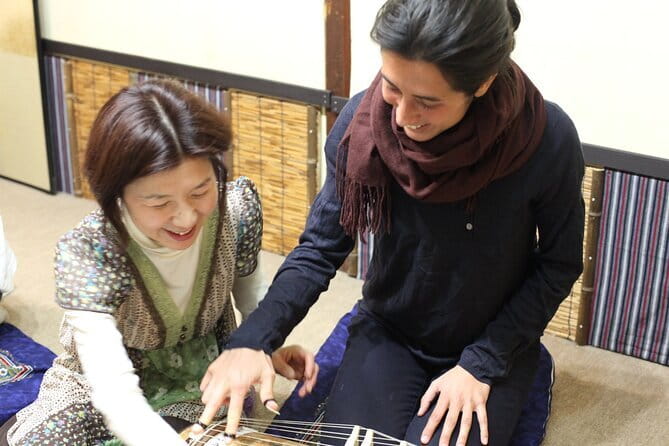
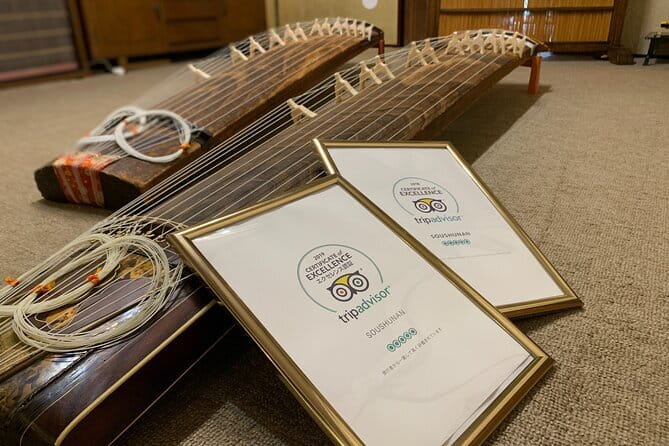
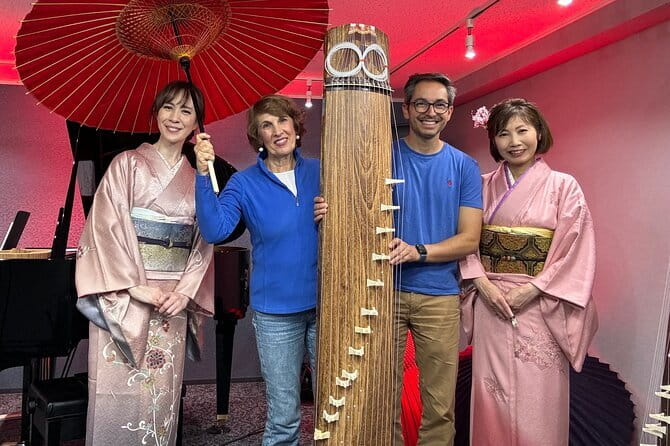
The koto is a long, stringed Japanese instrument traditionally associated with formal occasions and classical music. At Soushunan, you get to move from observer to participant. The teacher places the instrument at the center of the lesson and helps you produce music yourself.
That makes this a useful choice if you want a cultural activity with some substance. A shrine visit can show you how a place looks. A koto lesson gives you a small sense of how a traditional art works through touch, sound, and concentration.
The goal is not to turn you into a concert musician in one sitting. The goal is to help you play Sakura with guidance. That is an achievable target, especially for first-time musicians, and it gives the 80-minute session a clear shape.
You receive the equipment needed for the lesson, including the koto and music notation. You do not need to arrange an instrument rental or bring special materials. This matters because traditional instruments can look intimidating when you first encounter them. The teacher’s role is to make the first steps manageable.
Other private tours in Kyoto


What the 80-Minute Lesson Includes
The session begins with instruction from a professional koto performer. You learn how to approach the instrument and follow the music notation while the teacher helps you with the playing technique.
The exact order of every exercise is not specified, so you should think of this as a guided introduction rather than a fixed concert-style program. The core is clear: you learn about the koto, practice with assistance, and work on a traditional Japanese song.
Sakura is a smart choice for a short lesson. Many people already recognize its melody, even if they do not know its Japanese name. That familiarity can make the result feel rewarding. You are not trying to master an obscure composition with no musical foothold. You are working toward a tune you may already have heard in some form.
The teacher also explains the history and traditions connected with the instrument. This adds context to the physical practice. You learn not only where to place your fingers or how to follow the notes, but why the koto has a place in Japanese ceremonies and formal culture.
I would approach the lesson with modest expectations. You may be able to play part of Sakura or even complete a simple version by the end, but the main value is the experience of learning under a performer’s care. A short lesson cannot cover every feature of koto music, and that is not its purpose.
A Private Lesson Makes a Difference
This is a private activity, so only your group participates. That changes the mood and the practical experience. You can ask for help when you need it, and the instructor can adjust the pace for the people in your party.
A private setting is especially useful when your group includes different ages or different levels of musical confidence. A child may need short, clear directions. An adult may want more explanation about the instrument’s traditions. The format allows the teacher to respond to the group rather than teach to a room full of strangers.
The activity welcomes participants from age three through elderly adults. That wide age range makes it a strong family option. You can share the same cultural activity without requiring everyone to have the same physical ability or musical background.
One account of the lesson describes a son working hard and eventually mastering Sakura. That detail gives you a useful sense of the teaching style. Patience matters here. The instructor is not simply performing while you watch. The lesson is built around helping you make progress.
Still, private does not mean completely flexible in every way. The duration remains about 1 hour and 20 minutes, and the activity has a defined purpose. If your group wants a long recital, an advanced music lesson, or several different songs, this may feel brief.
From Practice to Tea and a Koto Performance
After the playing portion, you can take a tea break and enjoy a performance by your teacher. This second half gives you a chance to hear the instrument in skilled hands after trying it yourself.
That sequence is valuable. Before the lesson, you may hear a koto as an attractive but unfamiliar sound. After working with the instrument, you have a better sense of the control and precision behind a polished performance. The recital can put your own beginner efforts in context without making them feel like a test.
The tea break also gives the activity a calm finish. You are not rushed straight from the last exercise to the street. Instead, the session includes time to pause and listen.
The supplied details do not specify the type of tea, the length of the performance, or the precise refreshments. I would not book this expecting a full tea ceremony. Think of it as a tea pause paired with live music, not a separate formal tea experience.
That distinction helps you choose wisely. If you want an intimate cultural lesson with a performance at the end, this format fits. If your main goal is a lengthy recital, search for a dedicated koto concert instead.
Why the $60 Price Can Be Good Value
The listed price is $60 per person. For that fee, the activity includes the lesson, use of the koto, music notation, and all fees and taxes. There is no separate instrument charge waiting at the end.
I consider that fair value for a private lesson led by a professional performer, especially because your group receives direct instruction rather than a general talk. The value is strongest if you actively want to try the instrument. You are paying for participation, guidance, cultural context, and a performance.
The price is less compelling if you only want to hear koto music. In that case, a concert or cultural presentation may give you more performance time for less money. This activity earns its cost through the hands-on lesson.
There is also no private transportation included. You need to make your own way to Soushunan at 288-2 Higashishinmeicho, Kamigyo Ward, Kyoto, postal code 602-8162. The meeting point is near public transportation, so you should plan your route before the appointment rather than expect a pickup.
The activity ends back at the same meeting point. That makes it easy to connect with the rest of your Kyoto plans, provided you allow enough time to reach the studio and do not schedule a distant reservation immediately afterward.
A few more Kyoto tours and experiences worth a look


Finding Soushunan in Kyoto
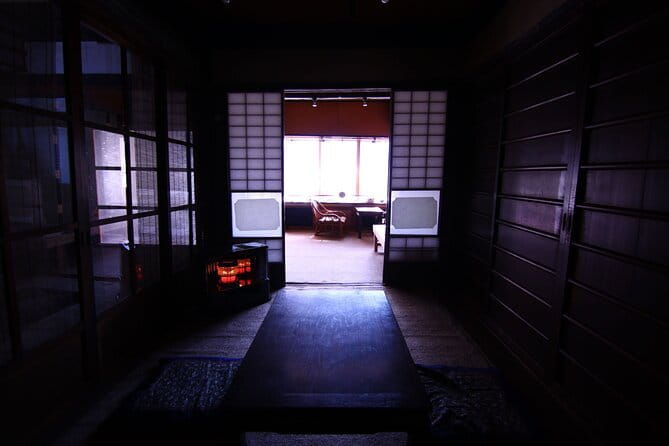
The meeting point is listed as 箏春庵 Soushunan in Kyoto’s Kamigyo Ward. The Japanese name can be useful when checking directions, since copying the address into a map app may be easier than relying on an English spelling alone.
No hotel transfer is provided. You should treat this as a meet-there activity. The location is near public transportation, but the details supplied do not name a particular station or give walking minutes. Check the route on the day before you leave, especially if you are traveling with young children or older family members.
Because the class lasts about 80 minutes and returns to the starting point, it can fit neatly into a half-day plan. I would avoid placing it between two tightly timed attractions. Kyoto transport and walking times can vary, and arriving calm is better than entering a quiet music lesson in a rush.
The mobile ticket is practical. Keep the booking confirmation accessible on your phone, and make sure you have the correct address ready when setting out.
Who Will Get the Most from This Activity
I would recommend this lesson to several kinds of people:
- Families seeking one activity everyone can share
- First-time visitors who want a cultural encounter beyond sightseeing
- People interested in Japanese music, ceremonies, or traditional arts
- Adults and children who enjoy trying something with their hands
- Visitors who prefer a private session to a large group demonstration
The activity also suits people who do not consider themselves musical. The stated age range and the patient teaching described in the supplied material suggest that advanced ability is not expected.
It may be less suitable for someone who dislikes sitting still, following notation, or repeating a new technique. Music lessons require attention. The koto may look graceful, but learning a song still takes concentration.
It is also not the right pick if you need transportation included, want a full-day cultural program, or expect a detailed course in Japanese classical music. This is a compact first encounter.
The Best Family Angle
The family appeal is one of the strongest reasons to choose this lesson. Children from age three can participate, and older adults can join as well. That means the activity does not divide your party into separate age-based plans.
A family lesson can also create a shared memory that does not depend on everyone taking the same photograph or standing quietly in the same historic building. Each person gets a turn at the instrument, and the group can listen to the teacher’s performance together afterward.
I would still consider the needs of your youngest child. The activity says children as young as three can play, but it does not promise a separate children’s program or a shorter session. A very young child may enjoy the novelty but need help staying focused for the full lesson.
Service animals are allowed, and most people can participate. Those details make the activity broadly accessible, though the supplied information does not provide specific details about wheelchair access or the physical arrangement of the room. If you need those details, ask the provider before booking.
Booking Ahead and Cancellation
This experience is booked an average of 57 days ahead, so I would not leave it until the last moment if the lesson is important to your Kyoto schedule. Confirmation arrives within 48 hours of booking, subject to availability.
Free cancellation is available if you cancel at least 24 hours before the local start time. A cancellation made inside that 24-hour window is not refunded, and changes during that period are not accepted. Set a reminder if your itinerary is still shifting.
The activity is often a better fit for a planned day than a spontaneous stop. Its private format and professional instruction make availability more limited than an ordinary walk-in attraction.
Is the Koto Lesson Worth Booking?
I would book this activity if you want to do something in Kyoto rather than simply look at something. The private instruction, professional performer, included equipment, and closing recital give the $60 price a clear purpose.
Choose it especially if your group includes several generations or if you are curious about Japanese music but have never touched a koto. The lesson gives beginners a realistic goal, Sakura, and the tea break provides a pleasant transition from practice to listening.
I would skip it if your schedule is packed, your group wants a large-scale show, or your main need is door-to-door transportation. The session is short and focused, and you must reach Soushunan on your own.
For the right visitor, this is a thoughtful Kyoto hour: practical, personal, and musical. You leave with more than a photograph of a traditional instrument. You have tried to make it speak.
FAQ
How long does the private koto lesson last?
The activity lasts approximately 1 hour and 20 minutes.
What song will I learn?
The lesson teaches you to play Sakura, a traditional Japanese song.
Who teaches the lesson?
A professional koto performer teaches the session and also performs for you after the tea break.
Is the activity private?
Yes. Only your group participates in this private activity.
Are children allowed to participate?
Yes. The activity is suitable for everyone from children aged three to elderly adults.
Is the koto provided?
Yes. Koto instrument use is included, along with the lesson and music notation.
Is transportation included?
No. Private transportation is not included. You must travel to the meeting point at Soushunan in Kyoto’s Kamigyo Ward.
Can I cancel for a full refund?
Yes, if you cancel at least 24 hours before the experience’s local start time. Cancellations made less than 24 hours ahead are not refunded.
More Workshops & Classes in Kyoto
More Private Tours in Kyoto

More tours in Kyoto we've reviewed




Workshops, compared.
 ★ 4.3Kyoto: 45-Minute Tea Ceremony Lesson ExperienceFrom $2245 min
 ★ 5.0Ramen Cooking Class at Ramen Factory in KyotoFrom $131
 ★ 4.9Kyoto: Ramen Cooking Class at a Ramen Factory with SouvenirFrom $1271h 30m
 ★ 4.9Kyoto: Samurai Class, Become a Samurai WarriorFrom $70
 ★ 5.0Ninja 1-hour Hands-on Lesson by Japanese master in Kyoto -EntryFrom $80
 ★ 5.0Kyoto: Ramen, Gyoza, and Onigiri Cooking ClassFrom $901h 30m