
Reviewed · TEA CEREMONY EXPERIENCES
Tea Ceremony Experience in Kyoto
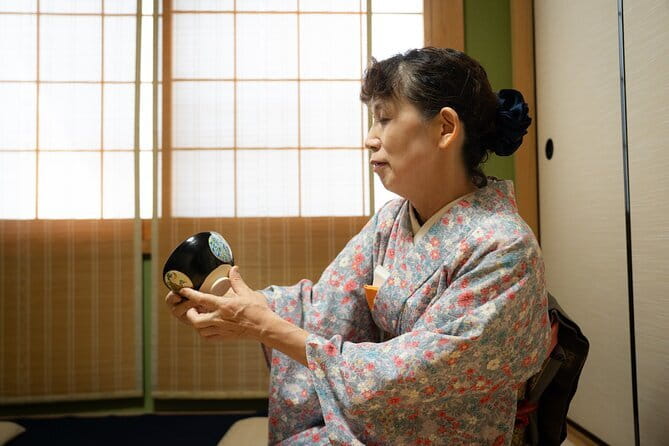
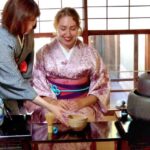
The best part of this Kyoto tea ceremony is that you are not only watching. Chisato guides you through the careful steps of making matcha, from measuring the powdered tea to whisking it with the right movements. Hands-on participation makes the customs easier to understand and gives the hour a quiet sense of purpose.
I like the small maximum of six people, which should allow room for questions and personal help. I also like the setting near the Kamogawa Delta, a pleasant place to visit before or after the ceremony. The main consideration is that the experience lasts about one hour, so it offers a focused introduction rather than a long, formal tea-school lesson.
In This Review
- Key points at a glance
- What this one-hour Kyoto ceremony really offers
- Arriving near Kamogawa Delta and Demachiyanagi
- The opening lesson: how to behave at a tea ceremony
- Preparing matcha one careful movement at a time
- Matcha and wagashi: the small tasting that completes the lesson
- Why the group size of six matters
- A calm lesson, not a costume package
- Is $39.09 a fair price?
- Who will enjoy this experience most?
- Planning the ceremony around your Kyoto day
- My verdict: should you book it?
- FAQ
- How long does the tea ceremony last?
- Where does the tea ceremony begin?
- Where does the activity end?
- How many people can join?
- Is matcha included?
- Is wagashi included?
- Can I make my own tea?
- Is kimono rental included?
- Is the experience wheelchair accessible?
Key points at a glance
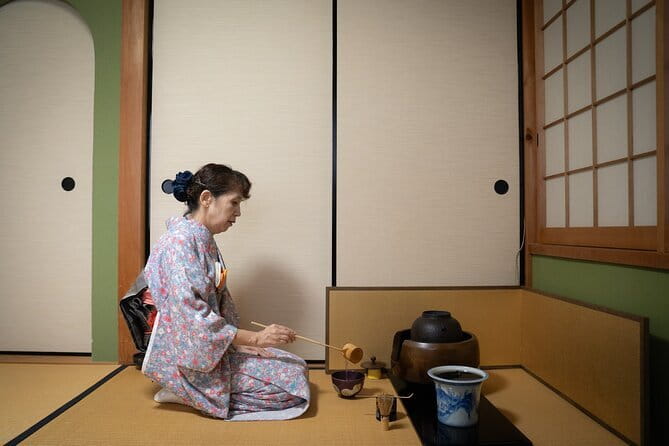
- Make your own matcha: You can prepare and whisk the tea yourself under Chisato’s guidance.
- Thirty years of teaching experience: The ceremony is led by a seasoned tea teacher who explains both actions and meaning.
- A small group of six or fewer: The limited size should make the session more personal and easier to follow.
- Matcha and wagashi included: Your tea is served with a traditional Japanese sweet.
- Good location for a half-day plan: The meeting point is about a 15-minute walk from Kamogawa Delta and Demachiyanagi Station.
- Simple, welcoming approach: The session is designed for beginners and does not require prior tea ceremony experience.
What this one-hour Kyoto ceremony really offers
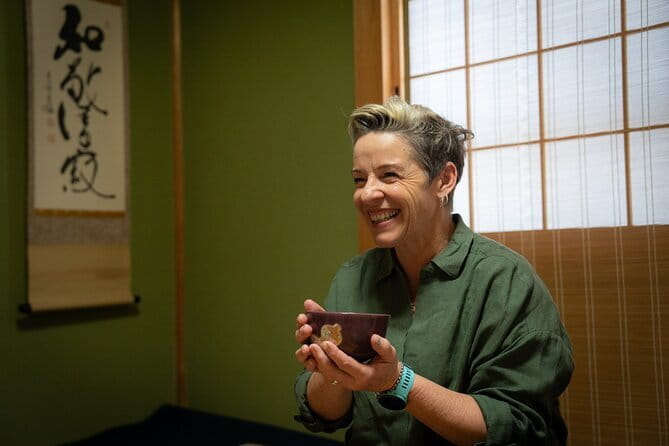
A Japanese tea ceremony can look mysterious if you only see it from a distance. The movements are deliberate, the tools have specific roles, and even the way you receive the tea carries meaning. This experience lowers that barrier by explaining the customs in plain terms and letting you take part.
Chisato has more than 30 years of experience with the tea ceremony. That matters because the value here is not just the drink. You are learning why the preparation is slow and precise, and how ideas such as respect, attention, and calm are expressed through small gestures.
The session is designed for complete beginners. You do not need to know how to sit, bow, hold the bowl, or use the whisk before you arrive. The teacher explains the process as you go, so you can focus on what is happening instead of worrying about making a mistake.
That friendly approach is especially useful if you are visiting Kyoto for the first time. You get a direct introduction to a major part of Japanese culture without committing to a long class or a full day in traditional dress.
A few more Kyoto tours and experiences worth a look
Arriving near Kamogawa Delta and Demachiyanagi
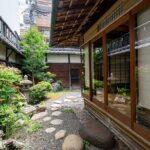
The tea ceremony takes place at Chisato67-23 Shimogamo Matsunokicho in Sakyo Ward. The meeting point is about a 15-minute walk from Kamogawa Delta, where the Kamo and Takano rivers meet.
That location gives you an easy way to build a little more Kyoto into the outing. You can walk along the riverside before the ceremony, or use the tea session as a quiet stop after spending time outdoors. The Kamogawa Delta is a popular local resting place, so it offers a different mood from Kyoto’s busiest temple approaches.
Demachiyanagi Station is also about a 15-minute walk away. The station is a useful starting point for trips toward Kibune Shrine and Rurikou Temple, making this activity a practical addition to a northern Kyoto itinerary.
You should allow enough time to find the address without rushing. The supplied details identify the exact meeting point, but no special transport service is included. This is a walk-up experience that begins and ends at the same place.
The opening lesson: how to behave at a tea ceremony
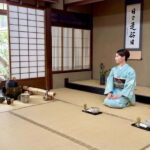
The ceremony begins with an introduction to the customs and the spirit behind them. Chisato explains how to show respect for the tea, the host, the setting, and the other people in the room.
This is an important part of the experience. Without context, the ritual can seem like a series of rules. With an explanation, the movements begin to make sense. You learn that the calm pace is not for show. It asks you to pay attention to what you are doing, rather than racing through a drink as you might at a café.
The teaching style is intended to be relaxed and welcoming. English is used during the experience. You may need to keep questions fairly simple at times, but the session is built for international visitors and people with no previous knowledge.
That language note is worth taking seriously. If you want an academic lecture about every school of tea, this may not be the right format. If you want clear guidance, cultural background, and a chance to take part, the setting sounds more suitable.
Preparing matcha one careful movement at a time
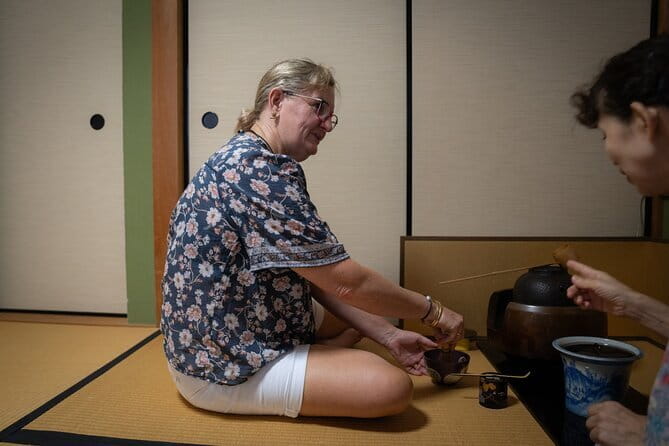
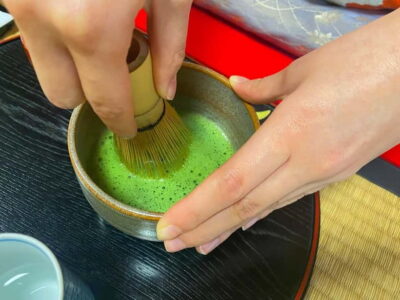
The central activity is the preparation of matcha, the powdered green tea used in the ceremony. You learn the basic sequence under direct guidance, including the whisking motion that turns the tea and water into a smooth drink.
The point is not speed. You are encouraged to notice the position of the bowl, the motion of the whisk, and the care given to each step. This makes the activity feel more like a practical lesson than a simple tasting.
You can choose to make your own tea. That option is helpful for people who prefer to watch first, especially children or anyone who feels unsure about performing a formal ritual. If you do take part, the teacher can correct your movements and explain what each action means.
The hands-on element also gives you something to remember after the ceremony. You may forget a few facts about tea production, but you are more likely to recall the sensation of whisking the powder and seeing the surface change.
The format is not described as a full tea-school training course. You should expect an introduction to the preparation rather than mastery of every traditional detail. In an hour, the emphasis is on understanding the main actions and the attitude behind them.
Matcha and wagashi: the small tasting that completes the lesson
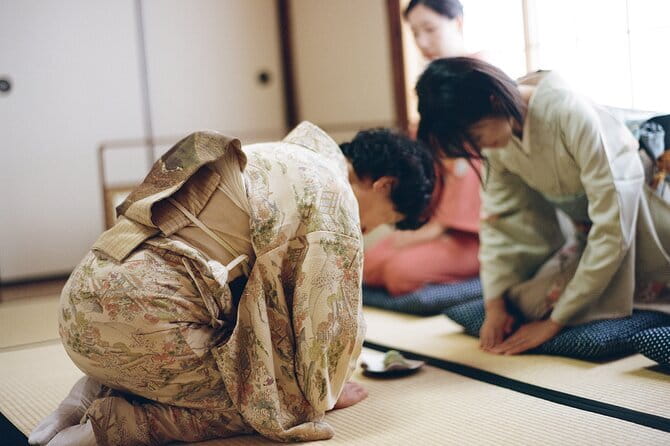
Matcha is served with wagashi, a traditional Japanese sweet. The sweet is not just an extra snack. In a tea ceremony, it balances the bitterness of the tea and gives the tasting a clear rhythm.
The supplied details do not specify the type or flavor of wagashi served, so you should not expect a particular sweet. You can expect a Japanese traditional confection alongside the matcha included in the price.
This pairing helps first-time drinkers. Matcha can have a strong, grassy taste, and the wagashi provides a softer contrast. Several people found both the tea and sweet enjoyable, while the calm preparation made the flavors feel more meaningful.
I like that the tasting is tied to the lesson. You are not simply handed a cup and sent on your way. The drink gives you a chance to practice the etiquette you have just learned and notice how the sweet fits into the ceremony.

Why the group size of six matters
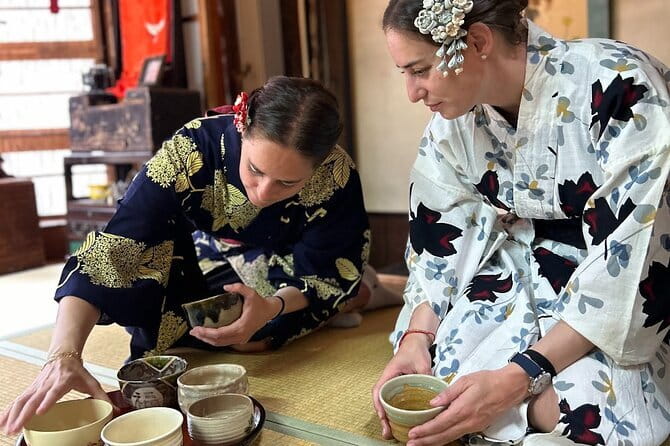
The maximum group size is six people. That is small enough to keep the ceremony from feeling like a stage show, and it should give you a reasonable chance to ask questions or receive help while making tea.
A small group also suits the subject. Tea ceremony depends on quiet concentration. A large room filled with people taking photos and talking would work against the purpose of the activity.
The experience has also worked well for families. Chisato has been described as patient and accommodating with small children, which is useful if you want to introduce younger family members to Japanese customs. Still, children who cannot sit quietly or follow simple instructions may find the pace difficult. The information provided does not state a minimum age, so you should check before booking for very young children.
Because the group is limited, the session may feel more personal than a large cultural demonstration. The tradeoff is that availability may be tighter, so it is sensible to reserve ahead if this is an important part of your Kyoto plans.
A calm lesson, not a costume package
Kimono rental or dressing is not included. That keeps the cost and time focused on the ceremony itself, but it also means this is not the right choice if your main goal is to pose in formal Japanese clothing.
I see that as a useful distinction. Kimono experiences can make attractive photographs, but they often center on clothing, styling, and movement through the city. This session centers on matcha, etiquette, and the meaning of being present.
You should wear clothing that allows you to sit comfortably and handle the tea without worrying about elaborate sleeves or accessories. The supplied information does not give a dress code, so you should not assume that formal clothing is required.
The activity is not wheelchair accessible. If you have mobility needs, confirm the physical arrangement before booking, since the available details do not explain the floor plan, seating style, or exact steps involved.
Is $39.09 a fair price?
At $39.09 per person, this is a moderate price for a one-hour cultural activity in Kyoto. Matcha, wagashi, and a guide are included, and you receive direct instruction from a teacher with more than three decades of experience.
The value depends on what you want from a tea ceremony. If you only want to drink matcha, the price may feel high for a single cup and sweet. If you want the background, the etiquette, and the chance to prepare the tea yourself, the cost is easier to justify.
The small group improves the value. You are not paying only for a demonstration from across a room. You have an opportunity to follow the motions and ask for help. That personal attention is especially useful for beginners who want to understand the ceremony instead of merely photographing it.
There are no kimono costs included, and tips are not included. The supplied information does not state that a tip is required, so treat it as optional and based on your own judgment.
For a short Kyoto itinerary, the one-hour length is also a financial advantage. You can fit the ceremony between sightseeing stops without giving up half a day. The location near Kamogawa Delta and Demachiyanagi makes it easier to pair with other northern Kyoto plans.
Who will enjoy this experience most?
This ceremony is a good fit for you if you want a first introduction to Japanese tea culture and prefer a small, quiet activity. It also suits people who like learning by doing, since you can whisk the matcha yourself rather than simply watch.
Families may find the patient teaching style helpful, especially if children are curious about Japanese food and customs. The small group can make it easier for a child to receive guidance, though the formal pace may not suit every youngster.
The experience also works well for couples, solo visitors, and friends who want a break from temple crowds. The setting is tied to the local neighborhood rather than a major sightseeing landmark, so it can feel like a change of pace within a busy Kyoto schedule.
You may want to choose another activity if you need wheelchair access, want kimono dressing, or expect a long and highly formal ceremony. The session is short and approachable by design.
Planning the ceremony around your Kyoto day
The ceremony starts and ends at the same meeting point. Since it lasts about one hour, you can plan a simple walking route around it.
A useful plan is to visit Kamogawa Delta first, then walk the 15 minutes to the tea ceremony. Afterward, you can continue toward Demachiyanagi Station or use the area as a starting point for plans connected with Kibune Shrine and Rurikou Temple.
The activity details do not provide a full sightseeing itinerary, meal stop, or transport between attractions. Keep your schedule flexible enough to cover the walk and finding the address.
You receive confirmation at booking, and the ticket is mobile, so you can keep the booking on your phone. Free cancellation is available if you cancel at least 24 hours before the local start time. Cancellations or changes made inside that window are not refunded or accepted.
My verdict: should you book it?
I would book this tea ceremony if you want a short, hands-on cultural lesson led by an experienced teacher. The strongest reasons are the small group, the chance to make your own matcha, and Chisato’s patient approach with beginners and children.
The $39.09 price is reasonable when you value instruction and cultural context, not just refreshments. The nearby riverside setting and access from Demachiyanagi Station make it easy to fit into a northern Kyoto day.
Skip it if you want kimono dressing, wheelchair access, or a longer ceremony with a highly formal presentation. For everyone else, this looks like a gentle and practical way to understand why matcha preparation is treated as an art of attention rather than a quick drink.
FAQ
How long does the tea ceremony last?
The experience lasts approximately one hour.
Where does the tea ceremony begin?
It begins at Chisato67-23 Shimogamo Matsunokicho, Sakyo Ward, Kyoto, 606-0816, Japan.
Where does the activity end?
The activity ends back at the meeting point.
How many people can join?
The maximum group size is six people.
Is matcha included?
Yes. Matcha is included in the experience price.
Is wagashi included?
Yes. A traditional Japanese sweet, called wagashi, is included.
Can I make my own tea?
Yes. You can prepare and whisk your own matcha if you wish, with guidance from the teacher.
Is kimono rental included?
No. Kimono is not included.
Is the experience wheelchair accessible?
No. The tea ceremony is not wheelchair accessible.
More Tea Ceremony Experiences in Kyoto
More tours in Kyoto we've reviewed
Tea Ceremony Experiences, compared.
 ★ 4.9Kyoto: Tea Ceremony in a Traditional Tea House in KiyomizuFrom $4945 min
 ★ 4.9Kyoto: Tea Ceremony Ju-An at Jotokuji TempleFrom $291h 10m
 ★ 4.3Kyoto: 45-Minute Tea Ceremony Lesson ExperienceFrom $2245 min
 ★ 5.0World Heritage Kyoto & Nara Uji Authentic Matcha ExperienceFrom $129
 ★ 4.9Kyoto: Table-Style Tea Ceremony at a Kyo-MachiyaFrom $451h 30m
 ★ 5.0Kimono Tea Ceremony at Kyoto Maikoya, NISHIKIFrom $65