
Reviewed · LUNCH EXPERIENCES
[W/Lunch] Kyoto Highlights Bike Tour with UNESCO Zen Temples
Kyoto’s best moments often come between the famous sights, and this small-group bike tour gives you a pleasant way to connect them. You pedal beside the Kamo River, pass through Gion, visit Kennin-ji and Nanzen-ji, pause at Heian Shrine, then sit down to a traditional Kyoto lunch.
I like the easy pace and the fact that the bike, helmet, lunch, photos, and Kennin-ji entry are covered in the $95 price. I also like the short group size, limited to six people, which gives you a better chance to hear the guide and ask questions. The main drawback is summer heat, plus one guide was reported to be soft-spoken while cycling, so you may need to stay close to catch every word.
In This Review
- Key points at a glance
- Why a bike is a smart way to see Kyoto
- Meeting near Kyoto Station and setting off
- Cycling beside the Kamo River
- Gion, geisha culture, and Kennin-ji
- Nanzen-ji and a brief Heian Shrine stop
- Lunch in a traditional Japanese house
- The final ride along the Kamo River
- What the $95 price covers
- How difficult is the cycling?
- The guides and the quality of the experience
- Who should book this Kyoto bike tour?
- Should you book it?
- FAQ
- How long does the Kyoto bike tour last?
- Where does the tour start?
- Where does the tour end?
- Is bicycle rental included?
- Is lunch included?
- Which temples and shrines are visited?
- Is the tour suitable for beginner cyclists?
- Can vegetarians join the tour?
- What happens if the weather is bad?
Key points at a glance
![[W/Lunch] Kyoto Highlights Bike Tour with UNESCO Zen Temples - Key points at a glance](https://www.check-in-kyoto.com/wp-content/uploads/2026/08/w-lunch-kyoto-highlights-bike-tour-with-unesco-zen-temples-1.jpg)
- Kamo River riding: Begin and end with a calm ride along one of Kyoto’s most pleasant city routes.
- Gion and Kennin-ji: Learn about geisha culture and Zen in Kyoto’s historic Gion district.
- Zen garden visit: Kennin-ji includes a traditional Japanese rock garden, known as karesansui.
- Local lunch: Stop at a traditional Japanese house for soba, matcha, mochi, and other Kyoto-style dishes.
- Small group format: The tour accepts no more than six participants and runs in English.
- Practical limits: You must be at least 150 centimeters tall, and the tour is not suitable for children under 15.
Why a bike is a smart way to see Kyoto
![[W/Lunch] Kyoto Highlights Bike Tour with UNESCO Zen Temples - Why a bike is a smart way to see Kyoto](https://www.check-in-kyoto.com/wp-content/uploads/2026/08/w-lunch-kyoto-highlights-bike-tour-with-unesco-zen-temples-2.jpg)
Kyoto is large, with more than 1.4 million people in its metropolitan area, yet parts of the city feel remarkably quiet. A bicycle lets you move between those two sides of Kyoto: the major sights and the calmer streets linking them.
Walking between Gion, the eastern temple district, and the Kamo River can take a fair amount of time. Public transport is useful, but it often leaves you underground or inside a crowded station. On a bike, you see the ordinary city along the way, including local streets, riverbanks, and the changing pace of each neighborhood.
This is not a demanding cycling challenge. The tour is designed for people who can ride a bike but do not consider themselves expert cyclists. Your guide explains the traffic rules, and the route focuses on sightseeing rather than speed.
You should still treat the ride as an active half-day outing. Wear comfortable clothes and shoes, bring water, and expect strong heat in summer. The operator does not provide a plastic bottle, part of its effort to reduce single-use waste.
Other cycling tours in Kyoto
Meeting near Kyoto Station and setting off
The meeting point is in front of the Seven Eleven outside Exit Hachijo guchi at Kyoto Station, next to Heart in viain. Look for the guide holding a Magical Trip sign board.
This location can be a little confusing, particularly if Kyoto Station is new to you. I would arrive early and allow time to find the correct side of the station and exit. Once everyone is together, the tour begins with the bikes and helmets provided by the operator, so you do not need to arrange a rental separately.
The tour lasts about 4.5 hours, though the timing can stretch if lunch service is slow. Restaurant staffing has been difficult in Japan since the pandemic, and the operator warns that food and drinks may take longer than planned. That is worth keeping in mind if you have a train, reservation, or evening activity soon afterward.
Cycling beside the Kamo River
![[W/Lunch] Kyoto Highlights Bike Tour with UNESCO Zen Temples - Cycling beside the Kamo River](https://www.check-in-kyoto.com/wp-content/uploads/2026/08/w-lunch-kyoto-highlights-bike-tour-with-unesco-zen-temples-4.jpg)
The first ride follows the Kamo River for about 15 minutes. This is a gentle introduction to the city and to the bike itself.
The Kamo River is one of Kyoto’s defining public spaces. Locals use its banks for walks, rest, and time in the sun, and the water gives the city a welcome break from traffic and buildings. You get a sense of why Kyoto can feel relaxed despite its size.
The river ride also helps you settle into the group’s rhythm. Stay close enough to hear instructions, especially if your guide has a quiet voice. One useful point from the tour experience is that a clip-on microphone would help while riding on city roads, so keeping within speaking distance matters.
Gion, geisha culture, and Kennin-ji
![[W/Lunch] Kyoto Highlights Bike Tour with UNESCO Zen Temples - Gion, geisha culture, and Kennin-ji](https://www.check-in-kyoto.com/wp-content/uploads/2026/08/w-lunch-kyoto-highlights-bike-tour-with-unesco-zen-temples-5.jpg)
The route continues into Gion, where you spend about 30 minutes learning about the district and its connection to geisha culture. Gion is one of Kyoto’s most recognizable areas, but it is more than a backdrop for photographs. The guide helps explain how the neighborhood fits into the city’s traditional arts and social life.
Next comes Kennin-ji, with about 30 minutes inside the temple. This is a key stop because the tour connects the temple itself with Zen practice rather than treating it as a quick photo stop.
You can expect an introduction to Zen culture and time to look at a traditional karesansui garden, the dry rock-and-gravel style often associated with Japanese temple design. The simple arrangement encourages you to slow down and notice space, shape, and balance. Your guide also explains how the temple fits into Kyoto’s past.
The admission fee to Kennin-ji is included, which is useful because it removes one small decision from the visit. Thirty minutes is enough for an introduction, though it will not allow a long, unhurried study of every part of the temple grounds.
Remember that this is a working religious site, not only a tourist attraction. Follow your guide’s instructions, observe quiet areas respectfully, and avoid treating every detail as a photo opportunity.
Nanzen-ji and a brief Heian Shrine stop
![[W/Lunch] Kyoto Highlights Bike Tour with UNESCO Zen Temples - Nanzen-ji and a brief Heian Shrine stop](https://www.check-in-kyoto.com/wp-content/uploads/2026/08/w-lunch-kyoto-highlights-bike-tour-with-unesco-zen-temples-6.jpg)
After Kennin-ji, you cycle toward Nanzen-ji. The scheduled visit here is about 15 minutes, so you should expect a focused look rather than an extended temple tour.
Nanzen-ji gives the guide another setting for explaining Zen and old Kyoto. The stop is especially useful after Kennin-ji because you can compare two temple environments and see how Zen ideas appear in architecture, gardens, and quiet outdoor spaces.
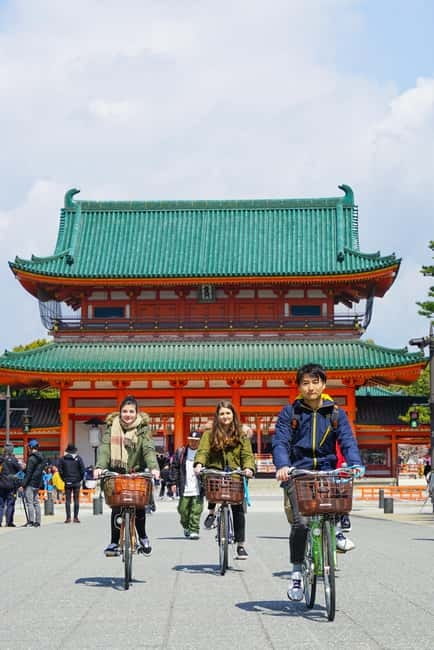
The tour also includes a short five-minute stop at Heian Shrine. That is enough for a quick look and orientation, but not enough for a detailed visit to the shrine complex. Think of it as a brief visual pause along the route, not a full shrine experience.
The order and length of these stops make the day feel varied. You move from a lively historic district to temple grounds, then back onto the streets and toward lunch. The trade-off is that none of the temple stops is especially long, so you should choose this tour for a broad introduction rather than a slow, specialist study of Kyoto religious sites.
A few more Kyoto tours and experiences worth a look
Lunch in a traditional Japanese house
![[W/Lunch] Kyoto Highlights Bike Tour with UNESCO Zen Temples - Lunch in a traditional Japanese house](https://www.check-in-kyoto.com/wp-content/uploads/2026/08/w-lunch-kyoto-highlights-bike-tour-with-unesco-zen-temples-7.jpg)
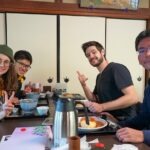
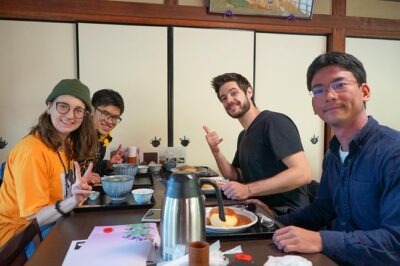
Lunch is one of the strongest parts of the experience. You stop at a traditional Japanese house and have about 40 minutes to eat local food, with soba dishes among the choices and matcha and mochi desserts available.
A meal in this setting adds something that a standard restaurant stop would not. You are not just refueling between sights. You get a closer look at the type of house and dining atmosphere associated with traditional Kyoto.
The meal is included, but extra drinks and food are not. Vegetarian options are limited, since many Japanese restaurants are still not fully set up for vegetarian menus. If you do not eat meat or fish, check the available choices before booking and be ready for fewer options than you might find at a restaurant aimed specifically at international visitors.
Next door, you can look at a Japanese garden and a souvenir shop. Yatsuhashi, a well-known Kyoto sweet, is available to try there. This gives you a small taste of Kyoto’s food culture beyond the main lunch, though purchases and additional items are at your own expense.
The schedule allows around 40 minutes for lunch, but service can run late. I would not book a tight afternoon appointment immediately afterward. The relaxed meal is part of the appeal, and rushing through it would undercut one of the tour’s more local-feeling moments.
The final ride along the Kamo River
![[W/Lunch] Kyoto Highlights Bike Tour with UNESCO Zen Temples - The final ride along the Kamo River](https://www.check-in-kyoto.com/wp-content/uploads/2026/08/w-lunch-kyoto-highlights-bike-tour-with-unesco-zen-temples-8.jpg)
After lunch, you get back on the bike for a relaxing ride along the Kamo River. This closes the loop nicely, returning you to one of Kyoto’s most peaceful public spaces before finishing at the original meeting point.
By this stage, the river ride should feel less like transport and more like a proper break. You can watch people enjoying the sunshine, see the water moving through the city, and take in a quieter side of Kyoto after the temples and streets.
The tour ends back at the Seven Eleven near Kyoto Station. That makes the finish convenient if you are staying near the station or continuing to another part of the city, but allow extra time if lunch service has been delayed.
What the $95 price covers
![[W/Lunch] Kyoto Highlights Bike Tour with UNESCO Zen Temples - What the $95 price covers](https://www.check-in-kyoto.com/wp-content/uploads/2026/08/w-lunch-kyoto-highlights-bike-tour-with-unesco-zen-temples-9.jpg)
At $95 per person, this is not the cheapest way to see Kyoto, but the price bundles several costs and services:
- Bicycle rental
- Helmet
- English-speaking live guide
- Lunch
- Kennin-ji entrance fee
- Tour photos
The value depends on how you like to travel. If you would otherwise rent a bike, plan the route, pay temple admission, and arrange lunch separately, the package is reasonably convenient. You also receive local explanations while moving through the city, which is difficult to price but can make the difference between seeing a place and understanding it.
The six-person limit is important. A small group is easier to manage on city streets, and it should feel less impersonal than a large bus or walking group. In some cases, the group may be smaller than six. One booking resulted in a private tour when the other participants did not attend, allowing the guide to adjust the pace and focus.
You pay separately for additional drinks, snacks, and souvenirs. Since you must bring your own water, carry a bottle from the start.
How difficult is the cycling?
You do not need advanced cycling skills. The tour is intended for ordinary riders, and the guide explains traffic rules before or during the ride.
Still, you should be comfortable riding in a city setting. You will cycle on roads and through local streets, so pay attention to the guide, obey signals, and avoid falling behind. A helmet is included, and comfortable clothing is strongly recommended.
The minimum height is 150 centimeters, or about 4 feet 11 inches. Children under 15 cannot join. Those limits make the tour better suited to teenagers and adults who can manage a bicycle independently.
Heat is the bigger physical concern. A family completed the ride in around 30-degree weather and found it enjoyable, but summer conditions can make even an easy route tiring. Start hydrated, bring water, and use sunscreen and light clothing as appropriate.
Bad weather can lead to cancellation for safety reasons. Keep some flexibility in your plans during periods of poor weather.
The guides and the quality of the experience
The tour is conducted in English, and the guide’s personality will shape how much you get from it. Tobu led one especially successful outing, explaining Kyoto’s history, Shinto shrines, and local sights in a way that worked well for a family with teenagers.
Karin also led a highly personal tour and adjusted the experience when the other bookings did not show up. That kind of flexibility is one benefit of the small-group setup.
The main communication issue is practical, not serious. One guide was soft-spoken, and it was harder to hear while cycling on the road. Stay near the guide and ask for a repeat when needed. If you are especially interested in detailed commentary, this is worth considering before you book.
The best guides will help you connect Gion, Zen temples, shrines, food, and the river into one picture of Kyoto. You should expect a general introduction rather than an academic lecture.
Who should book this Kyoto bike tour?
I would recommend this tour to first-time Kyoto visitors who want to cover several eastern Kyoto sights without spending the whole day walking. It works particularly well for families with teenagers, active couples, and anyone who likes seeing a city at street level.
It also suits you if you want practical orientation early in your stay. After four and a half hours, you will have seen several areas and may feel more comfortable returning to Gion, the Kamo River, or the temple district on your own.
You may want a different plan if you prefer long temple visits, need a fully vegetarian meal, dislike cycling in traffic, or have a strict schedule after lunch. The short Heian Shrine stop and limited time at Nanzen-ji will not satisfy someone who wants to study each site in detail.
The tour is flexible enough for beginners, but it is not passive sightseeing. You will ride for much of the morning or afternoon, so choose it because you enjoy moving under your own power.
Should you book it?
Book this Kyoto bike tour if you want a friendly, active introduction to the city with major cultural stops, a Zen garden, a traditional lunch, and a calm river ride. The included bike, helmet, lunch, photos, and Kennin-ji entry make the $95 cost fair, particularly for a small group of no more than six.
Skip it if you need extensive vegetarian choices, cannot ride in hot weather, or want a long visit at each temple. For most reasonably fit visitors who want to see Kyoto beyond the main station and bus routes, the combination of Gion, Zen temples, local food, and the Kamo River is a satisfying half-day plan.
FAQ
How long does the Kyoto bike tour last?
The tour lasts about 4.5 hours. Lunch service may take longer than expected, so allow extra time afterward.
Where does the tour start?
It starts in front of the Seven Eleven outside Exit Hachijo guchi of Kyoto Station, next to Heart in viain. The guide waits with a Magical Trip sign board.
Where does the tour end?
The tour finishes back at the same Seven Eleven meeting point near Kyoto Station.
Is bicycle rental included?
Yes. The bicycle and helmet are included in the tour price.
Is lunch included?
Yes. Lunch at a local restaurant is included. Additional drinks and food cost extra.
Which temples and shrines are visited?
The tour visits Kennin-ji Temple, Nanzen-ji Temple, and Heian Shrine. It also includes time in Gion and along the Kamo River.
Is the tour suitable for beginner cyclists?
Yes. The tour is intended for people who are not highly skilled bikers, though you should be comfortable riding on city roads and follow the traffic rules explained by the guide.
Can vegetarians join the tour?
Vegetarians can join, but the available vegetarian choices are limited because many Japanese restaurants do not offer extensive vegetarian menus.
What happens if the weather is bad?
The tour may be cancelled when weather conditions are unsuitable for safe cycling. You can cancel up to 24 hours in advance for a full refund.
More Lunch Experiences in Kyoto
More Cycling Tours in Kyoto
More tours in Kyoto we've reviewed
Lunch Experiences, compared.
 ★ 5.0Bike Tour Exploring North Kyoto plus LunchFrom $106
 ★ 4.4Osaka/Kyoto: Arashiyama, Nara & Fushimi Inari Shrine w/LunchFrom $61
 ★ 5.0Kyoto Zen Meditation & Garden Tour at a Zen Temple with LunchFrom $110
 ★ 5.04.5-Hour Kyoto Bike Tour with Lunch and UNESCO Zen TemplesFrom $99
 ★ 4.8From Kyoto: Nara History Guided Half Day Bus Tour with LunchFrom $776 hours
 ★ 4.9Kyoto: Zen Meditation and Garden Tour at a Temple with LunchFrom $1074h 30m