
Reviewed · FUSHIMI INARI TOURS
Kyoto: Fushimi Inari Taisha Small Group Guided Walking Tour
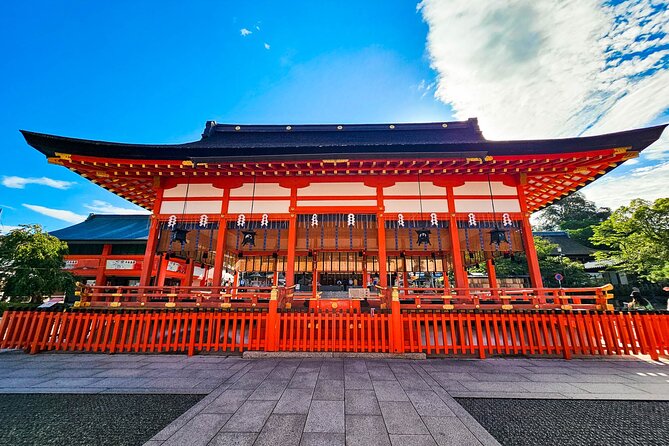
Fushimi Inari Taisha is Kyoto’s great tunnel of red torii gates, and this small-group walking tour gives you a clear way into it. You’ll learn why Inari is linked with agriculture and commerce, and why stone foxes appear around the shrine as the deity’s messengers.
I like the choice between exploring the lower shrine and hiking farther up Mount Inari. I also like the small maximum group of nine, which should make it easier to hear the guide and ask questions. The main consideration is physical effort: the full route is a mountain walk, not a flat shrine visit.
In This Review
- Key points
- Why Fushimi Inari Taisha deserves your morning
- Meeting the guide at Inari Station
- Entering the lower shrine and the first torii gates
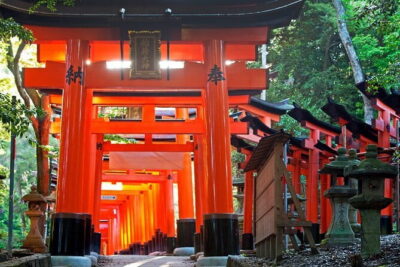
- Walking beneath thousands of red torii gates
- Continuing up Mount Inari for city views
- What the English-speaking guide adds
- Is $85 a fair price?
- Who will get the most from this walk?
- Timing, booking, and cancellation
- My practical take on the route
- Should you book this Fushimi Inari tour?
- FAQ
- How long does the Fushimi Inari walking tour last?
- How much does the tour cost?
- What is included in the tour price?
- Are meals and drinks included?
- Does the tour provide hotel pickup and drop-off?
- Where does the tour start and end?
- How many people can join the tour?
- Can I choose a shorter walk?
- What happens if I need to cancel?
Key points
- Thousands of red torii gates: Walk beneath the famous gates lining Mount Inari’s trails.
- A flexible route: Visit the lower shrine area or continue toward the upper sections and city views.
- A small group of nine or fewer: The format is more personal than a large coach tour.
- Useful cultural context: Learn about Inari, the Shinto deity of agriculture and commerce, and the fox messengers connected with the shrine.
- Three hours at a famous Kyoto sight: The tour suits a tight schedule and includes entrance fees.
- Positive guide feedback: The guide is described as entertaining, energetic, and well informed.
Why Fushimi Inari Taisha deserves your morning
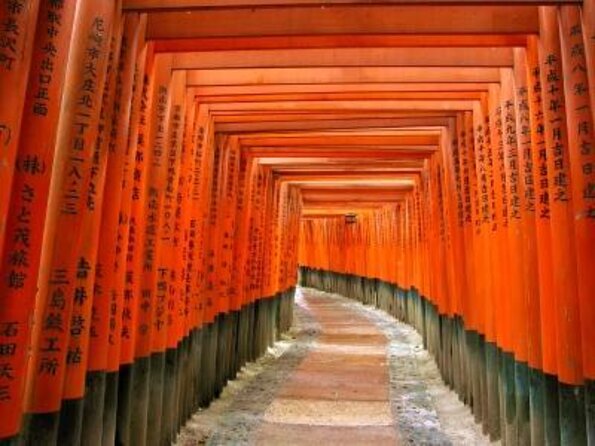
Fushimi Inari Taisha is one of Kyoto’s most recognizable sights, but its appeal is not limited to taking a quick photo at the first gate. The shrine extends up Mount Inari, with long rows of orange-red torii gates marking the paths through the wooded hillside.
I find the place most rewarding when you understand what you are seeing. Inari is associated with agriculture and commerce, and foxes serve as the deity’s messengers. Once your guide explains those connections, the fox statues, shrine symbols, and donated gates feel less like scenery and more like parts of a living religious site.
The famous gates are donations, and together they create the repeated patterns that make Fushimi Inari so memorable. The lower shrine gives you the easiest introduction, while the higher paths offer a stronger sense of walking through Mount Inari itself.
This tour focuses on that combination of visual spectacle and cultural explanation. You are not simply pointed toward the gates and sent off with a meeting time. The guide leads the walk, explains the site, and helps you decide how much of the mountain to tackle.
A few more Kyoto tours and experiences worth a look


Meeting the guide at Inari Station
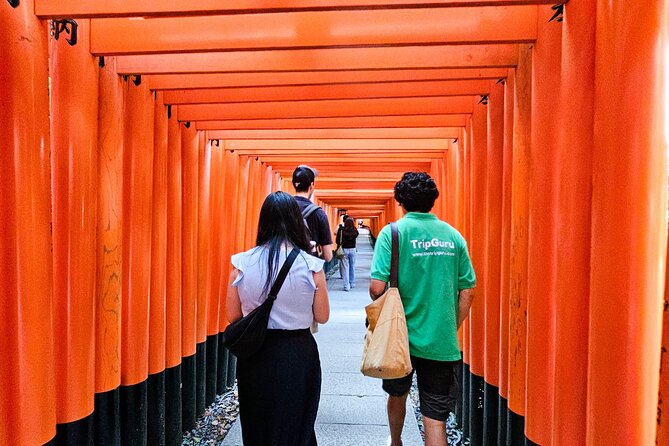
The tour starts and ends at JR Inari Station, at Fukakusa Inarionmaecho in Kyoto’s Fushimi Ward. That is a practical meeting point because you do not need hotel pickup, and the station puts you close to the shrine entrance.
I like a start and finish at the same station for a short Kyoto tour. You can leave your hotel with a simple plan, complete the walk, and continue elsewhere in the city without arranging a separate ride back. The tour is also near public transportation, which makes it easier to fit into a day of sightseeing.
You should allow enough time to find the correct meeting point at Inari Station. The supplied details identify JR Inari Station, and the experience finishes there as well. Hotel transfers are not included, so you are responsible for getting to and from the station.
The group is limited to a maximum of nine people. That is small enough to feel more like a guided walk than a mass tour, though the exact group size on your date may be smaller.
Entering the lower shrine and the first torii gates
The walk begins at Fushimi Inari Taisha Shrine, where you can see the lower sections before deciding how far to continue. This part is the best fit if you want the main atmosphere of the shrine without committing to the full climb.
Your guide introduces the site and its Shinto traditions, including Inari’s role in agriculture and commerce. The fox messengers are an important part of the visit, and the explanation gives you something specific to notice as you move through the shrine grounds.
The lower area can also work well for anyone with limited time. The full experience is described as roughly two to three hours, with the overall tour lasting about three hours. You can still see the famous gates and learn the basic story of Fushimi Inari without walking every upper trail.
I would choose this shorter option if you are fitting the shrine between other Kyoto plans, managing sore legs, or traveling with people who have different walking abilities. The tradeoff is simple: you get less of Mount Inari and fewer elevated views.
Walking beneath thousands of red torii gates
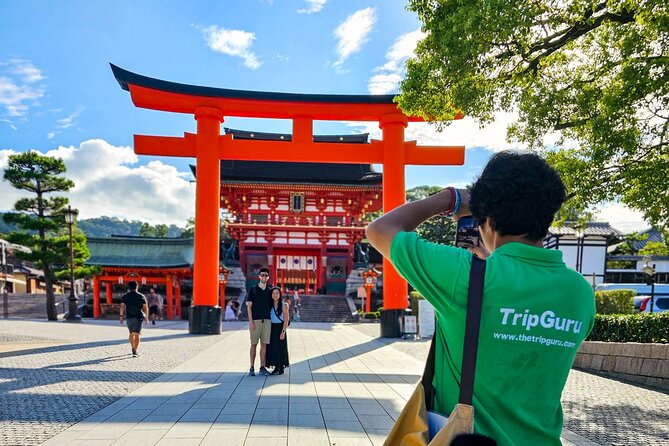
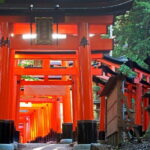
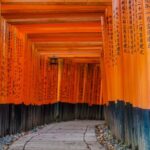
The torii gates are the heart of the visit. They line the paths in close succession, creating the striking orange-red corridors that have made Fushimi Inari famous around the world.
A guide is particularly useful here because the gates can otherwise become a series of impressive photographs without much explanation. You can ask about the shrine’s symbols and traditions while walking, rather than trying to piece together the meaning later.
The route is not a museum circuit with separate rooms and fixed displays. It is an outdoor walk through shrine grounds and mountain trails. That gives the experience a more open, changing rhythm, but it also means you should be ready for walking and some uphill effort.
The tour description calls for a moderate level of physical fitness. That wording matters. The lower section is more manageable, but continuing toward the upper parts of Mount Inari requires more stamina. You should choose comfortable walking clothes and shoes, although no specific equipment is listed as required.
The guide can help you explore either the lower and upper sections or only the lower part. That flexibility is one of the strongest reasons to choose a guided visit instead of a rigid package with no route choice.
Continuing up Mount Inari for city views
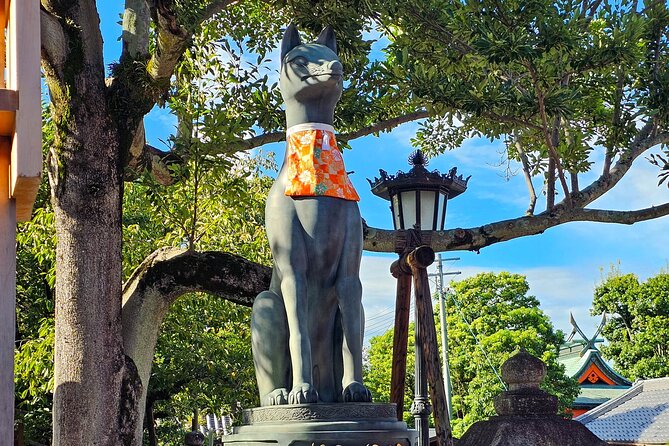
If you continue higher, the shrine paths lead along Mount Inari and open up views toward Kyoto. The appeal here is not just reaching a final point. The uphill walk lets you experience how the shrine extends beyond its most photographed entrance.
The views give the tour a useful second act. After the close, repeating lines of torii gates, you get a broader look over the city. The exact conditions will affect what you can see, but the route is specifically designed to include scenic views when you hike farther up.
This is also the section where the tour becomes more demanding. Three hours can pass quickly when you are climbing, pausing for explanations, and taking in the shrine. If you prefer a gentle outing, the shorter lower route is the safer choice.
I like that you are not forced into one answer. Some people want the full Mount Inari walk; others mainly want the torii gates and cultural background. The option to adjust the route makes the experience more useful for a mixed group or a busy Kyoto itinerary.
Other walking tours we've reviewed in Kyoto






What the English-speaking guide adds
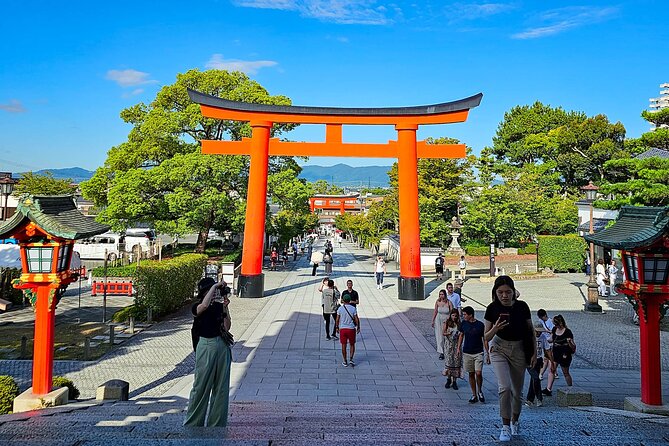
The guide leads the walk in English and provides historical facts and small cultural details about the shrine. No guide name is provided, so you should not book this experience expecting a particular named guide.
What is clear is the desired guiding style. The guide is described as entertaining, energetic, and well informed. That combination matters at Fushimi Inari because the route can be visually overwhelming. A lively guide can keep the explanations moving while still giving the shrine a sense of place.
I would value the guide most during the lower shrine introduction and the transition onto the mountain trails. Those are the moments when you can learn how the site functions and how Inari connects with fox imagery, commerce, and farming.
The small group helps here. With no more than nine people, you have a better chance of hearing explanations and asking a question without stopping an entire busload of people. It is not a private tour, but it is a relatively intimate format.
Is $85 a fair price?

The cost is $85 per person. That is not the cheapest way to visit Fushimi Inari Taisha, especially since the shrine itself is a public religious site rather than a conventional paid attraction. The value comes from the guide, the structured route, the cultural explanation, and the ability to choose between a shorter walk and a higher hike.
Entrance fees are included, as is the three-hour walking tour. Meals, drinks, personal expenses, and hotel transportation are not included. Since the walk is the main activity, you should budget separately for anything you want to eat or drink before or after the tour.
I think the price makes the most sense for a first visit to Kyoto, a short stay, or anyone who wants help understanding the shrine instead of simply finding the gates alone. If you are comfortable navigating independently and mainly want photographs, you may find the tour harder to justify.
The group discount option could improve the value for people booking together, though the exact discount is not specified. The average booking point is 43 days ahead, but last-minute bookings are accepted. That gives you room to plan ahead while keeping the tour useful for a spontaneous Kyoto day.
Who will get the most from this walk?
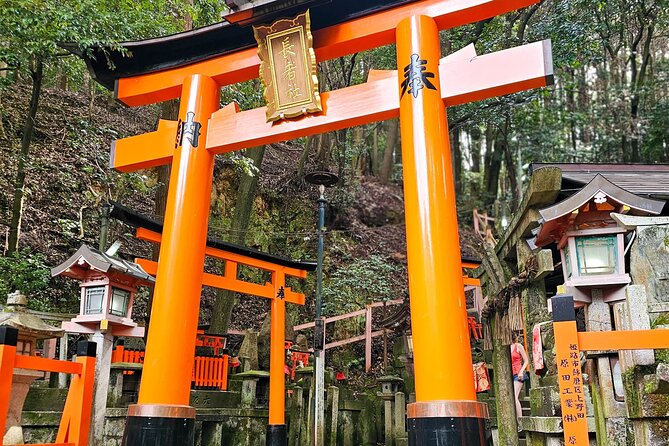
I would recommend this experience to you if you want a compact introduction to one of Kyoto’s major sights and prefer a guide to wandering without context. It is especially useful if you have only a few hours available and want the shrine built into a clear plan.
It also suits people who enjoy walking and want a choice of intensity. You can stay mostly in the lower shrine area or continue farther up Mount Inari for the views.
You may want to skip it if you dislike uphill walks, need a fully accessible route, or want a private experience. The information provided only confirms moderate physical fitness and a maximum group of nine. It does not promise an accessible route or private guiding.
Families and groups should think about stamina rather than age alone. The shorter lower section may work for a wider range of abilities, while the upper trails are better for people comfortable with a longer mountain walk.
Timing, booking, and cancellation
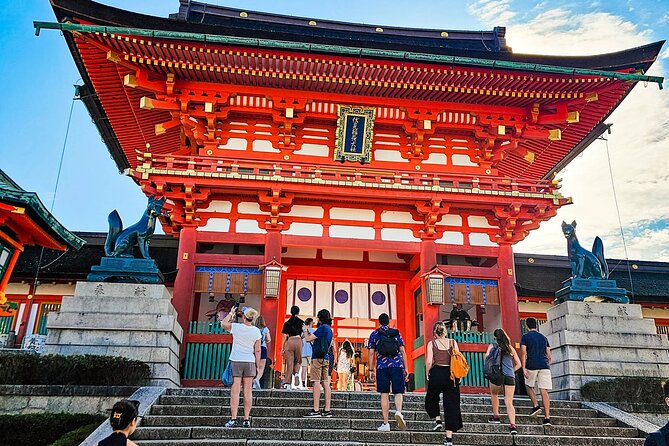
The experience lasts about three hours, with the walking portion focused entirely on Fushimi Inari Taisha and Mount Inari. That makes it easy to place before or after another Kyoto activity, provided you leave enough time to reach JR Inari Station.
Confirmation is provided at booking, and mobile tickets are available. You do not need to arrange hotel pickup, and the meeting point and end point are both at Inari Station.
Free cancellation is available if you cancel at least 24 hours before the local start time. A cancellation made less than 24 hours before the start is not refundable, and late changes are not accepted.
My practical take on the route
I would begin with the lower shrine sections and listen closely during the first explanation. That gives you the religious and cultural setting before the gates start repeating along the mountain path.
Then decide how your legs and schedule feel. If you have the time and moderate fitness called for, continue toward the upper sections. If you are already tired, the lower route still gives you the signature torii gates and the central story of Inari.
Do not judge the tour only by the first few minutes. The entrance area can feel like a quick photo stop if you rush. The value grows as the guide explains the fox messengers, the shrine’s purpose, and the way the gates mark the mountain trails.
I also suggest treating the view as a bonus rather than the only reason to climb. Weather and visibility are not specified, so the cultural experience and torii-lined walk should be your main expectations.
Should you book this Fushimi Inari tour?
Book it if you want an English-speaking guide, a small group, and a flexible walk through Kyoto’s most recognizable shrine. The energetic guiding style, the choice of route, and the chance to learn about Inari and the fox messengers give the visit more substance than a quick independent stop.
Think twice if you only want to take photographs, need hotel transfers, or prefer to avoid uphill walking. At $85, the tour is paying for structure and interpretation, not simply admission.
For a first Kyoto visit with limited time, I think it is a sensible choice. Meet at JR Inari Station, choose the route that matches your stamina, and let the guide turn a famous row of red gates into a place with meaning.
FAQ
How long does the Fushimi Inari walking tour last?
The tour lasts approximately three hours. The walking portion is described as taking about two to three hours.
How much does the tour cost?
The listed price is $85 per person.
What is included in the tour price?
The price includes an English-speaking tour guide, entrance fees, and the walking tour.
Are meals and drinks included?
No. Meals and other drinks are not included.
Does the tour provide hotel pickup and drop-off?
No. Hotel pickup and drop-off are not included. You meet and finish at Inari Station.
Where does the tour start and end?
The tour starts and ends at JR Inari Station, at Fukakusa Inarionmaecho in Kyoto’s Fushimi Ward.
How many people can join the tour?
The maximum group size is nine people.
Can I choose a shorter walk?
Yes. You can explore the lower and upper sections or choose to visit only the lower part for a shorter hike.
What happens if I need to cancel?
You can receive a full refund if you cancel at least 24 hours before the experience start time. Cancellations or changes made less than 24 hours before the start are not accepted for a refund.
More Guided Tours in Kyoto



More Walking Tours in Kyoto
More Fushimi Inari Tours in Kyoto

More tours in Kyoto we've reviewed







Fushimi Inari Tours, compared.
 ★ 4.8Kyoto: Fushimi Inari, Kinkakuji, Bamboo Grove 1 Day Bus TourFrom $122510 minutes - 9 hours
 ★ 5.0Fushimi Inari Hidden Hiking Tour (Private Option Available)From $63
 ★ 4.7Kyoto/Osaka: Nara, Fushimi Inari Taisha, Arashiyama Bus TourFrom $529 - 10 hours
 ★ 4.4Osaka/Kyoto: Arashiyama, Nara & Fushimi Inari Shrine w/LunchFrom $61
 ★ 5.0Kyoto: Nijo, Kinkaku-ji, Arashiyama, Kiyomizu & Fushimi InariFrom $51
 ★ 5.0Kyoto Fushimi-Inari Night Walking TourFrom $43