
Reviewed · NARA DAY TRIPS
Nara Day Trip from Kyoto with a Licensed Guide
Nara’s best sights fit into one memorable day, but the real prize is the contrast with Kyoto: free-roaming deer, giant Buddhist temples, stone lanterns, and a quieter old-capital mood. A National Licensed Guide Interpreter leads you from your Kyoto hotel by train, so you do not have to sort out the route alone.
I like the private format, which lets you set the pace and request changes. I also like the mix of major sights and smaller details, from the guardians at Todai-ji’s great gate to the borrowed scenery of Isuien Garden. Guides named Akiko, Jun, Fumi, and Tatsuya have all led especially warm, flexible days.
The main caution is guide consistency. One past guest found the historical interpretation too thin, while others praised their guides’ care and explanations. At $340 per person, you should confirm your interests in advance and make sure the guide assigned to your day fits your expectations.
In This Review
- Key points to know before booking
- Why Nara makes a good day from Kyoto
- Meeting at your Kyoto hotel and riding to Nara
- Feeding deer in Nara Park
- Passing through Todai-ji’s 25-meter Nandai Gate
- Seeing Todai-ji and its giant Buddha
- Walking the sacred grounds of Kasuga Grand Shrine
- Finding calm at Isuien Garden
- What the private format is really worth
- Guides, language, and the importance of setting expectations
- Timing, fitness, and weather
- Who should book this Nara day trip?
- Should you book it?
- FAQ
- How long does the Nara day trip from Kyoto last?
- Is hotel pickup included?
- Is transportation included in the price?
- Are admission fees included?
- Is lunch included?
- Can the itinerary be changed?
Key points to know before booking
- Train travel from Kyoto Station: Public transportation is included, and your guide helps you through the station.
- Nara Park’s free deer: You can buy special crackers and feed the deer, but keep your food and attention on the animals.
- Todai-ji’s enormous Buddha hall: The temple was founded in 752 and remains Nara’s headline sight.
- Kasuga Grand Shrine’s sacred setting: Expect a long visit among Shinto buildings, lanterns, and wooded paths.
- Private and adjustable: Only your group takes part, and the sample route can be changed around your interests.
- A full day on foot: The tour lasts about eight hours and calls for moderate physical fitness.
Why Nara makes a good day from Kyoto
Nara was one of Japan’s ancient capitals, and it feels different from both Kyoto and Tokyo. Kyoto spreads its famous temples through a large modern city. Nara gives you a more open, old-fashioned setting, where deer wander through the park and major religious sites sit close together.
This is a useful day trip if you want more than another Kyoto temple. You get Buddhist art, Shinto worship, Japanese gardens, public transport, and a chance to see how a major historic center works outside the capital most visitors already know.
The route is also practical. Nara Park, Todai-ji, Kasuga Grand Shrine, and Isuien Garden are all part of the same sightseeing area, though the day still involves plenty of walking. Your guide can explain what you are seeing instead of leaving you to read signs and guess at the meaning of each gate, statue, and ritual feature.
The eight-hour schedule includes the train ride and six listed stops. That makes this a full day, not a quick side trip. You will get a strong first look at Nara, but you should not expect to see every corner of the city.
A few more Kyoto tours and experiences worth a look
Meeting at your Kyoto hotel and riding to Nara
The day begins with hotel pickup in Kyoto. You meet the guide before heading to Kyoto Station, where you take a train to Nara. Public transportation costs are included, a useful feature in Japan, where a private guide can save you from worrying about tickets, platforms, and the return route.
The Kyoto Station portion is listed as two hours, which appears to include meeting up, getting through the station, and traveling toward Nara. Exact train timing is not provided, so keep your morning open and follow the guide’s instructions.
This part matters more than it may sound. A first-time visitor can lose time in a large station, especially when a day includes a firm sequence of temple and shrine visits. Having someone guide the transfer lets you focus on the day rather than the mechanics of getting there.
The tour is private, so you are not tied to the walking speed or interests of a large group. If you want more time at a temple and less time in a garden, or if your children need a break, ask about adjustments before the trip and again during the day.
Feeding deer in Nara Park
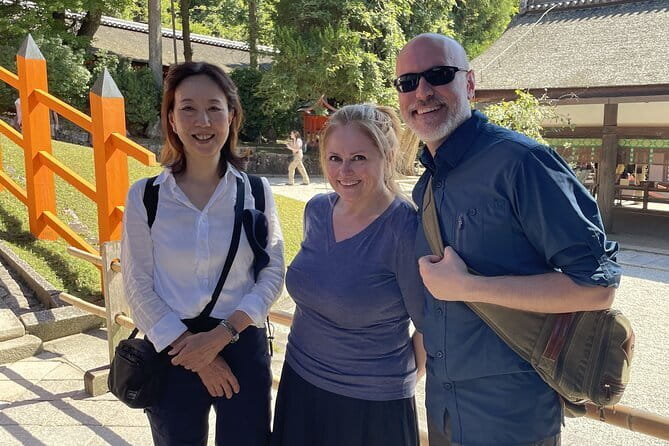
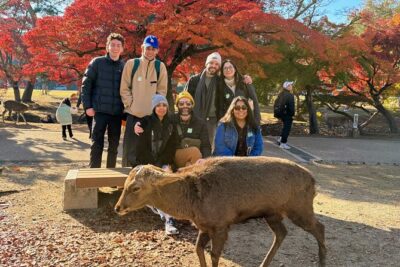
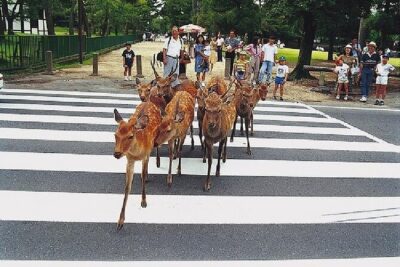
Nara Park covers about 660 hectares, so the first impression is scale. Deer move freely through this broad public area, often near the paths and temple approaches. You can buy special crackers and feed them, which is one of the most memorable parts of the day for many first-time visitors.
Your guide can help you handle this encounter sensibly. Keep the crackers separate from other food, offer them in a controlled way, and pay attention once the crackers are gone. Deer are accustomed to people, but they are still animals, not tame props.
The one-hour visit gives you time for photos and a first look at the park without letting the deer take over the whole day. If you have children, this may be the most immediately engaging stop. If you prefer temples and architecture, you may find the time better used as a short introduction before moving toward Todai-ji.
Nara Park is also where the day’s tone changes. Kyoto sightseeing can feel tightly planned and crowded around famous sites. Here, the open space and wandering deer create a slower start, even though the schedule remains busy.
Passing through Todai-ji’s 25-meter Nandai Gate
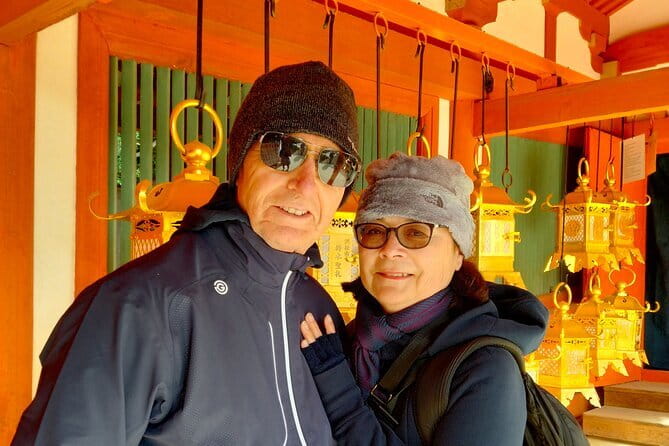
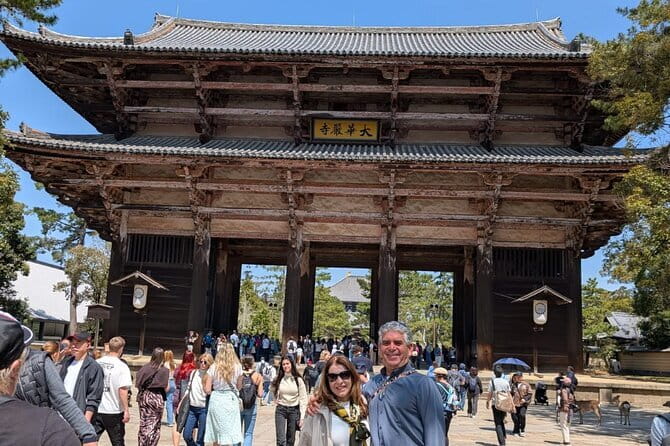
Before entering Todai-ji, you stop at Nandai Gate, a 25-meter-high structure and one of Japan’s largest temple gates. The size gives you a sense of the ambition behind Todai-ji before you even reach the main hall.
Look into the dark alcoves on both sides of the gate for the guardian kings. These figures were placed to protect the temple, and their forceful poses offer a sharp contrast to the quiet woodwork and open space around them.
The planned visit lasts about 30 minutes. That is enough for the gate, the guardians, and an explanation from your guide, but not enough for a slow study of every detail. If temple sculpture interests you, tell your guide. The private setup gives you a better chance of shaping the conversation around what catches your eye.
Seeing Todai-ji and its giant Buddha
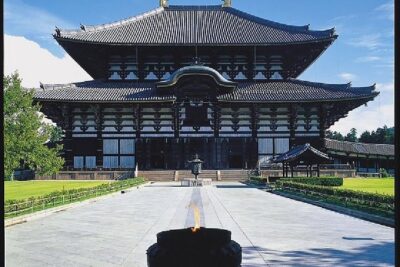
Todai-ji is the day’s major Buddhist site. It was built in 752 as the head temple for Buddhist temples in Japan, and its influence became so great that the temple developed major religious and political power.
The visit lasts about 90 minutes, with admission included. You can expect the main hall and its famous scale to take center stage. The building, the Buddhist imagery, and the sense of ceremony make this more than a quick photo stop.
A licensed guide is particularly useful here because Todai-ji can overwhelm you with size. Without context, you may remember only a huge wooden hall and a giant statue. With a good explanation, you can connect the building to Nara’s role as an early capital and understand why the temple mattered far beyond its grounds.
This is also where guide quality matters most. One account of the tour described a guide who did not yet offer enough insight into Nara’s historical and cultural importance. Other named guides, including Akiko and Jun, received strong praise for explaining the sites, adapting the day, and making visitors comfortable. I would contact the operator with specific requests, such as Buddhist art, temple history, or family-friendly explanations, rather than assuming every guide will deliver the same depth.
Other guided tours in Kyoto


Walking the sacred grounds of Kasuga Grand Shrine
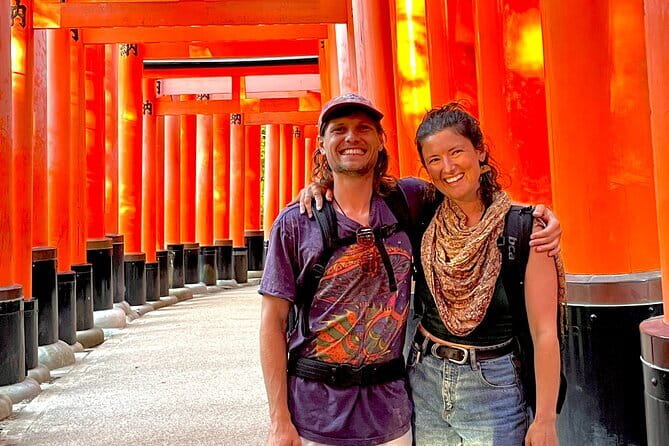
Kasuga Grand Shrine receives the longest scheduled visit, two hours. It is regarded as one of Japan’s most sacred Shinto shrines, with numerous gods enshrined there and a strong appeal for both worshippers and sightseers.
This stop gives the day a needed change of subject. Todai-ji represents grand Buddhist architecture. Kasuga offers a Shinto setting, where gates, shrine buildings, religious symbols, and wooded approaches create a different kind of atmosphere.
The route may feel more spread out than the temple visits. Wear comfortable shoes and expect time on foot. The supplied information calls for moderate physical fitness, and that is worth taking seriously because the day combines station movement, park paths, temple grounds, and shrine approaches.
Ask your guide to explain how Shinto practices differ from Buddhist ones. That comparison can turn two separate sightseeing stops into a clearer picture of Japanese religious life. You can also ask for time to pause rather than rushing from one structure to the next.
Finding calm at Isuien Garden

Isuien Garden is the final listed stop and lasts about 30 minutes. It is known for shakkei, the Japanese garden technique of using surrounding scenery as part of the view. Mt. Wakakusa forms part of that borrowed setting.
Half an hour is brief, but it can work well at the end of a busy day. After deer, giant temple buildings, guardian statues, and shrine grounds, the garden gives you a quieter place to look closely at composition, water, plants, paths, and distant views.
Do not expect a long garden visit at this pace. If gardens are your main interest, ask if more time can be shifted here from another stop. The itinerary is described as a sample, and the operator says it can be arranged around your requests.
What the private format is really worth
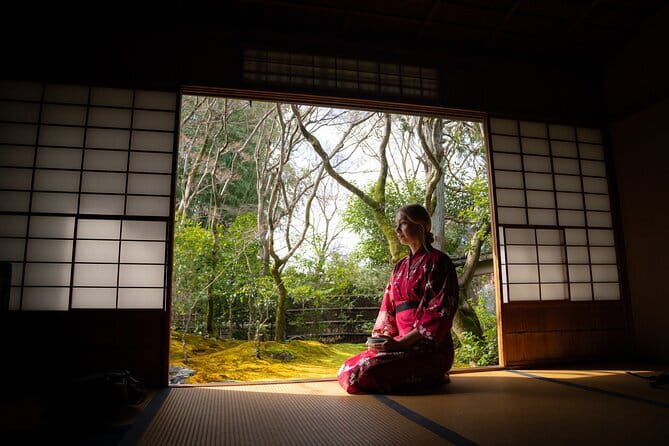
The price is $340 per person. That is a serious cost for a day trip, especially for a solo visitor. It becomes easier to justify for a couple or small group because the fee buys more than admission tickets.
Included are hotel pickup, the licensed English-speaking guide, public transportation, and admissions. Lunch and personal expenses are not included. The guide also brings practical value by leading you through Kyoto Station, explaining the sites, and adjusting the day when possible.
The private format is the key value point. You are paying for personal attention rather than a low-cost seat on a fixed bus. Past departures have included extra help with a souvenir stop, a ramen restaurant recommendation, and even a quick request for a stop at Fushimi Inari Shrine. Those additions are not guaranteed, but they show the sort of flexibility you can request.
Group discounts are available, though the exact saving is not stated. Ask for the price based on your party size before booking. If you want only transportation and a quick look at Nara, the cost may feel high. If you want a guided cultural day with hotel pickup and a route shaped around your interests, the calculation is more favorable.
Guides, language, and the importance of setting expectations
The experience includes a National Licensed English Speaking Guide, and other languages may be available if requested. The named guides associated with past trips include Akiko Okada, Jun, Fumi, and Tatsuya.
The strongest guide experiences combine historical explanation with personal care. Akiko was praised for filling the day with history and culture while helping a couple feel comfortable. Jun was described as friendly and accommodating, including an extra souvenir stop. Fumi handled the hotel pickup and station connection with care, while Tatsuya received praise for useful recommendations and a pleasant manner.
That range also points to a practical issue: a licensed guide is not automatically the perfect guide for your interests. Tell the operator what you want before arrival. You might request detailed temple history, Shinto customs, photography time, food suggestions, or a gentler pace for a family.
Dietary restrictions can be accommodated, including vegetarian, vegan, and gluten-free needs. Lunch is not part of the price, so include your food requirements in the booking notes and confirm how they will be handled.
Timing, fitness, and weather
The tour lasts about eight hours. The sample schedule allocates two hours to the Kyoto Station and train portion, one hour in Nara Park, 30 minutes at Nandai Gate, 90 minutes at Todai-ji, two hours at Kasuga Grand Shrine, and 30 minutes at Isuien Garden.
Those blocks add up to seven and a half hours, leaving a little room for transitions. Trains, walking between sights, meals, and small changes can affect the pace. Keep the rest of your day free rather than planning a late, fixed appointment in Kyoto.
Moderate physical fitness is required. Service animals are allowed, and the route is near public transportation, but the information does not promise a fully step-free route or special mobility arrangements. Contact the operator before booking if you have mobility concerns.
Weather may change the itinerary. That is especially important for Nara Park, Kasuga’s grounds, and Isuien Garden, where outdoor time is central. Bring suitable clothing and shoes, and expect the guide to adjust the order or route if conditions make that sensible.
Free cancellation is available until 24 hours before the start time. Cancellations or changes inside that window are not accepted for a refund.
Who should book this Nara day trip?
I would choose this tour if you want Nara’s main sights but do not want to manage the train, station, admissions, and temple explanations yourself. It suits couples, families, and small groups who value a flexible day and are willing to pay for private attention.
It is also a good choice if you want more cultural context than a self-guided visit usually provides. The contrast between Todai-ji and Kasuga Grand Shrine gives the day real range, while Nara Park and Isuien Garden prevent it from becoming a sequence of indoor religious sites.
I would hesitate if you are traveling alone on a tight budget, dislike walking, or want a slow day with only one or two stops. I would also ask direct questions about the guide’s experience with Nara if detailed interpretation is your main reason for booking.
Should you book it?
Book this Nara day trip if convenience, private guiding, and a flexible route matter more to you than finding the cheapest way to Nara. The included train fare, admissions, hotel pickup, and licensed guide make the day simple, and the sights are among Nara’s most important.
Before paying $340 per person, send the operator a short list of your interests and ask what can be adjusted. If you receive clear answers about the guide and pacing, this can be a strong one-day introduction to Nara. If the response is vague and your priority is expert historical detail, consider whether a different guide arrangement would better match your plans.
FAQ
How long does the Nara day trip from Kyoto last?
The tour lasts approximately eight hours, including the meeting at your Kyoto hotel, train travel, sightseeing, and the return portion of the day.
Is hotel pickup included?
Yes. The guide meets you at your hotel in Kyoto before accompanying you to Kyoto Station.
Is transportation included in the price?
Yes. Public transportation fees are included, including the train travel from Kyoto toward Nara.
Are admission fees included?
Yes. Admission fees are included for the paid sights in the planned route, including Todai-ji, Kasuga Grand Shrine, and Isuien Garden.
Is lunch included?
No. Lunch and personal expenses are not included. Vegetarian, vegan, gluten-free, and other dietary requirements can be accommodated if you note them when booking.
Can the itinerary be changed?
Yes. The listed route is a sample, and the operator says the day can be arranged around your interests. Weather or other conditions may also require changes.
More 1-Day Tours in Kyoto


More Guided Tours in Kyoto
More Nara Day Trips in Kyoto

More tours in Kyoto we've reviewed



Nara Day Trips, compared.
 ★ 5.0World Heritage Kyoto & Nara Uji Authentic Matcha ExperienceFrom $129
 ★ 4.7Kyoto/Osaka: Nara, Fushimi Inari Taisha, Arashiyama Bus TourFrom $529 - 10 hours
 ★ 4.4Osaka/Kyoto: Arashiyama, Nara & Fushimi Inari Shrine w/LunchFrom $61
 ★ 5.0Nara Early Morning Tour (Kyoto or Osaka Departure Available)From $61
 ★ 4.5Kyoto and Nara Day Trip from KyotoFrom $194
 ★ 4.5Nara Afternoon Tour from Kyoto or OsakaFrom $102