
Reviewed · GION & GEISHA WALKS
Kyoto Gion Early Morning Walking Tour
Kyoto’s famous sights are far more pleasant before the day gets going. This three-hour morning walk takes you from Gion’s willow-lined canal to Kiyomizu-dera and Yasaka Shrine, when the lanes are quieter and the light is kinder for photos. It is a smart way to see several essential sights without wrestling with Kyoto’s afternoon crowds.
I like two things especially: the route links Gion’s traditional streets with major temples and shrines, and the group is capped at 12 people. Guides including Hiro, Caleb, and Vincent are praised for clear English, historical detail, humor, and patience with questions.
The main catch is timing. The early start helps, but it does not guarantee an empty Kiyomizu-dera. One tour reached the temple after the crowds had already arrived, so you may prefer an even earlier start if quiet temple views are your top goal.
In This Review
- Key points to know before booking
- Why this early Gion walk makes sense
- Gion Shirakawa before the city wakes
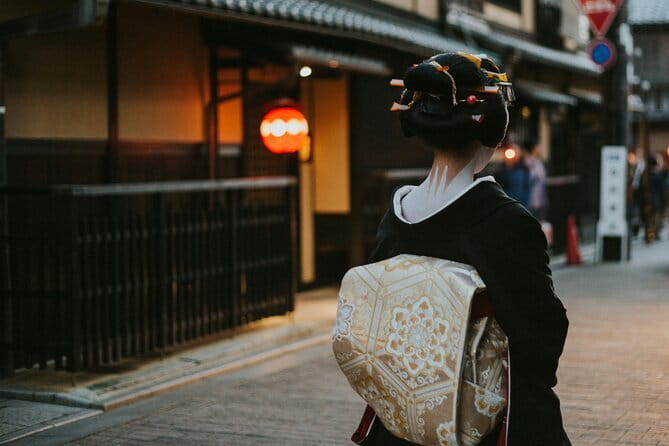
- Hanamikoji Street and Kyoto’s geisha district
- Kiyomizu-dera and the ¥500 admission fee
- Sannenzaka and Ninenzaka’s old stone lanes
- Yasaka Pagoda and the classic Kyoto view
- Yasaka Shrine and the end of the route
- The guides are a major part of the value
- What $49.42 buys you
- Timing, walking, and practical details
- Who should book this Kyoto morning tour
- Should you book the Gion Early Morning Walking Tour?
- FAQ
- How long does the Kyoto Gion Early Morning Walking Tour last?
- What sights are included?
- Is Kiyomizu-dera admission included?
- Is hotel pickup provided?
- Where does the tour end?
- How large is the group?
- Is the tour conducted in English?
- Who might lead the tour?
- Is the tour suitable for most people?
- Can I cancel for a full refund?
Key points to know before booking
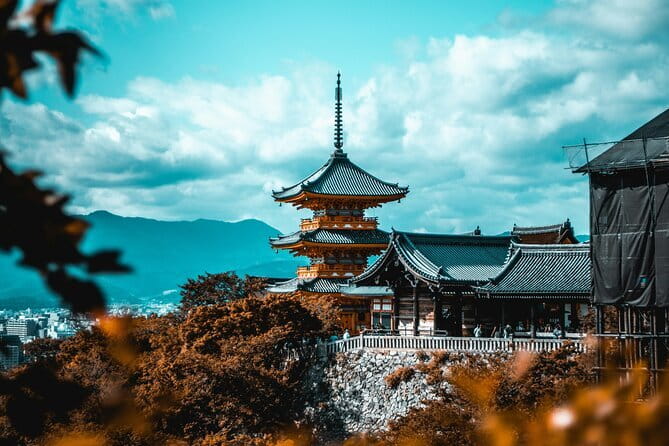
- Six classic Kyoto stops: See Gion Shirakawa, Hanamikoji Street, Kiyomizu-dera, Sannenzaka and Ninenzaka, Yasaka Pagoda, and Yasaka Shrine.
- Small group, maximum 12 people: You have a better chance to hear the guide and ask questions than on a large city tour.
- Early morning advantage: The first parts of Gion can feel calm, and the schedule aims to reach major sights before their busiest hours.
- Kiyomizu-dera costs extra: The temple admission fee is ¥500 per person.
- Strong guide emphasis: Hiro, Caleb, and Vincent are singled out for history, English, friendliness, and willingness to answer questions.
- A useful first-day orientation: The route gives you a clear sense of Kyoto’s old streets, religious sites, and geisha district in one outing.
Why this early Gion walk makes sense
Kyoto rewards early risers. Gion’s narrow streets, wooden townhouses, temple approaches, and shrine grounds can feel graceful and open in the morning, then much harder to appreciate later in the day. This tour uses that difference well.
You meet at the Statue of Izumo-no-Okuni in Kawabatacho, in Kyoto’s Higashiyama Ward. From there, the route moves through some of the city’s best-known sights on foot. You do not need to work out the order, find each entrance, or keep checking a map.
That convenience matters in Gion. The area is easy to reach by public transportation, but its lanes can be confusing, and several sights sit close together without feeling part of one obvious route. A guide gives the morning shape and adds the cultural background that a quick photo stop would miss.
The tour is in English and lasts about three hours. The group limit of 12 is small enough for a more personal feel, though the actual group size can vary. The experience ends back at the starting point, which is useful if you plan to continue sightseeing from central Kyoto afterward.
A few more Kyoto tours and experiences worth a look

Gion Shirakawa before the city wakes
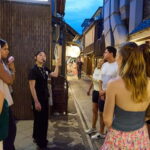
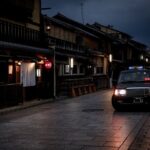
The first stop is Gion Shirakawa, where the Shirakawa River runs beside traditional machiya houses and drooping willow trees. The stop lasts about 15 minutes and does not require an admission ticket.
This is a gentle opening. You get a first look at Kyoto’s old wooden architecture without beginning at a packed temple gate. The river, willows, and neat facades create one of the city’s most recognizable scenes, and the early hour can make the area feel much more peaceful than its reputation suggests.
Your guide can also help you understand what you are seeing. Gion is not simply a collection of pretty streets. It is a historic entertainment district tied to traditional tea houses and geisha culture, and a guide can offer context while reminding you to treat the neighborhood as a living community.
Fifteen minutes is enough for orientation and photographs, but not for a long exploration. If this riverside setting appeals to you, make a mental note to return on your own later, when you can linger without holding up the group.
Hanamikoji Street and Kyoto’s geisha district
Next comes Hanamikoji Street, with roughly 20 minutes to walk through the district. The street is lined with wooden machiya buildings and traditional teahouses, known locally as ochaya.
This is one of the most atmospheric parts of the route. You see the refined, low-key side of Gion rather than a modern commercial street, and the guide helps connect the buildings to Kyoto’s traditional arts. The experience is more useful than simply chasing a glimpse of a maiko, since it gives you a better sense of why this district matters.
Keep your expectations sensible. The tour does not promise a geisha or maiko encounter, and the early morning may be too quiet for much activity. That is not a flaw. The value here is the street itself, the architecture, and the chance to learn how the district fits into Kyoto’s culture.
It is also a place where good manners matter. You should follow your guide’s lead, avoid blocking doorways, and respect private spaces. A small group helps, since 12 people create less disruption than a large crowd.
Kiyomizu-dera and the ¥500 admission fee
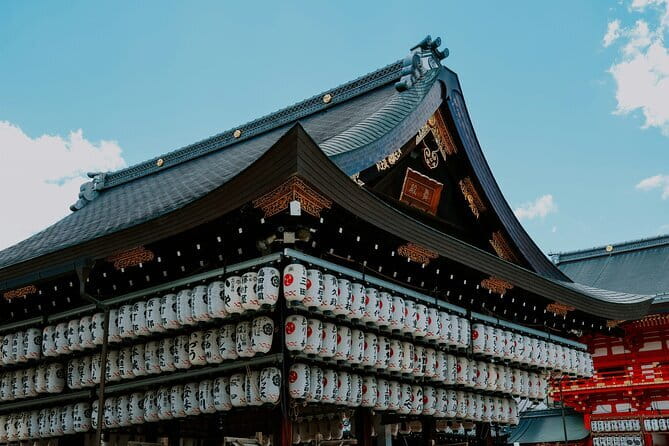
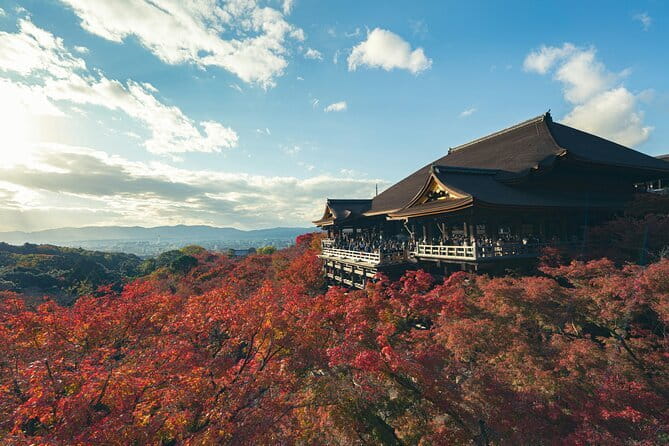
Kiyomizu-dera receives the longest stop, about one hour. Admission is not included, and you should budget ¥500 per person at the temple.
This is the centerpiece of the walk. Kiyomizu-dera is famous for its large wooden stage and broad views over Kyoto. Its setting changes with the seasons, with spring blossoms and strong autumn color often adding to the scene, although the tour information does not promise any particular seasonal display.
An hour gives your guide room to explain the temple’s place in Kyoto’s spiritual life while allowing time for views and photographs. This is where the tour’s timing matters most. Kiyomizu-dera is one of Kyoto’s essential stops, but it is also one of the city’s busiest. An early arrival can make the visit calmer, yet the schedule cannot control how many people have already arrived.
One person specifically wished the tour began an hour earlier because Kiyomizu-dera was already swarming by the time the group reached it. I would take that as useful advice, not a reason to reject the tour. If crowd avoidance is your main reason for booking, ask about the exact start time before paying, and understand that early in Kyoto is relative.
The temple is also the point where the walk may feel most demanding. You are spending an hour on a large religious complex after already covering Gion streets, and the route continues afterward. Wear comfortable shoes and think of this as an active morning, not a short transfer between photo stops.
Sannenzaka and Ninenzaka’s old stone lanes
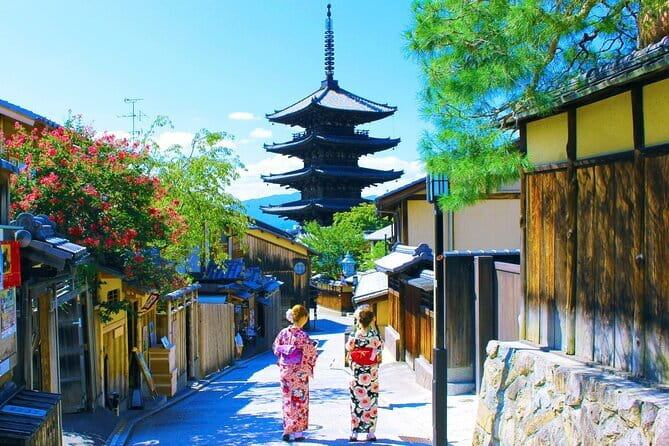
After Kiyomizu-dera, the route spends about 30 minutes in Sannenzaka and Ninenzaka. These historic lanes are known for stone paving, wooden townhouses, and small shops selling local goods and snacks.
This section gives you a closer look at Kyoto’s traditional street design. The lanes lead toward Kiyomizu-dera, and their preserved appearance explains why the area appears in so many photographs. They also show how religious sites, homes, and commerce have long worked together in Kyoto’s old quarters.
The trade-off is that the lanes can become crowded quickly. The morning start gives you a better chance at clear views, but these are public streets, not a private attraction. Shops may also not all be open early, so you should book this tour for the streets and history first, not for a morning shopping session.
I like this part because it slows the route down after the temple visit. Rather than rushing straight to the next shrine, you walk through a historic neighborhood and get a feel for how Kyoto’s old center is arranged. It is also a good place to mark shops or cafés you may want to revisit later.
Other walking tours we've reviewed in Kyoto

Yasaka Pagoda and the classic Kyoto view
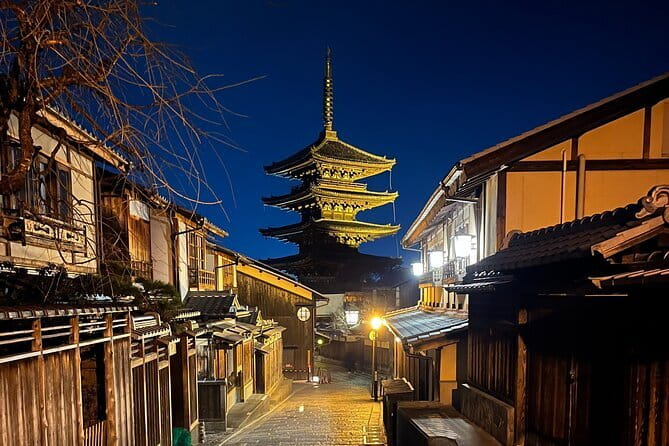
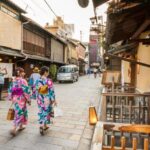
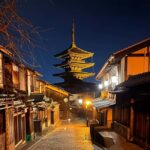
The short stop at Yasaka-no-To, better known as Yasaka Pagoda, lasts about 10 minutes. Admission is listed as free for this stop.
The pagoda is one of the easiest Kyoto landmarks to recognize. Its roof rises above the surrounding historic streets, giving the area a strong sense of place. In the quiet morning, you have a better chance to frame the pagoda with fewer people in the foreground.
Ten minutes is brief, but appropriate for a landmark viewed mainly from the street. The guide can point out the best angle and explain how the pagoda fits into the surrounding neighborhood. You are not getting a long interior visit here, so keep the stop’s purpose clear: it is a focused photo and orientation break.
The sequence also works well. After walking through Sannenzaka and Ninenzaka, Yasaka Pagoda feels like a natural visual punctuation mark before the final shrine visit.
Yasaka Shrine and the end of the route
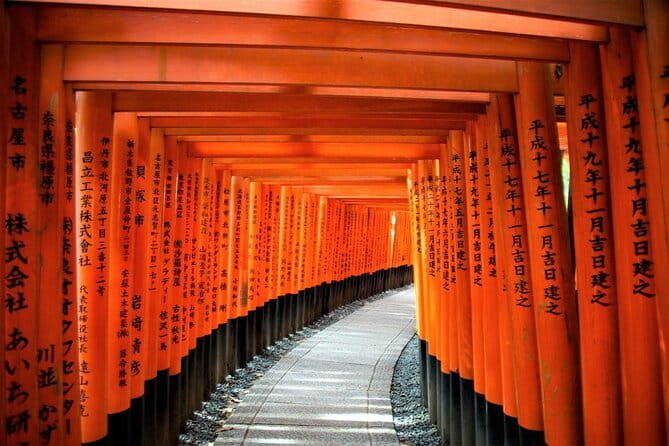
The final main stop is Yasaka Shrine, with about 30 minutes to explore. There is no admission fee listed for the shrine.
Yasaka is one of Kyoto’s important Shinto shrines. Its vermilion gate and lantern-lit dance stage make it easy to recognize, but the guide adds the meaning behind the buildings and rituals. This is a useful contrast with Kiyomizu-dera, since you see both Buddhist and Shinto sites in the same morning.
The shrine also helps round out the cultural picture. Gion is not just an entertainment district, and Kyoto is not just temples for photographs. A guided visit can show you how religious spaces remain part of the city’s daily identity.
Because this stop comes after several hours on foot, you may appreciate the slower pace. The tour ends back at the meeting point, giving you a straightforward finish rather than leaving you on the far side of the city. You can then use the rest of the day for lunch, another museum, or a return visit to a street that caught your eye.
The guides are a major part of the value

The strongest part of this experience is not just the route. It is the quality of the guiding.
Hiro is repeatedly praised for his command of English, broad understanding of Japanese history, sense of humor, and ability to place Japan in a wider world context. That combination suits you if you want more than dates and names. Hiro’s style appears especially useful for questions and larger cultural connections.
Caleb is described as friendly and passionate about history. His tours have included the Gion canal, the geisha district, shrines, and the pagoda, along with an enjoyable coffee stop at Here. The coffee stop is not listed as a guaranteed part of the itinerary, so treat it as a possible bonus rather than a promised feature.
Vincent is praised for taking time with explanations and answering questions, including questions outside the planned route. That can make a difference if you want to ask about Kyoto beyond the six scheduled stops.
Your guide may be Hiro, Caleb, Vincent, or another English-speaking guide. The exact guide is not guaranteed in the information provided, but all three named guides receive especially warm praise for friendliness and historical explanation. If a particular guide matters to you, ask the operator before booking rather than assuming.
What $49.42 buys you
At $49.42 per person, the price is reasonable if you want a guided introduction to Gion and Higashiyama. You are paying for about three hours of route planning, navigation, English explanations, and a small group, not for a series of admission tickets.
The ¥500 Kiyomizu-dera fee is extra. Yasaka Shrine, Yasaka Pagoda, Gion Shirakawa, and Hanamikoji Street do not list an admission charge, so the added cost is modest.
The value is strongest for a first visit to Kyoto. In one morning, you cover the city’s geisha district, a major Buddhist temple, historic shopping lanes, a landmark pagoda, and a major Shinto shrine. Doing that alone is possible, but you would need to plan the route, research the sites, and manage the timing yourself.
The value is weaker if you already know Gion well or prefer to move at your own pace. The short stops at Gion Shirakawa and Yasaka Pagoda may feel rushed if you want long photography sessions, and the group schedule limits spontaneous detours.
Timing, walking, and practical details
This is an early start, so check the meeting instructions carefully. The starting point is the Statue of Izumo-no-Okuni in Kawabatacho, Higashiyama Ward, and hotel pickup is not included.
The tour is near public transportation, but you are responsible for reaching the meeting point. A mobile ticket is provided, and booking confirmation arrives at the time of booking.
Plan for a sustained walk across traditional streets and temple approaches. The supplied feedback mentions getting plenty of steps, and the route includes Kiyomizu-dera plus stone-paved Sannenzaka and Ninenzaka. Comfortable shoes are more important here than fashionable ones.
Bring enough water for the morning and allow room in your schedule after the tour. The route ends back at the meeting point, but the three-hour estimate is approximate. If you have a fixed lunch reservation immediately afterward, leave some flexibility.
The tour can take a maximum of 12 people, and most people can participate. No hotel pickup is included. Free cancellation is available if you cancel at least 24 hours before the local start time. Changes or cancellations inside that window are not accepted for a refund.
Who should book this Kyoto morning tour
I would recommend it most strongly to first-time visitors who want an efficient introduction to Gion and the Higashiyama sights. It is also a good fit if you enjoy asking questions and want a guide to explain the difference between a shrine, a temple, a geisha district, and a traditional machiya neighborhood.
The tour suits you if:
- You want major sights before the afternoon rush.
- You prefer a small group over a large coach tour.
- You enjoy history and cultural explanation.
- You want someone else to handle the route.
- You can manage three hours of walking.
- You are happy to pay Kiyomizu-dera’s ¥500 entry fee separately.
I would hesitate if you want a slow photographic morning, extensive shopping time, or a guaranteed empty temple. The early schedule helps, but Kyoto’s most famous places can still be busy, especially by the time you reach Kiyomizu-dera.
Should you book the Gion Early Morning Walking Tour?
Book it if you want a well-organized first look at Kyoto’s most recognizable eastern districts, with strong English guiding and a real chance to see Gion before the day becomes crowded. The route is logical, the group limit is sensible, and the price is fair once you account for the guide’s time and the number of major sights covered.
Go in with the right expectations. This is an active orientation walk, not a private photo tour or a ticket that bypasses every crowd. Start early, wear good shoes, bring ¥500 for Kiyomizu-dera, and ask plenty of questions. If Hiro, Caleb, or Vincent leads your group, you can expect the historical side of the walk to be a particular strength.
FAQ
How long does the Kyoto Gion Early Morning Walking Tour last?
The tour lasts approximately three hours.
What sights are included?
The route includes Gion Shirakawa, Hanamikoji Street, Kiyomizu-dera Temple, Sannenzaka and Ninenzaka, Yasaka Pagoda, and Yasaka Shrine.
Is Kiyomizu-dera admission included?
No. Kiyomizu-dera admission costs ¥500 per person and is not included in the tour price.
Is hotel pickup provided?
No. Hotel pickup is not included. You meet at the Statue of Izumo-no-Okuni in Kawabatacho, Higashiyama Ward, Kyoto.
Where does the tour end?
The activity ends back at the meeting point.
How large is the group?
The tour has a maximum of 12 participants.
Is the tour conducted in English?
Yes. An English-speaking guide is included.
Who might lead the tour?
Guides named in the tour information include Hiro, Caleb, and Vincent. A specific guide is not guaranteed.
Is the tour suitable for most people?
Yes. Most people can participate, according to the provided activity information. You should still be prepared for about three hours of walking.
Can I cancel for a full refund?
Yes, if you cancel at least 24 hours before the experience start time. Cancellations or changes made less than 24 hours before the start are not accepted for a refund.
More Morning in Kyoto

More Walking Tours in Kyoto
More Gion & Geisha Walks in Kyoto
More tours in Kyoto we've reviewed










Gion & Geisha Walks, compared.
 ★ 4.7Kyoto Geisha Walking Tour: Gion District & Hidden GemsFrom $252 hours
 ★ 4.7Kyoto: Gion Geisha District Walking Tour – Stories of GeishaFrom $202 hours
 ★ 4.9Best of Kyoto: Gion, Geisha, Pagodas & CobblestonesFrom $242 hours
 ★ 4.5Night Walk in Gion: Kyoto’s Geisha DistrictFrom $211h 40m
 ★ 5.0Kyoto Night Foodie Tour in Gion (9+ dishes + 6 Sake tastings)From $163
 ★ 5.0Kyoto Gion Geisha District Walking Tour – The Stories of GeishaFrom $25