
Reviewed · HISTORICAL TOURS
Kyoto: Private 2.5 Hour Historical Walking Tour
Kyoto’s past comes together nicely on this private walk from Yasaka Shrine to Kiyomizu Temple. Instead of simply collecting shrine and temple photos, you learn how Shinto worship works, why Zen gardens look the way they do, and how Kyoto fits into Japan’s religious and political story.
I especially like the small private format, with one price covering up to five people, and the guide’s use of hand-drawn maps, sketches, and notes. The main thing to consider is cost at the temples: admission fees are not included, and the route finishes at Kiyomizu-dera, not back at the starting point.
In This Review
- Key points to know before you book
- Why this short Kyoto walk works
- Meeting at Yasaka Shrine’s red west gate
- Learning shrine customs at Yasaka-jinja
- Maruyama Park and Nene-no-michi
- Entokuin’s quiet Zen rooms and dry garden
- Yasaka Koshin-do and the five-storied pagoda
- Approaching Kiyomizu-dera through eastern Kyoto
- Kiyomizu’s wooden stage and wide views
- How the private format affects the experience
- What to budget and what to bring
- Who will get the most from this Kyoto walk
- Should you book the Yasaka to Kiyomizu walk?
- FAQ
- Where does the tour start?
- Where does the tour finish?
- How long does the tour last?
- Is the tour private?
- Are temple admission fees included?
- What language is the tour offered in?
Key points to know before you book
- A private walk for up to five people: The $80 group price can be good value for a family or small party.
- A thoughtful route through eastern Kyoto: You move from Yasaka Shrine and Maruyama Park to a Zen temple, a pagoda viewpoint, and Kiyomizu-dera.
- Hand-drawn teaching materials: Guides including Hisako and Hiroko have used maps, drawings, and illustrated folders to make difficult history easier to follow.
- More than a photo tour: Expect discussion of Shinto, Buddhism, emperors, shoguns, samurai, art, philosophy, and Japanese customs.
- Admission fees are extra: Budget separately for Entokuin and any temple entry required during the walk.
- A downhill-to-uphill city walk: Comfortable shoes matter, since the route uses stone streets, steps, and temple approaches.
Why this short Kyoto walk works
This tour covers a compact part of Kyoto, but it does not treat the city like a checklist. The route links places that make sense together: Yasaka Shrine introduces Shinto, Entokuin shows Zen design, Yasaka Koshin-do adds a smaller religious stop, and Kiyomizu-dera provides the grand finale.
That order is useful. You are not asked to absorb every Japanese religious custom at once. Instead, each stop adds another piece. By the time you reach Kiyomizu Temple, you have a better idea of why a shrine is different from a Buddhist temple, how to worship at each, and why both traditions remain part of everyday Japanese culture.
The private setting also changes the pace. You can stop for photographs, ask about something that catches your eye, or spend more time on a subject such as imperial rule or Buddhist philosophy. The guide can answer questions that would never fit into a large group tour.
The advertised timing varies slightly. The experience is described as two hours in one place and 2.5 hours in another, while the listed stops and walks add up to about 2 hours and 15 minutes before allowing for introductions and transitions. Plan for roughly half a day, and do not schedule a train or meal reservation too tightly afterward.
Other walking tours we've reviewed in Kyoto
Meeting at Yasaka Shrine’s red west gate
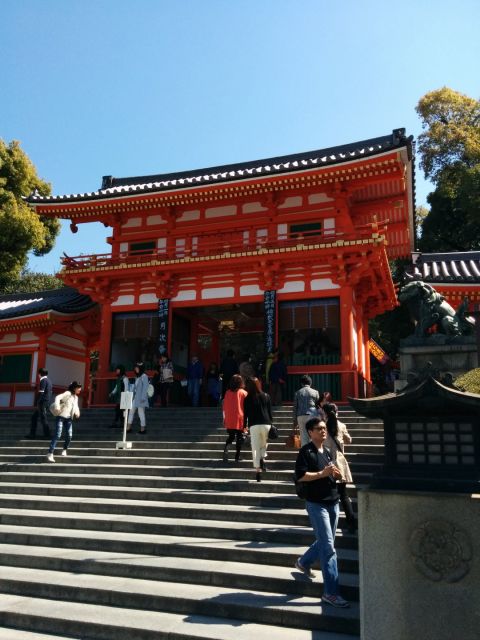
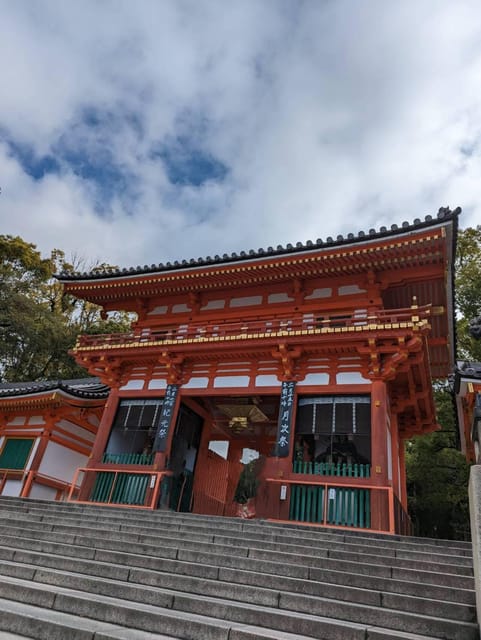
Your guide meets you at the west gate, also described as the red gate, of Yasaka Shrine. This is a sensible starting point because the shrine sits at the edge of Gion and is easy to connect with from central Kyoto.
From Keihan’s Gion-Shijo Station, walk east along Shijo Street toward the end of the road, then go up the stone steps. From Hankyu’s Kawaramachi Station, use the same general approach. If you come by bus, get off at the Gion stop and look for the steps before the red gate.
Allow extra time to find the meeting point. The guide may carry a clear sign, but the shrine area can be busy, especially around popular visiting hours. If you are unsure, arriving early is better than trying to locate the gate at the last minute.
The opening talk uses a map of Kyoto to explain the city’s setting and development. I find this kind of orientation particularly useful because Kyoto can seem like a collection of separate districts. A map helps you understand the relationship between the old city, the eastern hills, Gion, and the temple routes you may visit later in your trip.
Learning shrine customs at Yasaka-jinja
The first formal stop is Yasaka Shrine, one of the best places on this route to learn basic Shinto etiquette. Your guide explains how to approach a shrine and how to worship, including the general customs you will see at other Shinto sites in Japan.
This is practical information, not just background. Many first-time visitors know that they should bow, purify themselves, and offer a prayer, but they may not know the order or the reason behind each action. A short explanation here helps you feel less awkward at later shrines.
Yasaka Shrine also gives the guide a place to explain how Shinto differs from Buddhism. That distinction is easy to blur when you are moving quickly through Kyoto. The tour’s value comes partly from slowing down long enough to understand what you are seeing.
The shrine itself can be lively, and you should not expect a quiet, private setting. This is a major Kyoto sight, so the opening section feels more like a city orientation than a peaceful retreat. That is balanced by the quieter places later in the walk.
Maruyama Park and Nene-no-michi
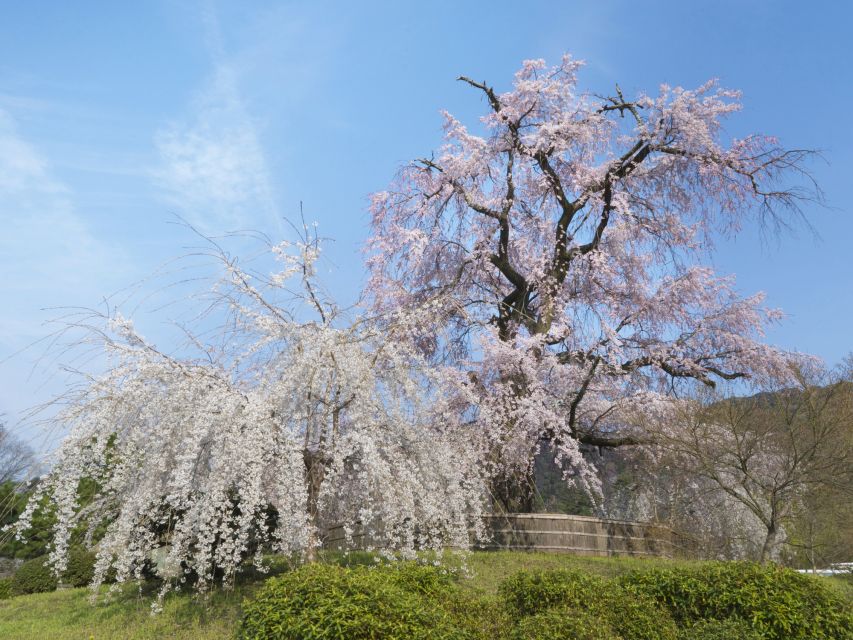
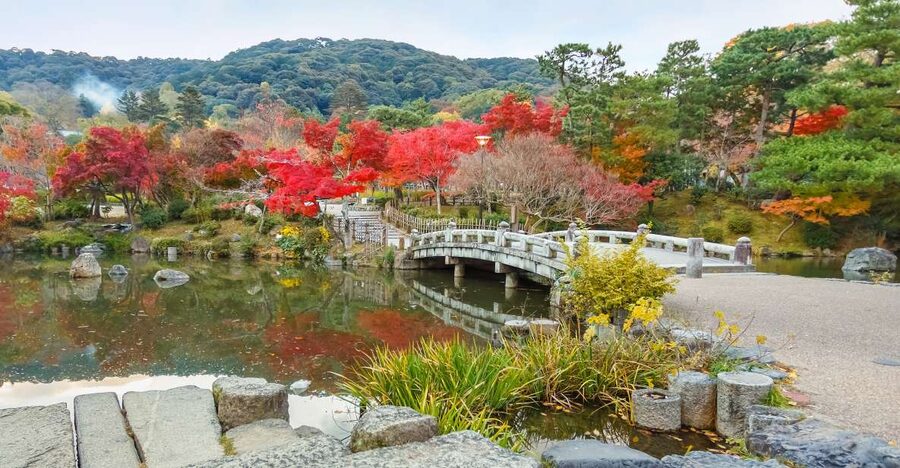
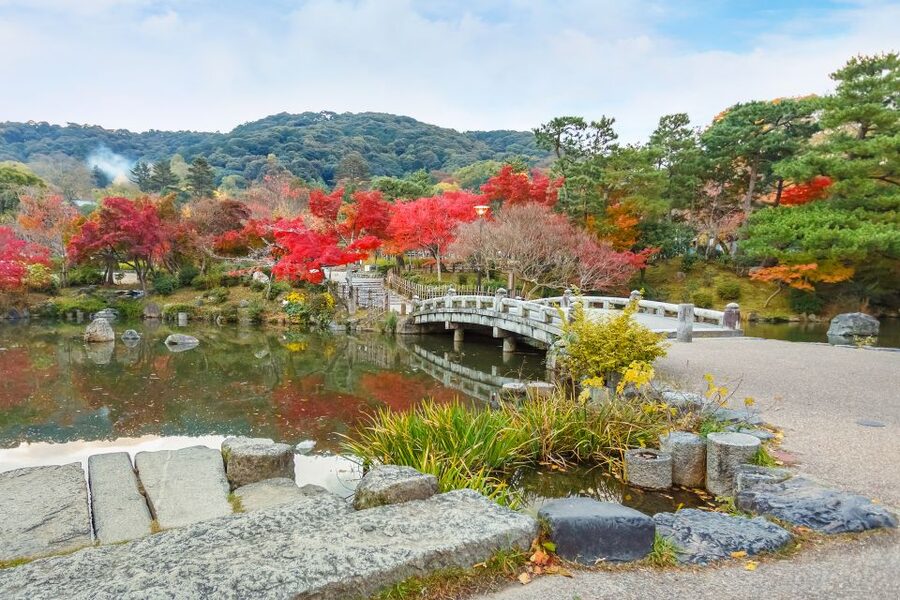
From Yasaka Shrine, you walk through Maruyama Park, which lies directly beside the shrine. The route then reaches Nene-no-michi, a stone-paved street associated with Nene, the wife of Toyotomi Hideyoshi.
Nene was connected with Entokuin, the Zen temple that comes next. This small piece of personal history gives the route a human thread. You are not just walking from one famous building to another. You are following a path connected with important political figures and religious patrons from Japan’s late 16th century.
The walk here takes about ten minutes, though your exact pace will depend on photographs and the amount of explanation. Nene-no-michi is one of the more attractive streets in this part of Kyoto, but it is also popular. Keep to the side, watch for other pedestrians, and wear shoes that handle uneven stone comfortably.
Entokuin’s quiet Zen rooms and dry garden
Entokuin is the most reflective stop on the tour. The temple is associated with Nene and is known for its dry landscape gardens, traditional Japanese rooms, and painted sliding doors.
The gardens use stones, gravel, and carefully arranged forms rather than ponds or flower beds to suggest a scene from nature. Your guide can help you read the design instead of leaving you to wonder why a seemingly simple arrangement deserves so much attention.
Inside, the traditional rooms give you a close look at Japanese architecture. The sliding doors and painted panels are not background decoration. They help show how art, space, and daily life were joined in an older Japanese home and temple setting.
This is also where the pace often feels most rewarding. After the crowds around Yasaka Shrine, you get time to sit with the garden and notice small details. Some tours have also included a calligraphy experience here, but you should confirm whether that is part of your particular departure rather than assume it is guaranteed.
The guide’s visual materials are especially useful at Entokuin. Hisako has been praised for using hand-illustrated pages and colored-pencil drawings, while other guides have brought folders with simple diagrams and bullet points. Japanese religious architecture can be hard to explain through words alone. A sketch of a roof, room, or garden arrangement can make the idea click.
Admission to the temple is not included, so check the current fee when you book. Since the tour depends on entering the temple to see the rooms and garden, this is an expense worth planning for rather than treating as an optional afterthought.
Other private tours in Kyoto

Yasaka Koshin-do and the five-storied pagoda
After another walk of about ten minutes, you reach Yasaka Koshin-do. The visit lasts around 15 minutes, making it a shorter stop than Entokuin or Kiyomizu-dera.
Koshin-do is a useful contrast to the larger temple complexes. Your guide can explain the religious ideas connected with the site and place it within the wider mix of Buddhist practice found in Kyoto. The stop also gives you a chance to see a smaller place of worship that is easy to pass without understanding.
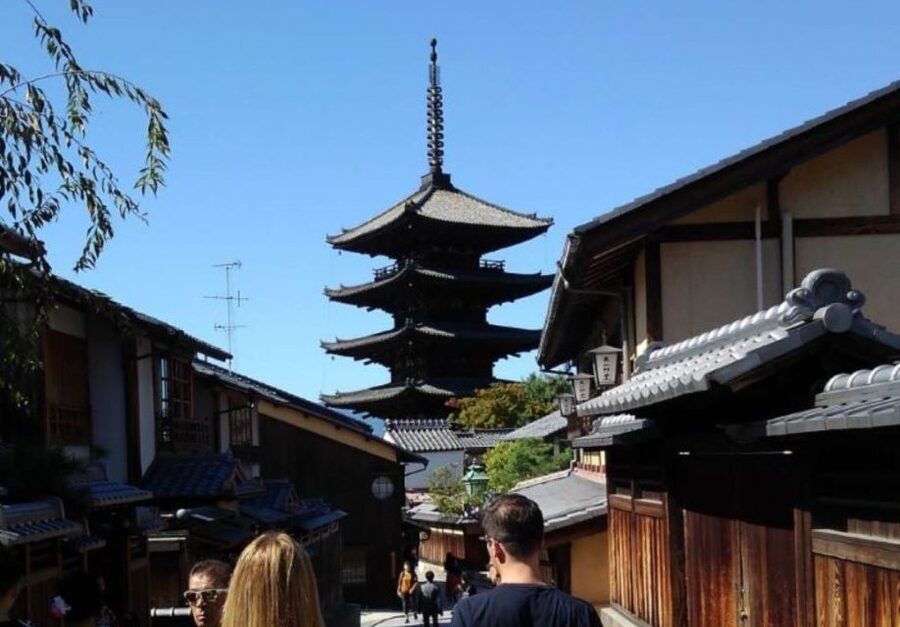
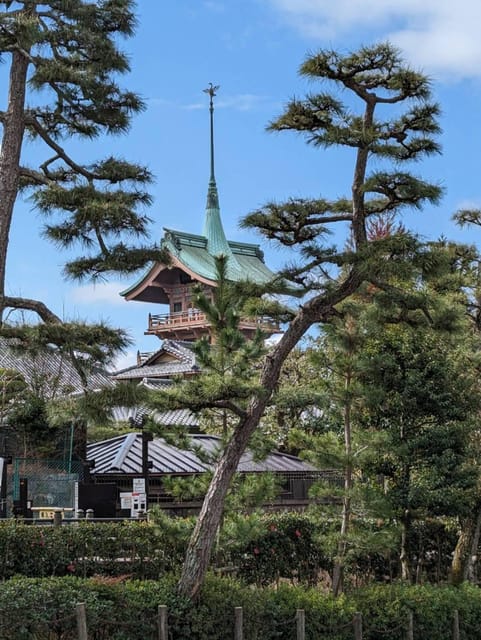
Near Koshin-do, you can see Yasaka-no-to, the five-storied pagoda. The pagoda is viewed from outside, and the nearby street is a well-known photo spot. This is an important limitation to keep in mind: you are not promised an interior visit or a climb.
Still, the outside view is worthwhile. The pagoda rises above the low traditional streets and makes one of Kyoto’s most recognizable compositions. Your guide can explain the meaning and design of a five-storied pagoda, giving the photograph more context than you would get by stopping alone.
Expect a short photo stop rather than a long temple visit. If you want several angles or time for careful photography, tell your guide early. The walk is private, so small adjustments are possible, but the route still needs to reach Kiyomizu-dera on time.
Approaching Kiyomizu-dera through eastern Kyoto
The final walk takes about 15 minutes and leads toward Kiyomizu-dera. This part of the route can feel more crowded, particularly near the well-known approach streets. The reward is that you arrive with a guide who can explain what you are seeing instead of leaving you to sort out the site on your own.
Kiyomizu-dera was first built in the eighth century and now receives millions of visitors each year. Its scale and fame can make the visit feel overwhelming, especially if this is your first major Kyoto temple. The guide helps by focusing your attention on specific features, stories, and customs.
The temple’s name means pure water, referring to the stream that runs down from the mountain behind the temple. The water has not dried up, and many people line up to drink it. The queue may add time, so ask your guide how best to fit it into the visit.
You can also see Buddhist statues, including Kannon Bodhisattva, the main object of worship. The tour gives you a basic explanation of Kannon and the religious purpose of the hall, which is useful if Buddhist figures are unfamiliar to you.
Kiyomizu’s wooden stage and wide views
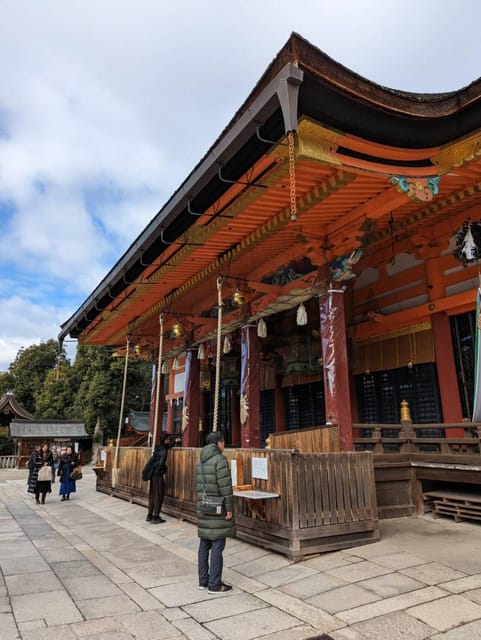
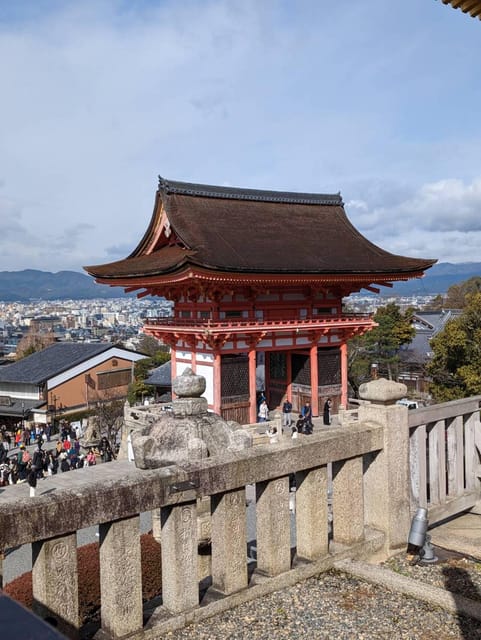
The best-known feature is the wooden stage attached to the main hall. It was built without nails, a detail that your guide will point out as you look at the structure and its setting.
From the stage, you can see the surrounding city and the three-storied Koyasu Pagoda. The name means a pagoda for easy birth, and women visit it to pray for a safe delivery. This is a good example of how a building can have both architectural importance and a continuing religious role.
The scenery is one of the tour’s strongest moments, but conditions vary. Crowds can make the stage feel less peaceful than photographs suggest, and the best views depend on weather and visibility. Even so, reaching the stage after the smaller temples gives the route a satisfying finish.
The tour ends after you leave the main hall. Before saying goodbye, the guide explains Jishu Shrine, associated with matchmaking. This final detail adds another layer to Kiyomizu’s appeal: the complex is not only a historic monument but also a place where people come with very specific hopes and prayers.
How the private format affects the experience
The price is $80 per group of up to five people. For one person, that is a fairly high per-person cost. For a family or group of four or five, it becomes much more attractive, especially since you receive a private English-speaking guide rather than joining a large party.
The strongest value is the interpretation. You are paying for someone to connect the sites, explain worship customs, answer questions, and adjust the pace. Several guides, including Hisako, Hiroko, and Takayuki Ishii, have been praised for clear English, patient answers, and prepared drawings or notes.
The experience can also be longer than the stated minimum. One particularly engaged visit continued for more than three hours and 40 minutes because the guide and participant discussed religion, the imperial family, shogunates, gender, language, philosophy, and aesthetics. Do not count on that extra time, but it shows how flexible a private tour can become when both sides want a deeper conversation.
You should not expect an entertainment-heavy performance or a fast list of facts. This suits you if you want to ask questions and understand the places. It is less suitable if your only goal is to cover as many major sights as possible in the shortest time.
What to budget and what to bring
The listed price covers the guide only. You pay separately for temple admissions, and meals and drinks are not included. Transportation to and from Yasaka Shrine is also your responsibility.
One past departure involved taking a taxi to get around, with that fare paid separately. The stated route is on foot, but keep a little flexibility in your plans in case conditions, timing, or personal needs make a taxi useful.
Wear comfortable shoes. The route includes stone steps, paved lanes, temple grounds, and the approach to Kiyomizu-dera. You will also want enough room in your schedule for photographs and short pauses, especially at the Zen garden and the Kiyomizu stage.
The tour is offered in English and is private. Cancellation is free up to 24 hours before the start, and you can reserve now and pay later, which helps if your Kyoto schedule is still changing.
Who will get the most from this Kyoto walk
I would recommend this tour early in a Kyoto stay. Once you understand the difference between shrine and temple customs, later visits around Japan become easier and more meaningful. One guide also offered suggestions for further places to visit in Kyoto and for a later trip to Kanazawa, a useful benefit if you want local ideas beyond the advertised route.
This is a strong choice for adults, couples, families, and curious first-time visitors. Children may find the political and religious material demanding, especially if they are young, though a private guide can switch languages or adjust explanations when needed.
It is also a good match for visitors who prefer smaller streets and quieter spaces alongside famous sights. You still visit Kiyomizu-dera and Yasaka Shrine, but Entokuin and Koshin-do keep the walk from becoming only a parade of major attractions.
You may want a different tour if you need step-free access, a food-focused walk, transportation between sights, or a full-day overview of Kyoto. None of those are part of this experience.
Should you book the Yasaka to Kiyomizu walk?
Book it if you want a personal introduction to Kyoto’s religious customs and historical setting, especially if you are traveling with up to four companions. The best reason to choose it is the guide’s teaching style: clear explanations, patience with questions, and visual materials that help you remember what you saw.
The route is short enough for a first day but substantial enough to include a Zen garden, traditional rooms, a pagoda view, and Kiyomizu’s famous stage. Just budget for admissions, wear good shoes, and accept that the final temple area can be crowded.
For a photo checklist, you can visit these places on your own. For a better understanding of why they matter, this private walk is worth the $80 group price.
FAQ
Where does the tour start?
It starts at the west gate, also called the red gate, of Yasaka Shrine.
Where does the tour finish?
The tour finishes at Kiyomizu-dera after the visit to the main hall and an explanation of Jishu Shrine.
How long does the tour last?
The activity is described as lasting two hours in one section and 2.5 hours in another. The scheduled walking and visits take about 2 hours and 15 minutes, so allow roughly 2 to 2.5 hours.
Is the tour private?
Yes. It is a private group experience for up to five people.
Are temple admission fees included?
No. Admission fees to the temples are not included in the tour price. Meals, drinks, transportation to the meeting point, and insurance are also excluded.
What language is the tour offered in?
The tour is offered in English with a live English-speaking guide.
More Historical Tours in Kyoto
More Private Tours in Kyoto
More Walking Tours in Kyoto

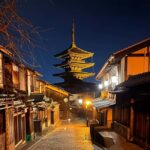
More tours in Kyoto we've reviewed











Historical Tours, compared.
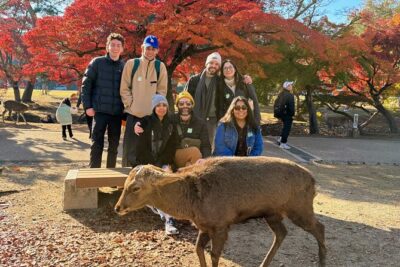 ★ 5.0World Heritage Kyoto & Nara Uji Authentic Matcha ExperienceFrom $129
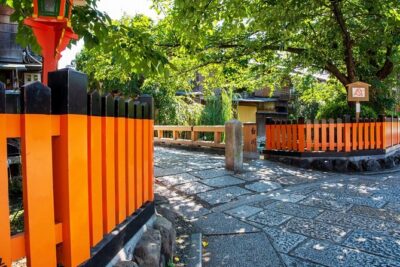 ★ 5.0Kyoto Gion Historical Walking TourFrom $40
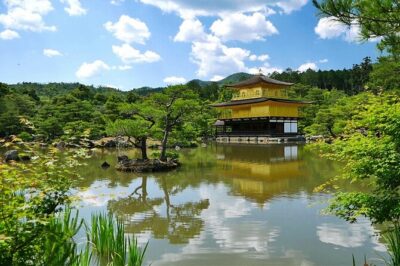 ★ 5.0Historical Kyoto E-Bike TourFrom $99
 ★ 4.8From Kyoto: Nara History Guided Half Day Bus Tour with LunchFrom $776 hours
 ★ 4.6Uji: UNESCO Heritage & Tea Ceremony Walking TourFrom $663 hours
 ★ 5.0Private car tour Let’s uncover secrets of majestic Kyoto historyFrom $108