
Reviewed · GION & GEISHA WALKS
Kyoto Gion Historical Walking Tour
Kyoto’s eastern hills are best understood on foot, and this tour links the city’s most atmospheric streets with its major temples. In about three hours, you move from Gion’s traditional lanes to Chion-in, Maruyama Park, Nene-no-Michi, Yasaka Pagoda, the Ninen-zaka and Sannen-zaka slopes, and finally Kiyomizu-dera.
I like the strong historical thread, which connects geisha culture, theater, samurai, monks, emperors, and the Meiji Restoration instead of treating each temple as an isolated photo stop. I also like the small maximum group of 12, plus the practical tips guides such as Jay, Ben, Ayumi, and Tommy give for the rest of your Kyoto visit.
The tradeoff is simple: this is a serious walk, not a gentle stroll. Expect hills, stone paths, and some stair climbing, with no lunch included and Kiyomizu-dera admission extra.
In This Review
- Key points at a glance
- Why this route works for a first Kyoto visit
- Tatsumi Bridge and the Gion Shimbashi lanes
- Chion-in’s enormous Sanmon gate
- Chion-in Temple and Maruyama Park
- Nene-no-Michi and the eastern hills
- Yasaka Pagoda, Ninen-zaka, and Sannen-zaka
- Kiyomizu-dera gives the walk its finish
- The guides make the history easier to follow
- Is $40 a fair price?
- Practical advice for a smoother three hours
- Who should book this Kyoto walk?
- Should you book the Kyoto Gion Historical Walking Tour?
- FAQ
- How long does the Kyoto Gion Historical Walking Tour last?
- Where does the tour begin?
- Where does the tour end?
- Is the tour conducted in English?
- How many people can join the tour?
- Are temple admission fees included?
- Is lunch included?
- What should I wear?
- Can I cancel for a refund?
Key points at a glance
- A full eastern Kyoto route: Walk from Gion through Higashiyama and finish at Kiyomizu-dera.
- History beyond temple names: Learn about geisha, theater, samurai, monks, emperors, and the Meiji Restoration.
- English-speaking guides: Jay, Ben, Ayumi, Aiyumi, Tommy, and Michel are among the guides named in the tour information.
- A small group setting: The tour accepts a maximum of 12 people, though group size can vary.
- Free sights with one paid finish: Most stops are viewed without a listed admission charge, but Kiyomizu-dera entry is not included.
- Plan for real walking: Comfortable shoes, water, and a meal or snack beforehand will make the three hours much easier.
Why this route works for a first Kyoto visit
Kyoto can feel scattered at first. One temple is near a park, a historic lane leads to a pagoda, and a famous shrine may sit just beyond a busy shopping street. This walk gives you a useful map of the eastern side of the city while filling in the stories that make the buildings matter.
You start in central Kyoto at Ben’s Cookies, at 89 Shinchō in the Shimogyo Ward. From there, the route heads toward Gion and then south and east through Higashiyama. The finish is at the entrance to Kiyomizu-dera, so you do not need to retrace the route to find your way back to the starting point.
The route is also well suited to an early Kyoto day. You see several major places in one outing, then you can return to the spot that caught your attention. Guides have also offered suggestions for gardens, temples, shops, and the next day’s plans, which can help you shape the rest of your stay.
The tour’s high rating and 98 percent recommendation figure reflect a clear strength: the guides make the past easy to follow. Jay is described as having graduate-level history training, while Ben, Ayumi, Tommy, and Michel are praised for clear English, humor, patience, and local suggestions. Guide assignments can change, so you should not book expecting one particular person.
A few more Kyoto tours and experiences worth a look

Tatsumi Bridge and the Gion Shimbashi lanes
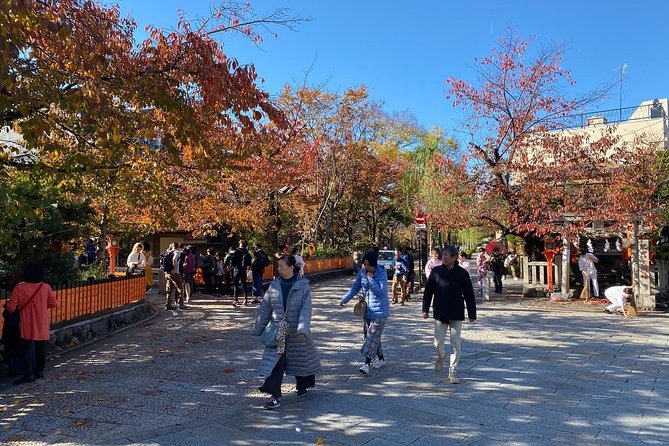
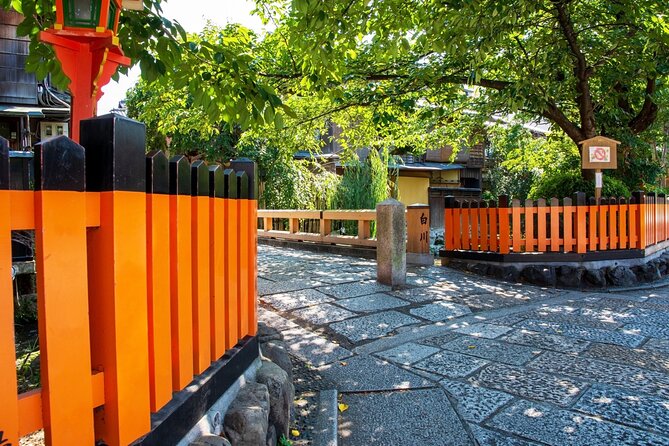
The first stop is Tatsumi Bridge, where you walk through Gion Shimbashi. This is one of the prettiest parts of Gion, with traditional architecture and narrow lanes that show why the district has such a strong place in Kyoto’s image.
Your guide helps you read the setting rather than simply photograph it. Gion is closely tied to geisha culture and traditional entertainment, and the tour also brings in theater and the changing role of the district over time. That wider context matters because it keeps the visit respectful and avoids reducing Gion to a search for a glimpse of a geisha.
The stop lasts about 15 minutes and has no listed admission charge. It is a short introduction, not a long neighborhood exploration. You will want to return later if you hope to browse shops, eat in the area, or take more time with the streets.
The route also includes the Statue of Izumo-no-Okuni, the performer associated with the origins of kabuki. The exact timing is not specified, but its inclusion adds another useful piece to the story of Kyoto’s theater and public culture.
Chion-in’s enormous Sanmon gate
From Gion, the tour reaches Chion-in’s Sanmon gate. At roughly 10 minutes, this is a quick stop, but the gate has the scale to make an immediate impression. It is one of Japan’s largest wooden temple gates, and its size gives you a clear sense of the importance of the temple beyond its peaceful grounds.
This is a good moment to listen closely to the guide’s explanation of Buddhist practice and temple design. A large gate is not merely an entrance in this setting. It marks a transition from city streets into a religious compound, and the change in space is part of the experience.
The stop is listed as free of admission charge. You should still expect to pause outdoors and continue walking soon after, rather than spending a long time inside the temple complex.
Chion-in Temple and Maruyama Park
The next stop is Chion-in itself, with about 20 minutes set aside. Founded in the 13th century, it is one of Kyoto’s largest temples and has major Buddhist importance. The guide’s role is especially useful here because a short visit can otherwise blur together with the many other religious sites in Kyoto.
You will hear more about the temple’s place in Japanese religious history and about the relationship between institutions such as temples, the imperial court, and the samurai class. The strongest guides on this tour are praised for explaining those connections in plain English and for handling questions without losing the pace of the group.
After Chion-in, Maruyama Park offers a change of mood. This old urban park provides a more open, green setting after the temple buildings and narrow lanes. The planned stop is about 10 minutes, so think of it as a breathing space and orientation point rather than a full park visit.
I appreciate this contrast. A good walking tour needs pauses between major buildings, and Maruyama Park gives you one. Still, if you want a long, quiet park walk, you will need to return on your own after the tour.
Nene-no-Michi and the eastern hills
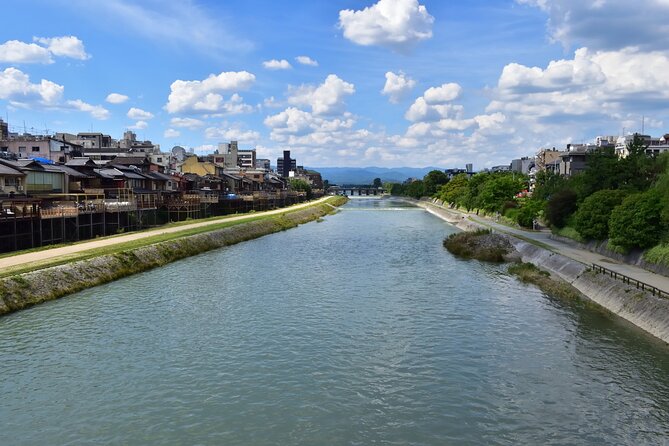
The route then follows Nene-no-Michi, or the Path of Nene. This stone-paved lane is named for Nene, the wife of Toyotomi Hideyoshi, and it winds through the historic Higashiyama area.
This is the kind of place where a guide adds real value. The lane itself is attractive, but the name opens a door into the political and social world of late 16th-century Japan. The walk becomes more than a sequence of old streets when you understand whose lives shaped the area.
The path is also a reminder that Kyoto’s historic center is not flat or uniform. Stone paving, narrow passages, slopes, and stairways become more common as you move through Higashiyama. If you have knee, ankle, or mobility concerns, consider the physical demands before booking. The activity information calls for moderate fitness, and one detailed account specifically warns about stair climbing.
Other walking tours we've reviewed in Kyoto



Yasaka Pagoda, Ninen-zaka, and Sannen-zaka
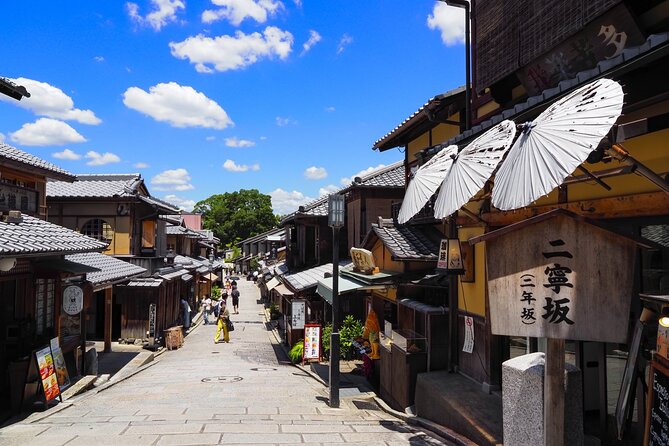
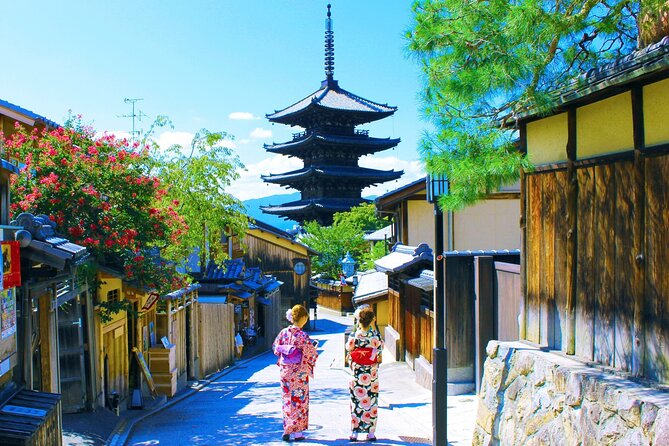
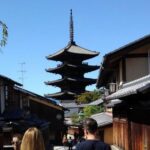
Hōkan-ji Temple, better known as Yasaka Pagoda, is one of the route’s most recognizable sights. Its five-story pagoda rises above the Higashiyama district and provides one of the classic Kyoto views. The planned stop is about 10 minutes, enough for the guide to explain the temple and for you to take photographs.
The tour then follows Ninen-zaka, the Two-Year Slope, and Sannen-zaka, the Three-Year Slope. These old cobblestone paths are lined with traditional buildings, tea houses, and souvenir shops. They are among the most scenic parts of the walk, but they are also popular and can feel crowded.
Here, timing and expectations matter. The tour gives you a short look at each slope, only about five minutes at Ninen-zaka and 10 minutes at Sannen-zaka. That is enough to understand the route and note places to revisit, but not enough for relaxed shopping or a leisurely tea stop.
The slopes are also uneven. Wear shoes with good support, and do not assume that a three-hour tour means three hours on level pavement. You will be walking steadily, with some uphill sections and stairs. Parents should also consider the length and information-heavy format before bringing younger children. An eight-year-old has kept up with the walk, but temple fatigue can arrive before the route ends.
Kiyomizu-dera gives the walk its finish
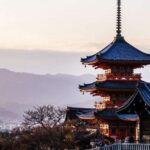
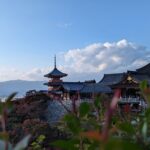
The tour ends at Kiyomizu-dera, one of Kyoto’s best-known Buddhist temples and a UNESCO World Heritage Site. Dating to the 8th century and perched on a hillside above the city, it is a fitting final stop after the eastern lanes and temple grounds.
About 10 minutes is allocated here. That is not enough for a full independent visit, especially if you want to explore the complex at a slow pace. The important point is that the tour brings you to the entrance, where you can continue on your own.
Admission is not included, so budget for the separate entry fee. The tour information also says admission fees are not included generally, even though several earlier stops are listed without an admission charge. Bring a little extra time after the walk if Kiyomizu-dera is high on your list.
Ending here is practical. You finish in a major sightseeing area rather than returning to the starting point, and you can decide on the spot how long to stay. The route has already introduced the neighborhood, so your independent visit should feel easier and more purposeful.
The guides make the history easier to follow
The most praised part of this experience is the guiding. Jay is repeatedly described as engaging, clear, and comfortable with questions. Ben is praised for memorable stories and useful suggestions for gardens, temples, and shops. Ayumi and Aiyumi are noted for energy, humor, strong English, and explanations of geisha and samurai culture.
Tommy is described as friendly and good with questions, while Michel is praised for being accommodating and offering ideas for the following day. Those details matter because three hours of historical explanation can become tiring if the guide simply recites dates.
You should expect an English-speaking guide, but the exact person is not guaranteed. The guiding style can also shape the day. Some guides may focus more on political history, others on folklore, religion, local life, or Kyoto’s entertainment districts.
The small maximum group of 12 is another advantage. It should make it easier to hear, ask questions, and stay connected while crossing streets and moving through narrow lanes. In the off-season, the group may be smaller and can even become a private experience, though that is not something you should count on.
Is $40 a fair price?
At $40 per person, this is a reasonable price for a three-hour guided orientation to Gion and Higashiyama. You are paying mainly for the guide’s interpretation, route planning, and the time saved from trying to connect these sights yourself.
The value is strongest if you are visiting Kyoto for the first time or if temple names and Japanese history tend to blend together. A good guide can explain why Chion-in matters, place Gion’s entertainment culture in context, and connect the Meiji Restoration to the broader story of modern Kyoto.
The price does not include lunch, gratuity, or admission fees. There are not many planned food stops, so eat before starting and carry water or a snack. You may also want to reserve money for Kiyomizu-dera and any refreshments or purchases along the route.
For a private tour, $40 would be an excellent bargain, but private treatment is not guaranteed. The advertised group cap is the safer way to judge the experience.
Practical advice for a smoother three hours
Wear walking shoes. This is the most important instruction, and it is easy to underestimate because the tour is described as a half-day walk rather than a hike.
Eat before you meet the group. One detailed account points out that the route has few food breaks beyond bathroom pauses. Carry water, especially if you are walking in warm weather.
Keep your schedule flexible after the tour. The walk can run slightly over if the guide is answering questions or checking on the group, though one guide gave advance notice so people with later reservations could leave when needed.
Use public transportation to reach the starting area, since the meeting point is near transit. Your mobile ticket is convenient, and confirmation arrives when you book. The finish is in front of the entrance to Kiyomizu-dera, not back at Ben’s Cookies.
The tour requires good weather. If poor weather cancels it, you can choose another date or receive a full refund. You can also cancel for a full refund up to 24 hours before the local start time. Changes or cancellations made inside that window are not accepted.
Service animals are allowed. The tour is best for people with moderate physical fitness, but the stated information does not promise a step-free route. The hills and stairs deserve serious consideration.
Who should book this Kyoto walk?
I would choose this tour if you want a clear first look at Gion and Higashiyama rather than a single temple visit. It suits adults who enjoy history, culture, religion, and local stories, especially if you want to ask questions as you go.
It is also a useful choice early in a Kyoto stay. You can use the route to decide which lanes, temples, shops, and gardens deserve a second visit. The end at Kiyomizu-dera lets you continue sightseeing without losing time returning to central Kyoto.
I would hesitate if you dislike walking on uneven surfaces, need frequent meal breaks, or prefer quiet visits with long stretches inside one temple. Families can manage it, but the three-hour length and steady stream of historical information may be too much for children who tire of temples.
Should you book the Kyoto Gion Historical Walking Tour?
Book it if you want the eastern side of Kyoto explained by an engaging English-speaking guide, not just photographed. The route covers Gion, major temples, atmospheric streets, a historic park, the Yasaka Pagoda, and Kiyomizu-dera for $40, with a group capped at 12.
Skip it if you need a flat walk, included meals, or extended time at each sight. For most first-time visitors who can handle hills and stairs, this is a practical way to get your Kyoto bearings fast and turn a beautiful but confusing district into a place with stories you can remember.
FAQ
How long does the Kyoto Gion Historical Walking Tour last?
The tour lasts approximately three hours.
Where does the tour begin?
It begins at Ben’s Cookies Kyoto Shijo, at 89 Shinchō, Shimogyo Ward, Kyoto, 600-8001, Japan.
Where does the tour end?
It ends in front of the entrance to Kiyomizu-dera at 1-chōme-294 Kiyomizu, Higashiyama Ward, Kyoto, 605-0862, Japan.
Is the tour conducted in English?
Yes. The tour is led by an English-speaking guide.
How many people can join the tour?
The maximum group size is 12 travelers.
Are temple admission fees included?
No. Admission fees are not included. Kiyomizu-dera is specifically listed as having an admission ticket not included, while several other stops have no listed admission charge.
Is lunch included?
No. Lunch is not included, and you should eat beforehand or bring a snack and water.
What should I wear?
Wear comfortable walking shoes. The route includes substantial walking, hills, stone paths, and some stair climbing.
Can I cancel for a refund?
You can cancel up to 24 hours before the experience start time for a full refund. Cancellations or changes made less than 24 hours before the start are not accepted. The tour may also be rescheduled or fully refunded if poor weather or an insufficient minimum number of participants causes cancellation.
More Historical Tours in Kyoto
More Walking Tours in Kyoto
More Gion & Geisha Walks in Kyoto

More tours in Kyoto we've reviewed





Gion & Geisha Walks, compared.
 ★ 4.7Kyoto Geisha Walking Tour: Gion District & Hidden GemsFrom $252 hours
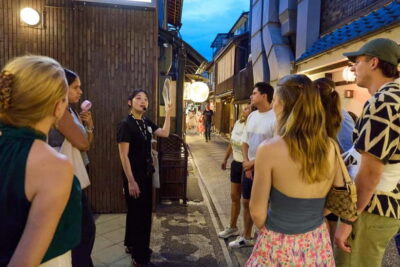 ★ 4.7Kyoto: Gion Geisha District Walking Tour – Stories of GeishaFrom $202 hours
 ★ 4.9Best of Kyoto: Gion, Geisha, Pagodas & CobblestonesFrom $242 hours
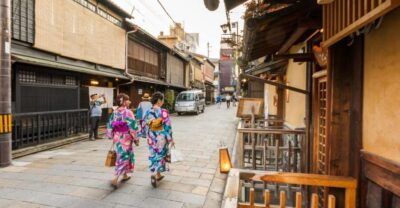 ★ 4.5Night Walk in Gion: Kyoto’s Geisha DistrictFrom $211h 40m
 ★ 5.0Kyoto Night Foodie Tour in Gion (9+ dishes + 6 Sake tastings)From $163
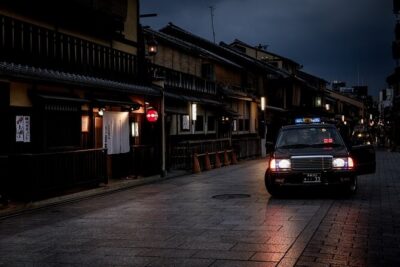 ★ 5.0Kyoto Gion Geisha District Walking Tour – The Stories of GeishaFrom $25