
Reviewed · TEA CEREMONY EXPERIENCES
Kyoto Private Tea Ceremony at a Japanese Inns
Kyoto gets especially atmospheric after dark, and this private program places you inside a traditional ryokan lit by Japanese candles. In 75 minutes, you move from Zen meditation to a tea ceremony, then put on a kimono for photographs in a large 20-mat tatami room.
I like the private format and the chance to use real-looking props, including folding fans and replica Japanese swords. I also like that translation devices are supplied, since the instructor speaks Japanese and the setting is designed for direct contact with your host. The main drawback is time: 75 minutes goes quickly, and the kimono choices are limited to bridal kimono or men’s haori.
In This Review
- Key points
- A candlelit ryokan near Higashi Honganji
- Zen meditation before the tea ceremony
- Tea ceremony in a private group
- Choosing between bridal kimono and men’s haori
- Photographs on a 20-mat tatami room
- What the $161 price means
- Who will enjoy this most
- Timing, access, and small practical details
- Is this Kyoto tea ceremony worth booking?
- FAQ
- Where does the tea ceremony take place?
- How long does the experience last?
- What activities are included?
- Is the experience private?
- What clothing choices are available?
- Are photographs included?
- Can I use flash photography?
- What language does the instructor speak?
- Is transportation included?
- Can I cancel for a refund?
Key points
- A candlelit Kyoto ryokan: The program takes place on the fourth floor of a traditional inn near Higashi Honganji Temple.
- Three-part cultural program: You begin with meditation, continue with tea, and finish with kimono photographs.
- Private group setting: You get a more personal experience than a large public ceremony.
- A 20-mat photo room: The broad tatami setting gives you room to pose with fans and replica swords.
- Japanese-speaking instruction: Translation devices are provided to help you communicate.
- Good booking flexibility: Reserve now and pay later, with free cancellation up to 24 hours before the start.
A candlelit ryokan near Higashi Honganji
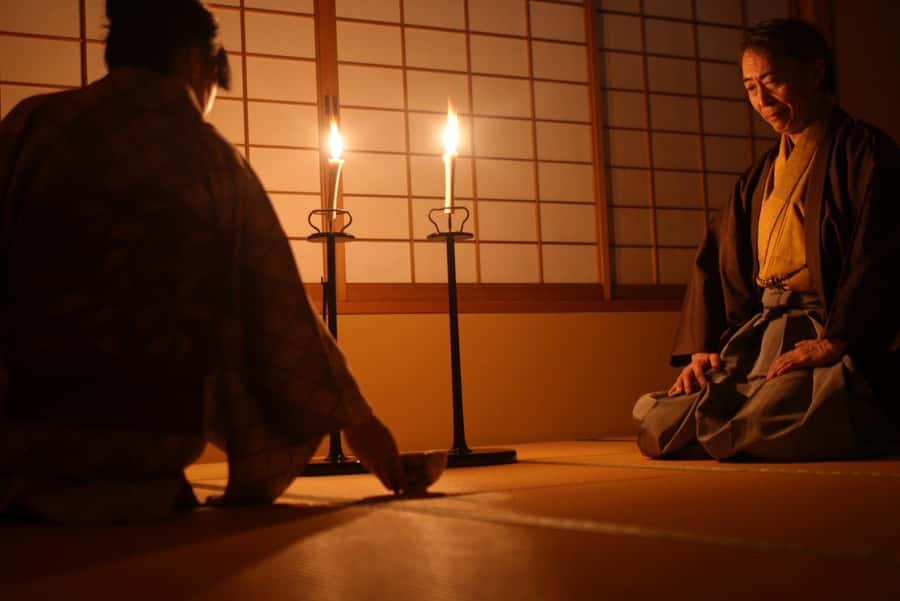
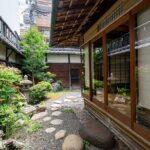
The setting does much of the work here. You check in at the front desk of a traditional Kyoto ryokan, then go to the fourth-floor venue. Near Higashi Honganji Temple, this is a useful location for fitting a short cultural activity into an evening in central Kyoto.
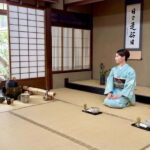
Inside, the soft light of traditional Japanese candles gives the room a quieter mood than a busy daytime attraction. The program takes place in a historic 20-mat tatami room, so you are not simply sitting in a modern studio dressed with a few Japanese decorations.
That distinction matters. A tea ceremony can feel rushed or staged if the room is treated as a backdrop only. Here, the ryokan, tatami floor, candles, and formal clothing all work together to create a setting suited to the ceremony. You still have a compact tourist activity, but the physical surroundings help it feel connected to Japanese customs.
Your first task is simple: greet the host and receive an introduction. Since the activity is conducted in Japanese, translation devices are available. I would still keep your expectations practical. The device helps you follow instructions and communicate, but it does not turn the 75-minute program into a long cultural lecture in your language.
A few more Kyoto tours and experiences worth a look
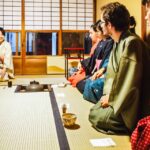
Zen meditation before the tea ceremony
The program starts with Zen meditation. This gives you a chance to slow down before the more visual parts of the evening begin.
The information provided does not specify the length or exact method of the meditation, so you should expect an introductory session rather than a full retreat-style practice. That is probably the right scale for this program. You are here for several linked activities, not a silent day at a temple.
Still, the order is sensible. Meditation first helps establish the calm mood that a tea ceremony calls for. Instead of arriving, putting on a costume, and immediately posing for photographs, you begin with a quieter activity. The shift from the outside streets of Kyoto to the tatami room should be part of the appeal.
This section may suit you best if you enjoy cultural activities that ask you to pause rather than simply watch. It may feel less important if you mainly want the kimono photographs. In that case, remember that the meditation is a real part of the program, not just a few words before the photo session.
Tea ceremony in a private group
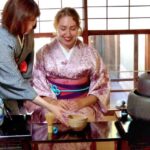
After meditation comes the tea ceremony. The activity is private, which gives the host more room to work with your group rather than delivering a fixed performance to a crowded audience.
A tea ceremony has value beyond the cup itself. The setting, gestures, order, and attention to detail are part of the point. Even in a short session, you get a glimpse of how Japanese hospitality can be expressed through a carefully arranged ritual.
One verified booking from Spain described this as highly worthwhile and as the best tea ceremony that person had attended. That is strong praise, though the overall rating comes from only three reviews, so I would treat it as encouraging rather than definitive proof for every visitor.
The tea segment also benefits from the private format. You can ask questions through the translation device and watch the host more closely. At the same time, the instructor is Japanese and the stated language is Japanese, so communication may take a little patience. If you want a long explanation of tea history in fluent English, this may not be the right choice. If you want to observe the ceremony and take part in a small cultural program, it is better suited.
Choosing between bridal kimono and men’s haori
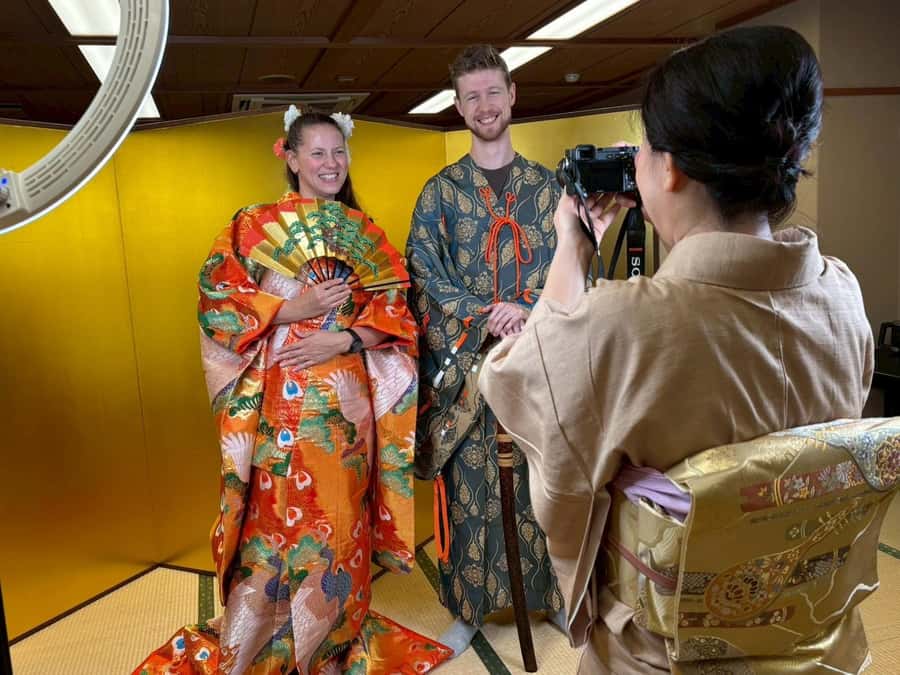
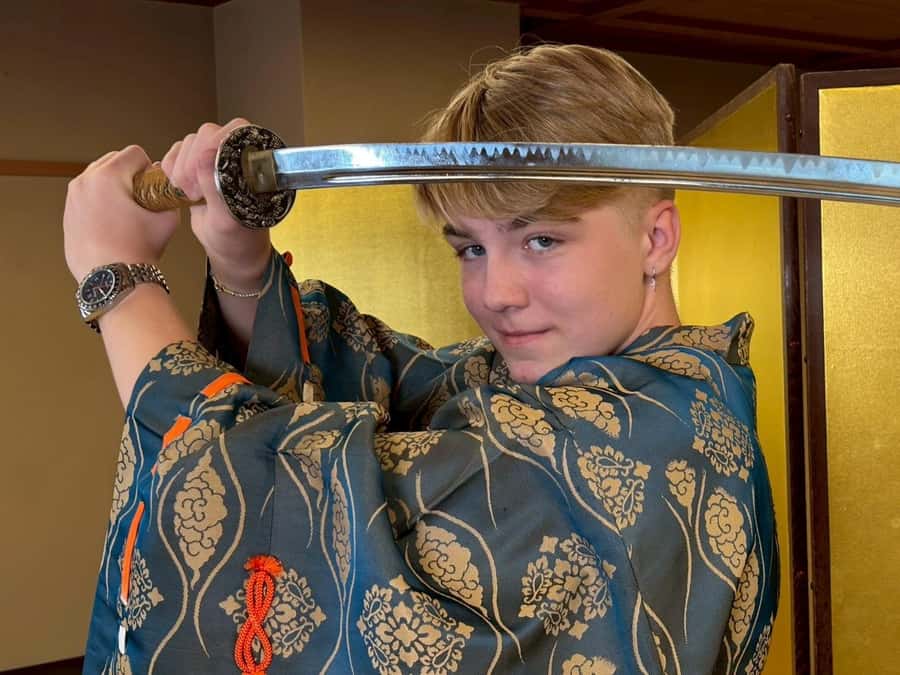
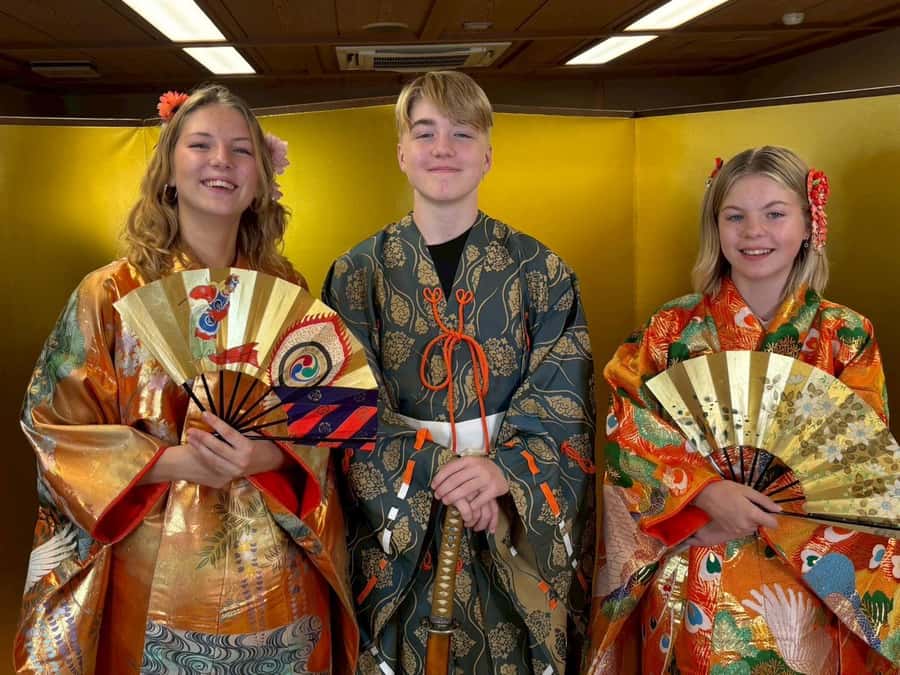
The clothing portion follows the meditation and tea ceremony. You choose between bridal kimono and men’s haori, two different styles of traditional Japanese dress.
The choices are specific, rather than a large wardrobe of outfits. That keeps the activity simple, but it also means you should not book this expecting to select from many colors, cuts, or seasonal patterns. The supplied information does not state how long the fitting takes or whether professional dressing assistance is included, so the exact process may vary.
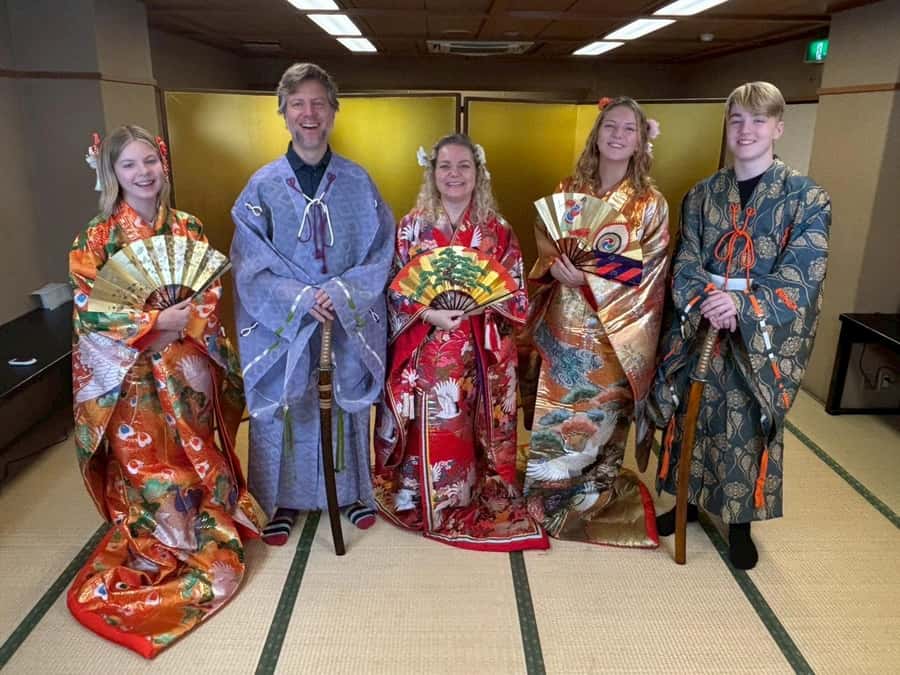
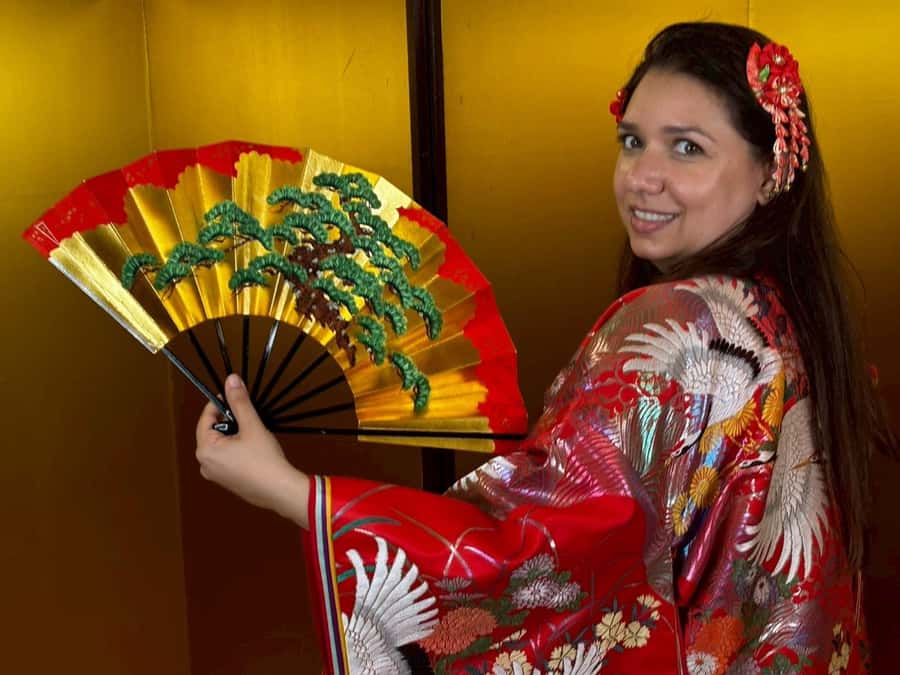
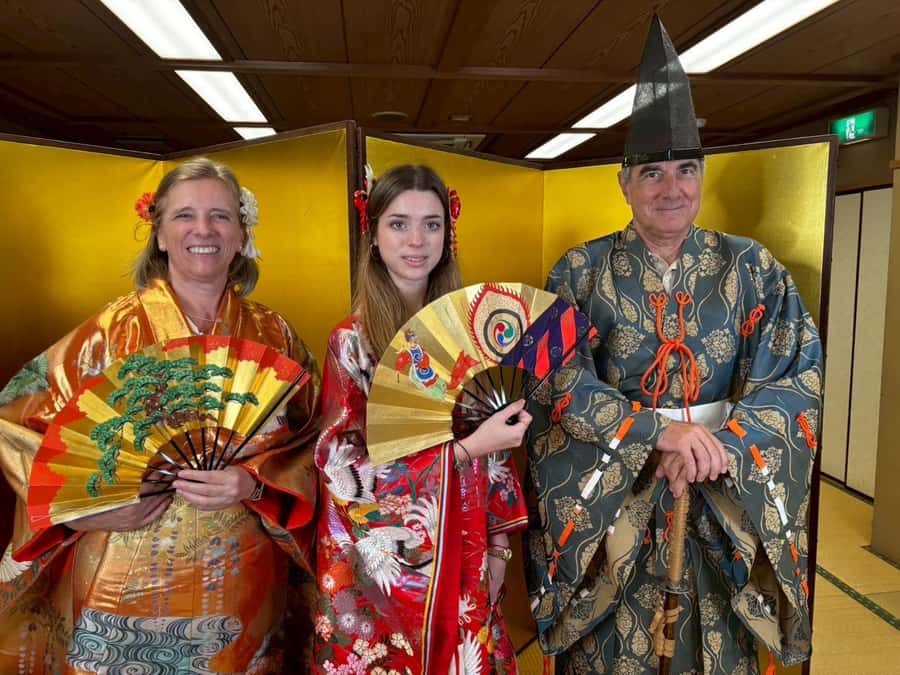
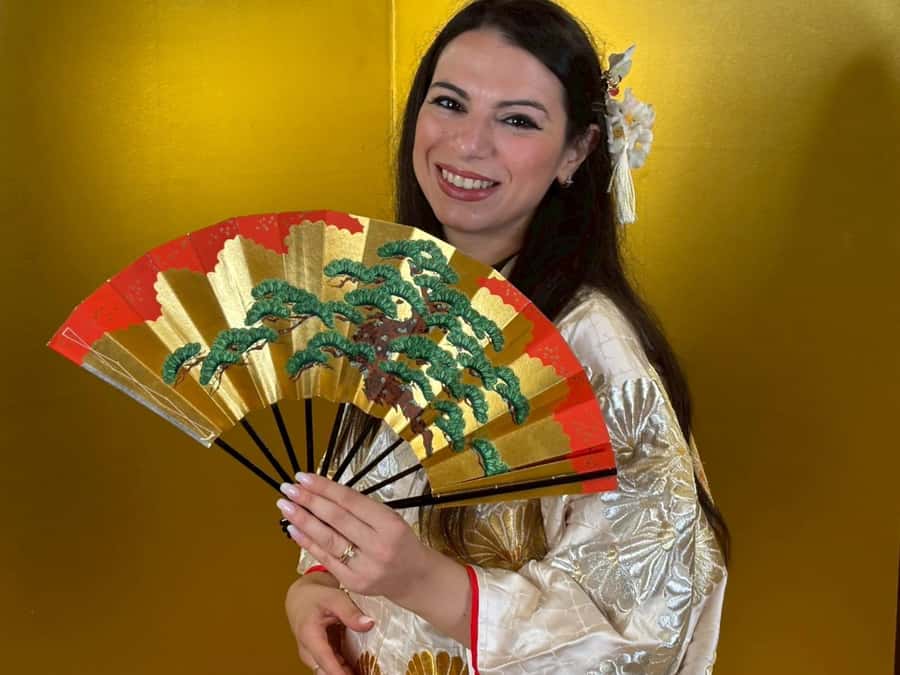
The bridal kimono option can create a formal, ceremonial look for photographs. Men’s haori offers a traditional outer garment with a different silhouette. Couples or mixed groups may find the two choices work well together, while a solo participant should pick the style that fits the photographs they want.
The wording also matters: the program includes a kimono fitting, but it does not promise a full bridal makeover, hair styling, or a complete wedding costume. Keep the scope in mind. This is a short cultural session with clothing and photographs, not a full-day dressing appointment.
Photographs on a 20-mat tatami room
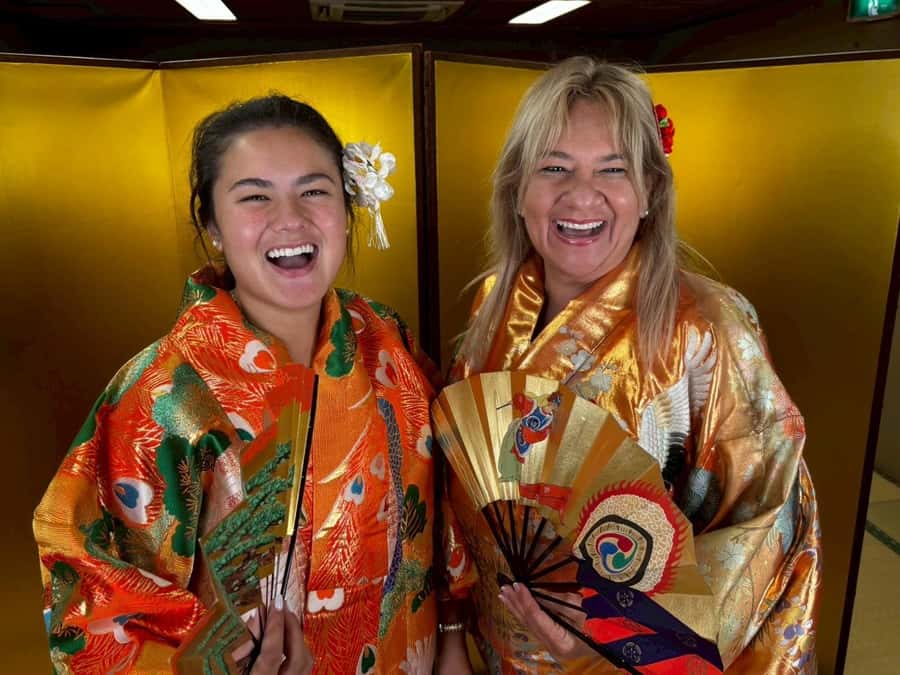
The final visual highlight is the commemorative photo session. You can pose in the kimono with authentic props such as folding fans and replica Japanese swords.
The large 20-mat room gives this part more space than a narrow photo corner. Tatami provides a natural Japanese backdrop, and the room’s size should help your images show the clothing rather than cutting off the whole outfit. The replica sword is included as a prop, not as a weapon, and you should treat it carefully and follow the host’s instructions.
Flash photography is not allowed. This is important if your phone or camera is set to automatic flash. Check the setting before you begin, and use the room’s available lighting. The candlelit mood is part of the atmosphere, but it may also mean your photographs look softer and darker than standard studio portraits.
A commemorative photo session is included, though the details of how many photographs you receive or how they are delivered are not provided. Do not assume a large edited gallery unless the provider confirms it. You can still take advantage of the setting by planning a few poses in advance: one with the fan, one with the sword, and one that shows the full kimono against the tatami.
Other private tours in Kyoto


What the $161 price means
At $161 per person, this is not a cheap drop-in tea tasting. You are paying for a private 75-minute program that combines four elements: meditation, tea, clothing, and photographs. The ryokan setting and private group structure also form part of the price.
The value depends on how many of those elements matter to you. If your main goal is simply to drink matcha or watch tea preparation, a less expensive tea activity may serve you better. If you want a compact evening program with a formal setting and a chance to dress for photographs, the price becomes easier to justify.
I see this as a convenience purchase as much as a cultural one. In one booking, you get a calm indoor setting, a Japanese host, a ceremony, clothing, props, and a private group. You do not need to arrange separate appointments for each part. For a short stay in Kyoto, that can be useful.
Still, the duration limits the depth. You will not have hours to compare tea schools, study the history of kimono, or settle into extended meditation. The price makes the most sense for someone who values a polished, private snapshot of several traditions rather than a specialist lesson in one of them.
Who will enjoy this most
I would recommend this program to couples, families, and small private groups who want an evening activity with clear structure. It can also suit solo visitors who want photographs in traditional clothing without joining a large public group.
It is especially practical for someone who wants several Japanese cultural touches in one place. You get meditation, tea, dress, props, and a traditional room without spending an entire day at a single attraction.
The program may also work well for people who feel uncertain about language barriers. The instructor speaks Japanese, but translation devices are provided. That does not remove every communication challenge, yet it gives you a useful tool for questions and instructions.
I would be more cautious if you want an in-depth Zen session, a specialist tea lesson, or a wide choice of kimono. The short schedule and limited clothing options point to a broad introduction, not a detailed workshop.
Timing, access, and small practical details
The experience lasts 75 minutes, with starting times based on availability. It is presented as a night activity, making it easy to pair with dinner or an evening walk, though you should allow enough time to find the ryokan and check in at the front desk.
You do not receive transportation to or from the venue. Plan your own route to the ryokan near Higashi Honganji, then register at the front desk and proceed to the fourth floor. The meeting instructions are simple, but the fourth-floor location means you should not go directly to the room without checking in.
The program is wheelchair accessible. If you need specific details about the route to the fourth floor or the room layout, confirm those points when booking, since the supplied information does not explain the access arrangements in detail.
Book at least one day ahead. You can reserve now and pay later, and cancellation is free up to 24 hours before the start time. Those terms help if your Kyoto plans are still shifting, but they do not remove the need to show up on time with the correct meeting instructions.
Is this Kyoto tea ceremony worth booking?
Book it if you want a private, candlelit evening that combines a tea ceremony with meditation and kimono photographs. The strongest features are the traditional ryokan setting, the 20-mat tatami room, and the fact that you do not have to choose between a cultural lesson and a photo experience.
At $161 per person, I would book only if you want the full package. For a simple cup of tea, it is expensive. For a compact private program with clothing, props, a ceremony, and photographs, it offers a reasonable fit for a special evening in Kyoto.
The 5 out of 5 rating from three verified bookings is promising, and the especially positive assessment of the tea ceremony supports its appeal. But the sample is small. Go in expecting a carefully staged 75-minute introduction, not a long formal training session, and you are more likely to feel the price was well spent.
FAQ
Where does the tea ceremony take place?
It takes place in a traditional Kyoto ryokan near Higashi Honganji Temple, in a venue on the fourth floor.
How long does the experience last?
The program lasts 75 minutes.
What activities are included?
The program includes Zen meditation, a tea ceremony, a kimono fitting, and a commemorative photo session.
Is the experience private?
Yes. It is offered as an exclusive private cultural experience for a private group.
What clothing choices are available?
You can choose between bridal kimono and men’s haori.
Are photographs included?
A commemorative photo session is included, with props such as folding fans and replica Japanese swords.
Can I use flash photography?
No. Flash photography is not allowed.
What language does the instructor speak?
The instructor speaks Japanese. Multi-language translation devices are provided to help you communicate.
Is transportation included?
No. Transportation to and from the venue is not included.
Can I cancel for a refund?
Yes. You can cancel up to 24 hours in advance for a full refund.
More Private Tours in Kyoto
More Tea Ceremony Experiences in Kyoto
More tours in Kyoto we've reviewed











Tea Ceremony Experiences, compared.
 ★ 4.9Kyoto: Tea Ceremony in a Traditional Tea House in KiyomizuFrom $4945 min
 ★ 4.9Kyoto: Tea Ceremony Ju-An at Jotokuji TempleFrom $291h 10m
 ★ 4.3Kyoto: 45-Minute Tea Ceremony Lesson ExperienceFrom $2245 min
 ★ 5.0World Heritage Kyoto & Nara Uji Authentic Matcha ExperienceFrom $129
 ★ 4.9Kyoto: Table-Style Tea Ceremony at a Kyo-MachiyaFrom $451h 30m
 ★ 5.0Kimono Tea Ceremony at Kyoto Maikoya, NISHIKIFrom $65