
Reviewed · GION & GEISHA WALKS
Kyoto Samurai and Geisha Town Private Walking Tour
Kyoto’s samurai story comes alive through four very different places: Nijo Castle, the golden Kinkakuji, Gion’s geisha streets, and old Kennin-ji Temple. This private seven-hour walk links military power, Zen art, and traditional entertainment in one long morning and afternoon.
I like the early 8 a.m. start because it gives you a better shot at calmer conditions at the major sights. I also like that the guide uses public transportation and shares details beyond the usual facts, including lesser-known sights along the way. The main drawback is stamina: seven hours on foot, with several temple and castle visits, calls for a moderate level of fitness.
In This Review
- Key things to know before booking
- A Kyoto history lesson with real variety
- Starting at Kyoto Station at 8 a.m.
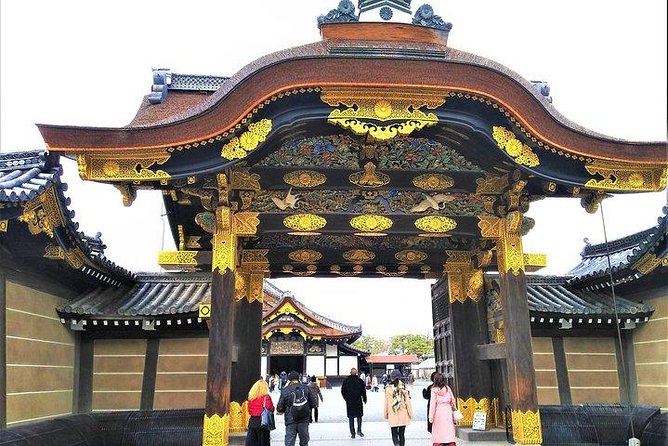
- Nijo Castle and the Shogun’s Kyoto base
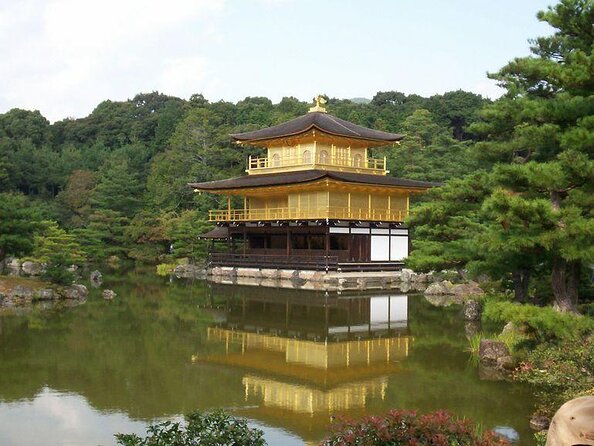
- Kinkakuji and the famous golden reflection
- Gion, where geisha traditions remain visible
- Kennin-ji and Kyoto’s Zen tradition
- Why a private guide changes the day
- Pace, food, and what to wear
- Who should book this Kyoto walking tour?
- Should you book it?
- FAQ
- Where does the tour begin?
- What time does the tour start?
- How long does the tour last?
- Is this a private tour?
- Which places does the tour visit?
- Are admission fees included?
- Is public transportation included?
- Is food included?
- Can I cancel for a full refund?
Key things to know before booking
- Four major Kyoto stops: Visit Nijo Castle, Kinkakuji Temple, Gion, and Kennin-ji in one private outing.
- An early start: Meet at Kyoto Station at 8 a.m. to begin before the day gets crowded.
- Samurai and geisha culture together: The tour connects Shogun-era castles with Kyoto’s traditional performing arts district.
- Private guiding: Only your group takes part, so the pace and questions can stay focused on your interests.
- Admission and transport included: Entry fees, guide fare, and public transportation are covered, but food and drinks are not.
- A full-day commitment: The listed duration is about seven hours, so wear practical shoes and plan for a steady day out.
A Kyoto history lesson with real variety
Many Kyoto tours lean heavily toward temples. This one has a broader frame. You begin with the political power of the Shoguns, move to the visual drama of a golden Zen temple, then shift into Gion’s world of geisha traditions before ending at one of Kyoto’s oldest Zen temples.
That mix matters. Nijo Castle helps explain how military rulers operated in an imperial capital. Kinkakuji shows how samurai-era power could also be expressed through gardens, architecture, and religious patronage. Gion adds living cultural traditions, while Kennin-ji gives you a quieter place to think about Zen design and Buddhist practice.
I like this structure because the stops do not feel interchangeable. Each has a different mood and purpose. You are not simply checking four famous Kyoto names off a list.
The tour costs $135.59 per person. That is not a bargain-priced walking tour, but it includes admissions, public transportation, and a private guide for roughly seven hours. The value is strongest if you are traveling with family or friends and want one guide devoted only to your group. Group discounts may also improve the price for larger parties.
A few more Kyoto tours and experiences worth a look


Starting at Kyoto Station at 8 a.m.
Your meeting point is inside the Kyoto Station Building at 901 Higashishiokōjichō. The early start is one of the practical strengths of this experience. Kyoto’s best-known sights can become crowded, and beginning at 8 a.m. gives the tour a head start.
The exact order of the stops is presented as Nijo Castle first, followed by Kinkakuji, Gion, and Kennin-ji. The experience uses public transportation, so you should expect the day to include movement through Kyoto as well as time inside each site.
A mobile ticket makes arrival easier. Still, Kyoto Station is a large place, so give yourself enough time to locate the meeting point. The supplied information does not name the guide in advance, so you should not book this expecting a particular guide by name.
The total duration is about seven hours, while the stated visits add up to less than that. The balance is not precisely explained, but it includes transportation between sites and the guide’s commentary. This is useful to remember when planning lunch or another afternoon activity. Treat the tour as a major part of your day, not as a quick morning outing.
Nijo Castle and the Shogun’s Kyoto base
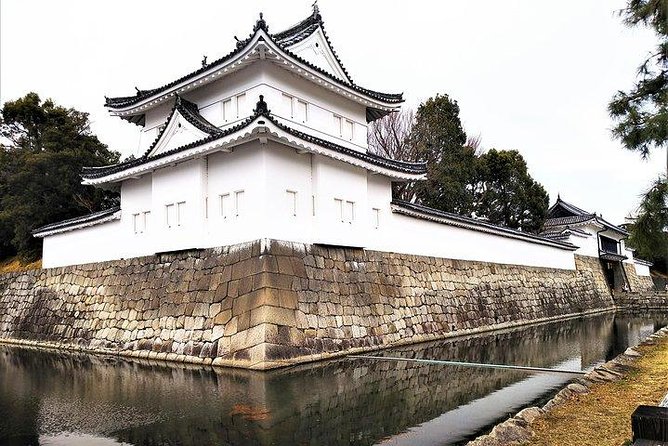
Nijo Castle is the best place on this route to picture the Shogun’s connection with Kyoto. In 1603, the Shogun’s government was based in Edo, present-day Tokyo, but the Shogun still needed a strong residence in Kyoto when visiting the imperial capital. Nijo Castle served that purpose.
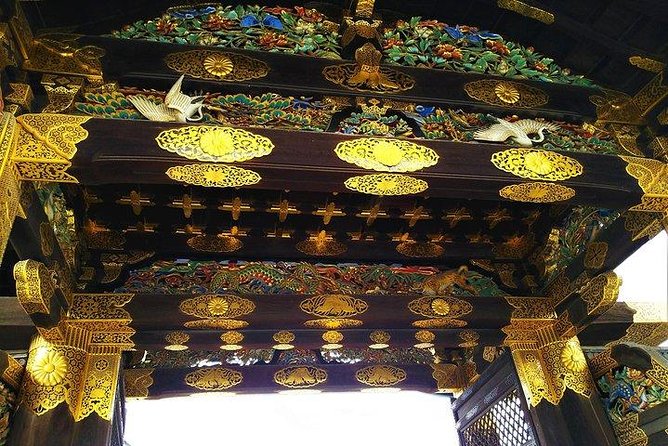
The castle was founded in the early Edo period, and its interiors contain more than 1,000 rooms decorated with elaborate artwork. That detail gives the visit weight. This was not just a defensive building. It was also a formal stage for power, ceremony, and the Shogun’s relationship with the imperial court.
Your guide can help connect the rooms and design to the larger political story. Without that context, you may notice impressive decoration but miss why the castle mattered. The private format is useful here because you can ask about the Shogun, the castle’s role in Kyoto, or the contrast between Edo and the imperial capital.
The listed visit lasts about one hour, with admission included. That is enough time for a focused look, though not an exhaustive study of every room and feature. If you want to linger over every painting or architectural detail, the group’s schedule may feel brisk.
I would pay close attention to how the castle feels different from a temple. Nijo Castle is tied to government and military authority, while the later stops turn toward religion, art, and traditional culture. That change begins here.
Kinkakuji and the famous golden reflection
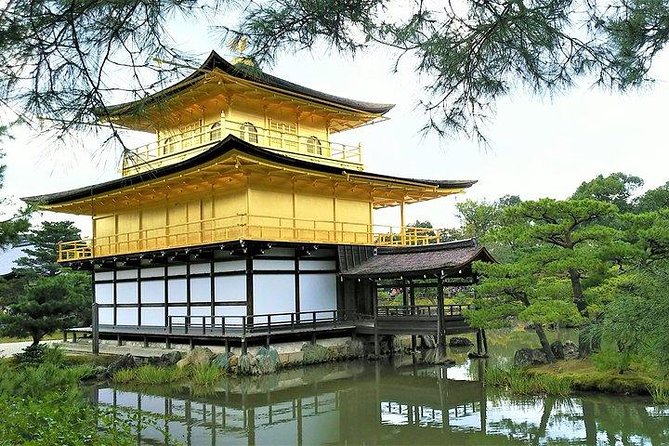
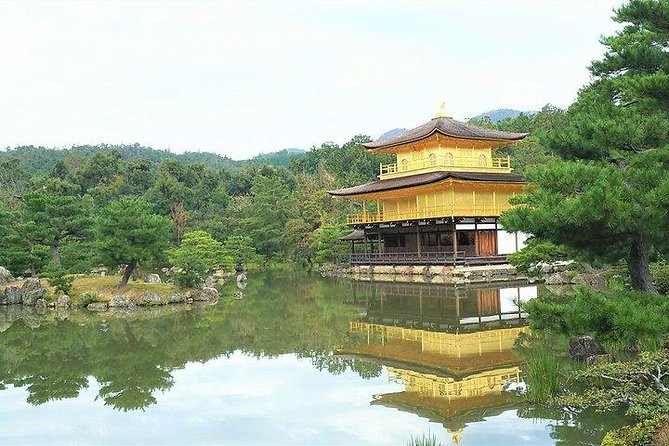
Kinkakuji Temple is one of Kyoto’s most recognizable sights. The golden pavilion, reflected in the pond, is the visual center of the visit. It was built in 1397 by the third Shogun of the Ashikaga Shogunate, making it another direct link to samurai-era power.
The pavilion’s beauty is obvious, but its historical setting makes it more than a photo stop. The building reflects the way influential Shoguns supported Zen temples and used art, architecture, and religious spaces to express status. Your guide’s job is to connect that gleaming image with the people and politics behind it.
The visit lasts about one hour, and admission is included. An early arrival should help, though the tour cannot promise an empty site. Kinkakuji is one of Kyoto’s must-see attractions, so some activity is part of the deal.
This stop may be the most visually rewarding part of the day, but it also has a clear limitation. The golden pavilion is the star, and your time is structured around seeing it and the surrounding grounds. If you want a long, quiet garden visit, a private visit at your own pace may suit you better.
For most first-time visitors, though, Kinkakuji earns its place. You see an iconic Kyoto image while learning how samurai rulers shaped religious and artistic life.
Gion, where geisha traditions remain visible
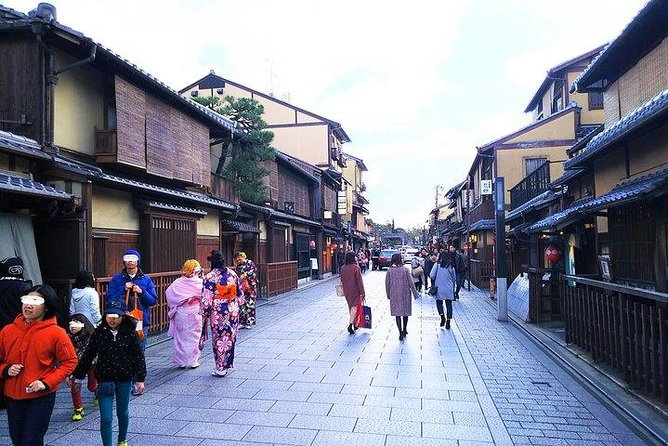
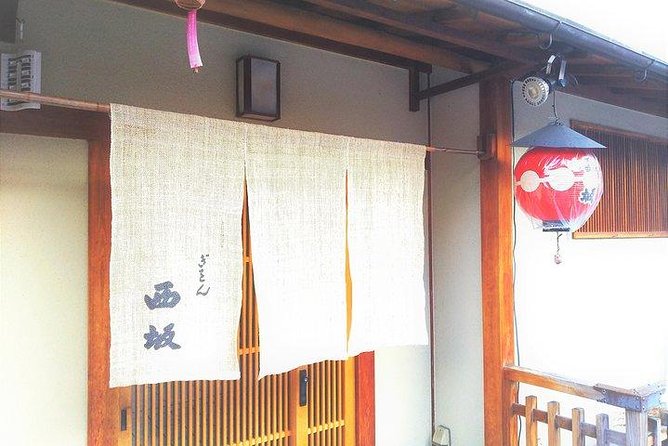
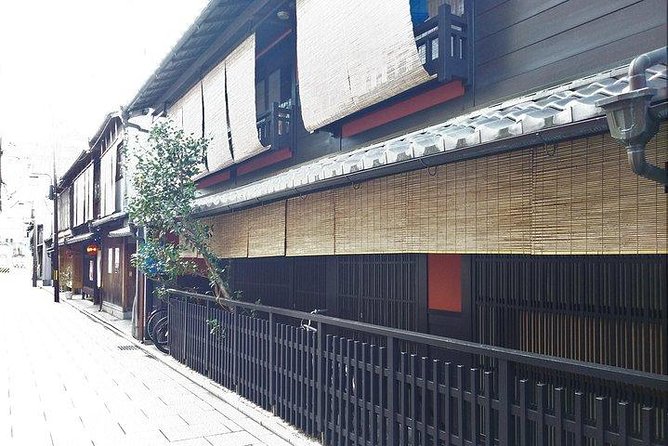
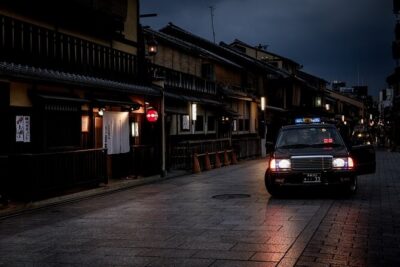
Gion brings a sharp change of mood. Kyoto has five kagai, or geisha districts, and Gion is the largest. Here, the tour introduces you to geisha as highly trained professional performers and successors to an important part of Japanese traditional culture.
The visit is scheduled for about 40 minutes and has no separate admission fee. That makes it a walking look at the district rather than a formal geisha performance or an extended cultural workshop. You should expect streets, traditional town houses, and explanations of Gion’s place in Kyoto’s heritage.
This is also where a guide can add value through restraint and context. Gion is not a stage set built for visitors. It is a historic district connected to working cultural traditions. You should follow local etiquette, avoid blocking entrances, and treat performers and residents with respect.
The tour description allows time for off-the-beaten-path sights, which fits Gion particularly well. The most familiar streets are only part of the area. A guide who knows the neighborhood may point out details you would walk past alone, though the exact extra sights will depend on the day and route.
Do not book this portion expecting guaranteed geisha sightings. The information promises a visit to Gion and an introduction to its culture, not a scheduled encounter. That is a fair arrangement and a more respectful way to approach the district.
A few more Kyoto tours and experiences worth a look

Kennin-ji and Kyoto’s Zen tradition
Kennin-ji is located in Gion, making it a natural continuation of the district visit. Founded in 1202 by the third Shogun of the Kamakura Shogunate, it is described as Kyoto’s first Zen temple. Its age and location give the stop an important place in the story of Japanese Buddhism.
The visit lasts about 40 minutes and admission is included. Two features are singled out as essential: the dry garden design and another major artistic feature that is not fully specified in the supplied details. You should ask your guide to explain both when you arrive.
The dry garden is a good reminder that Zen spaces often reward looking slowly rather than rushing from one object to the next. Even with a short visit, you can consider how stones, gravel, open space, and careful composition create meaning without elaborate decoration.
Kennin-ji also helps bring the day back to religion after the political focus of Nijo Castle and the spectacle of Kinkakuji. It is not simply another old temple. It gives the tour a chance to show how Zen shaped Kyoto’s visual culture and daily traditions.
The 40-minute allocation is enough for a guided introduction, but it is not generous if you like to sit quietly or study every detail. If Kennin-ji interests you most, note its location and consider returning on your own later.
Why a private guide changes the day
A private tour is the central feature here. Only your group participates, so you are not sharing the guide with strangers or waiting for a large party to gather. That can make a real difference on a day with several transfers and time limits.
The guide can explain details you might miss on a standard route and may include lesser-known sights. One especially strong account of the experience described moving efficiently without feeling rushed, along with learning facts that are not always covered on ordinary tours. That is the kind of benefit you are paying for.
Efficiency matters in Kyoto. Nijo Castle, Kinkakuji, Gion, and Kennin-ji are not one compact attraction. Public transportation helps connect them, but the day still requires planning. A guide takes care of the route while you focus on the places and their meaning.
There is a tradeoff. A private tour costs more than joining a large group, and the price may be difficult to justify for a solo visitor on a tight budget. For a family or small group, the cost can make more sense, especially with group discounts and admissions included.
Pace, food, and what to wear
The tour requires moderate physical fitness. You will walk through castle and temple grounds, move between stops, and use public transportation. Comfortable shoes are essential. You should also be ready for stretches of standing and for surfaces that may not be perfectly even.
Food and drinks are not included. The supplied schedule does not identify a meal stop, so bring water and plan your food carefully. Since the experience lasts about seven hours, you should ask the guide at the start how the day’s timing will handle a meal or snack break.
The tour is listed as accessible for people with limited eyesight and limited mobility, but it is not stroller accessible. Animals or pets are allowed according to the additional information, while another note says it is not suitable for pets, so anyone with a service animal or mobility concern should confirm the details before booking.
Weather matters. The experience requires good weather, and poor conditions can lead to a different date or a full refund. Kyoto’s outdoor temple grounds and walking routes are much easier to enjoy in dry conditions.
Who should book this Kyoto walking tour?
I would recommend this experience to first-time Kyoto visitors who want a strong historical framework rather than a loose collection of photo stops. It suits people who want samurai history, Zen temples, traditional town houses, and geisha culture in one day.
It is also a good choice for families and small groups. A private guide can adjust explanations and keep the day moving at a pace that works for your party. The tour is less suitable if you want long periods of free time at each site, a formal geisha performance, or a slow photography-focused itinerary.
The early start is a plus for anyone who dislikes heavy crowds. It also means you must be ready at Kyoto Station by 8 a.m., so this is not the right pick if you prefer lazy Kyoto mornings.
Free cancellation is available up to 24 hours before the start time. Changes or cancellations inside that window are not accepted, and poor weather may result in a new date or a full refund.
Should you book it?
Book this tour if you want Kyoto’s major sights explained as part of one connected story. The strongest reasons are the private guide, the early start, included admission fees, and the unusual balance between Shogun-era sites and living traditional culture.
Skip it if you prefer to explore independently, dislike a full seven-hour schedule, or want to spend most of your day in one temple district. At $135.59 per person, it is a value purchase only if you will use the guide’s context and the convenience of having transportation and admissions handled.
For a first Kyoto visit, I like the route. It gives you castles, gold, Zen gardens, and Gion in one well-shaped day, with enough structure to save you planning time and enough variety to keep the experience from feeling repetitive.
FAQ
Where does the tour begin?
The tour begins at the Kyoto Station Building, at 901 Higashishiokōjichō, Shimogyo Ward, Kyoto, 600-8216, Japan.
What time does the tour start?
The start time is 8 a.m.
How long does the tour last?
The experience lasts approximately seven hours.
Is this a private tour?
Yes. Only your group participates in the activity.
Which places does the tour visit?
The route includes Nijo Castle, Kinkakuji Temple, Gion, and Kennin-ji Temple.
Are admission fees included?
Yes. Admission fees for the included attractions are covered.
Is public transportation included?
Yes. Public transportation is included, along with the guide fare.
Is food included?
No. Food and drinks are not included.
Can I cancel for a full refund?
Yes. You can cancel at least 24 hours before the experience starts for a full refund. Cancellations or changes made less than 24 hours before the start time are not accepted for a refund.
More Walking Tours in Kyoto
More Samurai & Kendo Experiences in Kyoto
More Gion & Geisha Walks in Kyoto
More tours in Kyoto we've reviewed










Gion & Geisha Walks, compared.
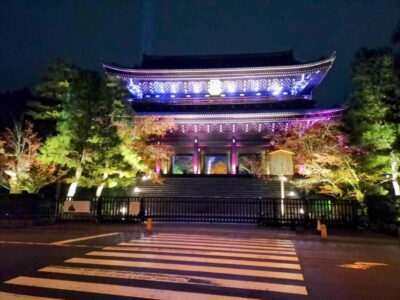 ★ 4.7Kyoto Geisha Walking Tour: Gion District & Hidden GemsFrom $252 hours
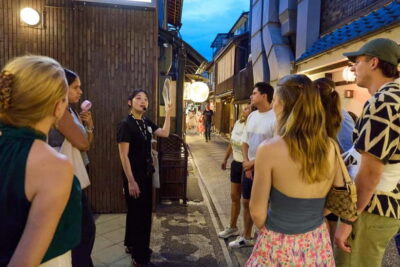 ★ 4.7Kyoto: Gion Geisha District Walking Tour – Stories of GeishaFrom $202 hours
 ★ 4.9Best of Kyoto: Gion, Geisha, Pagodas & CobblestonesFrom $242 hours
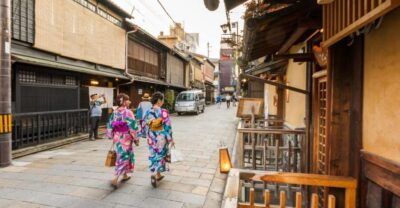 ★ 4.5Night Walk in Gion: Kyoto’s Geisha DistrictFrom $211h 40m
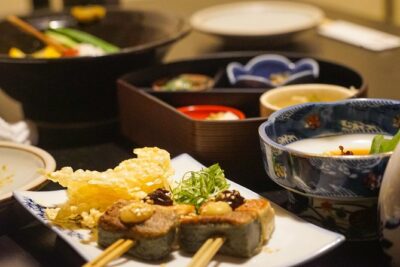 ★ 5.0Kyoto Night Foodie Tour in Gion (9+ dishes + 6 Sake tastings)From $163
 ★ 5.0Kyoto Gion Geisha District Walking Tour – The Stories of GeishaFrom $25