
Reviewed · GION & GEISHA WALKS
Guided Gion Tour: Explore Kyoto’s Historic Geisha District
Gion is best understood on foot, where a quiet side lane, a wooden machiya house, or a passing maiko can mean more than a long list of sights. This private walk connects the district’s major landmarks, including Yasaka Shrine and Hanamikoji Street, with local customs that are easy to miss on your own.
I like the private format, since your group of up to eight can ask direct questions and adjust the pace. I also like the choice of departure times: early morning brings fewer people, while an evening walk lets Gion change character as the lamps come on. The main caution is simple: a geisha or maiko sighting is never guaranteed, and the tour does not include private time with one.
In This Review
- Key points before you book
- Why a private walk makes sense in Gion
- Starting in Gion, where the old streets still do the talking
- The Izumo no Okuni Statue and Kyoto’s performance roots
- Chion-in Temple Gate brings scale to the route
- Yasaka Shrine, lanterns, and Kyoto’s public rituals
- Maruyama Park offers a needed pause
- Hanamikoji Street closes the walk with Kyoto’s most famous image
- Choosing the right time of day
- What the $350 group price really buys you
- Who will get the most from this Gion walk
- Practical booking advice and cancellation terms
- Should you book this private Gion tour?
- FAQ
- How much does the Guided Gion Tour cost?
- How long does the tour last?
- Is this a private tour?
- Does the tour include pickup?
- Will I definitely see a geisha or maiko?
- Does the tour include time with a geisha or maiko?
- Which places are included in the route?
- Are admission tickets included?
- What is the cancellation policy?
Key points before you book
- A private two-hour walk through Gion: Your group alone takes part, with space to ask questions and request a pace that suits you.
- Six useful stops in one compact route: The walk includes Gion, the Izumo no Okuni Statue, Chion-in Temple Gate, Yasaka Shrine, Maruyama Park, and Hanamikoji Street.
- Possible maiko sightings, not a scheduled meeting: Your guide takes you to places where you have a better chance of seeing one, but timing is outside the tour’s control.
- Early or late departures change the mood: Morning is calmer, while evening brings illuminated streets and a more theatrical feel.
- A good choice for families and first-time visitors: Most people can participate, public transport is nearby, and the private setup allows questions and rest breaks.
- Best value for a full group: The price is $350 for up to eight people, which works out to $43.75 each if your group is full.
Why a private walk makes sense in Gion
Gion can look simple at first: handsome wooden buildings, narrow streets, shrine gates, and plenty of people taking photographs. The meaning behind those details is harder to read. A private guide can explain local customs, point out the difference between a working entertainment district and a sightseeing street, and help you understand what you are seeing without turning the walk into a lecture.
The experience lasts about two hours. That is enough time to cover the main sights, but not enough for a slow, all-day exploration of every lane and temple. I would treat it as an orientation walk, especially if this is your first visit to Kyoto. You get the broad shape of Gion, then you can return later to the places that caught your interest.
The private format matters most for families, mixed-age groups, or anyone with a long list of questions. The guide can keep the walk conversational instead of following a fixed group-tour rhythm. A past hot-weather outing required extra rest and proved that pace matters, particularly when some members of a family are less comfortable walking in heat.
Guides named in the feedback include Ahmed and Mat. Ahmed was praised for being punctual and for explaining local customs in a way that added meaning to the streets. Mat was described as considerate and ready with answers. One less positive experience involved a guide who seemed distant and offered little explanation, so the standard can depend on the individual guide assigned to you.
A few more Kyoto tours and experiences worth a look
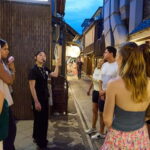

Starting in Gion, where the old streets still do the talking
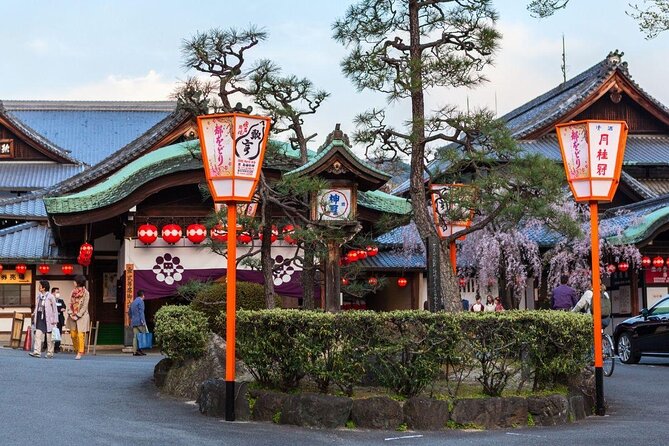
The opening hour is centered on Gion itself. This is the part of the walk where you get a feel for the district’s preserved architecture, traditional wooden houses, tea houses, and narrow streets. Your guide also points out places where a geisha or maiko is more likely to appear.
That last point needs a clear explanation. This is a spotting walk, not a guaranteed encounter. A maiko may pass through at the right moment, as happened for one participant, but you should not book this expecting a staged meeting, a photograph session, or time inside a tea house.
That distinction is important for respectful sightseeing. Gion is not a theme park. People working in the district are going about their business, and a guide can help you understand where to look without encouraging you to chase or interrupt anyone. The possibility of seeing a maiko adds interest, but the architecture and cultural context are the reliable parts of the tour.
Hanami Street is mentioned as one place where you may be lucky. The wording is right: luck plays a large role. If seeing a geisha or maiko is your only reason for booking, this tour may disappoint. If you want to understand Gion and perhaps see one during a normal walk, the expectation is more realistic.
The Izumo no Okuni Statue and Kyoto’s performance roots
The stop at the Izumo no Okuni Statue lasts about 15 minutes. It honors Izumo no Okuni, the pioneering figure associated with the founding of Kabuki theater.
This is a small stop, but it gives the walk a useful cultural angle. Gion is often reduced to images of geisha and tea houses, yet Kyoto’s performing arts tradition is much broader. The statue links the district to the development of Japanese theater and helps explain why performance, costume, music, and formal movement remain so closely tied to Kyoto’s cultural identity.
You will not need to pay an admission fee here. The value comes from the guide’s explanation and the connection between the statue and the wider district. Without context, it would be easy to walk past it without understanding why it matters.
Chion-in Temple Gate brings scale to the route
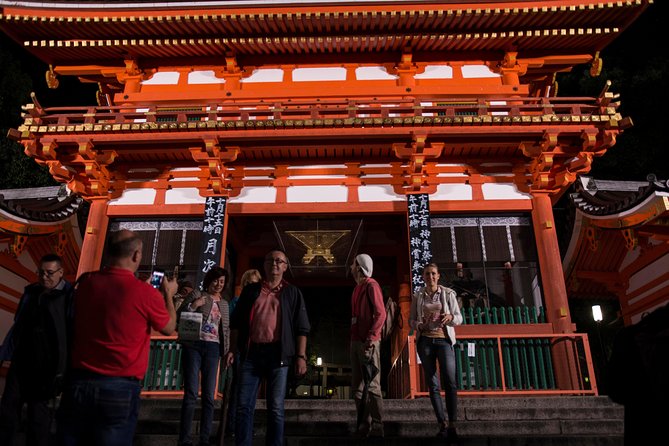
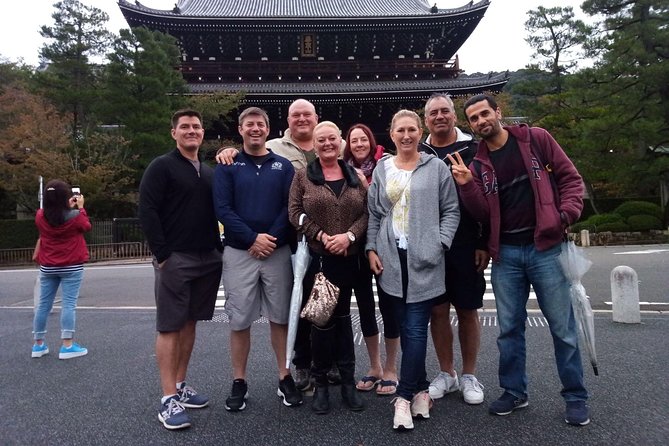
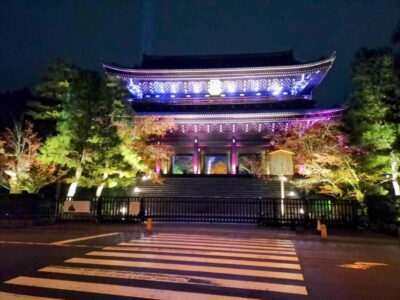
The Chion-in Temple Gate receives about 15 minutes. It is a large wooden entrance with detailed carvings, leading toward one of Kyoto’s important Buddhist temples.
The gate gives you a break from Gion’s close, human-scale streets. Its size and heavy timber construction make a strong contrast with the compact machiya houses and narrow lanes nearby. I like this part of the route because it shows how quickly Kyoto’s character can shift. In a few minutes, you move from an entertainment district to a major religious site.
The stop is focused on the gate rather than a full temple visit. That keeps the two-hour walk moving, but it also means you should not expect an extended temple tour or a long period inside the grounds. Admission is listed as free for the stop.
Yasaka Shrine, lanterns, and Kyoto’s public rituals
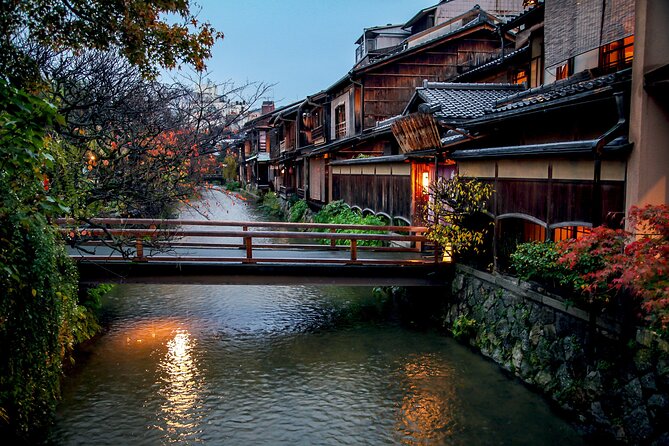
Yasaka Shrine is another short stop, listed at about 10 minutes. It is known for its festivals and lantern-lined paths, and it remains an important religious and cultural center in Kyoto.
The shrine helps put Gion in a wider setting. The district is not just a collection of scenic streets. It grew beside places of worship and public gatherings, and the shrine remains part of everyday Kyoto life as well as a major sight for visitors.
Ten minutes is enough to take photographs, see the main approach, and hear an introduction. It is not enough for a detailed shrine visit. If you enjoy religious architecture or want time for quiet observation, you may wish to return on your own after the tour.
This is also a good place to think about timing. An early morning departure should give you a calmer setting, while an evening walk can make the lanterns and street lighting more noticeable. The tour is available throughout the day, so you can choose based on heat, light, and your own schedule.
Other guided tours in Kyoto


Maruyama Park offers a needed pause
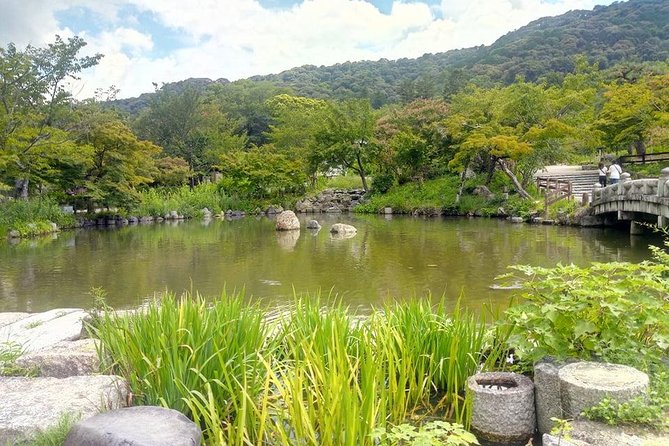
The route continues into Maruyama Park for about 10 minutes. The park provides open space, greenery, ponds, seasonal cherry blossoms, and paths for a slower walk.
That short pause can be welcome after the tighter streets of Gion. It is also where the pace may need adjusting. On a very hot day, a family group struggled to keep up and needed to stop for a rest. A private guide has more flexibility than a large group, but you should still tell the guide if you need a slower pace.
Maruyama Park is especially useful as a seasonal stop. Cherry blossoms can change the feel of the park, but the tour does not promise a particular season or bloom condition. Think of it as a calm green section of the route rather than a guaranteed flower display.
Hanamikoji Street closes the walk with Kyoto’s most famous image
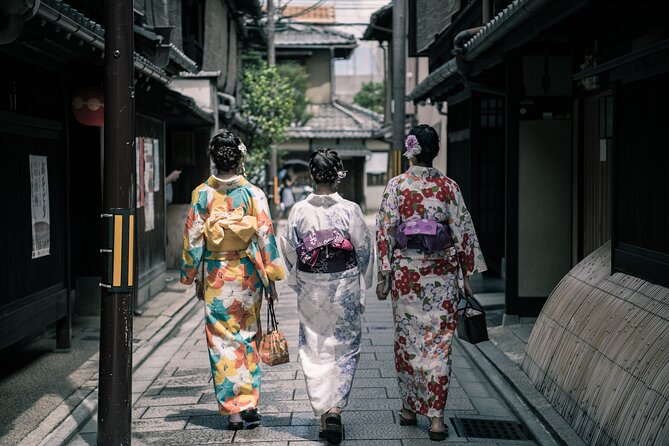
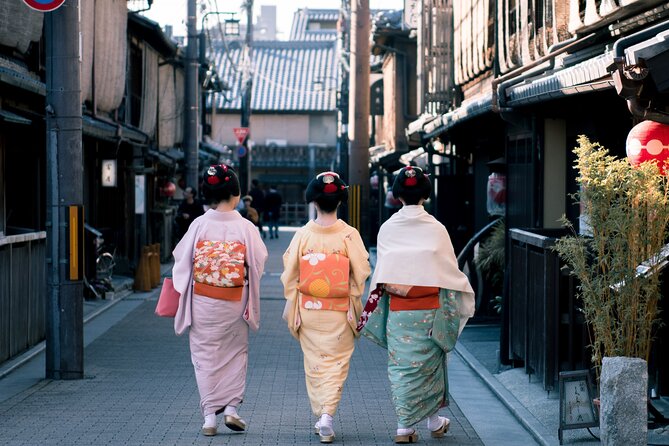
Hanamikoji Street is one of the most recognizable parts of Gion. Traditional teahouses and wooden machiya buildings line the street, giving you the classic Kyoto scene many people hope to see.
The street is photogenic, but a guide adds more than directions. You can ask about the buildings, the role of the teahouses, and the customs connected with the district. This is where the tour’s explanations are likely to feel most useful, since the street can otherwise become a quick sequence of photographs.
It is also a place where good behavior matters. Keep your camera ready, but do not block lanes or pursue anyone who appears to be working. A possible sighting should remain a bonus, not the entire purpose of your visit.
Because Hanamikoji Street is one of the central draws of Gion, it may feel busier than the park or temple area. An early start is the better choice if you prefer quieter photographs. An evening departure may offer more atmosphere, but it can also make the streets feel more crowded.
Choosing the right time of day
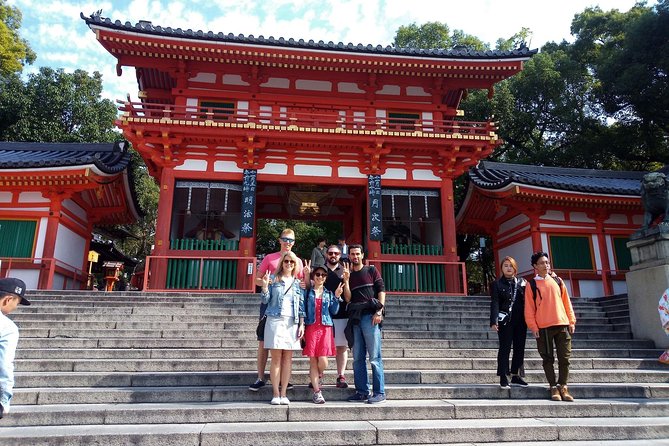
The tour runs throughout the day, which is one of its most practical features. I would choose the start time according to your priorities rather than assuming one slot is always best.
Early morning suits you if:
- You want fewer people on the streets.
- You prefer cooler conditions.
- You care most about clear photographs of the architecture.
- You want a calm introduction before Kyoto’s main sightseeing hours.
Evening suits you if:
- You want to see Gion under streetlights.
- You like a more atmospheric walk.
- You are hoping for a possible maiko sighting during the district’s active hours.
- You do not mind a greater chance of crowded streets.
The hot-weather experience is a useful warning. Even a two-hour walk can feel demanding in Kyoto’s heat, especially for children, older family members, or anyone unused to long days on foot. Bring water, wear comfortable shoes, and do not be shy about asking for a pause.
What the $350 group price really buys you
The cost is $350 per group of up to eight people. For a full group, that comes to $43.75 per person. For two people, the effective cost is $175 each, so the value depends heavily on your party size.
You are paying for a private guide and management fee, not for admission to a paid attraction or a meal. The listed stops have free admission, and the core benefit is interpretation, route planning, and the ability to ask questions as you walk.
For a family or group of friends, the price can make good sense. You avoid being folded into a large party, and the guide can respond to your interests. If you have only one or two people, compare the cost with other walking options before booking.
The tour also saves you from having to connect the sights yourself. Gion, the statue, Chion-in, Yasaka Shrine, Maruyama Park, and Hanamikoji Street are close enough to combine, but a first-time visitor may not know how they fit together. A good guide turns a series of attractive places into a connected story.
Who will get the most from this Gion walk
I would recommend this experience to first-time Kyoto visitors who want a clear introduction without spending half a day on a formal tour. It also suits people who care about local customs and want to ask questions that a guidebook cannot answer in the moment.
Families may appreciate the private format, since the pace can be discussed directly. Most people can participate, and the area is near public transportation. Pickup is offered, and one tour began with the guide meeting the group at Kyoto Station before taking a bus to Gion, although you should confirm the exact meeting arrangement when booking.
This is less suitable if you want a long temple visit, a food tour, or guaranteed access to a geisha or maiko. It is also not the best match for someone who dislikes walking or who expects every minute to be packed with major sights. The route is compact and interpretive, with several short stops.
The current score is 4.6 out of 5, with 94 percent recommending the experience across 16 ratings. The strongest praise centers on clear explanations, punctuality, considerate guiding, and the way the tour reveals details you might otherwise miss. The one poor experience shows why guide quality and your own expectations matter.
Practical booking advice and cancellation terms
Confirmation is provided when you book, and you receive a mobile ticket. The activity requires good weather. If poor weather causes cancellation, you can take a different date or receive a full refund.
You can cancel for a full refund up to 24 hours before the start time. Cancellation or changes made within 24 hours are not refundable. Since this is an outdoor walking tour, check the forecast before the final cancellation window passes.
Bring comfortable footwear and plan for changing conditions. A two-hour route sounds modest, but the day’s heat, your group’s ages, and the amount of time you spend stopping for photographs can all affect how tiring it feels.
Should you book this private Gion tour?
Book it if you want a focused introduction to Gion, prefer a private guide, and value explanations about customs as much as photographs. It is especially worthwhile for a full group of family or friends, when the $350 price is divided among several people.
Skip it if your main goal is a guaranteed geisha encounter, private time with a maiko, or an extensive temple visit. No guide can promise the sighting, and the experience is a short walking orientation rather than a full cultural day.
For most first visits, I would choose the early morning for cooler air and quieter streets. Choose evening if the glow of Gion’s lamps matters more to you than empty lanes. Go with realistic expectations, respect the working district, and the walk can give you a much better sense of Kyoto than a photo stop alone.
FAQ
How much does the Guided Gion Tour cost?
The tour costs $350 per group, with up to eight people included.
How long does the tour last?
The walking experience lasts approximately two hours.
Is this a private tour?
Yes. Only your group participates in the private activity.
Does the tour include pickup?
Pickup is offered. One outing began with the guide meeting the group at Kyoto Station and traveling by bus to Gion. Confirm your exact pickup details when booking.
Will I definitely see a geisha or maiko?
No. The guide visits places where you are more likely to see a geisha or maiko, but sightings are not guaranteed.
Does the tour include time with a geisha or maiko?
No. The tour does not include a scheduled meeting or private time with a geisha or maiko.
Which places are included in the route?
The route includes Gion, the Izumo no Okuni Statue, Chion-in Temple Gate, Yasaka Shrine, Maruyama Park, and Hanamikoji Street.
Are admission tickets included?
The tour lists free admission for the stops. The included service is the guiding and management fee.
What is the cancellation policy?
You can cancel up to 24 hours before the start time for a full refund. Cancellations or changes made less than 24 hours before the start time are not refunded. If poor weather cancels the tour, you can choose another date or receive a full refund.
More Historical Tours in Kyoto
More Guided Tours in Kyoto
More Gion & Geisha Walks in Kyoto

More tours in Kyoto we've reviewed





Gion & Geisha Walks, compared.
 ★ 4.7Kyoto Geisha Walking Tour: Gion District & Hidden GemsFrom $252 hours
 ★ 4.7Kyoto: Gion Geisha District Walking Tour – Stories of GeishaFrom $202 hours
 ★ 4.9Best of Kyoto: Gion, Geisha, Pagodas & CobblestonesFrom $242 hours
 ★ 4.5Night Walk in Gion: Kyoto’s Geisha DistrictFrom $211h 40m
 ★ 5.0Kyoto Night Foodie Tour in Gion (9+ dishes + 6 Sake tastings)From $163
 ★ 5.0Kyoto Gion Geisha District Walking Tour – The Stories of GeishaFrom $25