
Reviewed · GION & GEISHA WALKS
Kyoto 6h Private Tour Fushimi Inari, Kiyomizu, Gion & Hidden Gems
Kyoto’s famous sights are spread across the city, and this private tour links seven of them in one carefully packed afternoon. You’ll pass through the red torii gates of Fushimi Inari, enter major temples, stroll the old slopes of Higashiyama, and finish in Gion with a guide handling the route.
I like the private format, which keeps the day to your group of up to three, and I like the mix of major sights with Chishaku-in’s quiet garden. The main catch is simple: this is a fast half-day, with no lunch break and extra costs for taxis, transport, and temple admissions.
In This Review
- Key points at a glance
- Why this Kyoto route works so well
- Fushimi Inari and its famous red gates
- Chishaku-in offers a quiet change of pace
- Sanjusangendo’s thousand statues
- Kiyomizu-dera and the view over Kyoto
- Sannenzaka and Ninenzaka for old Kyoto streets
- Yasakanoto, Kyoto’s five-story landmark
- Finishing in Gion
- The real cost beyond the tour price
- What the guides add to the day
- Timing, meeting point, and practical planning
- Who should book this private Kyoto tour
- Should you book it?
- FAQ
- How long does the Kyoto private tour last?
- What time does the tour start?
- Where does the tour begin?
- Where does the tour end?
- How many people can join the private tour?
- Are transportation costs included?
- Are temple admission fees included?
- Is lunch included?
- Can I cancel for a full refund?
Key points at a glance
- Seven Kyoto sights in about five and a half hours: The route covers Fushimi Inari, three important temples, two historic streets, Yasakanoto, and Gion.
- A private guide for up to three people: You avoid the stop-and-go rhythm of a large group and can ask questions as you go.
- A welcome quiet pause at Chishaku-in: Its Japanese garden offers a calmer counterpoint to Kyoto’s busiest landmarks.
- Several admission fees are extra: Budget about 1,500 yen per person for temple entrances, plus transport and taxi costs.
- A noon start from Kyoto Station: This works well after a morning arrival, but you should eat before meeting the guide.
- Comfortable shoes matter: The tour includes temple grounds, sloping lanes, stone streets, and a great deal of walking.
Why this Kyoto route works so well
The appeal is not one single sight. It is the way the route moves from a famous shrine to quieter religious spaces, then into Kyoto’s most photogenic streets and traditional entertainment district.
You begin at Kyoto Station, a practical meeting point for a private tour. From there, the guide uses public transportation and taxis. That matters because Kyoto’s sights do not line up neatly, and spending the afternoon figuring out bus routes can cost precious sightseeing time.
The tour lasts approximately five hours and 30 minutes. That gives you enough time to see a lot, but not enough time to wander freely at every stop. I would treat this as a strong introduction to southern and eastern Kyoto, not as a slow temple day.
The private setup is especially useful for a first day in Kyoto. A guide can explain what you are looking at, point out details you might walk past, and keep the route moving. The group limit is three people, so couples, a small family, or close friends get a more personal outing.
A few more Kyoto tours and experiences worth a look

Fushimi Inari and its famous red gates
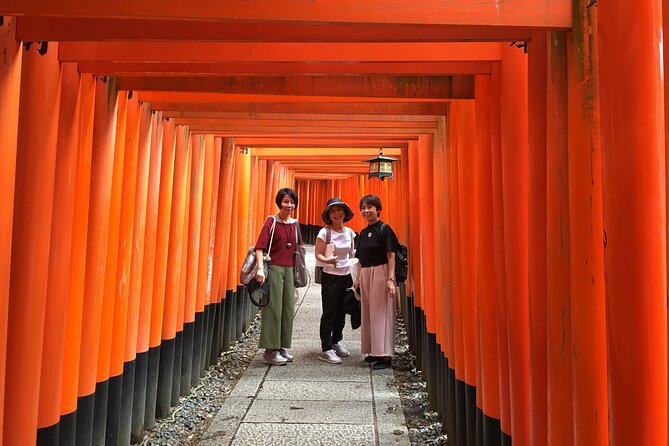
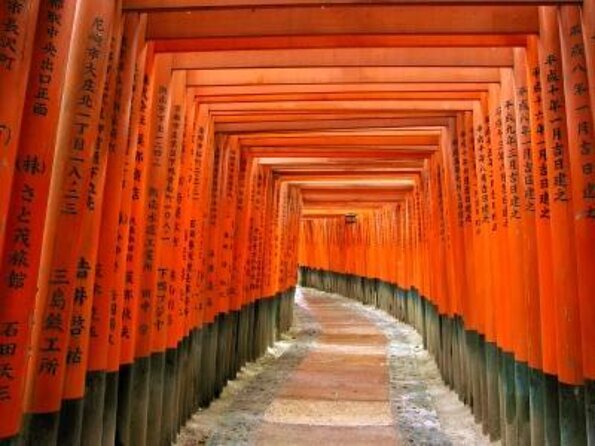
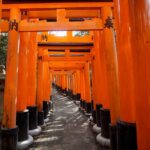
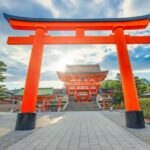
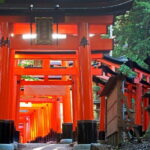
Fushimi Inari-taisha is the tour’s opening sight, with about one hour allotted. The shrine is known for its long corridors of orange-red torii gates, donated over the years by businesses and individuals seeking good fortune.
You do not need to climb the entire mountain to understand the place. Even the lower section gives you the classic experience of walking beneath repeated gates, with the shrine’s business connections providing useful context. Your guide can help explain the role of Inari worship and why fox images appear around the shrine.
The timing is sensible. Fushimi Inari can be very busy, and an hour lets you see the main approach without turning the whole tour into a mountain hike. If you want a long climb into the forest, this itinerary will feel too brief. If you want the essential atmosphere and photographs, it is a fair use of time.
Admission to the shrine is free. You should still bring Japanese yen for later costs, since taxi fares, public transportation, temple entrances, and purchases may require cash.
Chishaku-in offers a quiet change of pace
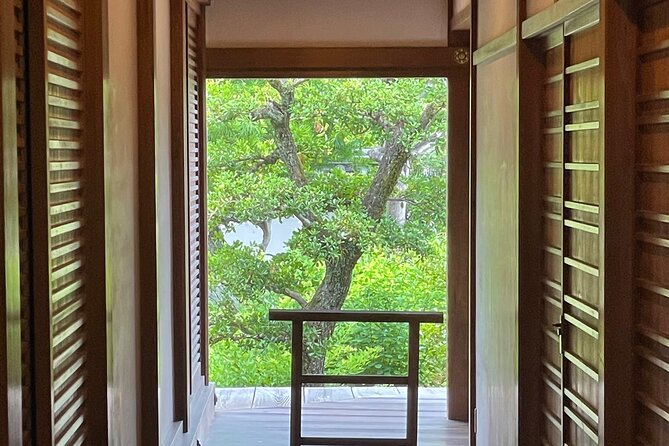
After Fushimi Inari, the route turns to Chishaku-in, with around 40 minutes here. This is one of the smartest choices in the schedule because it gives you a break from Kyoto’s better-known crowds.
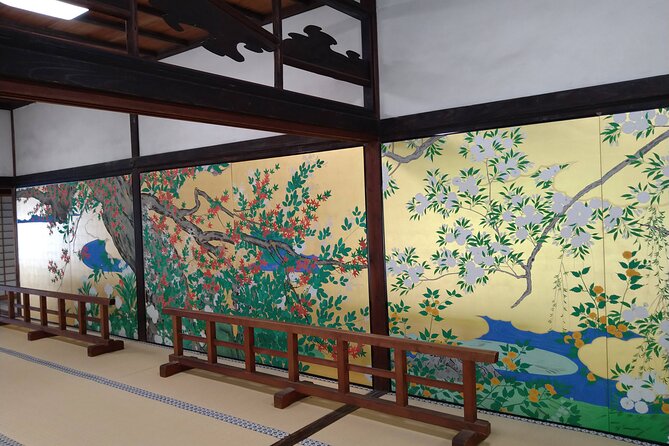
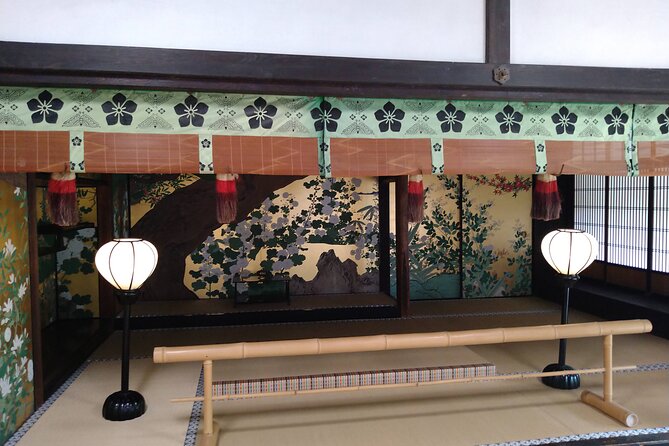
The temple is noted for its Japanese garden and calm setting. You can sit for a while, look across the garden, and take in a more measured side of Kyoto. This pause also helps the day feel less like a checklist of famous names.
Admission is not included. The exact cost is not supplied, so you should expect to pay the temple entrance separately. Ask your guide about the current fee before entering.
Chishaku-in will suit you if you value atmosphere as much as famous sights. It may not be the right stop if you want every minute spent at the biggest landmarks, but the contrast is valuable. Kyoto is more than its postcard locations, and this temple helps make that clear.
Sanjusangendo’s thousand statues
The next stop is Sanjusangendo Temple, where you have about one hour. The building is famous for its long wooden structure and its rows of 1,000 statues of Kannon, the Buddhist goddess of mercy.
This is an indoor temple visit, so it also gives you a change from walking outside. The repeated figures create a strong visual impression, and the scale of the hall helps explain why Sanjusangendo is considered one of Japan’s major repositories of national treasures.
You will pay an admission fee here. The tour estimates about 1,500 yen per person for all temple entrances combined, covering the paid sites on the route. Carry yen rather than counting on cards.
A guide adds real value at Sanjusangendo. Without some explanation, the statues can blur into one long row. With context, you can pay attention to the differences in posture, expression, and placement. The one-hour visit is enough for a focused look, though art lovers may wish for more time.
Kiyomizu-dera and the view over Kyoto
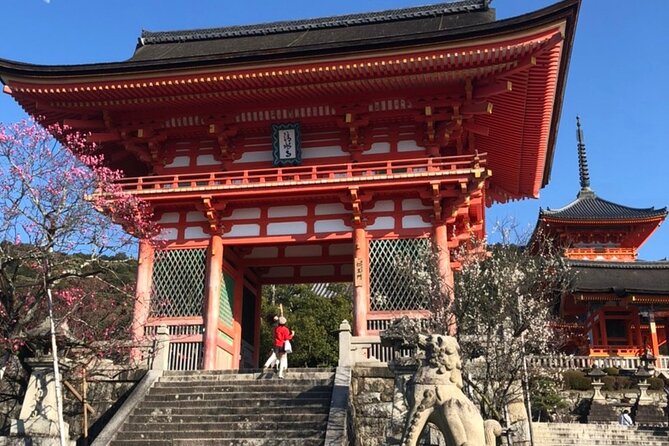
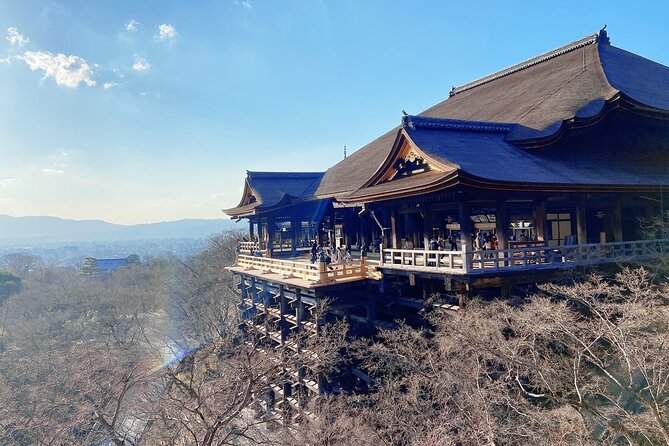
Kiyomizu-dera receives another hour. This UNESCO World Heritage site is one of Kyoto’s essential stops, known for its large wooden stage and broad view across the city.
The temple complex has a strong sense of drama. The elevated platform gives you a memorable view, while the approach leads into one of Kyoto’s busiest historic areas. The tour does not treat Kiyomizu-dera as an isolated temple. It places the visit in a larger walk through Higashiyama.
Admission is extra. Since the itinerary already includes several paid temples, the combined estimate of about 1,500 yen per person is useful for planning, though you should be prepared for current fees to vary.
One hour is a practical compromise. You can see the main stage and key areas, but you will not have time to inspect every corner of the complex at leisure. If Kiyomizu-dera is your top priority, tell the guide at the start, while understanding that the published route is designed to cover all seven stops.
A few more Kyoto tours and experiences worth a look

Sannenzaka and Ninenzaka for old Kyoto streets
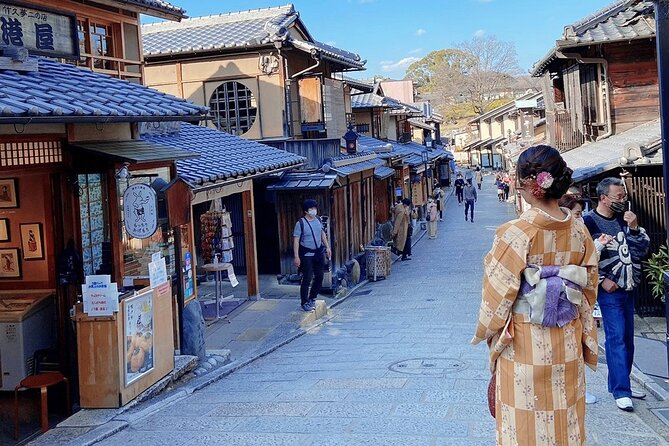
After the temple, you walk through Sannenzaka and Ninenzaka, with about one hour assigned to these sloping streets. Traditional wooden buildings line the route, now filled with shops selling souvenirs, sweets, crafts, and gifts.
This is where the tour becomes less formal. You are not simply moving between temple gates. You are walking through an old-style Kyoto setting, with narrow lanes and preserved-looking facades. The streets can be crowded, but they remain one of the best places to browse and photograph the city’s traditional side.
The hour gives you time to shop, but not an open-ended browsing session. If you are looking for gifts, decide early what interests you. The guide can help you understand where the tour is heading, but you should not expect a long stop at every shop.
Wear shoes with good grip. The route includes slopes and considerable walking, and comfortable footwear will make the afternoon much easier. This is also a good place to remember basic courtesy: keep to the side, avoid blocking narrow lanes, and ask before photographing people.
Yasakanoto, Kyoto’s five-story landmark
Yasakanoto is a very short stop, only about five minutes, and the visit is from the outside. The five-story pagoda is one of Kyoto’s best-known visual markers, especially from the surrounding streets.
Do not expect a temple interior or a long architectural visit here. The point is the view and the photograph. The pagoda fits naturally into the walk between the Higashiyama streets and Gion, so the short stop does not feel like a major detour.
This is a good example of the tour’s overall style: see the important sight, get the context, and keep moving. You gain broad coverage, but you give up the freedom to linger.
Finishing in Gion
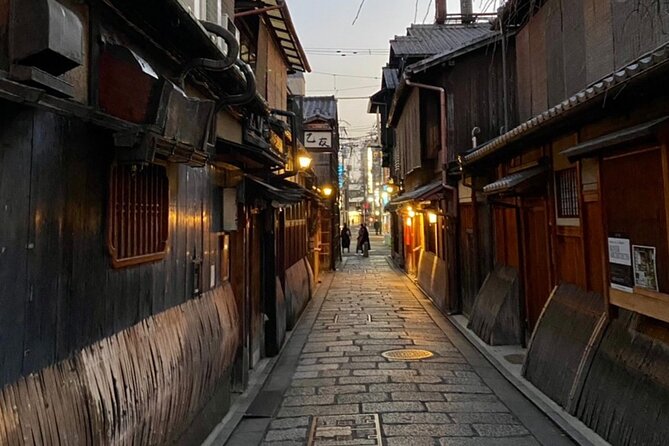
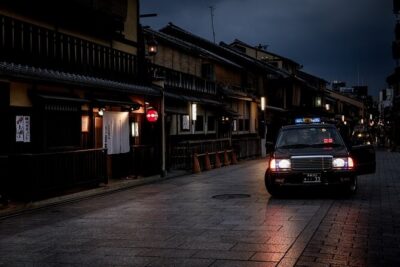
The final stop is Gion, the historic geisha district, with about 20 minutes. The area is known for traditional entertainment houses and the presence of Maiko and Geiko.
A short guided walk can help you understand what makes Gion different from the shopping streets earlier in the day. It is not just another old neighborhood. Its traditions are tied to performance, hospitality, and formal social spaces.
Twenty minutes is enough for an introduction, not a full evening in the district. The tour ends around the Gion area rather than returning you to Kyoto Station. Your guide explains how to reach your next destination, so plan your evening before you arrive.
Please be respectful here. Gion is a working neighborhood, not a stage set. Follow local signs and guidance about photography, and do not block entrances or pursue performers.
The real cost beyond the tour price
The listed price is $236.48 per group of up to three people. For three people, that works out to roughly $79 per person before admissions and transportation. For two people, the per-person cost rises, but the private format remains useful if you value your own pace and a guide focused only on your group.
The tour does not include lunch, public transportation, taxis, or temple admissions. The stated transport estimate is 150 yen per person for public transportation and about 2,500 to 3,000 yen for one taxi. The temple admissions are estimated at about 1,500 yen per person.
That makes the final price higher than the headline figure, but the costs are clear enough to plan for. Bring Japanese yen and keep some extra cash available. You are paying not only for admission, but also for route planning, local guidance, and the time saved by using taxis when useful.
I see the best value here for a first Kyoto visit, especially if you have only a few days. Someone staying longer and comfortable with public transportation could visit these places independently for less. You would also need to research the order, fares, opening details, and walking connections yourself.
What the guides add to the day
The experience uses a selected local professional guide, and guide names associated with the tour include Yoshi, Kaori, and Mutsumi. The personal accounts connected with these guides highlight friendly explanations, patience, humor, and an ability to respond to reasonable preferences.
Kaori is described as especially attentive and willing to explain Kyoto through its temples and art. Mutsumi is noted for adapting to suggestions and explaining the background of the sights. Yoshi is praised for clear information and a pleasant manner.
You should still treat the route as structured. The tour information says there is not enough time to change the itinerary or starting point, so do not book it expecting a completely open custom tour. A private guide may adjust the rhythm within the planned stops, but the seven-location schedule is the backbone of the afternoon.
Timing, meeting point, and practical planning
The tour starts at 12:00 p.m. at the Kyoto Tourist Information Center, Kyo-Navi, on the second floor of the Kyoto Station building. There is no pickup service, so you need to reach the meeting point yourself.
Eat lunch before you arrive. The schedule does not include a meal break, and stopping for a proper lunch would cut into the seven planned visits. Carry water, wear comfortable shoes, and prepare for outdoor walking as well as temple interiors.
The tour ends around Gion at 570-177 Gionmachi Minamigawa. It does not return you to the station, but the guide tells you how to reach your next stop. This ending is useful if you want to continue with dinner or an evening walk in eastern Kyoto.
The tour is near public transportation, and most people can take part. It does require enough stamina for a busy afternoon on foot, including sloping historic streets and temple grounds.
Who should book this private Kyoto tour
I would choose this tour if you want to cover the main southern and eastern Kyoto sights in one afternoon without planning every transfer yourself. It fits first-time visitors, couples, small families, and anyone arriving in Kyoto with limited time.
It is also a good choice if you enjoy asking questions. A private guide can explain Buddhist and Shinto details in plain language and help connect the temples, streets, and neighborhoods into one story.
I would hesitate if you prefer slow travel. The schedule is full, and the tour cannot easily accommodate long shopping stops, extended photography, or an unplanned meal. It is also less attractive if you have a full week in Kyoto and enjoy arranging public transportation on your own.
Book at least a little ahead if possible. The experience is often reserved well in advance, with an average booking lead time of 113 days. Free cancellation is available up to 24 hours before the start time. Poor weather may lead to a different date or a full refund, while late cancellations and late changes are not refunded.
Should you book it?
Book this tour if your priority is seeing a large slice of Kyoto in one well-guided afternoon. The combination of Fushimi Inari, Kiyomizu-dera, Sanjusangendo, Gion, and quieter Chishaku-in gives you both famous sights and a calmer stop.
Skip it if you want a leisurely temple day, need a lunch break, or would rather spend less by using public transportation independently. For three people sharing the group price, the private arrangement offers its strongest value. Bring yen, eat first, wear good shoes, and expect a brisk but rewarding introduction to Kyoto.
FAQ
How long does the Kyoto private tour last?
The tour lasts approximately five hours and 30 minutes.
What time does the tour start?
The start time is 12:00 p.m.
Where does the tour begin?
It begins at the Kyoto Tourist Information Center, Kyo-Navi, on the second floor of the Kyoto Station building in Shimogyo Ward.
Where does the tour end?
The tour ends around the Gion area at 570-177 Gionmachi Minamigawa in Kyoto’s Higashiyama Ward.
How many people can join the private tour?
The price covers one group of up to three people, and only your group participates.
Are transportation costs included?
No. Public transportation costs 150 yen per person according to the tour information, and one taxi costs about 2,500 to 3,000 yen.
Are temple admission fees included?
No. Admission fees are separate. The estimated total for all temples is about 1,500 yen per person.
Is lunch included?
No. The tour does not include lunch, and you are advised to eat before the 12:00 p.m. meeting time.
Can I cancel for a full refund?
Yes, if you cancel at least 24 hours before the experience start time. Cancellations or changes made less than 24 hours before the start time are not refunded or accepted.
More Golden Pavilion & Temple Tours in Kyoto

More Fushimi Inari Tours in Kyoto
More Gion & Geisha Walks in Kyoto
More tours in Kyoto we've reviewed





Gion & Geisha Walks, compared.
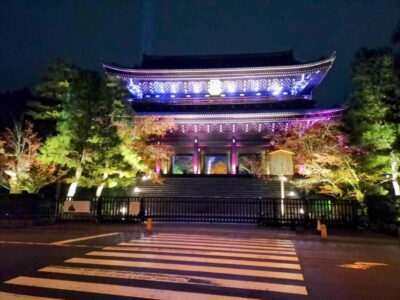 ★ 4.7Kyoto Geisha Walking Tour: Gion District & Hidden GemsFrom $252 hours
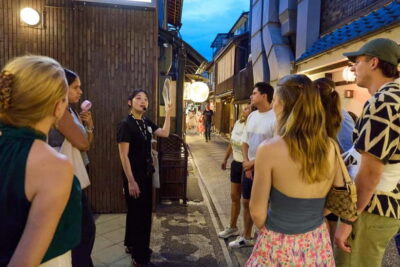 ★ 4.7Kyoto: Gion Geisha District Walking Tour – Stories of GeishaFrom $202 hours
 ★ 4.9Best of Kyoto: Gion, Geisha, Pagodas & CobblestonesFrom $242 hours
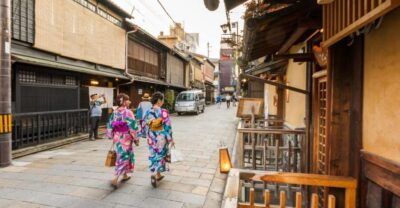 ★ 4.5Night Walk in Gion: Kyoto’s Geisha DistrictFrom $211h 40m
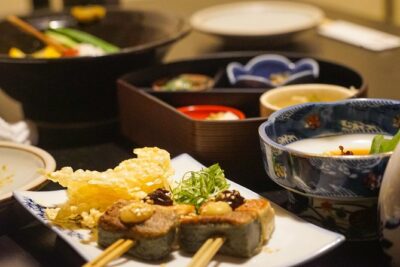 ★ 5.0Kyoto Night Foodie Tour in Gion (9+ dishes + 6 Sake tastings)From $163
 ★ 5.0Kyoto Gion Geisha District Walking Tour – The Stories of GeishaFrom $25