
Reviewed · KIMONO EXPERIENCES
Kyoto 6hr Private Guided Tour & Kimono Experience
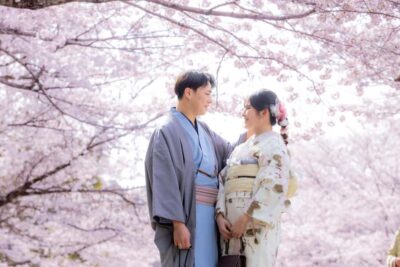
Fushimi Inari is famous for its endless red torii gates, but the best part of this Kyoto experience is learning what sits behind the picture. Your guide can point out shrine symbols, explain its ties to local culture, and show how politics changed the meaning of the site. The tour also gives you about an hour in a rented kimono, turning a standard sightseeing day into something more personal.
I like the private format, since only your group takes part and you can choose two or three sights instead of following a fixed route. I also like the practical help at Fushimi Inari, where guide Yasuko helped one guest move through the crowds with ease and made a short visit feel unhurried.
The main catch is time. Six hours sounds generous, but Kyoto’s sights are spread across the city, and transportation is not included. You will need to keep your selection tight, especially if you want time for the kimono fitting and actual visits rather than quick photo stops.
In This Review
- Key points to know before booking
- What this six-hour Kyoto experience really offers
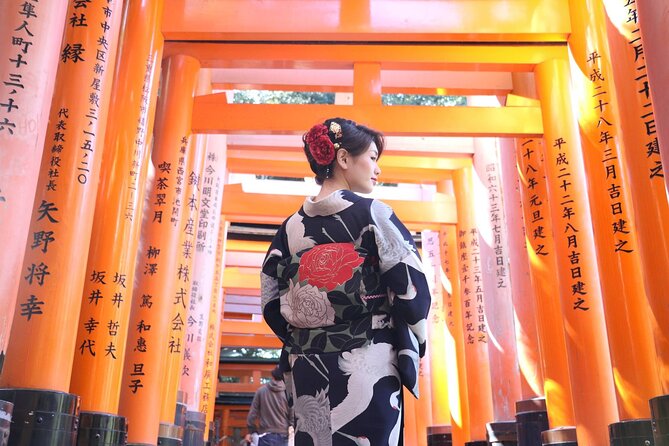
- Fushimi Inari beyond the red gates
- Kyoto’s famous temples, one choice at a time
- Gardens for quiet, thought, and careful looking
- Gion, markets, and Kyoto street life
- Kiyomizu-dera, Nijo Castle, and the classic Kyoto choices
- Arashiyama, Uji, and the cost of distance
- Price, group size, and what you really pay for
- Who should book this Kyoto tour?
- Should you book it?
- FAQ
- How long does the Kyoto tour last?
- How many sights will I visit?
- Is the tour private?
- Is transportation included?
- Are entrance fees included?
- What kimono sizes are available?
- Can I cancel for a refund?
Key points to know before booking
- Choose two or three sights: The long menu includes Fushimi Inari, Kiyomizu-dera, Gion, Kinkaku-ji, Nishiki Market, Arashiyama, and more, but you will not visit everything in one day.
- Spend about one hour in a standard kimono: The rental is an introductory plan with simple designs, and listed sizing is 150 to 170 centimeters for women and 165 to 200 centimeters for men.
- Fushimi Inari gets useful context: Your guide explains more than the torii gates, including shrine origins, symbols, local culture, and political change.
- This is a private activity: Only your own group participates, with a maximum of 15 people noted for the small-group setup.
- Budget beyond the $162.52 price: Transportation, meals, personal costs, and most entry fees are extra.
- Go early for photographs: Fushimi Inari can fill up by midday, making clear pictures and easy walking harder.
What this six-hour Kyoto experience really offers
At first glance, this looks like two different activities joined together: a kimono rental and a guided Kyoto sightseeing tour. That is exactly how you should think about it. The kimono portion gives the day a cultural touch, while the private guide helps you make sense of a city where nearly every temple has a long name and a story that is easy to miss.
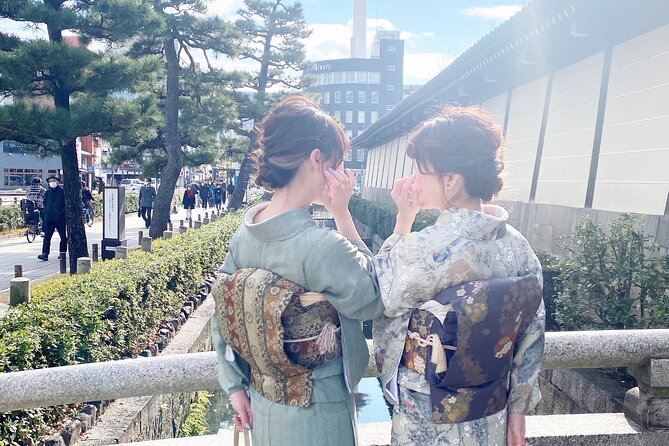
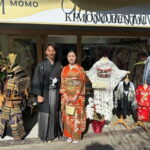
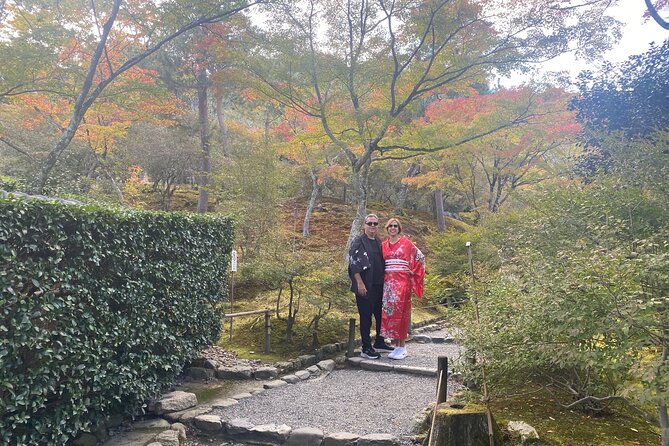
You meet your guide in Kyoto and begin with the Standard Kimono Plan at the Kyoto Kimono Rental wargo Gion Store. The designs are described as simple, cute, and elegant rather than formal ceremonial wear. Staff dress you as well as possible if the fit is not exact, but you should check the listed size ranges before paying.
The kimono portion takes about an hour from the start of the experience. That is enough time to enjoy the transformation, but it is not a full-day costume program. I would treat it as a pleasant introduction and a good way to begin a private walk through Kyoto, not as the main reason to book the experience.
After that, you and your guide select two or three places from a broad list. This flexibility is valuable, but it also calls for a clear plan. Kinkaku-ji in northern Kyoto, Fushimi Inari in the southeast, and Byodoin in Uji do not form a sensible short route together. Ask your guide to group nearby sights, unless one particular temple is your top priority.
A few more Kyoto tours and experiences worth a look
Fushimi Inari beyond the red gates
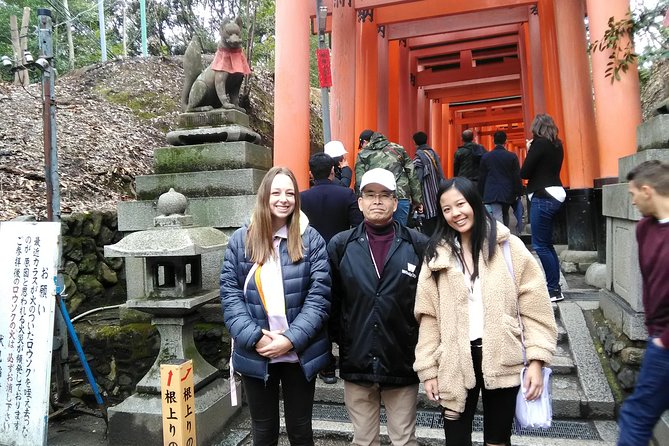
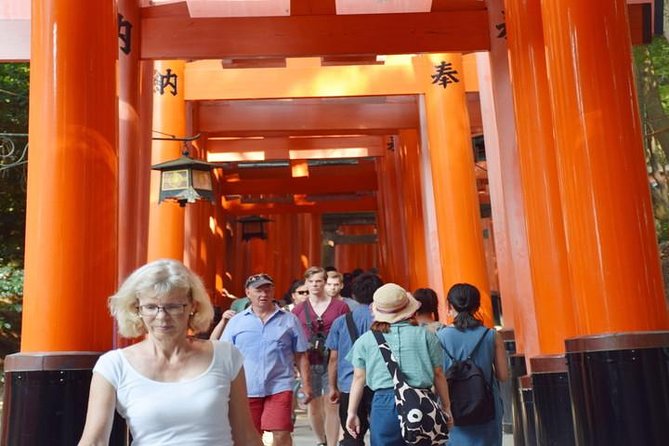
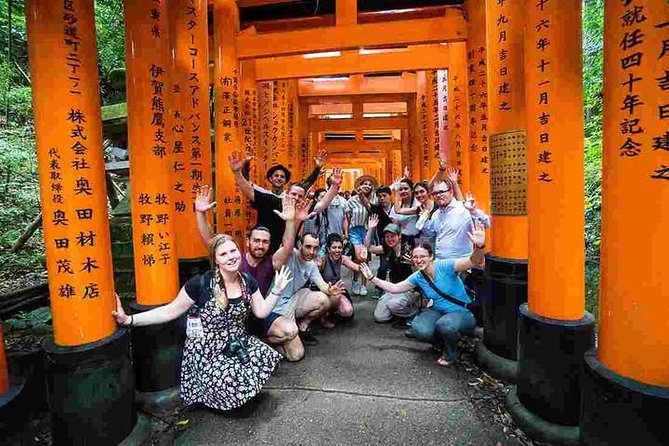
Fushimi Inari-taisha is the strongest match for the tour’s promise. The shrine is known around the world for its vermilion torii tunnels, yet a quick solo visit can reduce it to one famous photograph. A guide gives you a better chance to understand why the shrine matters and what the symbols mean.
The supplied experience information places special weight on the shrine’s connection to local culture and on the way politics changed its meaning. That is useful context in Japan, where religious sites often reflect layers of court life, state power, commerce, and daily devotion. Your guide can help you see Fushimi Inari as more than a scenic passage of gates.
Allow enough time for walking. The visit is listed at about one hour, and the crowds can slow you down. For the clearest pictures, go early. One guest specifically praised guide Yasuko for explaining things carefully and helping the group pass through the human traffic without losing its calm pace.
Fushimi Inari is free to enter, which helps the value of the tour. You are paying mainly for the guide’s time, interpretation, and local support, not for an admission ticket.
Kyoto’s famous temples, one choice at a time
The menu gives you plenty of ways to shape the day, but the short time listed at many sites is an important warning. Kinkaku-ji, Ginkaku-ji, Honen-in, Nanzen-ji, and Tofuku-ji are each listed for roughly 15 minutes, and most admission fees are not included. That schedule works for a quick look, but not for a slow temple visit.
Kinkaku-ji, the Golden Pavilion, is a Zen temple whose upper two floors are covered in gold leaf. It was first built as the retirement villa of shogun Ashikaga Yoshimitsu and later became a temple. It is one of Kyoto’s most recognizable sights, though the visit tends to focus on the pavilion and its garden views rather than a long exploration.
Ginkaku-ji, the Silver Pavilion, offers a useful contrast. Despite its name, it is not covered in silver. The temple began as the retirement villa of shogun Ashikaga Yoshimasa, who modeled it after Kinkaku-ji. Its setting along Kyoto’s eastern mountains and its dry garden make it a calmer choice for visitors interested in Zen design.
Honen-in is a small, atmospheric temple reached by a scenic approach to a moss-covered gate. Its sand mounds and quiet setting may appeal more to you than a major landmark with a long queue. Nanzen-ji, by contrast, has broad grounds and is one of Japan’s important Zen temples. It gives you more room to walk, but fitting it into a day with distant sights may be difficult.
Tofuku-ji is especially known for autumn color. If you are visiting in another season, the temple still offers an important Zen setting, but the famous seasonal display will not be the same.
Gardens for quiet, thought, and careful looking
Taizo-in, one of the subtemples of Myoshin-ji, is a good choice if gardens matter to you. Its garden is considered one of Kyoto’s best in every season, though the supplied timing allows only 15 minutes. That is enough for a focused introduction, not a long period of sitting and looking.
Ryoan-ji holds Japan’s most famous rock garden. The simple arrangement invites questions about balance, emptiness, and how much meaning you bring to what you see. It can also be crowded, so a guide is useful for giving the site context while helping you avoid spending your entire visit trying to find a quiet corner.
The route information includes Ryoan-ji twice, which appears to be a duplicate rather than two separate stops. Treat it as one possible selection when planning your day.
Shugakuin Imperial Villa is another appealing choice, but it is different from an ordinary temple visit. Built in the 17th century by Emperor Gomizuno, it is managed by the Imperial Household Agency and includes upper, middle, and lower villas. Because it lies away from central Kyoto, confirm how it fits with your chosen sights before making it one of your three selections.
Gion, markets, and Kyoto street life
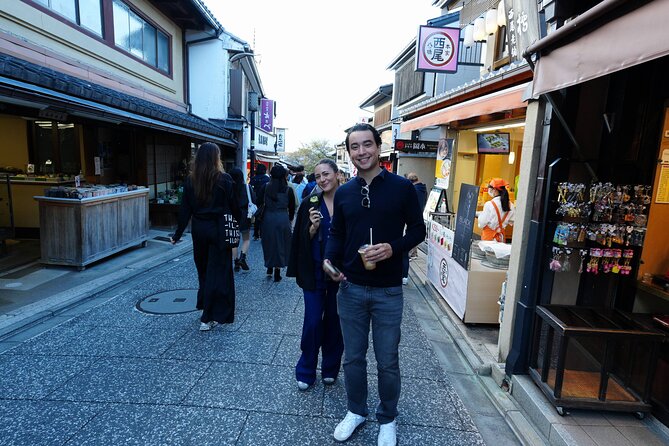
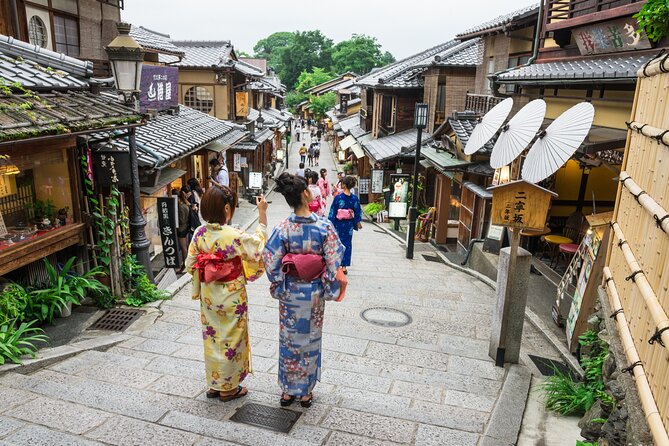
The Gion kimono shop puts you near one of Kyoto’s most atmospheric districts. A guided walk through Gion can help you handle the narrow lanes and understand the area without wandering aimlessly. The experience information also includes the Geisha District as a possible stop, though the duration is not specified.
You should approach Gion with respect. It is a living neighborhood, not a stage set. A guide can help you see the traditional streets without treating local residents or working entertainers as photo props.
Kennin-ji is close to Hanamikoji and Shijo streets. Its grounds are spacious and pleasant, with two dry gardens. The listed time is only one minute, so ask whether that timing can be adjusted if Kennin-ji is important to you. A private tour gives you room to discuss priorities, but it does not create extra hours.
Nishiki Market is known as Kyoto’s Kitchen, a narrow shopping street lined with more than 100 shops and restaurants. A ten-minute stop lets you get a taste of the place, but it will not be enough for a relaxed meal or careful shopping. Lunch is not included, so you will need to arrange food separately and account for the market’s crowded, narrow walkways.
Pontocho, the narrow dining alley beside the Kamogawa River, makes a natural add-on to Gion or Nishiki Market. It is one of Kyoto’s most atmospheric evening areas, but the information provided does not promise a meal or evening schedule. Consider it a short orientation stop rather than a guaranteed dining experience.
Other guided tours in Kyoto


Kiyomizu-dera, Nijo Castle, and the classic Kyoto choices
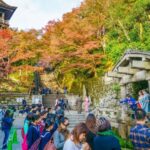
Kiyomizu-dera is among Kyoto’s best-known temples and offers a strong choice for first-time visitors. The temple has broad appeal because it combines a major historic setting with city views and a famous approach through the eastern hills. The time shown for this experience is only 10 minutes, however, which is far too brief for a full visit to the grounds.
If Kiyomizu-dera is your main goal, tell the guide before the day begins. You may need to choose it with nearby Gion rather than pairing it with Fushimi Inari or a temple on the other side of town.
Nijo Castle was built in 1603 as the Kyoto residence of Tokugawa Ieyasu, the first shogun of the Edo period. It gives you a different view of power than the city’s temples and shrines, with a focus on shogunal rule and the political center of early Edo Kyoto. The listed visit is 10 minutes, so again, think of this as a guided introduction unless additional time is agreed upon.
The Kyoto Imperial Palace was once the home of Japan’s Imperial Family until the emperor and capital moved to Tokyo in 1868. It occupies a large park setting and works well for visitors interested in court life and the former capital. Since admission fees are not generally included, check the cost before you finalize your choices.
Arashiyama, Uji, and the cost of distance
The Togetsukyo Bridge and Arashiyama Bamboo Grove are included among the possible places. The bridge, whose name means Moon Crossing Bridge, has roots reaching back to the Heian period and was reconstructed in the 1930s. The bamboo paths are attractive for a walk or bicycle ride, especially when the stalks sway in a light wind.
Arashiyama is not a quick add-on to every Kyoto route. If you choose it, pair it with nearby sights and accept that you may see fewer places overall. The same rule applies to Byodoin Temple in Uji. Its Phoenix Hall is a National Treasure and part of a UNESCO World Heritage Site, but extra travel time is expected because Uji lies outside Kyoto city.
Daitoku-ji in northern Kyoto offers a different kind of visit, with temples within a larger temple complex and several meditative gardens. Kokedera, also known as Saiho-ji or the Moss Temple, is another special choice. It is a UNESCO World Heritage Site, but the supplied details do not state the admission process or time needed, so confirm those points before selecting it.
Price, group size, and what you really pay for
The price is $162.52 per person. That is not a bargain sightseeing shuttle, because transportation, entrance fees, lunch, and personal expenses are excluded. It can still be fair value for a private half-day, especially if you are a couple, family, or small group that wants a guide to shape the visit around your interests.
The biggest value comes from interpretation and planning. You are not paying to race through 15 listed stops. You are paying for access to a local English-speaking guide, help choosing a sensible pair or trio of sights, and cultural explanation that can make Fushimi Inari or a Zen garden more meaningful.
The group limit is listed as 15, while the booking details also describe the activity as private, with only your group participating. The private arrangement is the point to rely on for your booking, but confirm the exact group setup if your party is large. You cannot combine tour groups.
Transportation is your responsibility, and the inclusion information says you meet the guide in Kyoto on foot. The tour page also notes pickup as a feature, so clarify the meeting or pickup arrangement after booking. This matters because a taxi or train across Kyoto can affect both your budget and the number of sights you can see.
Confirmation is sent within 48 hours, subject to availability. Most people can take part, and service animals are allowed. Free cancellation is available up to 24 hours before the start time, while later cancellations and changes are not accepted.
Who should book this Kyoto tour?
I would choose this experience if you want a guide but do not want a rigid sightseeing bus. It suits first-time Kyoto visitors who need help sorting the city’s enormous choice of temples, as well as returning visitors who want a more focused look at Fushimi Inari, Gion, or Zen gardens.
It is also a good fit for people who enjoy cultural explanation more than collecting entrance tickets. The kimono adds a memorable visual element, and the private format gives you a chance to ask questions without waiting for a large coach group.
I would be cautious if you want to see many landmarks in one day. The long list may look ambitious, but you choose only two or three sights, and some are far apart. I would also reconsider if you need a fully packaged day with transport, meals, and admissions included.
Should you book it?
Book this tour if you want a flexible Kyoto introduction built around two or three priorities, with Fushimi Inari as the strongest choice. Go early if photography matters, and ask the guide to group nearby sights so your six hours are spent seeing Kyoto rather than crossing it.
The kimono is a pleasant extra, not the central attraction. For a private guide, cultural explanation, and help handling one of Kyoto’s busiest shrines, the price can make sense. Just budget for transportation and admission fees, and do not try to turn the long menu of possible stops into a checklist.
FAQ
How long does the Kyoto tour last?
The experience lasts approximately six hours. The kimono portion takes about one hour from the tour start, and the remaining time is used for the two or three sights selected with your guide.
How many sights will I visit?
You will choose two or three sights with your guide from the available options. You will not visit every place listed in the possible stops.
Is the tour private?
Yes. The booking information describes it as a private activity, with only your group participating. It also notes a maximum of 15 people for the small-group format.
Is transportation included?
No. Transportation fees are not included, and the inclusions state that you meet your guide in Kyoto on foot. Pickup is also shown as an available feature, so confirm the exact arrangement for your booking.
Are entrance fees included?
Most entrance fees are not included. Guide entry fees are covered only for sights listed under the expected inclusions, so you should budget for admissions and confirm the details for your chosen sites.
What kimono sizes are available?
The stated ranges are 150 to 170 centimeters for women and 165 to 200 centimeters for men. If the fit is not exact, professional staff will dress you in the kimono as well as possible.
Can I cancel for a refund?
You can cancel at least 24 hours before the experience start time for a full refund. Cancellations or changes made less than 24 hours before the start time are not accepted for a refund.
More Private Tours in Kyoto


More Guided Tours in Kyoto
More Kimono Experiences in Kyoto
More tours in Kyoto we've reviewed





Kimono Experiences, compared.
 ★ 5.0Kimono Tea Ceremony at Kyoto Maikoya, NISHIKIFrom $65
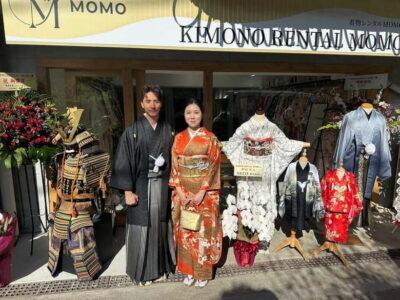 ★ 4.8Kyoto: Kimono Rental with Hairstyling and AccessoriesFrom $211 day
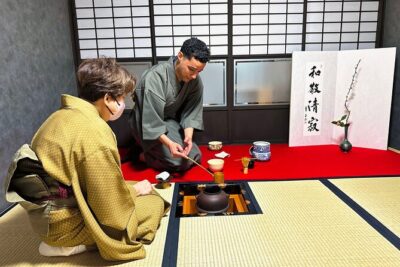 ★ 5.0KYOTO Tea Ceremony with kimono near by Imamiya Jinjya ShrineFrom $99
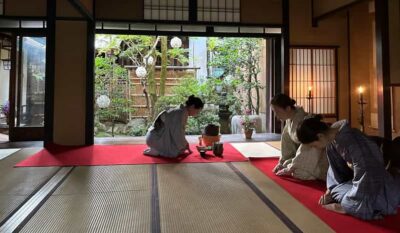 ★ 4.2Kimono & Tea Ceremony Experience in a Kyoto Cultural AssetFrom $126
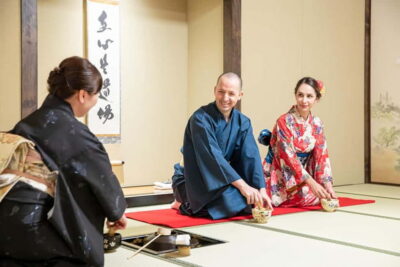 ★ 4.9Kyoto: Kimono Tea Ceremony with Matcha and SweetFrom $661h 30m
 ★ 4.7Enjoy Kyoto Summer in Traditional Kimono / YukataFrom $29