
Reviewed · ARASHIYAMA & BAMBOO TOURS
Kyoto Arashiyama & Sagano Bamboo Private Tour with Government-Licensed Guide
Arashiyama is much more than a quick photograph in a bamboo grove. This private six-hour walking tour links Kyoto’s famous sights with quieter temples, hillside paths, local food advice, and the kind of historical context that helps the area make sense. Guides such as Kazuo, Kazz, Tomo, Shoji, Satoko, Ken, and Ted have led versions of the day, though your assigned guide will depend on the date.
I like the freedom to choose three or four sites instead of being marched through a fixed checklist. I also like the human scale: you can ask questions, slow down for an injury, stop for a snack, or adjust the plan when the crowds become tiring. The main caution is that the advertised list is far wider than any six-hour walking tour can cover. Confirm your exact route before you go, especially if you are hoping to visit distant places such as Shugakuin, Katsura, Kurama, or Kibune.
In This Review
- Key points to know before booking
- What this private Arashiyama tour is really offering
- Starting at Togetsukyo Bridge and Arashiyama
- Walking through the famous bamboo grove
- Tenryuji, Okochi Sanso, and the best nearby additions
- Adashino and Otagi, two very different memorial temples
- The distant stops need careful planning
- How the six hours feel on foot
- How the guides shape the experience
- Is $157.82 per person good value?
- Who should book this Kyoto walking tour?
- Should you book it?
- FAQ
- How long does the Kyoto Arashiyama private tour last?
- Is the tour private?
- How many sights can I visit?
- Is hotel pickup included?
- Are entrance fees included?
- Is lunch included?
- Does the tour include an English-speaking guide?
- Can children or people with mobility concerns participate?
- What is the cancellation policy?
Key points to know before booking
- The bamboo grove is only one part of the day: Pair it with Tenryuji, Jojakkoji, Gioji, or another temple for a fuller sense of Arashiyama.
- You choose three or four stops: The guide can shape the route around gardens, history, family interests, quieter places, or food.
- It is genuinely private: Only your own group takes part, so questions and walking pace are easier to manage.
- You pay extra for transport and admission: The price covers the licensed guide, but not entrance fees, lunch, or transportation for you and the guide.
- Crowds change the experience: Cherry blossom, autumn color, rain, and summer heat all affect walking comfort and timing.
- The route needs clarification: Several places in the description are in other parts of Kyoto and cannot sensibly fit into one ordinary Arashiyama walk.
What this private Arashiyama tour is really offering
The tour costs $157.82 per person and lasts about six hours. That price buys a private, licensed English-speaking guide and a customizable walking day, not a private vehicle or an all-inclusive sightseeing package.
I see the value most clearly for first-time visitors who want help making choices. Arashiyama has a famous core, but it also spreads through temple lanes, wooded slopes, river paths, and residential streets. A good guide can explain which places deserve your energy and which can be skipped when the clock or weather turns against you.
The private format matters if your group has children, older relatives, different interests, or a slower walker. One guide, Kazuo Sumi, was praised for adjusting the pace for a person recovering from earlier injuries. Other guides helped families include the monkey park, while some built in time for lunch and snacks. Those are small touches, but they are hard to arrange on a rigid group outing.
The experience has a 4.8 rating from 49 reviews, with 98 percent recommending it. That is a strong record, but it does not remove the need to choose your route carefully. One unhappy customer found the bamboo forest attractive but felt the rest of the day offered too little and that the guide could not answer basic questions. Your experience will depend heavily on the guide assigned and on how clearly you set your goals in advance.
A few more Kyoto tours and experiences worth a look
Starting at Togetsukyo Bridge and Arashiyama
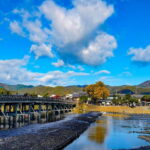
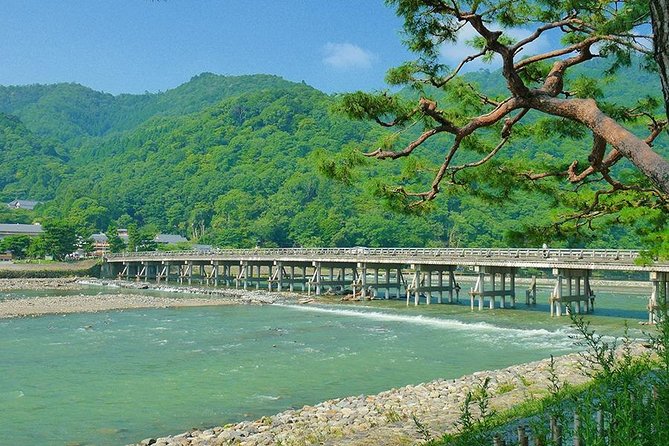
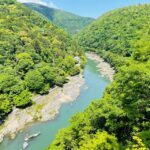
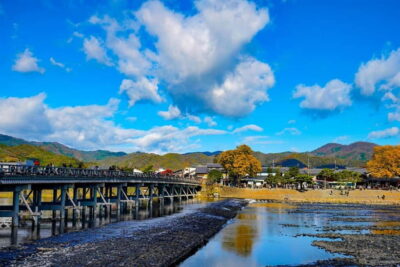
Togetsukyo Bridge is the natural place to get your bearings. Its name means Moon Crossing Bridge, and the view works because the bridge, river, and wooded hills come together in one simple picture. The bridge dates back to the Heian Period in origin, though the current structure was rebuilt in the 1930s.
The surrounding district is easy to like and easy to underestimate. Shops, restaurants, pleasure boats, and temple entrances crowd the area around the bridge. During cherry blossom season and autumn color, the riverside trees and mountain backdrop are lovely, but the same beauty draws large numbers of people.
The official schedule gives about 20 minutes to Arashiyama and free admission to the bridge. In practice, your guide may use this opening to explain the district and set the pace rather than treat it as a separate major attraction. Ask early if you want the tour to focus on gardens, religious art, photography, food, or quieter lanes.
Walking through the famous bamboo grove
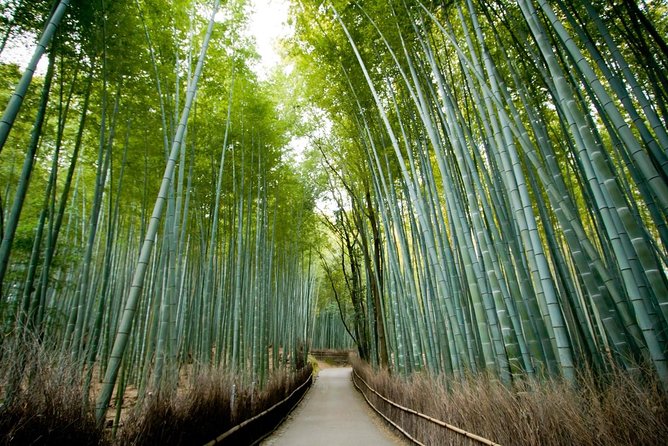
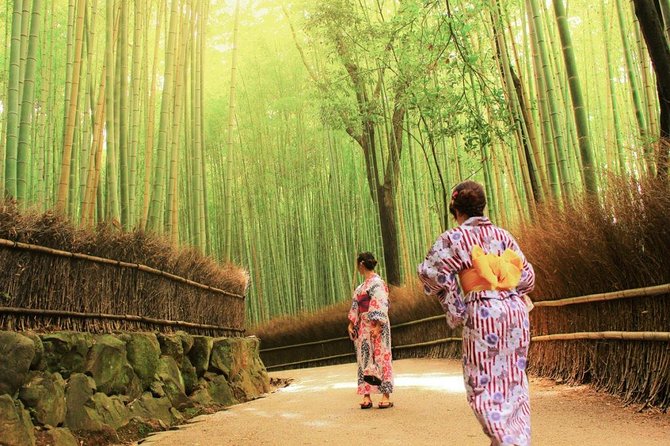
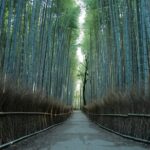
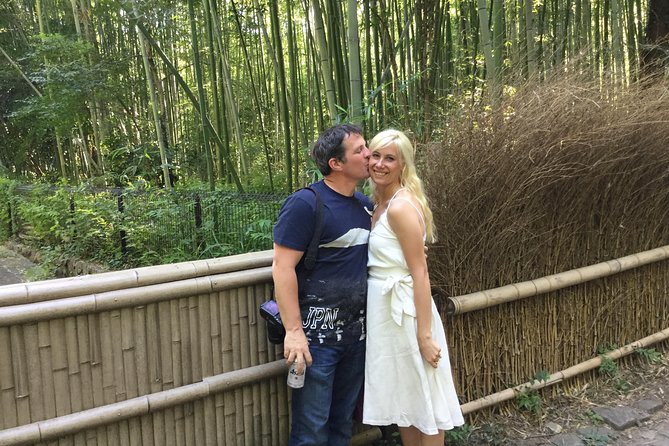
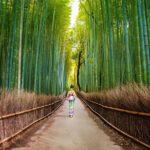
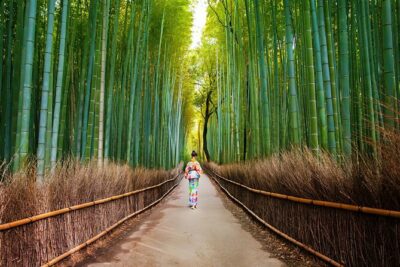
The Bamboo Forest Street is the image most people carry home from Arashiyama. Tall bamboo rises on both sides of the path, and a light breeze can make the stalks sway and creak above you. The grove is especially attractive in softer weather, though it can feel less peaceful when the path is packed.
Admission is free. The walk itself is not long enough to fill six hours, which is why this tour makes sense only when the bamboo is joined to temples and other parts of Sagano. A guide adds value here by explaining how bamboo has long been used for baskets, cups, boxes, mats, and other household goods.
Do not expect a private bamboo forest. This is a public path and one of Kyoto’s best-known sights. If avoiding the thickest crowds matters to you, tell the guide before the day begins. Tomo and Bell were specifically praised for finding calmer places and reducing time in the most crowded stretches, but crowd control can never be guaranteed.
Tenryuji, Okochi Sanso, and the best nearby additions
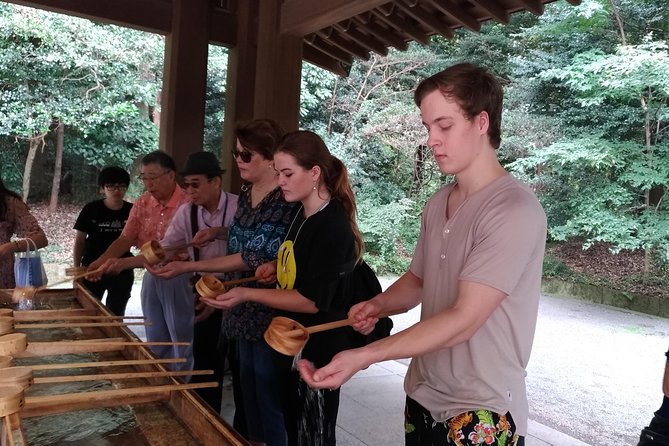
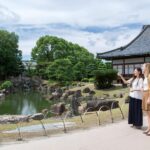
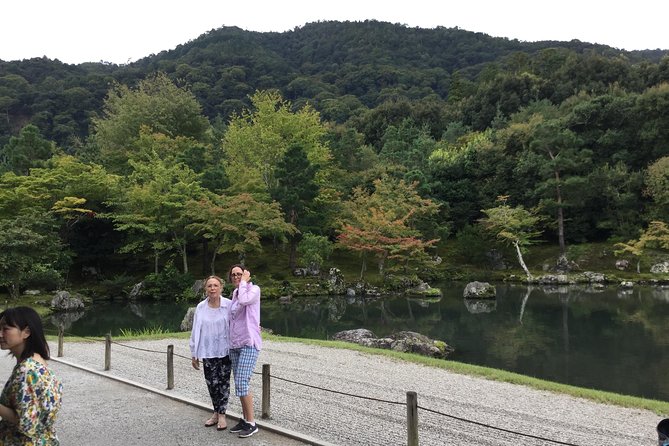
Tenryuji is the major temple of Arashiyama and one of Kyoto’s five great Zen temples. Founded in 1339, it is also a UNESCO World Heritage Site. The gardens are the real reason to allow time here, with walking paths and carefully arranged views that connect the temple buildings to the hills behind them.
The temple is a stronger use of your time than simply rushing through the bamboo grove. Its setting gives you a chance to understand how Japanese garden design uses water, borrowed scenery, trees, and open space. Entrance fees are not included, so ask your guide which sections require payment and how much time the visit will take.
Okochi Sanso Garden sits behind the bamboo grove and was once the villa of actor Okochi Denjiro, who lived from 1896 to 1962. The grounds include gardens, tea houses, gates, and living quarters, though the buildings are viewed only from outside. This is a good choice if you want a garden stop with a quieter mood, but it is still an additional paid attraction.
Jojakkoji is smaller and more restrained than Tenryuji. Moss and maple trees line the stairs, and the hillside setting gives you views over Kyoto. It is particularly appealing in autumn, when the trees color the paths and slopes.
Nisonin offers a similar hillside experience with somewhat larger buildings. Its approach passes beneath overhanging trees, creating a calm transition from the busier roads. The upper grounds provide city views, and the temple’s ninth-century origins give your guide useful material for explaining Tendai Buddhism and Kyoto’s long religious tradition.
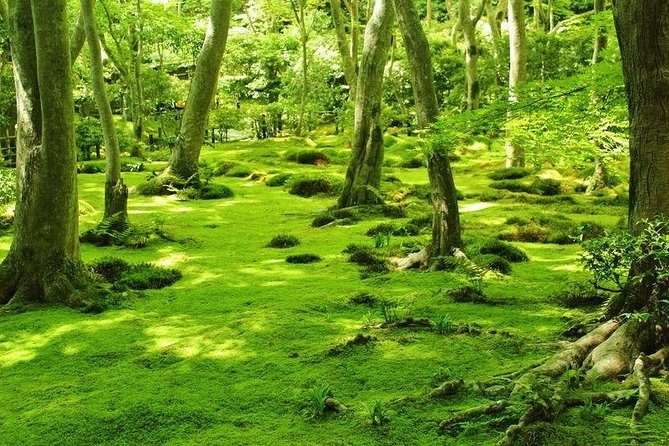
Gioji is the most intimate of the three. Its moss garden, maple canopy, thatched gate, and small hall create a compact scene rather than a grand temple complex. Choose Gioji if you care more about mood, texture, and quiet than large buildings.
Adashino and Otagi, two very different memorial temples
Adashino Nenbutsuji sits at the end of Saga-Toriimoto Preserved Street. The temple began in the early ninth century, when Kobo Daishi placed stone figures here for the souls of the dead. Hundreds of stone statues now cover the grounds, giving the place a solemn feel. A short bamboo path at the back adds another natural section without the scale of the main grove.
Otagi Nenbutsuji is about a ten-minute walk farther north. It is known for roughly 1,200 stone rakan figures, each with a different expression. The statues were made in the 1980s and early 1990s, so this is not an ancient collection in the usual sense, but the setting on a wooded mountain slope makes it memorable.
These temples suit you if you want something less polished and less crowded than the main Arashiyama corridor. They are not the best choices for anyone who wants to minimize stairs or walking. Paths through Sagano can also become slippery in rain, and one autumn itinerary was made harder by wet slopes.
Other guided tours in Kyoto

The distant stops need careful planning
The list of possible sights includes places far beyond the normal Arashiyama and Sagano circuit. Shugakuin Imperial Villa lies in northeastern Kyoto, while Katsura Imperial Villa is in the southwest. Kurama, Yoshimine-dera, and Kibune are also separate destinations with their own travel demands.
Shugakuin was built between 1655 and 1659 for Emperor Gomizuno and includes lower, middle, and upper villa areas. Its gardens and traditional buildings are important, but admission is not included. Katsura Imperial Villa is famous for its architecture and garden design, and visits require joining a set tour. Buildings are seen from outside, photography is limited to designated places, and English tours are available.
Kurama is a mountain town less than an hour from central Kyoto. It is known for Kurama-dera and Kurama Onsen, where day visitors pay 2,500 yen for all baths or 1,000 yen for the outdoor bath. A 15-minute stop at Kurama-dera, as shown in the schedule, would only give you a taste of the area.
Yoshimine-dera occupies Kyoto’s western mountains and spreads up a slope with views toward the city. Daikakuji, in northern Sagano, began as Emperor Saga’s detached palace before becoming a Shingon Buddhist temple in 876. Its pond, pagoda, imperial connections, and role in peace talks give it real historical weight.
Kibune River leads toward Kifune Shrine, dedicated to water and rain. At the shrine, you can dip a paper fortune into water to reveal its message. The inner shrine lies another kilometer up the valley, so Kibune is not a quick add-on to a standard Arashiyama visit.
These places are worthwhile, but the practical point is simple: three or four sites in six hours means choices. If the booking page lists many attractions, do not assume all of them are included in one route. Contact the provider and confirm the meeting point, order of stops, transport, and admission costs.
How the six hours feel on foot
The tour includes meeting the guide in Kyoto, but pickup and drop-off are on foot. There is no private vehicle. Transportation costs for you and your guide are extra, as are lunch, entrance fees, and personal purchases.
That arrangement can work well in Arashiyama, where walking between the bridge, bamboo grove, Tenryuji, and nearby temples is part of the experience. It becomes less convenient if you select distant villas or mountain towns. In that case, trains, buses, or taxis will use part of your six-hour window and add to the cost.
Wear shoes with a firm grip. The route can include stairs and hillside paths, and rain makes them slippery. Summer can be hot and humid, while autumn color brings heavier crowds. A guide can adjust the pace, but you should still treat this as an active day outdoors rather than a gentle vehicle tour.
Lunch is not included. That is useful if you want local advice instead of a fixed restaurant, and several guides have helped people find food or choose a place for a break. Build lunch into the plan from the start so the meal does not get squeezed out by temple visits.
How the guides shape the experience
This tour’s strongest feature is the person walking beside you. Kazuo Sumi was praised for careful planning before the tour, flexible routing, historical explanations, and help finding a local artist. Kazz was valued for food suggestions and for adjusting the route to personal interests. Ken provided a one-page Kyoto history sheet and helped a family include the monkey park.
Shoji guided a rainy walk through the bamboo forest and traditional neighborhoods, followed by a local lunch. Satoko connected well with a family whose children especially enjoyed the monkeys. Tomo and Bell helped reduce time in the most crowded areas.
Those details point to the right way to use the tour. Do not arrive with a vague request to see everything. Tell the guide what matters most, such as gardens, Buddhist temples, family-friendly stops, photography, quiet streets, food, or a slower pace. A private guide cannot fix an impossible route, but clear priorities can turn a scattered list into a satisfying day.
The guide is also your interpreter of small things: why a garden is arranged a certain way, how a former palace became a temple, why bamboo craft matters, or what makes a moss garden different from a formal Zen garden. If you want detailed answers, bring questions. Guide quality can vary, and one poor experience showed that a licensed guide is not automatically the perfect match for every subject.
Is $157.82 per person good value?
For a private six-hour tour, the price is reasonable if your group values time, conversation, and help with decisions. A couple pays more per person than a larger private group, but group discounts are offered, so the cost may work better for families or friends traveling together.
The price is less attractive if you only want to see the bamboo grove. That visit is free and can be done without a guide. The fee earns its keep when you use the guide for temple context, route planning, local food advice, crowd avoidance, and a pace suited to your group.
Remember the extra costs. Admission fees are not included, transportation is not included, lunch is not included, and the guide’s entrance fees are covered only for sights listed among the expected stops. Ask for a cost estimate if you plan to visit paid temples or travel beyond Arashiyama.
Free cancellation is available up to 24 hours before the start time. Poor weather can lead to a different date or a full refund, since the experience requires good weather.
Who should book this Kyoto walking tour?
I would choose this tour for a first visit to Kyoto, a family that wants flexibility, a couple seeking quieter temple stops, or anyone who prefers conversation to a recorded audio guide. It also suits you if you want help connecting famous sights with places you might otherwise miss.
It is less suitable if you dislike walking, want guaranteed access to every listed attraction, or need a private vehicle. It may also be poor value for an independent visitor who only wants one hour in the bamboo grove.
Before booking, send three priorities and one limitation. For example: bamboo forest, Tenryuji, and Gioji; no steep hills. Or: children want monkeys, adults want gardens, and lunch should be included in the timing. That gives the guide a useful starting point.
Should you book it?
Book this private Arashiyama and Sagano tour if you want the famous bamboo grove to be part of a wider Kyoto day, not the whole day. The best version combines one major sight such as Tenryuji with two quieter places such as Jojakkoji, Gioji, Nisonin, Adashino, or Otagi.
I would not book it without confirming the route. The supplied attraction list mixes nearby Arashiyama temples with distant imperial villas and mountain towns. Once the plan is narrowed to three or four realistic stops, the private guide format offers strong value, useful local judgment, and a more personal look at western Kyoto.
FAQ
How long does the Kyoto Arashiyama private tour last?
The tour lasts approximately six hours.
Is the tour private?
Yes. Only your own group participates in the private activity.
How many sights can I visit?
The tour is customizable and covers three or four sites from the available choices.
Is hotel pickup included?
The guide meets you in Kyoto, but pickup and drop-off are on foot. A private vehicle is not included.
Are entrance fees included?
No. Entrance fees are paid by you. Transportation costs for you and the guide, lunch, and personal expenses are also excluded.
Is lunch included?
No. You pay for your own lunch. The guide may help with local food suggestions and timing.
Does the tour include an English-speaking guide?
Yes. A licensed local English-speaking guide is included.
Can children or people with mobility concerns participate?
Most people can participate, and service animals are allowed. The tour includes walking, stairs, and some hillside paths, so discuss pace and route needs with the guide in advance.
What is the cancellation policy?
You can cancel at least 24 hours before the start time for a full refund. Cancellations or changes made less than 24 hours before the start time are not accepted for a refund. If poor weather cancels the experience, you are offered another date or a full refund.
More Private Tours in Kyoto
More Guided Tours in Kyoto
More Arashiyama & Bamboo Tours in Kyoto
More tours in Kyoto we've reviewed

Arashiyama & Bamboo Tours, compared.
 ★ 4.8Kyoto: Fushimi Inari, Kinkakuji, Bamboo Grove 1 Day Bus TourFrom $122510 minutes - 9 hours
 ★ 4.1Osaka/Kyoto:Kinkakuji,Arashiyama,FushimiInariShrine,NaraParkFrom $66
 ★ 4.7Kyoto/Osaka: Nara, Fushimi Inari Taisha, Arashiyama Bus TourFrom $529 - 10 hours
 ★ 5.0Kyoto Arashiyama Walking Tour: Bamboo, Monkeys, Gardens & SecretsFrom $65
 ★ 4.8Arashiyama Bamboo, Temple, Monkeys, or Secret Sake BreweryFrom $875 hours - 330 minutes
 ★ 4.4Osaka/Kyoto: Arashiyama, Nara & Fushimi Inari Shrine w/LunchFrom $61