
Reviewed · FUSHIMI INARI TOURS
Kyoto: Fushimi Inari Shrine and Tofukuji Temple E-Bike Tour
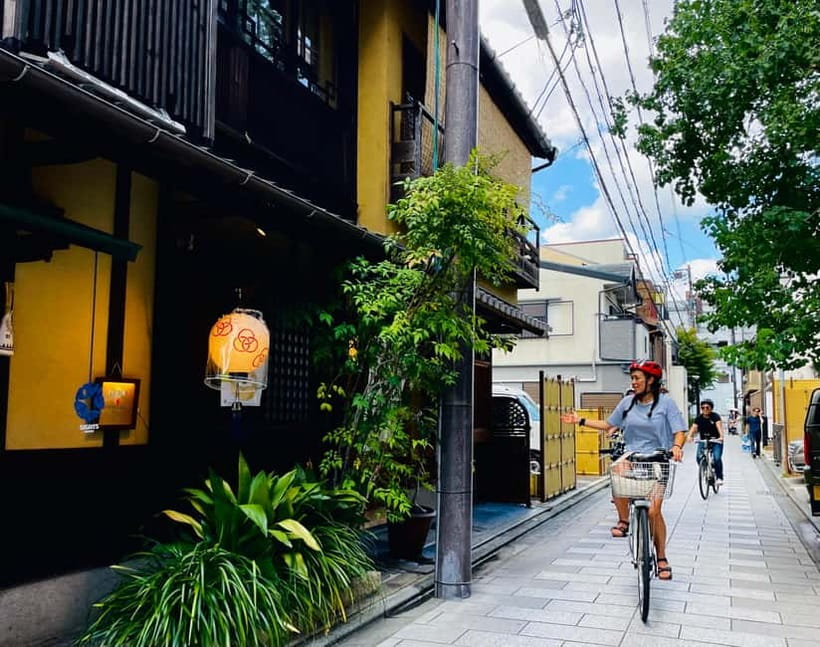
Kyoto’s famous shrines are easy to reach by train, but an e-bike tour lets you connect them with the city between the sights. This four-hour ride starts near Higashiyama-Sanjyo, passes through Gion and quieter residential streets, then reaches Fushimi Inari Shrine and Tofukuji Temple.
I like the mix of major landmarks and ordinary Kyoto, especially the ride beside rivers and through streets you might otherwise miss. I also like the small group, limited to eight, and guide Maki’s clear English, humor, personal stories, and knack for explaining Shinto customs, Buddhism, geisha culture, and daily life.
The main consideration is time. Four hours gives you a useful introduction, but the stops are not leisurely full-day visits. If you want to climb far up Fushimi Inari’s mountain or spend hours in every temple garden, you may want to return on your own.
In This Review
- Key points to know before you ride
- Why an e-bike is a smart way to see southern Kyoto
- Starting near Higashiyama-Sanjyo
- Gion, geisha customs, and everyday Kyoto
- Fushimi Inari Shrine and the meaning of the torii gates
- Tofukuji Temple and a quieter Zen pause
- The ride back beside the river
- Maki’s guiding style
- Is the $83 price worthwhile?
- Who should book this Kyoto e-bike tour?
- Practical details that affect your day
- Should you book it?
- FAQ
- How long does the Kyoto e-bike tour last?
- Where does the tour meet?
- Is the tour conducted in English?
- What is included in the price?
- Is lunch included?
- What should I bring?
- Can children join the tour?
- Can I cancel the booking?
Key points to know before you ride
- Fushimi Inari without the usual transport shuffle: Reach Kyoto’s famous torii gates by bicycle rather than spending more time on trains and crowded streets.
- Maki brings the cultural context: Expect stories about Shinto, Buddhism, geisha traditions, samurai, customs, and modern Kyoto life.
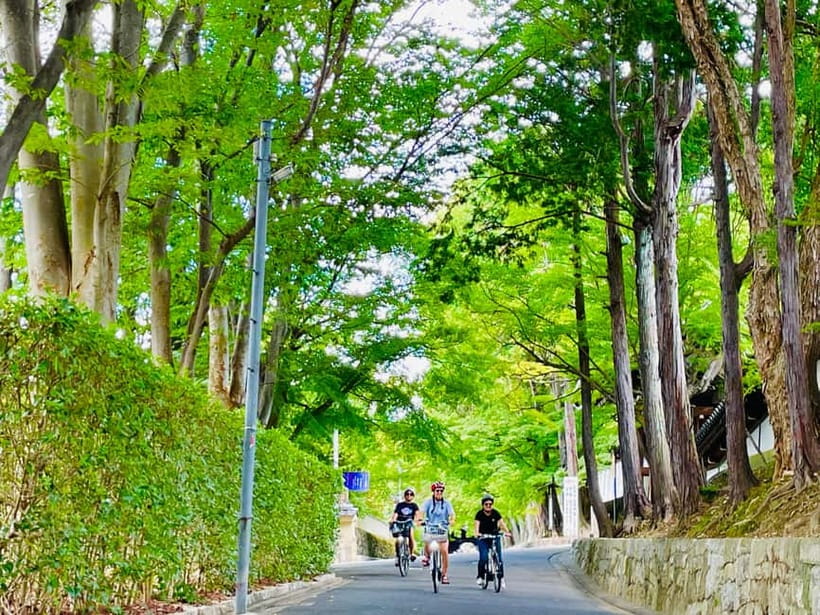
- Quiet streets are part of the route: The ride includes residential lanes, river paths, and less-visited shrines and temples.
- Electric assistance keeps the pace manageable: The bikes help on steeper sections and when your legs tire later in the ride.
- Tofukuji supplies a calm pause: Time in the Zen garden gives the tour a quieter rhythm after cycling and sightseeing.
- Best for active visitors aged 12 and older: You need to be comfortable with a mix of cycling and walking, including some riding in busy areas.
Why an e-bike is a smart way to see southern Kyoto
Kyoto can look compact on a map, yet its shrines, temples, shopping lanes, and neighborhoods spread across a broad city basin. Public transport works well, but a short ride can give you a much better sense of how the famous places fit into everyday life.
The electric bikes make the route less demanding than a standard bicycle tour. You still pedal, but the motor helps on uphill sections and takes the edge off after several hours. Riders describe the bikes as clean, sturdy, well maintained, and easy to use after the introductory lesson.
That matters because the tour is not just a ride from one attraction to another. You move through a mix of quieter streets, busier roads, temple grounds, and riverside routes. The electric assist gives you enough energy to pay attention to the city instead of focusing only on the next hill.
You should still be comfortable riding a bicycle in an urban setting. The guide explains how to ride in Japan and leads the group through the route, but you will encounter some busy areas. The group stays small, which makes it easier to follow directions and ask questions.
A few more Kyoto tours and experiences worth a look

Starting near Higashiyama-Sanjyo
The meeting point is Pedal Adventure Kyoto, at a temple near Higashiyama-Sanjyo. The tour begins with an orientation to the bike and basic riding rules in Japan. This is useful even if you cycle often, since city traffic patterns and road etiquette may differ from what you know at home.
Expect a practical start rather than a grand ceremony. You receive your e-bike, helmet, and safety guidance, then get moving with the group. The first part is important because it sets the pace for the rest of the morning or afternoon.
If you are nervous about riding on roads, tell the guide early. Maki has been praised for choosing side streets when possible, giving clear directions, and taking care with the group in busier sections. Still, this is an urban cycling experience, not a traffic-free park ride.
Wear comfortable clothes and shoes that work for both pedaling and walking. Sunscreen is sensible, and a water bottle is recommended even though water is included. The provider also supplies a snack, which helps keep the ride comfortable without adding a separate lunch stop.
Gion, geisha customs, and everyday Kyoto
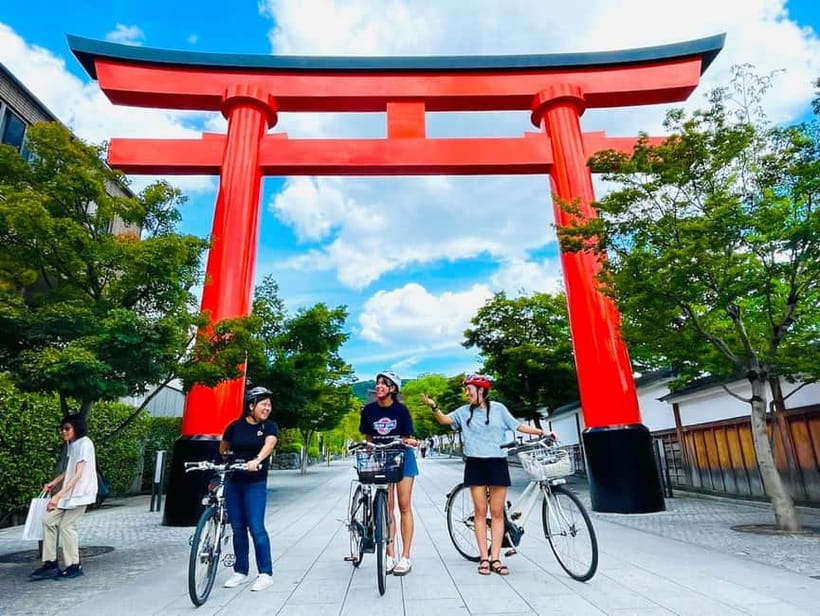
The route passes through Gion, Kyoto’s best-known traditional district. This is a good place to hear about geisha culture and local customs, but the value comes from looking beyond the postcard view.
Gion is not simply a stage set of wooden buildings. It is also a working district with residents, businesses, narrow lanes, and rules about respectful behavior. A guide can explain the difference between what you see as a visitor and what the area means to the people who live and work there.
Maki’s style is a major part of the experience. She uses humor, personal stories, visual material such as a picture binder, and clear explanations to make complicated subjects easier to follow. Her approach suits families and teenagers especially well because the cultural information does not feel like a formal lecture.
The route then moves into suburban and residential parts of Kyoto. This is where the tour earns its place in a busy itinerary. You see the ordinary side of the city, including local streets and smaller religious sites that are easy to pass by when you travel only between major stations.
Cycling also changes your pace. On foot, you may focus on the next intersection. In a taxi or bus, you see very little between stops. On a bicycle, you have time to notice the shift from historic districts to residential areas, while still covering enough ground to reach southern Kyoto.
Fushimi Inari Shrine and the meaning of the torii gates
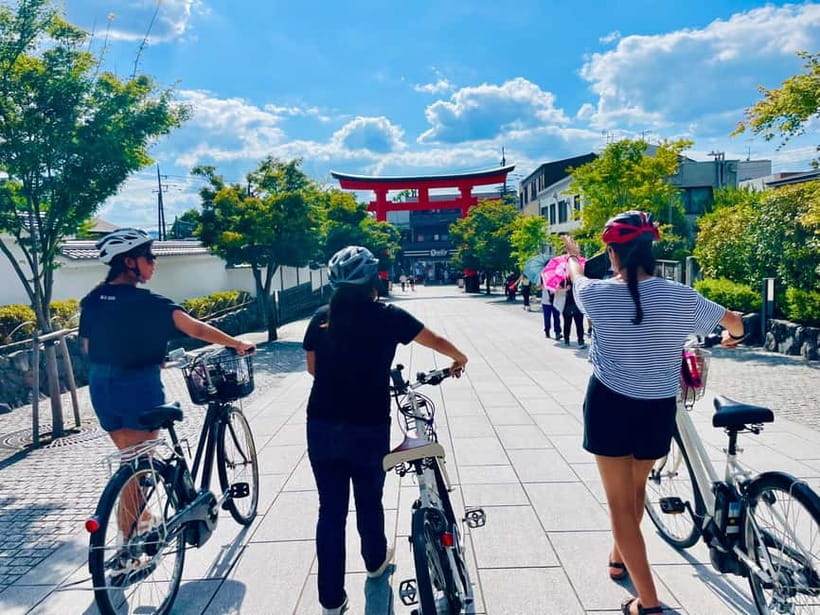
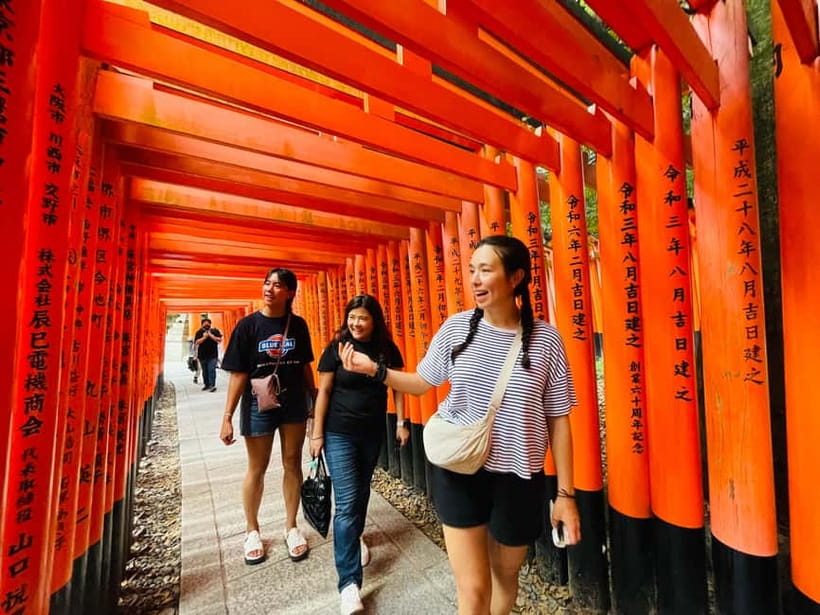
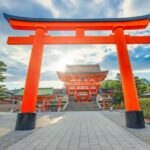
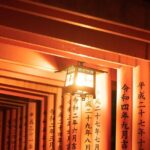
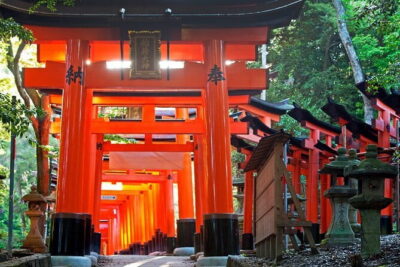
Fushimi Inari is the tour’s headline stop. It is one of Japan’s most recognized religious sites, famous for its long corridors of orange torii gates climbing the wooded slopes behind the shrine.
The shrine is dedicated to Inari, a Shinto deity linked with rice, prosperity, and commerce. The torii gates are donated by individuals and businesses, which helps explain why there are so many of them and why each carries an inscription.
Your guide explains the site’s history, the basic ideas of Shinto, and how to behave at a shrine. That context makes the visit more meaningful than simply photographing the gates. You learn what you are looking at, why the approach matters, and how Shinto differs from Buddhism.
A practical warning: Fushimi Inari can be crowded, especially around the lower gates. The tour helps by arriving by bike and by giving you an explanation of the site, but it cannot remove the crowds. You should also understand that a four-hour tour does not promise a full climb to the summit.
The amount of time at the shrine can vary with the group’s cycling pace. One participant felt the stop was shorter than ideal after delays earlier in the ride. That is a fair limitation to keep in mind. If Fushimi Inari is your top priority, plan another visit when you can explore at your own speed.
Still, the stop works well within a half-day design. You get the key setting, the cultural explanation, and a chance to see the famous gates without giving up the rest of the route.
Tofukuji Temple and a quieter Zen pause
Tofukuji Temple offers a useful contrast to Fushimi Inari. After the color and movement of the torii gates, the temple’s Zen garden gives the group a chance to slow down.
The stop is not just another item to tick off. Your guide explains the place and allows time to sit, look, and take in the quiet. That pause is especially welcome if you are visiting Kyoto during a packed sightseeing schedule.
Tofukuji is also useful for understanding the difference between the two main religious traditions introduced on the tour. Fushimi Inari gives you a clear Shinto setting, while Tofukuji lets you consider Buddhist temple design and Zen practice. You do not need prior knowledge to follow the discussion.
The garden stop may be the most restful part of the route. It gives you a few minutes without constant movement or photography. If you like learning through atmosphere as well as facts, this balance is one of the tour’s strongest features.
A few more Kyoto tours and experiences worth a look


The ride back beside the river
The return route includes a scenic ride along the river. It provides a pleasant finish and gives your legs a break from the more demanding parts of the route.
This final stretch also shows why the bicycle format works. You are not simply retracing your steps by train. You return through a different slice of Kyoto, with water, streets, and local surroundings passing at a pace that lets you stay aware of the city.
The ride back is described as easy and comfortable, but the tour still requires basic stamina. You will be cycling for part of four hours, stopping at sights, and walking around temple and shrine grounds. Comfortable clothing is not a minor detail here.
Maki’s guiding style
The guide can make or break a city tour, and Maki receives unusually strong praise for several specific reasons. She speaks excellent English, keeps the mood light, and explains subjects that can otherwise seem confusing to first-time visitors.
Her strongest skill is connecting facts to stories. She covers Japanese history, religion, infrastructure, customs, samurai conflicts, geisha culture, and modern life. She also shares personal experiences, which gives the information a local point of view without turning the tour into a classroom.
Maki is attentive to different ages and interests. Families with teenagers have found plenty to enjoy, while adults can ask detailed questions about traditions and daily life. She also takes photographs for the group, a useful extra if you want pictures of everyone together.
One minor practical issue is that explanations happen after the group stops, rather than continuously while riding. In a larger group, some people may need to gather close to hear every word. The maximum of eight participants keeps this manageable, and the format is safer than trying to listen while moving.
Is the $83 price worthwhile?
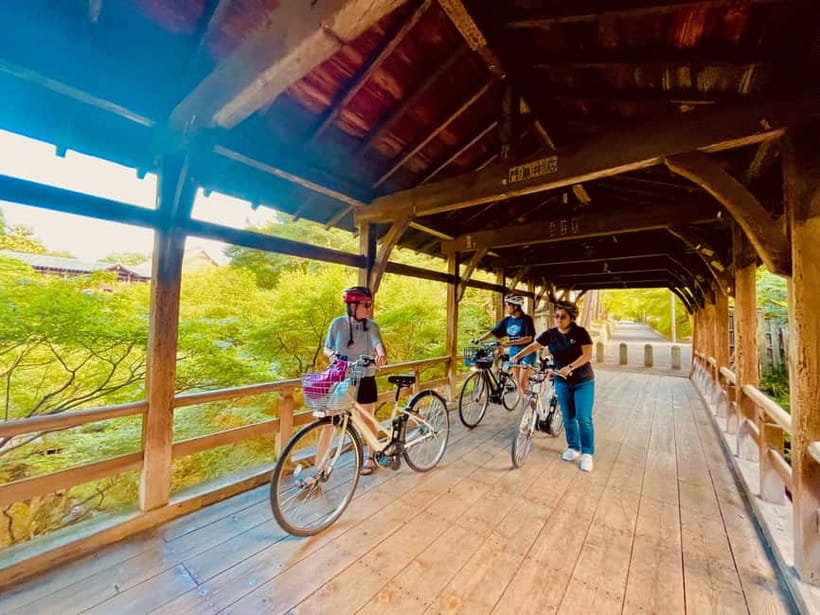
At $83 per person, the tour sits above the cost of simply visiting Fushimi Inari and Tofukuji on your own. The price includes the e-bike, helmet, insurance, snack, water bottle, entrance fees for two places, and a live English-speaking guide.
The real value is the route and the time saved. You reach several areas in one half-day, avoid planning every connection, and get explanations that are hard to reproduce with quick online notes. You also see residential streets and riverside routes that are not usually the main focus of a first Kyoto itinerary.
The value is strongest if you want an active introduction to Kyoto rather than a detailed study of one shrine. It is less compelling if you already know the city well, dislike cycling in traffic, or want long, unhurried visits at each temple.
There is no lunch, hotel pickup, or hotel drop-off. You meet at Pedal Adventure Kyoto and arrange your own way there and back. The four-hour length makes it easy to fit before or after another Kyoto plan, but leave enough room around it for getting to the meeting point.
Who should book this Kyoto e-bike tour?
I would choose this for first-time Kyoto visitors who want orientation, culture, and movement in one outing. It is also a strong choice for families with older children and teenagers, couples, and active adults who find all-day temple sightseeing too slow.
The minimum age is 12. The tour is not suitable for pregnant women or people with mobility impairments, and you should be prepared for both cycling and walking.
You do not need to be a serious cyclist. The e-bikes make the route approachable, and the pace includes regular stops. But you should feel comfortable controlling a bicycle, following a guide, and riding through at least some busy city areas.
Book it early in your Kyoto stay if possible. The route gives you useful context for the rest of your sightseeing, including how to approach shrines, what temple details mean, and how Kyoto’s historic districts connect to ordinary neighborhoods.
Practical details that affect your day
The tour lasts four hours and is offered in English. Availability depends on the starting time you select, so check the schedule before building the rest of your day.
Bring comfortable shoes, cycling-friendly clothing, sunscreen, and a camera if you want photographs of the route and group. Water is provided, but carrying extra water is sensible on warm or sunny days.
The booking allows cancellation up to 24 hours before departure for a full refund. You can also reserve now and pay later, which helps if your Kyoto schedule is still changing.
Smoking and alcoholic drinks are not allowed in the vehicle. Since this is a bicycle tour, treat the same rule as part of keeping the ride safe and pleasant for the whole group.
Should you book it?
Book this tour if you want to see Fushimi Inari and Tofukuji while also getting a feel for Kyoto beyond its headline sights. The combination of e-bike access, quiet streets, a Zen garden pause, and Maki’s engaging cultural stories gives you more than a basic shrine transfer.
Skip it if you want to spend most of the day at Fushimi Inari alone, avoid city cycling, or need a fully accessible activity. For everyone else, the four-hour format is a sensible compromise: active but not exhausting, informative without being stiff, and broad enough to help you understand Kyoto before exploring the city on your own.
FAQ
How long does the Kyoto e-bike tour last?
The tour lasts four hours. It includes cycling, walking, shrine and temple visits, explanations from the guide, and breaks along the route.
Where does the tour meet?
The meeting point is Pedal Adventure Kyoto, at a temple near Higashiyama-Sanjyo.
Is the tour conducted in English?
Yes. The tour includes a live English-speaking guide.
What is included in the price?
The price includes a local guide, electric bicycle rental, helmet, insurance, a snack, a water bottle, and entrance fees for two places.
Is lunch included?
No. Lunch is not included.
What should I bring?
Bring comfortable shoes, comfortable clothing suitable for cycling, sunscreen, and a water bottle if you want extra water. A camera is also recommended.
Can children join the tour?
Children under 12 cannot join. Participants must be at least 12 years old.
Can I cancel the booking?
Yes. You can cancel up to 24 hours in advance for a full refund. The activity also offers a reserve-now, pay-later option.
More Cycling Tours in Kyoto


More Golden Pavilion & Temple Tours in Kyoto
More Fushimi Inari Tours in Kyoto
More tours in Kyoto we've reviewed




Fushimi Inari Tours, compared.
 ★ 4.8Kyoto: Fushimi Inari, Kinkakuji, Bamboo Grove 1 Day Bus TourFrom $122510 minutes - 9 hours
 ★ 5.0Fushimi Inari Hidden Hiking Tour (Private Option Available)From $63
 ★ 4.7Kyoto/Osaka: Nara, Fushimi Inari Taisha, Arashiyama Bus TourFrom $529 - 10 hours
 ★ 4.4Osaka/Kyoto: Arashiyama, Nara & Fushimi Inari Shrine w/LunchFrom $61
 ★ 5.0Kyoto: Nijo, Kinkaku-ji, Arashiyama, Kiyomizu & Fushimi InariFrom $51
 ★ 5.0Kyoto Fushimi-Inari Night Walking TourFrom $43