
Reviewed · E-BIKES
Kyoto: Hidden Gems E-Bike Tour with Local Guide
Kyoto is easier to understand from a bike seat than from a bus window. This 3 to 4-hour ride links Ginkaku-ji, Nanzen-ji, and Heian Jingu Shrine with riverside paths, temple lanes, canals, and quieter corners of east Kyoto. You avoid much of the city traffic and cover ground without the strain of a long walking day.
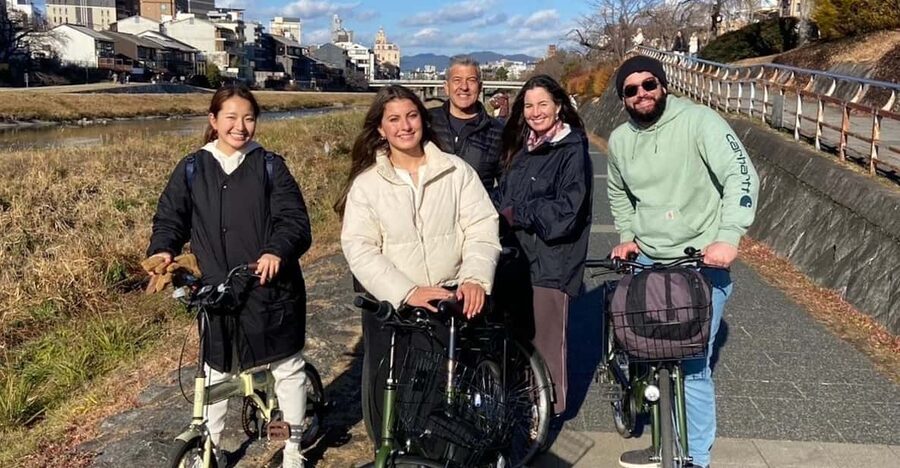
I like two things right away: Asuka’s friendly, personal guiding style and the useful electric bikes, which provide enough assistance for gentle pedaling. I also like the relaxed pace, with time for photos, souvenirs, coffee, matcha crepes, and conversation. The main consideration is simple: you need to ride a bike confidently, and hot weather can make the outing tiring.
In This Review
- Key points
- Why an e-bike works well in Kyoto
- Starting near Gojo and getting set up
- Following the Kamo River to Ginkaku-ji
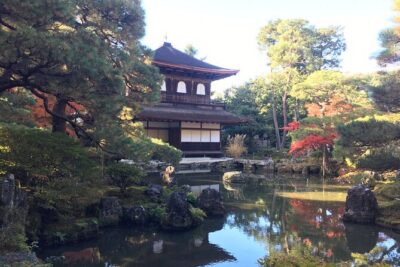
- Ginkaku-ji and the shopping street
- The Philosopher’s Path toward Nanzen-ji
- Nanzen-ji and the aqueduct
- Heian Jingu’s open grounds
- The guide makes the difference
- Price, pace, and practical value
- Who should book this Kyoto bike tour?
- Should you book it?
- FAQ
- How long does the Kyoto e-bike tour last?
- Where does the tour begin?
- Which sights are included?
- Is an electric bike and helmet included?
- Is food included?
- Can I continue using the bike after the tour?
- What happens if it rains?
Key points
- Ride beside the Kamo River: Enjoy the water, city views, and the playful chance to cross stepping stones.
- Visit three major sights: See Ginkaku-ji, Nanzen-ji, and Heian Jingu without spending the day on crowded buses.
- Explore east Kyoto by e-bike: The motor makes the route manageable for people who do not want to walk 7 or 8 miles.
- Spend time with Asuka: Her fluent English, international background, and interest in local life make the tour feel personal.
- Pause for local treats: The shopping street near Ginkaku-ji offers souvenirs, coffee, and matcha crepes.
- Keep the bike longer: You can ask about extending the rental after the tour, if you want to continue exploring.
Why an e-bike works well in Kyoto
Kyoto’s sights are spread across a broad city basin. You can walk between some temples, but linking several districts on foot takes time and energy. Buses are useful, yet traffic and crowded stops can slow you down.
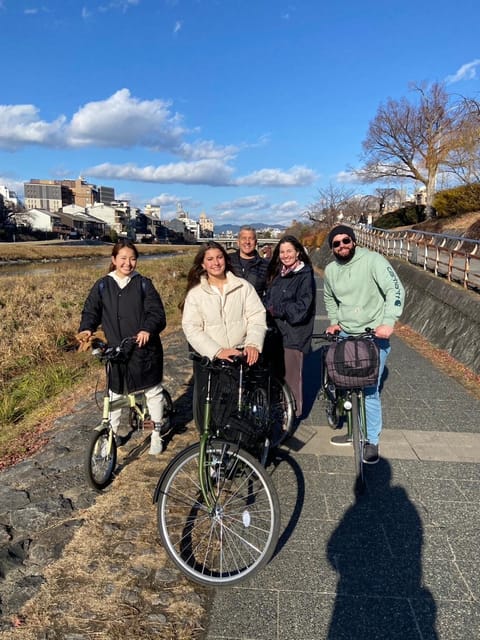
An electric bike gives you a middle path. You still pedal and move at street level, but the motor helps when your legs begin to tire. One useful detail from the ride is that the assistance is strong enough for gentle pedaling, so you do not need to push hard to keep moving.
I would not call this a hard cycling tour, but it is still active. You spend several hours on a bike, stop and start around sights, and ride in warm weather if you visit during summer. Comfortable clothes and shoes matter. High heels, large bags, and oversize luggage are not suitable.
The tour is for people aged 12 and older who know how to ride. It is not designed for wheelchair users, pregnant women, people with diabetes, people with a low fitness level, or anyone who cannot ride a bike. The operator also lists people over 95 and people with altitude sickness as unsuitable, although altitude is not the main feature of this Kyoto route.
Other cycling tours in Kyoto
Starting near Gojo and getting set up
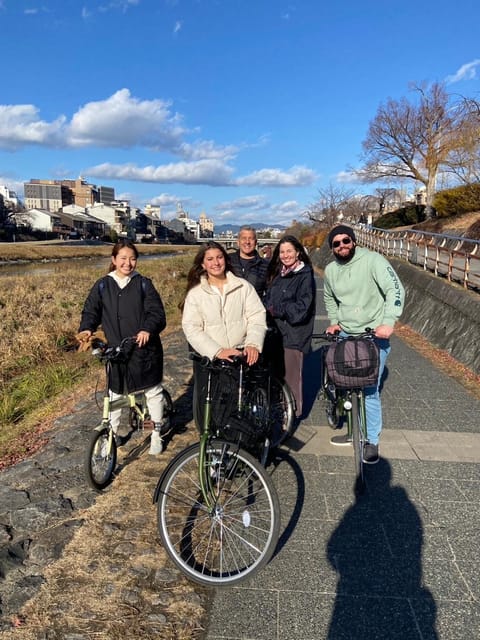
You meet the guide at a rental cycling shop in the Gojo area. The meeting point is about six minutes from Kyoto Station by train, or roughly 20 minutes on foot. The tour ends at the same bike shop, which makes the start and finish easy to plan around your day.
Allow a little patience at the beginning. The bikes and helmets need to be fitted, and one useful improvement would be a short five-minute briefing to adjust the bikes and explain the route. If you are not used to electric bicycles, ask for a quick explanation of the controls before setting off.
The standard bike rental and helmet are included, along with the guide, entrance ticket, and parking fees. Water and food are not included, so bring water or plan to buy it during the outing. Hotel pickup and drop-off are not provided.
Asuka leads the tour in English. She has studied sociology and international relations, lived in North Carolina as a high school exchange student, and attended university in London. She also enjoys music and yoga. That background helps explain the easy conversation and cross-cultural feel of the ride. On some departures, Tatsuya also helps guide the group.
Following the Kamo River to Ginkaku-ji
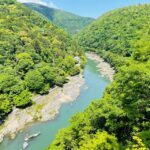
The first major ride heads toward Ginkaku-ji, also called the Silver Pavilion. The route follows the Kamo River, one of Kyoto’s most pleasant open spaces. You see the city from a quieter angle, with water, bridges, and room to slow down.
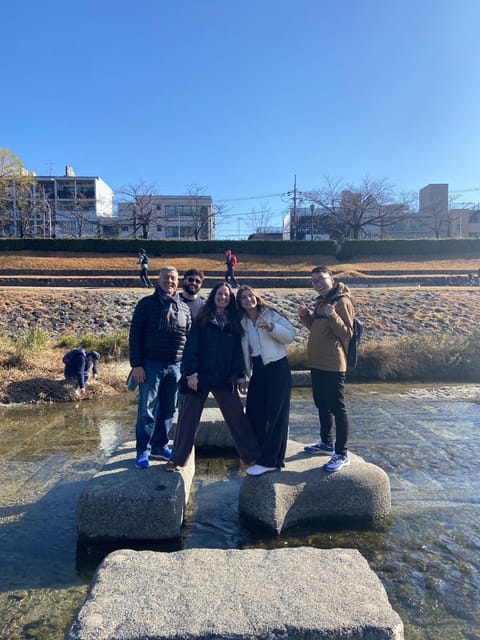
A memorable part of this section is crossing the river on stepping stones. It is a small moment, but it gives the ride some character. You can get off the bike and enjoy the stones rather than treating the river as something to hurry past.
This is also a good stretch for conversation. Asuka’s aim is not to rush you from one famous gate to another. The route leaves room for photos and a sense of daily Kyoto. That makes the bike useful for more than saving time. You get to see how the city connects its major sights with ordinary streets and waterways.
Take care near the river and on any shared paths. The operator does not accept responsibility for injuries, and you are expected to know how to ride before joining. The ride is friendly and relaxed, but it is not a lesson for beginners.
Ginkaku-ji and the shopping street
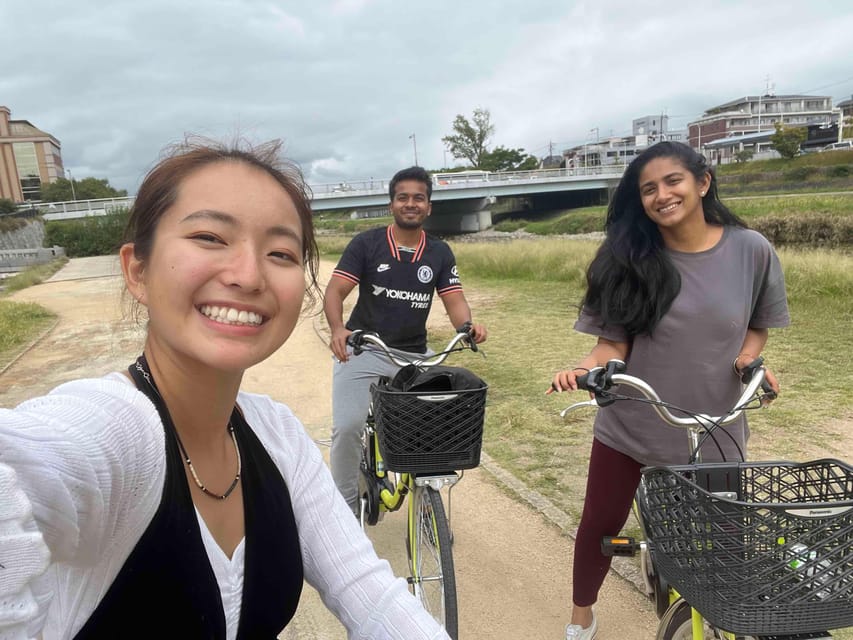
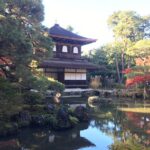
Ginkaku-ji is one of the essential stops in eastern Kyoto. Its formal name is Higashiyama Jisho-ji, but the nickname Silver Pavilion is the one most people use. The temple is known for its restrained design and garden setting rather than flashy decoration.
The tour includes the entrance ticket, so you do not need to handle that cost separately. You will have time to look around, take pictures, and absorb the setting before moving on. The exact time at each stop can vary, but the overall pace is designed to avoid making you feel hurried.
Near the temple, a shopping street gives you a chance to switch gears. You can look for souvenirs, stop for coffee, or try a matcha crepe. Food is not included, so bring some yen or a payment method that works locally. This pause is useful because it turns the temple visit into a small neighborhood experience rather than a quick photo stop.
The area around Ginkaku-ji can still be busy, especially at popular times. The tour avoids Kyoto’s most crowded places where possible, but no guided route can make a major temple district empty. If you prefer quiet gardens above all else, expect some people around the approach and shopping street.
The Philosopher’s Path toward Nanzen-ji
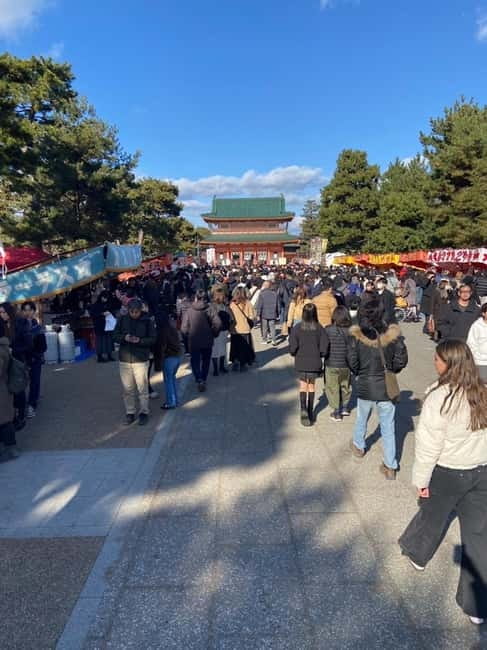
After Ginkaku-ji, you ride along the Philosopher’s Path toward Nanzen-ji. This famous walking route follows a canal and is especially attractive when the trees are in season. Even outside peak periods, the water and shaded path offer a pleasant change from city streets.
The bike makes this connection practical, though you should expect to move carefully. A path used by walkers is not a place to speed. Follow Asuka’s lead, slow down around pedestrians, and be ready to walk the bike if needed.
The route gives you a better sense of how Kyoto’s eastern sights fit together. Instead of treating each temple as an isolated stop, you travel through the spaces between them. That is one reason I prefer this tour to a checklist-style sightseeing trip.
The path is also a natural place for photographs. You may see canals, small bridges, walls, and temple approaches that do not require a separate admission ticket. The route is scenic, but it is not completely private or remote. Its appeal comes from its calm rhythm, not from total isolation.
Other guided tours in Kyoto

Nanzen-ji and the aqueduct
Nanzen-ji brings a larger scale to the day. The temple complex is known for its broad entrance gate and impressive grounds, and the route includes time to appreciate the grand views. It is a welcome contrast after the more intimate lanes and canal-side riding.
One detail worth watching for is the aqueduct. Its brick arches are a striking piece of infrastructure within the temple area, and they add a practical, slightly unexpected note to the visit. This is the sort of sight you might miss if you only followed the standard route between the best-known buildings.
Nanzen-ji is historically important and visually spacious, but you should not assume every building or area is included in the admission. The supplied information confirms an entrance ticket for the tour, not a list of every individual interior or sub-site. Ask Asuka what is covered if you want to see a particular building.
The stop works well for people who enjoy a mix of religious architecture, gardens, and public works. If you want a long, silent temple visit with plenty of time for private reflection, a group cycling tour may feel more structured than an independent visit.
Heian Jingu’s open grounds
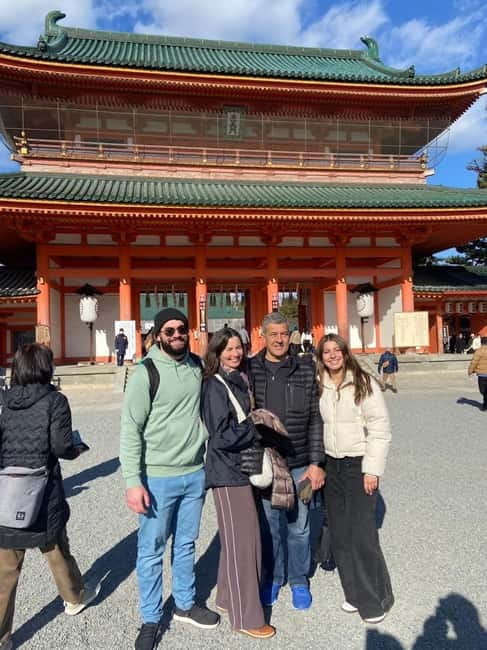
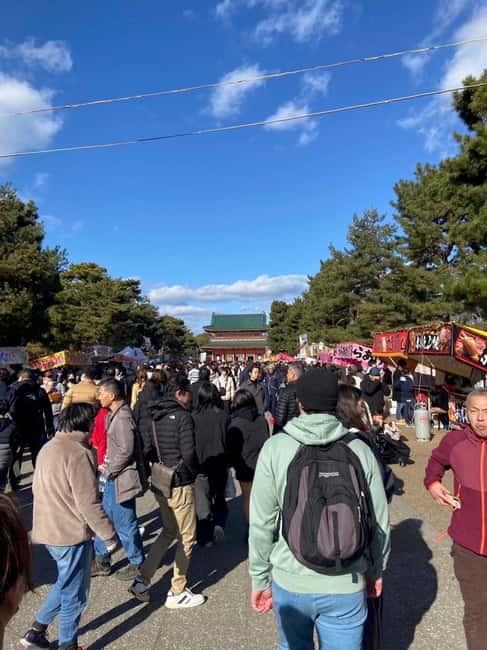
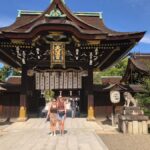
The final main stop is Heian Jingu Shrine, recognizable by its large torii and expansive grounds. Compared with the enclosed feel of some temple compounds, Heian Jingu offers broad open spaces and a strong sense of scale.
The shrine was built in the late 19th century as a commemoration of Kyoto’s imperial past, though that historical detail is best explored with Asuka during the visit. The tour description emphasizes the shrine’s beauty and size, and the stop completes the route with a different style of religious architecture.
By this point, the electric assistance matters. You have already ridden beside the river, through temple districts, and along the canal route. The motor helps keep the final leg pleasant instead of turning the last stop into a test of stamina.
You will want to leave room on your camera or phone. Asuka is happy to take plenty of photos, which is handy when you are riding alone, traveling as a couple, or trying to get a picture without a stranger’s elbow in the frame.
The guide makes the difference
The strongest part of this experience is the connection with Asuka. She is not presented as a distant voice delivering facts from a script. The tone is social and open, with time to talk about Kyoto, travel, food, and broader trip planning.
Her English is fluent, and her time living in the United States and United Kingdom gives her a useful understanding of visitors from abroad. She can also help with ideas for places to eat and sights to see during the rest of your stay. That advice can be as valuable as the formal route, especially if this is your first visit to Kyoto.
The guide’s attitude also suits the cycling format. You can stop for pictures, ask questions, and enjoy the ride without feeling pushed along. At the same time, you should be clear about what you want. If you need extra time at a temple or prefer a faster pace, discuss it early.
Some outings include Tatsuya alongside Asuka. The presence of two guides may vary, so do not book on the assumption that both will lead every departure. Asuka is the named guide and the main personal link to the experience.
Price, pace, and practical value
At $65 per person, this is a fair price for a guided half-day in Kyoto. You receive the e-bike, helmet, guide, entrance ticket, and parking fees. You are also paying for route planning, local conversation, and the ability to connect several eastern sights without arranging each segment yourself.
The value is strongest if you dislike long walking days. One rider compared the route with walking 7 or 8 miles around Kyoto and found biking a better way to cover the city. That is exactly the point: the tour does not replace a full day at each temple, but it gives you a useful overview without wearing out your feet.
The price is less compelling if you already know Kyoto well, have your own rental bike, or want to spend hours inside each temple. Food, water, and personal purchases cost extra. The tour also ends back at the rental shop, so you need to plan your next activity from there.
You can ask about keeping the bike for the rest of the day at an additional fair price. This option makes the tour more useful for independent exploring afterward, though the supplied information does not give the extension price or guarantee availability. Ask at the meeting point.
Rain does not automatically cancel the plan. You can discuss wearing a raincoat or changing the outing into a walking tour when you meet. That flexibility is helpful, but conditions may affect the route and comfort. The cancellation policy allows a full refund if you cancel at least 24 hours ahead.
Who should book this Kyoto bike tour?
I would choose this tour if you want a friendly introduction to east Kyoto and prefer movement to standing in transport queues. It suits couples, friends, solo visitors, and families with children aged 12 or older who are comfortable on bikes.
It is especially useful early in a Kyoto stay. Asuka can point out places to eat and other sights, giving you ideas for the days ahead. The route also works well as a change from major downtown attractions because it combines famous temples with riverside riding and smaller stops.
I would think twice if you have a low fitness level, cannot ride confidently, or dislike warm-weather exercise. The e-bike reduces effort, but it does not remove the need to balance, pedal, stop, and ride for several hours. People with the listed medical or mobility restrictions should choose a different way to see Kyoto.
Should you book it?
Book this tour if you want a social, active way to connect three major Kyoto sights without spending the day walking. The combination of Kamo River stepping stones, the Philosopher’s Path, Nanzen-ji’s aqueduct, and Asuka’s personal guidance gives the outing more variety than a simple temple transfer.
Skip it if your main goal is extended temple study, a private itinerary, or a completely quiet experience. For everyone else who can ride a bike, the $65 price offers a practical way to see more of east Kyoto while making a local connection.
FAQ
How long does the Kyoto e-bike tour last?
The tour lasts about 3 to 4 hours.
Where does the tour begin?
You meet the guide at a rental cycling shop in the Gojo area. It is about six minutes from Kyoto Station by train or around 20 minutes on foot.
Which sights are included?
The route includes Ginkaku-ji temple, Nanzen-ji temple, and Heian Jingu Shrine. It also follows the Kamo River and the Philosopher’s Path.
Is an electric bike and helmet included?
Yes. Standard bike rental and a helmet are included in the price.
Is food included?
No. Food and water are not included. You have free time near Ginkaku-ji for possible purchases such as coffee, matcha crepes, and souvenirs.
Can I continue using the bike after the tour?
You can ask to keep renting the bike after the tour. The operator may arrange this, but the additional price and availability are not provided.
What happens if it rains?
You can discuss wearing a raincoat or changing the outing into a walking tour when you meet the guide.
More E-Bikes in Kyoto

More Guided Tours in Kyoto
More Cycling Tours in Kyoto
More tours in Kyoto we've reviewed



E-Bikes, compared.
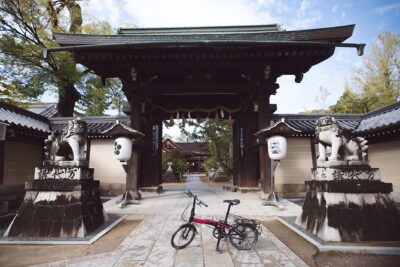 ★ 5.0Hidden Kyoto E-Biking tourFrom $116
 ★ 5.05 Top Highlights of Kyoto Full Day Bike Tour (E-bike option)From $172
 ★ 5.0E-Bike Tours of the highlights of Kyoto!!!From $109
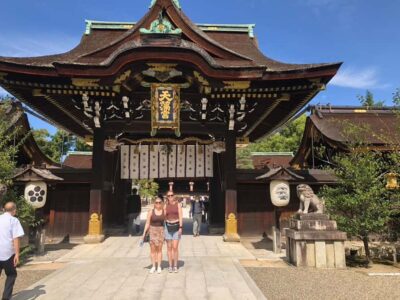 ★ 4.9Kyoto: Memory Kyoto E-Bike TourFrom $105
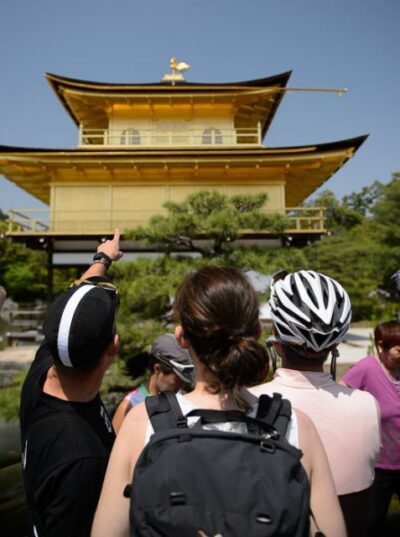 ★ 4.9Kyoto: City Secrets eBike TourFrom $1273h 45m
 ★ 5.0Pedal Adventure Kyoto’s iconic landmarks on an e-bike tourFrom $86