
Reviewed · VIP
Kyoto: Private Highlights Tour with Guide and Luxury Vehicle
Kyoto’s greatest challenge is not finding beautiful places. It is fitting them together without losing half the day to trains, buses, and wrong turns. This 10-hour private tour tackles that problem with a driver, air-conditioned vehicle, and an itinerary you can adjust as the day unfolds.
I like the free pickup and drop-off from Kyoto, Osaka, and Nara, especially if Kyoto is a one-day stop. I also like the flexible guides. Sam, Yash, Hashan, Malik, and others are praised for changing the route, suggesting food, helping with photos, and keeping families on track. The catch is simple: this is a full day, and you will still walk a lot at the temples and old streets.
In This Review
- Key points at a glance
- What the $383 private tour really buys you
- Starting from Kyoto, Osaka, or Nara
- Arashiyama begins with bamboo, temples, and river views
- Kinkaku-ji turns a short visit into a major sight
- Fushimi Inari brings the day under thousands of red gates
- Ginkaku-ji offers a quieter eastern Kyoto contrast
- Kiyomizu-dera leads into Kyoto’s old streets
- Sanjusangen-do adds a different kind of temple visit
- Nishiki Market is your flexible lunch stop
- Gion and the old lanes finish the cultural side of Kyoto
- The guides make or break the long day
- A 10-hour schedule requires honest planning
- Who gets the best value from this Kyoto day
- Should you book this private Kyoto highlights tour?
- FAQ
- How long does the Kyoto private highlights tour last?
- Where can I be picked up and dropped off?
- How many people can join the private tour?
- What is included in the tour price?
- Are food, drinks, and temple admission included?
- Which languages are available?
- Is the tour wheelchair accessible?
- What should I bring?
Key points at a glance
- A private vehicle for up to six people: The $383 group price makes the best value for families or small groups.
- Pickup beyond Kyoto: You can begin and end at accommodation in Kyoto, Osaka, or Nara.
- A serious sightseeing day: Arashiyama, Kinkaku-ji, Fushimi Inari, Kiyomizu-dera, Gion, Nishiki Market, and other stops can fit into one long outing.
- A flexible route: You can ask to spend more time at favorite places or adjust the plan around traffic, crowds, and tired legs.
- Guides who help with logistics: Several guides are praised for clear communication, careful driving, photography, restaurant suggestions, and family-friendly patience.
- Bring cash and sturdy shoes: Food and temple admission cost extra, and some temples may not accept cards.
What the $383 private tour really buys you
At $383 per group of up to six, the price works best when you fill the vehicle. Six people pay about $64 each before food and admission. Four people pay about $96 each. For two people, the cost is much harder to justify unless saving time and avoiding public transport are your main goals.
You are paying for more than a ride. The vehicle links distant parts of Kyoto, while your guide handles pickup, timing, directions, parking arrangements, and the route between major sights. That matters in a city where Arashiyama lies in the west, Fushimi Inari sits in the south, and Ginkaku-ji is on the eastern side.
The tour includes hotel, Airbnb, or accommodation pickup and drop-off, private transportation, Wi-Fi, and an English-speaking guide. Japanese, Hindi, and Urdu are also available. Food, drinks, and entry tickets are not included, so keep some cash with you.
The advertised service includes skip-the-line access, though admission itself remains your responsibility. Ask your guide how that works for each temple on your chosen day.
Other guided tours in Kyoto
Starting from Kyoto, Osaka, or Nara
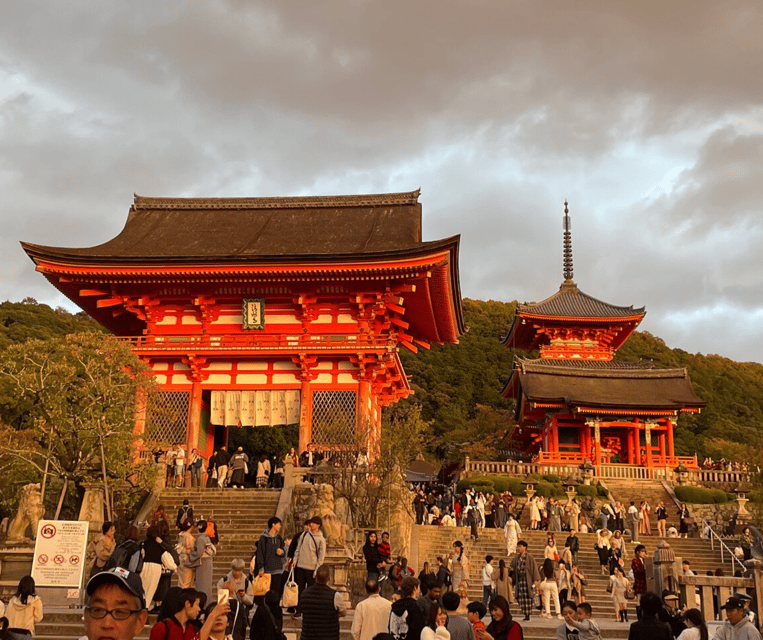
Pickup from Kyoto is the most efficient choice. Starting in Osaka or Nara can still work well, but the day includes additional driving before and after the Kyoto sightseeing. The schedule is already tight, so a late start or heavy traffic can force you to shorten a stop.
Several guides are praised for punctual pickup and clear messages about where they would meet at each stop. That small detail is important in crowded areas such as Arashiyama and Gion, where a precise meeting point saves time.
The vehicle is air-conditioned and described as clean and comfortable. That comfort matters in winter rain or snow, and it gives children and older family members a place to rest between walks. One practical point came through clearly: do not expect a full luxury transfer service with bottled water or many onboard extras. Bring your own water, snacks, and umbrella.
Arashiyama begins with bamboo, temples, and river views
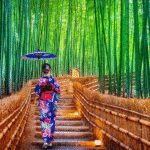
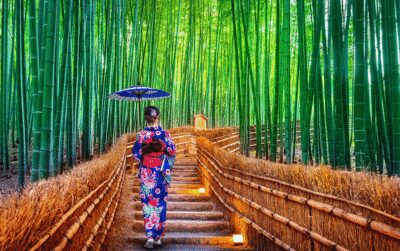
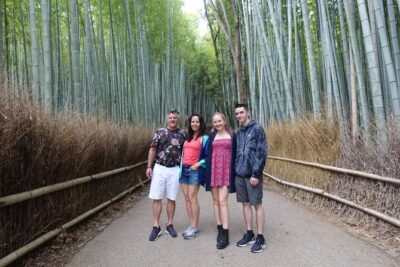
Arashiyama is one of Kyoto’s most recognizable areas, and the tour gives you several ways to experience it. The Sagano Bamboo Forest is usually a photo stop of about 40 minutes. The tall bamboo creates a striking corridor, but the path can be crowded, so this is not a quiet woodland walk in the usual sense.
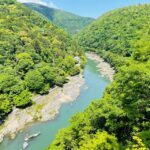
Your day may also include the broader Arashiyama area, with Tenryu-ji Temple and its calm garden, Togetsu-kyo Bridge, the Kimono Forest, and Monkey Park Iwatayama. The colorful fabric-wrapped pillars at Kimono Forest make an easy photo stop near the station area.
Monkey Park is the demanding option. It sits up a hillside, so reaching it requires a climb. The vehicle can bring you close to the area, but it cannot remove the walking. If your group has limited mobility, tell the guide early and choose your Arashiyama stops carefully.
Tenryu-ji gives the area its best temple-and-garden balance. The garden offers a slower counterpoint to the bamboo path, while Togetsu-kyo Bridge gives you open views along the river. With only about an hour assigned to Arashiyama, you will not have time to linger everywhere. Decide ahead of time if bamboo, the temple, the bridge, or Monkey Park matters most.
Kinkaku-ji turns a short visit into a major sight
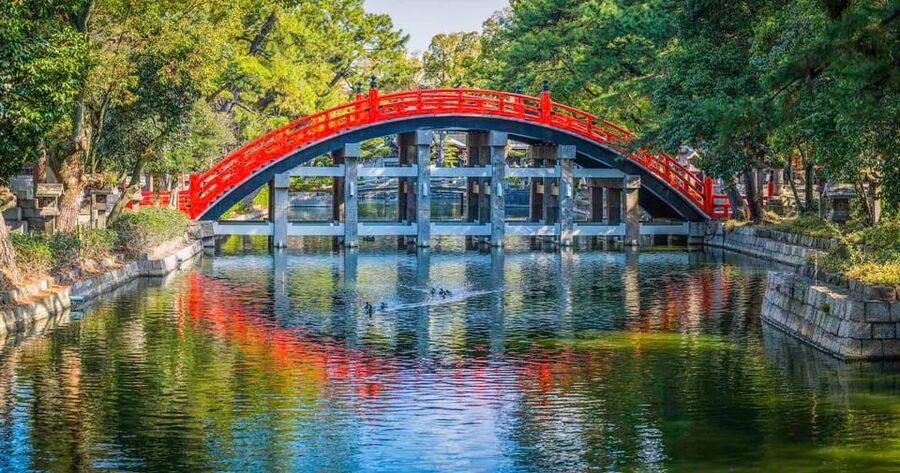
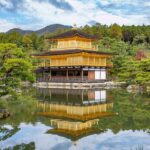
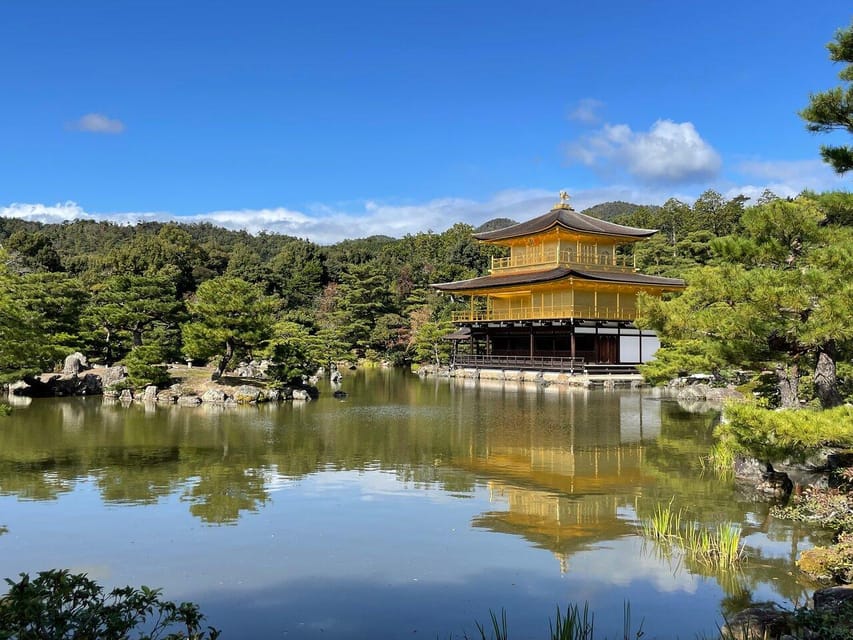
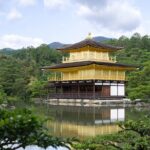
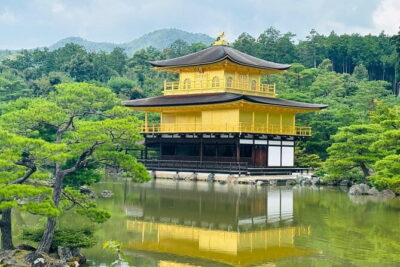
Kinkaku-ji, the Golden Pavilion, is one of Kyoto’s essential stops. Its upper levels are covered in gold leaf, and the building is reflected in a pond surrounded by carefully arranged gardens.
You follow a set walking route around the grounds rather than entering the pavilion itself. The visit is visually strong but not especially long. Your guide can explain the temple’s Zen setting and architectural details, then help keep the group moving before the day’s later stops.
This is a good place to use a camera, but do not judge the experience only by the famous front view. The garden path gives you changing angles, and the contrast between the gold structure, dark timber, water, and greenery is what makes the setting work.
Fushimi Inari brings the day under thousands of red gates
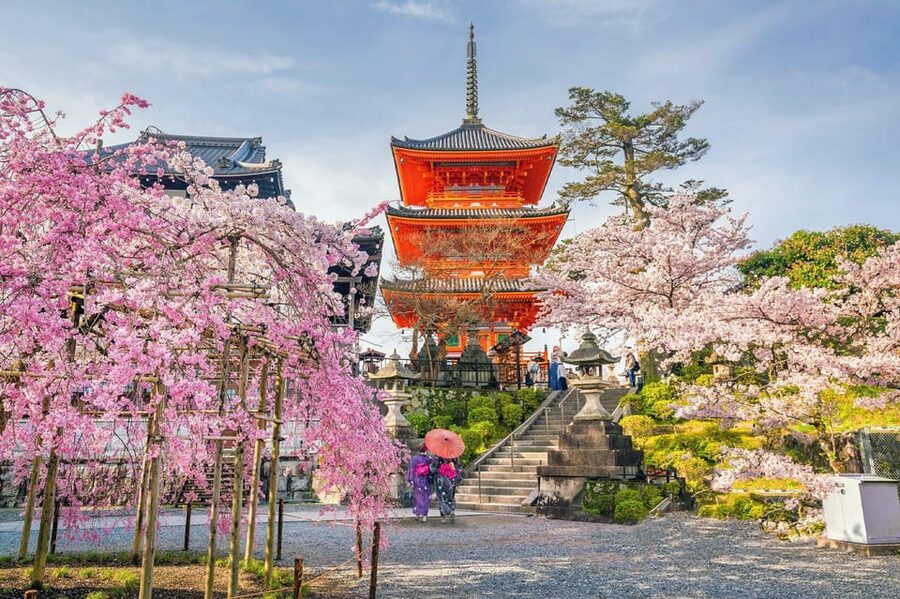
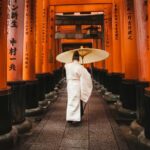
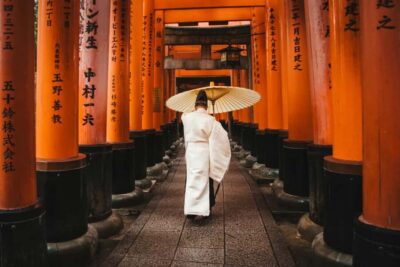
Fushimi Inari Taisha is different from the formal temple gardens. Its famous torii gates climb the wooded slopes of Mount Inari, creating long orange-red corridors through the shrine grounds.
You do not need to walk the entire mountain to understand the place. The lower section gives you the strongest first impression, while a longer climb adds quiet and a more religious atmosphere. With roughly an hour scheduled here, most groups will need to stay near the lower paths.
This stop is a good example of why private transport helps. Fushimi Inari can be awkward to combine with several western Kyoto sights by bus. Your guide can drop you near the shrine, set a meeting point, and adjust the walking plan to your energy level.
Go early if you can influence the schedule. The torii gates are a major photo draw, and crowded paths make the route slower. Your guide may rearrange stops to work around busy periods, as several guests praised guides for doing during cherry blossom season and New Year travel.
Other private tours in Kyoto
Ginkaku-ji offers a quieter eastern Kyoto contrast
Ginkaku-ji, the Silver Pavilion, appears in the listed itinerary even though the main description focuses more heavily on Kinkaku-ji. It is worth clarifying your preferred stops before departure so the driver-guide can protect time for it.
Despite its name, Ginkaku-ji is not covered in silver. Its appeal lies in the temple grounds, moss, trees, and restrained garden design. The visit is less flashy than Kinkaku-ji and can feel more reflective.
One hour is enough for a focused visit, but not for a slow wander through every path. If you prefer gardens and atmosphere to famous photographs, ask for more time here and trim a stop that matters less to your group.
Kiyomizu-dera leads into Kyoto’s old streets
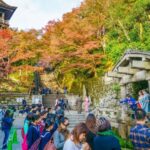
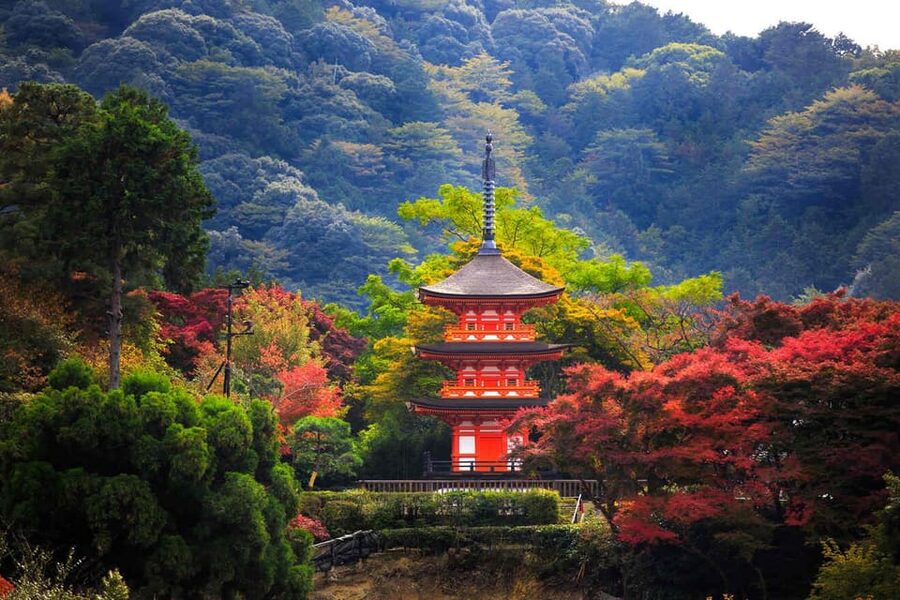
Kiyomizu-dera is built on a wooden stage above the hillside, with broad views over Kyoto. The main hall and surrounding grounds offer one of the city’s best combinations of architecture, city views, and religious tradition.
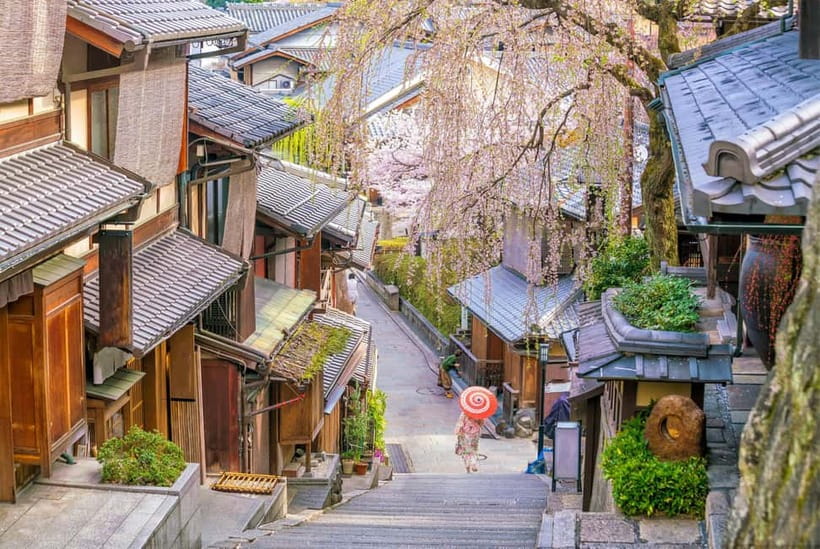
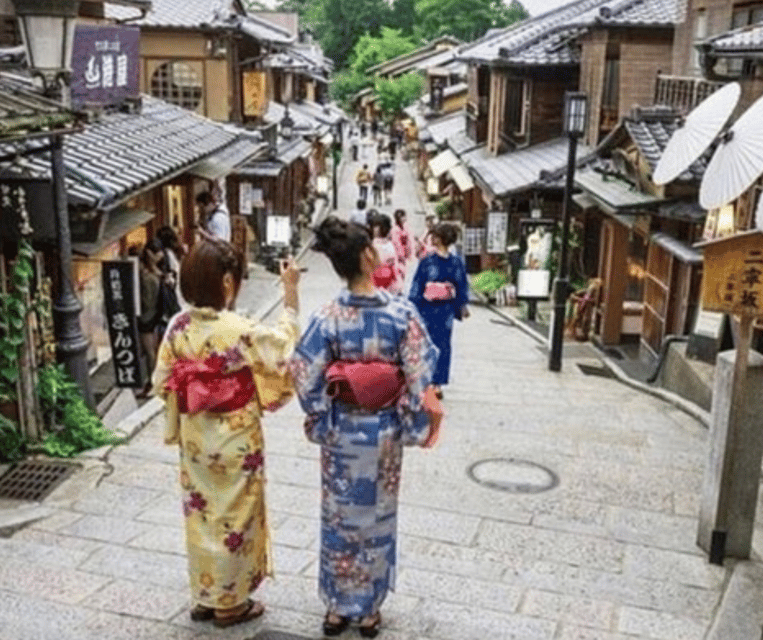
The approach is part of the experience. Ninenzaka and Sannenzaka streets run toward the temple with traditional-style buildings, tea shops, food stalls, and souvenir stores. They are attractive, but the stone slopes and crowds make them tiring.
This is where the private vehicle has limits. You may be driven close to the sightseeing area, but the final approach still requires walking. One guest with mobility concerns found the day more tiring than expected, despite having a private car. Take that warning seriously and ask your guide to build in pauses.
Comfortable shoes are not optional here. So are regular water and coffee breaks, particularly if you are traveling with children or anyone who walks slowly.
Sanjusangen-do adds a different kind of temple visit
Sanjusangen-do is another listed stop and a useful change of pace. Its long wooden hall is known for rows of Buddhist statues, creating an interior experience unlike the open gardens at Kinkaku-ji or the hillside setting of Kiyomizu-dera.
Because temple admission is extra and the day is crowded with stops, confirm whether you want to include it. It may be a strong choice for visitors interested in Buddhist art and interiors, while a group focused on gardens, shopping, or photographs may prefer more time elsewhere.
The guide can give brief background and point out the main features, but an hour passes quickly when the route includes several major sites. This is a day for seeing the range of Kyoto, not for studying every temple in detail.
Nishiki Market is your flexible lunch stop
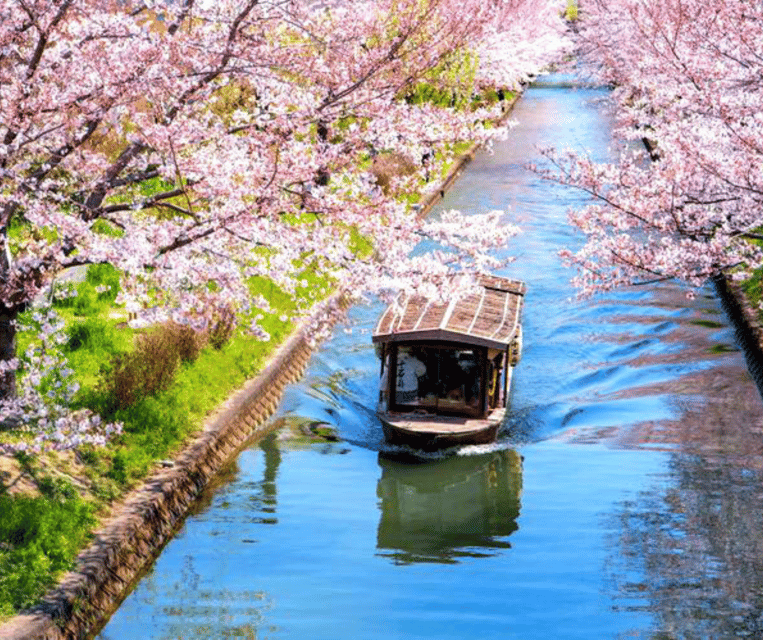
Nishiki Market offers a practical break from temples. The covered market is lined with food stalls, shops, and small places to eat, making it possible for each person in your group to choose something different.
Lunch is not included, and the guide can also take you to a restaurant of your choice. Guides have helped arrange restaurants, including a vegan option, and have called ahead when language made reservations difficult.
I would use Nishiki Market as more than a meal stop. It gives you a look at Kyoto’s food culture and daily shopping traditions. Still, it can be crowded, and a market is not always the best place for a large family to sit down together. Tell your guide if you need a proper restaurant, a quick bite, or a particular diet.
Gion and the old lanes finish the cultural side of Kyoto
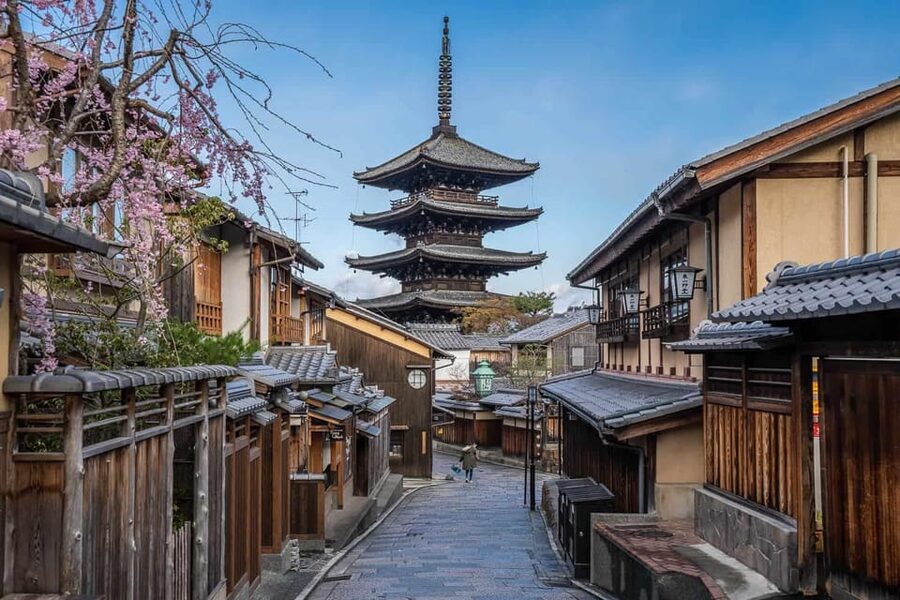
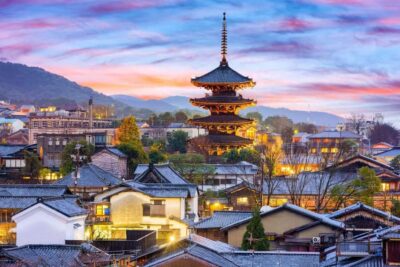
Gion is best approached with patience. Its traditional wooden buildings, teahouses, narrow lanes, and connection to geisha culture make it one of Kyoto’s most atmospheric districts.
You are looking at a living neighborhood, not a stage set. Keep your camera respectful and follow local signs about photography. The streets connect naturally with the eastern temple area, but walking here after Kiyomizu-dera can leave you tired.
The private tour lets you choose between a brief orientation and a longer walk. If Gion is a priority, say so before the day starts. Otherwise, traffic and long visits at Arashiyama or Fushimi Inari may leave only a short amount of time.
The guides make or break the long day
The strongest part of this experience is the human help with a complicated route. Sam is repeatedly praised for patience, clear communication, safe driving, and adapting plans for children. Yash is described as polite, flexible, and good at explaining the sights. Hashan is noted for traffic-aware scheduling, useful background, and photography.
Other named guides include Malik, Isuru, Ali, Sunny, Shan, Bagas, Dhanu, Narayan, Ravindu, and Leshan. The exact guide is not guaranteed, but the pattern is clear: you should expect a driver-guide rather than a formal scholar leading a long lecture at every site.
Some guests received brief explanations and directions, while others had fuller stories and historical context. Set your expectations sensibly. The guide’s main strength is helping you see a lot, avoid wasted time, and adjust the day. If you want detailed temple interpretation, ask for that style at the start.
Photography is another recurring strength. Several guides helped with family pictures and knew useful photo positions. That can be a real benefit when you are trying to record a group trip without handing your phone to strangers.
A 10-hour schedule requires honest planning
The listed route includes about an hour each at Arashiyama, Kinkaku-ji, Fushimi Inari, Ginkaku-ji, Kiyomizu-dera, Sanjusangen-do, Nishiki Market, and Gion, plus the bamboo forest. Add driving, pickup, meals, ticket queues, and walking, and you can see the challenge.
You can cover a remarkable amount, but you cannot give every place a slow, half-day visit. The best approach is to choose three or four must-see stops, then treat the rest as shorter visits if time allows.
Traffic, weather, seasonal crowds, and your starting city will affect the route. The flexible format helps, but flexibility is not magic. If you start in Osaka or Nara, or want a late pickup, ask the guide to identify the stops most likely to be cut.
The tour is wheelchair accessible, but individual temple grounds and old streets may still involve uneven surfaces, slopes, or long walking distances. Discuss your needs in advance rather than assuming the vehicle solves every access issue.
Who gets the best value from this Kyoto day
I would recommend this tour most strongly to:
- Families with children who need private transport and flexible breaks
- Small groups of four to six sharing the $383 price
- First-time Kyoto visitors with only one day
- People staying in Osaka or Nara who want a direct day in Kyoto
- Anyone who values photos, pickup convenience, and help with route planning
It is less suitable for you if you want to spend hours at one temple, ride local trains as part of the experience, or explore each neighborhood on foot. It is also a poor fit for a group that dislikes early starts, long days, or frequent changes of scene.
Cancellation is flexible up to 24 hours before the tour, with a full refund, and you can reserve now and pay later. Those terms help when weather or a changing Japan itinerary is still uncertain.
Should you book this private Kyoto highlights tour?
Book it if Kyoto time is short and your group wants to see the major sights without managing several transport connections. The strongest value comes with four to six people, especially when you begin outside Kyoto and need pickup and return.
Before booking, make a short priority list. Put Arashiyama, Kinkaku-ji, Fushimi Inari, Kiyomizu-dera, Gion, Ginkaku-ji, or Sanjusangen-do in order. Tell your guide what matters most, bring cash for admission and food, and protect time for lunch and rest.
You will not experience Kyoto slowly in one day. You can, however, get a well-organized first look at its temples, shrines, food, old streets, and cultural districts, with a comfortable vehicle waiting between the walks.
FAQ
How long does the Kyoto private highlights tour last?
The tour lasts 10 hours. Starting times depend on availability, and the schedule can change based on your preferences, traffic, weather, and the amount of time you spend at each stop.
Where can I be picked up and dropped off?
Pickup and drop-off are available from accommodation, hotels, or Airbnbs in Kyoto, Osaka, and Nara.
How many people can join the private tour?
The price of $383 covers a private group of up to six people.
What is included in the tour price?
The tour includes hotel pickup and drop-off, private transportation in an air-conditioned vehicle, an English-speaking guide, and Wi-Fi onboard.
Are food, drinks, and temple admission included?
No. Food, drinks, and entry tickets are not included. Bring some cash because certain temple ticket offices may not accept cards.
Which languages are available?
The available live guide languages are English, Japanese, Hindi, and Urdu.
Is the tour wheelchair accessible?
Yes, the activity is listed as wheelchair accessible. You should still discuss your needs in advance because some temple grounds, old streets, slopes, and walking routes may be tiring or uneven.
What should I bring?
Wear comfortable shoes. Bring an umbrella if rain is possible, along with cash for admission and food. Alcoholic drinks are not allowed in the vehicle.
More VIP Experiences in Kyoto
More Private Tours in Kyoto
More Guided Tours in Kyoto
More tours in Kyoto we've reviewed

VIP, compared.
 ★ 4.8Kyoto:Private Tour/Luxury Vehicle with Guide & photographerFrom $407
 ★ 4.5Private Kyoto Customizable Tour With Guide and Luxury vehicleFrom $525
 ★ 4.7Kyoto Day Tour with Certified Tour Guide & Luxury vehicleFrom $49010 hours
 ★ 5.0The Kyoto VIP Experience!From $492
 ★ 2.9Kyoto: Private Customizable Guided tour with Luxury VehicleFrom $6131 day
 ★ 4.8Kyoto & Nara Private Luxury Car Tour: Encounter with DeerFrom $435