
Reviewed · GOLDEN PAVILION & TEMPLE TOURS
KYOTO-NARA: Giant Buddha Deer Pagoda “Geisya” (Italian, full day)
The most striking part of this full-day tour is the sharp change of mood: in Nara, tame deer wander around Todai-ji and its enormous bronze Buddha; by afternoon, you are back in Kyoto among pilgrimage streets, temple gates, and Gion’s geiko and maiko tradition. Guide Omae leads in Italian and is known for explaining legends as well as monuments.
I like the small group of up to 15 and the fact that train, bus, and temple admission costs are included. I also like the human touch: Omae has lived in Italy, speaks polished Italian, and leaves space for questions, photos, and personal requests. The main drawback is the pace. Nara, Kyoto, Kiyomizu-dera, and Gion make a lot for one day, with several train rides and walking sections.
In This Review
- Key points at a glance
- Why this Nara and Kyoto pairing works
- Meeting at Kyoto Station
- The 45-minute train to Nara
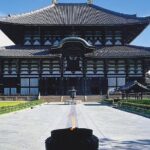
- Todai-ji and the giant Buddha
- Feeding the deer in Nara Park
- Returning to Kyoto for a one-hour break
- Kiyomizu-dera and the old approach streets
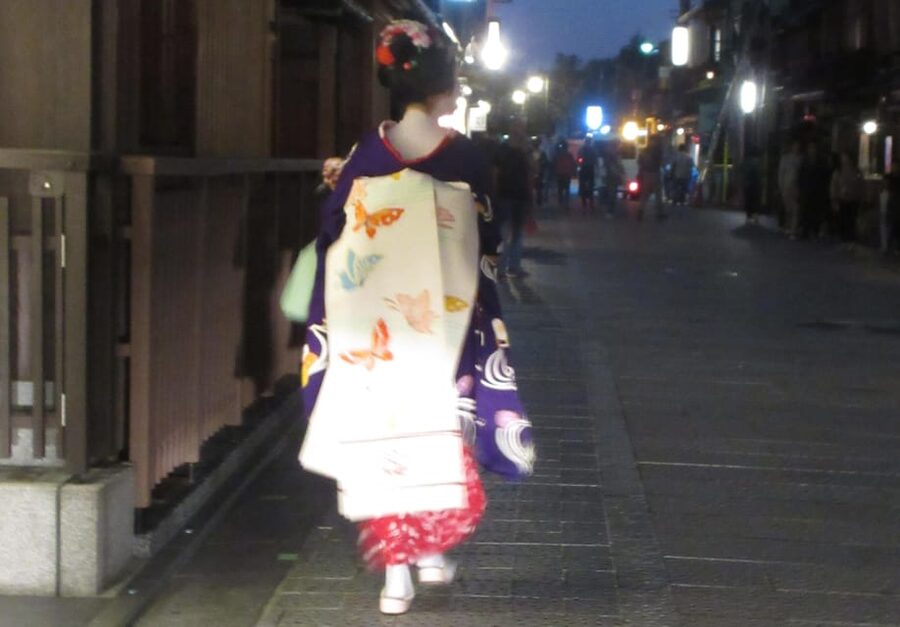
- Gion, geiko, and maiko culture
- Omae’s guiding style
- Group size, pace, and practical value
- Who should book this day?
- Should you book it?
- FAQ
- Where does the tour start?
- Where does the tour finish?
- How long does the activity last?
- Is the tour conducted in Italian?
- Who is the guide?
- Are train and bus fares included?
- Are temple entrance fees included?
- How large is the group?
- Can I cancel or pay later?
Key points at a glance
- Two historic capitals in one day: Visit ancient Nara in the morning and Kyoto’s Kiyomizu-dera and Gion after lunch.
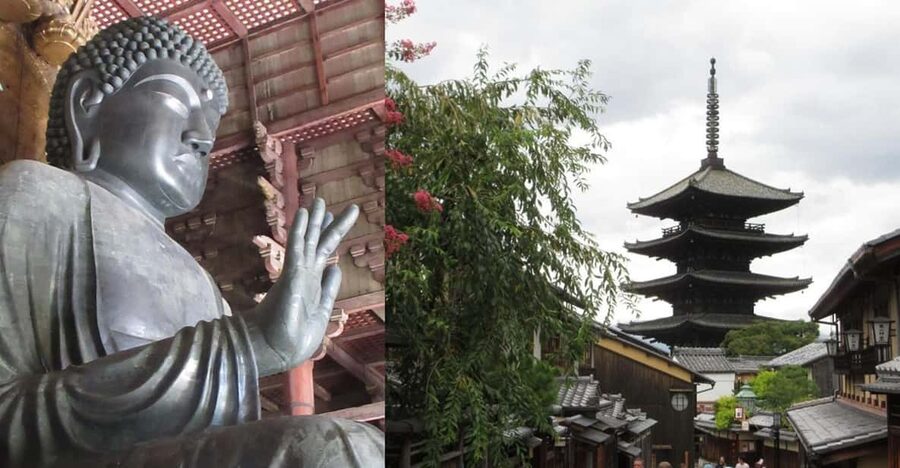
- Todai-ji’s giant Buddha: Enter one of Japan’s best-known Buddhist temples with a guide who explains its national treasures and religious meaning.
- Deer in Nara Park: Buy special deer cookies and feed the animals roaming freely around the temple grounds.
- Italian-speaking guidance: Omae provides detailed explanations in Italian, including local legends and cultural context.
- Transport and admission included: Scheduled train and bus fares, plus monument entrance fees, are covered in the $176 price.
- A practical finish in Pontocho: The tour ends near one of Kyoto’s best-known dining and evening areas.
Why this Nara and Kyoto pairing works
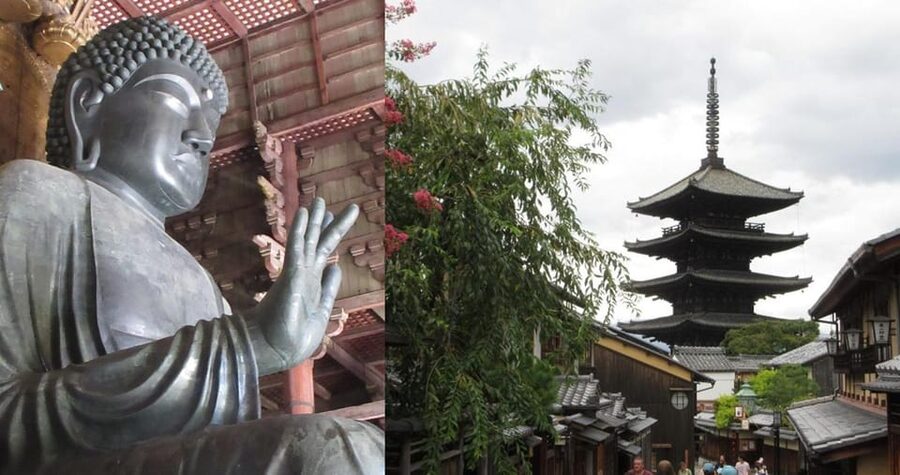
Many day trips force you to choose between Nara and Kyoto. This one gives you a useful sample of both. The morning belongs to Nara, the eighth-century imperial capital, while the afternoon returns you to Kyoto for Kiyomizu-dera and Gion.
That pairing also gives you two very different experiences. Nara feels open and spacious around the temple park. Kyoto becomes more intimate and urban, with rising lanes, old religious routes, souvenir shops, sweets, bars, and traditional entertainment districts.
I would choose this tour early in a Japan visit if you want cultural bearings without arranging every train and admission yourself. You will not see every major sight in either city, but you will cover three important themes: Buddhist worship, imperial-era history, and Kyoto’s traditional arts.
The $176 price deserves a careful look. It is not simply an expensive guided walk. It includes the return train between Kyoto and Nara, local buses, temple entry, an Italian-speaking guide, and practical help throughout the day. You are paying for interpretation and coordination as much as for transport.
Still, the value depends on how much you want guidance. If you are comfortable navigating Japanese trains, buses, and temples on your own, you could spend less independently. If you want explanations in Italian and prefer not to manage connections, the price is easier to justify.
A few more Kyoto tours and experiences worth a look
Meeting at Kyoto Station
The day starts at Kyoto Station, at the space between the four escalators in front of the taxi terminal. This is the taxi terminal, not the bus terminal, and it is just outside the north central entrance on the east side of the station.
The clearest landmark is Kyoto Tower. From the meeting area, you should see the tower in front of the station, toward the upper left rather than the right. That detail matters because Kyoto Station is large and its many exits can be confusing on a first visit.
You receive confirmation and detailed meeting-point instructions the day before. I would arrive early enough to orient yourself before the group moves. A full day with several transport changes is easier when you begin calm and ready.
The 45-minute train to Nara
The first train ride takes about 45 minutes. This is a useful transition from modern Kyoto to the former imperial capital, and the guide can begin setting the scene for the morning.
The transportation is scheduled as part of the tour, so you do not need to buy separate fares for the planned train and bus sections. That makes the morning simpler, particularly if you are still getting used to Japanese stations.
After reaching Nara Station, you take a bus for about 15 minutes toward the Buddha temple. The combination of train, bus, and walking means this is not a door-to-door coach excursion. You should be ready for a day that uses public transport and your own feet.
Todai-ji and the giant Buddha
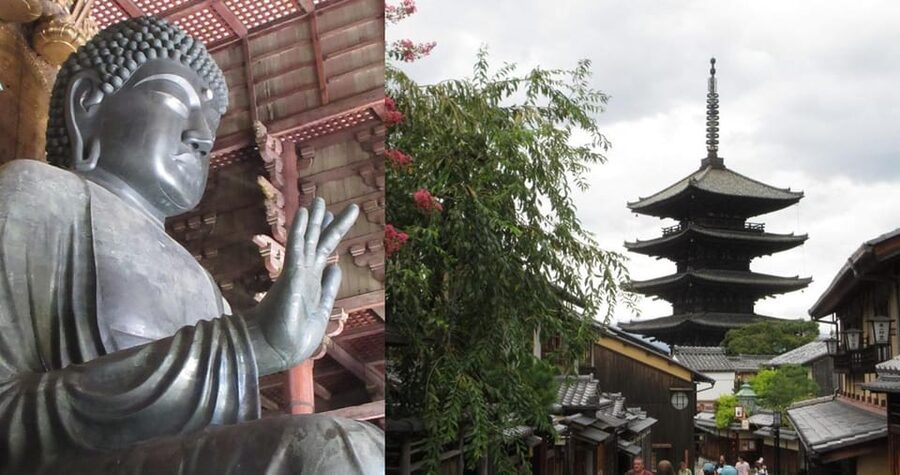
Todai-ji is the morning centerpiece. The temple is famous for its giant Buddha, one of the largest in Japan, but the visit is more meaningful when you understand the scale and purpose behind the monument.
The guide explains the temple’s major structures and the national treasures connected with the site. The focus is not only on what you are looking at, but also on Buddhist devotion and the way ordinary people related to the temple over time.
That added explanation is one of the strongest reasons to book the guided version. Large Japanese temples can be visually impressive but hard to read without context. A guide can point out details, explain symbols, and connect the building to religious practice.
The planned visit lasts about 90 minutes, including guided sightseeing and time for shopping. That is long enough for a serious introduction, but not long enough for an unhurried study of every corner. If you like to photograph each architectural detail or linger over museum displays, you may feel pressed.
Omae’s approach is a good fit for people who want substance without a lecture. He has been praised for speaking excellent Italian, answering questions clearly, and adding mythological stories and local legends. He also allows time to explore and take photographs independently, which keeps the visit from feeling overly controlled.
Feeding the deer in Nara Park
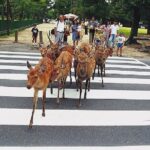
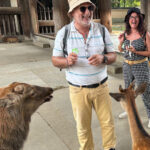
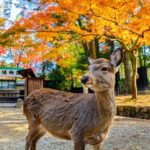
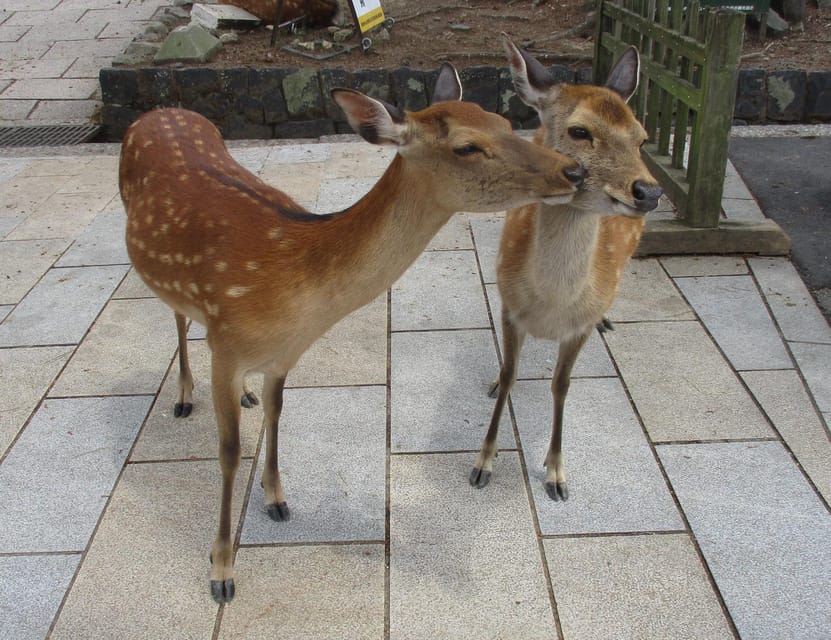
The huge park around Todai-ji is home to tame deer that roam freely among the public. They have lived alongside local people since ancient times, and their presence changes the feel of the temple visit. One moment you are studying a major Buddhist monument; the next, a deer is standing nearby waiting for a snack.
Special deer cookies are sold at stalls in the park. Feeding them is a memorable part of the morning, especially for families, but you should follow the local instructions and finish the food before putting your hands away. The animals are accustomed to people, yet they are still animals, not display pieces.
The park also gives you a short break from the temple buildings. The schedule includes time around Ukimido, with about five minutes of walking from Todai-ji and roughly ten minutes for a visit and walk-by. The stop is brief, so think of it as a scenic pause rather than a major separate attraction.
A few more Kyoto tours and experiences worth a look
Returning to Kyoto for a one-hour break
You then walk about ten minutes before taking the train back to Kyoto, another 45-minute ride. A one-hour break at Kyoto Station follows.
This pause is important. The day has already included a train, bus, temple visit, park walking, and another train. Use the break to eat, get a drink, visit a restroom, or simply sit down before the Kyoto afternoon begins.
The exact meal arrangement is not specified, so do not expect lunch to be included. You should plan to buy food during the break or have something ready. Keeping lunch practical will help you make the most of the second half.
Kiyomizu-dera and the old approach streets
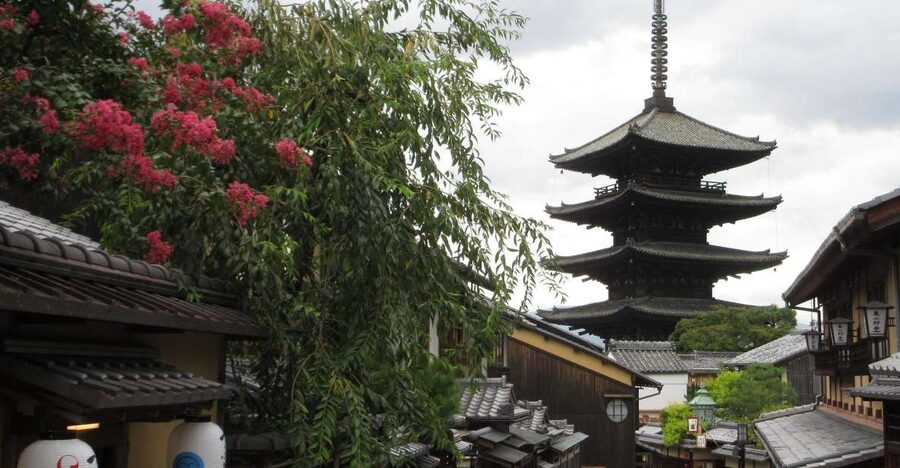
After the break, a bus ride of about 15 minutes brings you closer to the Kiyomizu-dera area. From there, you walk for around 15 minutes before reaching the temple.
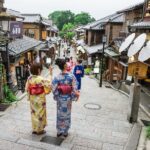
The approach to Kiyomizu-dera is part of the experience. The old pilgrimage routes have developed over centuries and are lined with souvenir shops, sweets, bars, and places aimed at visitors of all ages. This can feel crowded and commercial, but it also shows how religious sites function as living public places rather than sealed museum exhibits.
The temple visit is scheduled for about one hour. Your guide explains the historical, cultural, and religious details along the way, pointing out the sights that are easiest to miss when you are moving with the crowd.
Kiyomizu-dera works well in the afternoon because it contrasts with Todai-ji. Nara’s temple is surrounded by broad parkland, while Kiyomizu-dera connects directly with Kyoto’s streets and hillside routes. You get a sense of how pilgrimage, commerce, and daily life have overlapped for centuries.
The walking surface and approach deserve attention. The program includes several walking sections, including around 20 minutes from Kiyomizu-dera toward Gion. The activity is listed as wheelchair accessible, but anyone who needs specific assistance should ask about the route and pace in advance. The guide offers assistance during the tour, and reasonable schedule changes may be possible.
Gion, geiko, and maiko culture
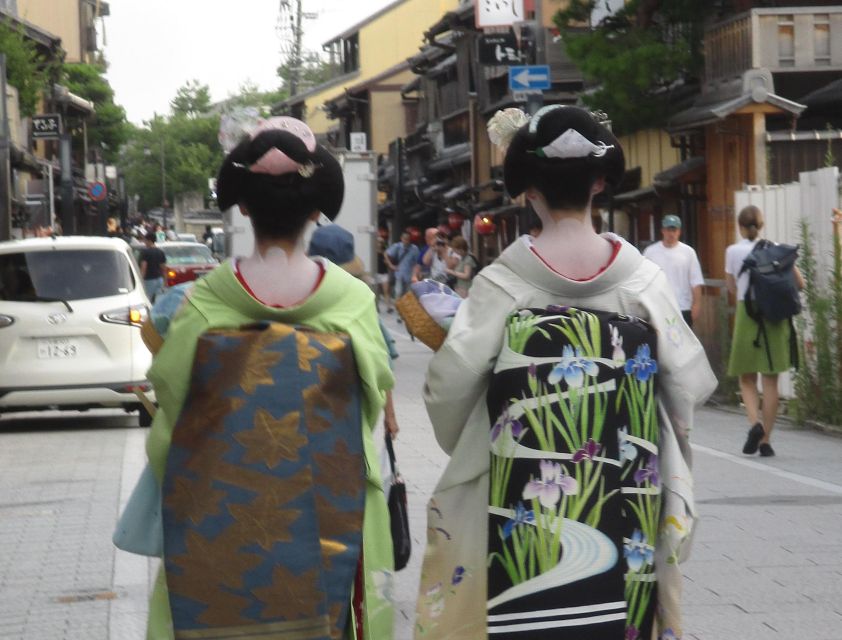
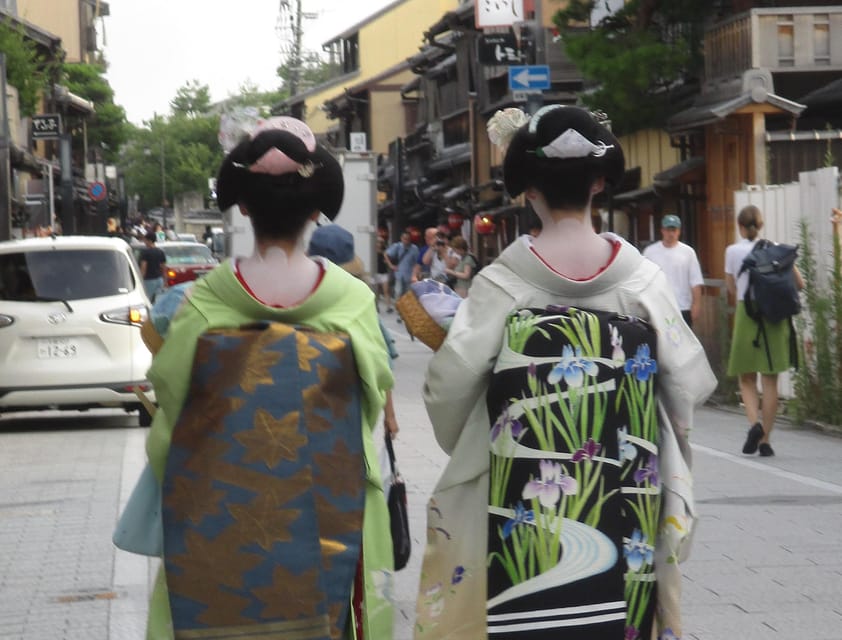
The final guided stop is Gion, reached after the walk from Kiyomizu-dera. The visit lasts about 20 minutes, followed by another ten-minute walk to Pontocho, where the tour ends.
Gion is associated with professional geiko and maiko artists. The word geiko refers to Kyoto’s professional traditional entertainers, while maiko are apprentice performers. The supplied description uses the common but less precise spelling Geisya, so the useful point is this: you are learning about a working cultural district, not entering a staged theme park.
The short Gion visit is best viewed as an introduction. You will hear about the area’s cultural role and traditional entertainment, but 20 minutes is not enough for an extensive exploration of every lane. The tour does not promise a performance or a private meeting with an artist, so keep your expectations focused on place, history, and explanation.
Ending at Pontocho is practical. You can continue into the evening from there, look for dinner, or use the area as a convenient point for your next Kyoto stop. Dinner is not included, but the location gives you useful options after the guided portion ends.
Omae’s guiding style
The guide is one of the central reasons this experience has earned a 4.7 rating from 15 published ratings. The strongest praise focuses on Omae, a Japanese guide who lived in Italy for more than a decade and speaks Italian at a very high level.
His style appears to combine precise explanations with humor and storytelling. He explains monuments clearly, answers questions, and adds mythological legends connected with places and objects. That is especially useful at Todai-ji and Kiyomizu-dera, where a quick visual visit can otherwise leave you with little sense of religious meaning.
I also value the reported flexibility. Omae accommodates reasonable requests, gives people room to take pictures, and does not force every minute into a rigid script. That said, flexibility is offered as far as possible, not guaranteed. The core route and transport schedule still shape the day.
The activity is described as an Italian-language tour, and the additional information lists Italian as the language. One part of the description also refers to answering questions in English, so if your language needs are strict, confirm the arrangement before booking. The reviews consistently praise the Italian delivery.
Group size, pace, and practical value
The group is limited to 15 people. That is small enough for questions and easier movement through temple grounds, though it is not a private tour. A smaller group also makes it more realistic for the guide to adjust briefly for photos or individual needs.
The day lasts from a Kyoto Station morning meeting to an afternoon or evening finish at Pontocho. Start times vary, so check availability for the date you want. The route includes at least two 45-minute train rides, a bus in Nara, another bus in Kyoto, and several walks.
I would wear comfortable shoes and keep your day bag light. You will want room for a drink, a small snack, and anything you buy near Kiyomizu-dera or Todai-ji. The schedule is full, so avoid planning a separate fixed-time activity immediately afterward.
The tour includes scheduled train and bus fares, entrance fees for the listed monuments, explanatory illustrations in Italian, and practical Japan travel information on request at no extra charge. Those extras are useful if this is your first trip and you want help beyond the day’s sightseeing.
Cancellation is free up to 24 hours before the start for a full refund. You can also reserve now and pay later, which helps if your Kyoto plans are still changing.
Who should book this day?
I would recommend it most strongly to Italian-speaking visitors who want cultural explanation rather than a simple photo stop. It suits first-time visitors, families who prefer an organized day, and anyone who wants to combine Nara with Kyoto without handling the connections alone.
It is also a good choice if you care about legends, religious practice, and local history. Omae’s background in Italy and his ability to explain Japanese subjects in polished Italian are unusually valuable here.
I would hesitate if you prefer a slow pace, long meals, or extensive independent wandering. The day covers a lot of ground, and the scheduled time at Kiyomizu-dera and Gion is limited. Independent visitors may also spend less, especially if they already understand Japan’s transport system.
Should you book it?
Book this tour if you want a full cultural day with excellent Italian guidance, included transport, and a carefully connected route from Nara’s giant Buddha to Kyoto’s temples and traditional districts.
Skip it if your priority is a relaxed visit with plenty of unplanned time. For most Italian-speaking visitors, though, the combination of Omae’s explanations, Nara’s deer, Todai-ji, Kiyomizu-dera, and Gion gives the $176 fee a reasonable purpose.
FAQ
Where does the tour start?
It starts at Kyoto Station, in the space between the four escalators in front of the taxi terminal. This is east of the north central entrance. Kyoto Tower should be visible in front of the station, toward the upper left from the meeting point.
Where does the tour finish?
The guided day finishes at Pontocho after a short walk from the Gion area.
How long does the activity last?
It lasts one full day. Check availability for the starting time on your chosen date.
Is the tour conducted in Italian?
Yes. The live tour guide language is Italian, and the explanatory illustrations provided for the monuments are also in Italian.
Who is the guide?
The guide identified for this experience is Omae. He is Japanese, lived in Italy for more than ten years, and is described as speaking excellent Italian.
Are train and bus fares included?
Yes. The scheduled train and bus fares in the program are included in the price.
Are temple entrance fees included?
Yes. Entrance fees for the monuments included in the program are covered.
How large is the group?
It is a small-group tour limited to 15 participants.
Can I cancel or pay later?
You can cancel up to 24 hours before the tour for a full refund. You can also reserve now and pay later.
More Full-Day in Kyoto

More Nara Day Trips in Kyoto
More Golden Pavilion & Temple Tours in Kyoto
More tours in Kyoto we've reviewed


Golden Pavilion & Temple Tours, compared.
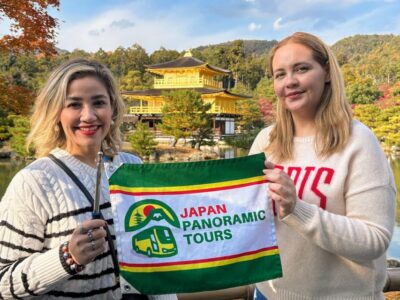 ★ 4.8Kyoto: Fushimi Inari, Kinkakuji, Bamboo Grove 1 Day Bus TourFrom $122510 minutes - 9 hours
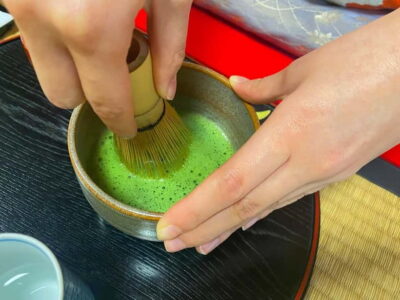 ★ 4.9Kyoto: Tea Ceremony in a Traditional Tea House in KiyomizuFrom $4945 min
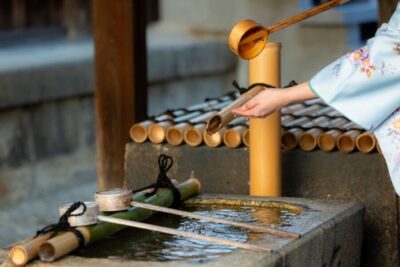 ★ 4.9Kyoto: Tea Ceremony Ju-An at Jotokuji TempleFrom $291h 10m
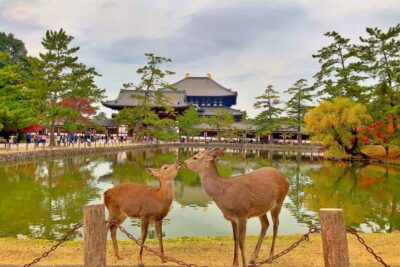 ★ 4.1Osaka/Kyoto:Kinkakuji,Arashiyama,FushimiInariShrine,NaraParkFrom $66
 ★ 4.8Arashiyama Bamboo, Temple, Monkeys, or Secret Sake BreweryFrom $875 hours - 330 minutes
 ★ 5.0Kyoto: Nijo, Kinkaku-ji, Arashiyama, Kiyomizu & Fushimi InariFrom $51