
Reviewed · ARASHIYAMA & BAMBOO TOURS
Arashiyama’s Best Vegan Ramen & Gyoza Class
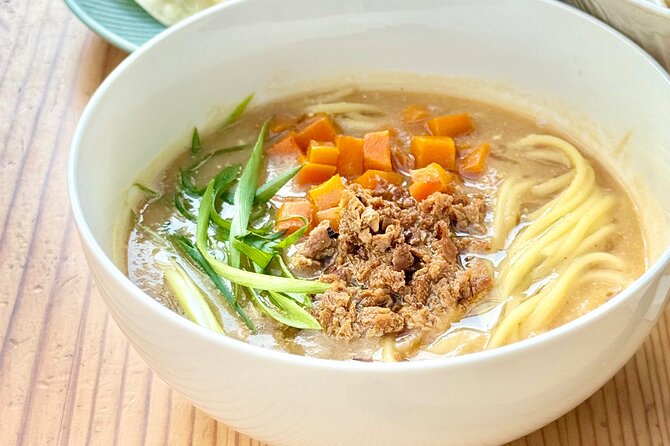
Arashiyama’s best surprise may be waiting away from the bamboo grove: a private cooking class built around serious vegan ramen. You will make two plant-based broths with kombu, shiitake, and Kyoto vegetables, then fold crispy gyoza from scratch. The aim is not merely to offer a meat-free substitute, but to show you how much flavor plants can deliver.
I like the small private setting, where only your group takes part, and the practical recipes you can use after your trip. I also like that the meal is cooked and eaten during the same two-hour session, with an English-speaking instructor, aprons, towels, water, and tea provided.
The main consideration is the narrow booking window. This class averages about 11 days of advance booking, and the home has a dog, so it is not a good fit if you have animal allergies. At $65.15 per person, the price is fair for a private lesson and full meal, but less attractive if you only want a quick bowl of ramen.
In This Review
- Key points at a glance
- Starting near Arashiyama Station
- A plant-based broth with real depth
- Rolling gyoza and building a complete meal
- What the two-hour session feels like
- Why the private format matters
- Recipes that follow you home
- Who should book this class
- Booking, timing, and cancellation
- Should you book Arashiyama’s vegan ramen class?
- FAQ
- Where does the ramen and gyoza class begin?
- Where does the activity end?
- How long does the class last?
- What will I cook?
- Is the food fully vegan?
- Are gluten-free options available?
- Is the class private?
- Is instruction available in English?
- Are food and drinks included?
- Is the class suitable for people with animal allergies?
- What is the cancellation policy?
Key points at a glance
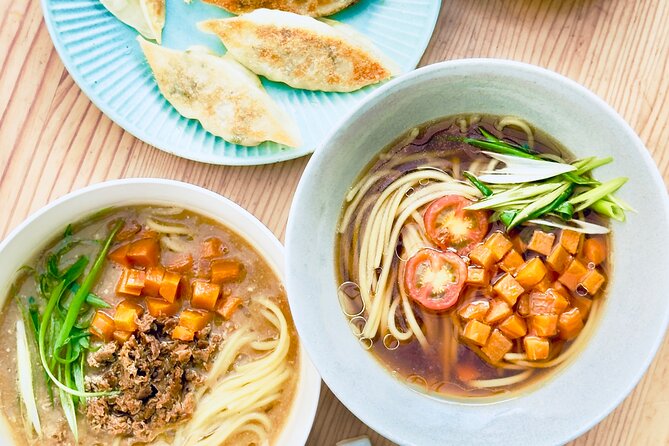
- Two broths from scratch: Compare plant-based ramen styles built with kombu, shiitake, and local Kyoto vegetables.
- Crispy gyoza included: You will prepare dumplings as well as ramen, giving the class more substance than a single-dish workshop.
- Private Arashiyama setting: Only your group participates, creating a more personal pace for questions and instruction.
- English-speaking guidance: Satoru and Akiko are the hosts named for the cooking experience, with recipes supplied for home use.
- About two hours with a meal: You cook, sit down, and eat what you make rather than leaving with an unfinished lesson.
- Plant-based and dashi-free: The menu suits vegans and vegetarians, with gluten-free options available if arranged in advance.
Starting near Arashiyama Station
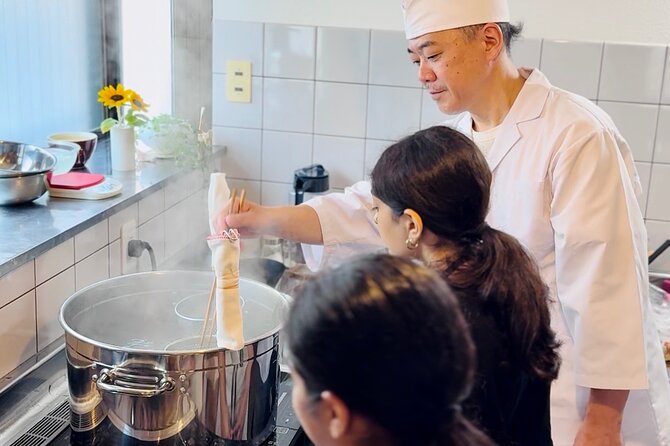
The class begins at Arashiyama Station in Higashichikawacho, Nishikyo Ward, Kyoto. That location matters because Arashiyama days can become crowded and tiring. A hands-on meal gives you a reason to slow down rather than rushing from one famous sight to the next.
The meeting point is near public transportation, and the activity ends back there. You should allow time to find the station area before the start, especially if you are visiting Arashiyama for the first time. The exact class takes about two hours, so it can fit before or after sightseeing, though you will want to arrive ready to cook rather than squeezing it between tight train connections.
This is not a restaurant meal with a short demonstration. You are entering a private home setting and taking part in the preparation. That makes the experience more personal, but it also means you should treat the meeting time and household setting with care.
The home is described as clean and welcoming, and aprons and towels are provided. A dog lives there. If animal allergies are part of your travel planning, choose another activity. This is a clear practical issue, not a minor footnote.
A few more Kyoto tours and experiences worth a look


A plant-based broth with real depth
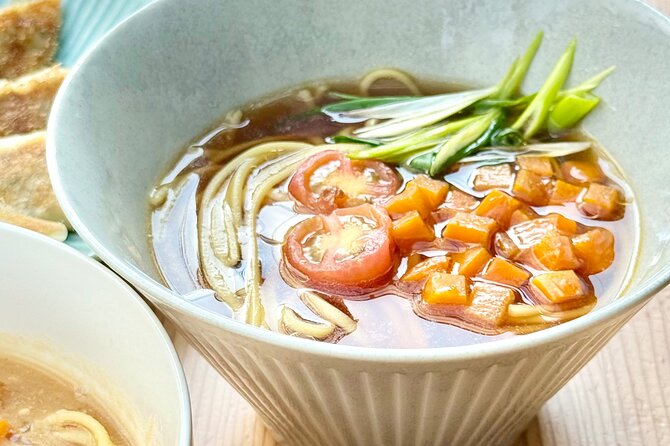
The central lesson is broth. The hosts spent months working on a 100 percent plant-based version with enough body to satisfy people used to tonkotsu, the creamy pork-bone style associated with hearty ramen.
You will work with kombu, shiitake, and fresh Kyoto vegetables. These ingredients are familiar in Japanese cooking, but the value lies in learning how they are layered. A bowl of vegan ramen can be thin if the broth is treated as an afterthought. Here, the broth is the main project.
The class is also 100 percent dashi-free. That point is useful for anyone checking ingredients carefully, since many Japanese dishes rely on dashi made with fish. The menu is designed to remain plant-based rather than quietly depending on a seafood stock.
You should expect two types of ramen broth, although the supplied details do not specify their exact flavors or toppings. That leaves room for the class to focus on the method rather than turning the session into a fixed tasting menu. You get to compare two approaches and leave with recipes instead of only a photograph of lunch.
For meat eaters, this is a useful test of your assumptions. You may arrive expecting a compromise and find that the appeal comes from umami, texture, and careful seasoning rather than from a meat substitute. For vegans and vegetarians, the lesson offers something more useful than reassurance that the food is acceptable. It gives you a way to make a substantial bowl at home.
Rolling gyoza and building a complete meal
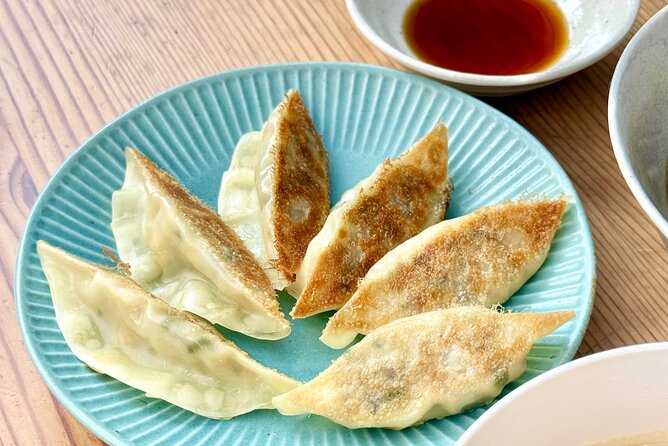
The second cooking project is crispy gyoza. Making dumplings adds handwork to the class and breaks up the broth preparation. You will learn how the filling is handled and how the wrappers are shaped and cooked, with the goal of producing a crisp finish.
The available information does not spell out every step or ingredient in the gyoza. I would therefore book this for the chance to learn a home-cooking method, not for a promise of a particular filling or a long list of techniques.
The combination works well. Ramen supplies the broth and noodles, while gyoza brings a different texture and a satisfying side dish. You are not spending two hours on a single pot. You are preparing a meal with enough variety to feel like dinner or lunch.
The class includes the food you prepare and eat. Water and tea are freely available, while alcoholic drinks and soda are not included. If you want beer, wine, or a soft drink with the meal, plan to arrange that separately, though the experience itself is built around cooking rather than drinking.
What the two-hour session feels like
The class is described as lasting about two hours. Within that time, you should expect a practical sequence: meet the instructor, put on an apron, learn the broth and gyoza methods, cook the dishes, and sit down to eat them.
The precise order can vary depending on the cooking process. Broth often needs attention while other ingredients are prepared, so the session should feel like a working kitchen rather than a lecture. You can ask questions as you go, which is especially helpful if you want to repeat the recipes at home.
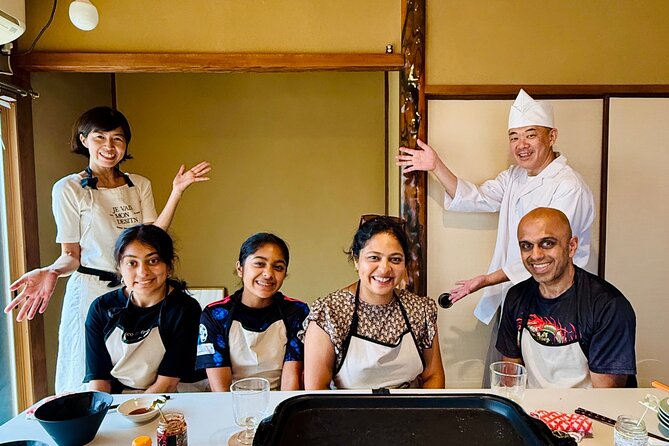
An English-speaking instructor leads the activity. The hosts named in the experience information are Satoru and Akiko, and the personal nature of the setting is a major part of the appeal. A private class gives you more freedom to ask about small details, such as how to build flavor without fish or meat, rather than simply following a large group.
The class has received a 4.7 rating from six reviews, with particular praise for organization, clear instruction, the clean home, and the relaxed atmosphere. One detailed account describes a friendly, well-planned session with the meal prepared and eaten on site. Another highlights the hosts’ attentiveness and professional approach. Those are useful signs for anyone worried that a home lesson might feel improvised.
At the same time, the review history includes comments about basic Japanese cooking lessons involving rice, miso soup, and tempura. That material does not match the current ramen and gyoza menu exactly, so I would focus on the present description when deciding what you will cook. The reliable promise here is two ramen broths and crispy gyoza.
Why the private format matters
A private activity can change the value of a cooking class. You are not sharing the kitchen with a large group of strangers, and the instructor can respond to your questions and cooking ability. That is especially useful if one person in your group is a confident cook and another rarely works in the kitchen.
It also suits families, couples, and small groups who want an activity with a local household feel. The setting is more intimate than a commercial cooking studio. You should be comfortable with that tradeoff: a private home is personal and memorable, but it is not designed like a restaurant or classroom.
The private format also makes the $65.15 price easier to justify. You receive instruction, ingredients, a full meal, an apron, towels, recipes, water, and tea. You are paying for the time and attention of a host as well as the food.
Still, value depends on your goal. If you want the cheapest vegan meal in Kyoto, a restaurant will cost less. If you want to learn methods you can repeat, ask questions in English, and share a private meal near Arashiyama, the price is more reasonable.
A few more Kyoto tours and experiences worth a look



Recipes that follow you home
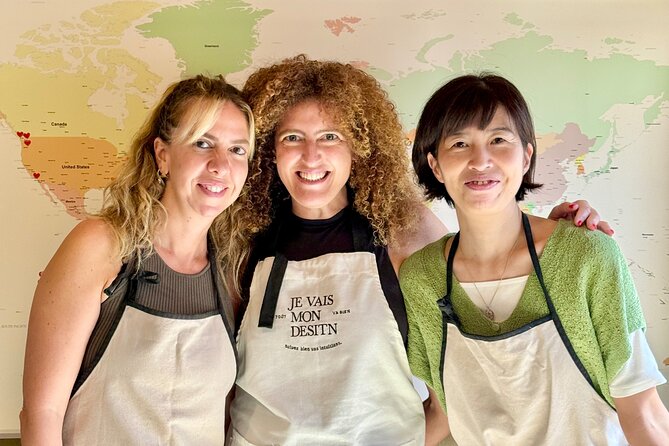
The recipes may be the most useful part of the class after the meal is finished. Ramen is easy to enjoy and harder to reproduce if you do not understand the broth. A written recipe gives you a starting point for making the dish again rather than treating the class as a one-time novelty.
I like that the lesson centers on ingredients available in Japanese cooking rather than relying on a packaged imitation. Kombu, shiitake, and vegetables show you how umami can be built from plants. You can then adjust the method to suit your own kitchen.
The class also has value for visitors who are curious about Japanese food but need to avoid fish-based stock. The dashi-free approach removes a common source of uncertainty. If you have food allergies, tell the provider before the class. Gluten-free options are available, but you should not assume they happen automatically without advance notice.
The recipes are included, but the supplied information does not say how many recipes or in what format. Think of them as a useful take-home aid, not a full Japanese cookbook.
Who should book this class

I would recommend this experience to a vegan or vegetarian who wants more than a standard restaurant meal. You will get a plant-based menu designed as the main event, with enough cooking to make the food feel earned.
It also suits omnivores who care about flavor and want to test a meat-free broth without giving up a hearty meal. The class was created by food lovers who also enjoy meat and fish, which explains the focus on depth and satisfaction rather than on dietary labels alone.
Couples and small groups should benefit most from the private arrangement. It is also a good choice if you want an indoor activity during an Arashiyama visit and prefer a slower local experience to another sightseeing stop.
I would be more cautious if you dislike home-based activities, have a dog allergy, or want a highly technical chef-led course. The class is friendly and practical, not presented as advanced culinary training. It is also not the best pick if you need a guaranteed list of exact ingredients before booking, since the menu details are fairly brief.
Booking, timing, and cancellation
The experience is booked around 11 days ahead on average, so I would not leave it until the last day of your Kyoto stay. Confirmation arrives within 48 hours, subject to availability.
You can cancel for a full refund up to 24 hours before the start time. Cancellations or changes made less than 24 hours ahead are not accepted for a refund. The cut-off follows local Kyoto time, so check the clock carefully if you are changing plans from another time zone.
The ticket is mobile, which keeps the arrival process simple. Bring your appetite, arrive at the station meeting point on time, and notify the provider in advance about allergies or dietary needs.
Should you book Arashiyama’s vegan ramen class?
Book it if you want a private, hands-on meal and care about learning how Japanese broth gets its flavor. The two broths, handmade gyoza, English instruction, and recipes give the experience more lasting value than a meal alone.
Skip it if you are seeking a bargain bowl of ramen, a large professional kitchen, or a menu built around alcohol. The dog in the home also rules it out for people with animal allergies.
For most food-focused visitors, I see this as a well-priced way to spend two hours in Arashiyama. You cook, eat, ask questions, and leave with methods that can change the way you make soup at home. That is a useful souvenir, and one you can actually use.
FAQ
Where does the ramen and gyoza class begin?
The class begins at Arashiyama Station in Higashichikawacho, Nishikyo Ward, Kyoto, 616-0002, Japan.
Where does the activity end?
The activity ends back at the meeting point near Arashiyama Station.
How long does the class last?
The class lasts approximately two hours.
What will I cook?
You will make two types of plant-based ramen broth and crispy gyoza from scratch.
Is the food fully vegan?
Yes. The experience is 100 percent plant-based and dashi-free.
Are gluten-free options available?
Gluten-free options are available. Tell the provider about your needs in advance.
Is the class private?
Yes. Only your group participates in the activity.
Is instruction available in English?
Yes. An English-speaking instructor is included.
Are food and drinks included?
The meal you cook and eat is included. Bottled water and tea are freely available. Alcoholic beverages and soda are not included.
Is the class suitable for people with animal allergies?
No. A dog lives at the home, so the class is not recommended for people with animal allergies.
What is the cancellation policy?
You can cancel up to 24 hours before the start time for a full refund. Cancellations or changes made less than 24 hours before the experience are not accepted for a refund.
More Workshops & Classes in Kyoto


More Food Experiences in Kyoto
More Arashiyama & Bamboo Tours in Kyoto
More tours in Kyoto we've reviewed






Arashiyama & Bamboo Tours, compared.
 ★ 4.8Kyoto: Fushimi Inari, Kinkakuji, Bamboo Grove 1 Day Bus TourFrom $122510 minutes - 9 hours
 ★ 4.1Osaka/Kyoto:Kinkakuji,Arashiyama,FushimiInariShrine,NaraParkFrom $66
 ★ 4.7Kyoto/Osaka: Nara, Fushimi Inari Taisha, Arashiyama Bus TourFrom $529 - 10 hours
 ★ 5.0Kyoto Arashiyama Walking Tour: Bamboo, Monkeys, Gardens & SecretsFrom $65
 ★ 4.8Arashiyama Bamboo, Temple, Monkeys, or Secret Sake BreweryFrom $875 hours - 330 minutes
 ★ 4.4Osaka/Kyoto: Arashiyama, Nara & Fushimi Inari Shrine w/LunchFrom $61