

Reviewed · WALKING TOURS
Kyoto : Private Custom Walking Tour With A Local Guide
Kyoto is easier to understand when someone helps you read the city. On this private walking tour, you can link famous sights such as Fushimi Inari, Kiyomizu-dera, Gion, and the Philosopher’s Path with the smaller details that are easy to miss alone. Guides have adjusted routes for children, heat, food interests, and even a climb up Daimonji.
I like the one-to-one format, which lets you ask questions and set the pace instead of following a fixed group. I also like the practical advice, from restaurant suggestions to help getting around town. The main drawback is that the price covers the guide and walking experience, not attraction tickets, food, drinks, or all local transportation.
In This Review
- Key points at a glance
- Why a private Kyoto walk can be worth your first morning
- Building a route around your Kyoto interests
- Fushimi Inari and southern Kyoto
- Kiyomizu-dera, Sannenzaka, and Ninenzaka
- Gion, Maruyama Park, and the Philosopher’s Path
- Local food, cafes, and useful Kyoto advice
- What the two-hour and eight-hour options really mean
- The guides and the quality of the personal connection
- Price, extra costs, and overall value
- Who should book this Kyoto walking tour?
- FAQ
- How long is the Kyoto private walking tour?
- What languages do the guides speak?
- Is the tour private?
- Can the tour be customized?
- Is hotel pickup available?
- Are attraction tickets included?
- Are food and drinks included?
- Is transportation included?
- Is the tour wheelchair accessible?
- What is the cancellation policy?
Key points at a glance
- Choose two to eight hours: A short orientation works well on arrival, while a full day can connect several areas.
- Set your own route: Ask for temples, shrines, museums, food, architecture, shopping areas, or quieter streets.
- Meet a guide at your Kyoto accommodation: Hotel pickup is available when your lodging is in the city.
- Expect local advice, not just facts: Guides have suggested udon, ramen, cafes, sake, and ways to move around Kyoto.
- Good for mixed-age groups: Guides have adapted walks for children, teenagers, couples, and families dealing with summer heat.
- Plan for extra costs: Admission tickets, meals, drinks, and local transportation are not included.
Why a private Kyoto walk can be worth your first morning
Kyoto has no shortage of famous places. The problem is choosing between them, reaching them in a sensible order, and knowing what you are looking at once you arrive. A private guide can turn a long list of temples into a route that fits your interests and energy.
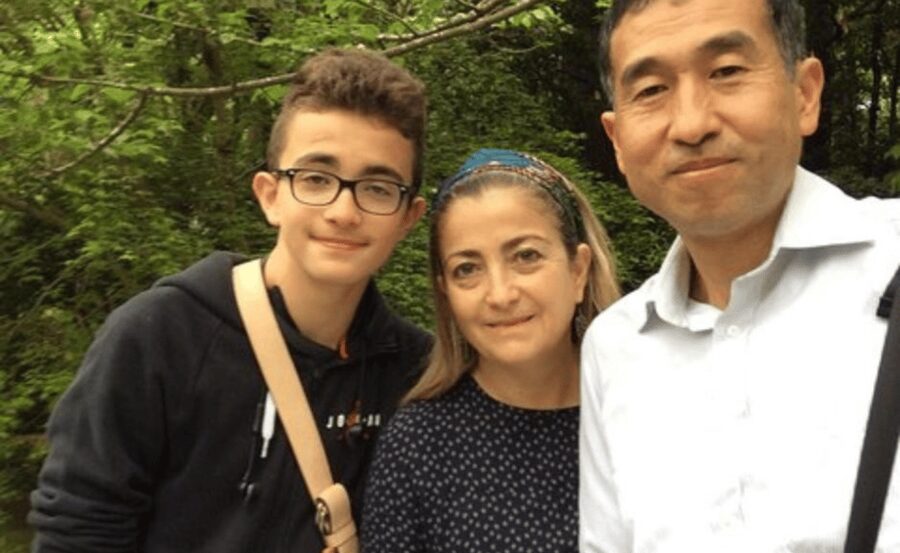
I would consider booking this early in your stay. A two-hour outing can help you get oriented, while a longer walk can show you which neighborhoods deserve more of your time later. Anne and her son used their tour to understand Kyoto’s different areas before exploring on their own, which is exactly how I think this format works best.
The tour is private, so you are not sharing the guide with strangers. That matters in Kyoto, where a family with young children may need frequent breaks, while a couple interested in architecture may want longer explanations at each site. The guide can adapt the route before and during the walk.
You should still keep your expectations clear. This is primarily an exterior sightseeing and walking experience. Museums and other attractions can be included if arranged in advance, but entrance tickets are extra. The flexibility is the strength of the tour, not a promise that every major Kyoto sight will fit into one day.
Other walking tours we've reviewed in Kyoto
Building a route around your Kyoto interests
Before meeting, think about what you actually want from Kyoto. You can request major temples and shrines, a historic district, gardens, architecture, museums, food stops, or areas that feel less crowded. The more specific you are, the more useful the route can become.
One guide, Omar, contacted his guests several days beforehand to ask what they wanted to see. That kind of preparation is valuable because Kyoto’s sights are spread across the city. A route focused on eastern Kyoto will feel very different from one covering Fushimi Inari and southern Kyoto.
You can also tell the guide what you do not want. If you have already visited several temples, ask for neighborhood walks, local food, or a change of pace. If this is your first day in Japan, ask for basic explanations of shrine customs, temple etiquette, transport, and the difference between the two.
The tour can also include a museum visit if you request it ahead of time. Since admission is not included, confirm the plan and ticket costs before the meeting. A museum may be a good choice on a hot or rainy day, but it will reduce the time available for outdoor sights.
Fushimi Inari and southern Kyoto
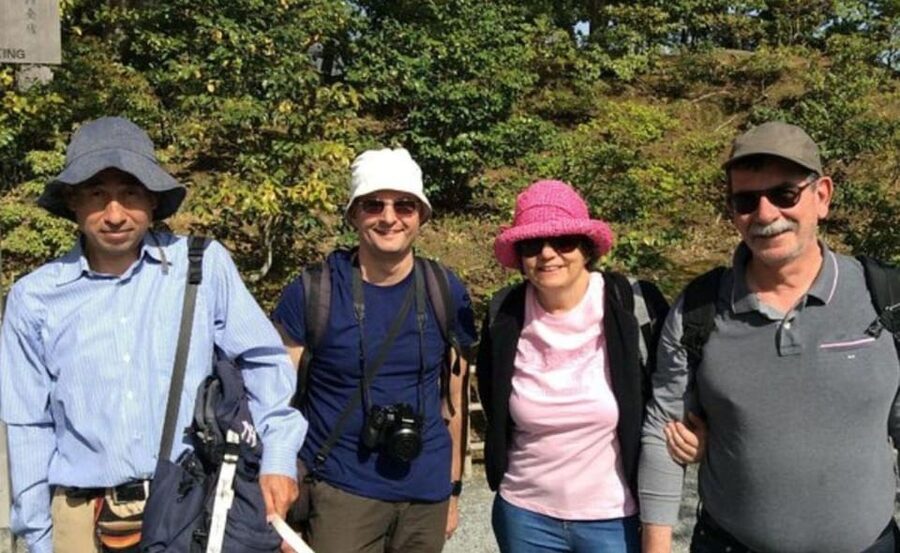
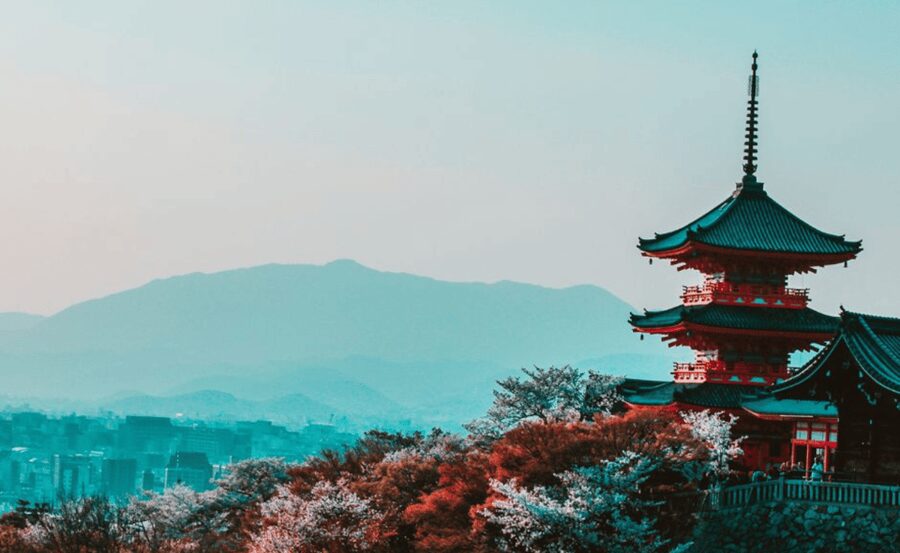
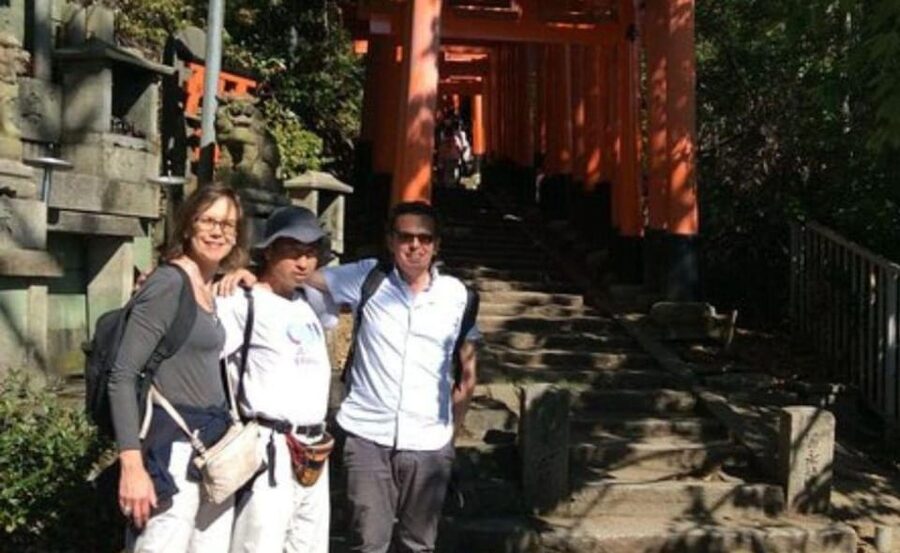
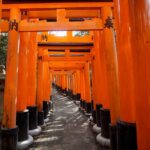
Fushimi Inari is one of Kyoto’s most recognizable sights, with thousands of orange torii gates climbing the wooded hillside. A guide can give the shrine’s symbols and rituals some meaning instead of leaving you with a quick photo and a vague sense of having seen a famous place.
The full hillside route can take time and involves uphill walking. If you want only the lower gates, say so. If you enjoy walking and have the energy, you can ask to go farther. Your private guide can help judge the pace, though the tour does not include a vehicle.
A longer southern Kyoto route might also include Sanjusangendo Temple. Its hall is known for the rows of 1,001 Kannon statues, an impressive sight that benefits from explanation. Lesley’s guide, Wajid, paired it with Fushimi Inari and Kiyomizu-dera, creating a full day with both major landmarks and cultural context.
Remember that famous places can be busy. A private guide cannot remove crowds, but can help you move through the area with less confusion and explain what deserves your attention. You will get more from the stop if you are willing to listen, look up from your camera, and ask questions.
Kiyomizu-dera, Sannenzaka, and Ninenzaka
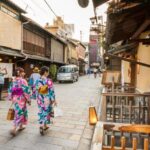
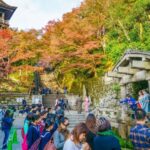
Kiyomizu-dera is one of the essential Kyoto stops, and the approach matters almost as much as the temple itself. The lanes around Sannenzaka and Ninenzaka bring you through traditional-looking streets, shops, snack counters, and strong photo spots.
This area is also a good test of the tour’s value. Without context, you may see attractive wooden buildings and a famous temple. With a guide, you can ask about the details of the streets, the site’s place in Kyoto, and the customs connected with the temple.
Wajid’s route included Kiyomizu-dera, Sannenzaka, Ninenzaka, and Maruyama Park. That combination makes sense geographically and gives you a steady progression from major temple to old lanes to open parkland. It is a fuller outing than simply arriving at Kiyomizu-dera, taking pictures, and leaving.
The tradeoff is walking on sloped streets and spending time in popular areas. Wear shoes you can walk in and tell your guide if you need a slower pace. A private booking is especially useful here for families, since the guide can adjust the amount of explanation and the number of stops.
Gion, Maruyama Park, and the Philosopher’s Path
Gion offers a different view of Kyoto. Its lanes connect traditional architecture with the city’s geisha culture, though you should treat the area as a living neighborhood, not a stage set. A guide can explain the cultural details and help you enjoy the atmosphere without acting intrusive.
A walk through Maruyama Park can pair well with Gion. Wajid pointed out cultural features and unusual details, including a Pokémon manhole cover. Small observations like this give a walk personality, especially after several formal temple visits.
The Philosopher’s Path offers another change of mood. Kevin combined it with Ginkakuji, also called the Silver Pavilion, after a climb up Daimonji. He began with an explanation of the difference between temples and shrines, then adjusted the amount of information as the day continued.
That is an important point. A good walking tour is not a lecture from start to finish. You need enough explanation to understand what you see, plus quiet time to look around. Kevin was praised for judging when to speak and when to let the setting do the work.
Other guided tours in Kyoto

Local food, cafes, and useful Kyoto advice
Food can be part of the plan, but it is not included in the $62 price. Guides have suggested udon, ramen, cafes, pizza, frozen apple pie, and sake tastings. Flavio’s full-day route included a sake stop, pizza, and a bowl of ramen recommended through his local connections.
These suggestions may be one of the tour’s most useful extras. A restaurant recommendation from someone who knows the area can save you from choosing at random after a tiring day. Still, ask about the budget and type of food you want. The guide can give advice, but you pay for meals and drinks yourself.
Cafe stops can also make the walk more comfortable. Sophie began with iced coffee at AG Coffee in Sakyo during very hot weather, then continued toward Daimonji and the Philosopher’s Path. A break like that is not wasted time. It lets you reset, talk with your guide, and avoid turning the tour into an endurance test.
Several guides also gave advice for the rest of the visit. That can include areas to explore, food to try, and ways to get around. Bring a short list of questions, since the informal conversation may be as helpful as the formal sightseeing.
What the two-hour and eight-hour options really mean

The two-hour option is best used as a focused introduction. Choose one area, such as Gion and Maruyama Park, or one clear theme, such as shrines and temples. Trying to cover all of Kyoto in two hours would leave you with too much transport and too little time at each place.
A four-hour walk gives you room to combine nearby districts. You might connect Fushimi Inari with another southern Kyoto sight, or pair Gion with Kiyomizu-dera and the lanes around it. The exact route depends on your interests and the starting point.
An eight-hour day is the most flexible choice, but it is also the most demanding. Flavio’s day included temples, shrines, a quiet river walk, sake, pizza, and ramen. That variety sounds appealing, but you should plan pauses and be realistic about Kyoto’s summer heat.
The tour includes walking and public transport as part of the experience, but local transportation costs are not included. Car transportation is not part of this walking tour. Ask what transport your chosen route requires so the final cost does not surprise you.
The guides and the quality of the personal connection
The guide makes the biggest difference here. Maria was described as a licensed guide who had lived in Japan for more than 25 years and could discuss temple history, culture, and economics. Terry helped explain shrines and temples in a way that made later independent sightseeing more meaningful.
Other guides brought different strengths. Jerome was praised for punctuality, city knowledge, flexibility, and taking good photographs. Gef combined a relaxed manner with an interest in Japan, architecture, and the route itself. Ian showed a guest all the requested areas and added more, though the short booking left the guest wishing for extra time.
That last point is useful. A two-hour booking may feel like a bargain until you realize how much you want to cover. If your wish list includes several districts, book a longer slot or narrow the focus before you arrive.
Languages offered are English, Spanish, French, and Italian. The booking is for a private group, and the tour is wheelchair accessible. You should still discuss the route in advance, especially if it includes steep approaches, long distances, or older streets.
Price, extra costs, and overall value
At $62 per person, this is a reasonable price for a private, customizable introduction to Kyoto, especially if you are sharing the cost with family or friends. The value is highest when you use the guide for orientation, cultural explanation, and practical advice, rather than treating the outing as a simple escort between photo stops.
The base price does not include food, drinks, attraction tickets, or local transportation around the city. That means a museum, temple admission, cafe stop, or train ride can increase the total. These costs are normal for Kyoto sightseeing, but you should budget for them.
The tour is less compelling if you already know Kyoto well and prefer to wander alone. It is also not the cheapest way to check off a fixed list of sights. A public bus, train, or self-guided route will cost less, though you will need to handle the planning and interpretation yourself.
I see the strongest value for first-time visitors, families, couples, solo visitors, and anyone with limited time. The guide can help you avoid a scattered day and leave you with a better sense of where to return.
Who should book this Kyoto walking tour?
Book it if you want Kyoto explained in plain language and shaped around your own interests. Families can request a kid-friendly pace, as Jerome adapted his Gion walk for children and another guide kept twin boys engaged in hot weather.
It also suits travelers who care about culture but do not want constant formal commentary. The best moments may be small ones: learning how temples differ from shrines, hearing why a street matters, finding a good bowl of noodles, or getting a practical suggestion for tomorrow.
Solo visitors can benefit from the private format because the conversation stays personal. Couples can build a route around architecture, gardens, food, or photographs. Guests with mobility needs should appreciate the stated wheelchair accessibility, while confirming the exact route before booking.
I would skip it if you want a fully planned coach-style tour, included admissions, or guaranteed transportation by car. This is a flexible walk, and its success depends on telling the guide what you want.
The booking allows cancellation up to 24 hours before the start for a full refund, and you can reserve now and pay later. Starting times vary by availability, and the tour lasts from two to eight hours.
FAQ
How long is the Kyoto private walking tour?
You can book a tour lasting from two to eight hours. Starting times depend on availability.
What languages do the guides speak?
Guided tours are available in English, Spanish, French, and Italian.
Is the tour private?
Yes. The experience is for a private group, so you are not placed with unrelated participants.
Can the tour be customized?
Yes. You can request sights, neighborhoods, museums, food interests, and other areas that matter to you. Tell the team about museum visits ahead of time.
Is hotel pickup available?
You can meet the guide at your accommodation if it is located in Kyoto city.
Are attraction tickets included?
No. Tickets to temples, museums, and other attractions are not included. The team can help you book tickets for visits you want to make.
Are food and drinks included?
No. You pay separately for drinks, meals, cafe stops, and tastings.
Is transportation included?
The experience is a walking tour and includes walking and public transport, except where a different option is selected. Local transportation around the city is not included, and car transportation is not part of the walking tour.
Is the tour wheelchair accessible?
Yes, the activity is listed as wheelchair accessible. Confirm your preferred route in advance so the guide can match the walk to your needs.
What is the cancellation policy?
You can cancel up to 24 hours in advance for a full refund. You can also reserve now and pay later.
More Private Tours in Kyoto
More Guided Tours in Kyoto
More Walking Tours in Kyoto
More tours in Kyoto we've reviewed



Walking Tours, compared.
 ★ 4.7Kyoto Geisha Walking Tour: Gion District & Hidden GemsFrom $252 hours
 ★ 4.7Kyoto: Gion Geisha District Walking Tour – Stories of GeishaFrom $202 hours
 ★ 4.5Night Walk in Gion: Kyoto’s Geisha DistrictFrom $211h 40m
 ★ 5.0Kyoto Gion Geisha District Walking Tour – The Stories of GeishaFrom $25
 ★ 5.0Nishiki Market Brunch Walking Tour (7 Tastings + Brunch)From $68
 ★ 4.9Kyoto: Gion Magical Night Walking Tour with Geisha InsightsFrom $34