
Reviewed · NARA DAY TRIPS
Kyoto & Nara Private Luxury Car Tour: Encounter with Deer
Kinkakuji’s gold, Fushimi Inari’s red gates, and Nara’s friendly deer make this private 10-hour car tour a strong way to connect Kyoto’s famous sights with Nara in one long day. You get picked up at your hotel, travel in an air-conditioned vehicle, and avoid the work of arranging several trains and local transfers.
I like the door-to-door service and the freedom of having a private vehicle. Drivers such as Amber and Wang have been praised for smart drop-off points, kind service, WiFi, bottled water, and USB charging. The main catch is time: six major sights, two cities, and optional stops can make the day feel rushed, especially if Sanjusangendo, Nishiki Market, or Gion is added.
In This Review
- Key points at a glance
- A long day linking Kyoto’s icons with Nara’s deer
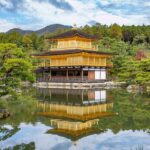
- Kinkakuji and the first look at Kyoto’s gold
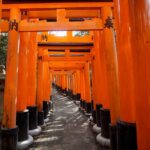
- Fushimi Inari beneath thousands of red gates
- Sanjusangendo, Kyoto’s quieter interior stop
- Crossing to Nara and entering Todaiji
- Meeting Nara’s deer in Nara Park
- Optional Kyoto stops on the way back
- What the private vehicle adds
- The guide question and language expectations
- Timing, walking, and the real trade-off
- Who gets the best value from this tour
- Should you book the Kyoto and Nara private car tour?
- FAQ
- How long is the Kyoto and Nara private car tour?
- Where does pickup take place?
- How many people can join the private tour?
- Are entrance fees and meals included?
- What languages does the driver speak?
- Is the tour wheelchair accessible?
Key points at a glance
- Kinkakuji first: See Kyoto’s famous gold-leaf pavilion reflected in its pond.
- Fushimi Inari’s torii tunnel: Walk beneath a long run of red shrine gates, with time limits likely shaping how far you go.
- Sanjusangendo if time permits: View 1,001 golden statues inside Japan’s longest wooden structure.
- Todaiji and its giant Buddha: Visit Nara’s huge wooden temple and its remarkable bronze image.
- Nara Park deer: Buy deer crackers and approach the animals carefully and respectfully.
- Private comfort: Hotel pickup, fuel, tolls, parking, WiFi, charging sockets, and a private group of up to five are included.
A long day linking Kyoto’s icons with Nara’s deer
This tour is built for you if you want to cover the headline sights without learning Kyoto and Nara’s transport systems in a single day. Your driver meets you at the main gate of your Kyoto hotel in the morning, then takes you between stops in a private vehicle.
The advertised price is $435 per group of up to five people. For a full vehicle, that works out to $87 per person before entrance fees and meals. That is a fair value for families or small groups who would otherwise need several train tickets, taxis, and a lot of coordination. For one or two people, the price feels less like a bargain, but the comfort and time savings may still be worthwhile.
This is a driver-led sightseeing service, not automatically a full guided tour. The driver speaks Chinese, English, or Japanese, but the English service is described as basic. If you want detailed explanations at each temple, you need to add an expert guide through the booking process.
A few more Kyoto tours and experiences worth a look
Kinkakuji and the first look at Kyoto’s gold
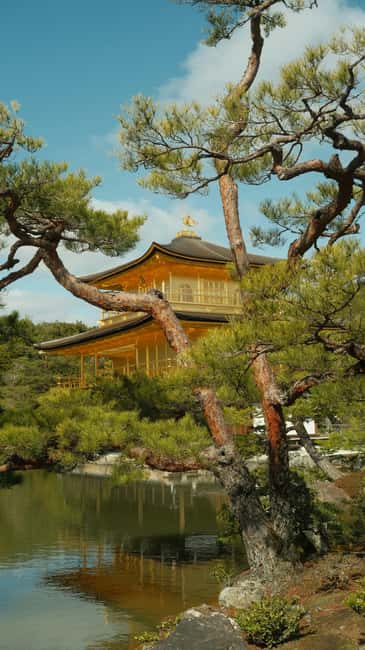
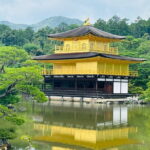
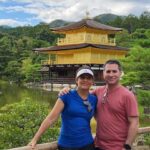
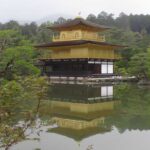
Kinkakuji, also called the Golden Pavilion, is a practical first stop because it gives you one of Kyoto’s strongest visual moments early in the day. The three-story pavilion is covered in gold leaf and sits beside a pond, where the bright building can reflect in the water.
You follow the temple grounds rather than enter the pavilion itself. The appeal is the view, the gardens, and the quick sense of old Kyoto that comes from seeing this carefully maintained site in person.
I would keep your expectations in check. Kinkakuji is one of Kyoto’s most recognizable sights, so it is not a quiet discovery. The stop is worthwhile for first-time visitors, but the exact amount of time you get there depends on traffic, crowds, and the rest of the schedule.
Your private car helps here. You are dropped near the sightseeing area, then return to a known vehicle instead of trying to find a bus or taxi afterward. That matters later in the day, when the tour is moving between Kyoto and Nara.
Fushimi Inari beneath thousands of red gates
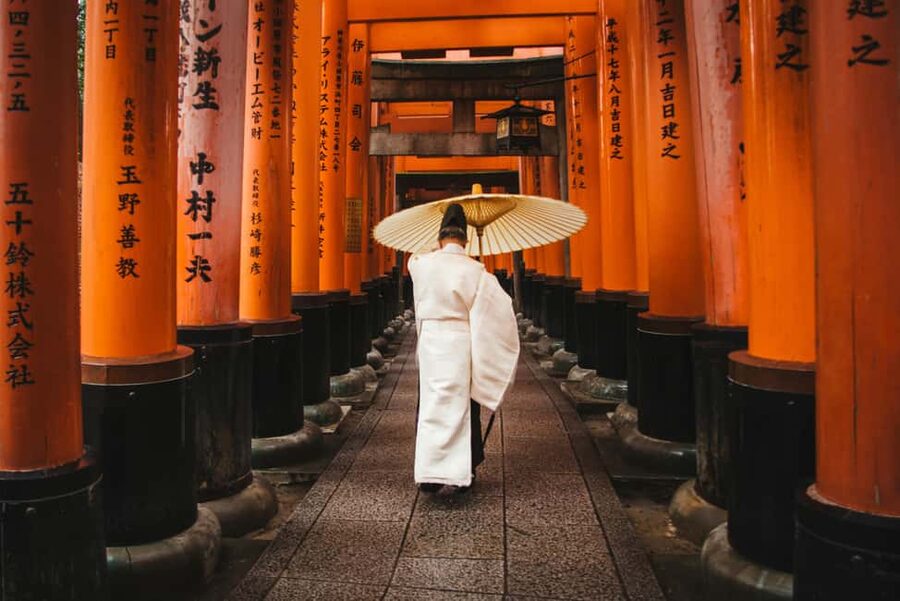
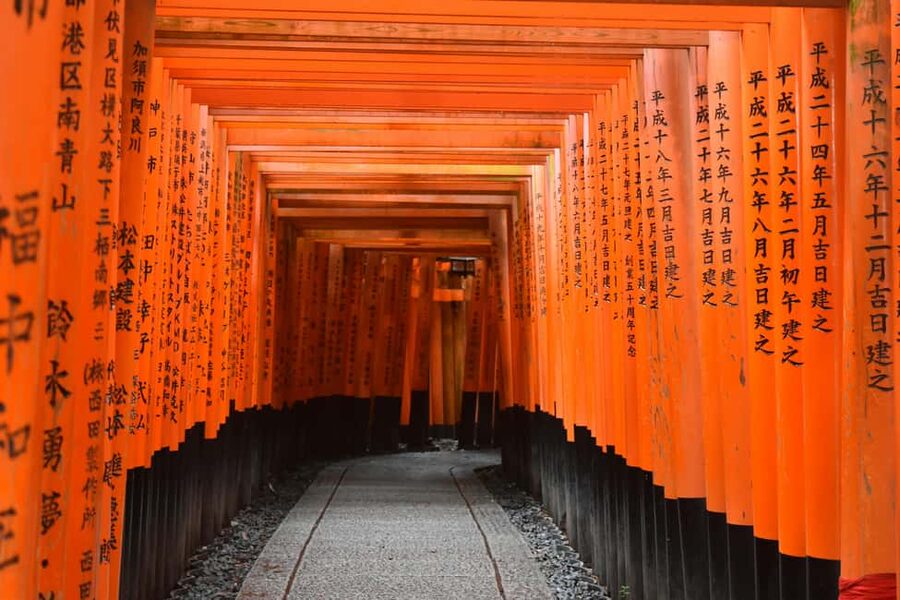
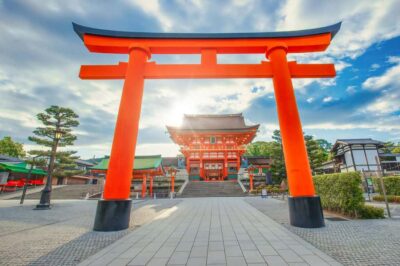
Fushimi Inari Taisha gives you a very different view of Kyoto. Its long corridor of red torii gates climbs along a mountain path, creating the famous tunnel effect that makes this shrine such a popular stop.
You do not need to complete the entire mountain route to enjoy the setting. Walk as far as your time and energy allow, take in the repeating gates, and return to the meeting point. The lower section delivers the most immediate visual impact, while a longer walk gives you more space and a stronger sense of the wooded shrine path.
This is one place where a private car is especially useful because your driver handles the return pickup. You should confirm exactly where to meet before leaving the vehicle, since the shrine area can feel crowded and spread out.
The schedule is tight enough that you may need to choose between a short visit and a longer walk. If walking uphill is difficult, tell the operator ahead of time and consider how much of the route you want to attempt. The tour is wheelchair accessible as a service, but individual temple grounds and mountain paths may still present practical limits.
Sanjusangendo, Kyoto’s quieter interior stop
If the morning schedule allows, the driver can take you to Sanjusangendo. This is a valuable addition because it offers a calmer indoor experience after the open grounds at Kinkakuji and Fushimi Inari.
The building is described as Japan’s longest wooden structure. Inside, you see 1,001 golden statues of Guanyin, creating a powerful, orderly view that feels very different from Kyoto’s gardens and shrine gates.
The important phrase here is if time allows. Sanjusangendo is not one of the fixed stops listed in the short itinerary, so you should not assume it is guaranteed. Traffic, walking time, and how long you spend at the first two sights all affect the decision.
If this temple matters to you, say so at the start of the day. A private tour gives you some flexibility, but it does not create extra hours. You may need to shorten another stop to fit it in.
Crossing to Nara and entering Todaiji
The afternoon brings a change of pace as you leave Kyoto for Nara. Nara served as an ancient capital and played an important role in Japan’s early political and cultural life. You see that older scale most clearly at Todaiji.
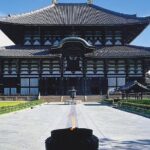
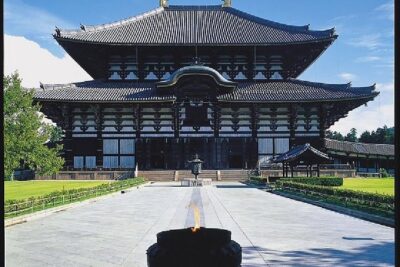
Todaiji is known for its enormous wooden temple hall and its large bronze Buddha. The Buddha is about 15 meters high, and its creation used almost all of Japan’s bronze reserves at the time, according to the tour information. That detail gives the statue a useful sense of scale. This is not simply another temple interior with a few statues. The building and image were made to overwhelm you.
You should allow time to look up, not just walk through. The broad wooden hall, the Buddha, and the surrounding temple grounds make this one of the day’s most memorable stops.
Entrance fees are not included, so budget separately for Todaiji and the Kyoto sites. The tour price covers the vehicle and service, not admission to the attractions.
Other private tours in Kyoto
Meeting Nara’s deer in Nara Park
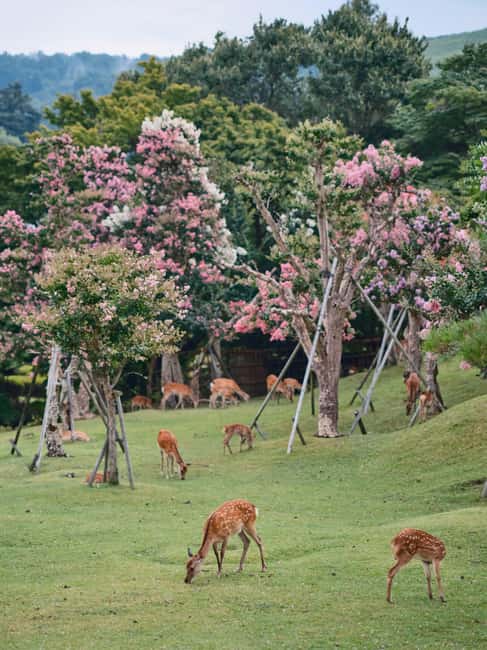
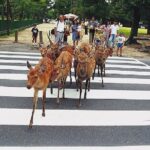
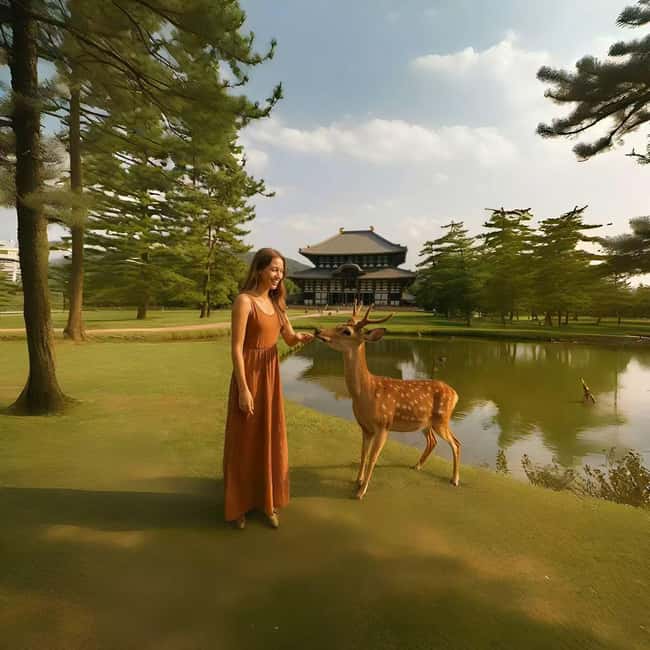
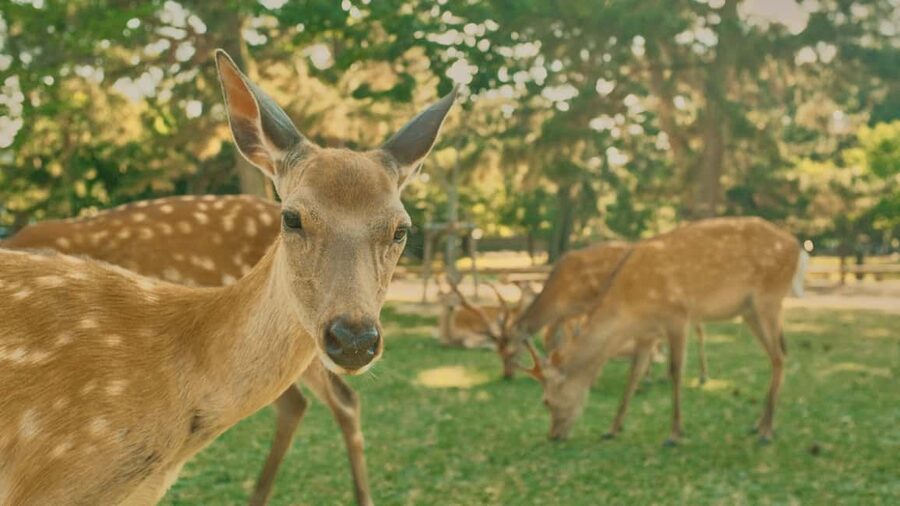
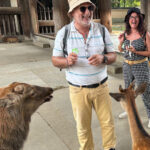
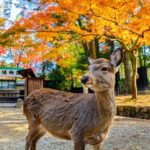
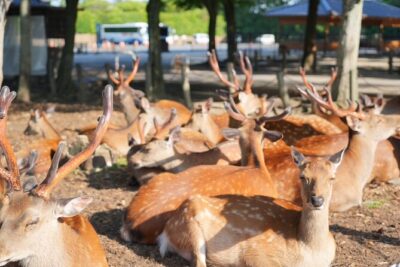
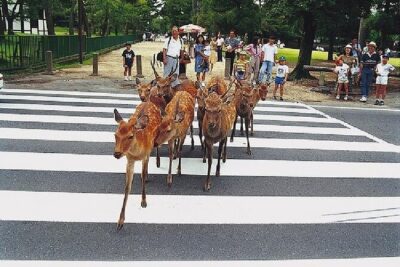
Nara Park sits next to Todaiji and gives the day its most playful moment. Herds of deer move through the park, and many approach people because they are used to being fed.
You can buy a packet of deer crackers and offer them carefully. The experience is simple, but it works because the animals are part of the public park rather than displayed behind a barrier. You get a close look at how deer behave around people, with the temple grounds and open park around you.
Keep your hands clear once the crackers are gone. The deer may continue looking for food, and you should follow local instructions and treat them calmly. The tour describes them as peaceful and friendly, but they remain animals, not stuffed toys.
Nara Park is also a useful pause after the indoor grandeur of Todaiji. You can walk, take photographs, and enjoy a little open space before the return drive. If your group includes children, this will likely be one of the day’s favorite stops.
Optional Kyoto stops on the way back
After Nara, the plan is to return to Kyoto. If there is enough time, the driver may take you to Nishiki Market, a narrow central market known for traditional foods and small gifts.
Nishiki is a good choice if you want a taste of everyday Kyoto rather than another major temple. You can browse food stalls, sample local items, and shop for compact souvenirs. Food and drinks are not included, so anything you eat there is your own expense.
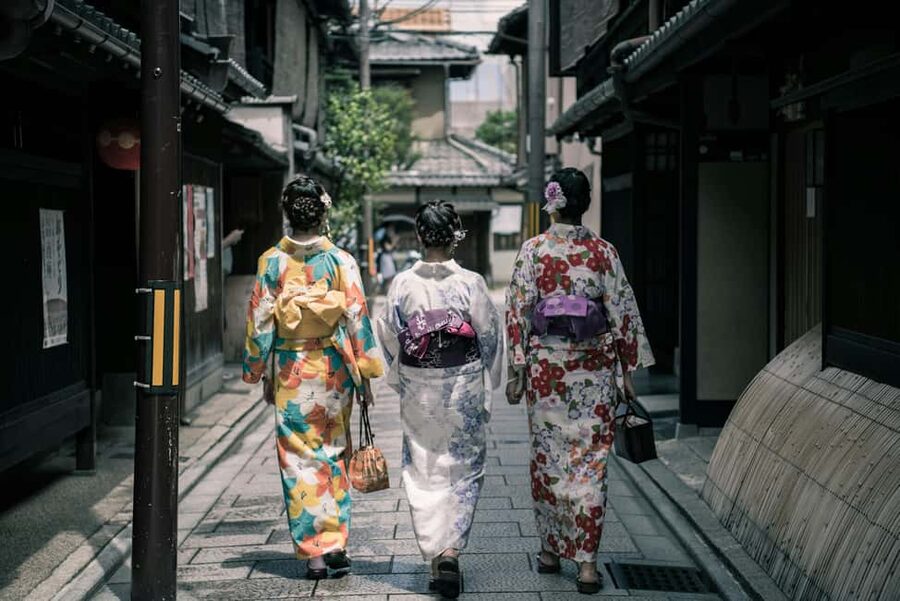
If the schedule is too full for Nishiki, the alternative may be Sannenzaka and Ninenzaka, two old-style streets with shops and traditional architecture. From there, you can walk toward Gion, Kyoto’s well-known geisha district, and remain there into the evening.
These optional stops are a bonus, not a promise. The fixed day already includes Kinkakuji, Fushimi Inari, Todaiji, and Nara Park, with Sanjusangendo also dependent on available time. I would decide early which kind of ending you prefer: food and shopping at Nishiki, or old streets and Gion.
What the private vehicle adds
The vehicle is air-conditioned and includes private transportation, fuel, tolls, parking, WiFi, charging cables, and a power socket. Those details sound minor until you spend a full day moving between several busy sights.
Hotel pickup and drop-off remove the need to reach a station before the tour begins. The private group format also means you are not waiting for strangers or following a fixed coach itinerary. With up to five people, the cost becomes easier to justify, especially for families carrying bags or traveling with children.
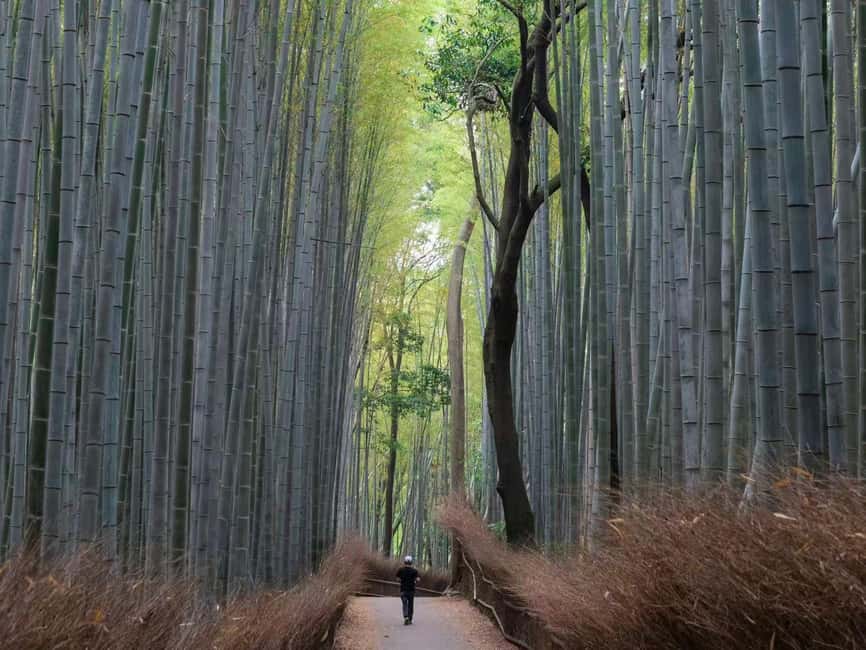
Past service has included bottled water and USB charging. A driver named Amber accommodated an extra stop at the bamboo forest when the group had spare time. Wang was also praised for knowing practical places to get out and be picked up. You should still treat extra stops as dependent on the schedule, but these details suggest that a little flexibility may be possible.
Overtime costs 5,000 yen per hour for six or nine-seat vehicles. Service after 9:00 p.m. adds 2,000 yen per hour. Ask about the vehicle class and timing if you think your day may run late.
The first baby seat is free if requested before departure. A second costs 2,000 yen per child. Tell the operator about child seats in advance, since leaving this until pickup could create a problem.
The guide question and language expectations
Your driver can provide service in Chinese, English, or Japanese. The English level is described as basic, so you should expect help with transportation, timing, pickup points, and general service rather than a detailed lecture at every temple.
If temple stories, Buddhist art, and Japanese history are central to your trip, add the expert guide option at booking confirmation. That extra service may make a large difference at Sanjusangendo and Todaiji, where the objects and buildings reward context.
If your main goal is efficient sightseeing with a comfortable ride, the driver-only format should be enough. You can also use a translation app, which is included among the vehicle services.
Timing, walking, and the real trade-off
Ten hours sounds generous, but Kyoto and Nara contain more than ten hours of sightseeing on their own. You have four core temple and park stops, travel between cities, hotel pickup and return, and perhaps an extra temple or market.
You should expect walking at every major sight. Fushimi Inari includes a mountain path, and Nara Park covers open ground between the deer area and Todaiji. Comfortable shoes matter more than dressing up for the car.
The greatest benefit is control. You can spend more time at a favorite stop if the driver agrees and the schedule allows. The trade-off is that you must make choices. A slow visit at Kinkakuji, a long walk at Fushimi Inari, and a careful look inside Todaiji may leave no room for Nishiki Market or Gion.
I would not book this as a relaxed temple study day. I would book it as a well-planned sampler of Kyoto and Nara’s major sights.
Who gets the best value from this tour
This tour suits a small family, a group of friends, or anyone who values private transport over the lowest possible price. Five people sharing the vehicle get the strongest financial value.
It also works well if you are staying in Kyoto and want Nara included without changing hotels. Hotel pickup, parking, tolls, and return transport are already arranged.
You may want another format if you prefer slow mornings, long temple visits, or a fully guided cultural tour. The basic driver service is practical, but it does not automatically provide expert commentary.
Free cancellation is available up to 24 hours before the start, and you can reserve now and pay later. Orders must be made at least 24 hours in advance, and late arrival or failure to attend because of personal problems does not qualify for a refund.
Should you book the Kyoto and Nara private car tour?
Book it if you want maximum coverage with minimum transport fuss. Kinkakuji, Fushimi Inari, Todaiji, and Nara Park give you four very different experiences, and the private car makes the connection between Kyoto and Nara far easier.
The best value comes with four or five people, especially if you appreciate hotel pickup, WiFi, charging, parking, and flexible routing. Before paying, decide which optional stop matters most and request any baby seat or expert guide in advance.
Skip it if your priority is a slow, deeply explained temple visit or if your group is too small to make the $435 price comfortable. For everyone else, this is a sensible full-day introduction to Kyoto’s most famous sights and Nara’s unforgettable deer.
FAQ
How long is the Kyoto and Nara private car tour?
The service lasts 10 hours. You can check available starting times when booking.
Where does pickup take place?
The driver picks you up at the main gate of your hotel in Kyoto and returns you to Kyoto at the end of the service.
How many people can join the private tour?
The price covers a private group of up to five people.
Are entrance fees and meals included?
No. Entrance fees, food, and beverages are not included in the tour price.
What languages does the driver speak?
Service is available in Chinese, English, and Japanese. The driver’s English is described as basic. An expert guide can be purchased separately during booking confirmation.
Is the tour wheelchair accessible?
Yes, the activity is listed as wheelchair accessible. You should still consider the walking paths and mountain route at individual sights, especially Fushimi Inari.
More VIP Experiences in Kyoto
More Private Tours in Kyoto
More Nara Day Trips in Kyoto
More tours in Kyoto we've reviewed
Nara Day Trips, compared.
 ★ 5.0World Heritage Kyoto & Nara Uji Authentic Matcha ExperienceFrom $129
 ★ 4.7Kyoto/Osaka: Nara, Fushimi Inari Taisha, Arashiyama Bus TourFrom $529 - 10 hours
 ★ 4.4Osaka/Kyoto: Arashiyama, Nara & Fushimi Inari Shrine w/LunchFrom $61
 ★ 5.0Nara Early Morning Tour (Kyoto or Osaka Departure Available)From $61
 ★ 4.5Kyoto and Nara Day Trip from KyotoFrom $194
 ★ 4.5Nara Afternoon Tour from Kyoto or OsakaFrom $102