
Reviewed · GION & GEISHA WALKS
Gion and Fushimi Inari Shrine Kyoto Highlights with Government-Licensed Guide
Fushimi Inari’s long tunnel of red torii gates and Gion’s narrow lanes make a striking Kyoto pairing. One moment you’re beneath thousands of vermilion gates, and later you’re walking past teahouses, willow-lined canals, and old shrines where cars cannot go. A licensed English-speaking guide helps turn pretty streets into a story about Shinto practice, geisha training, and Kyoto’s old neighborhoods.
I like the small maximum group of 10, which makes it easier to hear the guide and ask questions. I also like the focus on walking, especially through Shirakawa and the tucked-away corners around Gion. The main consideration is price: at $154.37 per person, you’ll want to use the guide’s context and route-finding help, since entrance fees for Kiyomizu-dera and Kennin-ji are extra and no vehicle is provided.
In This Review
- Key points to know before booking
- Why this Kyoto combination works
- Starting near Tatsumi Daimyojin Shrine
- Fushimi Inari and its red torii tunnel
- Gion, Pontocho, and Miyagawacho after dark
- Shirakawa’s canal and Tatsumi Daimyojin
- Yasaka Shrine in a 10-minute stop
- Kiyomizu-dera on the Higashiyama slope
- Kennin-ji and the final temple contrast
- What $154.37 buys you
- Who will get the most from this walk
- Practical details that affect your day
- Should you book this Kyoto tour?
- FAQ
- How long does the tour last?
- What is the maximum group size?
- Is the tour led by a licensed guide?
- Where does the tour start?
- Where does the tour end?
- Is transportation included?
- Are entrance fees included?
- Does the tour include a geisha show?
- Can I cancel for a full refund?
- Is the tour suitable for most people?
Key points to know before booking
- Fushimi Inari and Gion in one long outing: You cover two of Kyoto’s most recognizable areas, with several historic stops between them.
- A licensed English-speaking guide: Expect explanations about geisha culture, shrine customs, Kyoto’s past, and the difference between maiko and geiko.
- Walking is the main event: Pickup and drop-off are on foot, and the route includes narrow lanes, temple grounds, and shrine approaches.
- A group capped at 10 people: This is more personal than a large bus tour and easier to follow in crowded lanes.
- Paid temple admissions are separate: Fushimi Inari and Yasaka Shrine are free, while Kiyomizu-dera and Kennin-ji are not included.
- Do not expect a geisha show: The tour offers cultural explanation and neighborhood walking, not a performance.
Why this Kyoto combination works
Kyoto can feel confusing because its major sights are spread across several districts. Fushimi Inari is in southern Kyoto, while Gion and the Higashiyama temples lie farther north. Seeing them in one six-hour outing saves you from planning separate visits, but it also creates a fairly full schedule.
The appeal is variety. Fushimi Inari gives you a major Shinto shrine and its famous torii path. Gion adds traditional streets, teahouses, and geisha culture. Kiyomizu-dera supplies one of Kyoto’s grandest temple settings, while Kennin-ji offers a quieter temple visit close to the heart of Gion.
I would choose this tour early in a Kyoto stay if you want help getting oriented. A guide can point out the difference between a shrine and a temple, explain why certain lanes matter, and help you avoid spending your limited time wandering in circles.
The route is not a relaxed cafe stroll. You’ll be on your feet for about six hours, with one hour listed at Fushimi Inari and another hour at Kiyomizu-dera. Temple approaches can include slopes and uneven paving, so comfortable shoes matter.
A few more Kyoto tours and experiences worth a look

Starting near Tatsumi Daimyojin Shrine
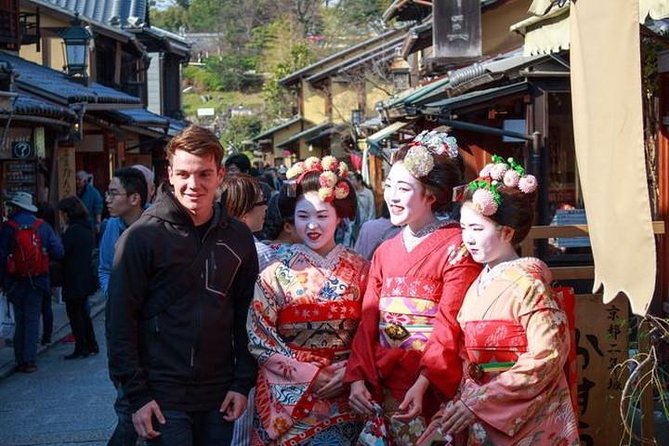
The stated meeting point is Tatsumi-jinja, also called Tatsumi Daimyojin Shrine, at Motoyoshicho in Kyoto’s Higashiyama Ward. This small shrine sits near the Shirakawa area, a part of Gion associated with traditional teahouses and geisha activity.
Starting here places you close to one of Gion’s most atmospheric sections. It is not a large gateway attraction like Yasaka Shrine. Instead, it gives you a smaller first look at the district, where the setting and local customs are easier to discuss without the visual overload of a major temple.
The published route also lists Fushimi Inari as the first major stop, so confirm the exact order and meeting instructions with Japan Guide Agency before you go. The tour includes no private vehicle, and pickup and drop-off are on foot. That detail matters because the starting point, Fushimi Inari, and the later Higashiyama stops are not presented as a private-car transfer experience.
The activity ends back at the meeting point. Plan your evening around that fact rather than assuming you’ll finish at Kiyomizu-dera or near Kyoto Station.
Fushimi Inari and its red torii tunnel
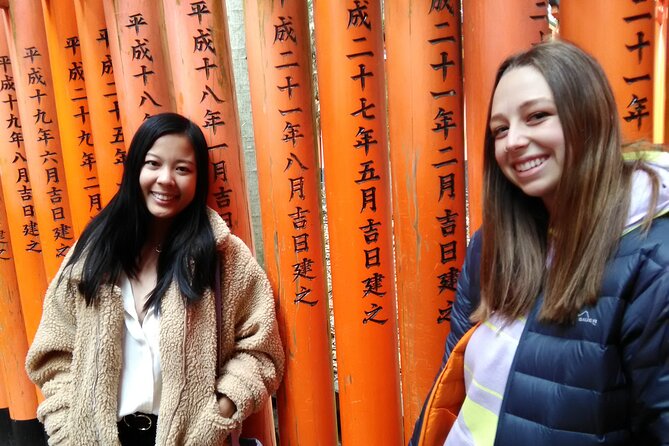
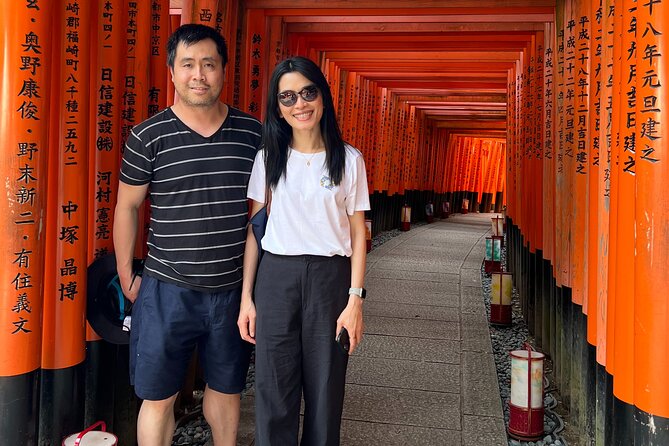
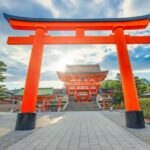
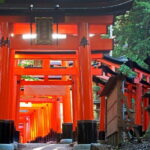
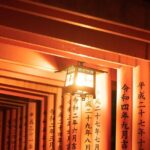
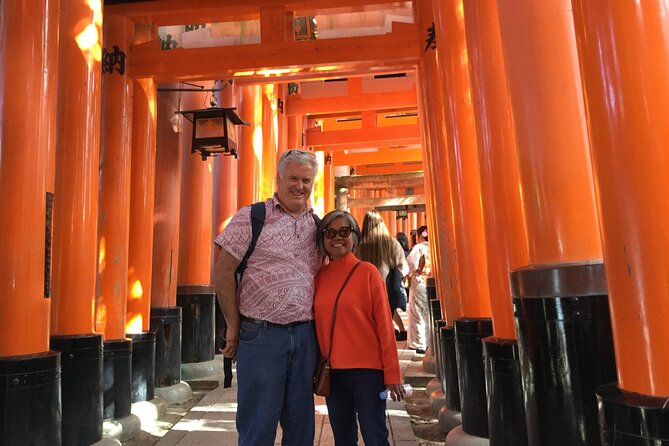
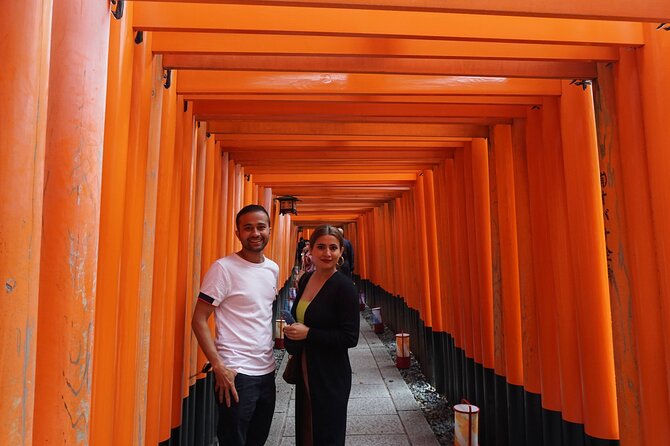
Fushimi Inari-taisha is one of Kyoto’s most memorable sights. Its thousands of vermilion torii gates line trails behind the main shrine, creating the famous tunnel effect that draws photographers and first-time visitors alike.
The scheduled visit is about one hour, with free admission. That is enough to see the main shrine area and walk into the torii-lined route, but not enough to treat the entire mountain trail as a serious hike. Fushimi Inari’s paths continue well beyond the most photographed gates, so your guide will need to keep the group moving if the rest of the day is to fit.
This is where a guide adds practical value. The gates are beautiful, but without context they can seem like one long photo corridor. A licensed guide can explain the shrine’s importance and the role of torii in marking a transition into sacred space. You also avoid losing time at every fork in the trail.
Expect crowds at the best-known sections. The narrow path can become slow when people stop for photos, and the route is not a quick roadside viewpoint. If you want a quiet, complete walk to the upper parts of the mountain, this six-hour combination tour is not the right format. If you want a strong first look, the one-hour stop makes sense.
Gion, Pontocho, and Miyagawacho after dark
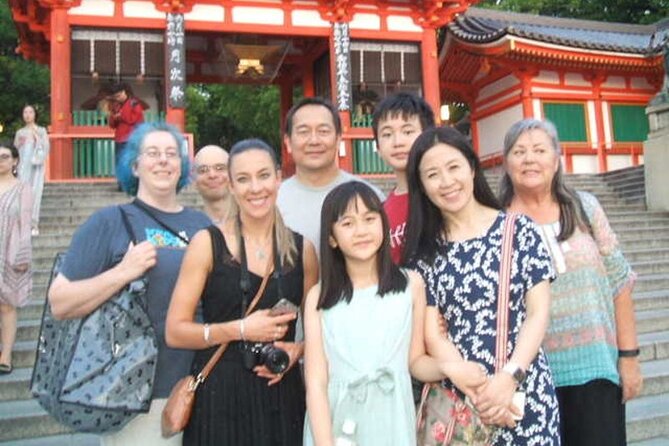
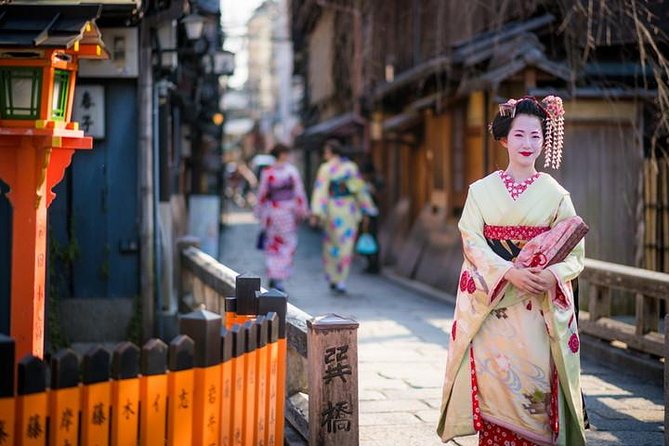
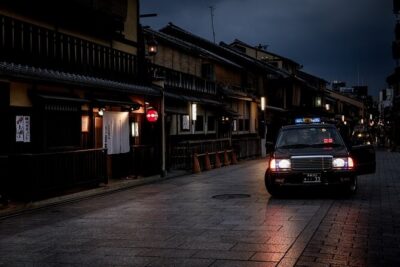
Gion is Kyoto’s best-known geisha district, stretching around Shijo Avenue between Yasaka Shrine and the Kamo River. Its appeal comes from the narrow lanes, traditional facades, restaurants, and ochaya, the teahouses where geiko and maiko perform and entertain private clients.
The tour description highlights Gion, Pontocho, and Miyagawacho as part of the evening experience. These districts are not museums. They are working neighborhoods, and that means the best approach is quiet observation rather than treating every doorway as a photo opportunity.
One of the strongest parts of the experience is the explanation of geisha culture. Your guide can discuss the difference between a maiko, an apprentice, and a geiko, a trained entertainer in Kyoto’s tradition. You may also hear about the long training path involved in becoming a geisha.
Maiko and geiko sightings are possible, but they are never guaranteed. You should not book this tour expecting a staged encounter, a geisha dinner, or a show. The program does not include a geisha performance. Its value is learning how the district works and seeing the streets respectfully.
A previous guide named Mari-san received special praise for explaining the history of Gion and the difference between maiko and geiko. Guides can vary, so you may not have Mari-san, but her approach gives you a useful idea of the tour’s best potential: clear cultural explanation alongside a scenic walk.
Shirakawa’s canal and Tatsumi Daimyojin
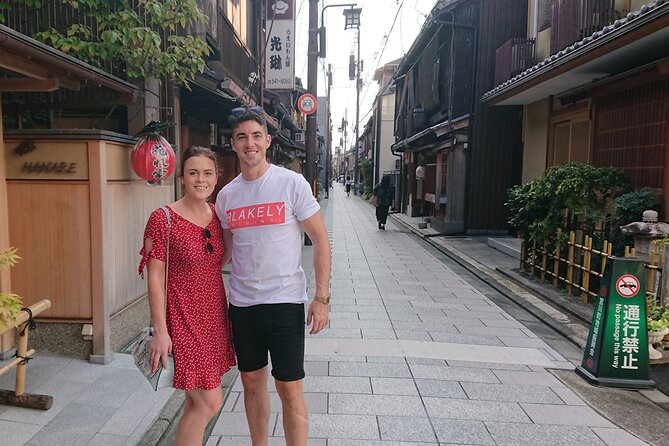
The Shirakawa section runs beside a canal parallel to Shijo Avenue. Willow trees, restaurants, and high-class teahouses line the water, giving this part of Gion a calmer feel than the main shopping streets.
This is one of the places where walking pays off. Cars cannot reach every narrow lane, and the canal-side route offers details you would miss from a taxi window. Look for the contrast between the quiet water, timber buildings, discreet entrances, and the nearby flow of ordinary city life.
Tatsumi Daimyojin Shrine is located near Shirakawa. Its exact story is less clear than the history of Kyoto’s major shrines, but that does not make it uninteresting. Small neighborhood shrines often work best as conversation points, and the guide can place this modest site within Gion’s religious and social setting.
The meeting point itself is here, so pay attention to the exact shrine name and address. Kyoto has many shrines, and a five-minute mistake in Gion’s lanes can turn into a frustrating start.
A few more Kyoto tours and experiences worth a look

Yasaka Shrine in a 10-minute stop
Yasaka Shrine, also called Gion Shrine, has more than 1,350 years of history and sits between Gion and Higashiyama. Its location makes it a natural bridge between the geisha district and the temple area farther east.
The planned stop is about 10 minutes, and admission is free. That is enough for a quick look at the main grounds and a short explanation, not a full visit to every corner.
I like Yasaka Shrine as a transition point because it shows how Kyoto’s sacred sites remain woven into busy neighborhoods. You are not leaving the city behind to reach an isolated monument. The shrine is part of the daily route through eastern Kyoto.
Keep your expectations in proportion to the timing. If you want a slower visit for prayers, photographs, or festival details, return on your own later. Here, the guide is using Yasaka Shrine to connect Gion with the rest of the route.
Kiyomizu-dera on the Higashiyama slope
Kiyomizu-dera is more than 1,250 years old and sits partway up Mt. Otowa in Kyoto’s Higashiyama range. It is one of the city’s essential temple visits, with a setting that makes the approach as important as the main buildings.
The planned visit lasts about an hour. Admission is not included, so bring money for the entry fee. The guide’s entry costs are covered only for sights listed as included, and Kiyomizu-dera is specifically marked as an extra expense.
An hour gives you a useful introduction, but Kiyomizu-dera can easily absorb much longer. You may want time for the temple buildings, views, paths, and surrounding streets. Since this tour has several other stops, you should see the visit as a guided overview rather than a complete exploration of the entire complex.
The temple is also where the physical demands of the day may become clearest. The site is on a mountain slope, and the route through Higashiyama includes walking. Anyone with limited stamina should ask about the exact pace before booking.
Kennin-ji and the final temple contrast
Kennin-ji is close to Hanamikoji and Shijo streets, yet its grounds offer a calmer change of pace. The temple has pleasant grounds and two dry gardens, giving you a different visual experience from Fushimi Inari’s red gates and Kiyomizu-dera’s hillside setting.
The listed stop is only one minute, which is far too brief for a full temple visit. Treat this as a passing orientation or exterior look unless the schedule changes. Admission is not included.
That short timing is an important point when judging the price. The tour covers many famous places, but not every stop receives equal attention. You are paying for a connected route and a guide’s explanations, not six hours of leisurely time at each attraction.
What $154.37 buys you
At $154.37 per person, this is a premium walking tour. The strongest value comes from the licensed English-speaking guide, the small group limit, and the amount of ground covered in one outing.
If you already know Kyoto well, can read maps easily, and are happy to visit each site independently, the price may feel high. You can enter Fushimi Inari and Yasaka Shrine free of charge, and you will still need to pay separately for Kiyomizu-dera and Kennin-ji.
For a first Kyoto visit, the calculation changes. Gion’s lanes can be confusing, geisha etiquette is easy to misunderstand, and the distance between major districts makes planning awkward. A group of no more than 10 also gives you a better chance to hear explanations than a large coach tour.
Group discounts are available, and the ticket is mobile, which makes booking simpler. Free cancellation is allowed until 24 hours before the start time. After that cutoff, the payment is not refunded and changes are not accepted.
Who will get the most from this walk
I would recommend this experience to a first-time Kyoto visitor who wants a guided introduction to eastern Kyoto and does not mind a long day on foot. It also suits people who are curious about geisha culture but want a respectful, educational approach rather than a staged show.
The tour works well for couples, friends, and small family groups who want one outing to cover several major sights. The maximum of 10 people keeps the group manageable, and service animals are allowed. Most people can participate, but remember that this is a walking activity with temple approaches and uneven urban paths.
I would hesitate if you want a slow photographic tour, a private guide, a vehicle, or a guaranteed meeting with geiko or maiko. I would also hesitate if Kiyomizu-dera is your main priority, since one hour may not satisfy someone who wants to explore the temple at length.
Practical details that affect your day
Wear shoes you can walk in for six hours. You’ll move through shrine paths, city streets, temple grounds, and narrow lanes, with little chance to turn the outing into a seated sightseeing experience.
The tour begins and ends on foot at Tatsumi Daimyojin Shrine. No private vehicle is included, and the activity does not provide general pickup from your hotel. Check the meeting point carefully and allow time to find the exact shrine.
Admission is free at Fushimi Inari and Yasaka Shrine. Kiyomizu-dera and Kennin-ji charge separate entry fees, so budget for those in addition to the tour price.
The experience is offered in a group, and you cannot combine multiple tour groups. Confirmation is received when you book, and the mobile ticket is useful for keeping the details close at hand.
Should you book this Kyoto tour?
Book it if you want one guided route through Fushimi Inari, Gion, and Higashiyama, and you value cultural explanation more than unhurried time inside each temple. The geisha background, small group size, and access to lanes that cars cannot use are the best reasons to choose it.
Skip it if you prefer independent sightseeing or want a deep visit to Kiyomizu-dera and Kennin-ji. At this price, the tour makes sense only when you use the guide’s local context and route planning. Confirm the meeting instructions and exact stop order before booking, then bring good shoes and realistic expectations about geisha sightings.
FAQ
How long does the tour last?
The experience lasts approximately six hours.
What is the maximum group size?
The group has a maximum of 10 travelers.
Is the tour led by a licensed guide?
Yes. A licensed local English-speaking guide is included.
Where does the tour start?
The meeting point is Tatsumi-jinja Shrine, also called Tatsumi Daimyojin Shrine, at Motoyoshicho in Kyoto’s Higashiyama Ward.
Where does the tour end?
The activity ends back at the meeting point.
Is transportation included?
No. Private vehicle service is not included, and pickup and drop-off take place on foot.
Are entrance fees included?
Admission is free at Fushimi Inari-taisha Shrine and Yasaka Shrine. Admission to Kiyomizu-dera Temple and Kennin-ji Temple is not included.
Does the tour include a geisha show?
No. The experience includes a walking tour and explanations about geisha history and culture, but it does not include a geisha show.
Can I cancel for a full refund?
Yes, if you cancel at least 24 hours before the scheduled start time. Cancellations made less than 24 hours before the start time are not refunded.
Is the tour suitable for most people?
Most travelers can participate, but this is a walking tour. Service animals are allowed, and the activity operates near public transportation.
More Guided Tours in Kyoto


More Fushimi Inari Tours in Kyoto
More Gion & Geisha Walks in Kyoto


More tours in Kyoto we've reviewed





Gion & Geisha Walks, compared.
 ★ 4.7Kyoto Geisha Walking Tour: Gion District & Hidden GemsFrom $252 hours
 ★ 4.7Kyoto: Gion Geisha District Walking Tour – Stories of GeishaFrom $202 hours
 ★ 4.9Best of Kyoto: Gion, Geisha, Pagodas & CobblestonesFrom $242 hours
 ★ 4.5Night Walk in Gion: Kyoto’s Geisha DistrictFrom $211h 40m
 ★ 5.0Kyoto Night Foodie Tour in Gion (9+ dishes + 6 Sake tastings)From $163
 ★ 5.0Kyoto Gion Geisha District Walking Tour – The Stories of GeishaFrom $25