
Reviewed · NIJO CASTLE TOURS
Kyoto: Golden Pavilion, Nijo Castle, Nishiki Market. Private
Kyoto’s past comes into focus on this private tour, which links the gleaming Golden Pavilion, the shogun’s Nijo Castle, and Nishiki Market in one well-planned morning. I like the private format, since your group can ask questions and set the pace, and I like the guide’s use of an iPad to explain people and events with maps, graphics, and notes. You also receive photos and a short video as keepsakes.
The main drawback is cost: $105.10 per person before admission fees and public transportation. You are paying for a guide-led experience rather than a simple sightseeing route, so it offers better value for first-time visitors who want historical context than for travelers who prefer to explore independently.
In This Review
- Key points at a glance
- Why this private Kyoto route works
- Kinkaku-ji, Kyoto’s Golden Pavilion
- Nijo Castle and the power of the shogun
- Nishiki Market, Kyoto’s food street
- The iPad, photos, and short video
- What $105.10 per person buys you
- Timing, transport, and the shape of the morning
- Who will get the most from this tour
- Should you book it?
- FAQ
- How long is the Kyoto private tour?
- What time does the tour begin?
- Where does the tour start?
- Where does the tour end?
- Which attractions are included?
- Are entrance fees included?
- Is public transportation included?
- Is this a private activity?
- Is the tour offered in English?
- What extras does the guide provide?
Key points at a glance
- Three very different Kyoto stops: Move from the polished temple grounds of Kinkaku-ji to the political drama of Nijo Castle, then finish with food and shopping at Nishiki Market.
- A genuinely private outing: Only your group takes part, making it easier to ask questions and spend a little longer on subjects that interest you.
- History explained with an iPad: Graphics and notes help put samurai, feudal lords, and shoguns into a clear timeline.
- A useful city-center finish: The tour ends at Nishiki Market, leaving you near other central Kyoto sights for the afternoon.
- Personal mementos included: The guide takes photos and sends them by AirDrop, then provides a short video of about 90 seconds.
- A guide with local Kyoto experience: Roberto is named in the available feedback as the guide, and he is described as kind and experienced.
Why this private Kyoto route works
This tour is built around contrast. Kinkaku-ji gives you one of Kyoto’s most famous views. Nijo Castle puts you inside the world of military rule and palace politics. Nishiki Market brings you back to present-day Kyoto, where food shops and small businesses fill a narrow shopping street.
That mix makes the morning more useful than a temple-only outing. You do not simply see three popular places. You get three ways to understand the city: religious beauty, political power, and daily food culture.
The guide is a licensed Kyoto guide and offers the tour in English as a native speaker. That matters most at Nijo Castle, where the buildings and rooms can be impressive but confusing without a clear explanation of who lived there, who held power, and why the castle mattered.
The tour begins at 9 a.m. at the 7-Eleven Heart-In store by the central entrance of Kyoto Station. You pay your own transportation costs during the tour, so keep that in mind when working out the final price. The route ends at Nishiki Market, not back at Kyoto Station.
A few more Kyoto tours and experiences worth a look
Kinkaku-ji, Kyoto’s Golden Pavilion
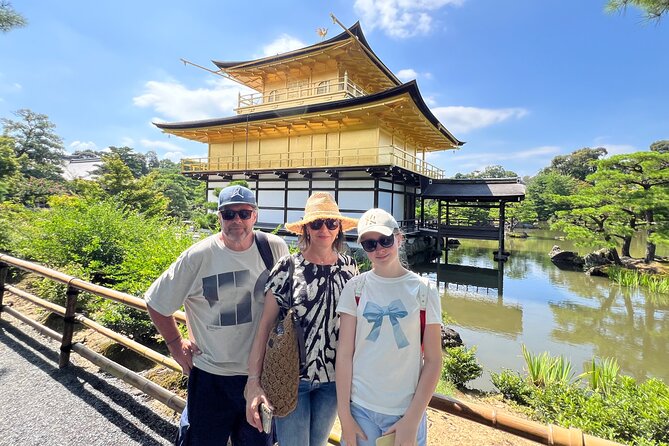
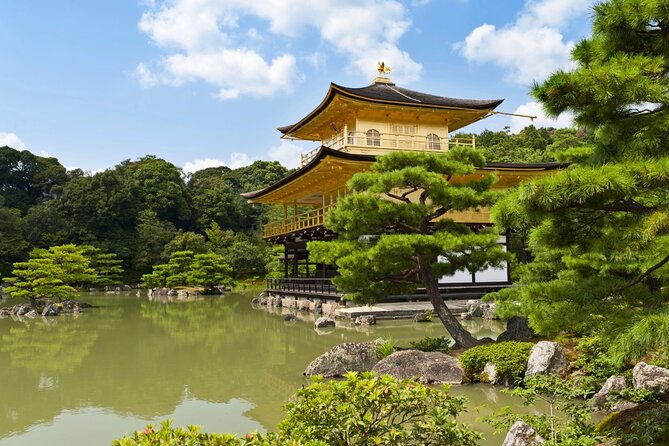
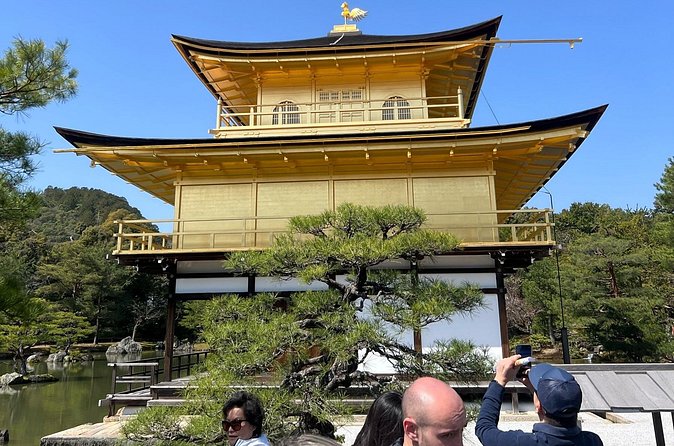
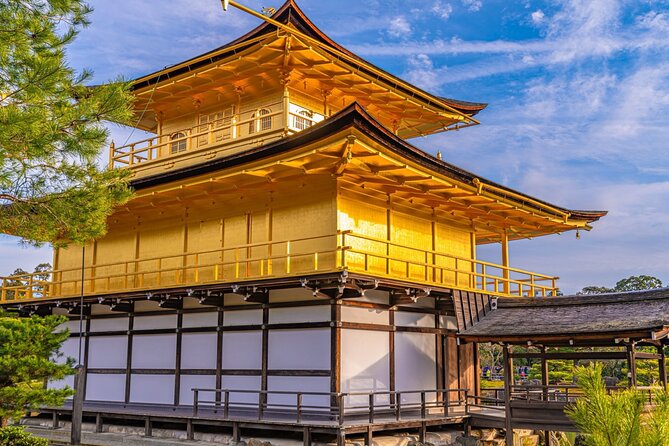
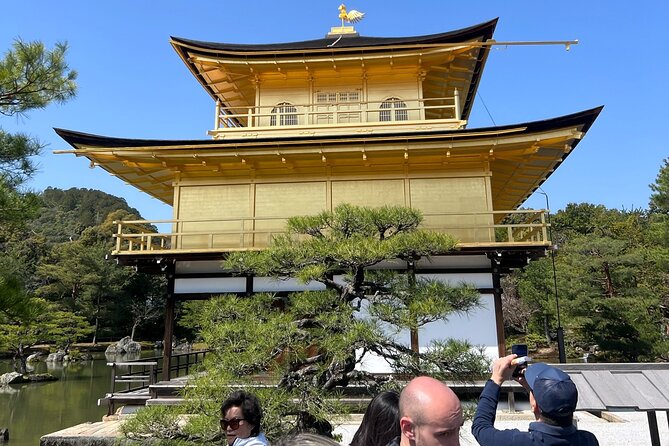
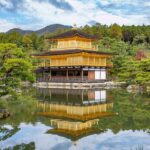
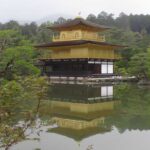
The first stop is Kinkaku-ji, better known to many visitors as the Golden Pavilion. It sits in northwest Kyoto and is listed as a UNESCO World Cultural Heritage site. The building’s gold exterior is the obvious draw, but the setting around it is just as important to the visit.
You can expect about one hour here. That is enough time for the main visit, though it is not an open-ended temple exploration. The pavilion is one of Kyoto’s best-known sights, so a morning start is useful. The tour does not include the admission fee, and you should budget for that separately.
A guide can help you see past the famous photograph. The pavilion is not just a pretty structure placed beside water. It reflects the taste and ambition of the powerful figures who shaped Kyoto, and its role makes more sense when connected to the wider story of feudal Japan.
The guide’s iPad is especially useful at this stop. Historical graphics and notes can show how the site fits into Kyoto’s political and religious past without asking you to read long blocks of information on your own. If you are visiting Japan for the first time, that visual help may keep the timeline from becoming a blur of unfamiliar names.
Kinkaku-ji is also the most postcard-like stop on the route. That can be a strength or a weakness. You get an instantly recognizable Kyoto scene, but the visit is focused on the grounds and the pavilion rather than on a long, quiet stay inside a working temple complex.
Nijo Castle and the power of the shogun
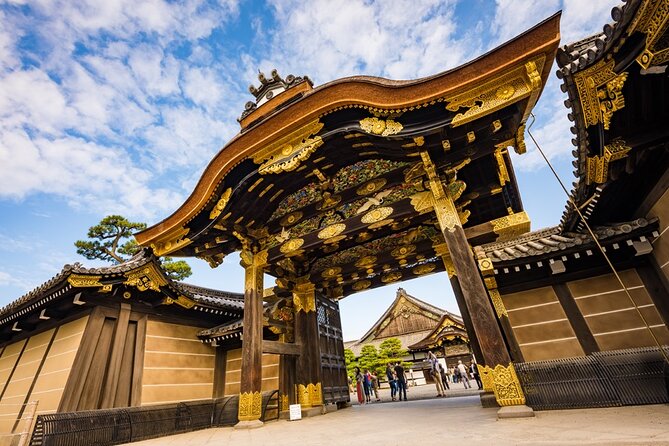
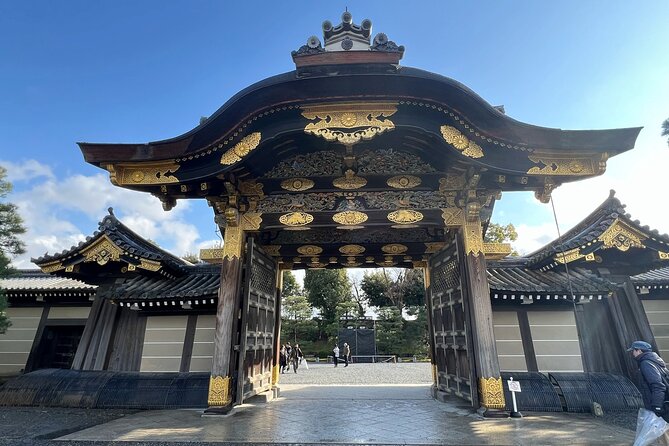
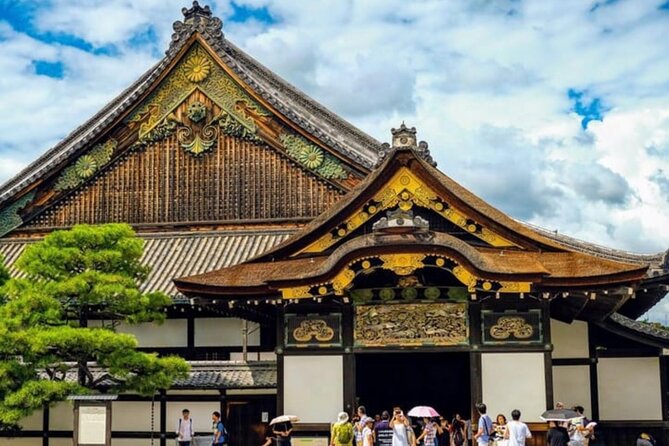
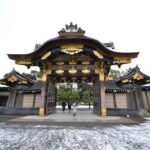
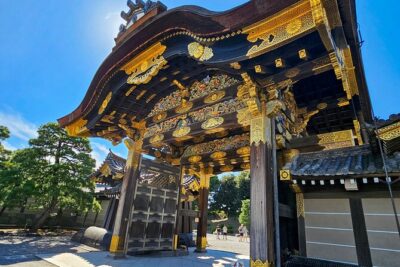
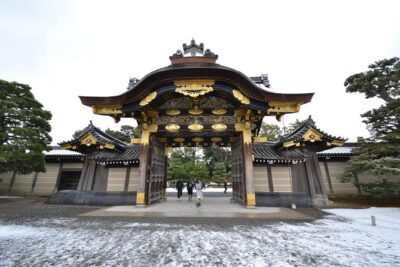
Nijo Castle receives the longest visit, about one hour and 45 minutes. That tells you where the tour places its historical emphasis. Here, the guide can explain the struggles among samurai warriors, feudal lords, and military rulers who controlled Japan for long periods.
This is the stop where the tour’s theme comes together. The Golden Pavilion shows the visual side of elite power. Nijo Castle shows how that power operated.
You can expect the guide to use the iPad for notes and images as you move through the castle grounds and buildings. The supplied information does not promise a fixed lecture or a specific room-by-room route, so the exact presentation may depend on your guide and your group. That flexibility is one advantage of booking privately.
Nijo Castle is a better match for you if you want explanations rather than quick photographs. Its importance is tied to events and changing authority, and those details are not always obvious when you visit on your own. The guide’s goal is to strip away the Hollywood version of samurai life and explain the real political setting.
The longer time here also gives the tour room to breathe. You are not being rushed from one famous photo point to the next. Still, admission is not included, so this is another separate entrance expense. Check your total budget before booking, especially if you are traveling with a family or group.
The private structure helps most at Nijo Castle. You can ask what a title means, how the shogun differed from an emperor, or why a particular event mattered. You are not limited to a general script designed for a large crowd.
Nishiki Market, Kyoto’s food street
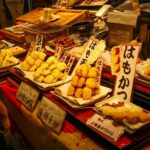
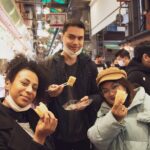
The final stop is Nishiki Market, a narrow shopping street about five blocks long in central Kyoto. It is often called Kyoto’s Kitchen, and it offers a sharp change of mood after the formal temple and castle visits.
The scheduled time is about 30 minutes, and admission is free. That makes Nishiki Market more of a closing introduction than a full food tour. You will have time to get your bearings, look at the shops, and decide if you want to return later.
This is a smart place to finish. The market is in central Kyoto, and the guide provides a list or suggestions for nearby places you can visit in the afternoon. You do not end at an isolated site with a long trip still ahead. Instead, you finish in an area where you can continue exploring on your own.
Do not expect the market portion to replace a dedicated food experience. Thirty minutes passes quickly, especially along a five-block street with more than a hundred shops and restaurants. The description does not include tastings, food purchases, or a set lunch.
I like the market as the final stop because it changes the focus from rulers and religious sites to ordinary commerce and local eating habits. You can use the time to ask the guide what to look for, then return later if something catches your eye.
The iPad, photos, and short video
The guide’s visual approach is one of the tour’s most useful features. Historical subjects can become hard to follow when several names, titles, and conflicts appear in a short period. Graphics and written notes on an iPad give you something concrete to look at while the guide explains the story.
This does not turn the tour into a classroom. It simply gives the information some shape. You can see how the people and events connect instead of trying to remember a string of spoken names.
The guide also takes photos during the outing and delivers them through AirDrop. This is convenient if you use an Apple device, but the supplied details do not say how photos are provided to guests without AirDrop. If that applies to you, ask the guide about the transfer method at the beginning.
At the end, you receive a short video of about 90 seconds as a souvenir. It is a small extra, not a professional film, but it gives the morning a personal record. These additions help explain part of the price difference between a private guided visit and seeing the same places alone.
The strongest praise attached to this experience focuses on Roberto’s kindness, experience, and local knowledge. That matches the design of the tour: the guide is not just there to point out buildings, but to connect them to Kyoto and Japan.
A few more Kyoto tours and experiences worth a look

What $105.10 per person buys you
At $105.10 per person, this is not a budget sightseeing option. You also pay admission fees for Kinkaku-ji and Nijo Castle, along with any public transportation costs. Nishiki Market has no admission fee.
The price makes more sense if you are splitting it among a small private group and want a guide for the full morning. You receive about four hours of service, an English-speaking native guide, historical visuals, photos, and a short video. You also avoid the uncertainty of trying to build the route and research the background yourself.
The value is less convincing if you already know Kyoto’s history, prefer audio guides, or want to spend a long time browsing Nishiki Market. Independent visitors can see these places without paying a guiding fee, though they will not receive the same personal explanation or photo service.
Group discounts are available, so check the price for your party before deciding. A private tour can become more reasonable when shared by several people, particularly if you value the ability to ask questions and keep your group together.
The 25-day advance booking average suggests you should not leave this until the last moment if your Kyoto dates are fixed. Confirmation is provided at booking, and free cancellation is available until 24 hours before the start time. Changes or cancellations made inside that window are not accepted for a refund.
Timing, transport, and the shape of the morning
The morning begins at 9 a.m. near Kyoto Station. That is a practical meeting point for anyone arriving by train or staying close to the station, though the tour does not include transportation.
You are responsible for getting between the stops. The exact transport plan is not specified, so ask the guide at the start how your group will move from one location to the next and how much that is likely to cost. Public transportation expenses are paid by you.
The listed stop times add up to about three hours and 15 minutes, while the experience is described as approximately four hours. The difference allows for movement between sites and the natural pauses of a guided visit. You should still avoid booking a tight lunch reservation immediately after the stated end time.
The tour ends at Nishiki Market, specifically near Nishiki Soya on Nakauoyacho. That finish is useful if you want to continue around central Kyoto. It is less convenient if you need to return to Kyoto Station right away, since that return trip is not part of the activity.
Most people can participate, and the tour is near public transportation. The private format means only your group joins, which is helpful for families, couples, or friends who want a shared morning without strangers.
Who will get the most from this tour
I would choose this experience for a first visit to Kyoto, especially if you want the major sights explained in plain English. It suits you if samurai politics, shogun-era power, and the development of Kyoto interest you as much as temple photographs.
It is also a good fit for a small group that wants a flexible pace. The guide can answer your questions directly, and the iPad visuals give younger visitors or history newcomers a way to follow the story.
You may want something else if your priority is food. Nishiki Market receives only about 30 minutes, and there are no included tastings. You may also prefer a different plan if you want gardens, quiet lanes, or a slower visit at each temple.
The tour is best treated as a strong morning introduction, not a complete Kyoto program. The guide’s suggestions for nearby afternoon locations are useful, but you will need to plan the rest of your day yourself.
Should you book it?
Book this private tour if you want three major Kyoto sights tied together by one clear story. The combination of Kinkaku-ji, Nijo Castle, and Nishiki Market gives you beauty, power, and food culture in a single morning, while Roberto’s reported kindness and local experience add a personal touch.
Skip it if $105.10 per person feels high before entrance fees and transportation, or if you prefer to set your own pace. For everyone else, the tour earns its price through private attention, strong historical framing, iPad visuals, and useful keepsakes. The best reason to book is not simply seeing the Golden Pavilion. It is understanding why these places mattered, then ending in central Kyoto with the rest of the afternoon still open.
FAQ
How long is the Kyoto private tour?
The experience lasts approximately four hours.
What time does the tour begin?
The tour starts at 9 a.m.
Where does the tour start?
It starts at the 7-Eleven Heart-In store at the central entrance of Kyoto Station in Kyoto’s Shimogyo Ward.
Where does the tour end?
It ends at Nishiki Market near Nishiki Soya on Nakauoyacho, Nakagyo Ward.
Which attractions are included?
The route includes Kinkaku-ji, also called the Golden Pavilion, Nijo Castle, and Nishiki Market.
Are entrance fees included?
No. Admission fees for temples and shrines are not included in the tour price.
Is public transportation included?
No. You are responsible for transportation costs during the tour.
Is this a private activity?
Yes. Only your group participates in the tour.
Is the tour offered in English?
Yes. It is offered in English by a native speaker.
What extras does the guide provide?
The guide explains the historical material with an iPad, takes photos and sends them by AirDrop, and provides a souvenir video of about 90 seconds.
More Private Tours in Kyoto
More Nishiki Market Tours in Kyoto
More Nijo Castle Tours in Kyoto
More tours in Kyoto we've reviewed
Nijo Castle Tours, compared.
 ★ 4.7Kyoto: Nijo-jo Castle and Ninomaru Palace Guided TourFrom $161 hour
 ★ 5.0Kyoto: Nijo, Kinkaku-ji, Arashiyama, Kiyomizu & Fushimi InariFrom $51
 ★ 4.7Kyoto: Imperial Palace & Nijo Castle Guided Walking TourFrom $493 hours
 ★ 4.5Kyoto Imperial Palace & Nijo Castle Guided Walking Tour – 3 HoursFrom $55
 ★ 4.6Kyoto: Nijo Castle and Kyoto Imperial Palace Guided TourFrom $633 hours
 ★ 5.0Nijo Castle and Imperial Palace Visit with GuideFrom $79