
Reviewed · TEA CEREMONY EXPERIENCES
Kyoto near Fushimiinari Wagashi making&Small Group Tea Ceremony
Making a Japanese sweet by hand, then eating it during a tea ceremony, gives this Kyoto experience a pleasing sense of purpose. You are not simply watching a formal ritual. You make part of what you later enjoy, then learn how to prepare matcha yourself in a quiet local home.
I like the small maximum of eight people, which leaves room for questions and personal help. I also like the setting: a Japanese-style room reached through a tiny garden, only about a 10-minute walk from Fushimi Inari Taisha. The main consideration is the short 1-hour-15-minute schedule, which gives you a friendly introduction rather than a lengthy study of tea culture.
In This Review
- Key points
- A quiet tea lesson near Fushimi Inari
- Making wagashi in the kitchen
- Walking through the garden to the tea room
- Understanding the scroll, sweets, and etiquette
- Preparing your own bowl of matcha
- How much value do you get for $52.26?
- Group size, children, and practical comfort
- Who will enjoy this Kyoto experience?
- Should you book this tea ceremony?
- FAQ
- Where does the wagashi and tea ceremony take place?
- What time does the experience start?
- How long does the activity last?
- Is the activity conducted in English?
- How many people can join the group?
- Can I sit on a chair instead of the tatami floor?
- Are children allowed to participate?
- What should I bring or wear?
- Is matcha included?
- Can I cancel for a full refund?
Key points
- Hands-on wagashi making: You prepare one type of Japanese traditional sweet in the kitchen instead of only watching a demonstration.
- Two bowls of matcha included: You watch the ceremonial preparation, then make a bowl yourself.
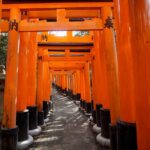
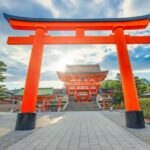
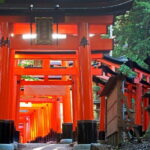
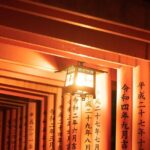
- Local-house setting near Fushimi Inari: The class takes place in an authentic Japanese-style room near Kyoto’s famous orange torii gates.
- English-speaking licensed guides: Instructors explain the customs, history, and meaning of the room’s hanging scroll.
- Small group size: No more than eight people take part, making the lesson easier to follow.
- Tatami or chair seating: You can request chairs in advance if sitting on the floor is difficult.
A quiet tea lesson near Fushimi Inari
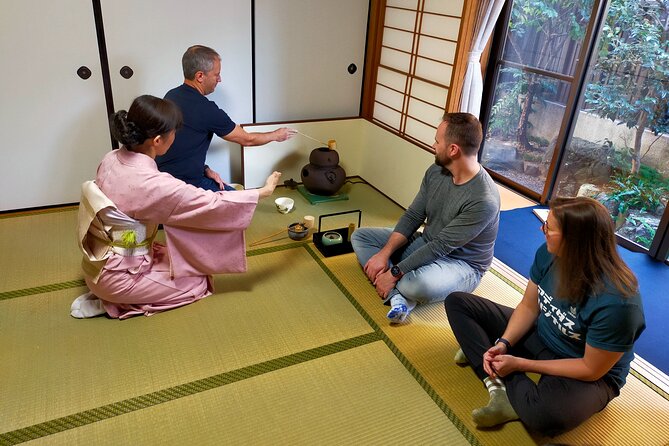
This experience begins at 9:45 a.m. at 38-4 Fukakusa Watamoricho in Kyoto’s Fushimi Ward. Its location is useful if you are already planning to visit Fushimi Inari Taisha, since the house is described as roughly a 10-minute walk from the shrine.
That pairing makes the morning easy to plan. You can take part in the class first, then continue to the orange torii gates, or visit the shrine before your scheduled start if your timing allows. The activity ends back at the same meeting point, so you are not left trying to find a different neighborhood at the end.
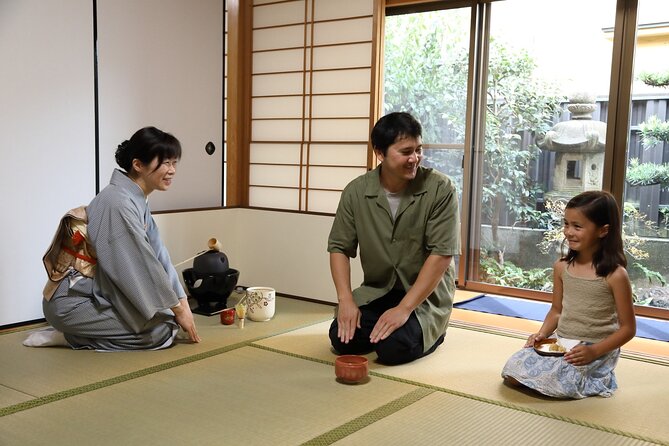
The experience takes place in a local house rather than a large cultural center. That matters. Tea ceremony can feel distant when presented only as a highly polished performance, but a home setting gives the lesson a more personal tone. The hosts aim to welcome you as if you were visiting a friend for tea, while still explaining the formal customs carefully.
The group limit of eight is another practical advantage. You will not have the scale of a major sightseeing activity, and the instructor can demonstrate movements at close range. If you have questions about the tea utensils, floor etiquette, or the sweets, there should be time to ask them.
A few more Kyoto tours and experiences worth a look
Making wagashi in the kitchen
Your first activity is a hands-on wagashi lesson. The English-speaking host takes you into the kitchen, where you learn to make one kind of Japanese sweet.
Wagashi covers a broad family of Japanese traditional confections. The specific type prepared here is not stated, so you should not book expecting a particular shape or flavor. What is clear is that you work with the ingredients yourself. This is not simply a demonstration followed by a plate of finished sweets.
The process can be a little sticky, so it is worth approaching the activity with a playful attitude rather than expecting a tidy pastry class. That hands-on quality is part of the appeal. You see how the sweet comes together, handle the mixture, and end with something you can eat during the next part of the session.
The timing also works well. Making the wagashi first gives you an immediate connection to the tea ceremony. Instead of receiving an unrelated snack, you enjoy the confection you have just prepared. That small link helps the customs feel easier to remember.
The class is also useful after you return home. The experience is designed to leave you able to prepare wagashi for friends, although the information provided does not specify whether written recipes or ingredients are supplied. Think of it as a practical introduction and a memorable souvenir idea, not a full professional cooking course.
Walking through the garden to the tea room
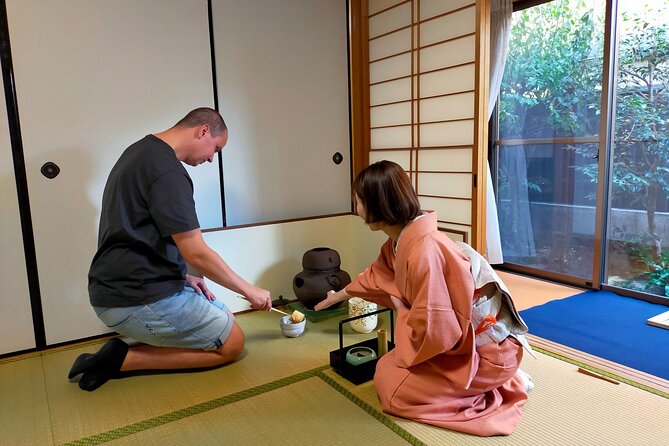
After the kitchen lesson, the host explains how to attend a tea ceremony. This orientation is important because the ceremony has its own manners, movements, and quiet rhythm. You are given context before being asked to take part.
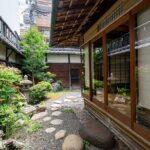
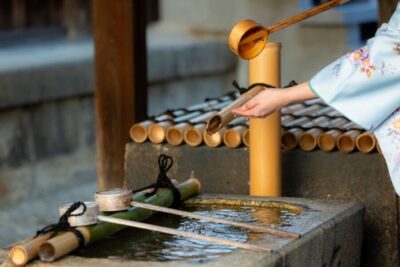
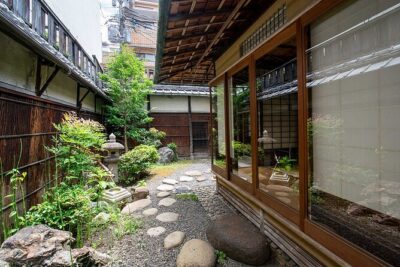
When the weather is suitable, you walk outside through a tiny garden and enter the Japanese-style tea room. The garden walk is brief, but it marks a clear change from the active kitchen class to the more measured ceremony.
If it rains, the outdoor portion may not take place. The activity is listed as dependent on good weather, so poor conditions can lead to a different date or a full refund. That policy is worth keeping in mind when arranging a tightly packed Kyoto schedule.
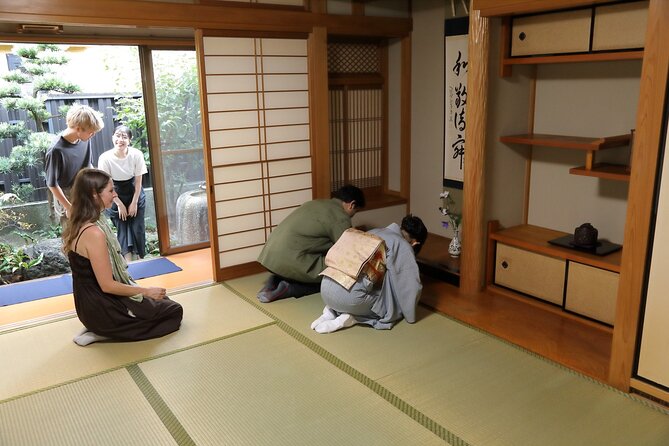
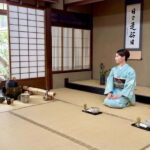
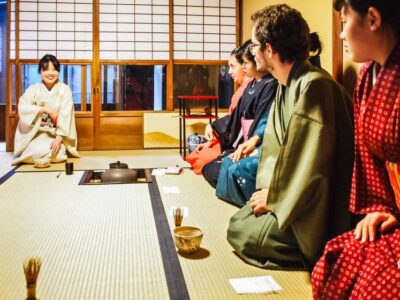
Inside, you sit on tatami flooring. You must wear or bring socks because bare feet are not allowed in the room. Easy-to-remove shoes are recommended, a sensible tip for any Japanese-style setting where footwear comes off before entering.
Tatami seating is part of the traditional atmosphere, but it is not comfortable for everyone. If you prefer a chair, you can ask for one when booking and specify how many chairs are needed. This is especially useful for anyone with knee, hip, or mobility concerns, though the supplied details do not describe wider accessibility features.
Understanding the scroll, sweets, and etiquette
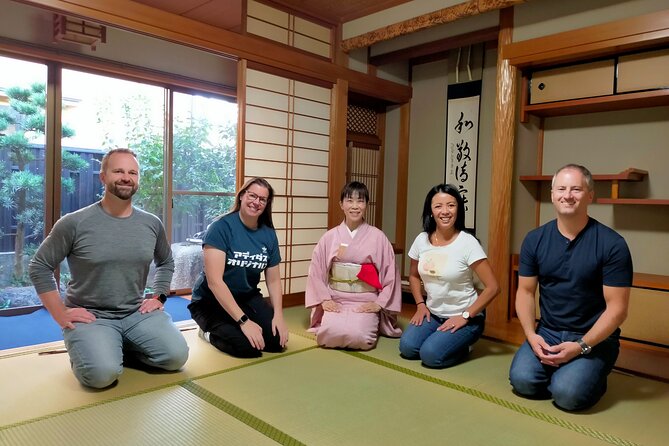
Once seated, the instructor explains the history of tea ceremony and discusses the hanging scroll displayed on the wall. This detail adds meaning to the room. You are not only learning how to hold a bowl or drink matcha. You are also being shown how the room’s decoration contributes to the occasion.
The class presents tea ceremony as both formal and welcoming. That balance is useful for first-time participants. You learn that the ceremony has rules, but you are not expected to arrive with prior knowledge.
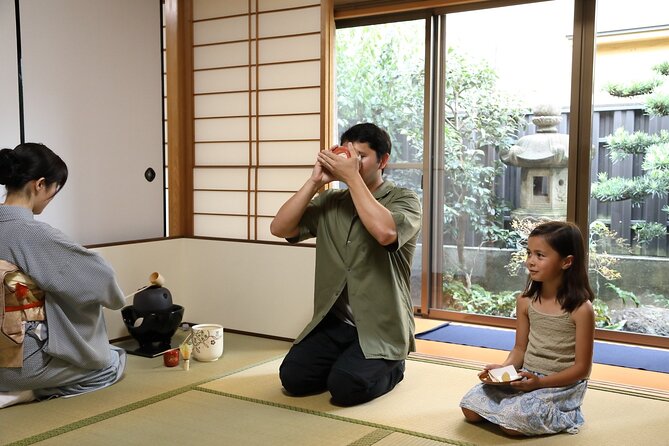
The instructor first demonstrates how to drink a bowl of matcha. You then eat the wagashi you made in the kitchen while watching the demonstration. The sweet is not an afterthought. Traditional confections are served with matcha for a reason, since their sweetness balances the tea’s grassy bitterness.
That pairing can be especially helpful if matcha is new to you. The tea has a distinct taste, and the wagashi provides a contrasting flavor. The experience is not recommended for people who do not take caffeine, so keep that point in mind before booking.
The teaching is conducted in English by licensed guide interpreters. That should make the explanations easier to follow, particularly when the instructor discusses etiquette or symbolic details rather than simply showing hand movements. Clear instruction is one of the strongest reasons to choose this session over a ceremony where you are expected to copy the host without much explanation.
Preparing your own bowl of matcha
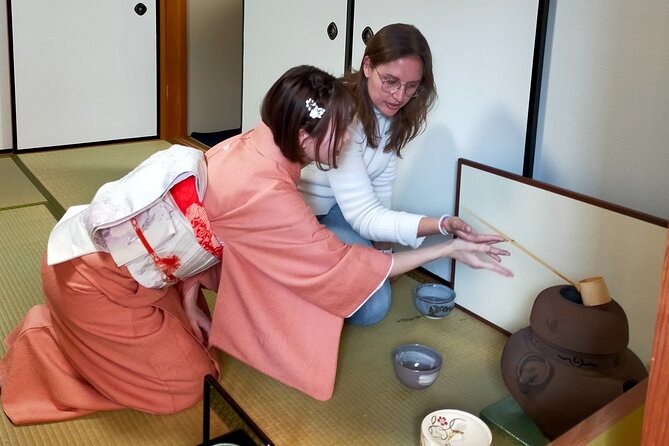
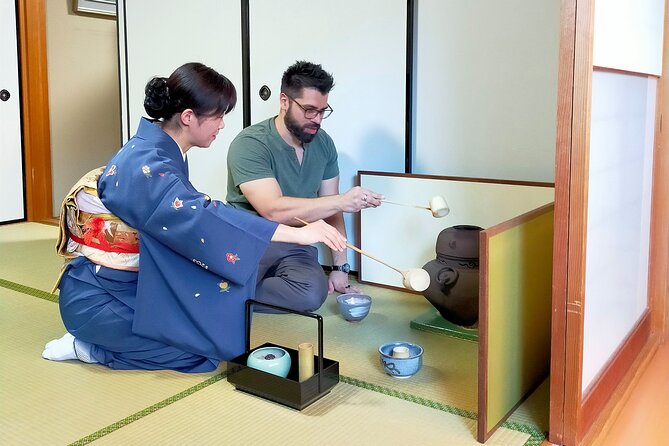
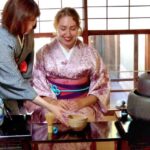
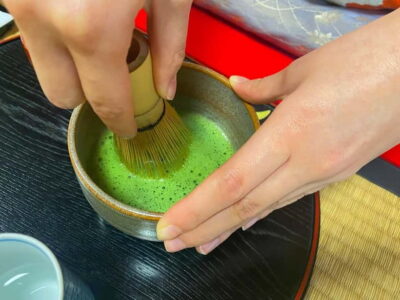
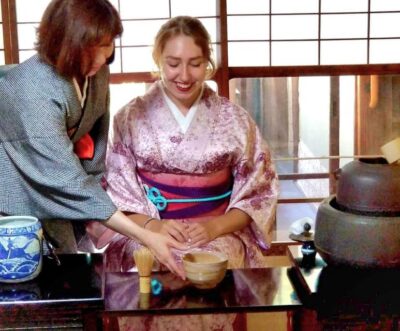
The host then demonstrates the ceremonial preparation of matcha. After watching, you have the opportunity to prepare a bowl yourself.
This is the part that turns the experience from a performance into a lesson. You see the preparation done correctly, then repeat the basic process with guidance. You will leave with enough practical understanding to serve matcha to friends at home, although the session is short and should not be confused with formal training in tea ceremony.
Two bowls of matcha and Japanese traditional confectionaries are included in the price. One bowl is prepared for you after the demonstration, and another opportunity comes when you prepare matcha yourself. The exact sequence may depend on the host’s instruction, but you should expect both to be part of the session.
The ceremony’s quiet pace may feel very different from a busy morning at Kyoto’s major sights. That contrast is valuable. Fushimi Inari can be an energetic stop, while this class offers time to sit, listen, and pay attention to small movements.
The experience also gives you a better understanding of why tea ceremony is about more than drinking tea. The setting, the scroll, the garden, the sweets, the gestures, and the hospitality all work together. In 75 minutes, you get a compact introduction to that larger idea.
A few more Kyoto tours and experiences worth a look


How much value do you get for $52.26?
At $52.26 per person, this is not the cheapest way to drink matcha in Kyoto. A tea house may offer a simpler cup for less money. That comparison, however, misses what you are paying for here.
The fee includes an English-speaking instructor, all fees and taxes, the wagashi activity, traditional confectionaries, and two bowls of matcha. You are also paying for direct instruction in a small group, access to a private home setting, and the chance to prepare both the sweet and the tea yourself.
I consider the price reasonable for someone who wants participation rather than a short ceremonial display. The value is strongest if you care about understanding what you are doing and want a cultural activity that fits neatly beside a visit to Fushimi Inari.
The value is weaker if you only want a quick taste of matcha, dislike sitting on tatami, or have no interest in making sweets. The class is also less suitable for people who avoid caffeine, since matcha is central to the session.
The booking pattern suggests planning ahead. It is booked on average about 10 days in advance, so I would not leave it until the last minute if your Kyoto dates are fixed. Reservations are normally for at least two people, but solo participants can contact the provider to see if an arrangement is possible.
Group size, children, and practical comfort
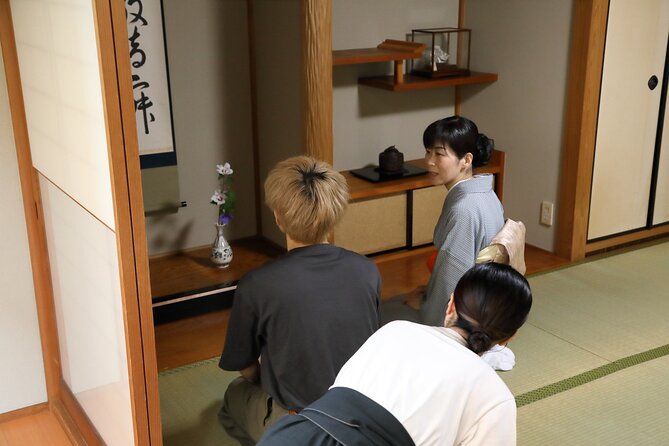
The group maximum is eight people. That is large enough to create a little shared energy but small enough for a personal lesson. The hosts and instructors are described as friendly, and the session is designed to make all participants comfortable asking questions.
Children aged eight to 12 must attend with at least one adult. Children aged seven or younger cannot take part. This age rule matters because the session includes quiet etiquette, hot tea, floor seating, and careful handling of utensils.
The experience is near public transportation, but hotel pickup and drop-off are not included. You need to make your own way to the house and return from the same meeting point. Since the address is near Fushimi Inari, it can fit well into a morning centered on the shrine, but leave enough time to locate the house before the 9:45 a.m. start.
The mobile ticket is convenient for keeping the booking on your phone. Confirmation is received at booking. Bring socks, wear shoes that come off easily, and request chairs before the visit rather than waiting until you arrive.
Free cancellation is available up to 24 hours before the start time for a full refund. Cancellations or changes made less than 24 hours before the start are not accepted for a refund. Poor weather can result in a different date or a full refund, since the activity requires suitable conditions.
Who will enjoy this Kyoto experience?
I would recommend this class to first-time visitors who want a manageable introduction to tea ceremony. You receive enough explanation to understand the basic customs, but the schedule is not so long that it takes over your day.
It is also a good choice if you are staying near Fushimi Inari or already plan to visit the shrine. The location lets you combine one of Kyoto’s best-known sights with a quieter cultural activity in the same part of town.
Families with older children may find it appealing, especially because the wagashi making gives the lesson an active element. Younger children cannot participate, and children from eight to 12 need an adult beside them.
The experience suits people who value direct contact with local hosts, English instruction, and a small class. It may not suit anyone who avoids caffeine, dislikes sitting on the floor, or prefers a grander, more theatrical ceremony.
Should you book this tea ceremony?
Book it if you want to do more than observe. The strongest features are the kitchen lesson, the chance to prepare your own matcha, the local-house setting, and the small group of no more than eight people.
I especially like the way the wagashi becomes part of the ceremony. You make it, learn why it is served with tea, and eat it in the room while the host explains the customs. That creates a clear beginning, middle, and end within a short morning session.
Skip it if your schedule is too tight for the 9:45 a.m. start, if you are avoiding caffeine, or if traditional floor seating is a serious problem and you cannot request a chair ahead of time. For everyone else, the $52.26 cost buys a focused and personal introduction to two Japanese traditions, with Fushimi Inari close by.
FAQ
Where does the wagashi and tea ceremony take place?
The experience takes place at a local house at 38-4 Fukakusa Watamoricho, Fushimi Ward, Kyoto, 612-0022, Japan.
What time does the experience start?
The scheduled start time is 9:45 a.m.
How long does the activity last?
The experience lasts approximately 1 hour and 15 minutes.
Is the activity conducted in English?
Yes. An English-speaking instructor leads the session, and the instructors are licensed guide interpreters.
How many people can join the group?
The maximum group size is eight participants.
Can I sit on a chair instead of the tatami floor?
Yes. You can request chairs when making your reservation and should state how many chairs you need.
Are children allowed to participate?
Children aged eight to 12 must attend with at least one adult. Children aged seven or younger cannot participate.
What should I bring or wear?
You must wear or bring socks because bare feet are not allowed in the room. Easy-to-remove shoes are recommended.
Is matcha included?
Yes. The experience includes two bowls of matcha and Japanese traditional confectionaries.
Can I cancel for a full refund?
Yes, if you cancel at least 24 hours before the experience start time. Cancellations or changes made less than 24 hours before the start are not refunded or accepted.
More Cooking Classes in Kyoto


More Fushimi Inari Tours in Kyoto
More Tea Ceremony Experiences in Kyoto
More tours in Kyoto we've reviewed



Tea Ceremony Experiences, compared.
 ★ 4.9Kyoto: Tea Ceremony in a Traditional Tea House in KiyomizuFrom $4945 min
 ★ 4.9Kyoto: Tea Ceremony Ju-An at Jotokuji TempleFrom $291h 10m
 ★ 4.3Kyoto: 45-Minute Tea Ceremony Lesson ExperienceFrom $2245 min
 ★ 5.0World Heritage Kyoto & Nara Uji Authentic Matcha ExperienceFrom $129
 ★ 4.9Kyoto: Table-Style Tea Ceremony at a Kyo-MachiyaFrom $451h 30m
 ★ 5.0Kimono Tea Ceremony at Kyoto Maikoya, NISHIKIFrom $65