
Reviewed · NARA DAY TRIPS
Nara 8hr Private Tour – Kyoto DEP. with Licensed Guide
Nara’s biggest surprise is how much history sits beside ordinary city life. In one day, you can face the enormous Buddha at Todaiji, feed the free-roaming deer in Nara Park, and stroll through old merchant streets in Naramachi. The private format lets you choose three or four sites instead of following a fixed route.
I like the custom itinerary, which can be shaped around temples, gardens, architecture, family interests, or food. I also like the personal help from guides such as Junichi, Taku, Ken, Yuka, Haru, and Masaaki, who have helped visitors understand the difference between Shinto and Buddhism, find suitable restaurants, and use Japanese trains.
The main drawback is cost control. The price is about $201.51 per person, but transportation, entrance fees, lunch, and personal expenses are extra. This is also a walking tour, so hot weather, rain, crowds, and tired feet can affect your day.
In This Review
- Key points to know before you book
- Why a private day in Nara works so well
- Starting from Kyoto, with transport left to you
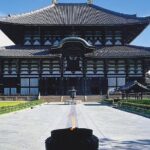
- Todaiji and the enormous Great Buddha
- Nara Park and the bowing deer
- Kasuga Taisha and the lantern-lined forest
- Kofukuji and Naramachi, from aristocrats to merchants
- Choosing a garden, hill, or second temple
- What the guides add to the day
- Walking, weather, crowds, and extra costs
- Who should book this Nara tour
- Should you book it?
- FAQ
- How long is the Nara private tour?
- Where does the tour begin?
- Is hotel pickup included?
- How many sites can I visit?
- Is the tour private?
- Are transportation fees included?
- Are entrance tickets included?
- Is lunch included?
- Is Nara Park free to enter?
- What language does the guide speak?
- Can service animals participate?
- Can I cancel for a full refund?
Key points to know before you book
- Pick three or four sites: You can focus on Nara Park and the major temples, or choose quieter places such as Yakushiji, Isuien Garden, or Horyuji.
- Todaiji is the main event: The Great Buddha Hall and its enormous bronze Buddha give the day a memorable centerpiece.
- Private means flexible: Your guide can adjust the pace and explain sites in a way that fits your interests and age group.
- Expect a full day on foot: Pickup is on foot within a designated Kyoto area, and no private vehicle is included.
- Guides add value beyond directions: Several guides have helped with train navigation, restaurant choices, shopping streets, and cultural questions.
- Plan for extra fees: Admission, transportation, lunch, and other personal costs are not included in the tour price.
Why a private day in Nara works so well
Nara is close enough to Kyoto and Osaka for a day trip, but it feels different from both. It was Japan’s capital during much of the Nara Period, from 710 to 794, and its temples and shrines preserve an early chapter of Japanese Buddhism and court culture.
A private guide is useful here because Nara’s sights are spread across a large area. The famous places near Nara Park can be combined on foot, while Horyuji, Yakushiji, Toshodaiji, and the Heijo Palace Site Historical Park require a wider plan. Your guide can help you avoid spending the day zigzagging across town.
The tour lasts about eight hours, with three or four selected sites. That is enough time for a substantial day, but not enough to properly visit all fourteen possible stops. I would choose your priorities before meeting your guide and treat the rest as options for another visit.
The private setup suits couples, families, and small groups who want to ask questions without holding up strangers. It also helps if one member of your party cares about gardens, another about architecture, and another about deer or food. Guides have adjusted routes for children, teenagers, vegetarian diners, and visitors with very specific temple interests.
A few more Kyoto tours and experiences worth a look
Starting from Kyoto, with transport left to you
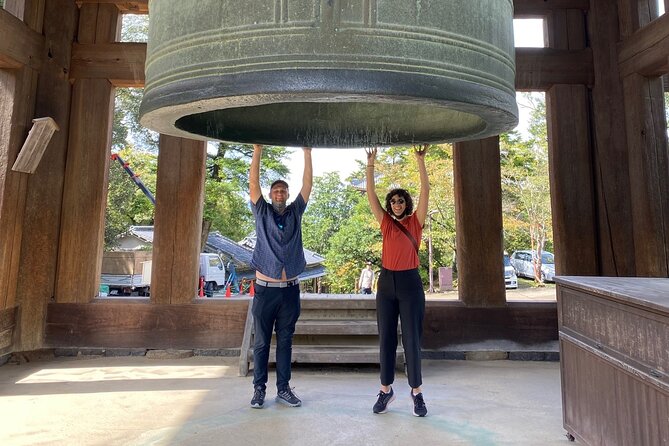
The tour is based on a meet-up within a designated area of Kyoto, and the pickup is on foot. Transportation fees are not included, and there is no private vehicle. Some arrangements described by guides have involved meeting at a hotel or starting from Osaka, but you should confirm the exact meeting point and route after booking.
This matters because Nara is not a single compact attraction. If you choose Horyuji or the temples farther west, you will need more time and probably more transportation than if you stay around Nara Park. Ask your guide how the three or four selected sites fit together before the day begins.
A useful feature is the communication before the tour. Guides such as Haru and Junichi have contacted visitors in advance to ask about interests and plan the route. Ken has shaped days around a teenager’s preferences, while Yuka adjusted a tour to include Yakushiji, a less central choice that rewarded an interest in old architecture.
You pay about $201.51 per person. That is a serious price for a day trip, especially once you add trains, admissions, and lunch. The value comes from having one person organize the day, explain what you are seeing, and help you make the most of limited time.
For a larger group, the price can make more sense because the experience is private and group discounts are available. For a solo visitor, the cost is harder to justify unless you place a high value on historical explanation, a tailored route, and help with local logistics.
Todaiji and the enormous Great Buddha
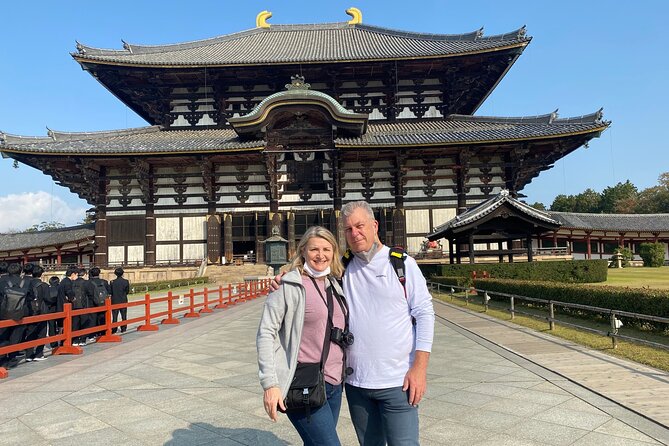
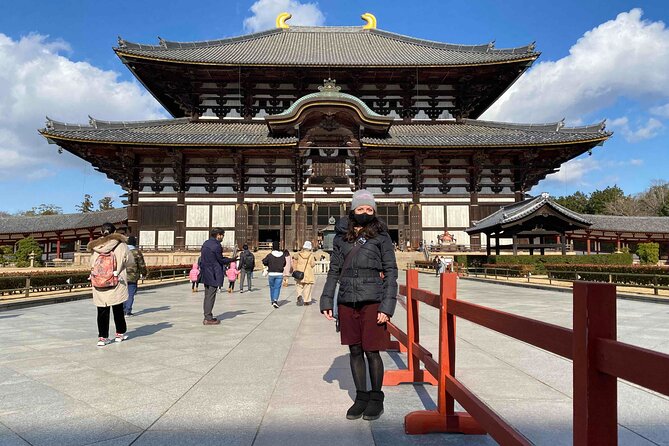
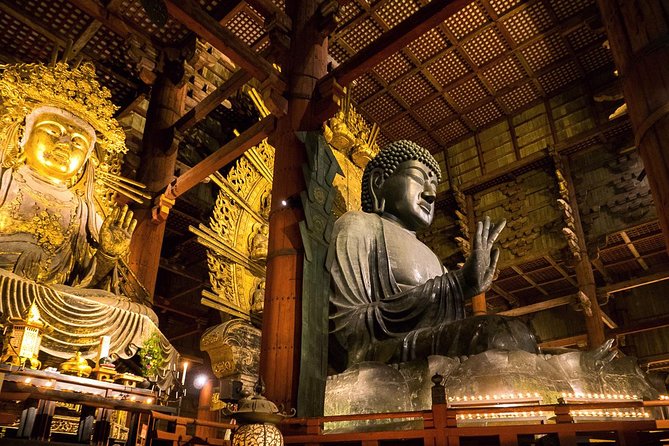
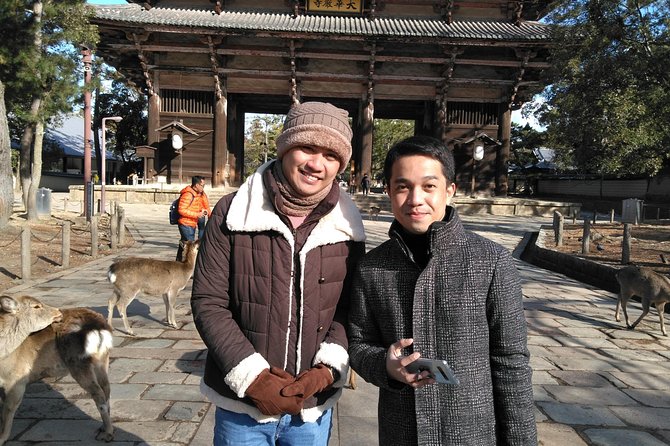
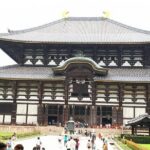
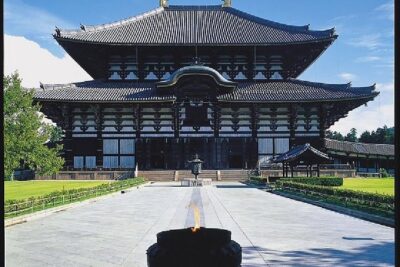
If you choose only one temple, I would make it Todaiji. Founded in 752, it was once the head temple for provincial Buddhist temples across Japan. Its scale is the first lesson: the approach, the great gate, the wooden hall, and the bronze Vairocana Buddha all work together to make you feel very small.
The Daibutsuden, or Great Buddha Hall, contains the main attraction, an immense bronze Buddha associated with cosmic enlightenment. A guide can give you the religious and political background that makes the building more than a grand photo stop.
The temple area can be crowded, especially during school excursions and major holiday periods. One visitor found Todaiji packed with Japanese schoolchildren, leaving less time to study the Buddha quietly. Your guide can help you move through the complex efficiently, but no guide can remove the crowds.
Look for the famous hole in one of the wooden pillars. It is said to be the same size as the Buddha’s nostril, and squeezing through is associated with academic success. Children often enjoy this more than a long explanation of temple architecture, and it gives families a small, playful break in a serious place.
Nigatsudo Hall is another worthwhile addition near Todaiji if your route allows it. It sits higher on the hillside and offers views over Nara and the temple grounds. Tamukeyama Hachiman Shrine, also nearby, provides a quieter meeting point of Buddhist and Shinto traditions.
Nara Park and the bowing deer
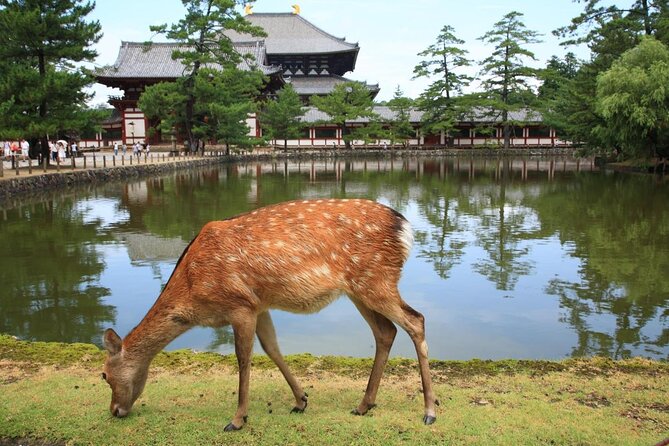
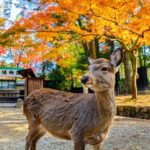
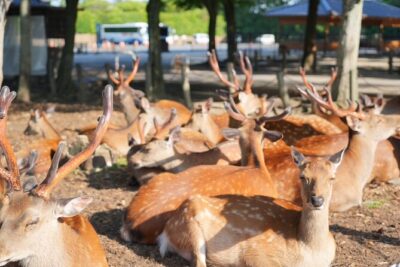
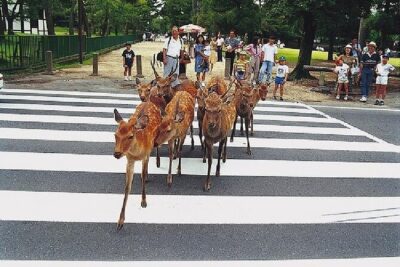
Nara Park was established in 1880 and includes several of Nara’s major sights. Its deer are free-roaming and are one of the clearest reasons this day feels different from a standard temple tour.
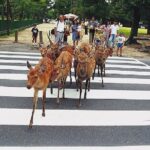
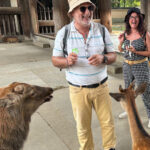
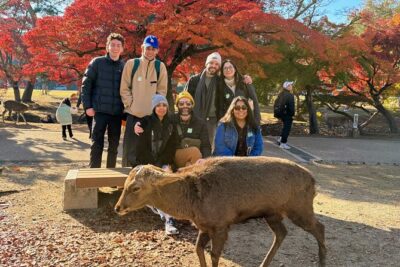
You can buy deer crackers and feed the animals, but pay attention once the crackers are gone. The deer are tame, yet they are still animals, and several may crowd around you when they see food. A guide can show you how to bow to them and how to move on without creating a small deer queue.
I like the way Nara Park connects the major sights. You are not simply driving from monument to monument. You walk through open spaces, wooded paths, and temple grounds while deer appear beside you. Autumn colors, clear weather, and cooler temperatures can make the walking especially pleasant, while summer heat and humidity can wear you down.
The park is free, but nearby attractions charge admission. That makes it easy to include even on a budget, though you should reserve money for the temples and museums you actually enter.
Kasuga Taisha and the lantern-lined forest
Kasuga Taisha is Nara’s best-known Shinto shrine. It was founded when the capital was established and is dedicated to the deity charged with protecting the city.
The approach is part of the experience. Stone lanterns line the path, and the wooded setting gives the shrine a quieter mood than the open spaces around Todaiji. Inside, bronze lanterns and shrine buildings create a more intimate encounter with Japanese religious practice.
A guide can explain how Shinto customs differ from Buddhist ones, a subject that came up often in the strongest guiding experiences. That context helps you understand why Nara contains temples and shrines side by side rather than treating them as interchangeable old buildings.
Wakamiya Shrine, a related sub-shrine, may be added when time allows. If your interest is spirituality, ritual, or traditional architecture, Kasuga Taisha should be one of your selected stops.
Other guided tours in Kyoto

Kofukuji and Naramachi, from aristocrats to merchants
Kofukuji was the family temple of the Fujiwara clan, one of the most powerful aristocratic families during the Nara and Heian periods. Its five-story pagoda is one of Nara’s familiar sights, and the temple grounds help connect religious buildings with the power of Japan’s early court.
Some parts of Kofukuji require admission, so check which halls are open and whether you want to spend part of your day inside its museum spaces. Guides have included Kofukuji museums for visitors especially interested in Buddhist art and sculpture.
Naramachi offers a different kind of history. This former merchant district preserves traditional townhouses and storehouses, with small shops, cafes, and buildings open to the public. The streets show how Nara worked as a lived-in town, not just as a collection of monuments.
Nigiwai-no-Ie is a traditional house where you can see tatami rooms, alcoves, and staggered shelves. I like Naramachi as the final part of a temple-heavy day because it slows the pace and gives you room to browse, eat, or simply look at the older facades.
Several guides have also added modern local experiences, including sake tasting, shaved ice, ramen, and cafes. These extras are not promised, and food is not included, but your guide can help you choose a lunch stop that fits your needs. One guide made a special effort to find vegetarian food, while another knew a tofu restaurant.
Choosing a garden, hill, or second temple
The flexible site list is the best reason to discuss your interests in advance. You can replace a familiar highlight with a quieter place that better suits your group.
Wakakusayama Hill rises behind Nara Park, between Todaiji and Kasuga Taisha. The grass-covered mountain is about 350 meters tall and gives wide views over Nara. It adds an uphill walk, so I would choose it only if your group is comfortable with extra exertion and the weather is favorable.
Isuien Garden is a strong choice for anyone who needs a quieter hour. Its design uses Todaiji’s Nandaimon Gate and Mount Wakakusayama as borrowed scenery. That makes it a place to study Japanese garden design rather than rush through another large religious complex.
Yoshikien Garden is a pleasant central garden named for the Yoshikigawa River. It is a good alternative when you want greenery and a slower pace without committing to a longer journey.
Horyuji Temple is one of Japan’s oldest temples, founded in 607 by Prince Shotoku. It contains the world’s oldest wooden buildings, making it one of the most important choices for anyone focused on early Buddhism, architecture, or art.
The tradeoff is distance. Horyuji can take time away from Nara Park and Naramachi, so do not try to add it casually to a route already packed with central Nara sights. One carefully planned day made Horyuji the highlight for a visitor interested in ancient artwork and wooden construction.
Yakushiji Temple has a formal, symmetrical layout and was built in the late seventh century for the recovery of Emperor Tenmu’s sick wife. Its East Pagoda dates back more than 1,300 years and is one of Japan’s National Treasures.
Shinyakushiji Temple was founded during the Nara Period for an ailing emperor and is devoted to Yakushi Buddha, the Buddhist patron of medicine. It is a more specialized choice, best for someone with a clear interest in Buddhist sculpture or religious history.
Toshodaiji was founded in 759 by Ganjin, a Chinese priest invited to Japan to train priests and improve Japanese Buddhism. Its story gives the tour an international angle and shows how closely early Japanese religion was tied to cultural exchange with the Asian mainland.
Heijo Palace Site Historical Park marks the former capital of Heijo-kyo. The palace covered about one kilometer by one kilometer and offers a chance to think about Nara as an organized imperial capital, not simply a temple town.
What the guides add to the day
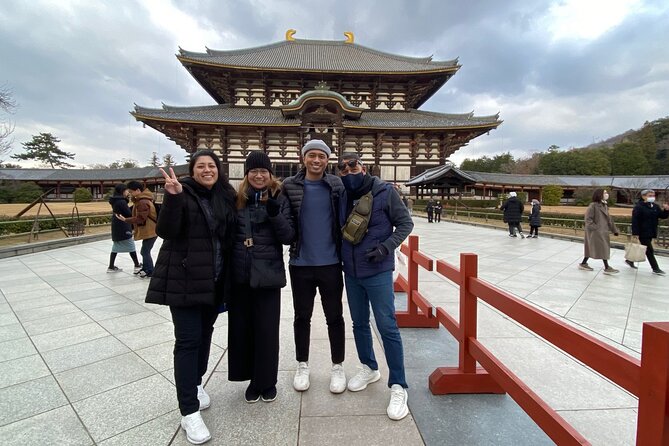
The strongest part of this experience is the human element. The guide assigned to you may change, but the most praised guides share several useful habits: they ask what you care about, adjust the walking pace, explain religion without assuming prior knowledge, and help you navigate practical problems.
Junichi, who was born and raised in Nara, has shared local stories and helped visitors connect ancient sites with the modern city. Taku has combined temple history with sake tasting, cafes, jokes, and photo stops, while also watching for jet lag and sore feet.
Ken has been especially good at organizing tight schedules and explaining how history shaped the buildings in front of you. Masaaki is a strong match for visitors focused on art, architecture, and the political background of Nara. Yuka has handled custom temple requests and helped explain small architectural details at Yakushiji and Horyuji.
English ability can vary by guide. The service uses government-licensed tour interpreters, but one experience included communication problems and frequent use of Google Translate. I would state your preferred language level and interests clearly when arranging the tour, then contact the agency if pre-tour communication is unclear.
Walking, weather, crowds, and extra costs
Eight hours on foot is a long day. Comfortable shoes are essential, and you should pace yourself rather than selecting four distant temples simply because the menu allows four sites.
Summer heat and humidity have made some days tiring, while rain has affected otherwise successful tours. A guide can adjust the order and help you find shelter or indoor sights, but weather still shapes the experience. Spring and autumn are likely to feel easier for a walking-heavy itinerary, though exact conditions are not guaranteed.
Admission fees are not included. Todaiji, Wakakusayama, Horyuji, Kofukuji, Yakushiji, Shinyakushiji, the Nara National Museum, Heijo Palace Site attractions, Toshodaiji, Isuien, and Yoshikien may involve separate costs, depending on the area or building you enter.
Lunch is also extra. This is not a problem if you want freedom, but dietary needs should be discussed before the day. Your guide may help locate vegetarian food or a local specialty, yet the meal remains your responsibility.
The cancellation policy allows a full refund if you cancel at least 24 hours before the local start time. Changes or cancellations inside that window are not accepted for a refund.
Who should book this Nara tour
I would choose this tour if you have one day for Nara and want more than a quick walk past Todaiji and the deer. It is particularly useful for families, older relatives who need a sensible pace, first-time visitors who want cultural context, and anyone who has a specific site in mind.
It also suits repeat visitors who want to leave the standard route. Ask for Isuien, Yoshikien, Yakushiji, Toshodaiji, or Naramachi rather than spending the whole day at the busiest highlights.
I would skip it if you prefer to travel cheaply and plan your own trains, or if you want a relaxed day with little walking. The price rises once you add transportation and entrance fees, and the eight-hour format can feel tiring in poor weather.
Should you book it?
Book this private Nara tour if your priority is a well-shaped day with clear explanations and the freedom to choose your sights. Before paying, decide whether you prefer deer and major temples, old wooden architecture, gardens, or early Japanese religion.
The best value comes from using the guide’s flexibility. Tell the agency your interests, fitness level, dietary needs, and must-see site. If you do that, the tour can turn a complicated day across Nara into a focused visit with room for local streets, a good lunch, and the small details you might otherwise miss.
FAQ
How long is the Nara private tour?
The tour lasts approximately eight hours.
Where does the tour begin?
The included meeting arrangement is on foot within a designated area of Kyoto. The experience is promoted as a day trip from Kyoto, and some arrangements may begin from Osaka, so confirm your meeting point after booking.
Is hotel pickup included?
The included service specifies an on-foot meet-up in Kyoto rather than a private vehicle pickup. Some guide arrangements have involved meeting visitors at a hotel, but you should confirm whether that applies to your booking.
How many sites can I visit?
You can choose three to four sites from the available options. The guide customizes the route around your interests.
Is the tour private?
Yes. Only your group participates, and multiple tour groups cannot be combined.
Are transportation fees included?
No. Transportation fees are not included, and the tour does not provide a private vehicle.
Are entrance tickets included?
No. Entrance fees are generally extra. Guide entry fees are covered only for sights listed under the tour’s expected sites.
Is lunch included?
No. Lunch and personal expenses are not included.
Is Nara Park free to enter?
Nara Park itself has free admission. Some attractions located in or near the park charge separate entrance fees.
What language does the guide speak?
The tour includes a licensed local English-speaking guide. Multilingual guides are available through the service, but the specific guide is designated after booking.
Can service animals participate?
Yes. Service animals are allowed.
Can I cancel for a full refund?
Yes, if you cancel at least 24 hours before the experience start time. Cancellations or changes made less than 24 hours before the start time are not eligible for a refund.
More Private Tours in Kyoto
More Guided Tours in Kyoto
More Nara Day Trips in Kyoto
More tours in Kyoto we've reviewed


Nara Day Trips, compared.
 ★ 5.0World Heritage Kyoto & Nara Uji Authentic Matcha ExperienceFrom $129
 ★ 4.7Kyoto/Osaka: Nara, Fushimi Inari Taisha, Arashiyama Bus TourFrom $529 - 10 hours
 ★ 4.4Osaka/Kyoto: Arashiyama, Nara & Fushimi Inari Shrine w/LunchFrom $61
 ★ 5.0Nara Early Morning Tour (Kyoto or Osaka Departure Available)From $61
 ★ 4.5Kyoto and Nara Day Trip from KyotoFrom $194
 ★ 4.5Nara Afternoon Tour from Kyoto or OsakaFrom $102