
Reviewed · TEA CEREMONY EXPERIENCES
Private Kyoto Sushi Cooking Class & Tea Ceremony with Emika
Kyoto’s best food lesson may be the one held far from a restaurant counter. At Emika’s home, you cook, eat, and talk with a local family. You might prepare sushi, miso soup, slow-cooked vegetables, tofu, or even Osaka-style okonomiyaki, depending on the menu you arrange.
I like the private home setting, where your group gets Emika’s full attention instead of sharing a crowded classroom. I also like the use of seasonal vegetables from Emika’s organic garden, a small detail that makes the meal feel tied to this particular place and season. The main consideration is location: expect a 10 to 15 minute walk from Katsura Station through residential streets, with no hotel pickup.
In This Review
- Key points to know before booking
- Cooking lunch inside a Kyoto family home
- Sushi, Obanzai, or another Japanese main
- Seasonal produce from Emika’s garden
- A meal you prepare, not a demonstration you watch
- Matcha and the closing tea ceremony
- The optional market walk comes after lunch
- What the $109 price buys you
- Getting there and planning the day
- Who will enjoy this most
- Should you book Emika’s Kyoto cooking class?
- FAQ
- Where does the cooking class meet?
- How long does the experience last?
- How far is the home from Katsura Station?
- Can I choose sushi or Obanzai?
- What dishes might I prepare?
- Is matcha included?
- Is alcohol included?
- Is the market tour included?
- Does the market tour happen before cooking?
- Can dietary restrictions be accommodated?
- Is transportation provided from my hotel?
- Can I cancel for a full refund?
Key points to know before booking
- A real home meal: You cook and eat in Emika’s Kyoto home, not in a commercial cooking studio.
- Choose your main menu: Request sushi or Kyoto-style Obanzai when you book, and ask about other preferences.
- Garden vegetables may reach your cutting board: Emika grows organic produce used in the dishes.
- Tea frames the experience: Matcha is served at the start or end, with the meal finishing in a tea ceremony.
- The market add-on comes afterward: The optional one-hour supermarket and produce tour follows the cooking and lunch.
- Best for small private groups: Families, couples, and mixed-age groups can take part at their own pace.
Cooking lunch inside a Kyoto family home
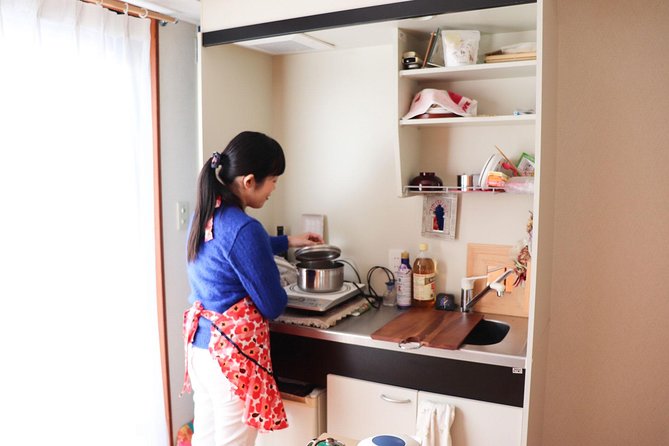
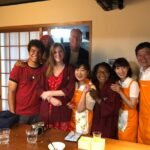
The heart of this experience is simple: you meet Emika at her home, prepare food together, then sit down to eat what you made. That sounds modest, but it gives the class a quality many polished food tours cannot provide. You are not just watching a chef perform. You are learning how food fits into an ordinary Kyoto household.
The meeting point is at 31-30 Katsurainariyamachō in Kyoto’s Nishikyo Ward. From Katsura Station, the walk takes roughly 10 to 15 minutes. The route passes through winding residential streets, so keep your phone map open and allow extra time. The walk is part of the setting, but this is not a central Kyoto attraction with a famous temple at the door.
Once inside, expect a relaxed, hands-on lesson. Emika explains the ingredients, cooking methods, and a few points of Japanese custom and table etiquette. Her father may prepare the matcha, giving the tea portion a family feel rather than making it a formal stage show.
The class welcomes beginners. You do not need professional knife skills or a background in Japanese food. Emika’s teaching style is patient and practical, with instructions suited to the people in front of her. Families with children and teenagers can take part, and adults can ask broader questions about daily life in Japan as they cook.
A few more Kyoto tours and experiences worth a look
Sushi, Obanzai, or another Japanese main
You should tell Emika when booking if you prefer sushi or Obanzai, the home-style cooking associated with Kyoto. This choice matters because the class is meant to be shaped around your group, not delivered as one fixed menu for everyone.
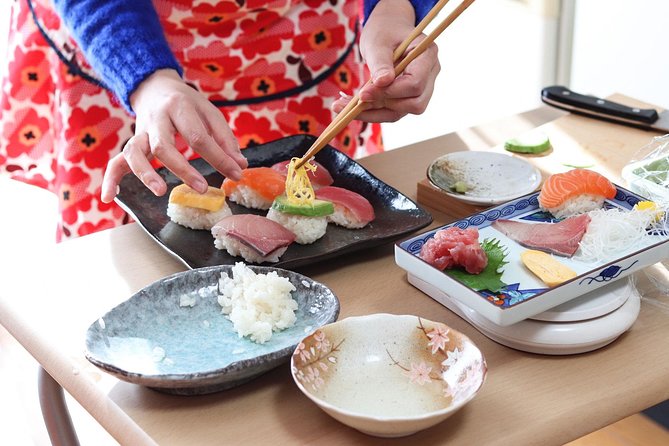
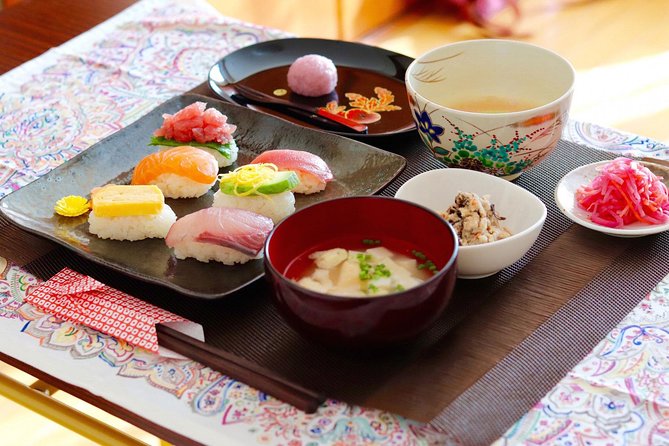
The sushi option can include preparing sushi rice, shaping nigiri, and working with raw fish and seaweed. You may also make miso soup and seasonal vegetable dishes alongside the sushi. The lesson is not limited to rolling one type of maki. You learn small techniques that help sushi look better and hold together at home.
That hands-on approach is useful because sushi often seems easier than it is. Rice texture, portion size, hand shape, and the amount of topping all matter. Emika explains these details in a way that lets you try them yourself. You will not produce perfect restaurant pieces on your first attempt, but that is part of the fun.
The Obanzai menu offers a different view of Kyoto food. Rather than focusing only on raw fish or presentation, it uses familiar home dishes such as marinated mushrooms, slowly cooked vegetables, miso soup, and tofu preparations. These dishes show how Japanese meals are often built from several modest portions instead of one large centerpiece.
The menu can also vary. Some sessions include Osaka-style okonomiyaki, a savory pancake cooked with vegetables and other ingredients. That option is especially appealing if your group wants something hearty and less focused on raw seafood. The exact dishes depend on the menu chosen in advance, so ask clearly before arrival.
Seasonal produce from Emika’s garden
The garden vegetables are one of the nicest details here. Emika grows organic vegetables herself, and some may be used in your meal. That connects the lesson to the season in a direct way. You are not simply hearing that Japanese cooking values fresh produce. You may be chopping something grown a short distance from the kitchen.
Seasonal ingredients also mean the meal is not identical all year. The vegetables, side dishes, and available choices can change. I see that as a plus for repeat visitors, but it also means you should not book expecting a rigid menu unless you have confirmed it with Emika.
The class gives you a useful look at Japanese seasoning. Miso, soy-based flavors, vegetables, rice, tofu, and soup are presented as working parts of a home meal. You learn what the ingredients do, not just what they are called. The market option adds another layer by showing you where local shoppers find these products.
Dietary needs should be shared at the time of booking. The class has accommodated vegetarian cooking and other special requests, and the private format makes adjustments more practical than they would be in a large group. Still, you should never wait until the day of the class to mention an allergy or restriction.
A meal you prepare, not a demonstration you watch
The cooking section takes about an hour, though the full experience lasts roughly three hours. That leaves time for preparation, questions, eating, conversation, and tea. The pace is part of the appeal. You are not being pushed through a chain of stations with a whistle at the end.
After cooking, you sit down with Emika and eat the meal your group prepared. This shared table is where the experience becomes more than a recipe lesson. You can ask about Kyoto, Japanese customs, local food products, and places to visit in the city. Emika also offers practical suggestions for finding ingredients and continuing the cooking at home.
Drinks are included. You can have one or two glasses of local alcohol, or choose matcha with your food. If you prefer not to drink alcohol, the tea choice keeps the meal inclusive. Be sure to state your preference if it matters to you.
The private arrangement works especially well for families and groups with different ages. Children can take part in shaping sushi or helping with simple dishes, while adults can ask more detailed questions. One family group found that even a teenager stayed engaged, which is no small victory on a sightseeing trip.
The setting is intimate, so this is not the place to expect a large, theatrical cooking show. You get conversation and personal instruction instead. If you prefer a formal class with printed recipes, a professional kitchen, and a fixed menu, this home visit may feel informal.
Matcha and the closing tea ceremony
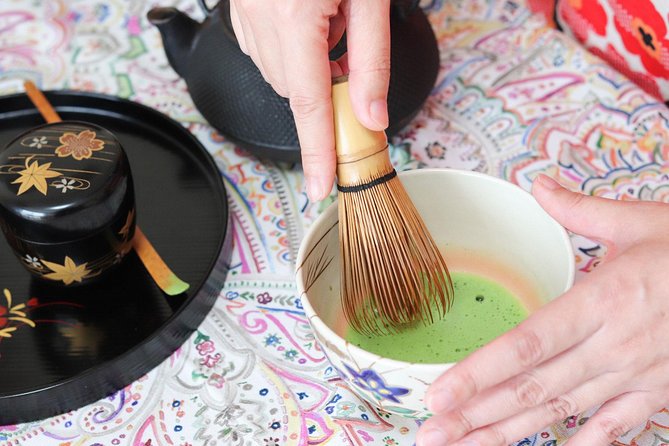
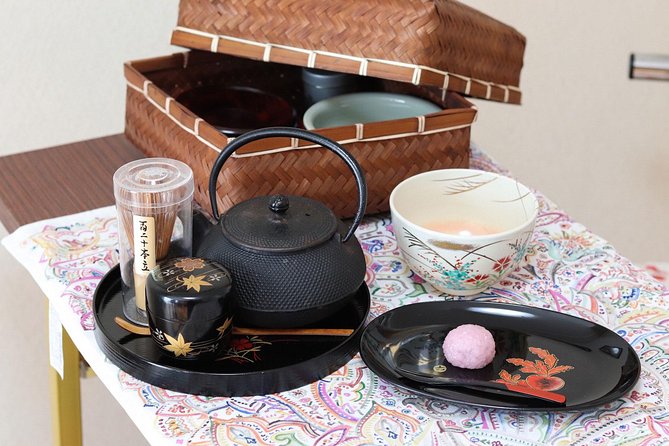
The experience starts or ends with a freshly prepared cup of matcha, and the meal finishes with a tea ceremony. Emika or her father prepares the tea, giving you a quiet cultural moment before or after the busy work of cooking.
The tea ceremony here should be viewed as part of a home visit rather than a long specialist performance. Its value is in seeing how tea fits into Japanese hospitality. You can slow down, pay attention to the preparation, and ask questions about customs and etiquette.
For many people, the tea is a welcome change of pace after handling ingredients and eating. It also gives the class a clear shape: arrive, cook, share the meal, and finish with tea. If your schedule is tight, remember that the three-hour duration is approximate, so avoid booking a major attraction immediately afterward.
Other cooking classes in Kyoto

The optional market walk comes after lunch
The market tour option is easy to misunderstand, so note the order. You do not visit the market first and then return to cook. The cooking class and meal come first. Afterward, you walk about 10 minutes with Emika to a supermarket and produce shop used by local residents.
The market visit lasts about an hour. Emika points out Japanese ingredients, seasonings, and food products that may be unfamiliar on a regular shopping trip. This is more useful than simply wandering through aisles because you can ask what an item is used for and how it fits into a home recipe.
You can also buy ingredients to take home. That makes the add-on worthwhile for anyone who wants to repeat the dishes after returning home. You might find it especially helpful after the sushi class, when the names and packaging of rice, seasonings, and other supplies can be hard to sort out alone.
The drawback is timing. The market tour happens after lunch, when you may already be full and ready for a rest. It also adds walking and time to an already full experience. Choose it if you want food shopping guidance, not simply because you feel you should add every available option.
What the $109 price buys you
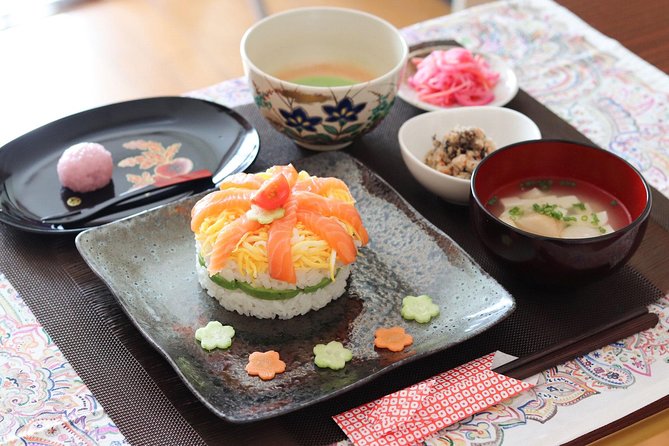
At $109 per person, this is not the cheapest way to eat lunch in Kyoto. It is also not priced like a basic recipe demonstration. The fee covers a private cooking class, the meal you prepare, local alcohol or matcha, and the tea ceremony. If you choose the market option, the supermarket and produce tour is included as well.
The value comes from access and attention. Your group does not share the instructor with a large room of strangers. You get a local host, a home setting, seasonal ingredients, cultural conversation, and advice you can use after the trip.
I would compare the cost with what you want from the activity. If you only want to learn how to roll sushi, a cheaper group class may do the job. If you want a personal introduction to Japanese home food and a chance to ask many questions, the price is easier to justify.
The experience is booked an average of 49 days ahead, so popular dates may disappear well before your trip. I would arrange it early, especially for a family or a small private group with only a few possible lunch or dinner times.
Getting there and planning the day
There is no hotel pickup or drop-off. You make your own way to the home in Nishikyo Ward, near public transportation. Plan your route before leaving and allow time for the walk from Katsura Station.
The activity ends back at the meeting point unless the market option changes the final walking portion. Since the market visit follows the meal, check the end time before planning another reservation. Lunch and dinner choices make it easier to fit the class into a Kyoto schedule, but the approximate three-hour length still deserves a clear block of time.
You receive confirmation when booking. Service animals are allowed. Free cancellation is available if you cancel at least 24 hours before the local start time. Changes or cancellations inside that window are not accepted, so check your plans carefully.
Who will enjoy this most
I would choose this for people who want contact with daily life, not just another stop on a sightseeing route. Couples can use it as a shared activity, and families can give children a role in preparing the food. It also suits anyone who collects recipes and food ideas to try at home.
The private format helps groups with dietary restrictions, different cooking abilities, or a strong interest in Japanese culture. It is also a good choice if you have already eaten plenty of restaurant food and want to understand how a Japanese meal comes together in a home kitchen.
You may want to skip it if your schedule is packed, if you dislike walking through residential neighborhoods, or if you want a polished restaurant-style presentation. The home setting is the point, and that means the experience is personal and informal rather than highly produced.
Should you book Emika’s Kyoto cooking class?
Book it if you want to cook with a local, eat a meal made by your own hands, and leave with practical food knowledge. The garden vegetables, private setting, flexible menu, and market option give it more substance than a short sushi lesson.
Choose the menu carefully, share all dietary needs in advance, and decide if the market walk fits your energy and schedule. For many visitors, this can become one of the more personal parts of a Kyoto trip, especially if temples and restaurants have begun to blur together. At $109, it is a considered purchase, but the private attention and home setting give you a fair return.
FAQ
Where does the cooking class meet?
The class meets at Emika’s home at 31-30 Katsurainariyamachō, Nishikyo Ward, Kyoto, 615-8025, Japan.
How long does the experience last?
The cooking class and tea ceremony last approximately three hours.
How far is the home from Katsura Station?
The walk from Katsura Station takes about 10 to 15 minutes through the surrounding neighborhood.
Can I choose sushi or Obanzai?
Yes. Tell Emika when booking if you prefer sushi or Obanzai, the traditional Kyoto-style menu.
What dishes might I prepare?
Depending on your chosen menu, you might prepare sushi, miso soup, marinated mushrooms, slow-cooked vegetables, tofu dishes, or other Obanzai-style food. Some sessions also include Osaka-style okonomiyaki.
Is matcha included?
Yes. A freshly prepared matcha tea is served at the beginning or end, and the meal ends with a tea ceremony.
Is alcohol included?
Yes. Local alcohol, usually one or two glasses, is included. You can choose matcha instead.
Is the market tour included?
The supermarket and produce market tour is included only if you choose the Market tour option.
Does the market tour happen before cooking?
No. The market tour takes place after the cooking class and meal. The walk to the supermarket takes about 10 minutes.
Can dietary restrictions be accommodated?
You should tell Emika about allergies, dietary restrictions, and cooking preferences when booking. Vegetarian cooking has been accommodated.
Is transportation provided from my hotel?
No. Hotel pickup and drop-off are not included. You must travel to and from the meeting point yourself.
Can I cancel for a full refund?
Yes, if you cancel at least 24 hours before the experience start time. Cancellations or changes made less than 24 hours before the start are not accepted for a refund.
More Private Tours in Kyoto
More Cooking Classes in Kyoto
More Tea Ceremony Experiences in Kyoto
More tours in Kyoto we've reviewed



Tea Ceremony Experiences, compared.
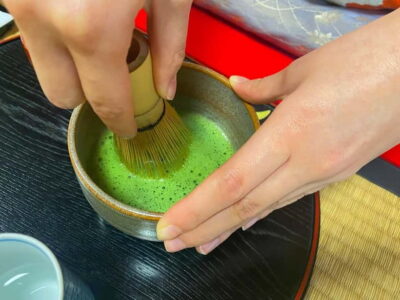 ★ 4.9Kyoto: Tea Ceremony in a Traditional Tea House in KiyomizuFrom $4945 min
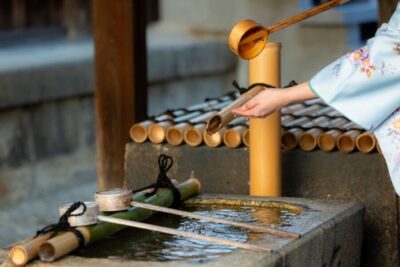 ★ 4.9Kyoto: Tea Ceremony Ju-An at Jotokuji TempleFrom $291h 10m
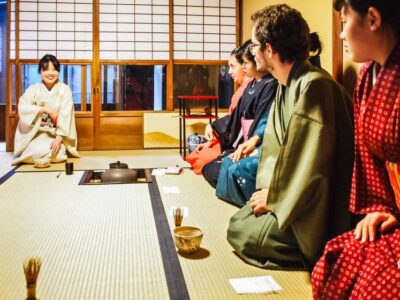 ★ 4.3Kyoto: 45-Minute Tea Ceremony Lesson ExperienceFrom $2245 min
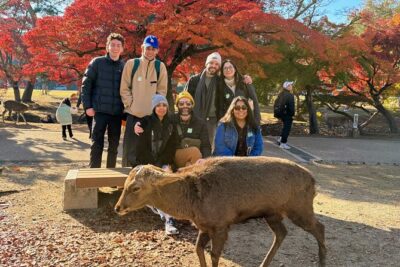 ★ 5.0World Heritage Kyoto & Nara Uji Authentic Matcha ExperienceFrom $129
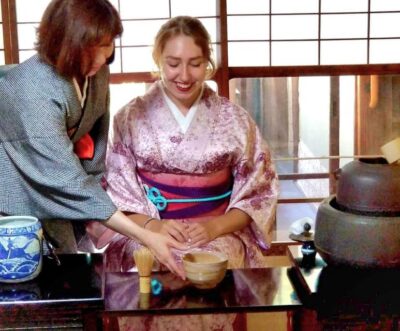 ★ 4.9Kyoto: Table-Style Tea Ceremony at a Kyo-MachiyaFrom $451h 30m
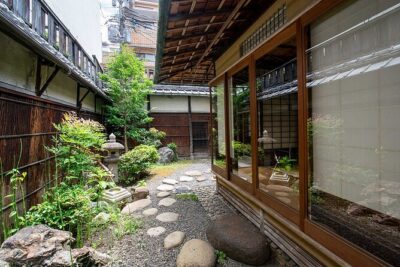 ★ 5.0Kimono Tea Ceremony at Kyoto Maikoya, NISHIKIFrom $65